Montana Problem Solving
Description
Get your form ready online
Our built-in tools help you complete, sign, share, and store your documents in one place.
Make edits, fill in missing information, and update formatting in US Legal Forms—just like you would in MS Word.
Download a copy, print it, send it by email, or mail it via USPS—whatever works best for your next step.
Sign and collect signatures with our SignNow integration. Send to multiple recipients, set reminders, and more. Go Premium to unlock E-Sign.
If this form requires notarization, complete it online through a secure video call—no need to meet a notary in person or wait for an appointment.
We protect your documents and personal data by following strict security and privacy standards.

Make edits, fill in missing information, and update formatting in US Legal Forms—just like you would in MS Word.

Download a copy, print it, send it by email, or mail it via USPS—whatever works best for your next step.

Sign and collect signatures with our SignNow integration. Send to multiple recipients, set reminders, and more. Go Premium to unlock E-Sign.

If this form requires notarization, complete it online through a secure video call—no need to meet a notary in person or wait for an appointment.

We protect your documents and personal data by following strict security and privacy standards.
Looking for another form?
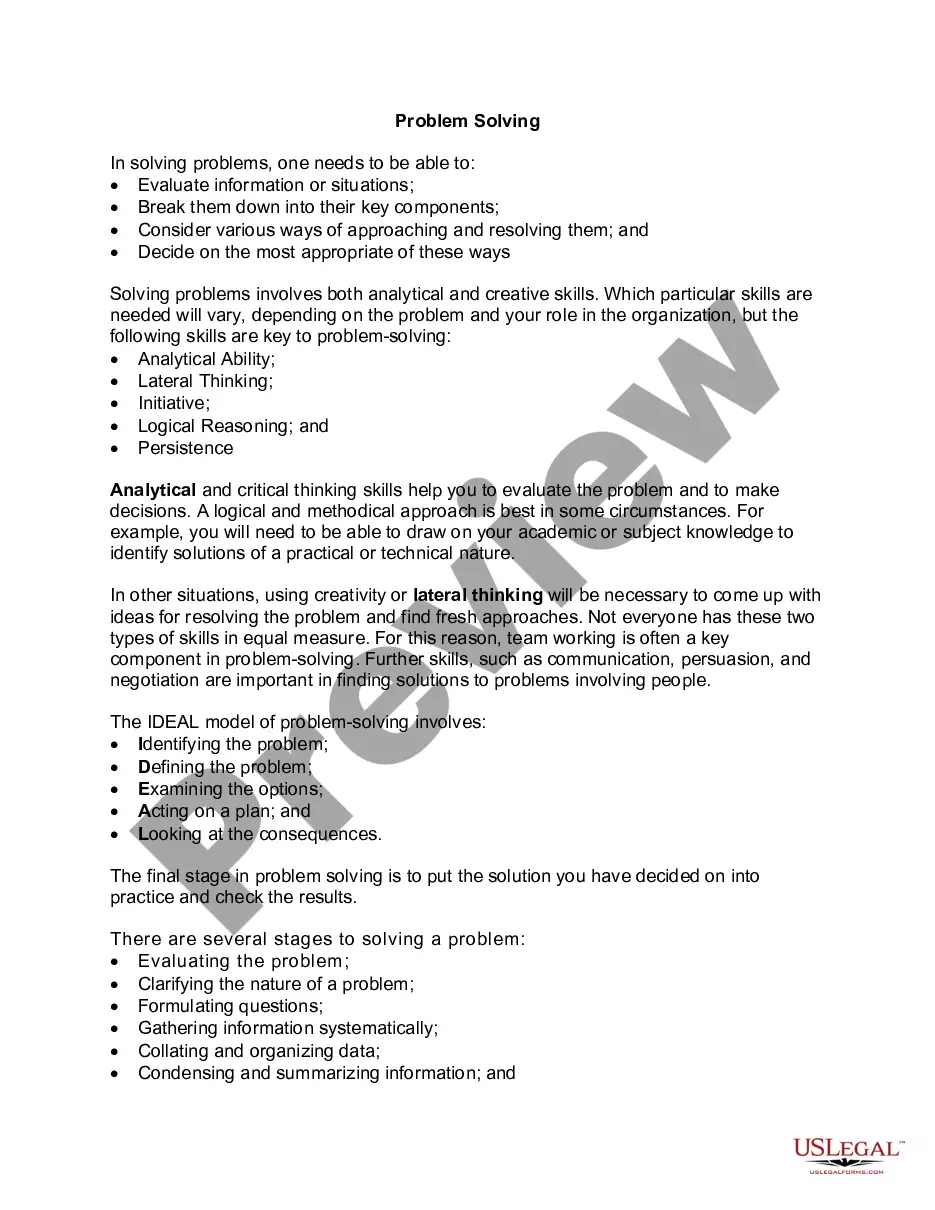
How to fill out Problem Solving?
Discovering the appropriate legal document format can be challenging.
Unquestionably, there are numerous templates accessible online, but how will you locate the legal document you require.
Utilize the US Legal Forms website. The service offers a wide array of templates, including the Montana Problem Solving, which you can utilize for business and personal purposes.
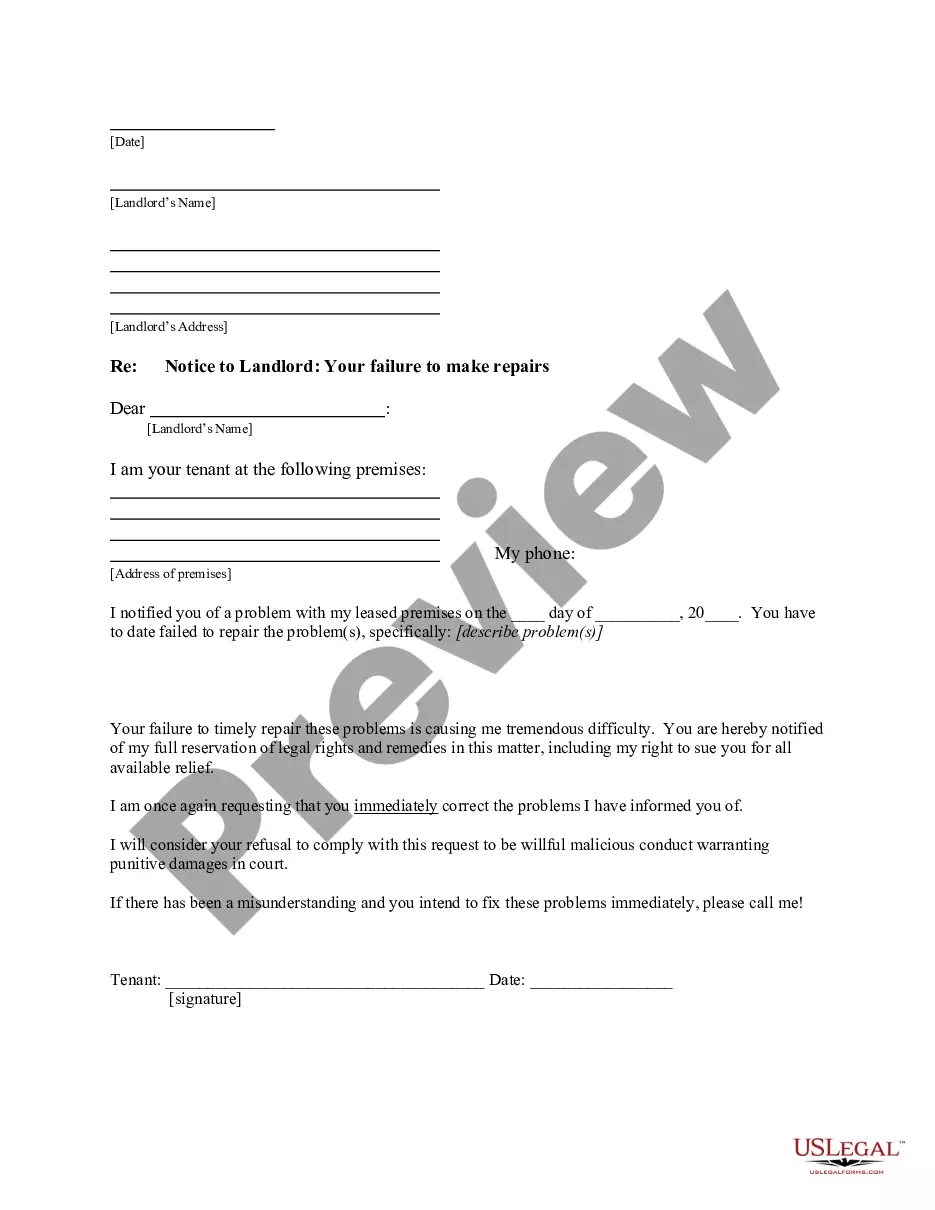
You can review the form using the Review button and examine the form details to confirm this is the right one for you.
- All forms are verified by professionals and adhere to state and federal requirements.
- If you are currently registered, Log In to your account and click the Acquire button to find the Montana Problem Solving.
- Use your account to search through the legal forms you have previously ordered.
- Visit the My documents section of your account to obtain another copy of the document you need.
- If you are new to US Legal Forms, here are some simple guidelines to follow.
- First, ensure you have selected the correct document for your locality/county.
Form popularity
FAQ
Steps of the A3 ProcessStep 0: Identify a problem or need.Step 1: Conduct research to understand the current situaion.Step 2: Conduct root cause analysis.Step 3: Devise countermeasures to address root causes.Step 4: Develop a target state.Step 5: Create an implementation plan.More items...
Steps of the A3 Process?0: Identify the problem.1: Capture the current state of the situation.2: Conduct a root cause analysis.3: Devise countermeasures to address root causes.4: Define your target state.5: Develop a plan for implementation.6: Develop a follow-up plan with predicted outcomes.7: Get everyone on board.More items...
The purpose of the A3 Report is to: Document the learning, decisions, and planning involved with solving a problem. Facilitate communication with people in other departments. Provide structure to problem-solving so as to maximize learning.
The A3 approach is also known as SPS, which stands for Systematic Problem Solving. This approach is based on the principles of PDCA (Plan, Do Check, Act). The reason for the A3 approach is to provide structure to problem-solving and helps determine what caused the problem.
The A3 problem-solving method provides a simple, logical, formulaic way to solve a problem and to communicate about the problem to coworkers. Other nice benefits of the A3 process are that it's organized, and it focuses on objectives, it forces the A3 report writer to be concise and stick to what's truly critical.
The A3 process has many benefits. It helps us follow a thinking process, facilitates communication, and builds consensus. It stimulates learning, forces us to focus on what is a priority, and supports both mentoring and leadership.
Just go to Layout Page Setup Size and choose A3 from the dropdown.
In the A3 report, the target condition should be a diagram (similar to the current condition) that illustrates how the new proposed process will work. The specific countermeasures should be noted or listed, and the expected improvement should be predicted specifically and quantitatively.
The purpose of the A3 is to put all the relevant details of a project on one piece of paper. The A3 tells the story of the project in a clear and succinctly as possible. The term A3 comes from the size of the page, approximately 11X17 inches.
Steps of the A3 ProcessStep 0: Identify a problem or need.Step 1: Conduct research to understand the current situaion.Step 2: Conduct root cause analysis.Step 3: Devise countermeasures to address root causes.Step 4: Develop a target state.Step 5: Create an implementation plan.More items...