This form is an official Montana form which complies with all applicable state codes and statutes. USLF updates all state forms as is required by state statutes and law.
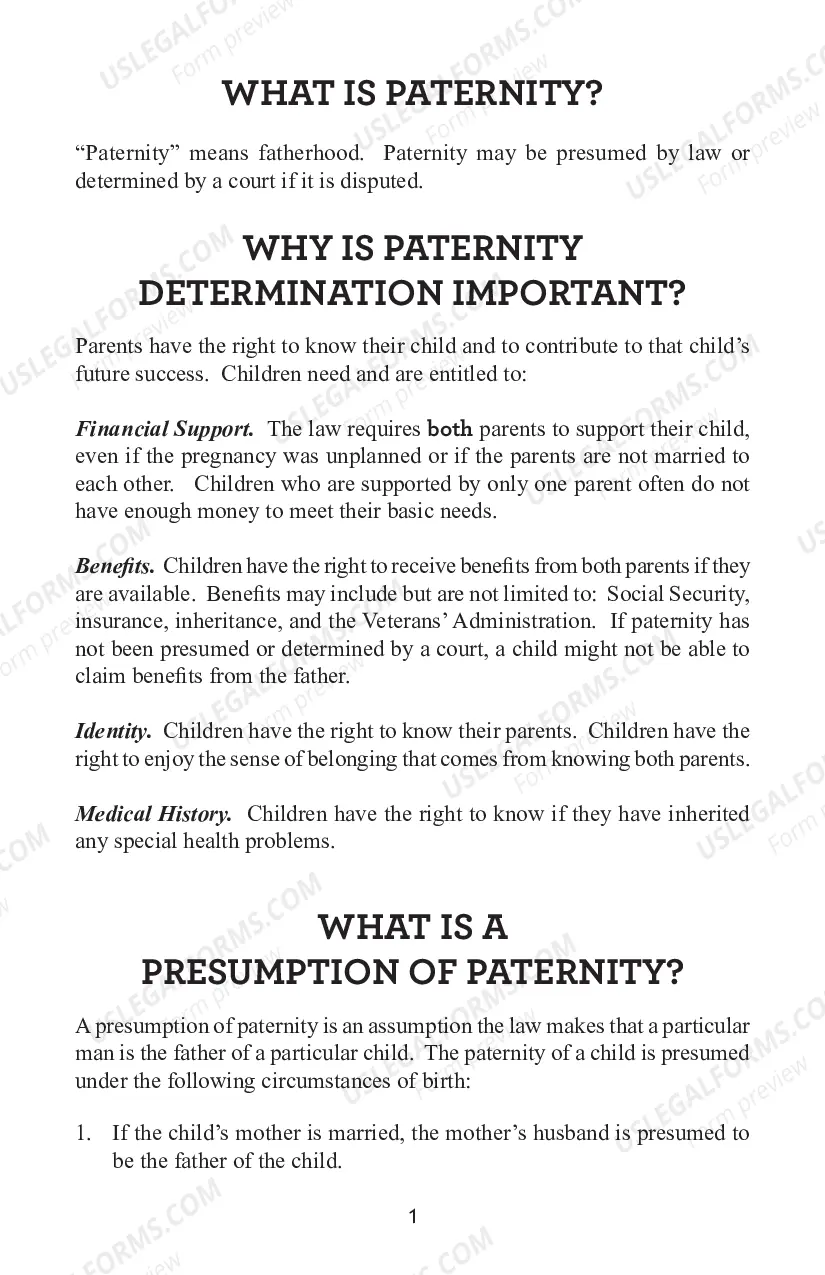
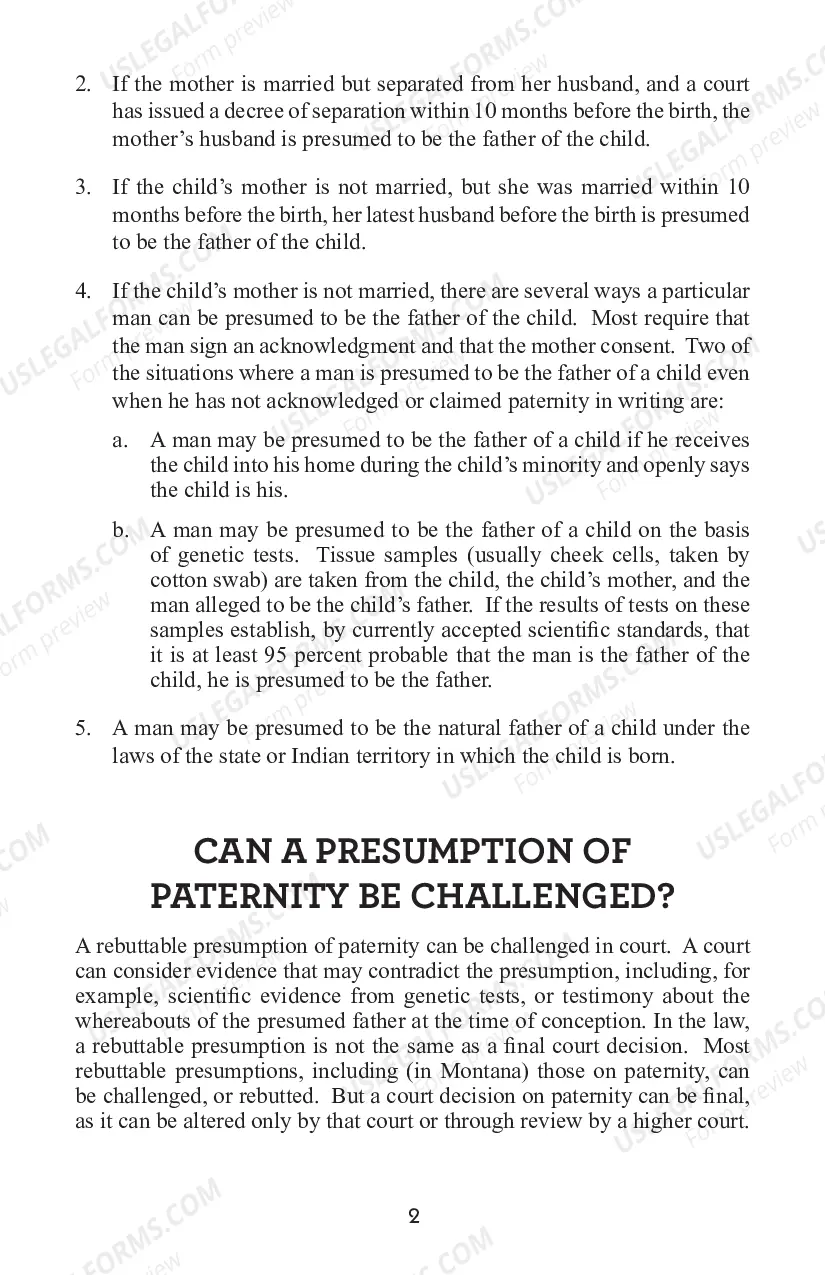
Montana Paternity Information for Parents
Instant download
This website is not affiliated with any governmental entity
Public form
Description
Free preview


Get your form ready online
Our built-in tools help you complete, sign, share, and store your documents in one place.
Built-in online Word editor
Make edits, fill in missing information, and update formatting in US Legal Forms—just like you would in MS Word.
Export easily
Download a copy, print it, send it by email, or mail it via USPS—whatever works best for your next step.
E-sign your document
Sign and collect signatures with our SignNow integration. Send to multiple recipients, set reminders, and more. Go Premium to unlock E-Sign.
Notarize online 24/7
If this form requires notarization, complete it online through a secure video call—no need to meet a notary in person or wait for an appointment.
Store your document securely
We protect your documents and personal data by following strict security and privacy standards.

Make edits, fill in missing information, and update formatting in US Legal Forms—just like you would in MS Word.

Download a copy, print it, send it by email, or mail it via USPS—whatever works best for your next step.

Sign and collect signatures with our SignNow integration. Send to multiple recipients, set reminders, and more. Go Premium to unlock E-Sign.

If this form requires notarization, complete it online through a secure video call—no need to meet a notary in person or wait for an appointment.

We protect your documents and personal data by following strict security and privacy standards.
Looking for another form?
How to fill out Montana Paternity Information For Parents?
Acquire a printable Montana Paternity Information for Parents with just a few clicks in the most comprehensive library of legal electronic files.
Locate, download, and print professionally prepared and certified samples on the US Legal Forms website. US Legal Forms has been the leading provider of cost-effective legal and tax templates for US citizens and residents online since 1997.
After you’ve downloaded your Montana Paternity Information for Parents, you can fill it out in any online editor or print it out and complete it manually. Utilize US Legal Forms to gain access to 85,000 professionally drafted, state-specific documents.
- Individuals who already possess a subscription must sign in to their US Legal Forms account, download the Montana Paternity Information for Parents, and view it stored in the My documents section.
- Users without a subscription need to follow the steps outlined below.
- Ensure your template complies with your state’s standards.
- If available, review the form’s description to gain more insights.
- If provided, preview the document to see additional content.
- Once you are certain the form fulfills your needs, click Buy Now.
- Establish a personal account.
- Select a subscription plan.
- Pay via PayPal or credit card.
- Download the document in Word or PDF format.
Form popularity
FAQ
Birth certificate. If a birth certificate declares the father and he signs it, this is a legally binding qualification of paternity. DNA test. Court order.
Child custody laws in Montana allow judges to take a child's wishes into account as a single factor in custody determinations, but will not allow any child under 18 to unilaterally decide which parent to reside with.
Get on the birth certificate. Once your child is born, the easiest way to establish paternity is by getting your name on the birth certificate. Get an order through an administrative agency. Get a court order.
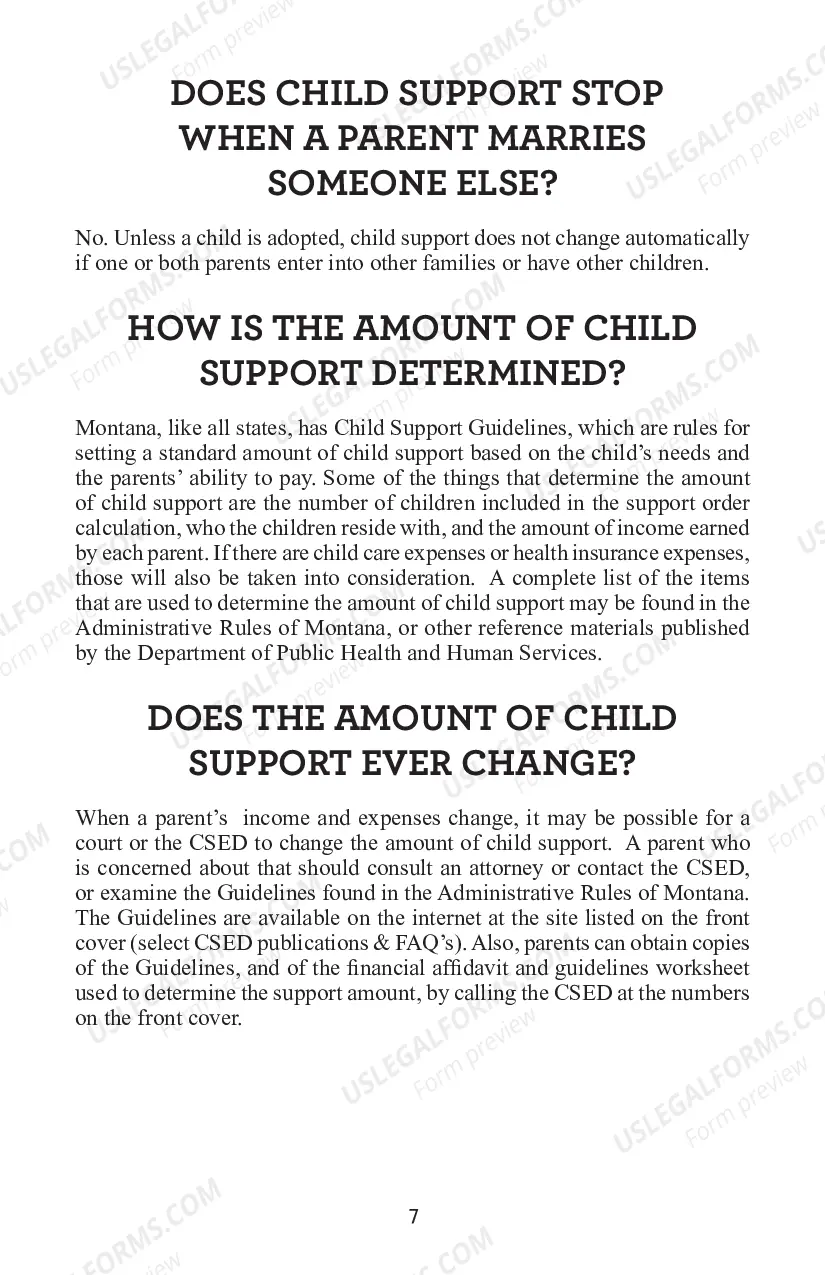
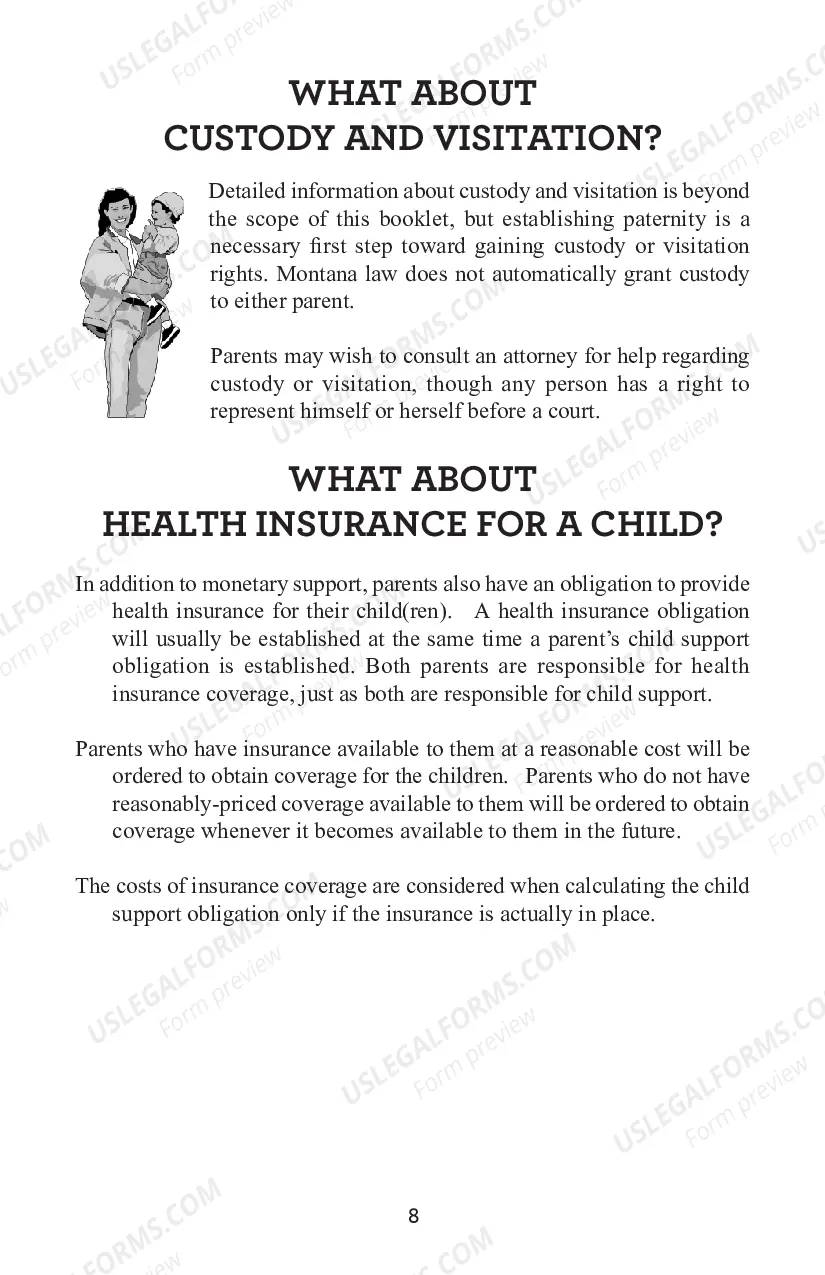
The alleged father, the mother, or the child him or herself can file a court action requesting that the Montana district court establish paternity.Additionally, the Child Support Enforcement Division of the Montana Department of Public Health and Human Services can file a court action.
Establishing paternity ensures a father's legal rights and various rights and privileges for their children, such as rights to inheritance, father's medical and life insurance benefits, and Social Security and veterans' benefits, plus access to paternal family health history.
Fathers who were not married when their child was born must legally establish paternity in order to gain access to father's rights.Once paternity is established, a father may pursue child visitation or other custody rights.
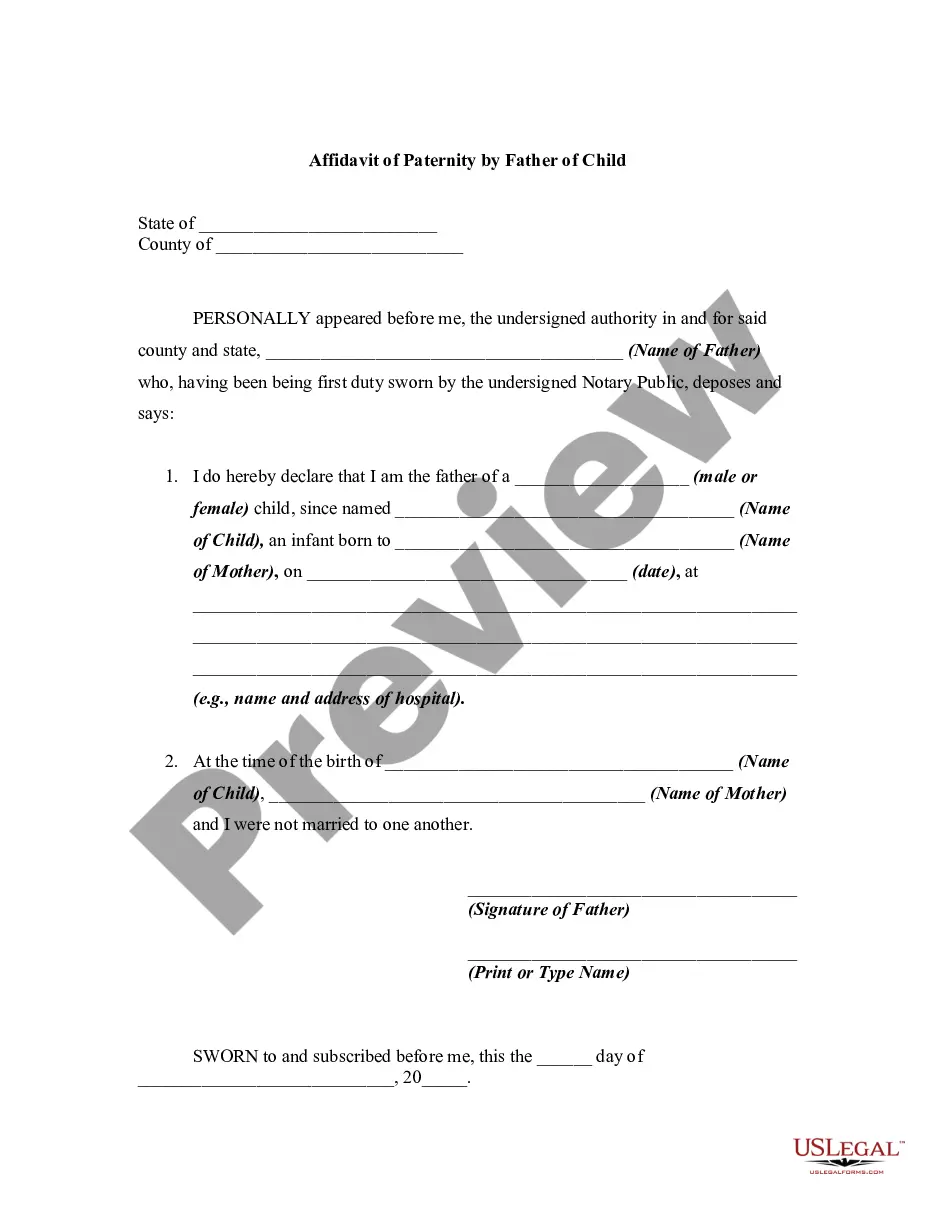
An acknowledgment of paternity will require some basic information including the child's full name, mother's full name, and father's full name. The father's date of birth, address, and Social Security number are also needed. The AOP must be signed and notarized by both parents.
If you would like to formally establish paternity, you should begin by asking the father of your child to voluntarily acknowledge paternity.The birth father can voluntarily acknowledge paternity in two ways: He can be present at the birth of your child and sign a Declaration of Paternity.