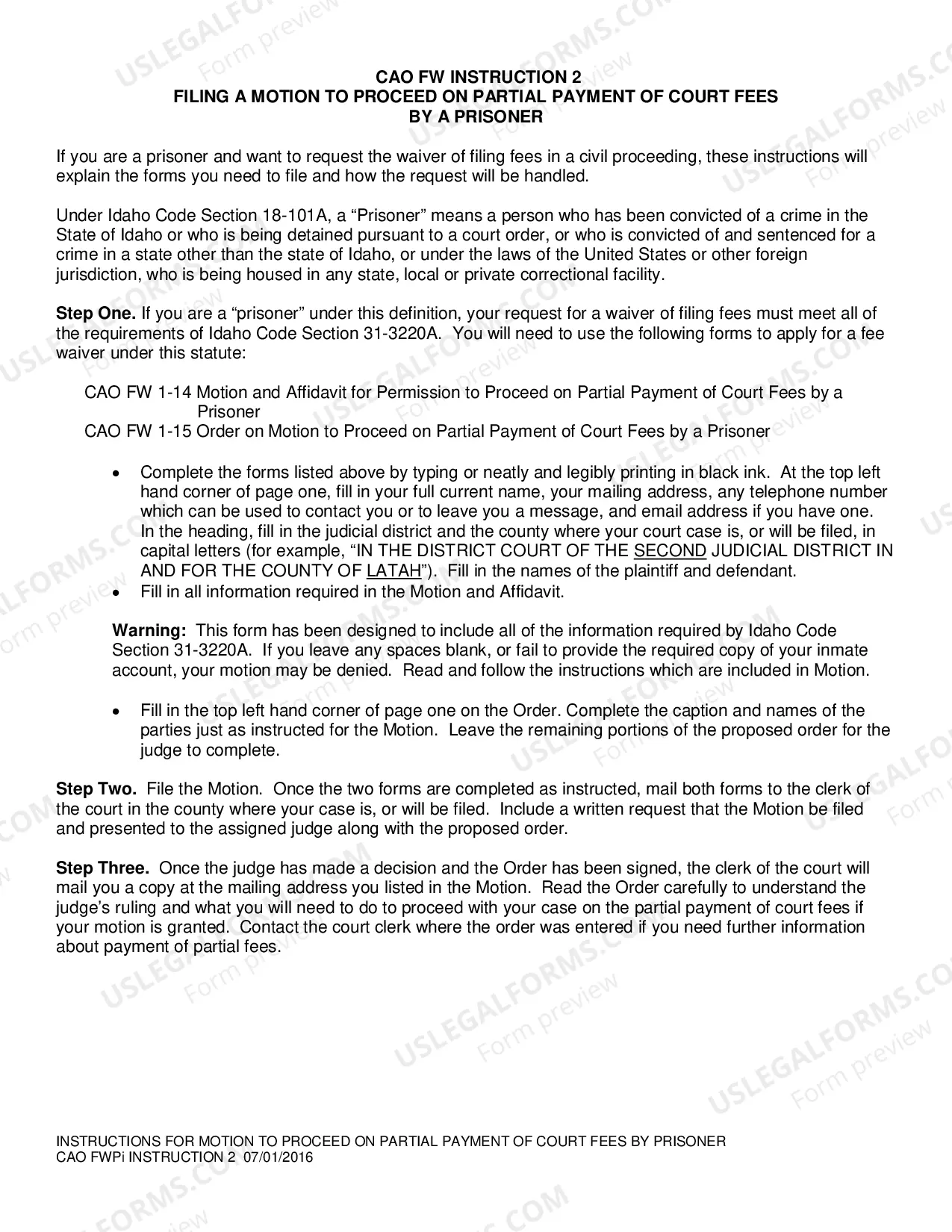
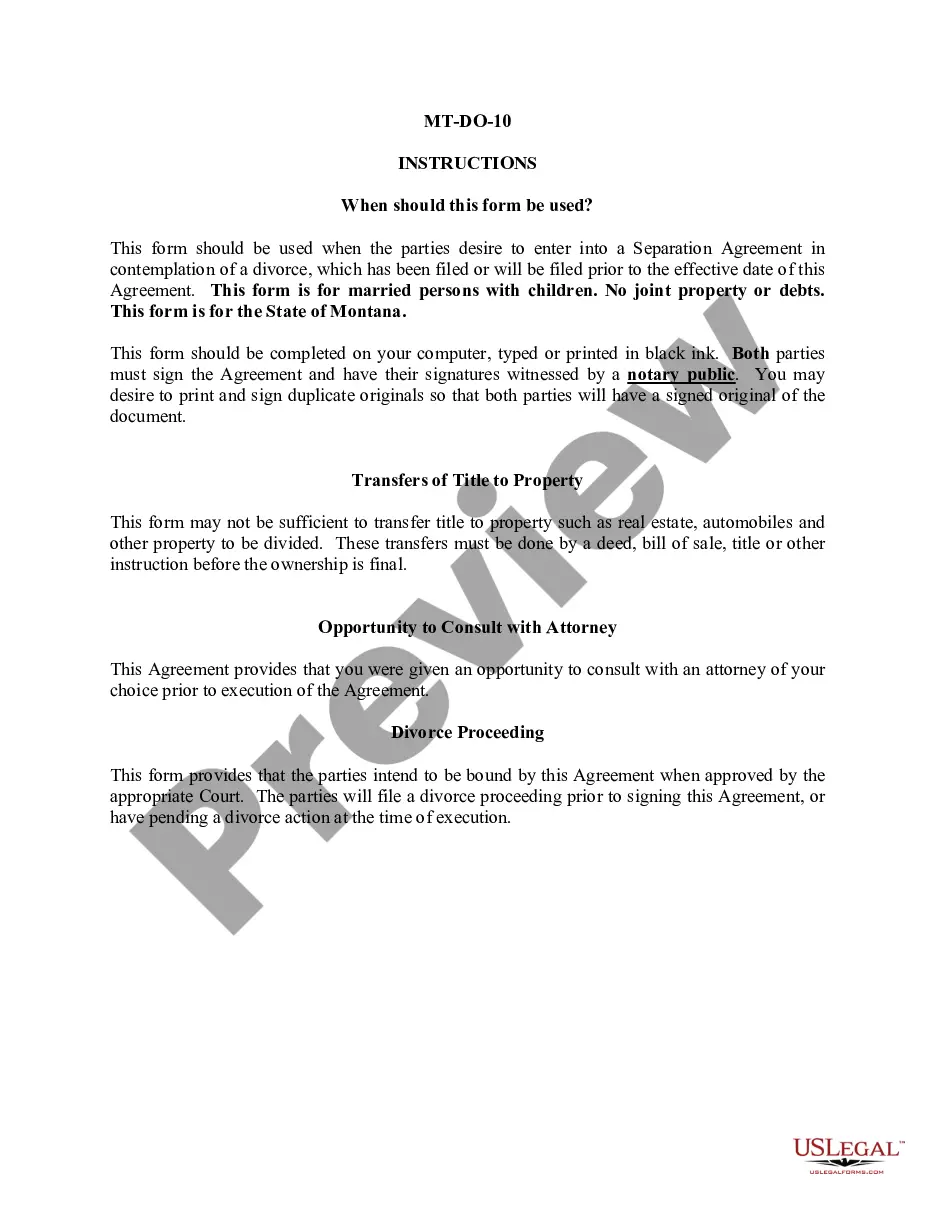
Montana Marital Domestic Separation and Property Settlement Agreement Minor Children no Joint Property or Debts where Divorce Action Filed
Overview of this form
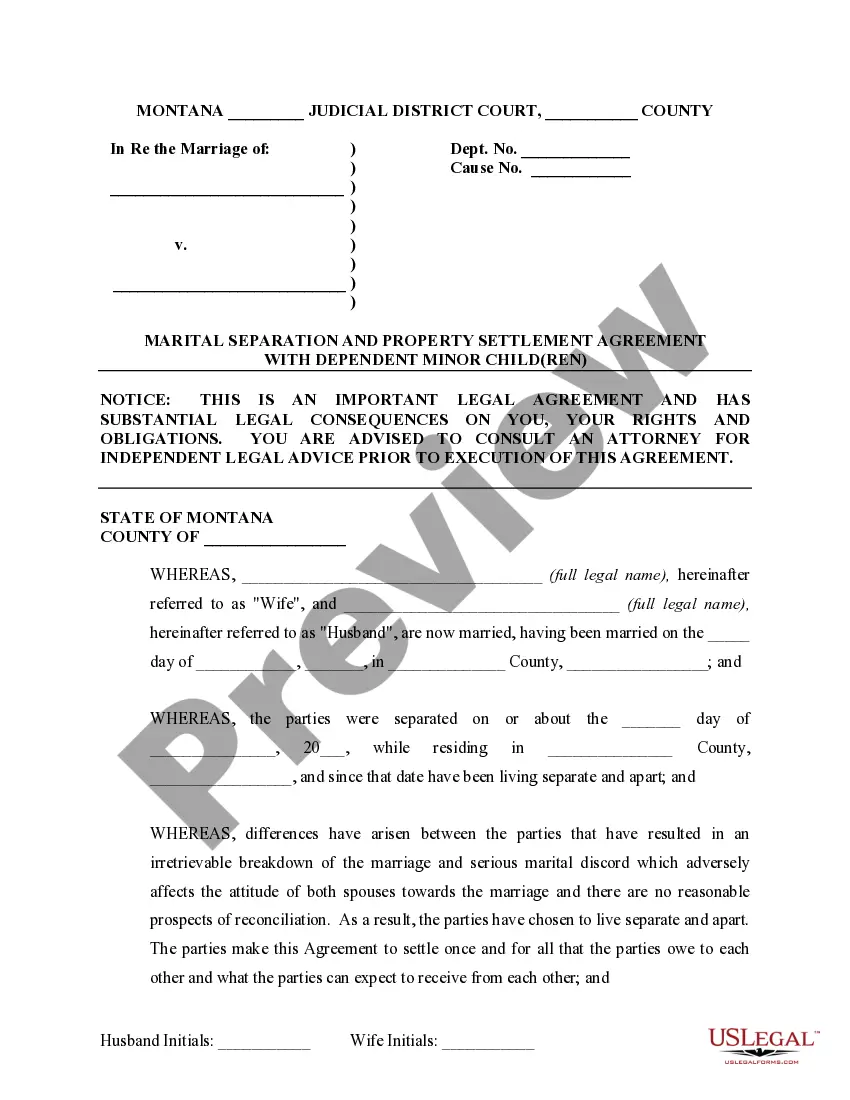
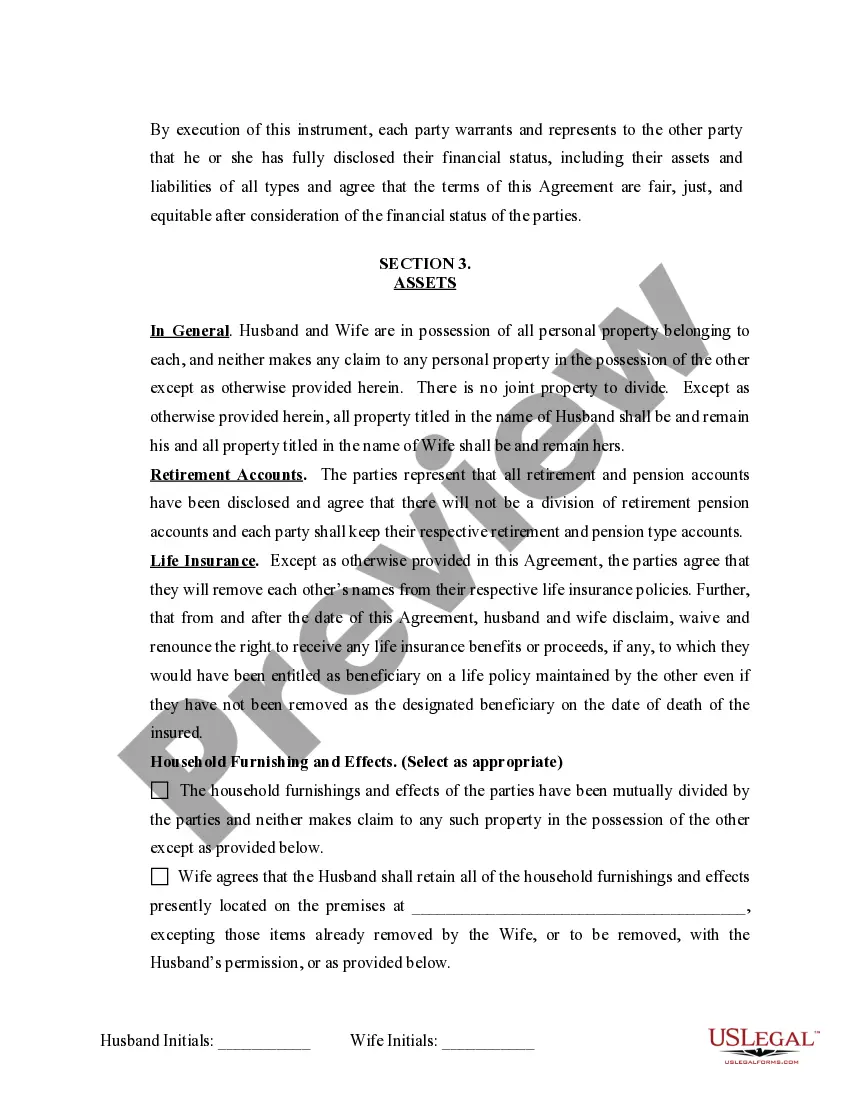
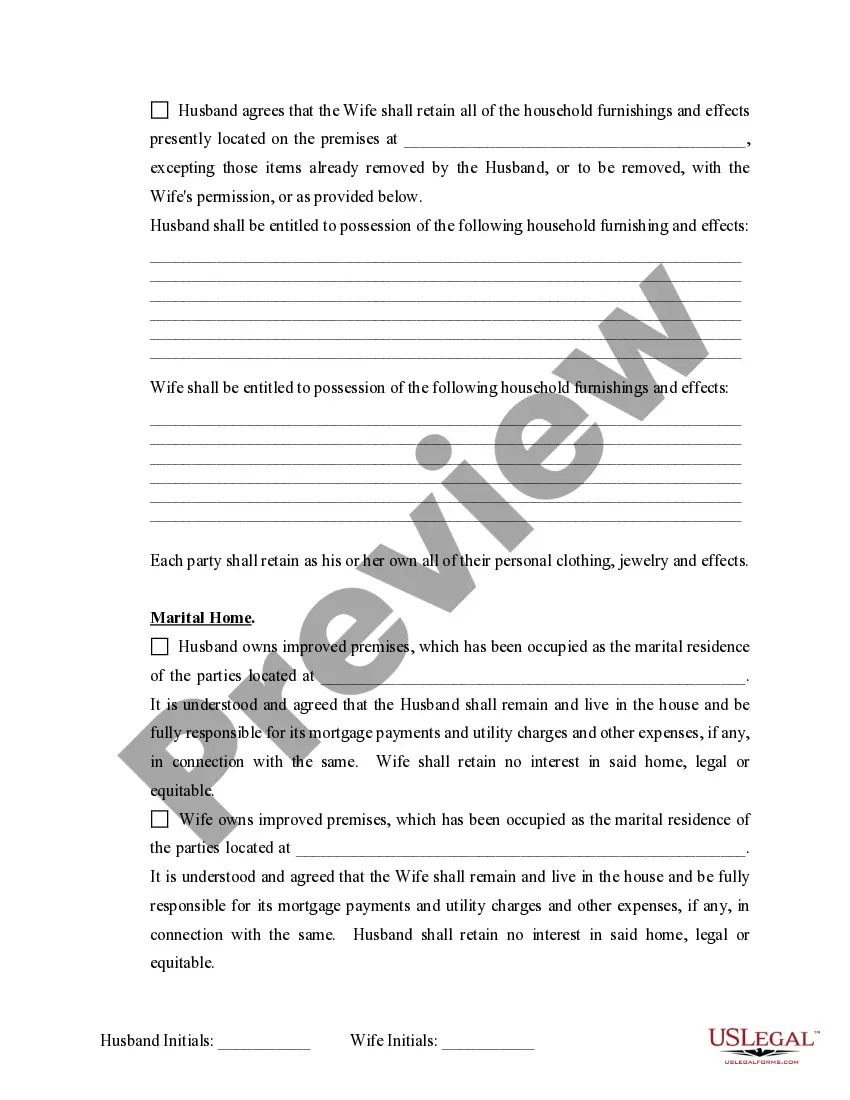
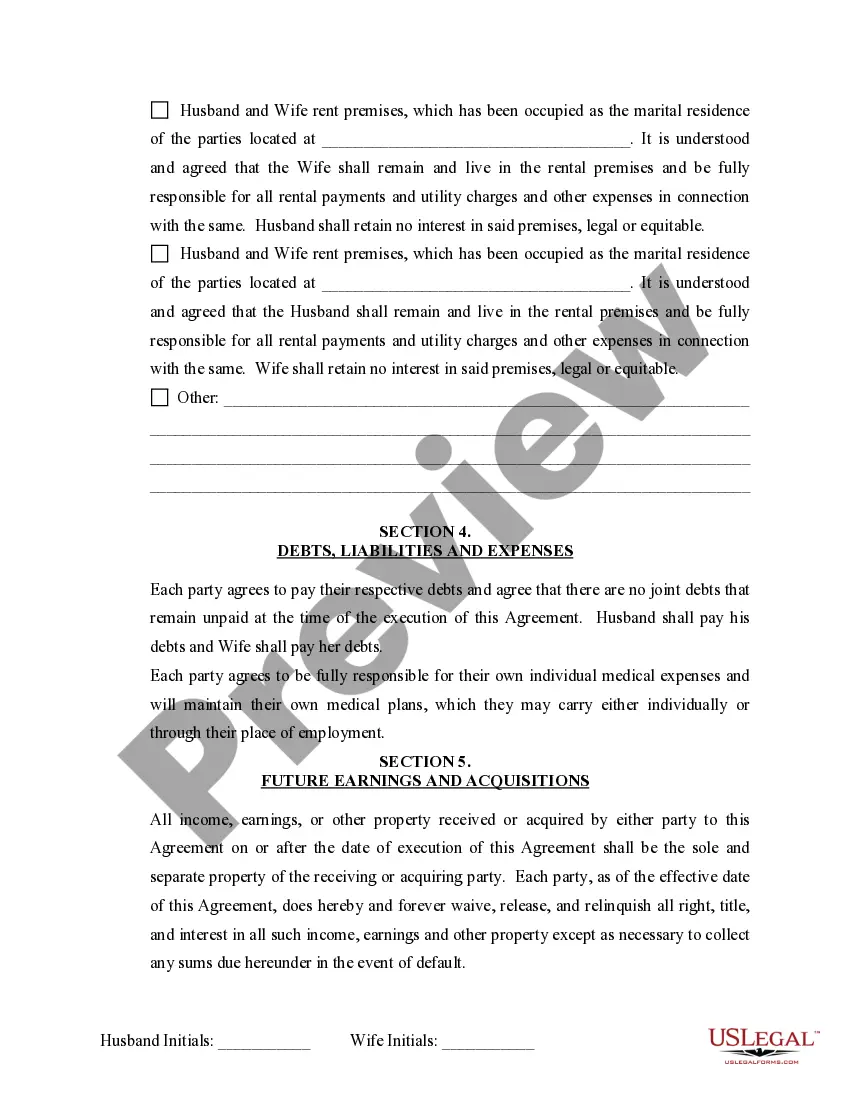
The Marital Domestic Separation and Property Settlement Agreement is a legal document designed for married couples with minor children who are preparing for divorce. This form addresses matters such as child custody, visitation, and support without involving any shared property or debts. It ensures that all necessary arrangements are made during the divorce process, differentiating it from other separation agreements that may involve asset division or joint liabilities.
What’s included in this form
- Identification of the parties involved (Wife and Husband).
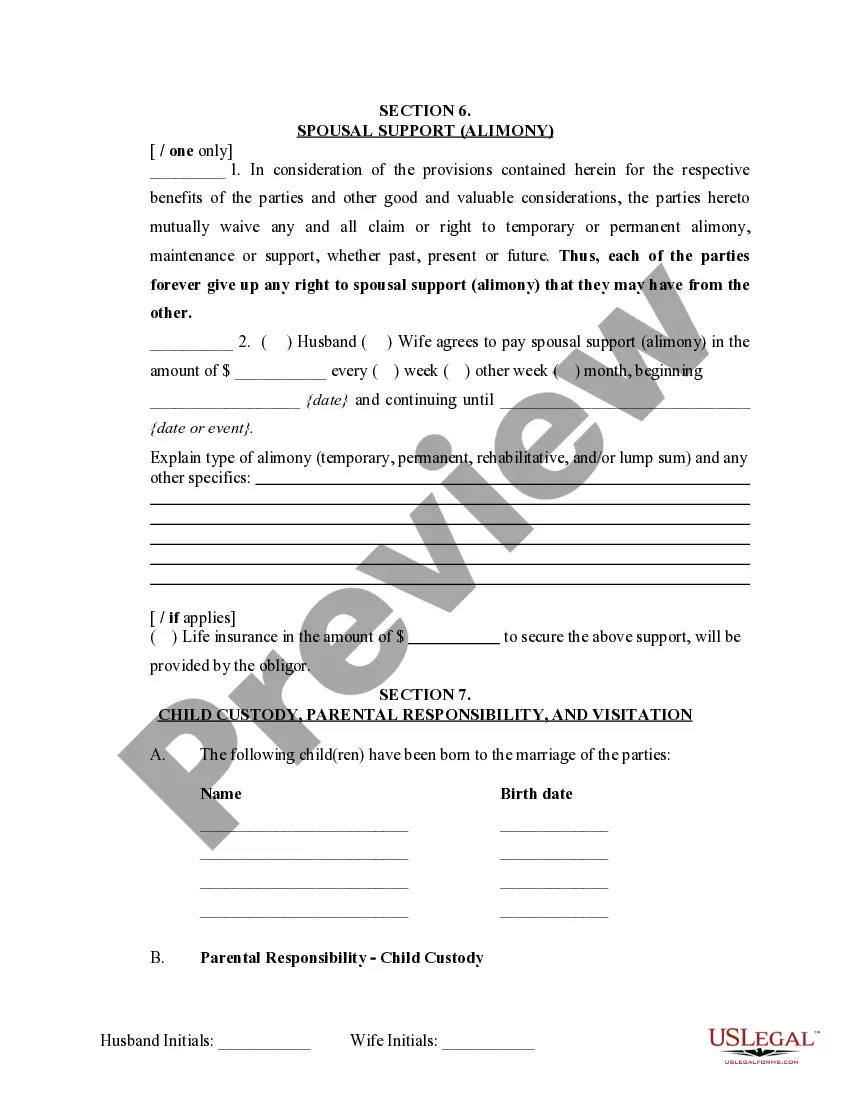
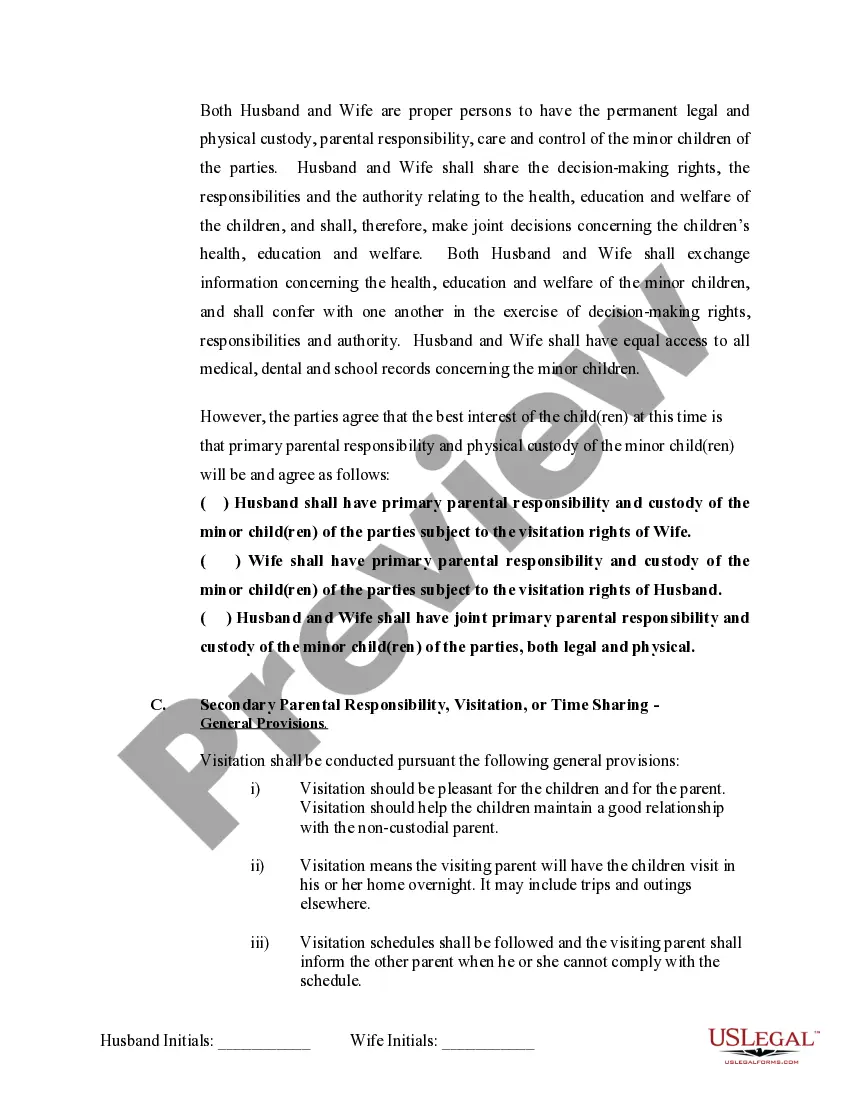
- Provisions for child custody, including legal and physical arrangements.
- Details regarding child support payments and responsibilities.
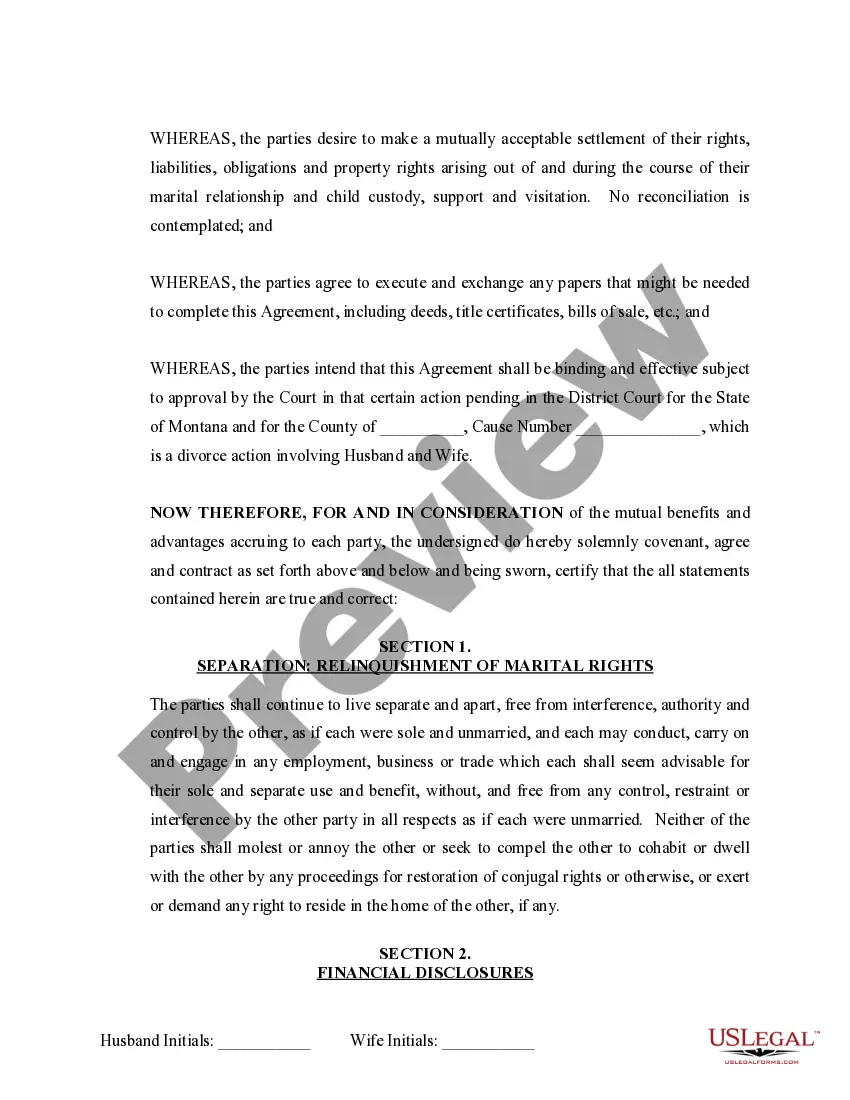
- Clauses addressing the relinquishment of marital rights and responsibilities.
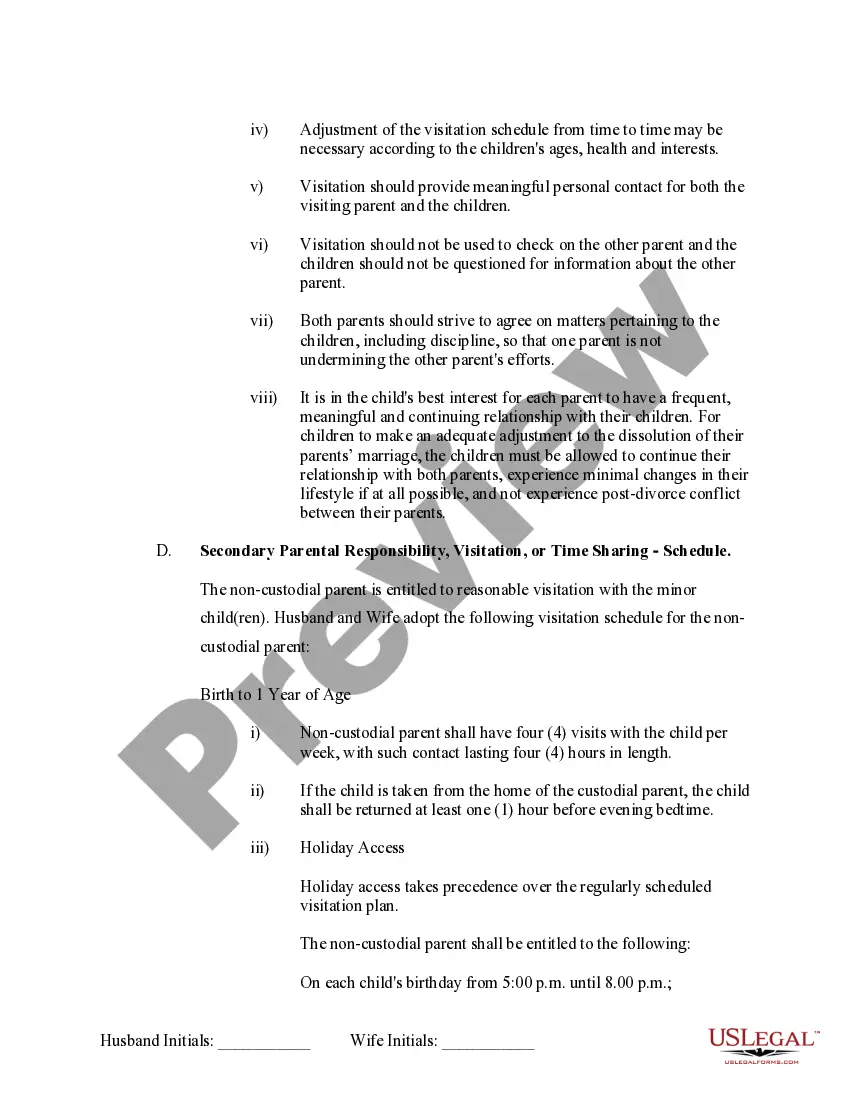
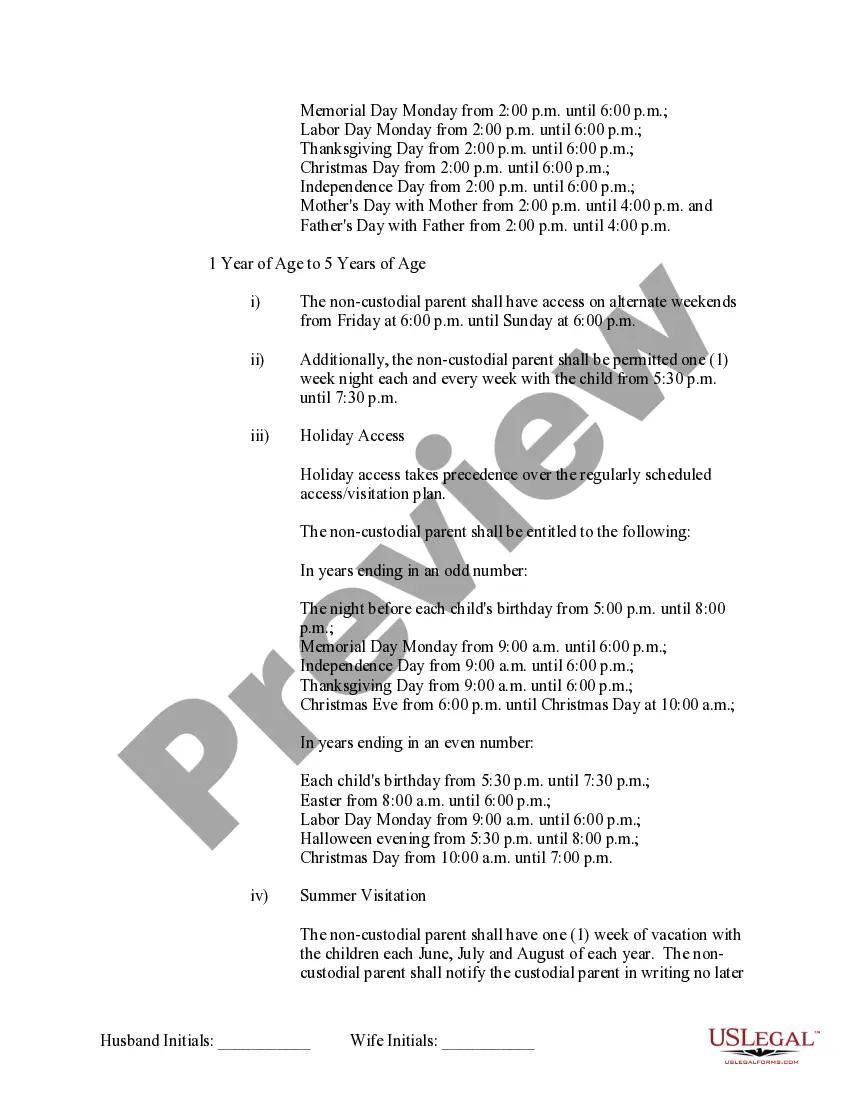
- Specific terms for visitation rights and schedules.
- Alimony provisions, if applicable.

Situations where this form applies
This form should be used when a married couple with minor children wants to set forth a clear agreement regarding their separation while divorce proceedings are underway. It is particularly useful if the couple has no joint property or debts that need to be addressed in the separation. The agreement provides a legal framework to ensure that child-related matters are resolved, which is essential for both legal compliance and the well-being of the children involved.
Intended users of this form
- Married couples with minor children who are filing for divorce.
- Couples who do not have joint property or debts to divide.
- Either spouse wanting to formalize custody and support arrangements prior to finalizing a divorce.
Completing this form step by step
- Identify the parties involved by entering their full legal names at the beginning of the document.
- Fill in the details regarding the child custody arrangement and visitation schedules specified in the relevant sections.
- Specify child support amounts, including frequency of payment and any relevant conditions.
- Ensure both parties sign the document and have their signatures witnessed by a notary public.
- File the signed agreement with the appropriate court as part of the divorce proceeding.
Does this form need to be notarized?
This form needs to be notarized to ensure legal validity. US Legal Forms provides secure online notarization powered by Notarize, allowing you to complete the process through a verified video call, available anytime.
Get your form ready online
Our built-in tools help you complete, sign, share, and store your documents in one place.
Make edits, fill in missing information, and update formatting in US Legal Forms—just like you would in MS Word.
Download a copy, print it, send it by email, or mail it via USPS—whatever works best for your next step.
Sign and collect signatures with our SignNow integration. Send to multiple recipients, set reminders, and more. Go Premium to unlock E-Sign.
If this form requires notarization, complete it online through a secure video call—no need to meet a notary in person or wait for an appointment.
We protect your documents and personal data by following strict security and privacy standards.

Make edits, fill in missing information, and update formatting in US Legal Forms—just like you would in MS Word.

Download a copy, print it, send it by email, or mail it via USPS—whatever works best for your next step.

Sign and collect signatures with our SignNow integration. Send to multiple recipients, set reminders, and more. Go Premium to unlock E-Sign.

If this form requires notarization, complete it online through a secure video call—no need to meet a notary in person or wait for an appointment.

We protect your documents and personal data by following strict security and privacy standards.
Avoid these common issues
- Failing to notarize the agreement, which can render it unenforceable.
- Leaving crucial sections regarding custody or support incomplete.
- Not discussing the terms thoroughly with the other party before signing.
- Ignoring state-specific filing requirements or court deadlines.
Why use this form online
- Convenience of completing and downloading the form at your own pace.
- Editability, allowing you to customize the agreement to suit your specific needs.
- Reliable templates drafted by licensed attorneys to ensure legal compliance.
Looking for another form?
Form popularity
FAQ
Enforcing an MSA must be done by filing a formal request or motion (legal paperwork) with the court. You will need to show the court how your ex-spouse failed to follow the terms of the agreement. There are many reasons you may need to ask the court to assist you with enforcing your agreement.
Marital Settlement Agreements, reached between the parties in writing and signed by the parties, become legally binding when approved by the court at the time of the final court hearing.Once approved by the court, such post judgment stipulations do become legally binding and enforceable between the parties.
WHAT ARE MY PROPERTY RIGHTS IN A MONTANA DIVORCE? Montana is an equitable division state, not a "community property" state.
Montana is an equitable division state, not a "community property" state. The difference is Montana courts weigh multiple legal factors to determine an equitable division of the marital estate versus the assumption that all property is community property regardless each spouse's contributions.
Montana is NOT a community property state, which means that marital property is not automatically divided 50/50 between the spouses in a divorce case.
Montana is an equitable distribution state. Equitable distribution means that the marital property will be split between spouses in a way that is equitable, or fair.
Montana has a "no fault" divorce law. To grant a divorce, the court must determine that: a) the couple has lived separately and apart for more than 180 consecutive days before the petition for divorce is filed; or b) there is serious marital discord between the parties and no reasonable prospect of reconciliation.
What Rights do Spouses Have During Separation? In a legal separation proceeding, a court can decide matters such as child custody and support, alimony and property division. However, as stated above, the spouses will remain legally married and cannot remarry unless and until they get a divorce.
Equitable distribution is a method of dividing property at the time of divorce. All states except for Arizona, California, Idaho, Louisiana, Nevada, New Mexico, Texas, Washington and Wisconsin follow the principles of equitable distribution.