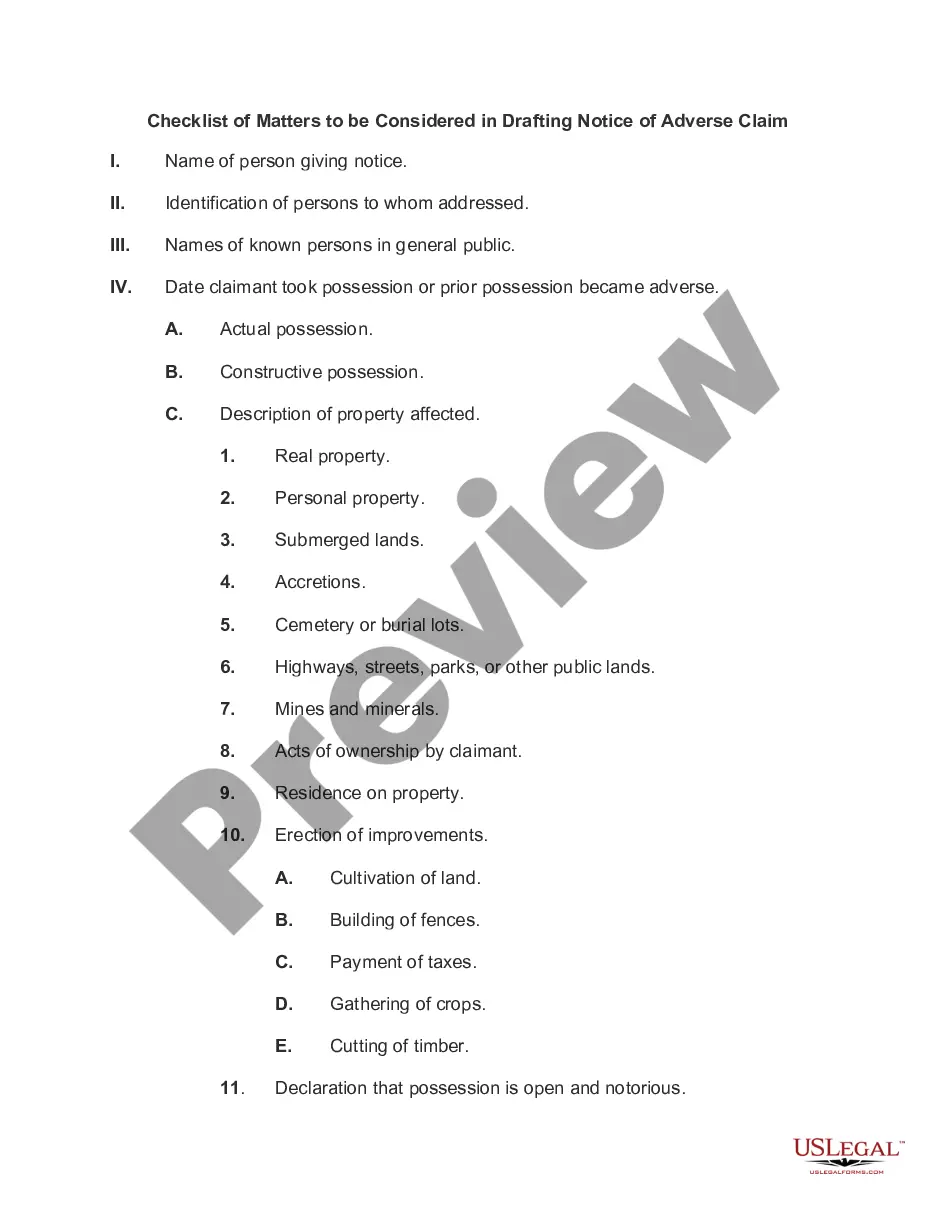
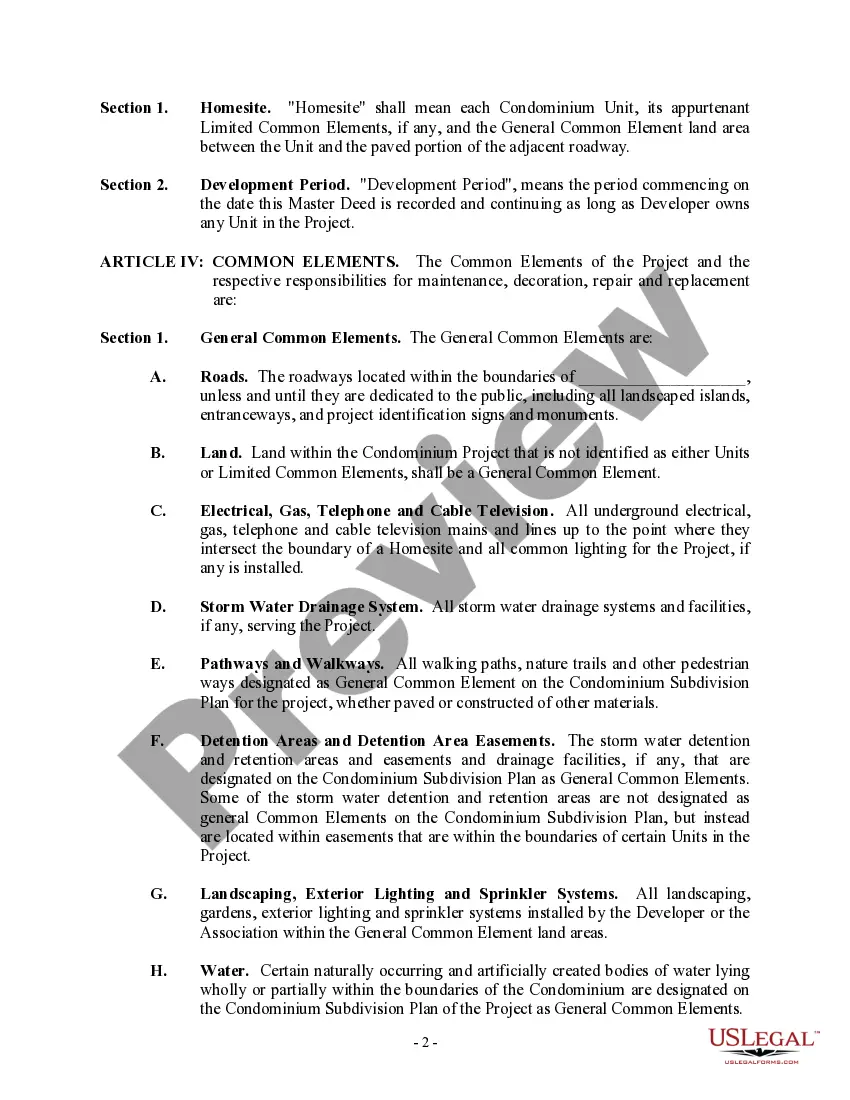
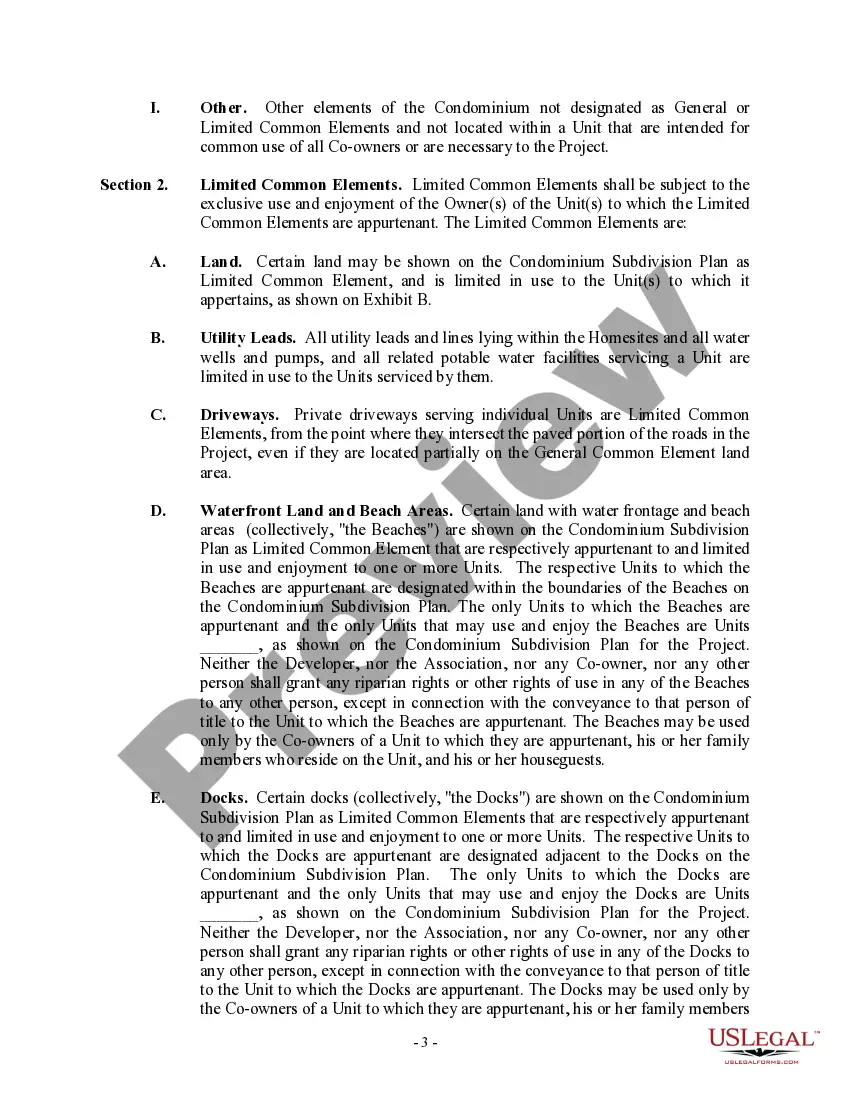
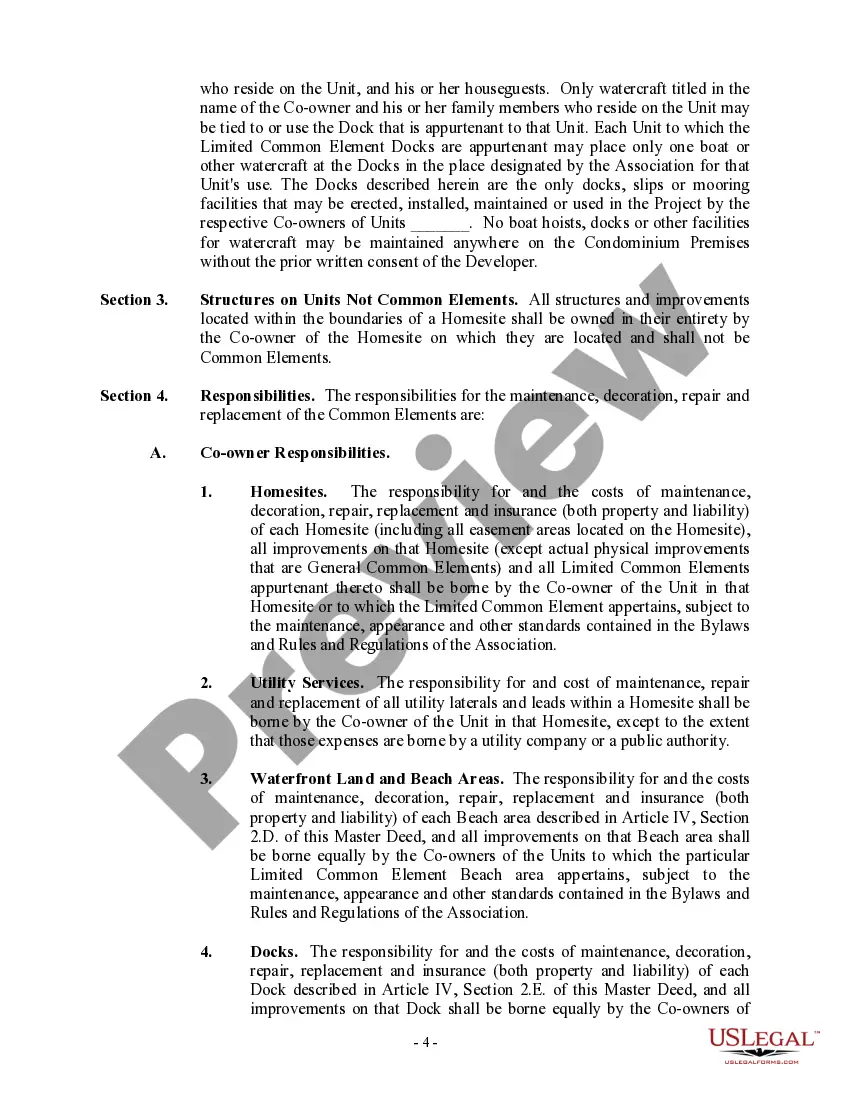
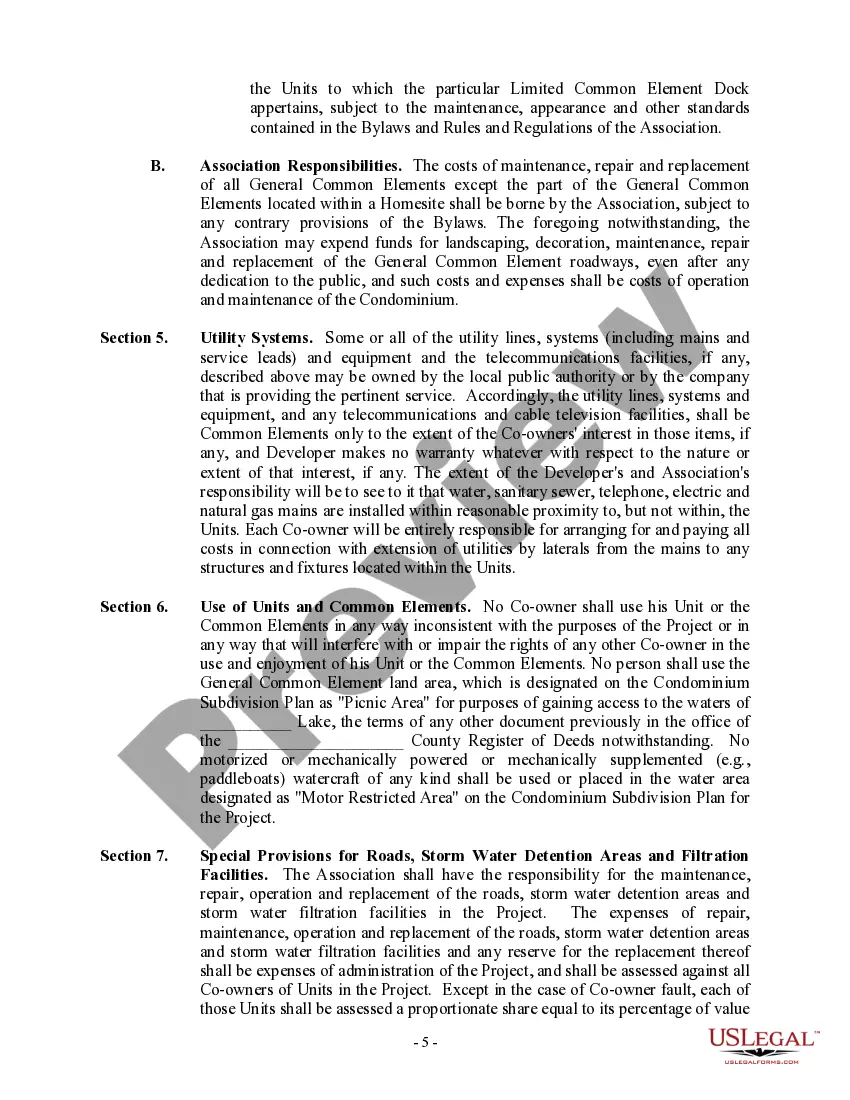
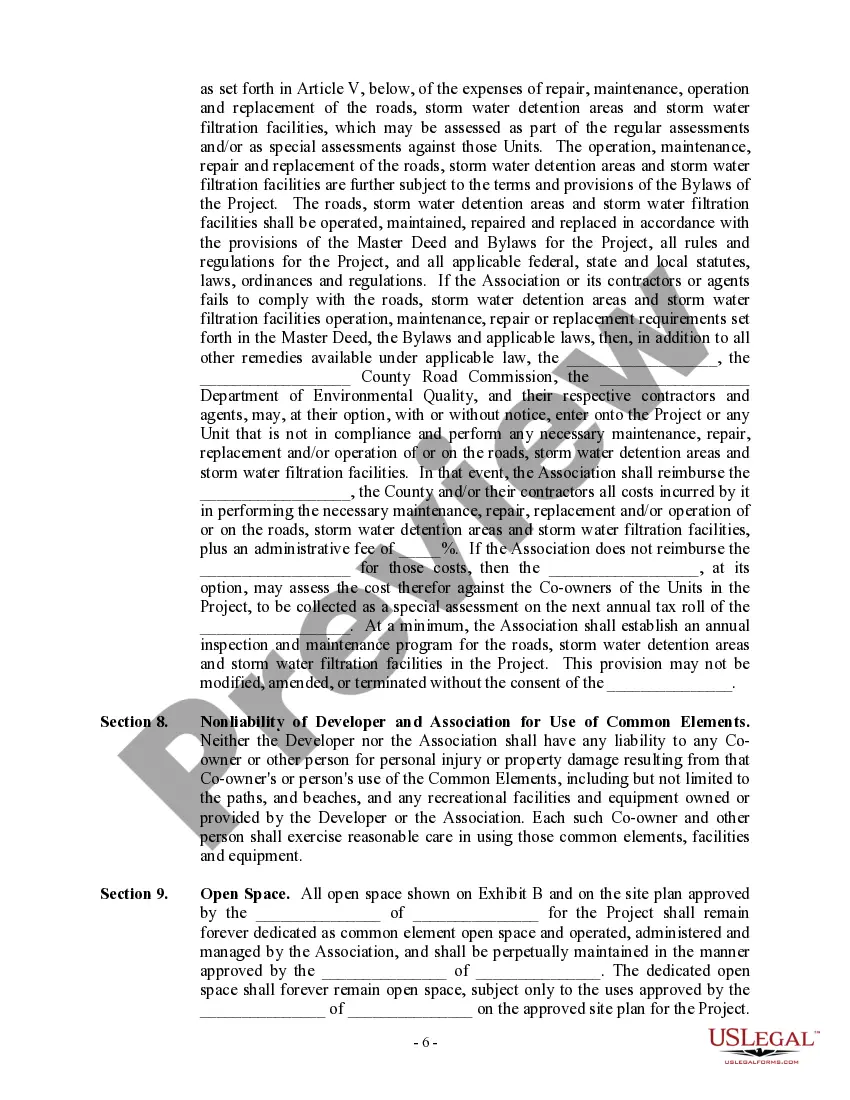
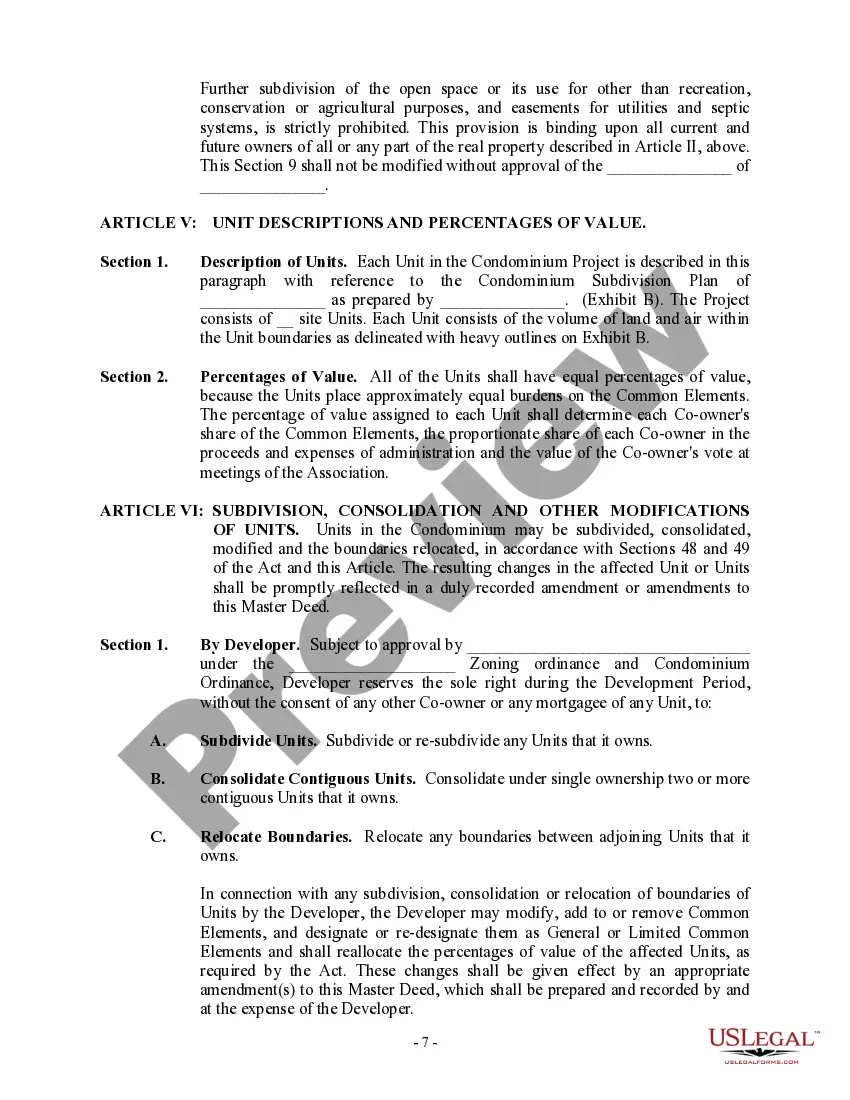
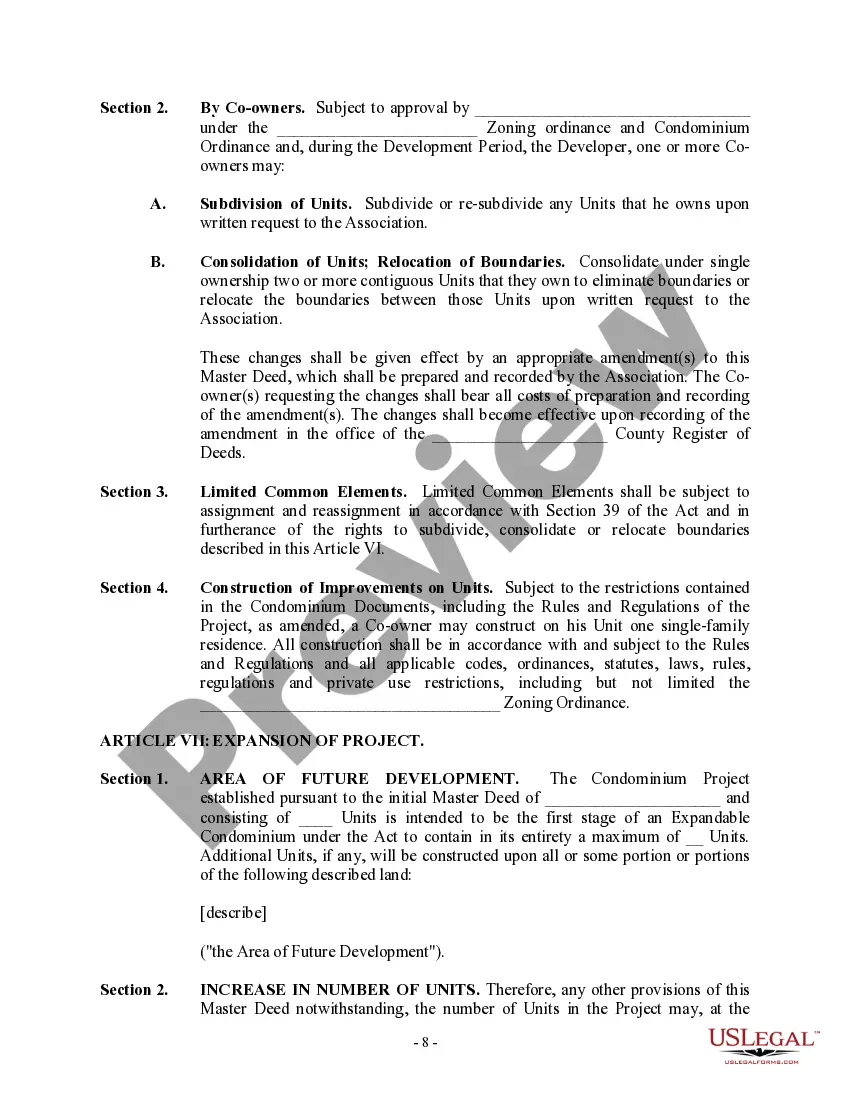
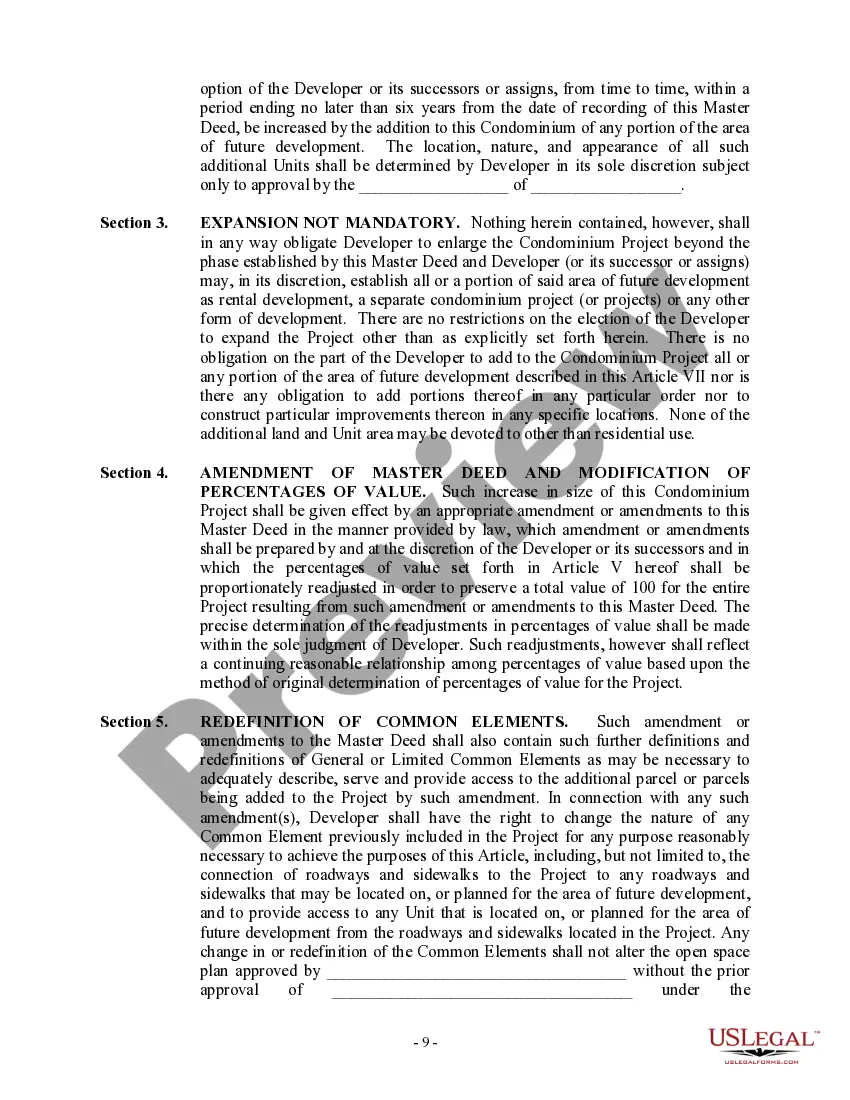
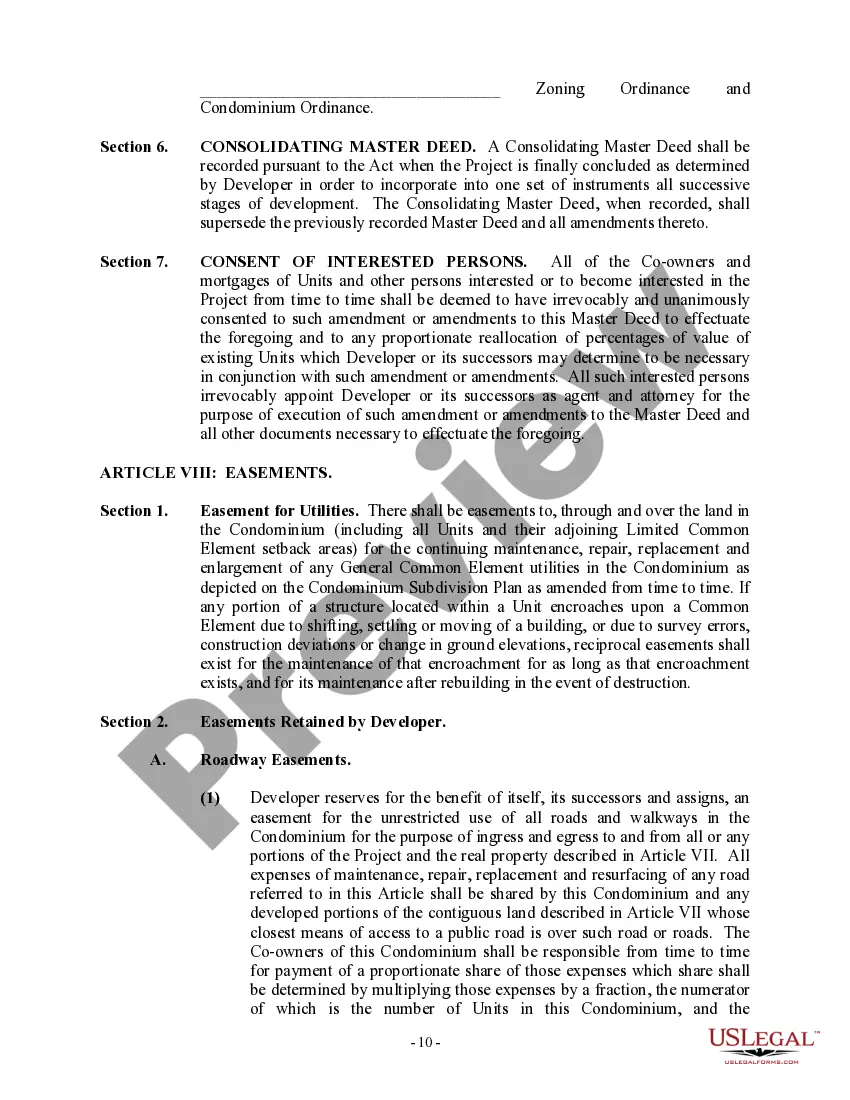
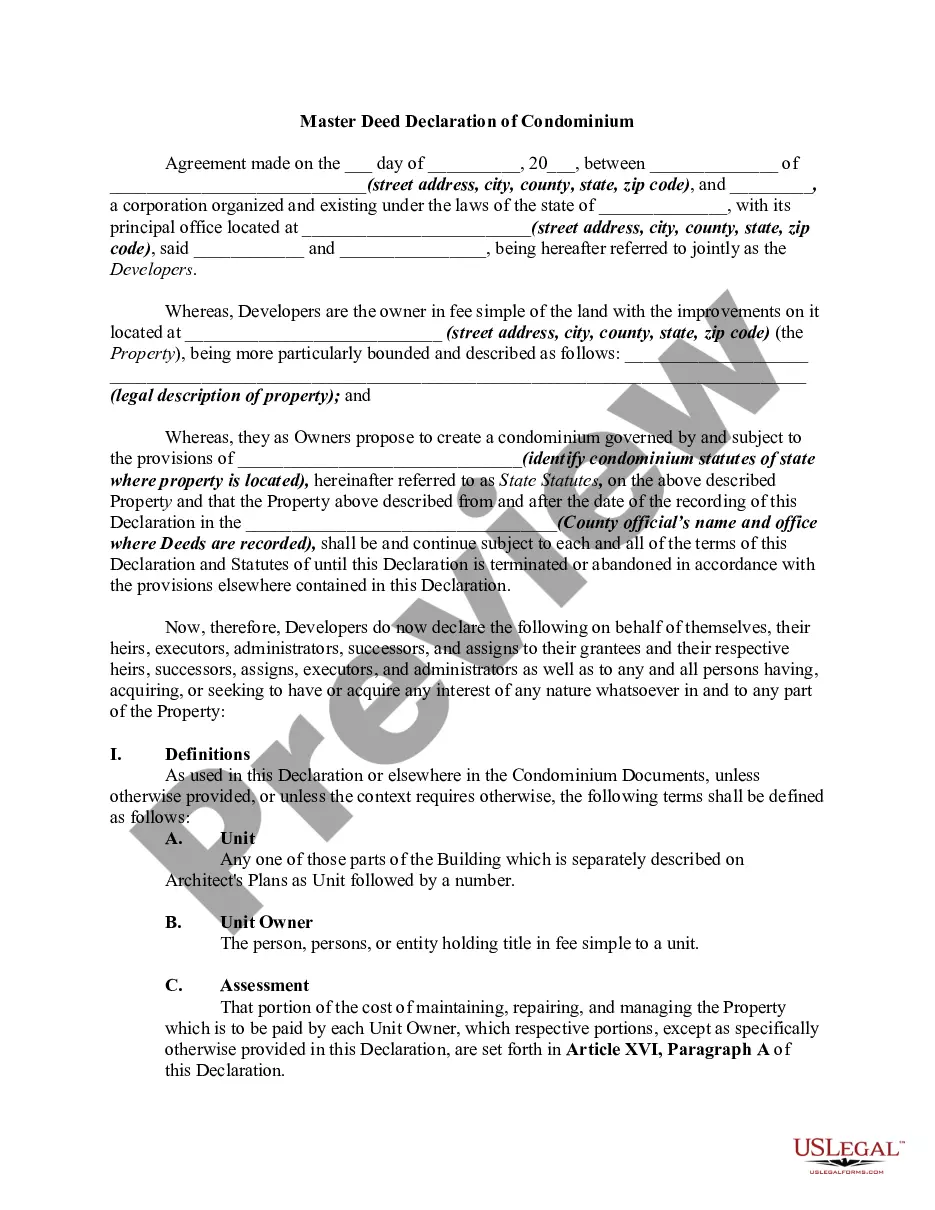
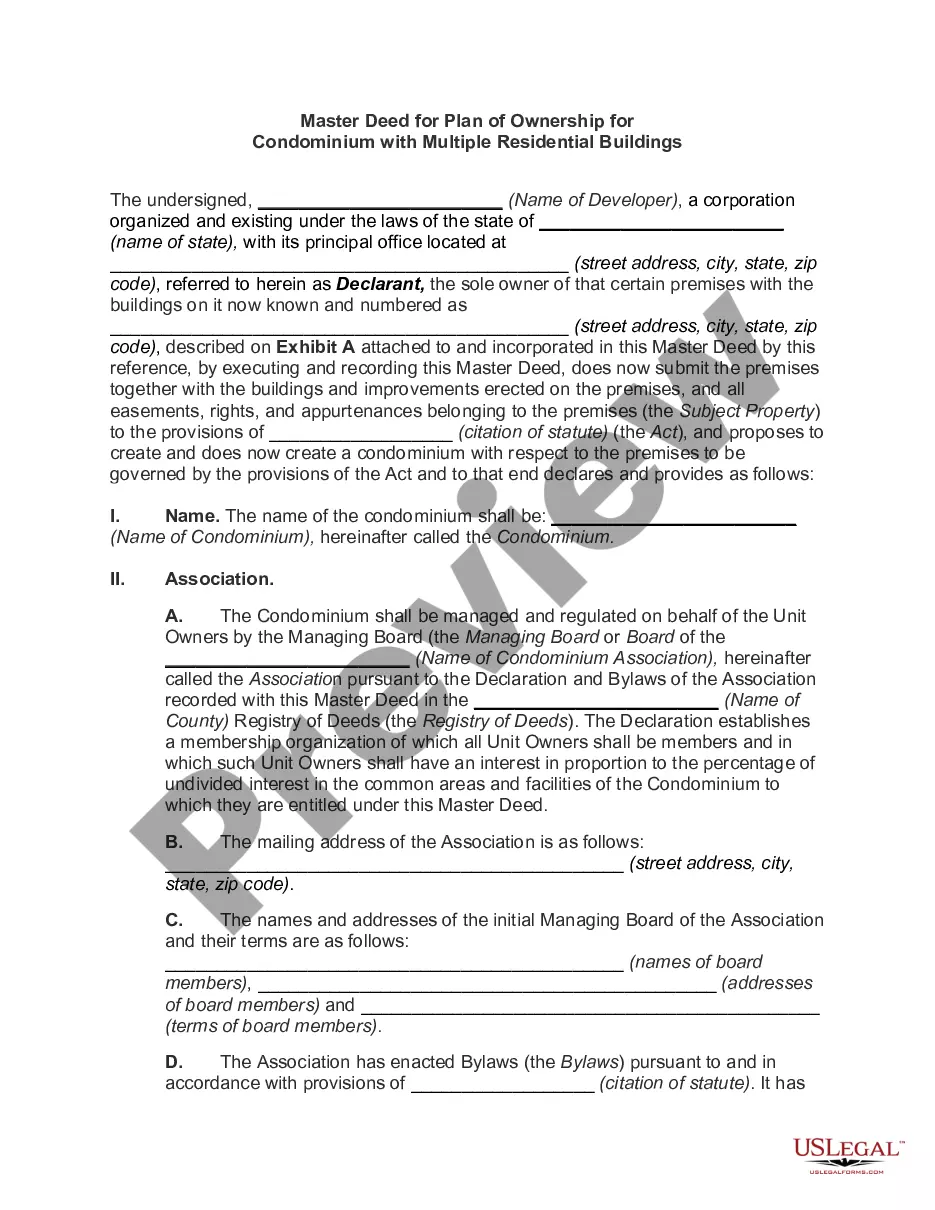
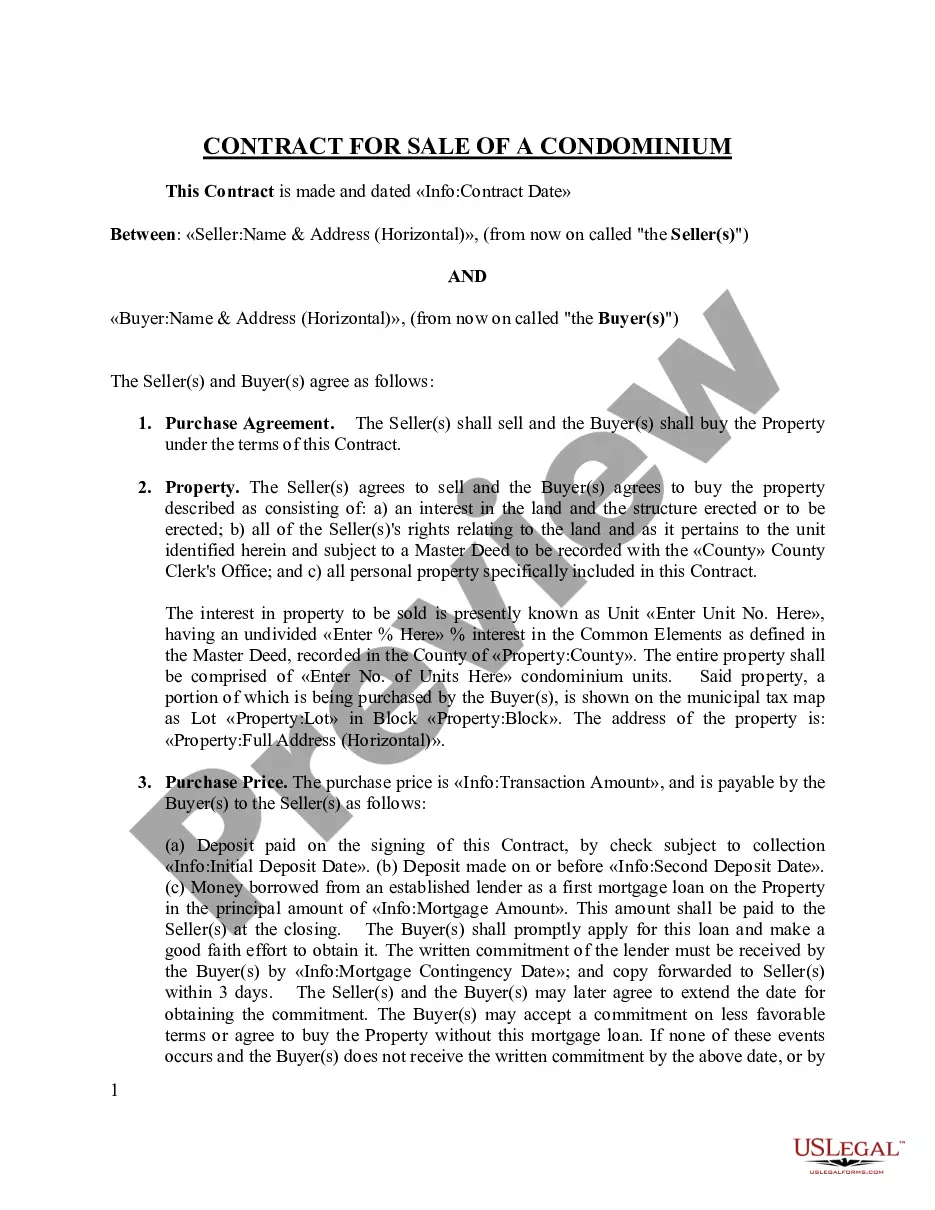
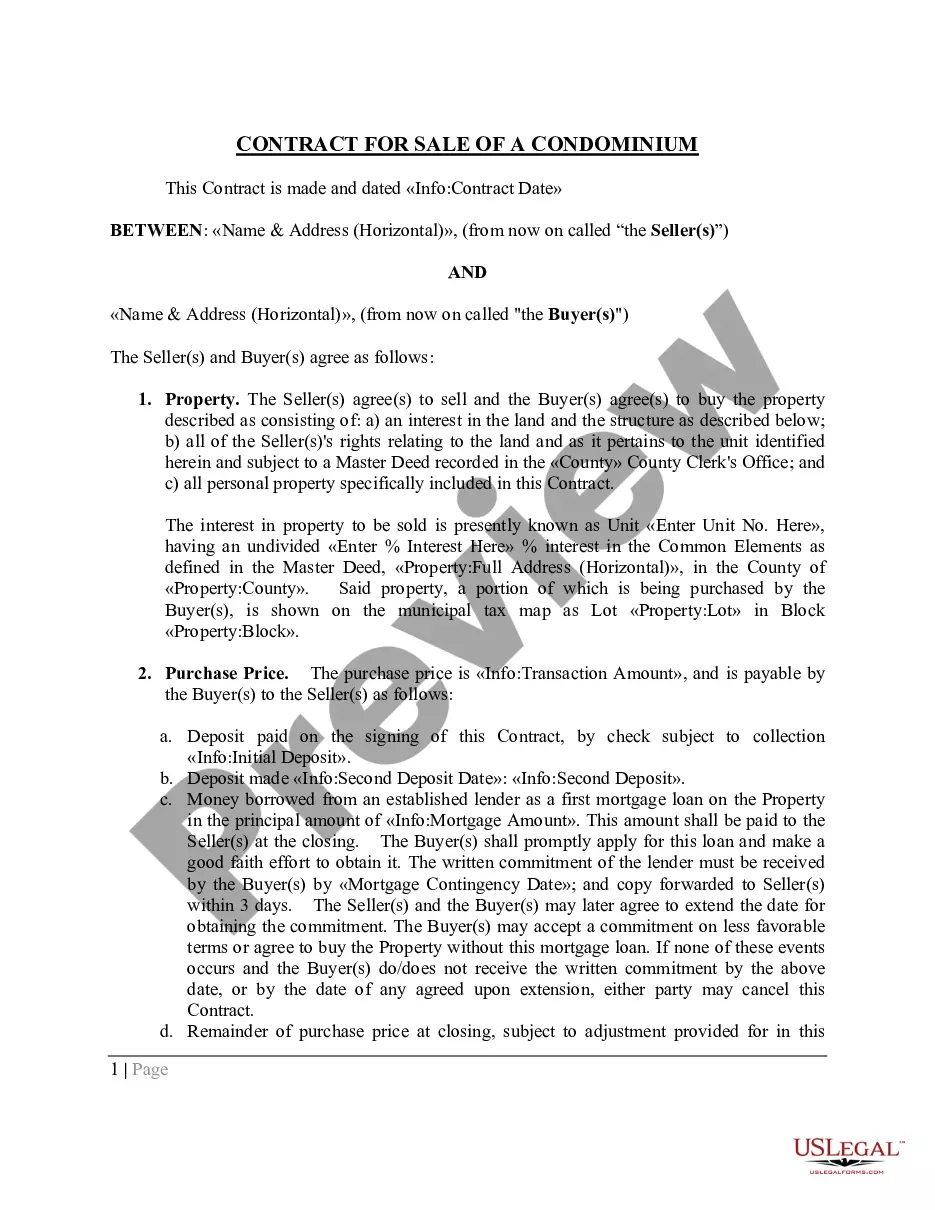
This form is a Master Deed. This Master Deed is executed by a developer pursuant to the provisions of the Condominium Act. The deed contains a legal description of the project and the responsibilities of the co-owner.
Mississippi Condominium Master Deed - Residential Condo Development
Instant download
Description
Free preview



Get your form ready online
Our built-in tools help you complete, sign, share, and store your documents in one place.
Built-in online Word editor
Make edits, fill in missing information, and update formatting in US Legal Forms—just like you would in MS Word.
Export easily
Download a copy, print it, send it by email, or mail it via USPS—whatever works best for your next step.
E-sign your document
Sign and collect signatures with our SignNow integration. Send to multiple recipients, set reminders, and more. Go Premium to unlock E-Sign.
Notarize online 24/7
If this form requires notarization, complete it online through a secure video call—no need to meet a notary in person or wait for an appointment.
Store your document securely
We protect your documents and personal data by following strict security and privacy standards.

Make edits, fill in missing information, and update formatting in US Legal Forms—just like you would in MS Word.

Download a copy, print it, send it by email, or mail it via USPS—whatever works best for your next step.

Sign and collect signatures with our SignNow integration. Send to multiple recipients, set reminders, and more. Go Premium to unlock E-Sign.

If this form requires notarization, complete it online through a secure video call—no need to meet a notary in person or wait for an appointment.

We protect your documents and personal data by following strict security and privacy standards.
Looking for another form?


How to fill out Condominium Master Deed - Residential Condo Development?
Locating the appropriate legal document template can be a challenge. Of course, there are countless templates available online, but how do you identify the legal version you require? Utilize the US Legal Forms website. The service offers thousands of templates, including the Mississippi Condominium Master Deed - Residential Condo Development, which you can use for both business and personal purposes. All templates are reviewed by professionals and comply with federal and state regulations.
If you are already registered, Log In to your account and click on the Download button to obtain the Mississippi Condominium Master Deed - Residential Condo Development. Use your account to browse the legal documents you have previously purchased. Proceed to the My documents section of your account to get another copy of the document you need.
If you are a new user of US Legal Forms, here are simple instructions for you to follow: First, ensure you have selected the correct template for your city/area. You can view the document using the Preview button and read the document details to confirm it is suitable for you. If the template does not meet your requirements, use the Search box to find the appropriate template. Once you are confident that the document is correct, click on the Get now button to acquire the template. Choose the pricing plan you prefer and enter the necessary information. Create your account and pay for your order using your PayPal account or credit card. Select the file format and download the legal document template to your device. Complete, modify, print, and sign the obtained Mississippi Condominium Master Deed - Residential Condo Development.
Make the most of the platform to access a wide range of legal document templates that fit your needs.
- US Legal Forms is the largest collection of legal templates available.
- Utilize the service to download professionally crafted documents.
- All documents comply with state regulations.
- The site offers both organizational and personal templates.
- Templates are reviewed by experts to ensure quality.
- You can easily access previously purchased forms.
Form popularity
FAQ
The biggest difference between a condo and an apartment is ownership. An apartment is defined as a residence that is rented, often as part of a larger residential building. A condo can be similar in structure to an apartment ? usually a unit within a larger residential building ? but condos are owned instead of rented.
As townhouse residents own the land their unit sits on, they have greater freedom to modify their exterior spaces, such as landscaping or adding personal touches like a deck or patio. Condo owners, on the other hand, enjoy convenience as exterior maintenance, landscaping, and shared amenities are handled by the HOA.
The Texas Condominium Act, Tex. Prop. Code §§ 81.001 et seq., governs condominium associations created before January 1, 1994. Importantly, condominium associations created before January 1, 1994, are also subject to the laws under Chapter 82 as provided by Section 82.002.
Master deed. This is a deed filed by a condominium owner to record the property and allow sales of the individual condos and use of communal areas by owners.
The master deed is one of the documents that transfer property to be owned by the condominium. It includes a description of the land and buildings, a description of what is the common area and what the individual owners own, a determination of percentage interest, a plot plan, and use restrictions.
A condominium is generally defined as a system of separate ownership of individual units in multi-unit projects.
Site condominiums are also commonly referred to as ?detached? condominiums in that there are no constructed improvements shared by adjacent condominium units, i.e., the improvements within the condominium unit, or that constitute all or a part of the condominium unit, are separate and not connected or shared with ...