This form for use in litigation against an insurance company for bad faith breach of contract. Adapt this model form to fit your needs and specific law. Not recommended for use by non-attorney.
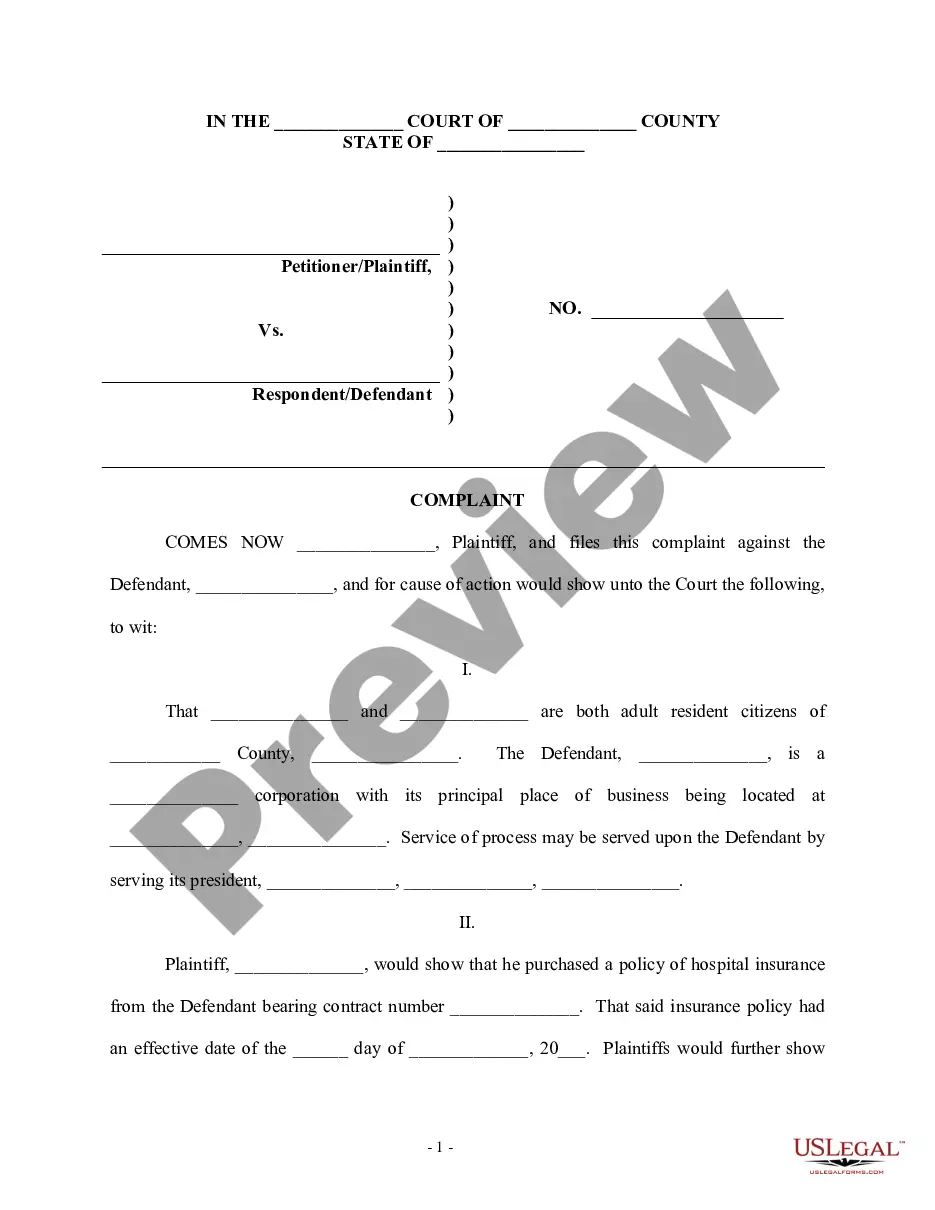
Mississippi Complaint for Recovery of Monies Paid and for Declaratory Judgment as to Parties' Responsibility and Subrogation
Instant download
Description
Free preview

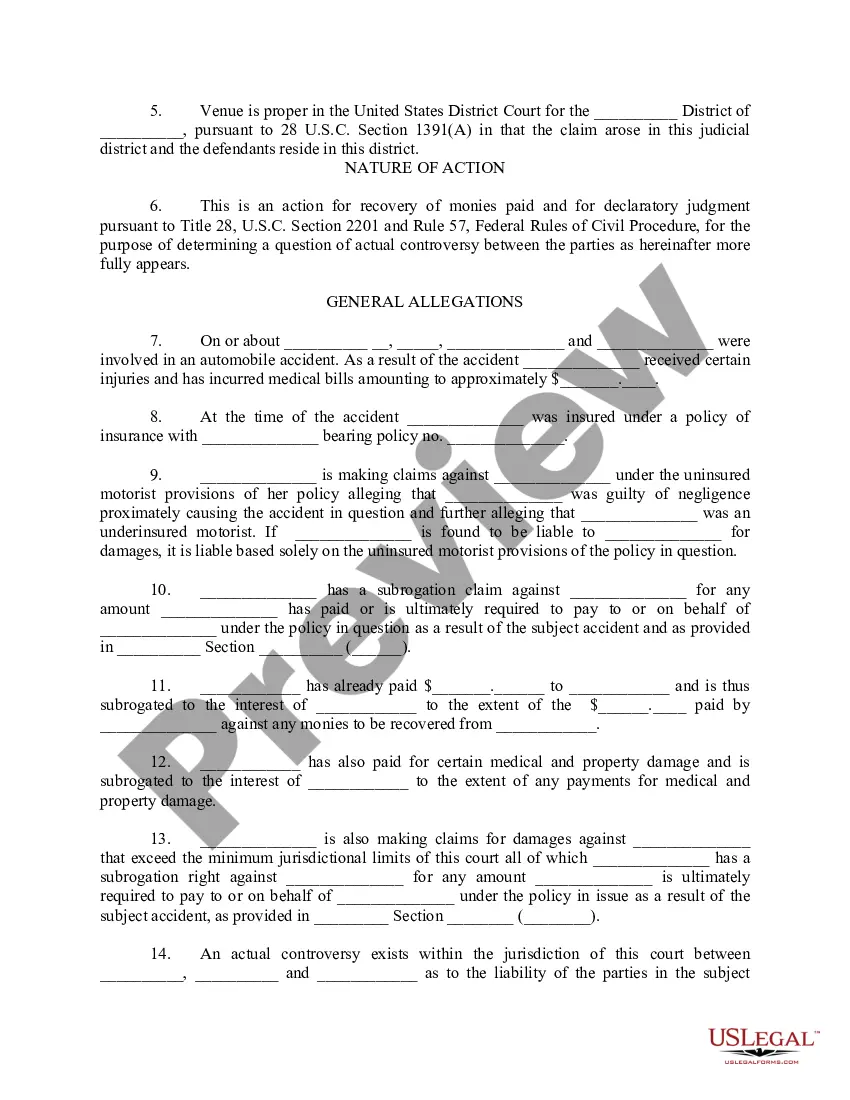
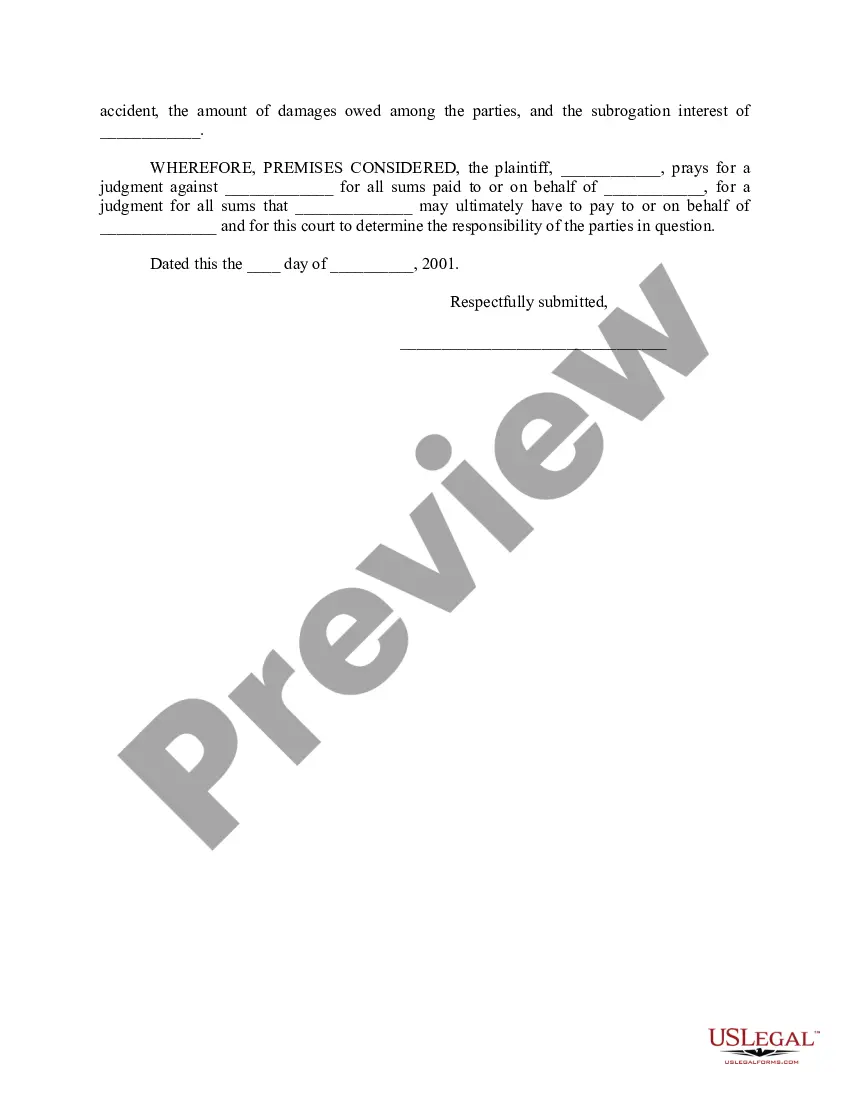



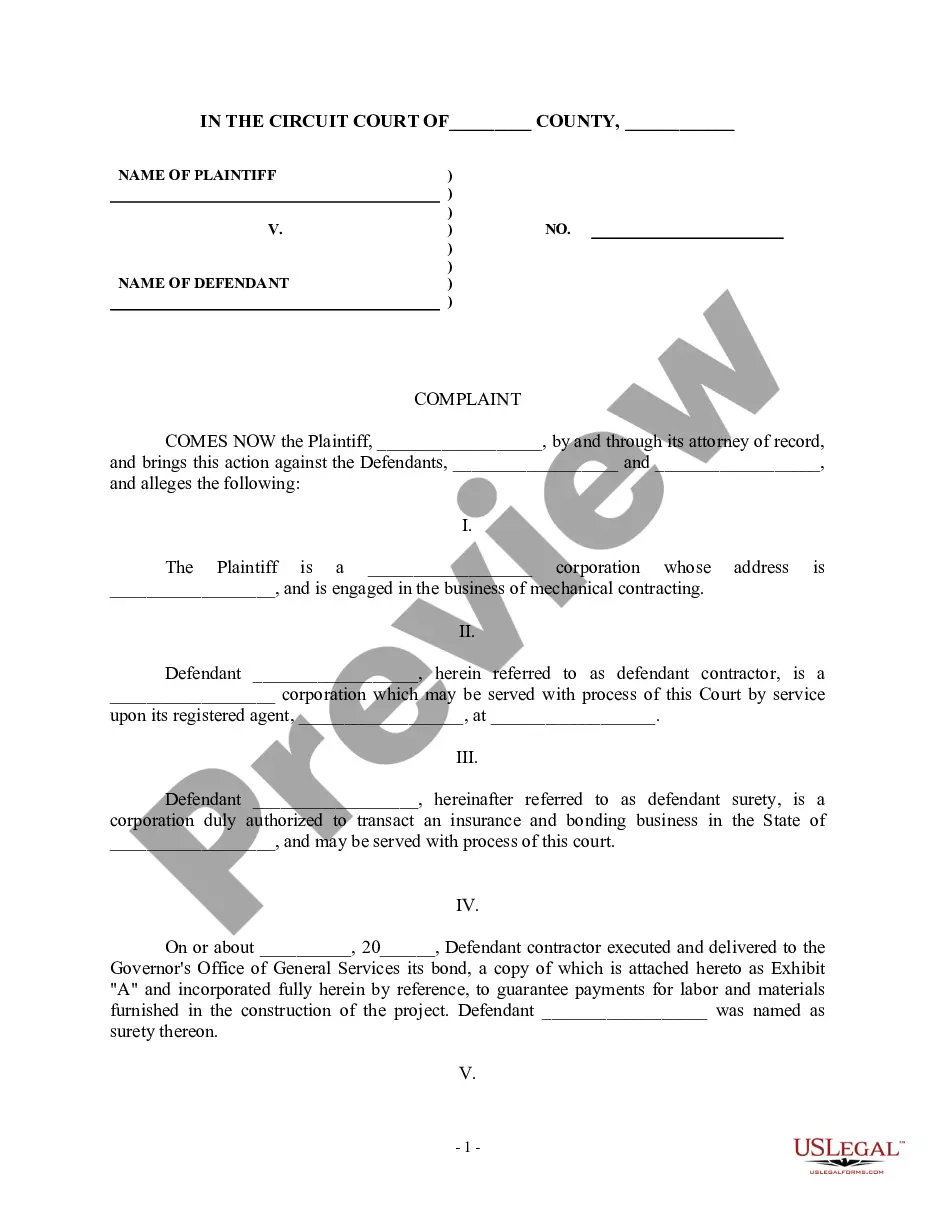
How to fill out Complaint For Recovery Of Monies Paid And For Declaratory Judgment As To Parties' Responsibility And Subrogation?
US Legal Forms - one of the largest collections of legal documents in the United States - offers a broad selection of legal form templates that you can download or print. By using the website, you can access thousands of forms for business and personal purposes, organized by categories, states, or keywords.
You can obtain the most recent forms like the Mississippi Complaint for Recovery of Monies Paid and for Declaratory Judgment regarding Parties' Liability and Subrogation within seconds. If you already have a subscription, Log In to download the Mississippi Complaint for Recovery of Monies Paid and for Declaratory Judgment regarding Parties' Liability and Subrogation from the US Legal Forms library. The Download button will appear on every form you view. You can access all previously downloaded forms in the My documents section of your account.
If you are using US Legal Forms for the first time, here are simple steps to help you get started: Ensure you have selected the correct form for your city/county. Click the Review button to examine the form’s content. Check the form details to confirm that you have chosen the correct document. If the form does not meet your needs, use the Search box at the top of the screen to find one that does. If you are satisfied with the form, confirm your selection by clicking the Buy now button. Then, choose your preferred pricing plan and provide your information to register for an account. Complete the transaction. Use a credit card or PayPal account to finalize the payment. Select the format and download the form to your device. Make adjustments. Fill out, edit, and print the downloaded Mississippi Complaint for Recovery of Monies Paid and for Declaratory Judgment regarding Parties' Liability and Subrogation.
- Each template you added to your account has no expiration date and is yours forever.
- If you wish to download or print another copy, simply go to the My documents section and click on the form you need.
- Access the Mississippi Complaint for Recovery of Monies Paid and for Declaratory Judgment regarding Parties' Liability and Subrogation through US Legal Forms, the most extensive collection of legal document templates.
- Utilize a vast array of professional and state-specific templates that meet your business or personal needs and requirements.
- Easily navigate through the library to find the forms you need.
- Make sure to keep track of your downloaded forms for future use.
Form popularity
FAQ
Thus, a declaratory judgment action that is nothing more than an anticipatory defense to a breach of contract claim may be an inappropriate use of the declaratory judgment mechanism. Given that courts have discretion whether to entertain a declaratory judgment action, they may decline to do so under such circumstances.
Rule 57 - Declaratory Judgments (a) Procedure. Courts of record within their respective jurisdictions may declare rights, status, and other legal relations regardless of whether further relief is or could be claimed.
Declaratory relief refers to a court's declaratory judgment stating the rights of parties without ordering any specific action or listing awards for damages.
A declaratory judgment is typically requested when a party is threatened with a lawsuit but the lawsuit has not yet been filed; or when a party or parties believe that their rights under law and/or contract might conflict; or as part of a counterclaim to prevent further lawsuits from the same plaintiff (for example, ...
A declaratory judgment is a binding judgment from a court defining the legal relationship between parties and their rights in a matter before the court. When there is uncertainty as to the legal obligations or rights between two parties, a declaratory judgment offers an immediate means to resolve this uncertainty.
For example, a party may bring an action for declaratory relief before an actual breach or invasion of rights has occurred. However, the action must be based on an actual controversy with known parameters. It is not available to determine hypothetical or abstract questions.
The declaratory judgment is generally considered a statutory remedy and not an equitable remedy in the United States, and is thus not subject to equitable requirements, though there are analogies that can be found in the remedies granted by courts of equity.
A declaratory judgment is a court-issued judgment that defines and outlines the rights and obligations of each party in a contract. Declaratory judgments have the same effect and force as final judgments and are legally binding. These judgments are also called a declaration or declaratory relief.