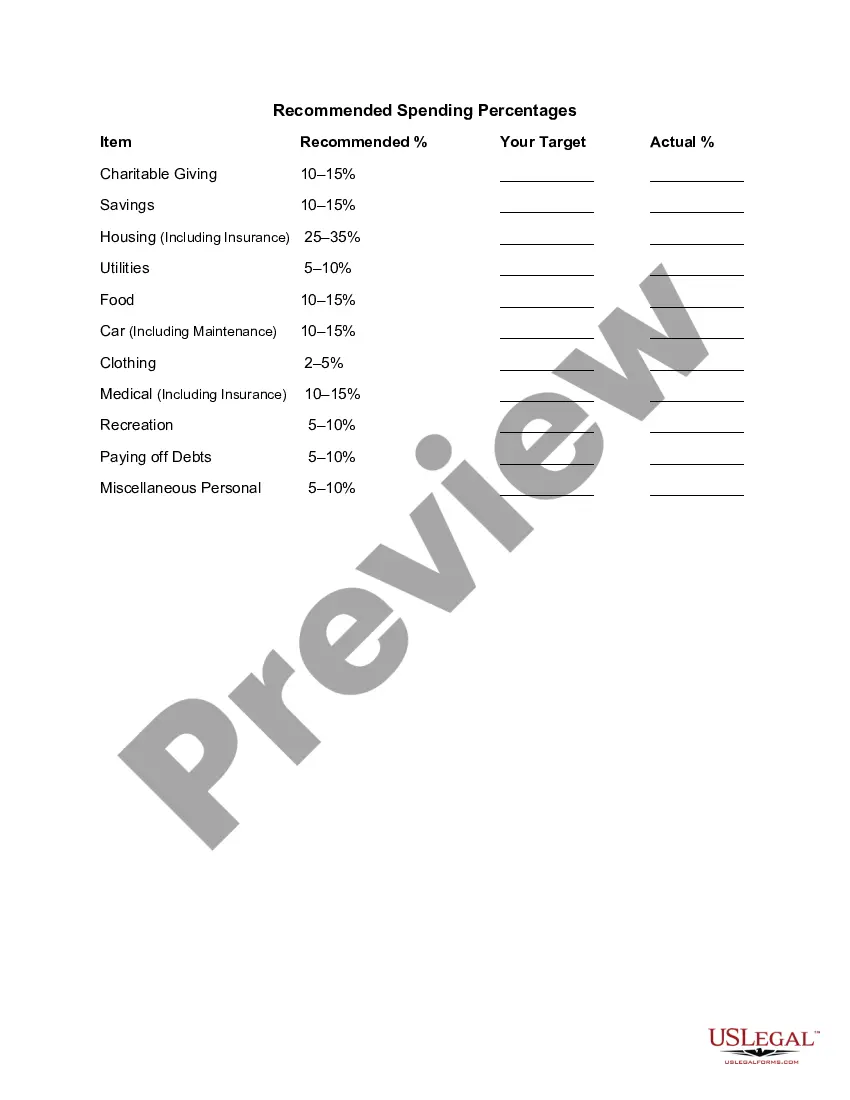
Missouri Recommended Spending Percentages
Description
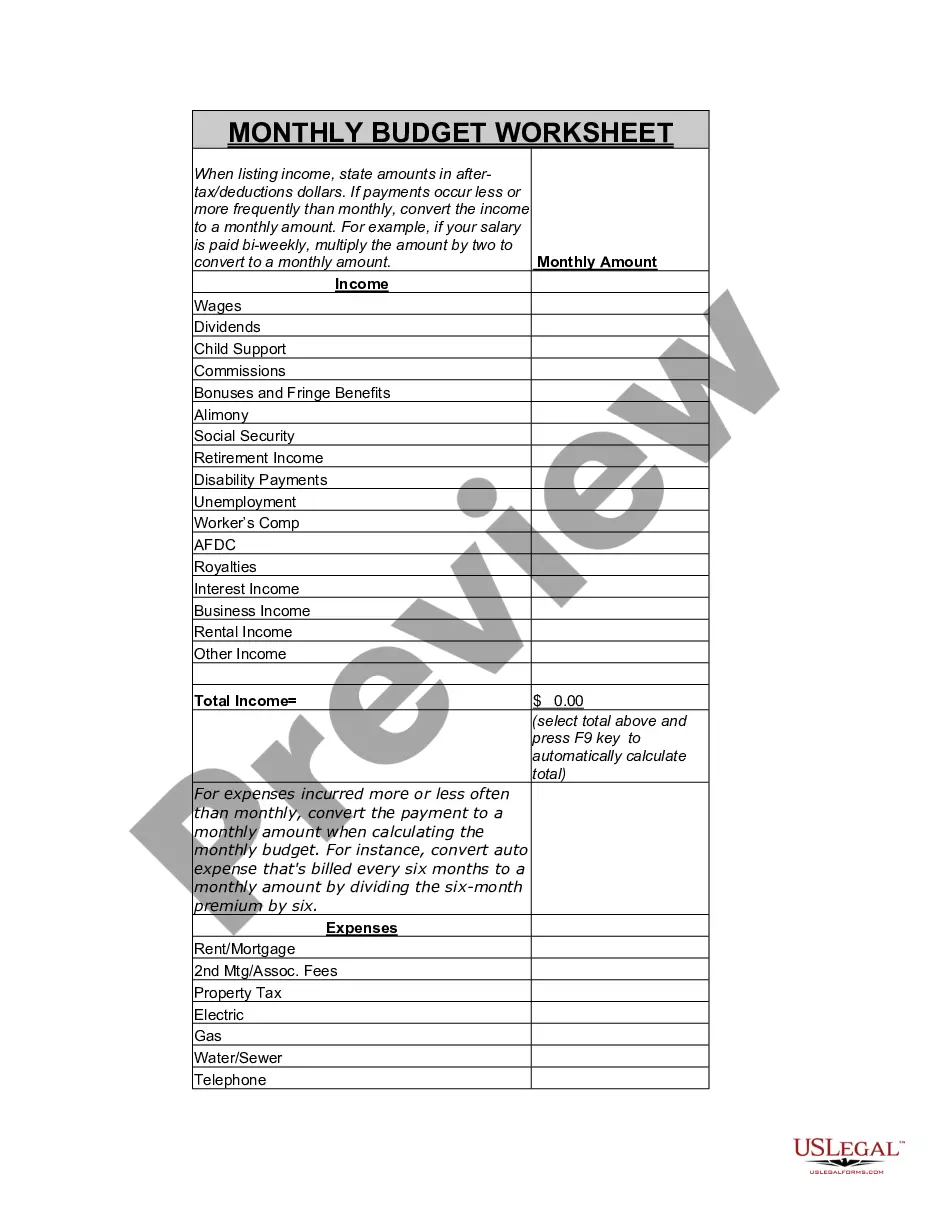
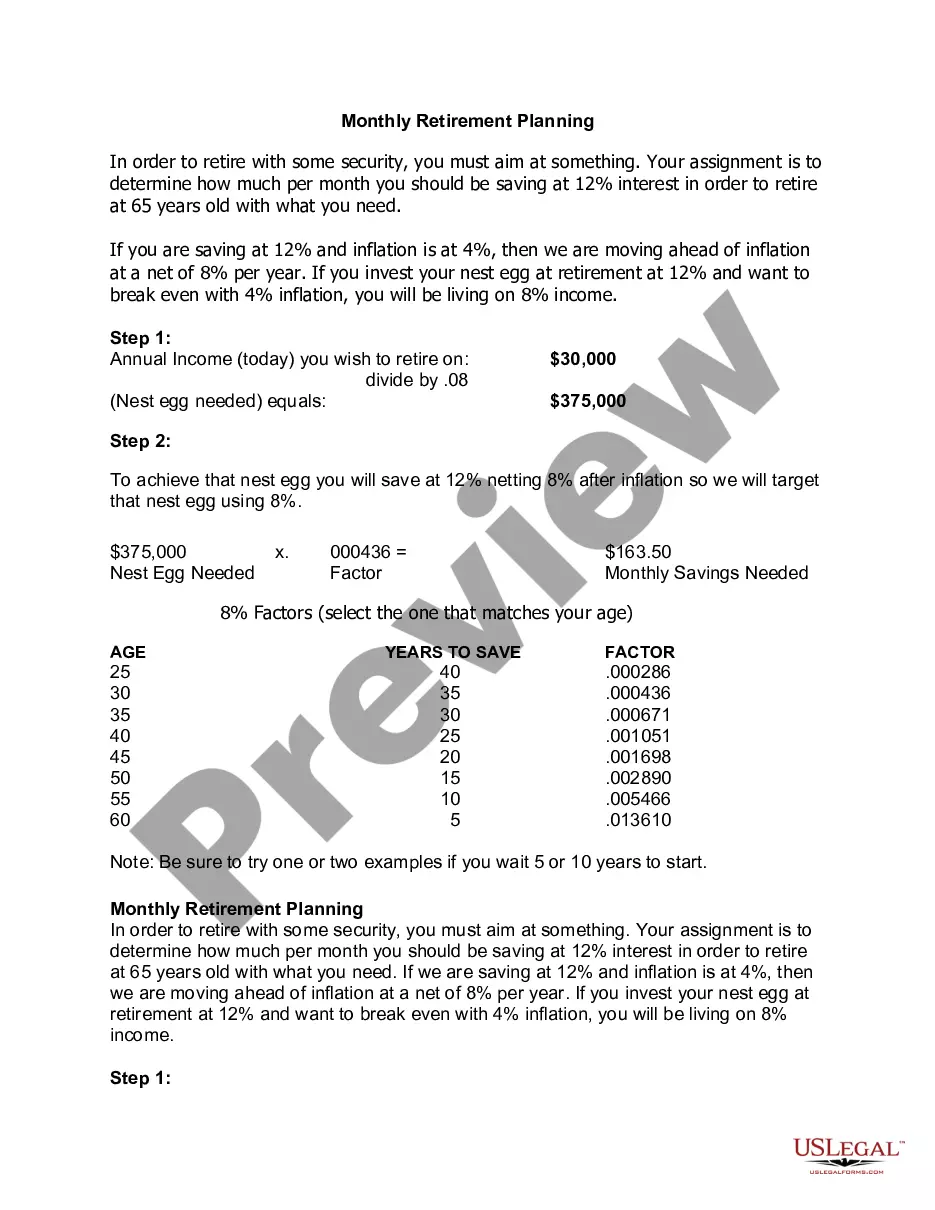
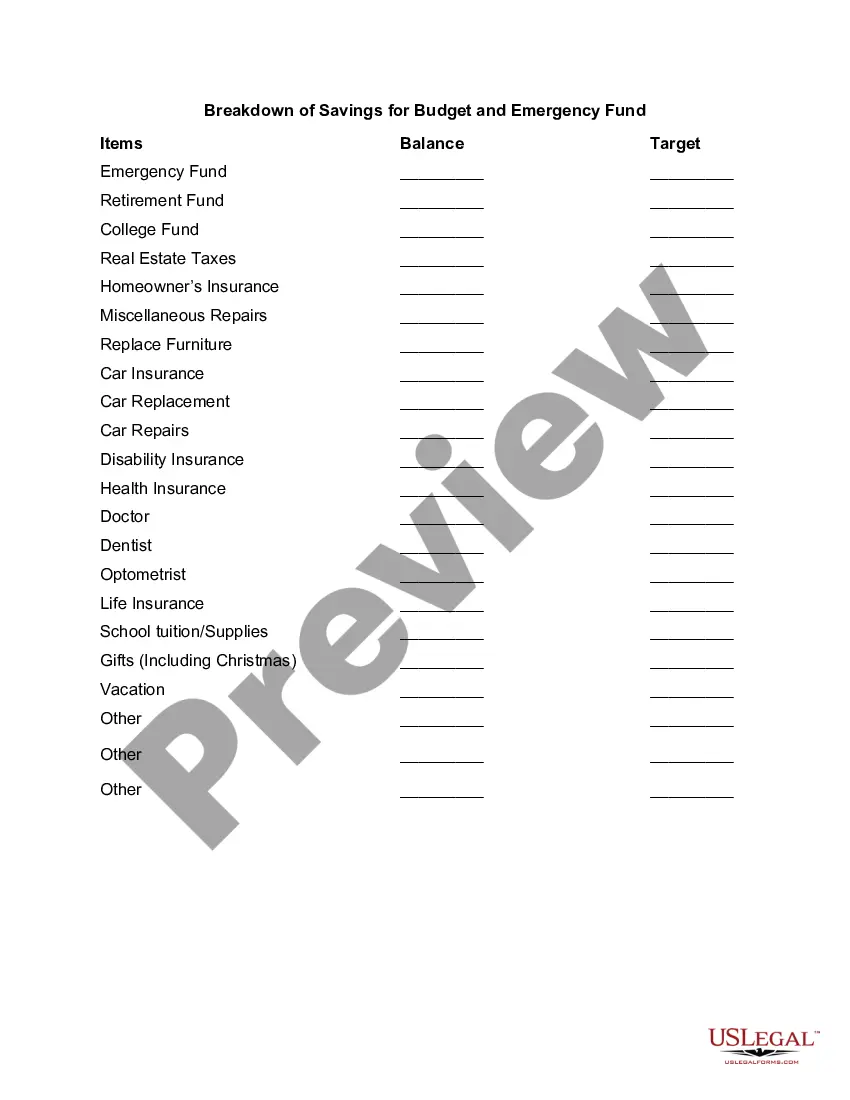
Get your form ready online
Our built-in tools help you complete, sign, share, and store your documents in one place.
Make edits, fill in missing information, and update formatting in US Legal Forms—just like you would in MS Word.
Download a copy, print it, send it by email, or mail it via USPS—whatever works best for your next step.
Sign and collect signatures with our SignNow integration. Send to multiple recipients, set reminders, and more. Go Premium to unlock E-Sign.
If this form requires notarization, complete it online through a secure video call—no need to meet a notary in person or wait for an appointment.
We protect your documents and personal data by following strict security and privacy standards.

Make edits, fill in missing information, and update formatting in US Legal Forms—just like you would in MS Word.

Download a copy, print it, send it by email, or mail it via USPS—whatever works best for your next step.

Sign and collect signatures with our SignNow integration. Send to multiple recipients, set reminders, and more. Go Premium to unlock E-Sign.

If this form requires notarization, complete it online through a secure video call—no need to meet a notary in person or wait for an appointment.

We protect your documents and personal data by following strict security and privacy standards.
Looking for another form?



How to fill out Recommended Spending Percentages?
Selecting the appropriate legal document web template can be somewhat challenging.
Certainly, there is a multitude of designs available online, but how can you find the legal form you need.
Utilize the US Legal Forms website. This service offers thousands of designs, such as the Missouri Recommended Spending Percentages, which you can utilize for both business and personal purposes.
You can review the form using the Preview button and read the form details to confirm it is suitable for you.
- All templates are verified by experts and comply with federal and state regulations.
- If you are currently registered, sign in to your account and click the Download button to access the Missouri Recommended Spending Percentages.
- Use your account to browse the legal documents you have previously purchased.
- Navigate to the My documents section of your account to obtain another copy of the document you need.
- If you are a new user of US Legal Forms, here are straightforward steps to follow.
- First, ensure you have selected the correct form for your city/state.
Form popularity
FAQ
The major source of revenue for the state of Missouri is the individual income tax. For local government the major source of revenue is the property tax, but this varies by type of local government. The state and local tax system of Missouri is regressive.
The majority of Missouri General Revenue comes from the personal income tax. Another 23% comes from the state sales tax, and smaller contributions come from other sources including corporate income tax.
Parson is proposing a $47.3 billion budget, an increase of more than one-third over current spending. Of that amount, there is a 16.7% increase in general revenue appropriations and a 63% increase in the use of federal funds, mainly from coronavirus relief money and match funding for expanded Medicaid eligibility.
DOES MISSOURI HAVE A BALANCED BUDGET? The Missouri Constitution requires that the state pass a balanced budget, where estimated revenues are equal to or greater than estimated spending. By this definition, the state budget is in balance.
The governor submits his or her proposed budget to the state legislature no later than 30 days after the legislature convenes. The legislature is required to adopt a budget by the first Friday after the first Monday in May. A simple majority is required to pass a budget.
DOES MISSOURI HAVE A BALANCED BUDGET? The Missouri Constitution requires that the state pass a balanced budget, where estimated revenues are equal to or greater than estimated spending. By this definition, the state budget is in balance.
The primary sources of state general revenue funding are individual income tax and sales and use tax. Nearly three-fourths of general revenue comes from individual income taxes, while one- quarter of state general revenue comes from sales and use taxes.
Expenditures generally include spending on government salaries, infrastructure, education, public pensions, public assistance, corrections, Medicaid, and transportation. State debt refers to the money borrowed to make up for a deficit when revenues do not cover spending.
Among the states, Alaska had the highest per capita state and local spending in 2019 at $17,596, followed by New York ($15,667) and Wyoming ($15,107).
Article IV, Section 13 of the Missouri Constitution outlines the following duties of the auditor: "Establish appropriate systems of accounting for all public officials of the state, post-audit the accounts of all state agencies and audit the treasury at least once annually."