Home buyers are often confused about home construction and its components, and have difficulty understanding such inspection reports. Many don't know how to figure out which types of defects are serious or whether their home inspector checked all the essentials.
Home Inspection Checklist Comparisons: All home inspections are different and can vary dramatically from state to state, as well as across counties and cities. Much depends on the home inspector and which association, if any, to which the home inspector belongs.
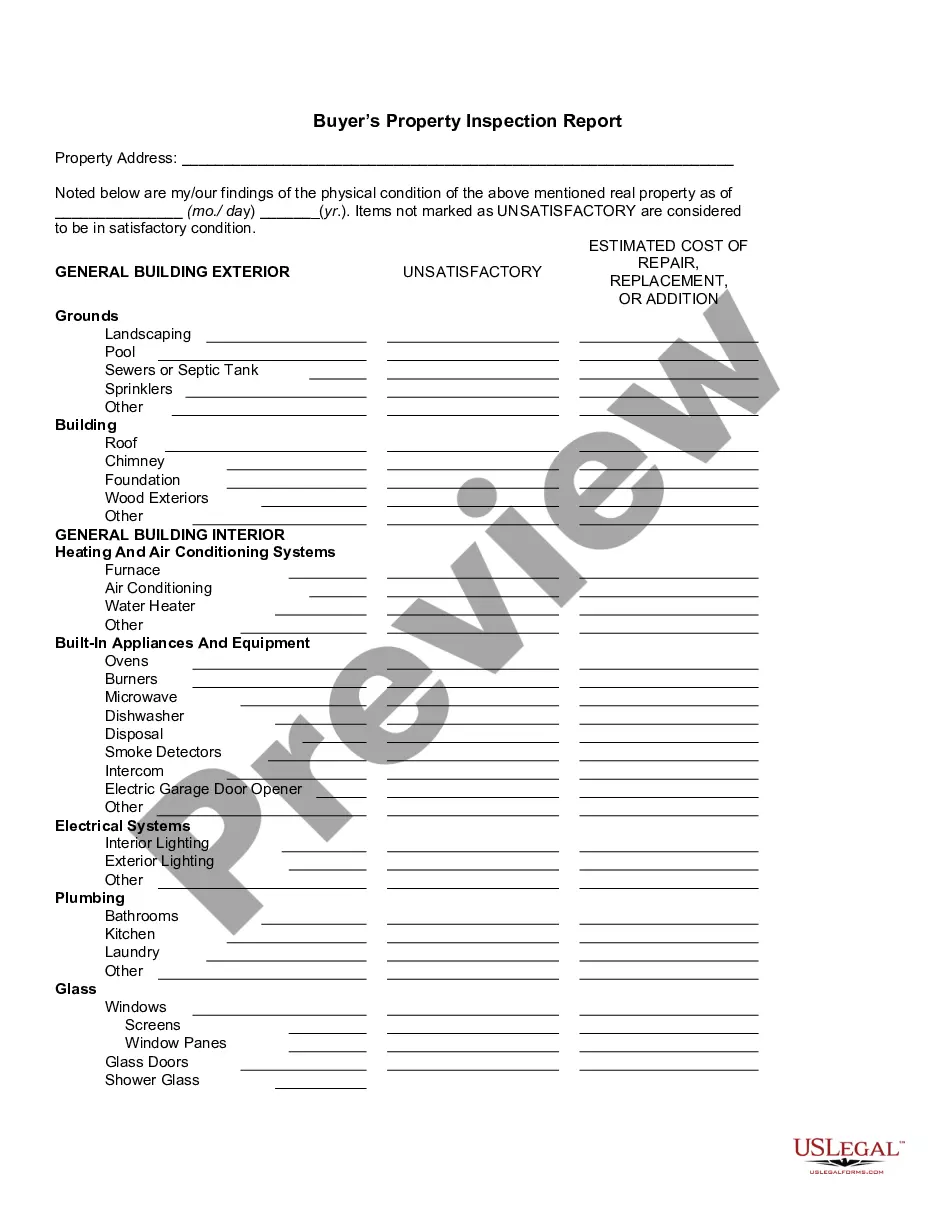
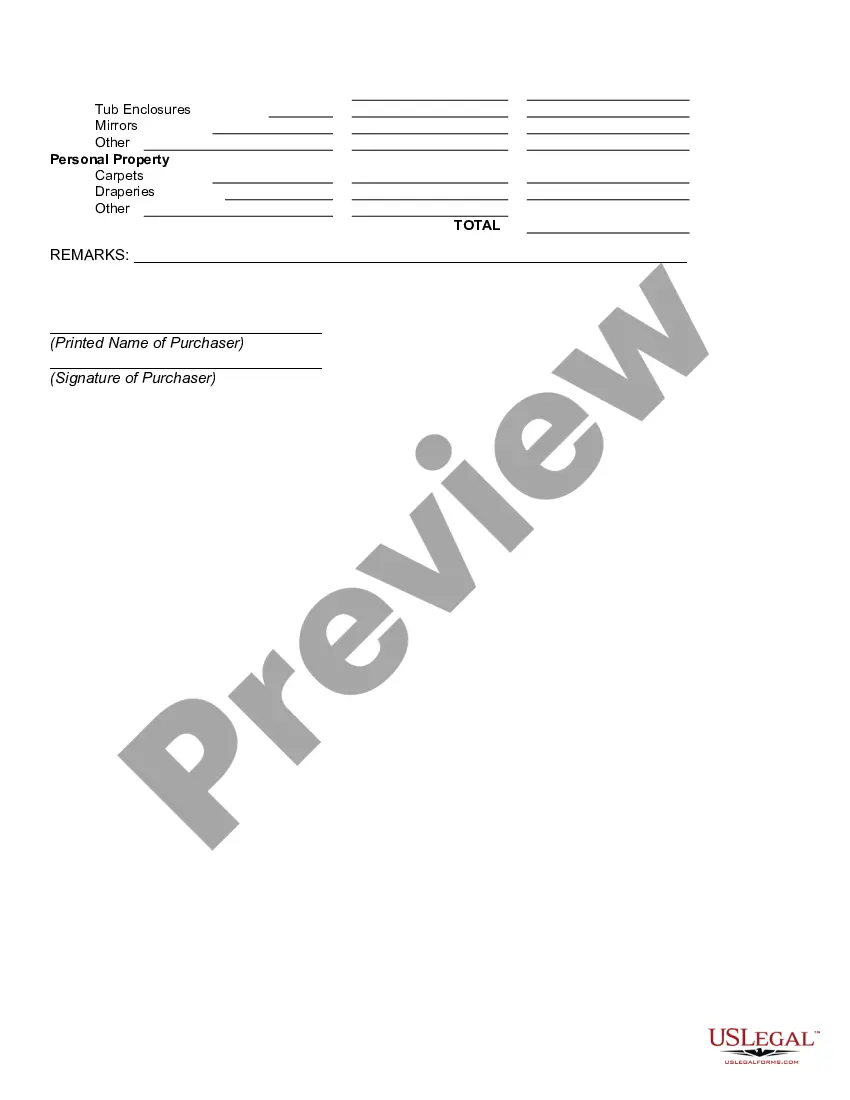
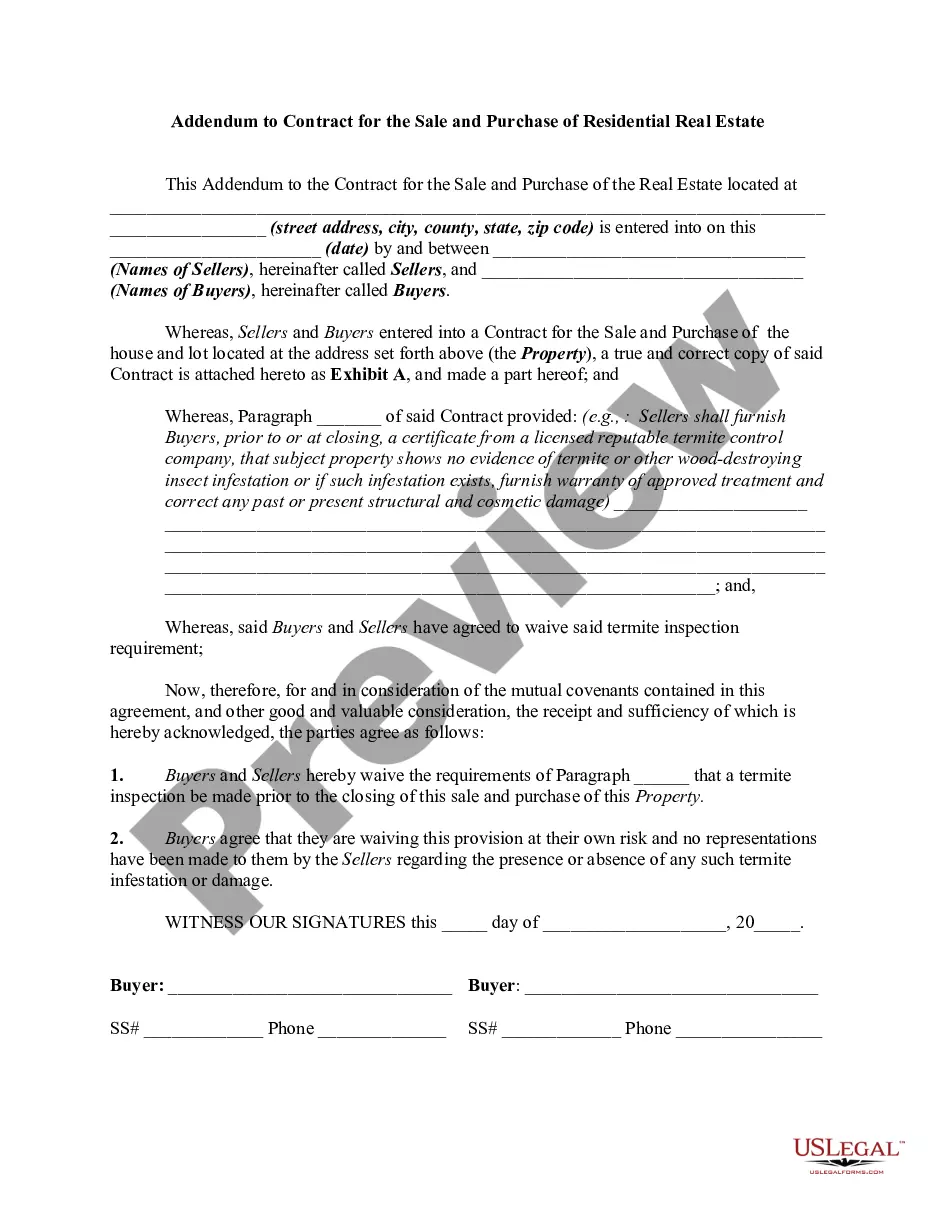
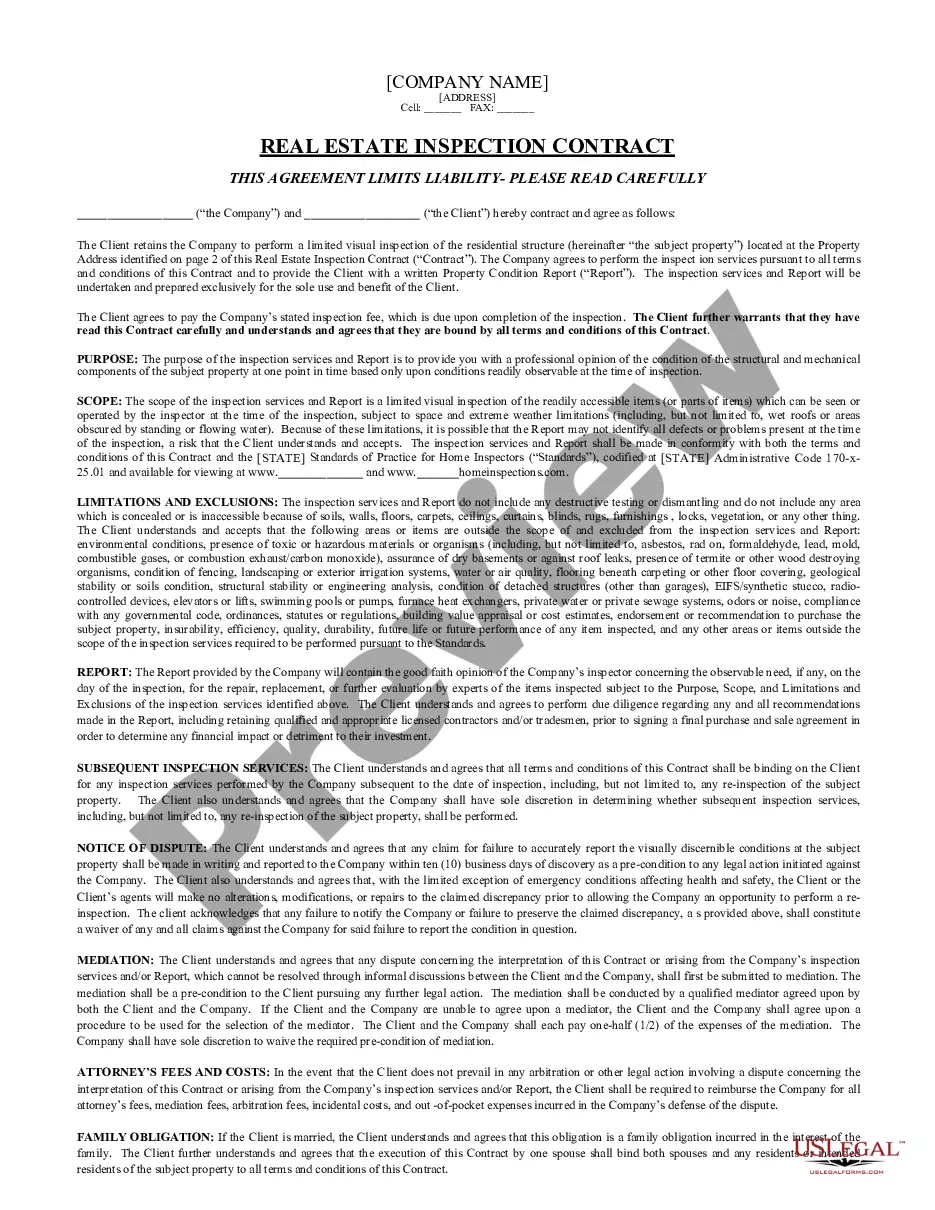
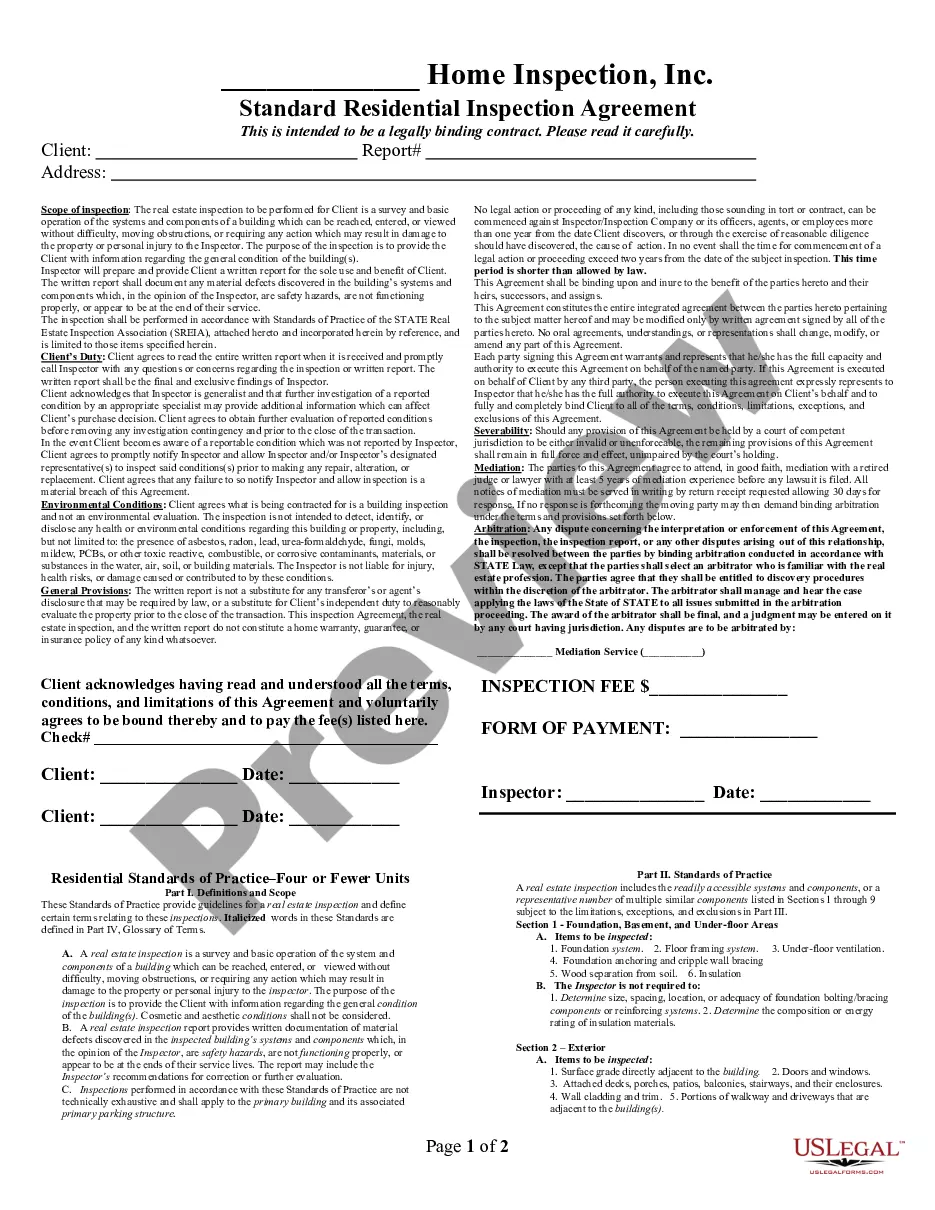
Missouri Buyer's Property Inspection Report
51 downloads
Description
Free preview
Get your form ready online
Our built-in tools help you complete, sign, share, and store your documents in one place.
Built-in online Word editor
Make edits, fill in missing information, and update formatting in US Legal Forms—just like you would in MS Word.
Export easily
Download a copy, print it, send it by email, or mail it via USPS—whatever works best for your next step.
E-sign your document
Sign and collect signatures with our SignNow integration. Send to multiple recipients, set reminders, and more. Go Premium to unlock E-Sign.
Notarize online 24/7
If this form requires notarization, complete it online through a secure video call—no need to meet a notary in person or wait for an appointment.
Store your document securely
We protect your documents and personal data by following strict security and privacy standards.

Make edits, fill in missing information, and update formatting in US Legal Forms—just like you would in MS Word.

Download a copy, print it, send it by email, or mail it via USPS—whatever works best for your next step.

Sign and collect signatures with our SignNow integration. Send to multiple recipients, set reminders, and more. Go Premium to unlock E-Sign.

If this form requires notarization, complete it online through a secure video call—no need to meet a notary in person or wait for an appointment.

We protect your documents and personal data by following strict security and privacy standards.
Looking for another form?
How to fill out Buyer's Property Inspection Report?
You can invest time online attempting to locate the legitimate document template that meets the state and federal requirements you need.
US Legal Forms offers numerous legal forms that are reviewed by experts.
You can easily download or print the Missouri Buyer's Property Inspection Report from the service.
To locate another version of your form, use the Search area to find the template that fits your needs and criteria.
- If you already possess a US Legal Forms account, you may Log In and click the Download button.
- Subsequently, you may complete, modify, print, or sign the Missouri Buyer's Property Inspection Report.
- Every legal document template you purchase is yours indefinitely.
- To acquire another copy of any purchased form, visit the My documents tab and click the corresponding button.
- If you are using the US Legal Forms website for the first time, follow the simple instructions listed below.
- First, ensure you have selected the correct document template for the state/region that you choose.
- Review the form description to confirm you have chosen the appropriate type.
Form popularity
FAQ
Common seller repairs after home inspectionMajor electrical issues that are safety or code issues.Plumbing, drainage, sewer, septic, or water issues (or well water issues, if applicable)Mold or water damage.HVAC problems that affect home comfort.Leaking roofs or missing shingles.Termite and pest damage.More items...
What the law requires: Most states, including Missouri, have moved away from the Buyer Beware scare tactic. Instead, as the seller, you will be asked to complete a Seller's Disclosure. This is a form that buyers use to learn about the property, including any potential issues.
§ 339.730. 1. This states that an agent must disclose to any potential buyer "all adverse material facts actually known or that should have been known by" the agent. In other words, real estate agents cannot lie for you without risking their license.
Although real estate laws vary from states and counties, both residential and commercial transactions are required to disclose defects about the property sold. In Missouri, a seller is obliged to fill out a seller disclosure statement notifying the buyer of any defects that could affect the property's value.
A standard home inspection summarizes findings from a visual inspection of the condition of the home's heating system, central air conditioning systems (temperature permitting), interior plumbing and electrical systems; roof, attic, and visible insulation; walls, ceilings, floors, windows and doors; foundation,
Lender RequirementsA leaking or damaged roof.Structural defects like large cracks in the foundation.Major plumbing issues.A contaminated well or non-functional septic tank.Outdated or damaged electrical system.Faulty HVAC.Pest infestations.
Normally a buyer would have six years in which to bring a claim against you, although in certain situations it could be three years from when the buyer becomes aware of a problem.
7 tips for negotiating after a home inspectionHire an experienced real estate agent.Only focus on the major repairs.Opt for a credit or price reduction instead.Think long term.Provide supporting documents.Ask for a home warranty.Be reasonable.
A standard home inspection summarizes findings from a visual inspection of the condition of the home's heating system, central air conditioning systems (temperature permitting), interior plumbing and electrical systems; roof, attic, and visible insulation; walls, ceilings, floors, windows and doors; foundation,
But, there are 12 states that are still considered non-disclosure: Alaska, Idaho, Kansas, Louisiana, Mississippi, Missouri (some counties), Montana, New Mexico, North Dakota, Texas, Utah and Wyoming. In a non-disclosure state, transaction sale prices are not available to the public.