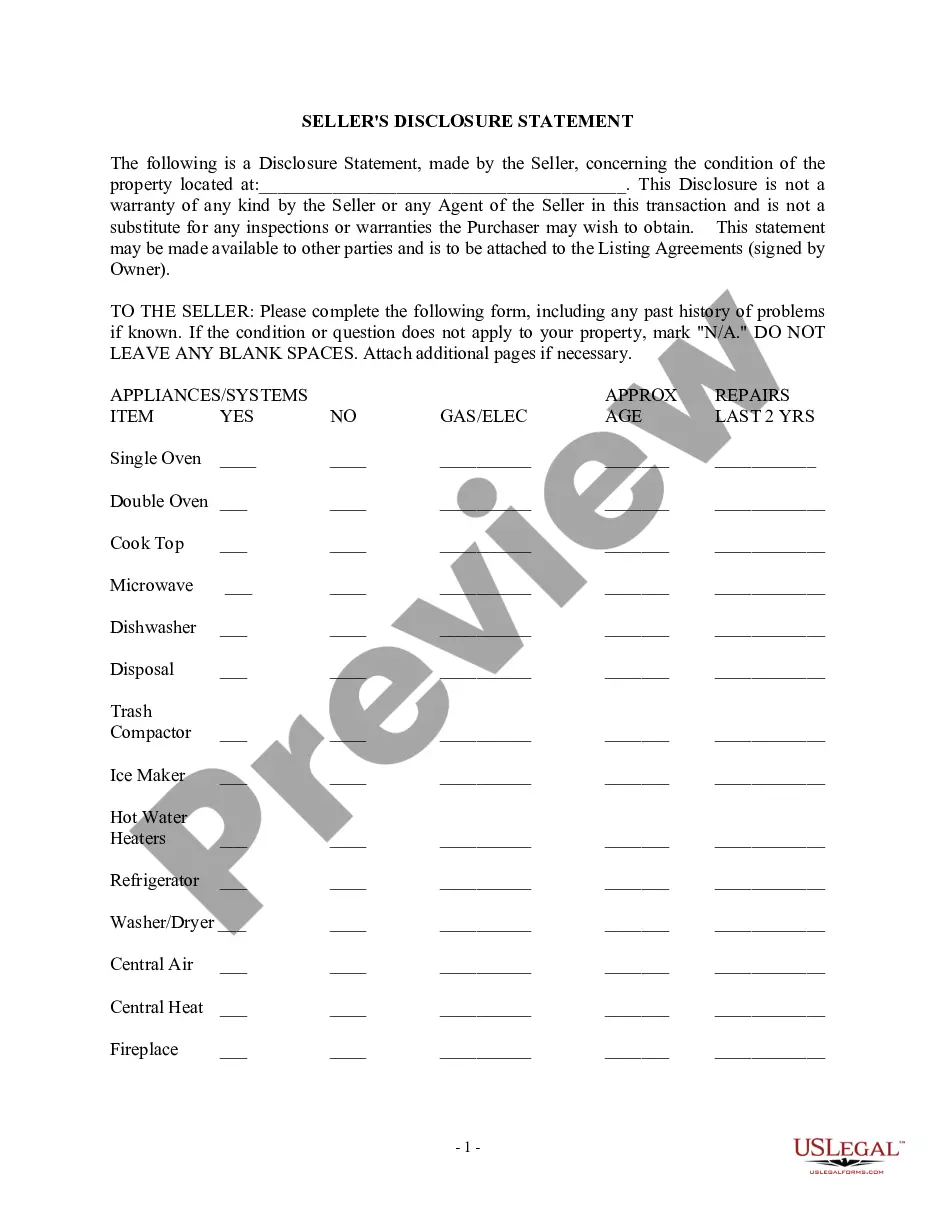
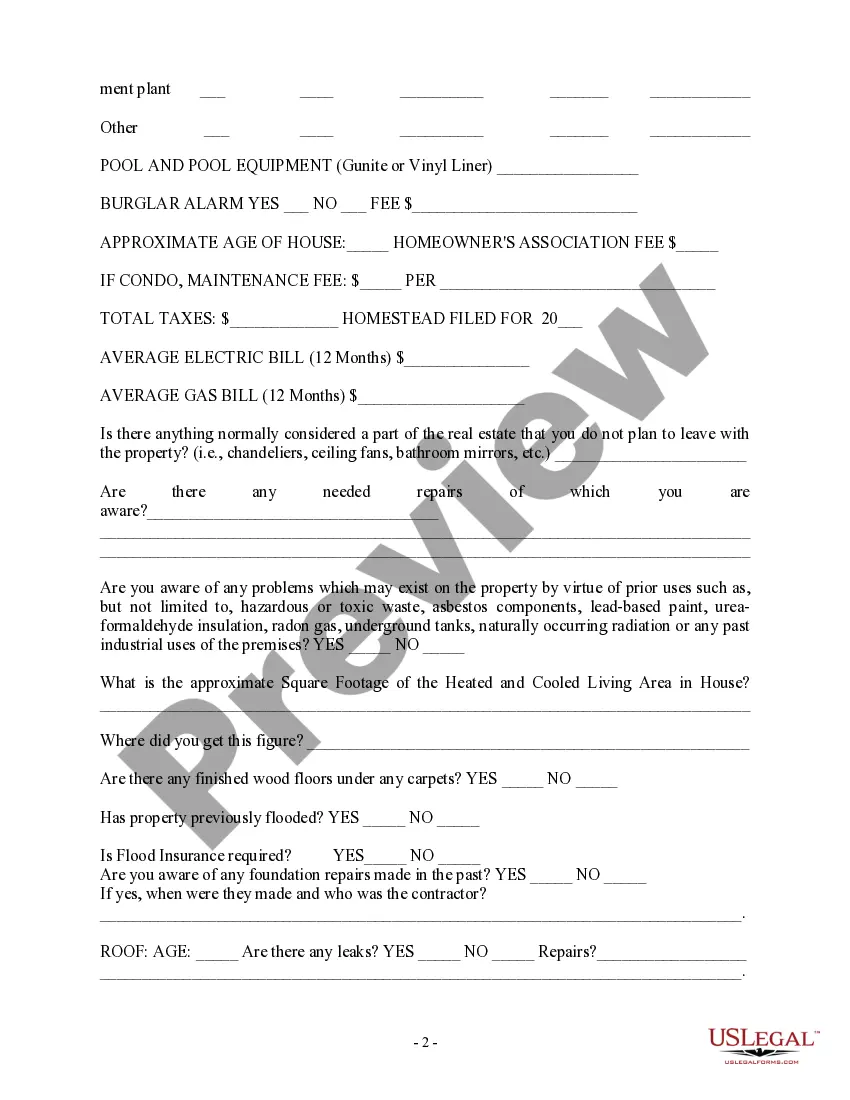
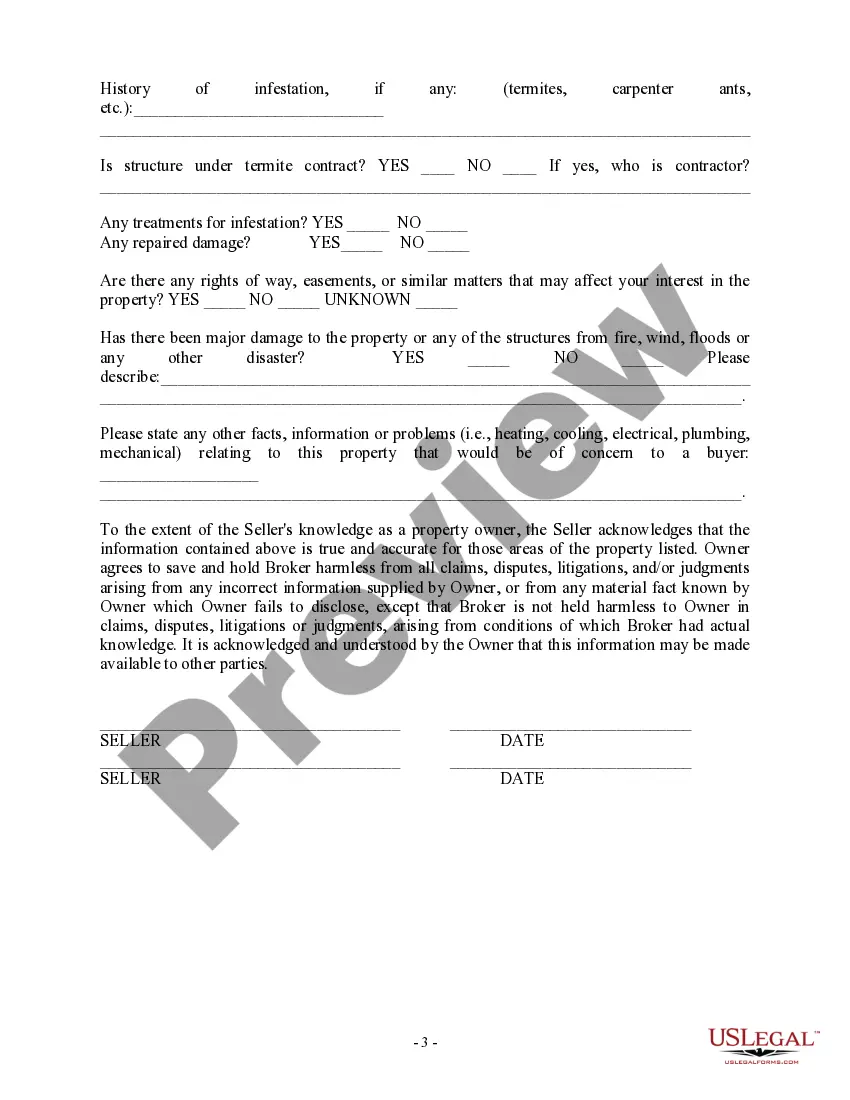
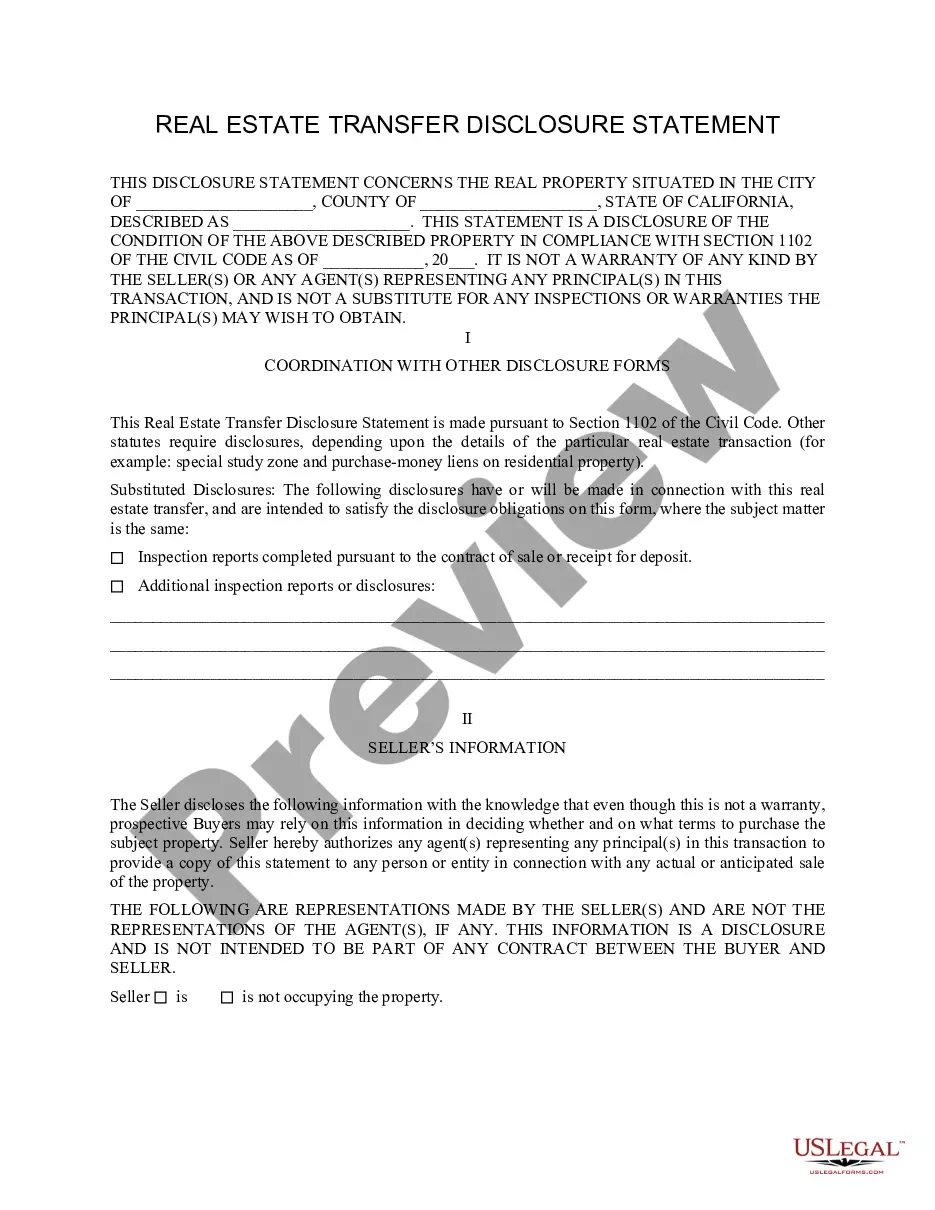
This form is a Seller's Disclosure Statement. This disclosure statement concerns the condition of property described in the document. The seller acknowledges that the information contained in the form is true and accurate.
Missouri Seller's Real Estate Disclosure Statement
487 downloads
Description
Free preview
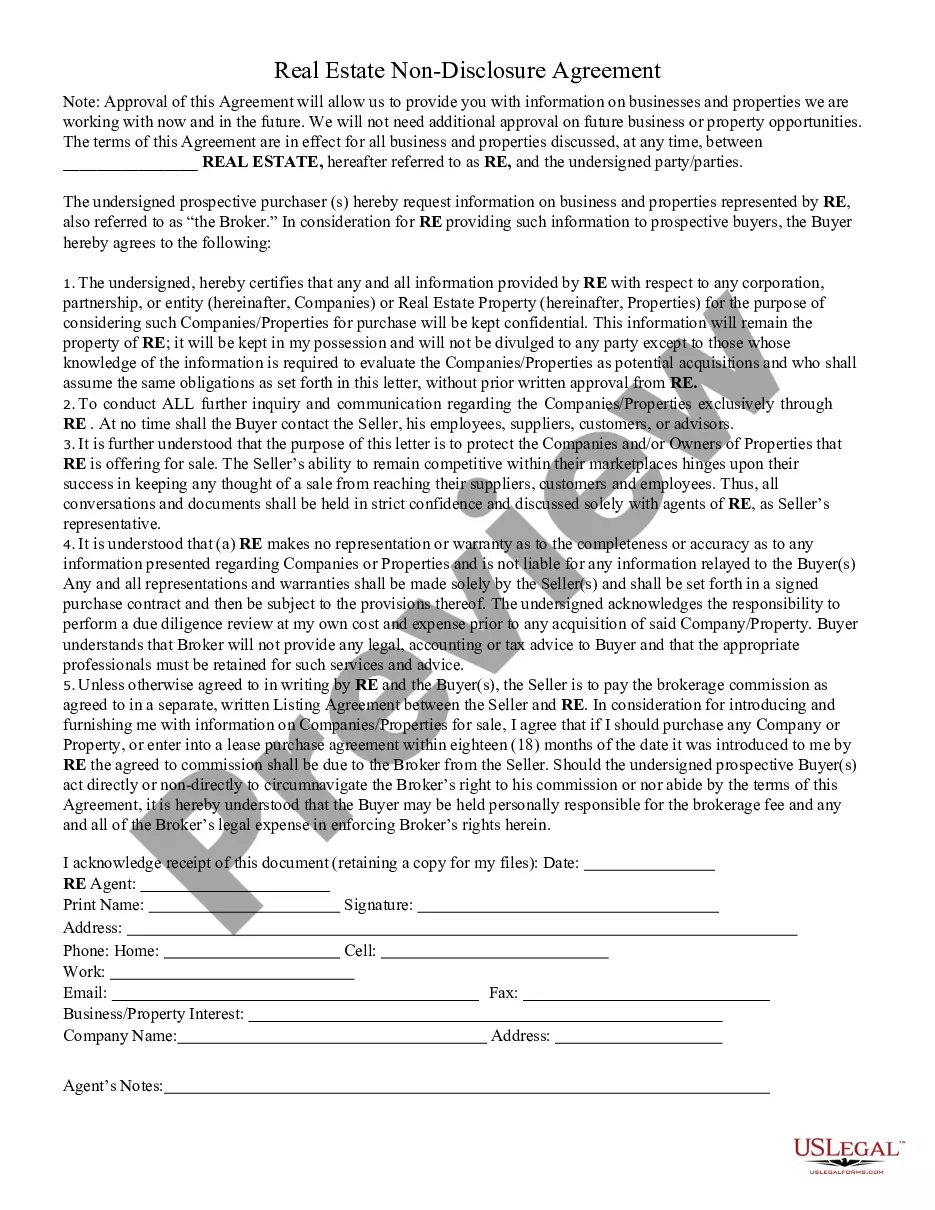
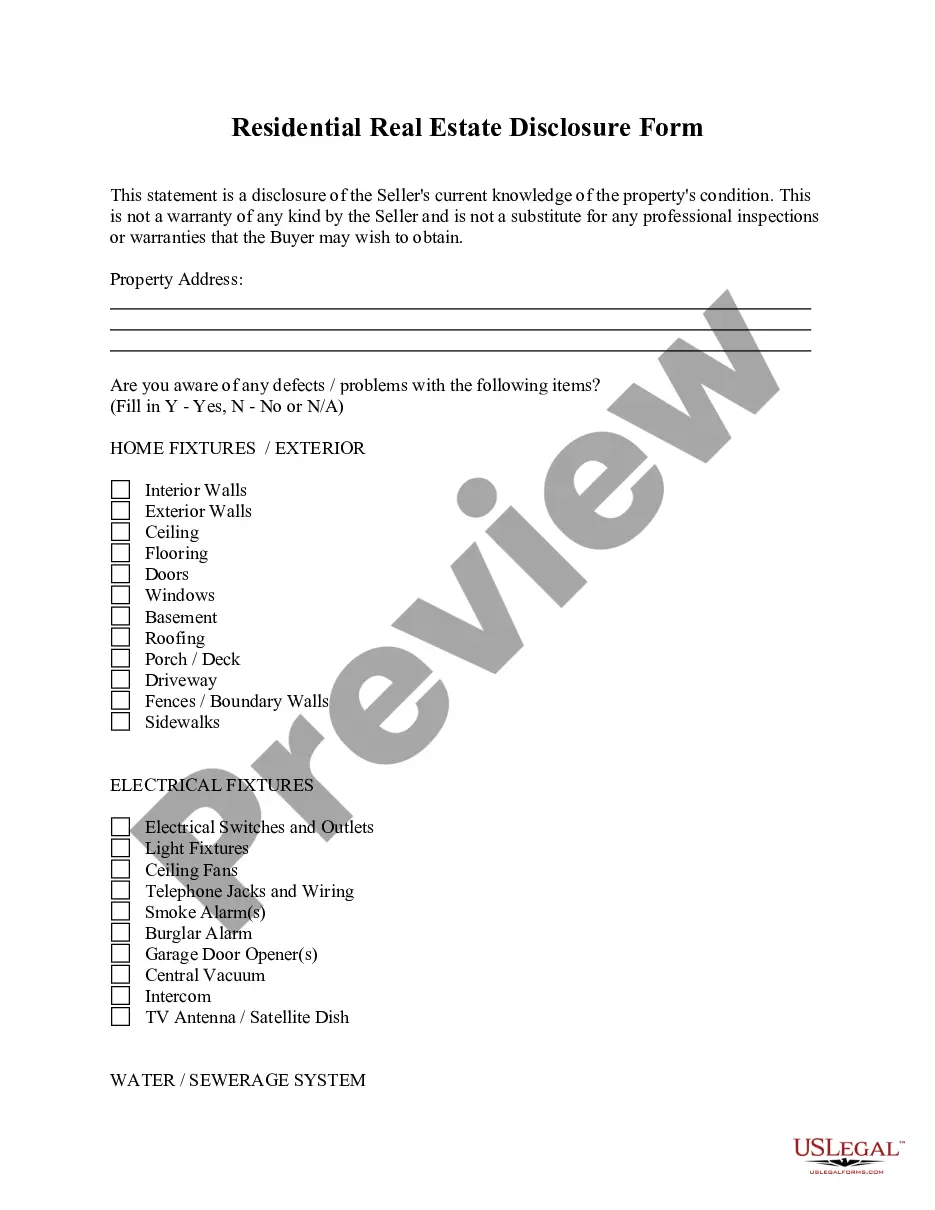
Get your form ready online
Our built-in tools help you complete, sign, share, and store your documents in one place.
Built-in online Word editor
Make edits, fill in missing information, and update formatting in US Legal Forms—just like you would in MS Word.
Export easily
Download a copy, print it, send it by email, or mail it via USPS—whatever works best for your next step.
E-sign your document
Sign and collect signatures with our SignNow integration. Send to multiple recipients, set reminders, and more. Go Premium to unlock E-Sign.
Notarize online 24/7
If this form requires notarization, complete it online through a secure video call—no need to meet a notary in person or wait for an appointment.
Store your document securely
We protect your documents and personal data by following strict security and privacy standards.

Make edits, fill in missing information, and update formatting in US Legal Forms—just like you would in MS Word.

Download a copy, print it, send it by email, or mail it via USPS—whatever works best for your next step.

Sign and collect signatures with our SignNow integration. Send to multiple recipients, set reminders, and more. Go Premium to unlock E-Sign.

If this form requires notarization, complete it online through a secure video call—no need to meet a notary in person or wait for an appointment.

We protect your documents and personal data by following strict security and privacy standards.
Looking for another form?
How to fill out Seller's Real Estate Disclosure Statement?
If you need to finalize, download, or create legal document templates, utilize US Legal Forms, the largest collection of legal forms available online.
Take advantage of the site's straightforward and handy search feature to locate the documents you require.
Numerous templates for business and personal purposes are organized by categories and jurisdictions, or keywords.
Step 4. Once you have found the form you need, click the Get Now button. Choose your preferred pricing plan and enter your details to register for an account.
Step 5. Complete the payment process. You can use your credit card or PayPal account to finalize the transaction.
- Utilize US Legal Forms to acquire the Missouri Seller's Real Estate Disclosure Statement in just a few clicks.
- If you are already a US Legal Forms member, Log In to your account and click the Download button to retrieve the Missouri Seller's Real Estate Disclosure Statement.
- You can also access forms you previously saved from the My documents section of your account.
- If you are using US Legal Forms for the first time, follow the instructions below.
- Step 1. Ensure you have selected the form for the appropriate city/state.
- Step 2. Use the Preview option to review the form’s content. Remember to read the description.
- Step 3. If you are not satisfied with the form, use the Search box at the top of the screen to find alternative versions of the legal form template.
Form popularity
FAQ
In general, a disclosure document is supposed to provide details about a property's condition that might negatively affect its value. Sellers who willfully conceal information can be sued and potentially convicted of a crime. Selling a property "As Is" will usually not exempt a seller from disclosures.
Details that you do not need to disclose include whether a prior occupant had Acquired Immune Deficiency Syndrome (AIDS) or whether someone died on the property, as long as the death occurred more than three years before the current potential buyer's purchase offer.
This secrecy is not permitted by law under any circumstances. Sellers are obliged to declare all the positive and negative details. With 100% complete information about a property, the buyer must be able to make the right decision.
But, there are 12 states that are still considered non-disclosure: Alaska, Idaho, Kansas, Louisiana, Mississippi, Missouri (some counties), Montana, New Mexico, North Dakota, Texas, Utah and Wyoming. In a non-disclosure state, transaction sale prices are not available to the public.
Most Common Disclosures in Real EstateNatural Hazards Disclosure. First on the list is the natural hazards disclosure.Market Conditions Advisory (MCA) Market Conditions Advisory, also known as MCA, covers items more financial in nature.State Transfer Disclosure.Local Transfer Disclosure.Megan's Law Disclosures.
Here are eight common real estate seller disclosures to be aware of, whether you're on the buyer's side or the seller's side.Death in the Home.Neighborhood Nuisances.Hazards.Homeowners' Association Information.Repairs.Water Damage.Missing Items.Other Possible Disclosures.
Missouri statute § 442.600 deals with the sale of psychologically impacted real estate and protects sellers from lawsuits for failing to disclose that the property was the site of a homicide, felony, or suicide.
Other than the mentioned requirements above, the Missouri statute usually requires a caveat emptor clause in the Missouri property purchase contracts. The caveat emptor or let the buyer beware states that it's the buyer's decision to verify the defects conducting a home inspection.
Owners offering to sell as-is real estate in Missouri must disclose to prospective buyers all material information about the real estate that is known to the seller. This includes defects in the property. The disclosure should be written and given to prospective buyers prior to entering into a sale contract.
What the law requires: Most states, including Missouri, have moved away from the Buyer Beware scare tactic. Instead, as the seller, you will be asked to complete a Seller's Disclosure. This is a form that buyers use to learn about the property, including any potential issues.