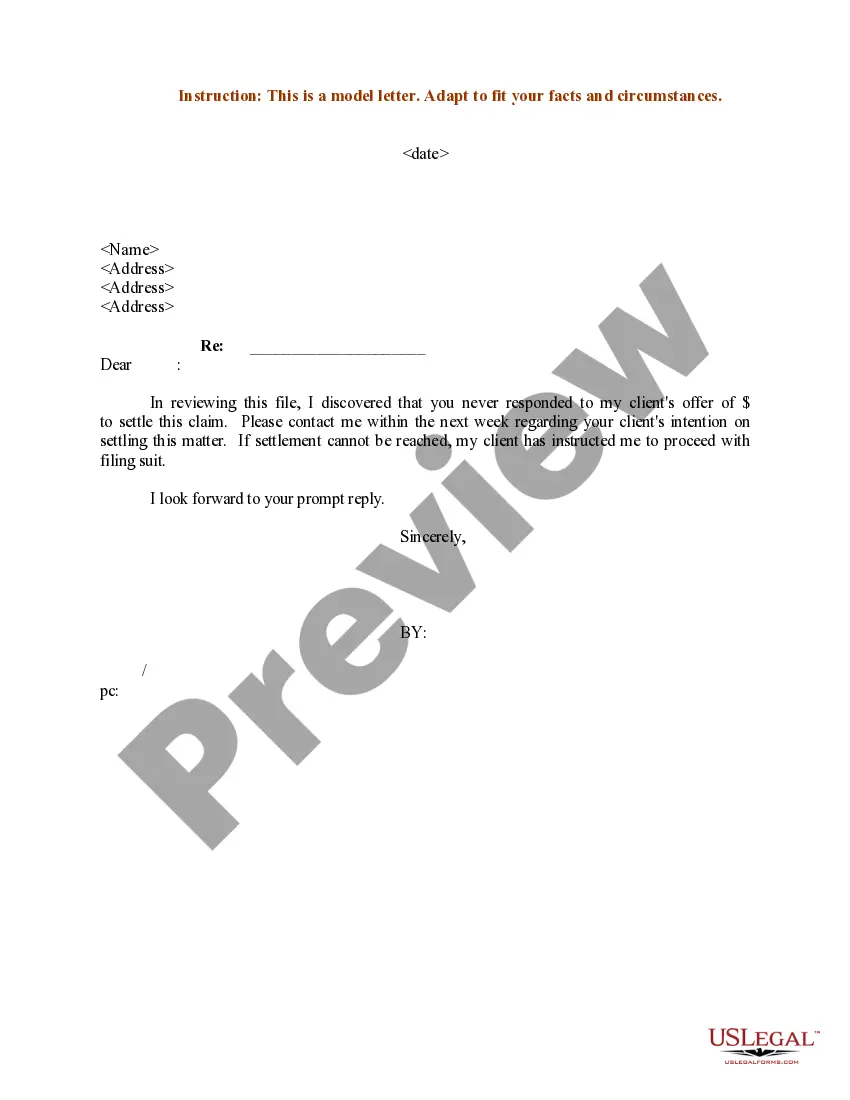
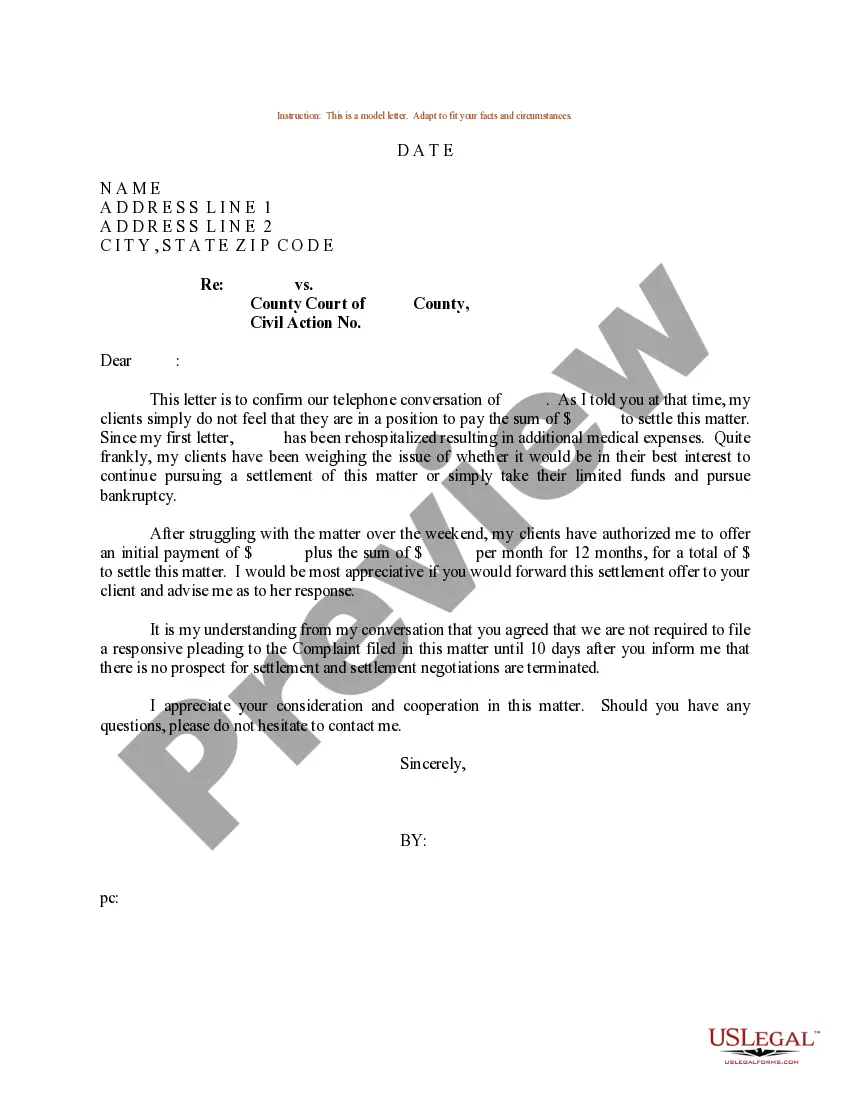
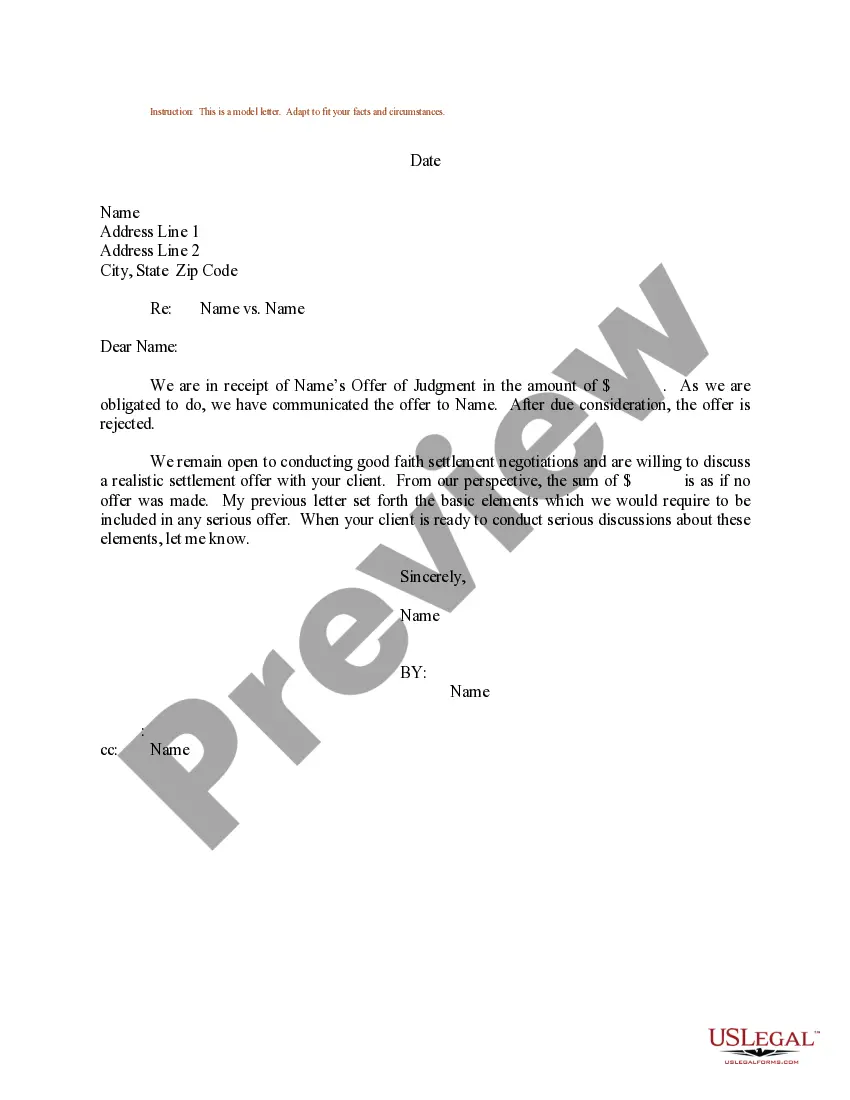
Missouri Sample Letter for Request to Respond to Settlement Offer
Description

Get your form ready online
Our built-in tools help you complete, sign, share, and store your documents in one place.
Make edits, fill in missing information, and update formatting in US Legal Forms—just like you would in MS Word.
Download a copy, print it, send it by email, or mail it via USPS—whatever works best for your next step.
Sign and collect signatures with our SignNow integration. Send to multiple recipients, set reminders, and more. Go Premium to unlock E-Sign.
If this form requires notarization, complete it online through a secure video call—no need to meet a notary in person or wait for an appointment.
We protect your documents and personal data by following strict security and privacy standards.

Make edits, fill in missing information, and update formatting in US Legal Forms—just like you would in MS Word.

Download a copy, print it, send it by email, or mail it via USPS—whatever works best for your next step.

Sign and collect signatures with our SignNow integration. Send to multiple recipients, set reminders, and more. Go Premium to unlock E-Sign.

If this form requires notarization, complete it online through a secure video call—no need to meet a notary in person or wait for an appointment.

We protect your documents and personal data by following strict security and privacy standards.
Looking for another form?







How to fill out Sample Letter For Request To Respond To Settlement Offer?
If you need to download, print, or obtain legal document templates, utilize US Legal Forms, the leading collection of legal forms available online. Employ the site’s straightforward and user-friendly search to find the documents you require. A range of templates for business and personal uses are categorized by types and states, or keywords. Utilize US Legal Forms to access the Missouri Sample Letter for Request to Respond to Settlement Offer with just a few clicks.
If you are a current US Legal Forms user, Log In to your account and click on the Download option to retrieve the Missouri Sample Letter for Request to Respond to Settlement Offer. You can also access forms you previously obtained in the My documents section of your account.
If you are using US Legal Forms for the first time, follow these steps: Step 1. Ensure you have selected the form for the correct city/state. Step 2. Use the Review feature to inspect the form’s content. Always remember to read the summary. Step 3. If you are not satisfied with the form, use the Search field at the top of the screen to find alternative versions of the legal form template. Step 4. Once you locate the form you desire, click the Buy now button. Choose your preferred pricing plan and enter your details to register for an account. Step 5. Complete the payment process. You can use your credit card or PayPal account to finalize the transaction. Step 6. Select the format of your legal form and download it to your device. Step 7. Fill out, edit, and print or sign the Missouri Sample Letter for Request to Respond to Settlement Offer.
Every legal document template you receive is yours for a long duration. You can access all forms you obtained in your account. Select the My documents section and choose a form to print or download again.
Be proactive and download, print the Missouri Sample Letter for Request to Respond to Settlement Offer using US Legal Forms. There are millions of professional and state-specific forms available for your business or personal requirements.
- Every legal document template you receive is yours for a long time.
- You will have access to every form you acquired in your account.
- Select the My documents section and choose a form to print or download again.
- Be proactive and download, print the Missouri Sample Letter for Request to Respond to Settlement Offer with US Legal Forms.
- There are countless professional and state-specific forms available for your business or personal needs.
Form popularity
FAQ
A settlement demand letter is a written offer addressed to a claimant in a dispute. Typically, the claimant has previously sent a demand letter requesting payment for injury or other damages. In the Settlement Demand Letter, a counteroffer is made to try to induce settlement before the matter ends up in court.
A settlement conference is a dispute resolution mechanism that allows the parties involved in a civil case to resolve their dispute in an informal setting without going through a trial, thereby saving time and money.
These are the essential items every settlement demand letter must mention: Key facts about the incident: date, time, location, parties involved, etc. Injuries sustained. Medical treatment received. Cost of medical treatment and supplies. Other expenses.
State the settlement offer you are willing to accept and the reasons why. You can repeat the position you stated in the first demand letter. Your attorney can advise you on whether you should stick with the amount stated in your first demand letter or if you should present a counteroffer.
How to write demand letters Your information and the debtors' information (contact details, address etc.) The date when the debt began and the amount of money owed. Details and dates of any disputes relating to this payment. Description of the nature of the agreement and breach of contract.
I am writing about the money which you are claiming on the above account. I can confirm that I am unable to pay the money which I owe in full. Include a paragraph explaining your circumstances and details of your financial situation that you want the creditor to take into account.
I would like to offer an amount of to settle the outstanding debt amount of $ with you. I also like to request you to include the following conditions as a part of my settlement offer: My account will be showing as 'paid in full' with no future liability or involvement.
Simply put, it is a written request sent by the claimant or their lawyer demanding action or payment from the other party before potentially taking the matter to court. The letter of demand lets the claimant explain clearly and formally what they believe the recipient did wrong.