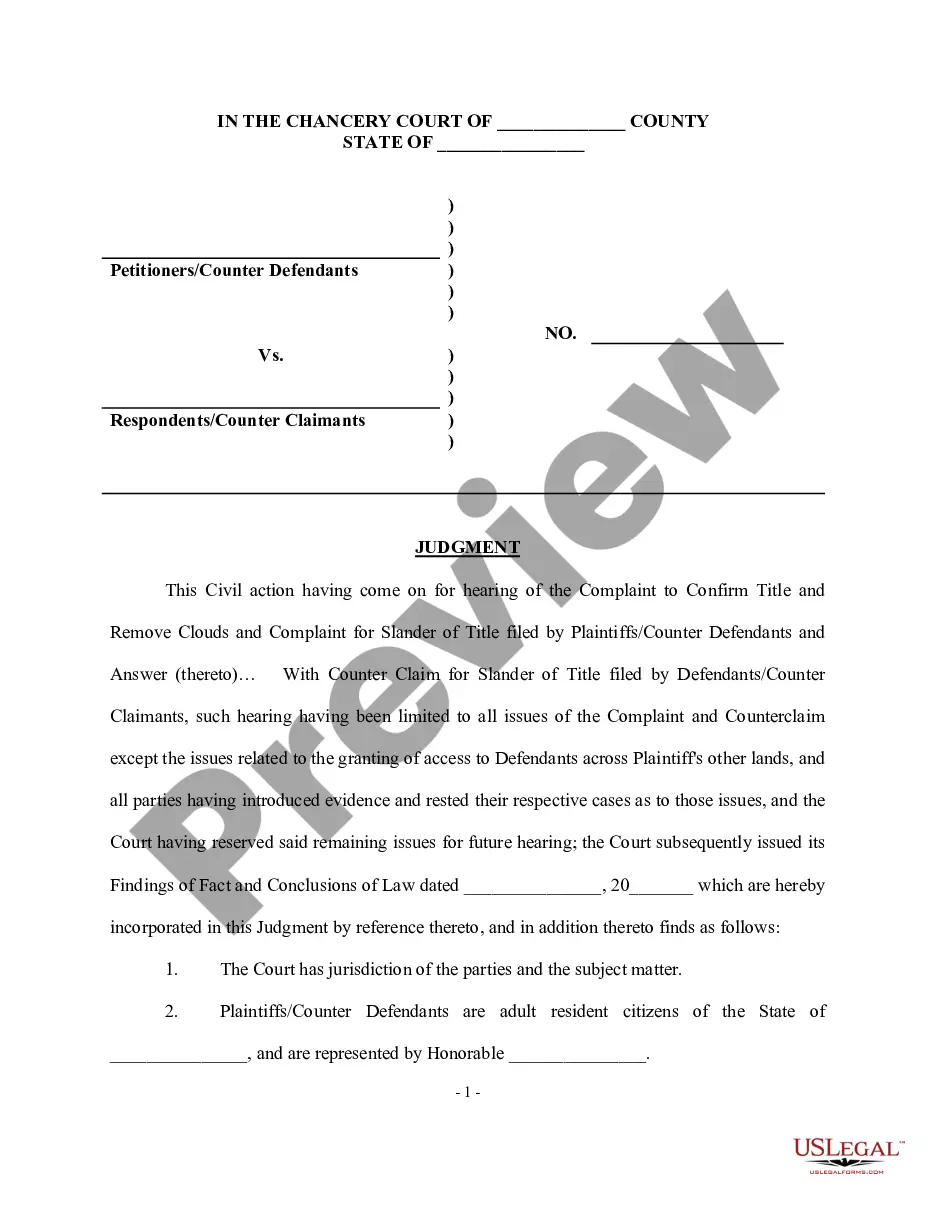
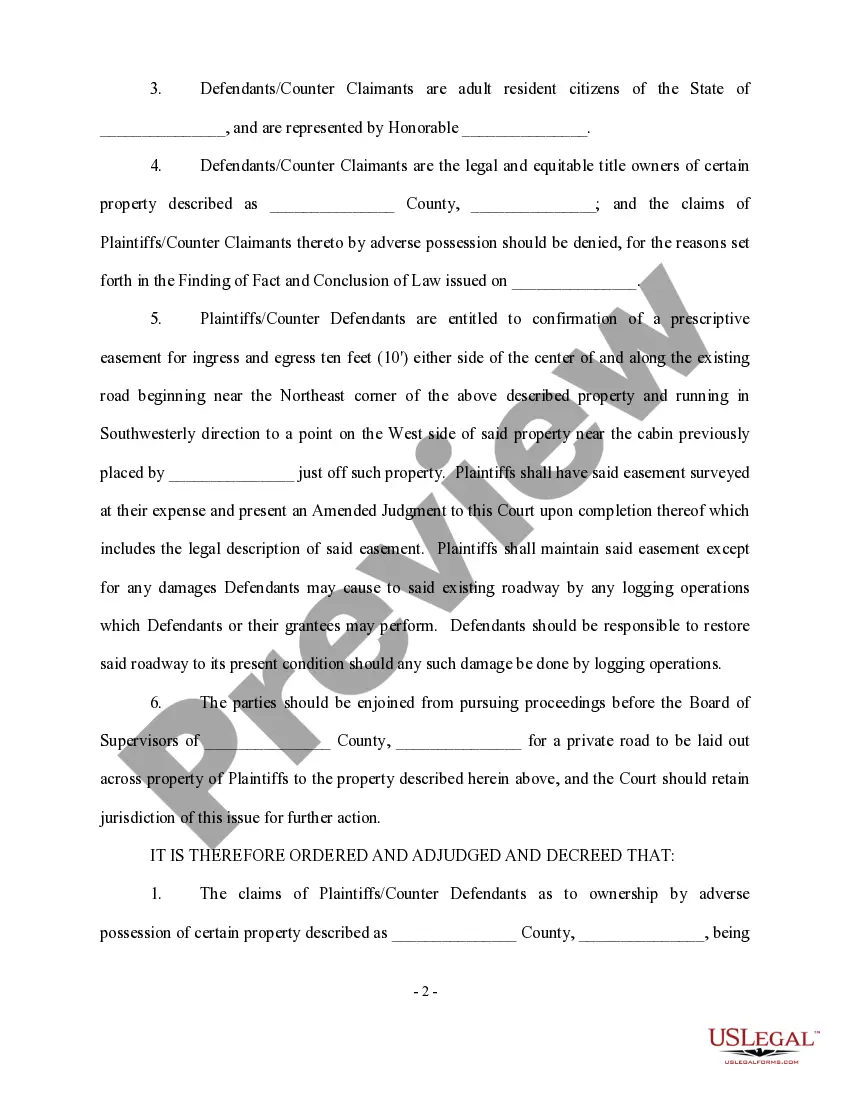
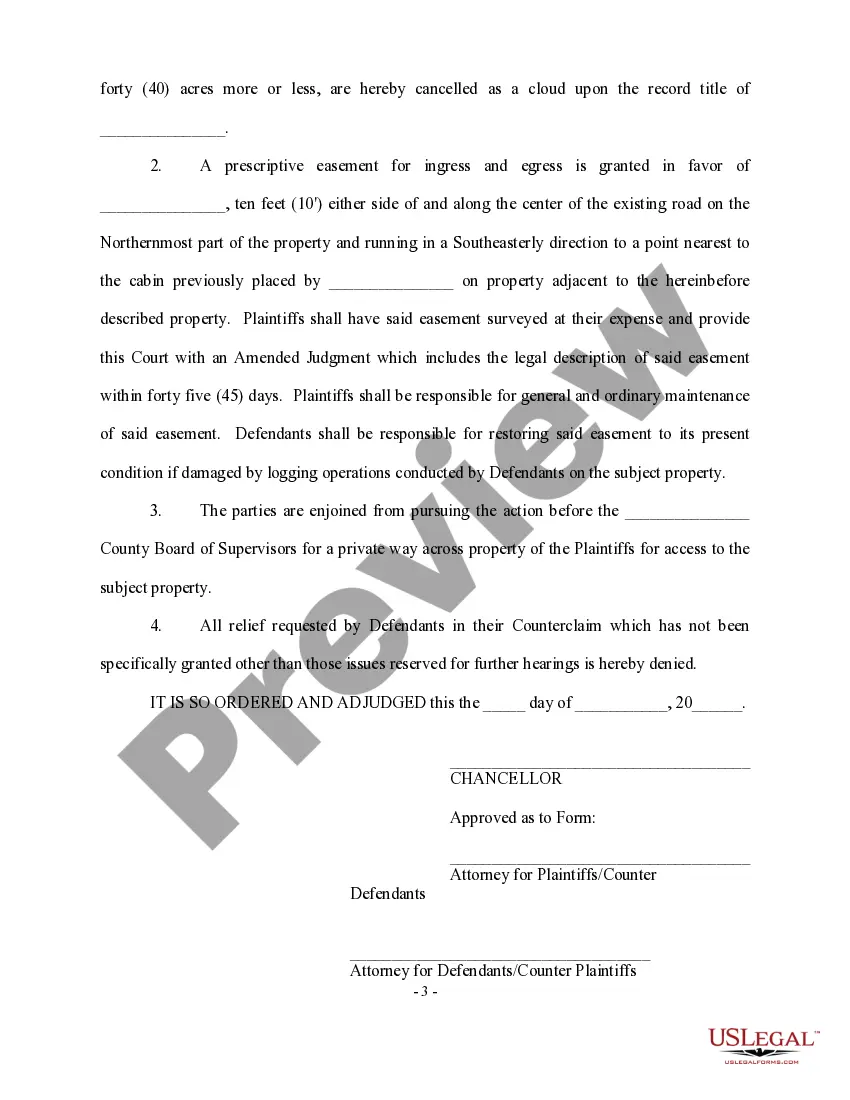
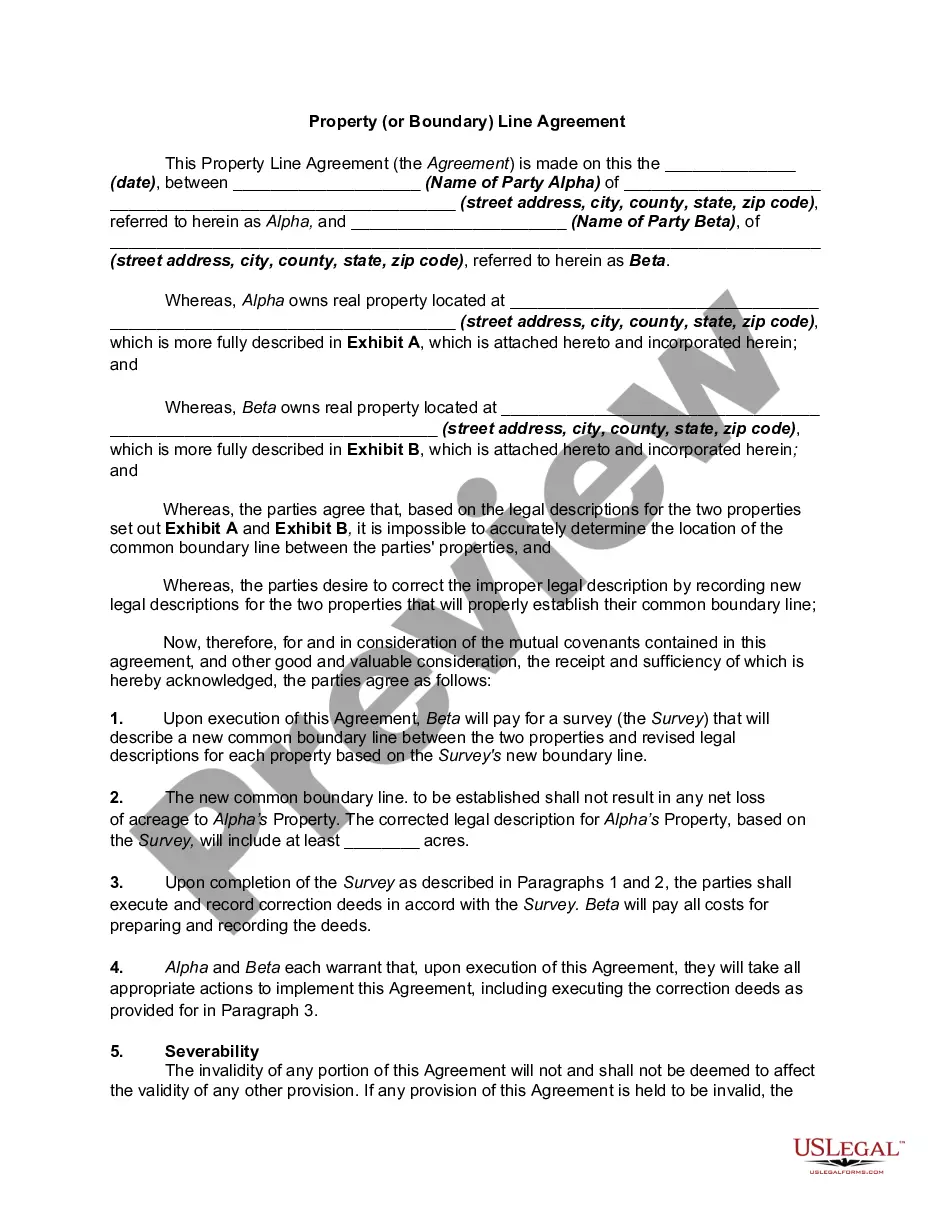
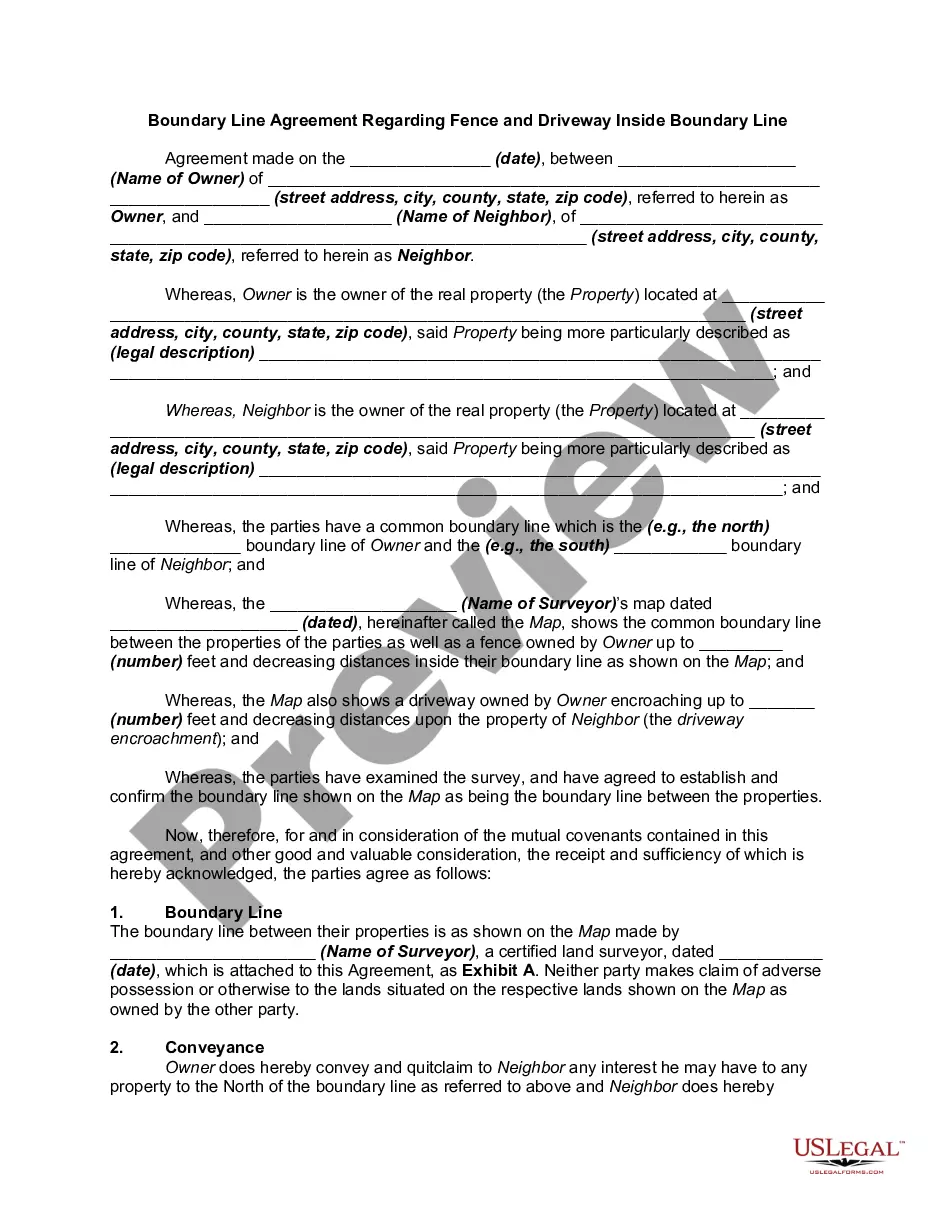
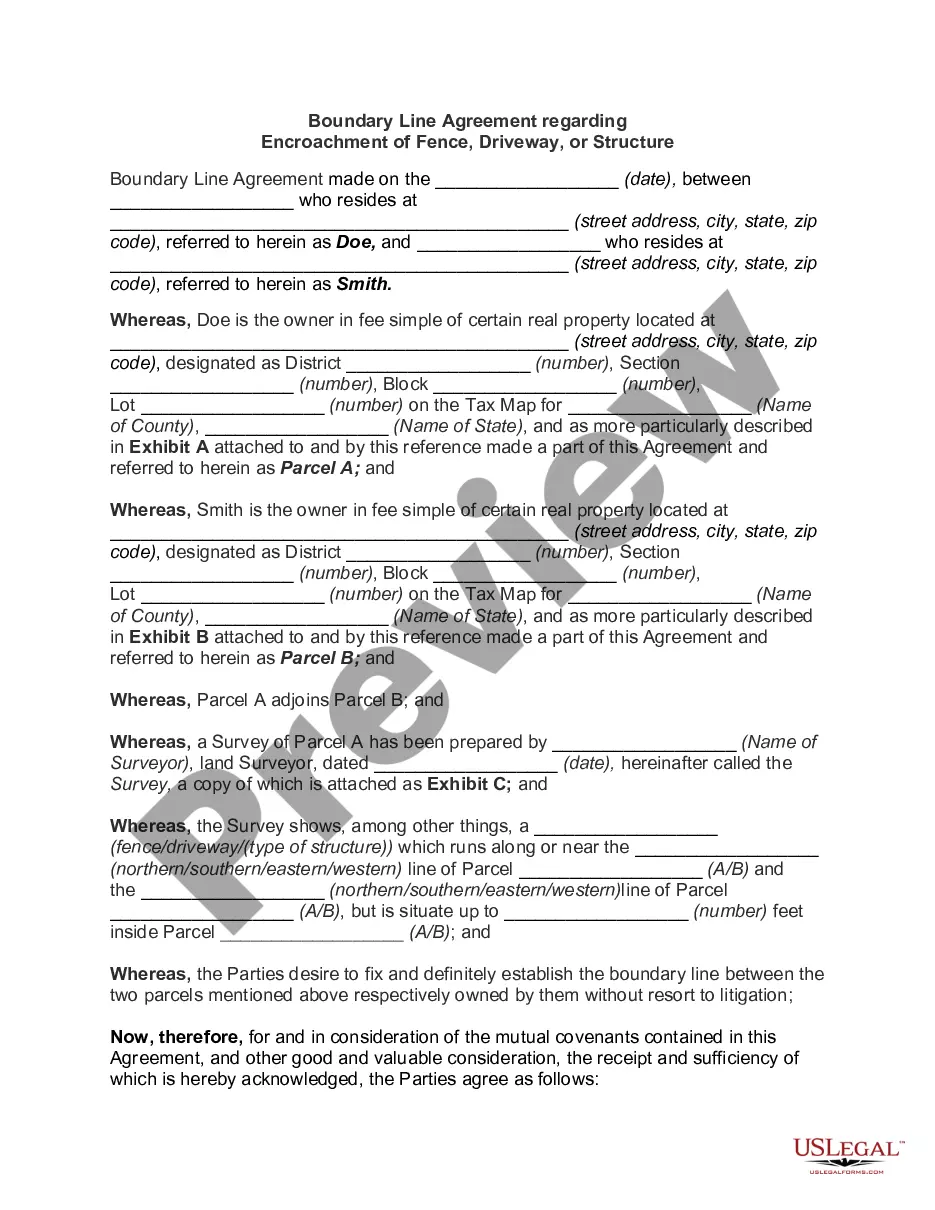
This form is a Judgment. The judgment provides that the plaintiffs/ counter defendants are entitled to a prescriptive easement for ingress and egress along an existing road. The judgment also provides that all relief requested by defendants in their counterclaim which was not specifically granted, other than those issues reserved for further hearing, are denied by the court.
Missouri Judgment regarding Boundary Line Dispute
Category:
State:
Multi-State
Control #:
US-00748
Format:
Word;
Rich Text
Instant download
Description
Free preview








How to fill out Judgment Regarding Boundary Line Dispute?
It is feasible to spend several hours on the Internet searching for the sanctioned document template that meets the state and federal requirements you need.
US Legal Forms provides a vast array of legal forms that can be reviewed by professionals.
You can effortlessly download or print the Missouri Judgment concerning Boundary Line Dispute from our service.
Review the form description to confirm you have selected the accurate form. If available, use the Preview button to examine the document template as well. To find another version of your form, use the Search field to locate the template that fits your needs and criteria. Once you have found the template you require, click Acquire now to continue. Choose the pricing plan you want, enter your details, and register for a free account on US Legal Forms. Complete the transaction. You can use your credit card or PayPal account to pay for the legal form. Select the format of your document and download it to your device. Make changes to the document if necessary. You can complete, revise, and sign and print the Missouri Judgment concerning Boundary Line Dispute. Acquire and print a multitude of document templates using the US Legal Forms site, which offers the largest collection of legal forms. Utilize professional and state-specific templates to address your business or personal needs.
- If you already have a US Legal Forms account, you can Log In and click on the Acquire button.
- Then, you can complete, modify, print, or sign the Missouri Judgment concerning Boundary Line Dispute.
- Every legal document template you purchase is yours indefinitely.
- To obtain another copy of any purchased form, go to the My documents tab and click on the corresponding button.
- If you are using the US Legal Forms website for the first time, follow the simple instructions below.
- First, ensure you have selected the correct document template for your state/city of choice.
Form popularity
FAQ
If the married couple or joint owners of a property do not have a tenancy by the entireties title, any lien can attach to the person's interest in the property. Whether it's judgment or confessed judgment, the lien will attach to the homeowner's interest, making the lienor a co-owner of the property.
If you own real estate jointly with a spouse in a common law property state (and you don't own the property as tenants by the entirety), then a creditor may be able to put a lien on that property, whether or not you were ever individually liable on that debt.
The easy definition is that a judgment is an official decision rendered by the court with regard to a civil matter. A judgment lien, sometimes referred to as an ?abstract of judgment,? is an involuntary lien that is filed to give constructive notice and is to attach to the Judgment Debtor's property and/or assets.
Missouri Civil Statutes of Limitations at a Glance Injury to property, trespassing, and enforcement of written contracts carry a five-year statute of limitations. The longest time limit for civil suits is reserved for fraud, rent collection, debt collection, and judgments. This time limit is 10 years.
A Missouri judgment is valid for ten (10) years from the latter of (1) the date of entry of the judgment or (2) the date that a plaintiff last successfully tried to execute on the judgment as reflected by a Court record.
Replevin allows the plaintiff to gain possession of the personal property; the other causes of action only allow the plaintiff to recover damages, not possession of the property. Replevin also allows the plaintiff to obtain possession of the property at the beginning of a lawsuit.
A Missouri judgment is valid for ten (10) years from the latter of (1) the date of entry of the judgment or (2) the date that a plaintiff last successfully tried to execute on the judgment as reflected by a Court record.
The answer is judgment lien. A judgment is a decree issued by a court, and when filed, a judgment becomes a general, involuntary lien on both real and personal property owned by the debtor.