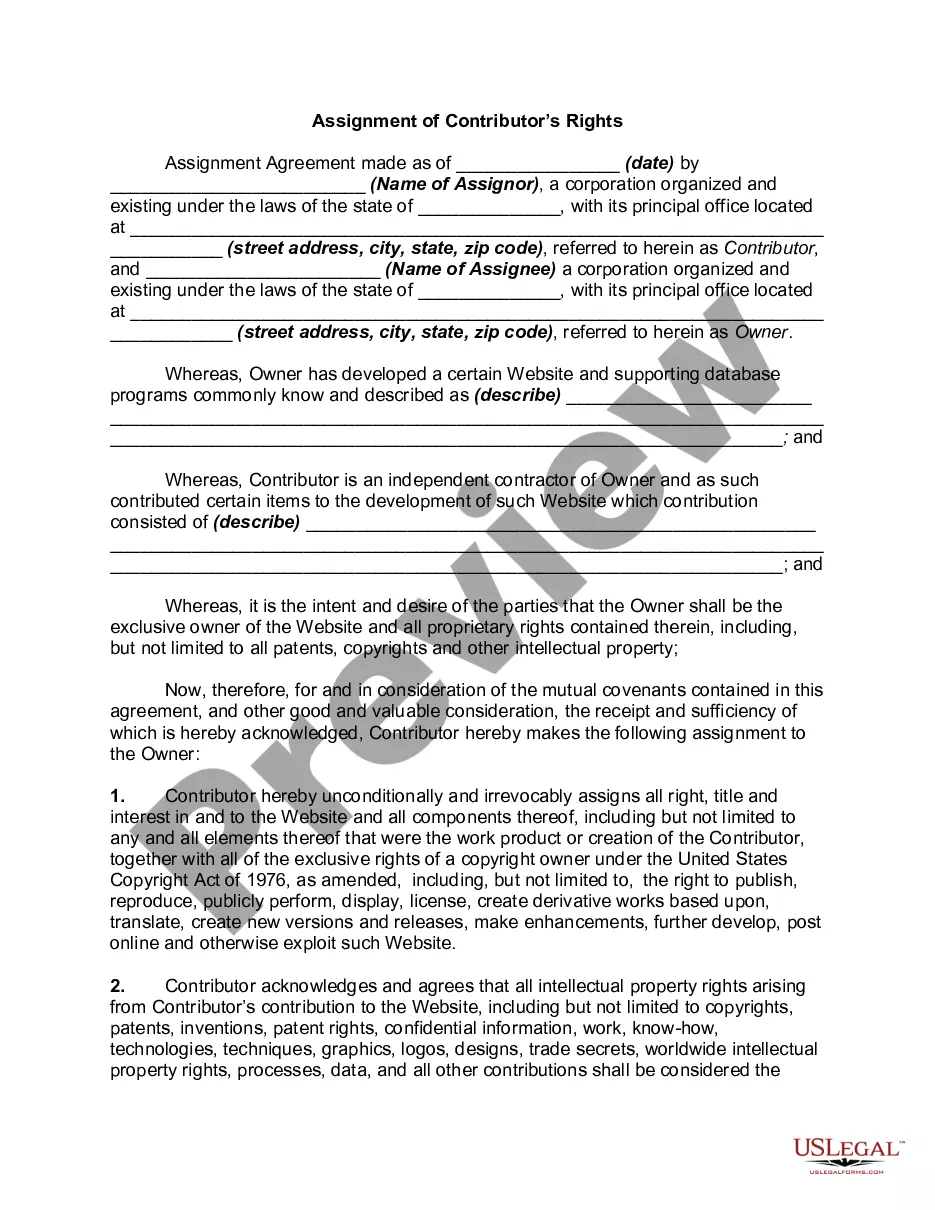
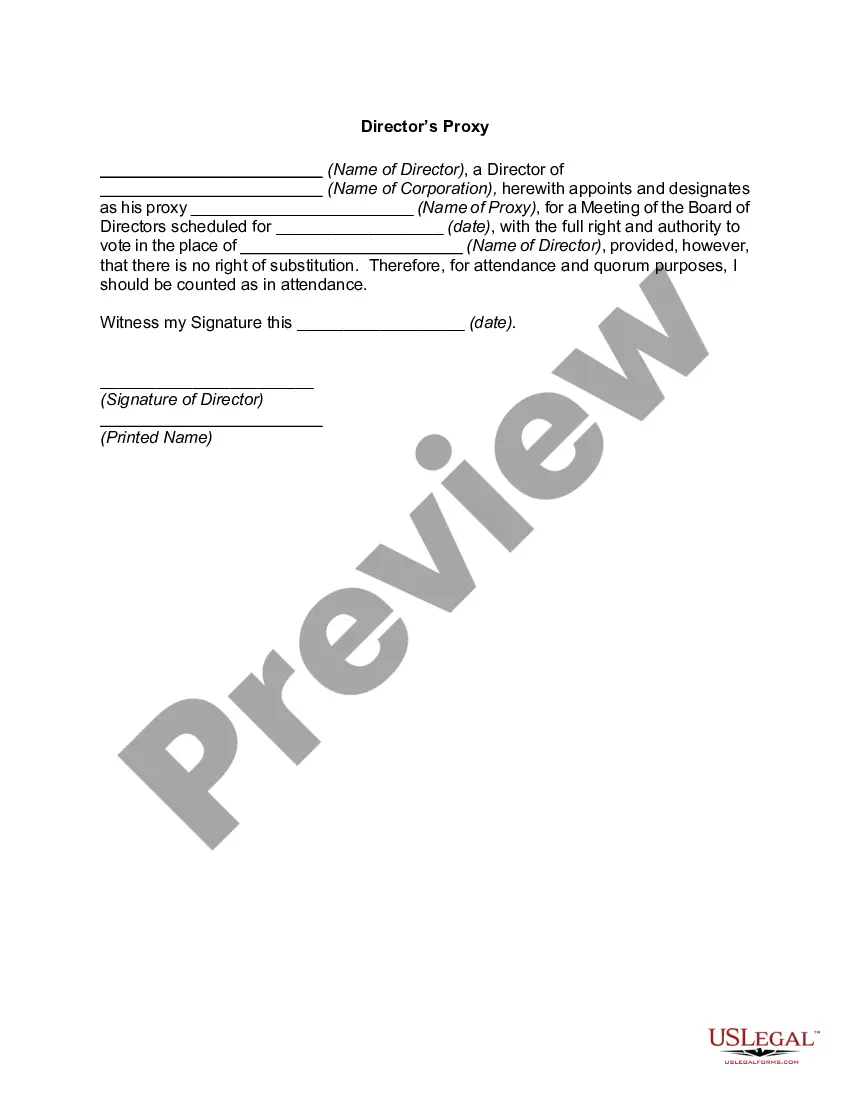
Minnesota Director's Proxy
Description



Get your form ready online
Our built-in tools help you complete, sign, share, and store your documents in one place.
Make edits, fill in missing information, and update formatting in US Legal Forms—just like you would in MS Word.
Download a copy, print it, send it by email, or mail it via USPS—whatever works best for your next step.
Sign and collect signatures with our SignNow integration. Send to multiple recipients, set reminders, and more. Go Premium to unlock E-Sign.
If this form requires notarization, complete it online through a secure video call—no need to meet a notary in person or wait for an appointment.
We protect your documents and personal data by following strict security and privacy standards.

Make edits, fill in missing information, and update formatting in US Legal Forms—just like you would in MS Word.

Download a copy, print it, send it by email, or mail it via USPS—whatever works best for your next step.

Sign and collect signatures with our SignNow integration. Send to multiple recipients, set reminders, and more. Go Premium to unlock E-Sign.

If this form requires notarization, complete it online through a secure video call—no need to meet a notary in person or wait for an appointment.

We protect your documents and personal data by following strict security and privacy standards.
Looking for another form?
How to fill out Director's Proxy?
If you need to acquire, download, or print legal document templates, utilize US Legal Forms, the biggest repository of legal forms available online.
Take advantage of the site's straightforward and effortless search capabilities to locate the documents you require.
Various templates for business and personal use are organized by categories and states, or can be found using keywords.
Step 4. Once you’ve found the form you need, click on the Get now button. Choose your preferred pricing plan and enter your information to create an account.
Step 5. Complete the transaction. You can use your credit card or PayPal account to finalize the purchase.
- Utilize US Legal Forms to obtain the Minnesota Director’s Proxy with just a few clicks.
- If you are already a US Legal Forms customer, Log In to your account and click the Obtain button to download the Minnesota Director’s Proxy.
- You can also retrieve forms you previously downloaded in the My documents section of your account.
- If you are using US Legal Forms for the first time, follow the instructions below.
- Step 1. Ensure you have selected the form for the correct city/state.
- Step 2. Utilize the Preview option to review the content of the form. Don’t forget to read the description.
- Step 3. If you are not satisfied with the form, use the Search field at the top of the page to find different versions of the legal form format.
Form popularity
FAQ
Appointment of a proxy Under Section 105(1) of the Companies Act, 2013 (hereinafter, CA), any member who is entitled to attend and vote in a company meeting can appoint a proxy. However, a proxy cannot be appointed by a member of a company not having a share capital unless the Articles provide for it.
If unable to attend, a Director may appoint another Director to attend on his behalf by proxy which specifies the scope of authorization; any appointee shall not act as proxy for more than one Director.
What Is a Proxy? A proxy is an agent legally authorized to act on behalf of another party or a format that allows an investor to vote without being physically present at the meeting.
A proxy board is a board composed entirely of American citizens which are responsible for the day-to-day running of the business. In this way the company's classified information is "insulated" from foreign exploitation but the parent company still benefits from any profits made by its subsidiary.
The representative may be another member of the same body, or external. A person so designated is called a "proxy" and the person designating them is called a "principal". Proxy appointments can be used to form a voting bloc that can exercise greater influence in deliberations or negotiations.
A director could never appoint a proxy with a set of instructions on how to act on each issue that could arise and with their duty being personal and ongoing, could never be delegated to a proxy. Accordingly, directors are not permitted to appoint proxies.
Proxyholder means the person duly nominated by the registered owner to represent him at the meeting and includes the duly authorized representative of a corporation which is the registered owner.
Under the Code, each nonprofit corporation shall have a board of directors and each director shall have one vote on each matter presented to the board of directors for action. However, a director shall not vote by proxy. (Corp.
Directors or trustees cannot attend or vote by proxy at board meetings. A directors or trustee who has the potential interest in any related party transaction must recuse from voting on the approval of the related party transaction without prejudice to the compliance with the requirements of Section 31 of this Code.