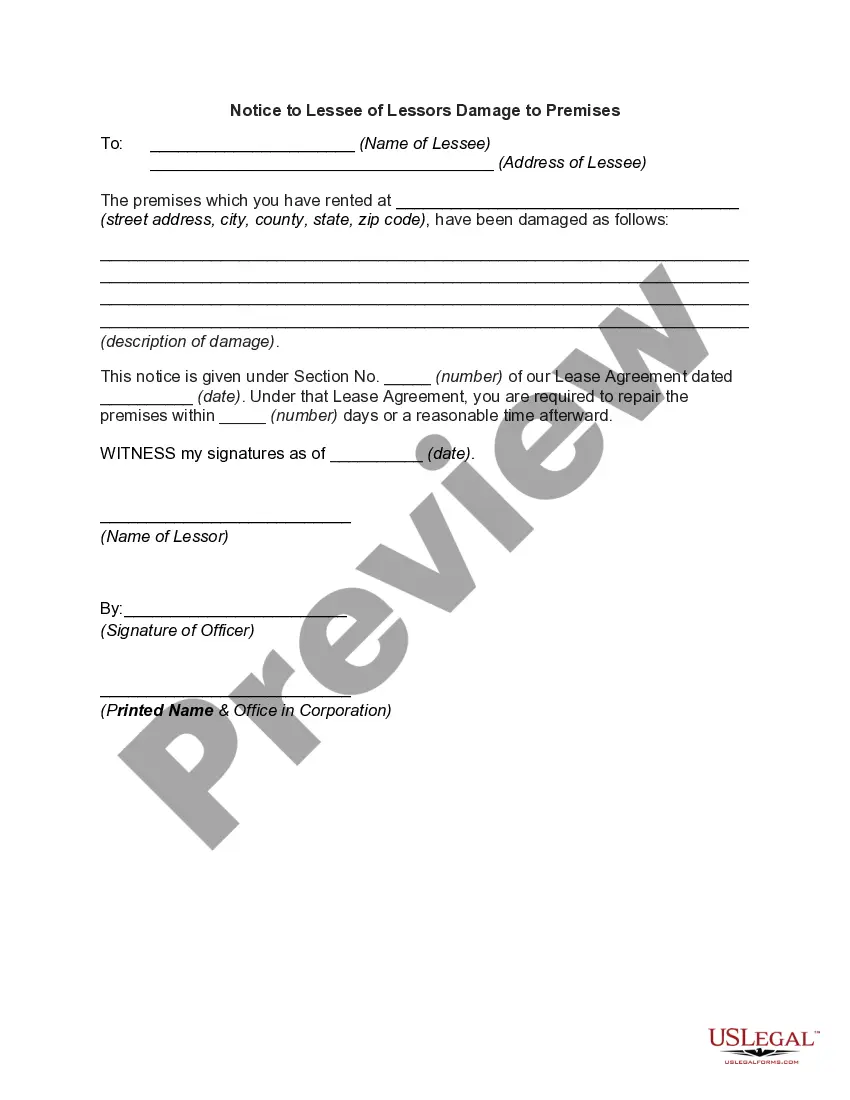
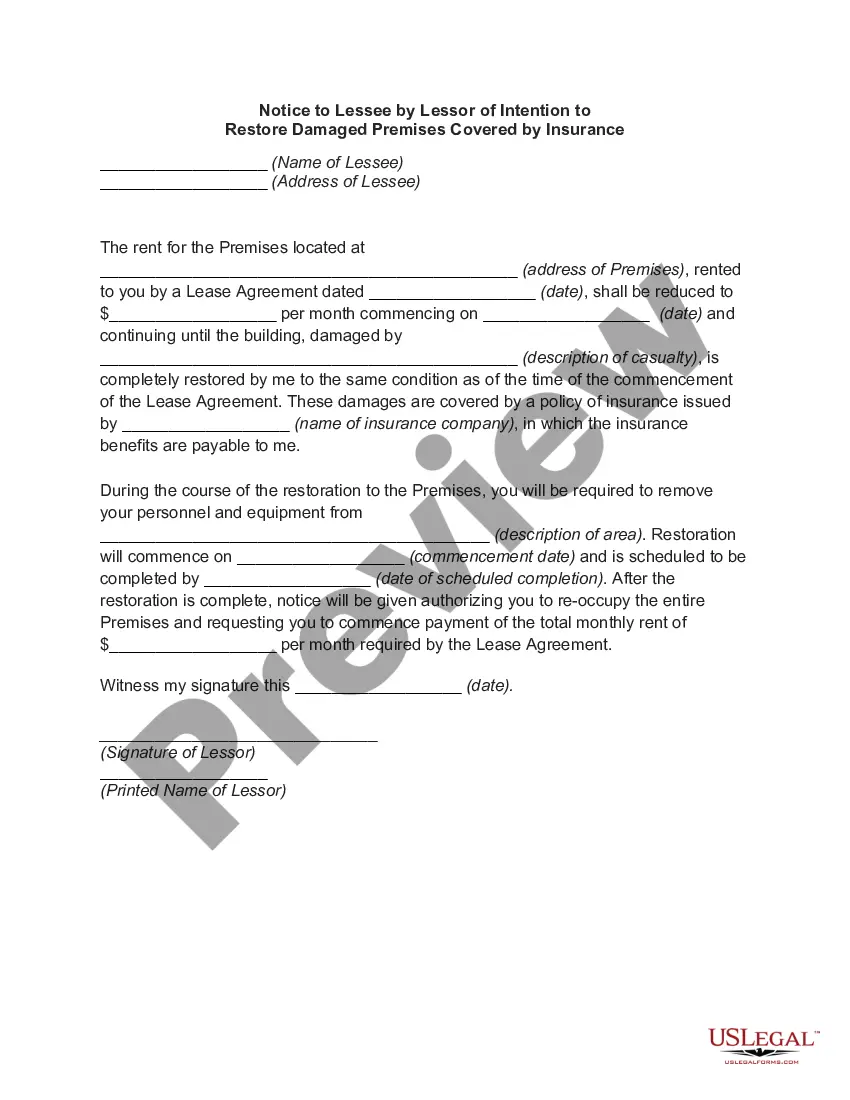
Minnesota Notice to Lessee of Lessor of Damage to Premises
Description

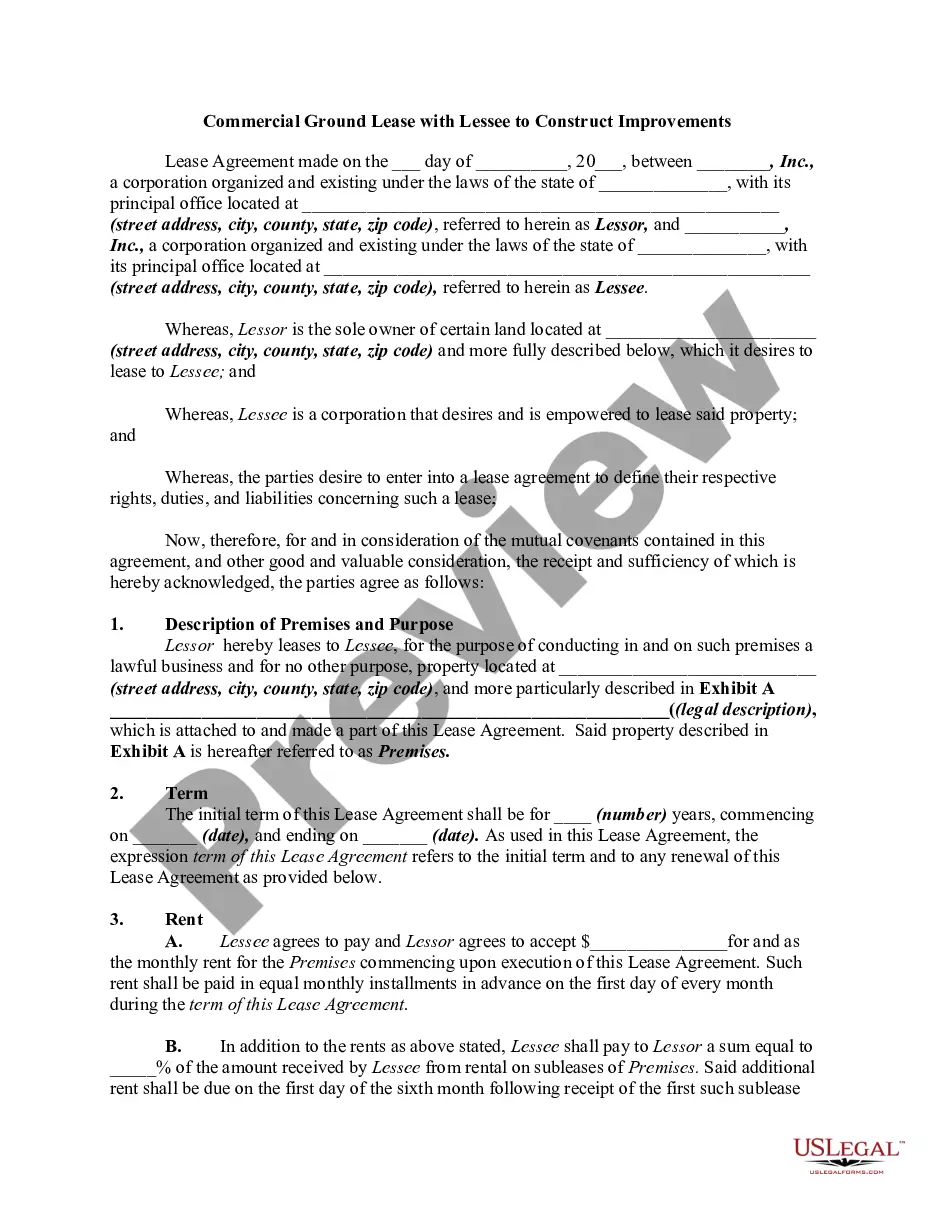
How to fill out Notice To Lessee Of Lessor Of Damage To Premises?
Finding the right legal document template can be challenging.
Of course, there are numerous templates available online, but how do you obtain the legal form you need.
Make use of the US Legal Forms website. The service provides thousands of templates, including the Minnesota Notice to Lessee of Lessor of Damage to Premises, which you can utilize for both business and personal purposes.
Navigate to the My documents section of your account to obtain another copy of the document you need.
- All of the forms are verified by experts.
- and meet state and federal regulations.
- If you are already registered.
- sign in to your account.
- and click on the Download button to receive the Minnesota Notice to Lessee of Lessor of Damage to Premises.
- Use your account to search for the legal forms you may have previously purchased.
Form popularity
FAQ
An owner of real property, who allows another to take temporary possession through a lease. landlord & tenant. property & real estate law.
A 24-hour notice is probably reasonable in most situations. The notice does not have to be in writing. If a landlord enters your home without notice while you are out, they have to leave a note in a place where you can see it.
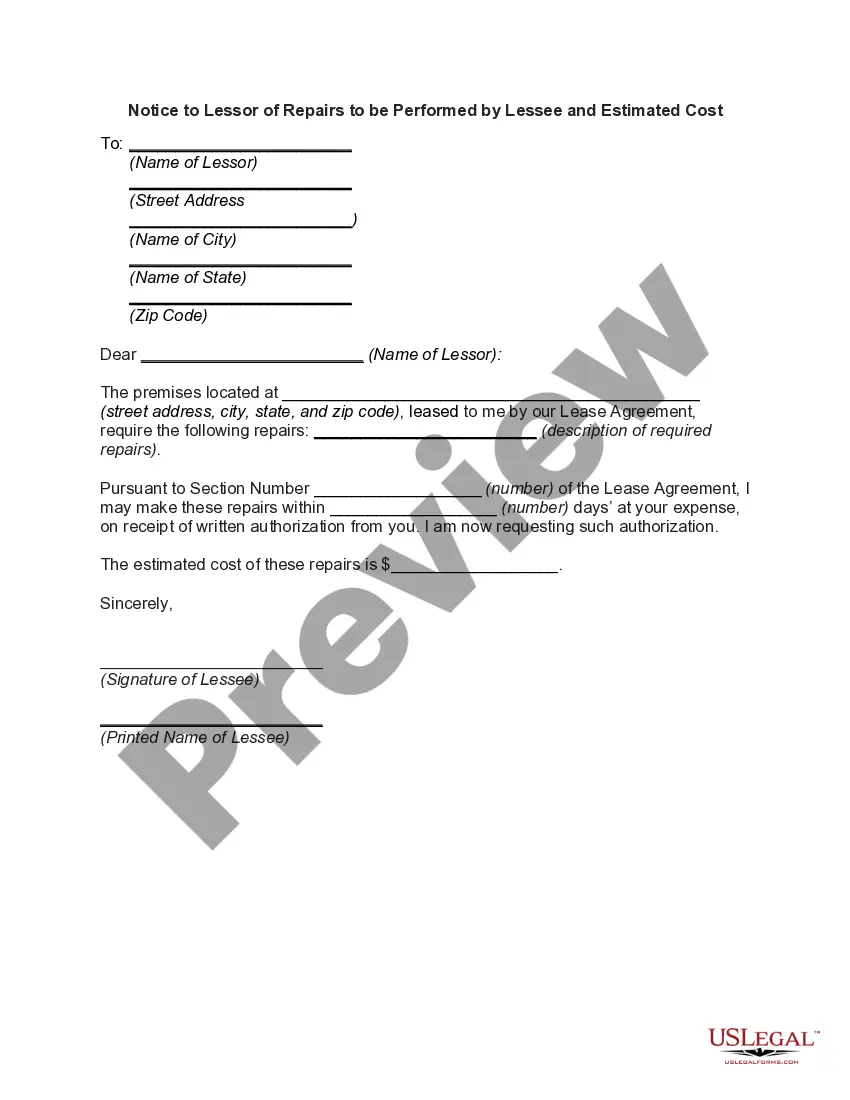
In the event of any assignment of a Leasehold Mortgage or in the event of a change of address of a Leasehold Mortgagee or of an assignee of a Leasehold Mortgage, notice of the new name and address shall be provided to Lessor. See All (23) Notice to Lessor.
A lessor is the owner of an asset that is leased, or rented, to another party, known as the lessee. Lessors and lessees enter into a binding contract, known as the lease agreement, that spells out the terms of their arrangement.
Ultimately, the tenant is responsible for any damage that they cause to the property they are renting. The damage should be reported as soon as possible, so that it can be repaired or at least assessed by either the landlord or a professional (tradesman etc.)
Do landlords have to give notice before entering a tenant's property? In most instances, yes. The minimum notice a landlord is required to give by law is 24 hours, but they can give longer should they wish to do so.
Landlords cannot enter tenanted properties without giving proper notice. Landlords cannot arbitrarily end someone's tenancy before the lease expires. Arbitrary, mid-lease rent increases are not permitted unless specified in certain circumstances in the lease or by the municipality.
Landlords may enter the rental only for reasonable business purposes. A reasonable business purpose includes but is not limited to showing the unit to prospective tenants, performing maintenance, allowing for state inspections, or the belief that tenant is violating the lease or has abandoned the property.
The landlord can enter without giving notice for three reasons. First, if there is an emergency, the landlord does not have to give notice to enter. For example, if the landlord sees smoke coming from under the tenant's door and thinks the property is on fire, the landlord can enter without notice.
How can I ensure a good relationship with my tenant when it comes to gaining access to the property? There's one golden rule you should always stick by: always provide your tenants with written notice at least 24 hours before any planned visits.