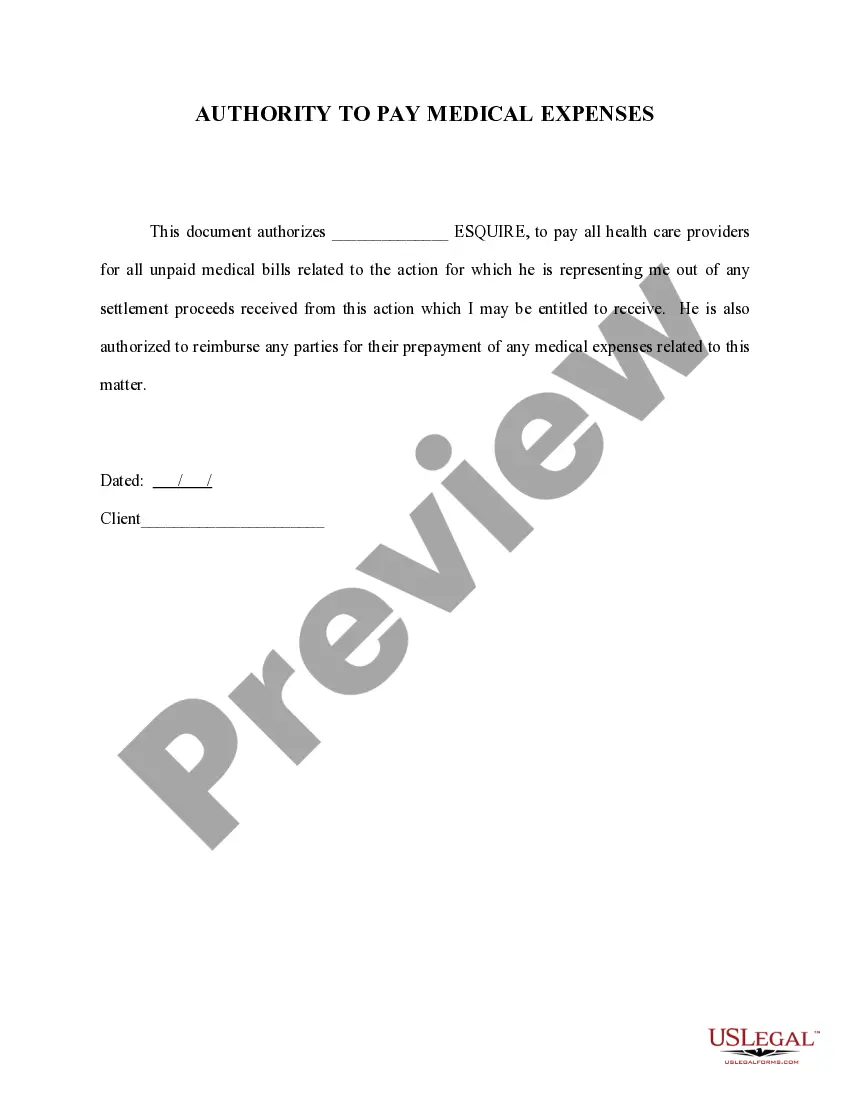
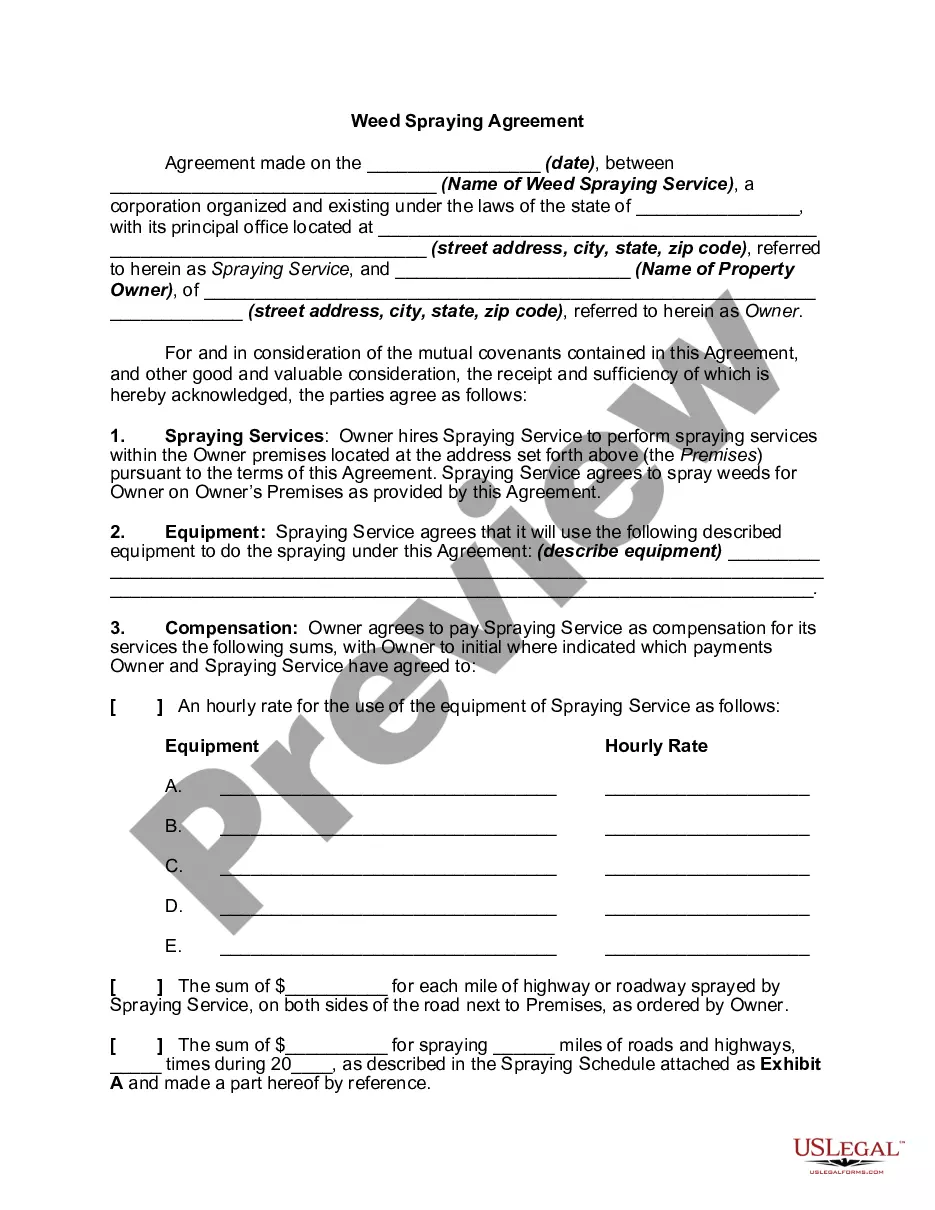
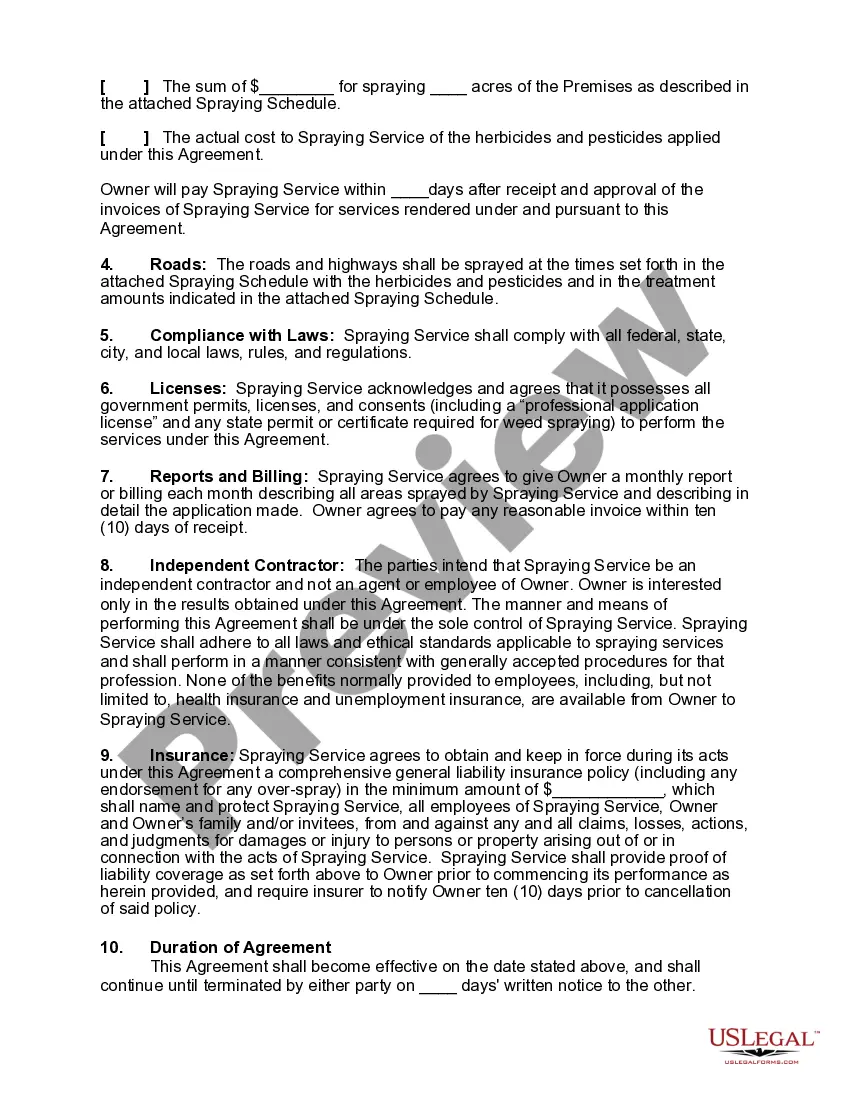
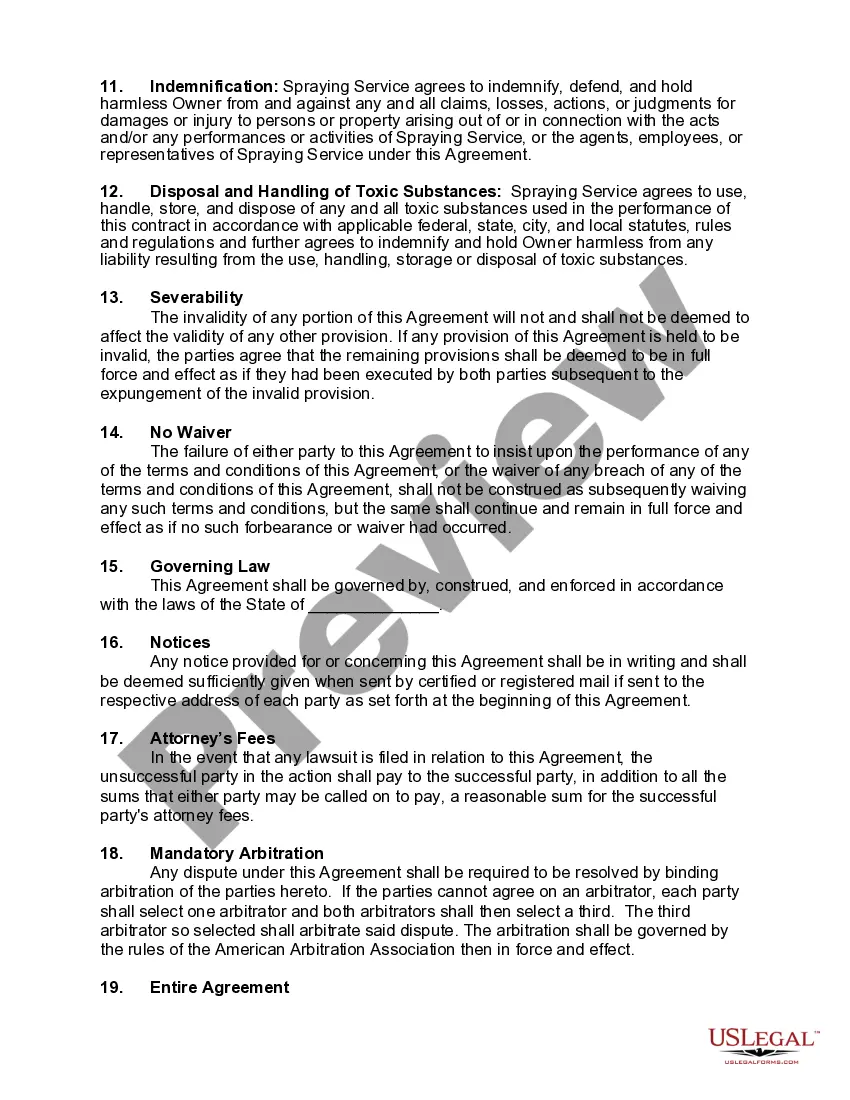
Minnesota Weed Spraying Agreement
Description
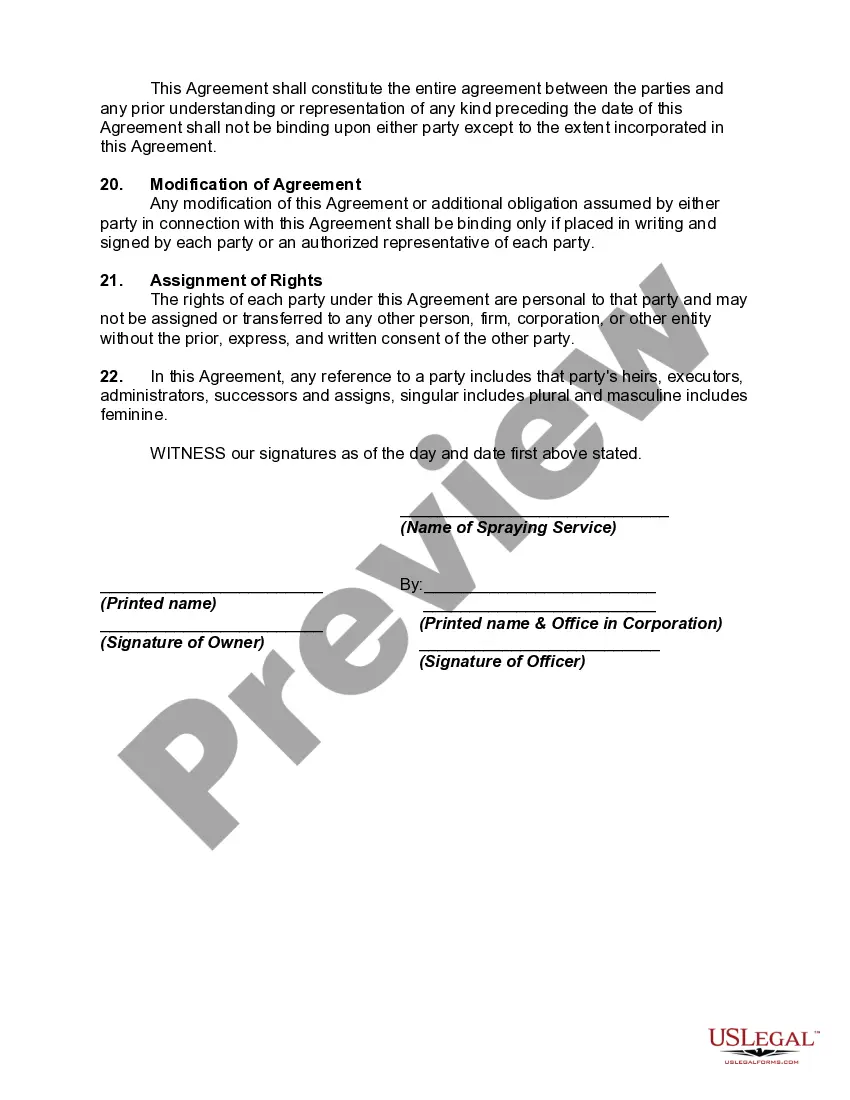
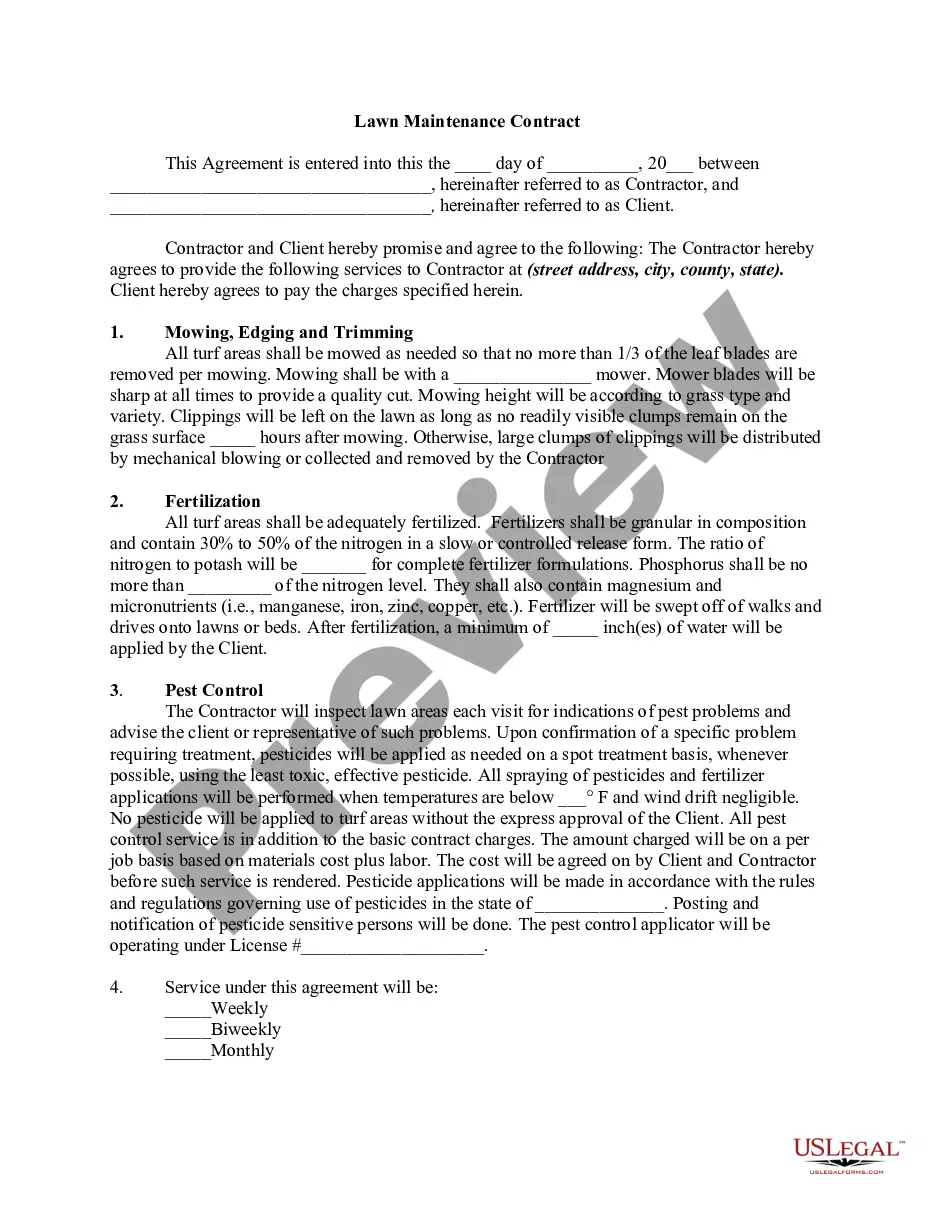
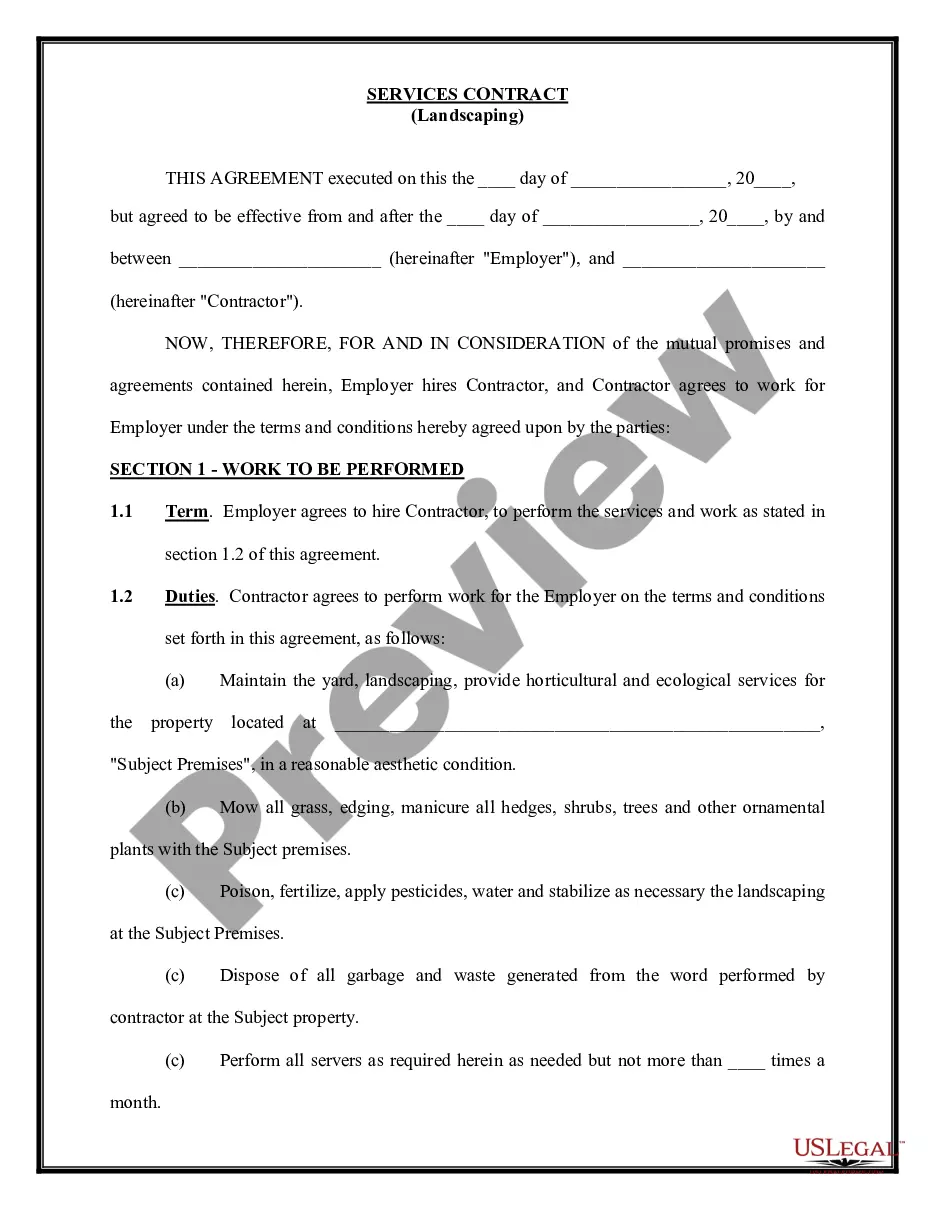
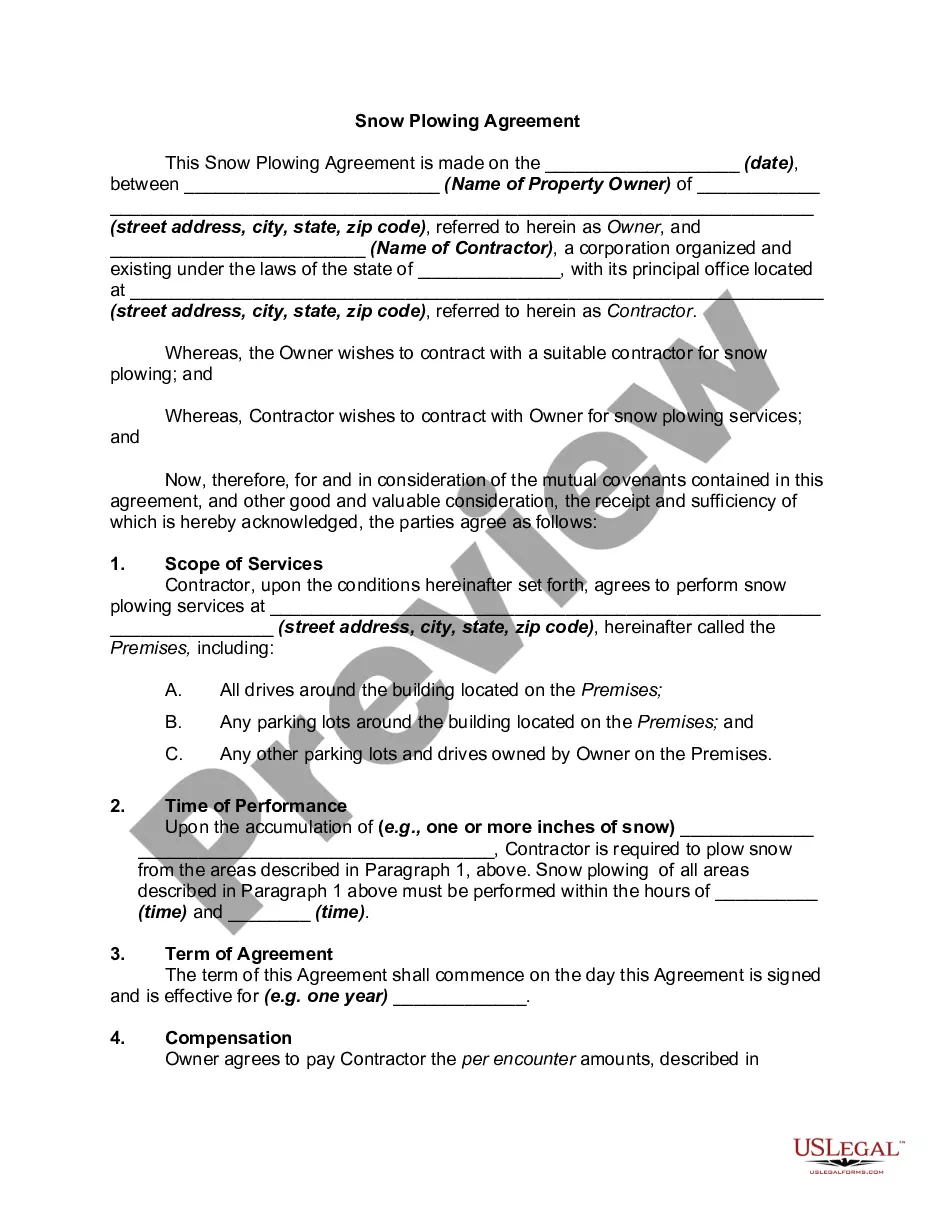
Get your form ready online
Our built-in tools help you complete, sign, share, and store your documents in one place.
Make edits, fill in missing information, and update formatting in US Legal Forms—just like you would in MS Word.
Download a copy, print it, send it by email, or mail it via USPS—whatever works best for your next step.
Sign and collect signatures with our SignNow integration. Send to multiple recipients, set reminders, and more. Go Premium to unlock E-Sign.
If this form requires notarization, complete it online through a secure video call—no need to meet a notary in person or wait for an appointment.
We protect your documents and personal data by following strict security and privacy standards.

Make edits, fill in missing information, and update formatting in US Legal Forms—just like you would in MS Word.

Download a copy, print it, send it by email, or mail it via USPS—whatever works best for your next step.

Sign and collect signatures with our SignNow integration. Send to multiple recipients, set reminders, and more. Go Premium to unlock E-Sign.

If this form requires notarization, complete it online through a secure video call—no need to meet a notary in person or wait for an appointment.

We protect your documents and personal data by following strict security and privacy standards.
Looking for another form?




How to fill out Weed Spraying Agreement?
US Legal Forms - one of the largest collections of legal documents in the United States - offers a comprehensive array of legal form templates that you can download or print.
By utilizing the website, you can access thousands of forms for business and personal purposes, organized by categories, states, or keywords. You can obtain the latest versions of forms such as the Minnesota Weed Spraying Agreement in just moments.
If you have a monthly subscription, Log In and download the Minnesota Weed Spraying Agreement from the US Legal Forms repository. The Download button will be visible on every form you browse.
If you are satisfied with the form, confirm your choice by clicking the Purchase now button. Then, select your preferred pricing plan and provide your credentials to register for an account.
Complete the purchase. Use your credit card or PayPal account to finalize the transaction. Select the format and download the form to your device. Make modifications. Fill out, modify, and print and sign the downloaded Minnesota Weed Spraying Agreement. Each template you added to your account has no expiration date and is yours indefinitely. So, if you want to download or print an additional copy, simply go to the My documents section and click on the form you need.
- You can access all previously saved forms in the My documents section of your account.
- If you are using US Legal Forms for the first time, here are simple steps to get started.
- Make sure you have selected the correct form for your city/county.
- Use the Preview option to check the form’s content.
- Review the form description to confirm you have picked the correct one.
- If the form does not meet your requirements, utilize the Search field at the top of the page to find one that does.
Form popularity
FAQ
If you are fertilizing your own lawn, you do not require a license in Minnesota. However, for those offering fertilization services to others, obtaining a pesticide applicator license becomes necessary. Utilizing a Minnesota Weed Spraying Agreement can provide insights into the required qualifications and ensure legal compliance for your business operations.
No, you do not need a specialized license to apply fertilizer for personal use on your lawn in Minnesota. However, if you plan to provide fertilization services commercially, you should obtain the appropriate license. A Minnesota Weed Spraying Agreement can serve as a helpful resource for understanding these regulations and ensuring proper compliance.
To spray herbicides or weed killers in Minnesota, you need a commercial or non-commercial pesticide applicator license. This license ensures that you are trained in the proper application techniques and understand the environmental impacts. A Minnesota Weed Spraying Agreement can help clarify the specifics of this requirement and assist you in securing the necessary certification.
In Minnesota, the best time to apply fertilizer is typically in the spring and early fall. These seasons provide optimal conditions for nutrient uptake, which supports healthy growth. By understanding the timing outlined in a Minnesota Weed Spraying Agreement, you can achieve better results for your lawn or agricultural field.
To obtain your applicator license in Minnesota, you must complete a training course approved by the Minnesota Department of Agriculture. After completing the necessary coursework, you must pass an exam demonstrating your understanding of herbicide application and safety practices. Acquiring a Minnesota Weed Spraying Agreement can guide you through this process and ensure compliance.
Yes, you need a pesticide applicator license to spray herbicides in Minnesota. This requirement ensures that applicators understand the safe handling and application of chemicals in accordance with local regulations. By obtaining a Minnesota Weed Spraying Agreement, users can navigate the licensing process and operate within the legal framework effectively.
An invasive weed becomes classified as noxious in Minnesota when it threatens crops, ecosystems, or human health. This classification allows for regulatory measures and assistance in managing the weed. A well-defined Minnesota Weed Spraying Agreement can prevent the spread of these invasive species and protect local agriculture.
A noxious weed is a plant designated by law as harmful to crops, livestock, or ecosystems. These weeds can hinder agricultural productivity and impair biodiversity. Through a Minnesota Weed Spraying Agreement, landowners can outline strategies to combat these weeds, ensuring that valuable resources and land remain productive.
Yes, under certain circumstances, a native plant can be classified as a noxious weed. If a native plant species is aggressively spreading and harming crops or ecosystems, it may be designated as such. This highlights the importance of a tailored Minnesota Weed Spraying Agreement, which can address specific weed challenges effectively.
Noxious weeds are plants that the state identifies as harmful to agricultural land and human health, while invasive weeds multiply quickly and outcompete native plants. Understanding this distinction can aid in developing a Minnesota Weed Spraying Agreement, promoting effective weed management. Both types of weeds pose threats, but the classification affects control methods and regulations.