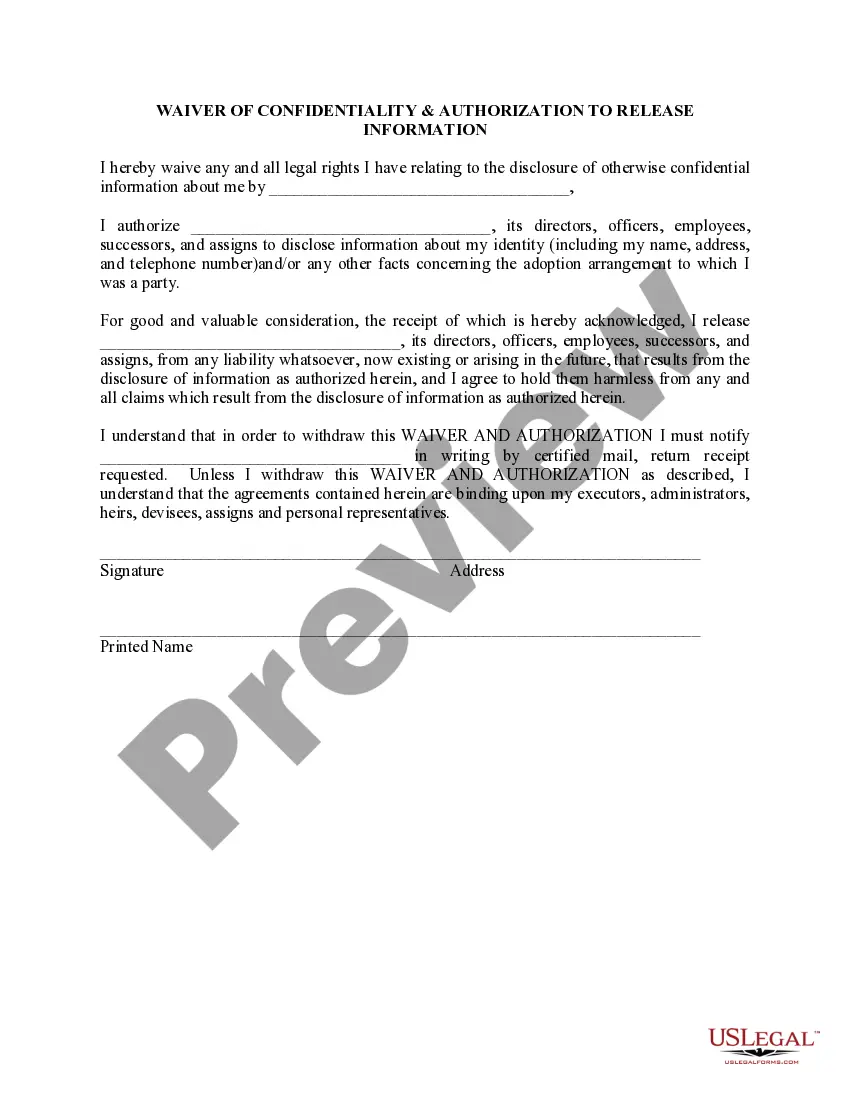
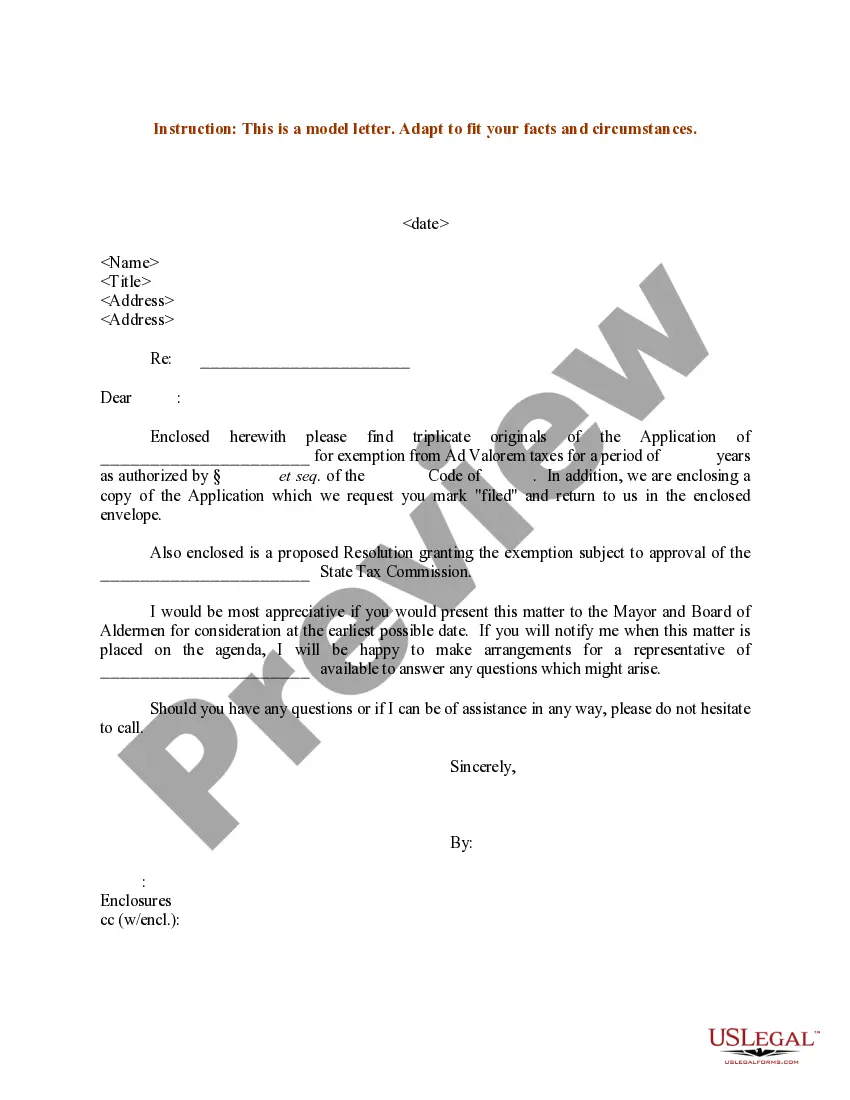
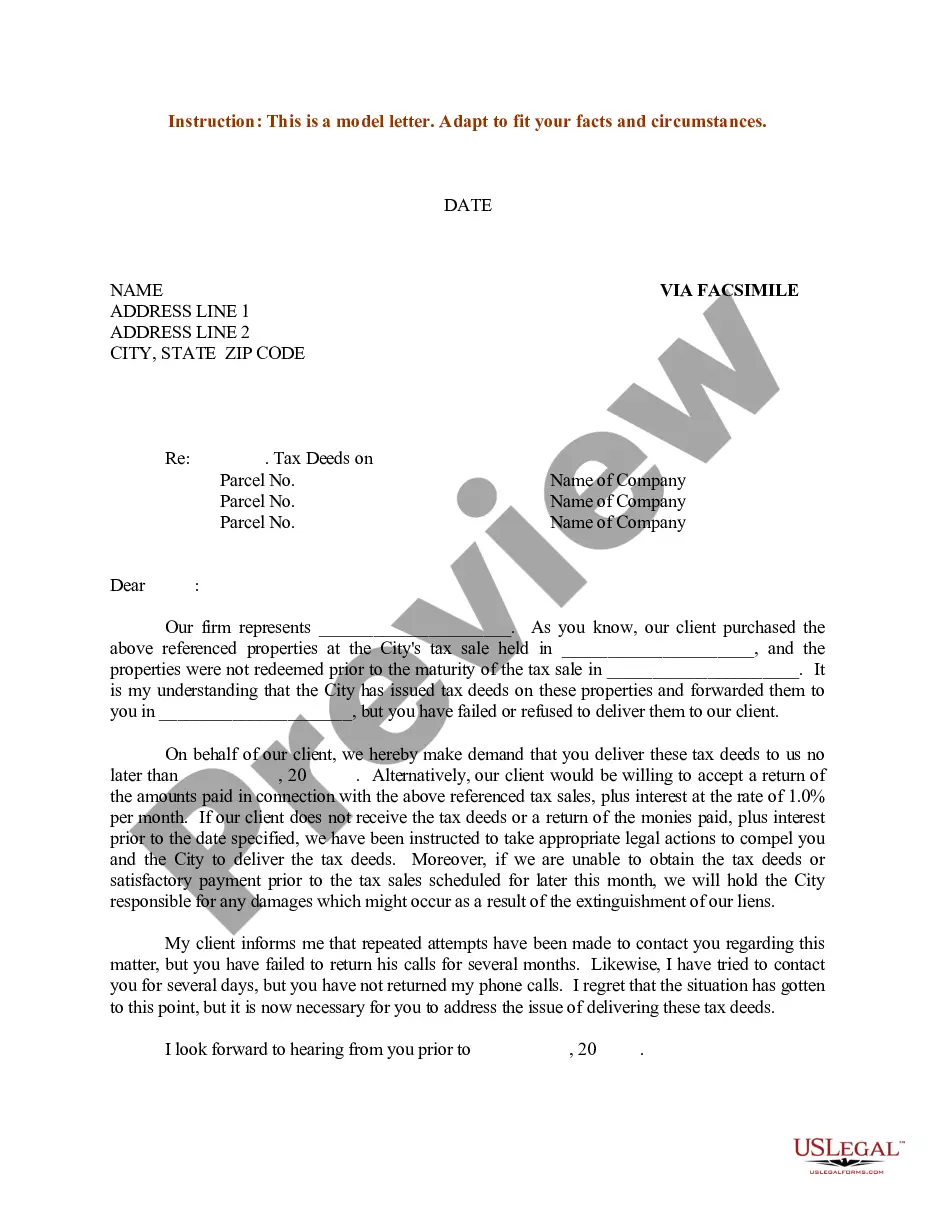
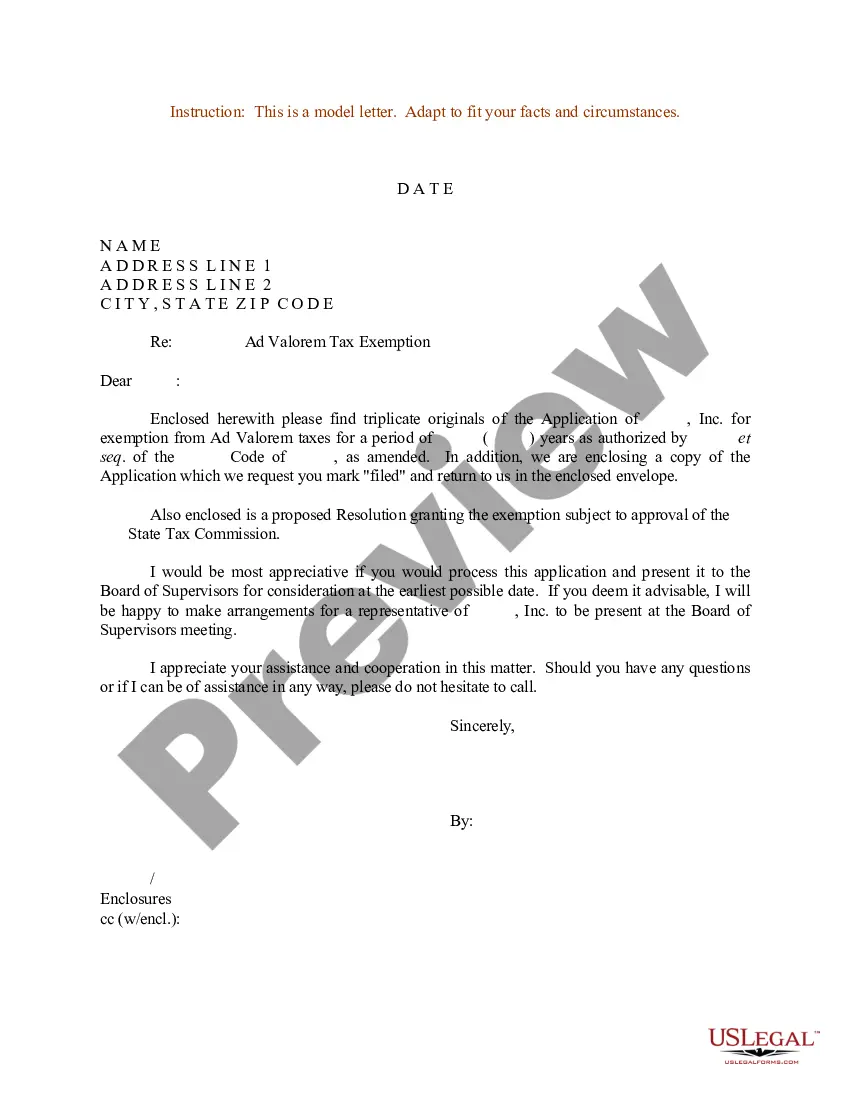
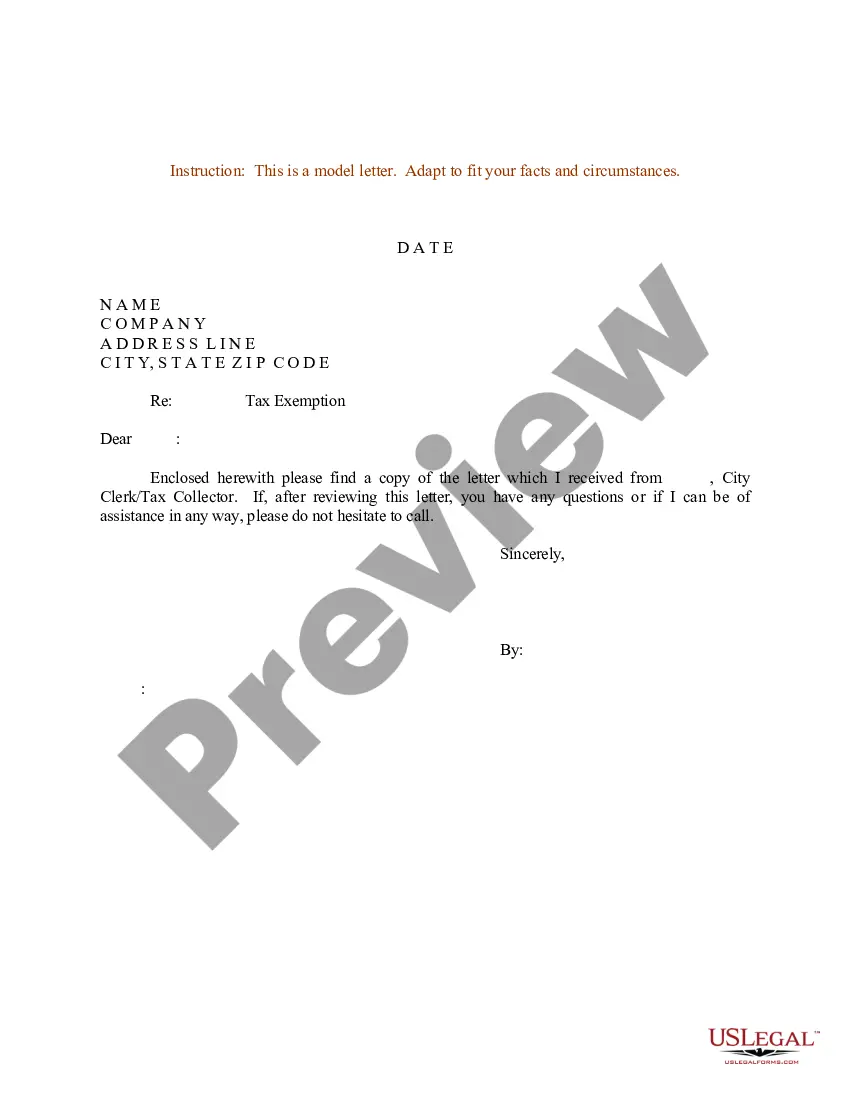
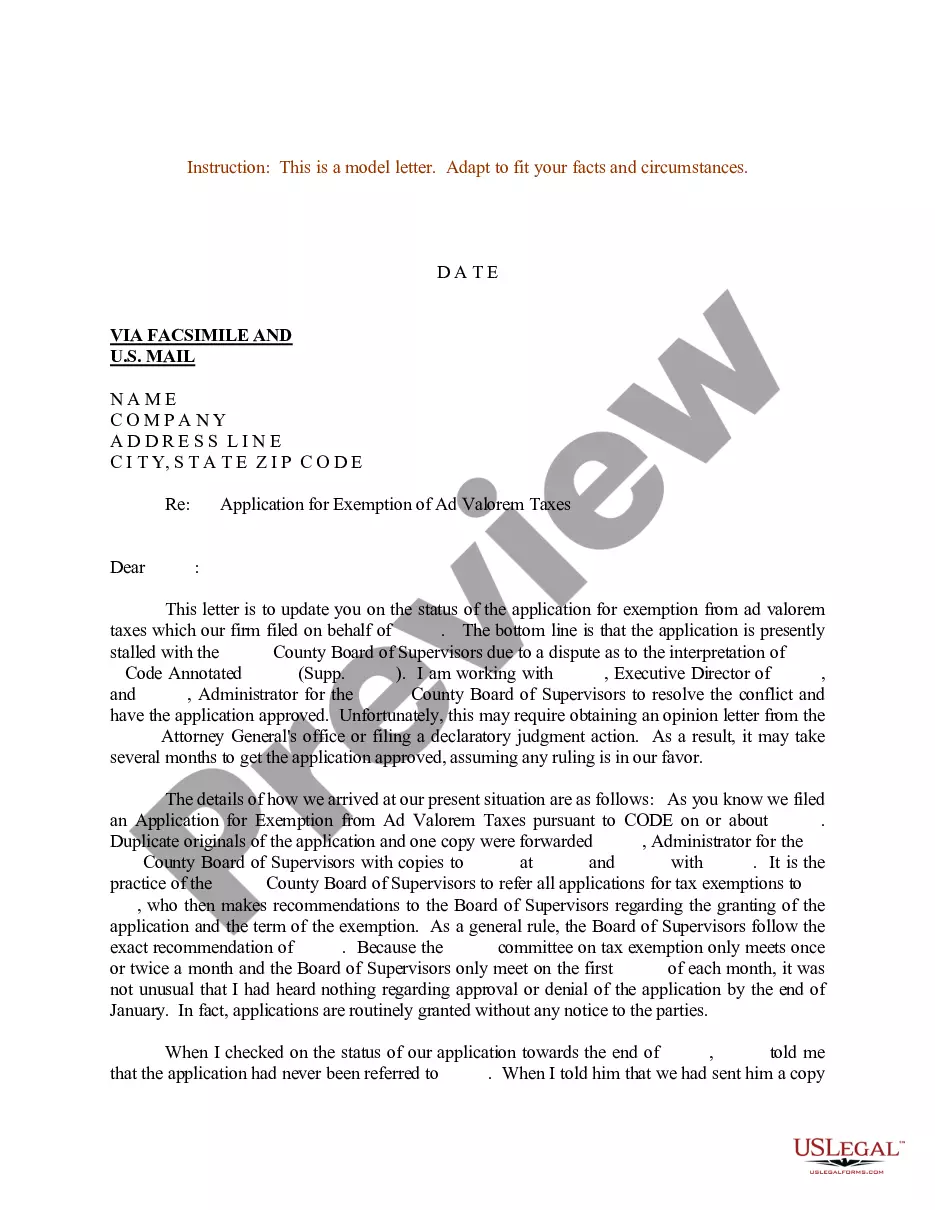
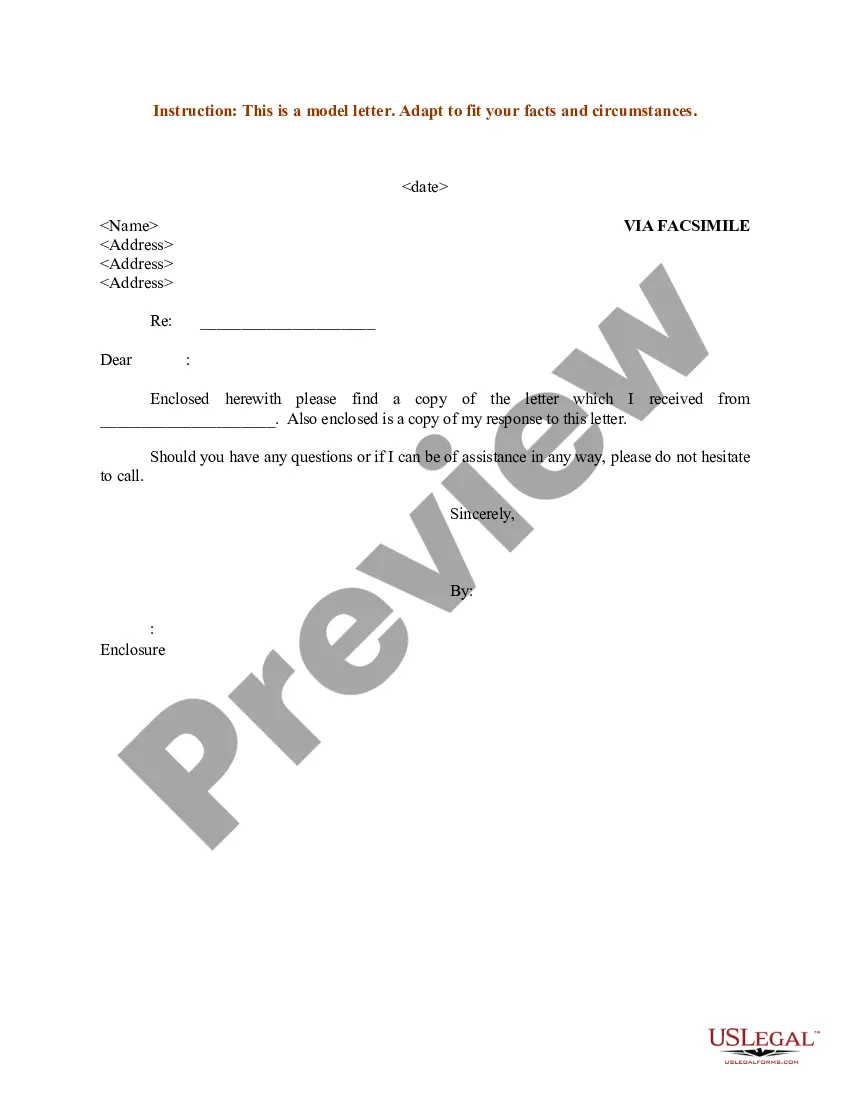
Minnesota Sample Letter to City Clerk regarding Ad Valorem Tax Exemption
Description

Get your form ready online
Our built-in tools help you complete, sign, share, and store your documents in one place.
Make edits, fill in missing information, and update formatting in US Legal Forms—just like you would in MS Word.
Download a copy, print it, send it by email, or mail it via USPS—whatever works best for your next step.
Sign and collect signatures with our SignNow integration. Send to multiple recipients, set reminders, and more. Go Premium to unlock E-Sign.
If this form requires notarization, complete it online through a secure video call—no need to meet a notary in person or wait for an appointment.
We protect your documents and personal data by following strict security and privacy standards.

Make edits, fill in missing information, and update formatting in US Legal Forms—just like you would in MS Word.

Download a copy, print it, send it by email, or mail it via USPS—whatever works best for your next step.

Sign and collect signatures with our SignNow integration. Send to multiple recipients, set reminders, and more. Go Premium to unlock E-Sign.

If this form requires notarization, complete it online through a secure video call—no need to meet a notary in person or wait for an appointment.

We protect your documents and personal data by following strict security and privacy standards.
Looking for another form?




How to fill out Sample Letter To City Clerk Regarding Ad Valorem Tax Exemption?
You can spend time online attempting to locate the official document template that fulfills the state and federal requirements you require.
US Legal Forms provides a wide range of legal forms that have been reviewed by experts.
It is easy to download or print the Minnesota Sample Letter to City Clerk concerning Ad Valorem Tax Exemption from the service.
If available, use the Preview button to review the document template as well. If you wish to find another version of the form, use the Lookup field to find the template that meets your needs and specifications. Once you have found the template you want, click Get now to proceed. Select the pricing plan you desire, enter your details, and register for an account on US Legal Forms. Complete the transaction. You can use your credit card or PayPal account to pay for the legal form. Choose the format of the document and download it to your device. Make modifications to your document if necessary. You can complete, edit, sign, and print the Minnesota Sample Letter to City Clerk regarding Ad Valorem Tax Exemption. Acquire and print numerous document templates using the US Legal Forms website, which offers the largest collection of legal forms. Utilize professional and state-specific templates to meet your business or personal needs.
- If you already have a US Legal Forms account, you can Log In and click the Acquire button.
- Then, you can complete, modify, print, or sign the Minnesota Sample Letter to City Clerk regarding Ad Valorem Tax Exemption.
- Every legal document template you purchase is yours forever.
- To obtain another copy of any purchased form, visit the My documents tab and click the corresponding button.
- If you are using the US Legal Forms website for the first time, follow the simple instructions below.
- First, ensure that you have selected the correct document template for the state/city of your preference.
- Check the form description to make sure you have chosen the right form.
Form popularity
FAQ
Churches are not exempt from special assessments, but only from taxes. Taxes are imposed on both real and personal property; with very few exceptions, special assessments apply only to land or to land and improvements. Church property remains subject to all district levies on land only or land and improvements only.
Property tax deferral for senior citizens This program allows people 65 or older to defer a portion of their homestead property taxes and is also administered by the State of Minnesota. Property Tax Refunds | Ramsey County ramseycounty.us ? taxes-values ? homestead ramseycounty.us ? taxes-values ? homestead
To be eligible for exemption, a property needs to meet two criteria: It needs to be owned by a qualifying person or entity, and. It needs to be used for a public, educational, religious, or charitable purpose. Property Tax Exemptions | Ramsey County ramseycounty.us ? residents ? taxes-values ramseycounty.us ? residents ? taxes-values
Today, in all 50 states and the District of Columbia, statutes and constitutions provide various types of property tax exemptions for religious organizations.
As a general rule, all property in the state of Minnesota is taxable, except tribal lands, unless the property is owned and used for a public purpose, education, or religious or charitable ministration. Exempt Status | Scott County, MN scottcountymn.gov ? Exempt-Status scottcountymn.gov ? Exempt-Status
Organizations that may qualify include: Churches. Museums and historical societies. Private schools, colleges, and universities.
All properties used exclusively for public purposes, including public hospitals, schools, burial grounds, etc. Certain kinds of personal property, including in most cases property that creates energy, enables commerce, or conserves nature. Qualifying wetlands or native prairie lands.