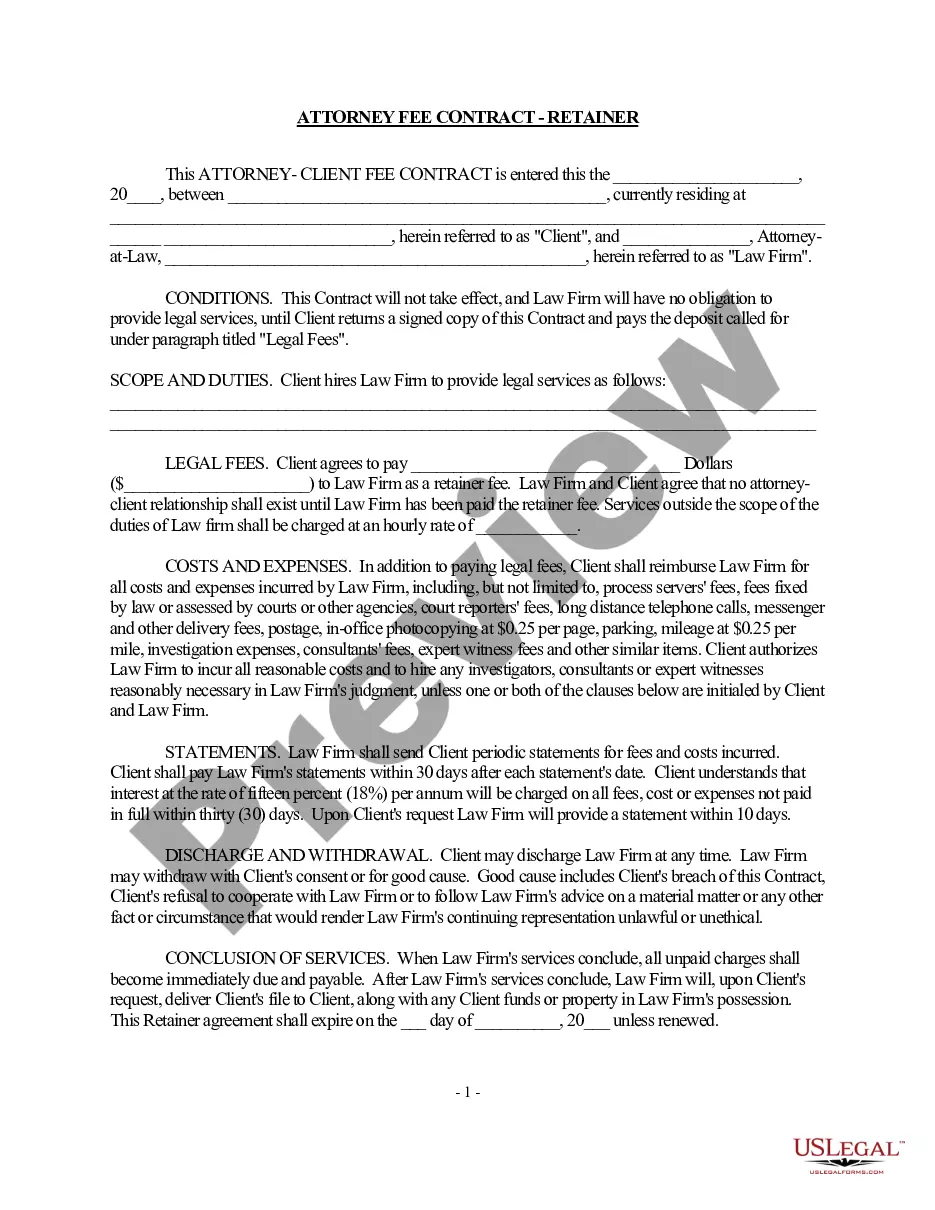
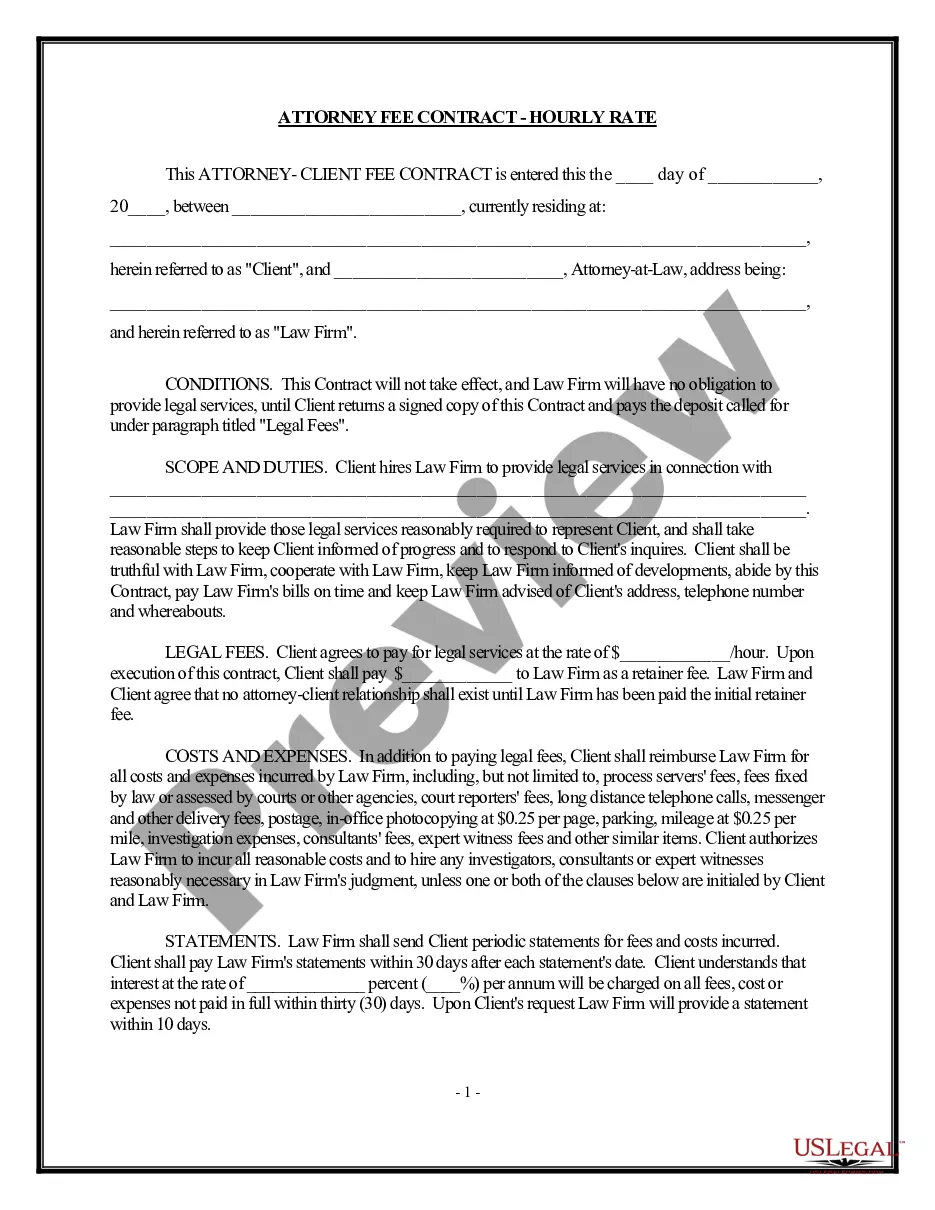
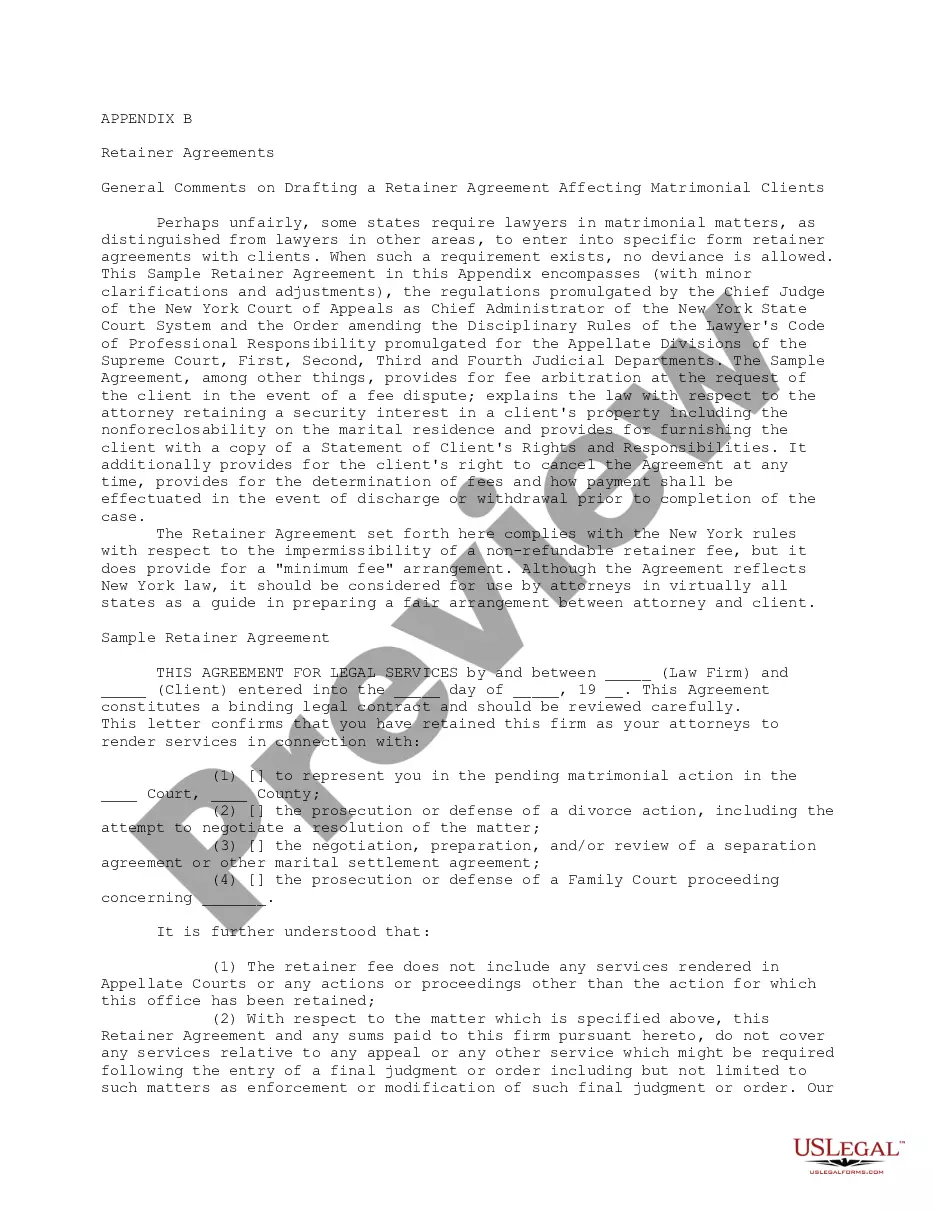
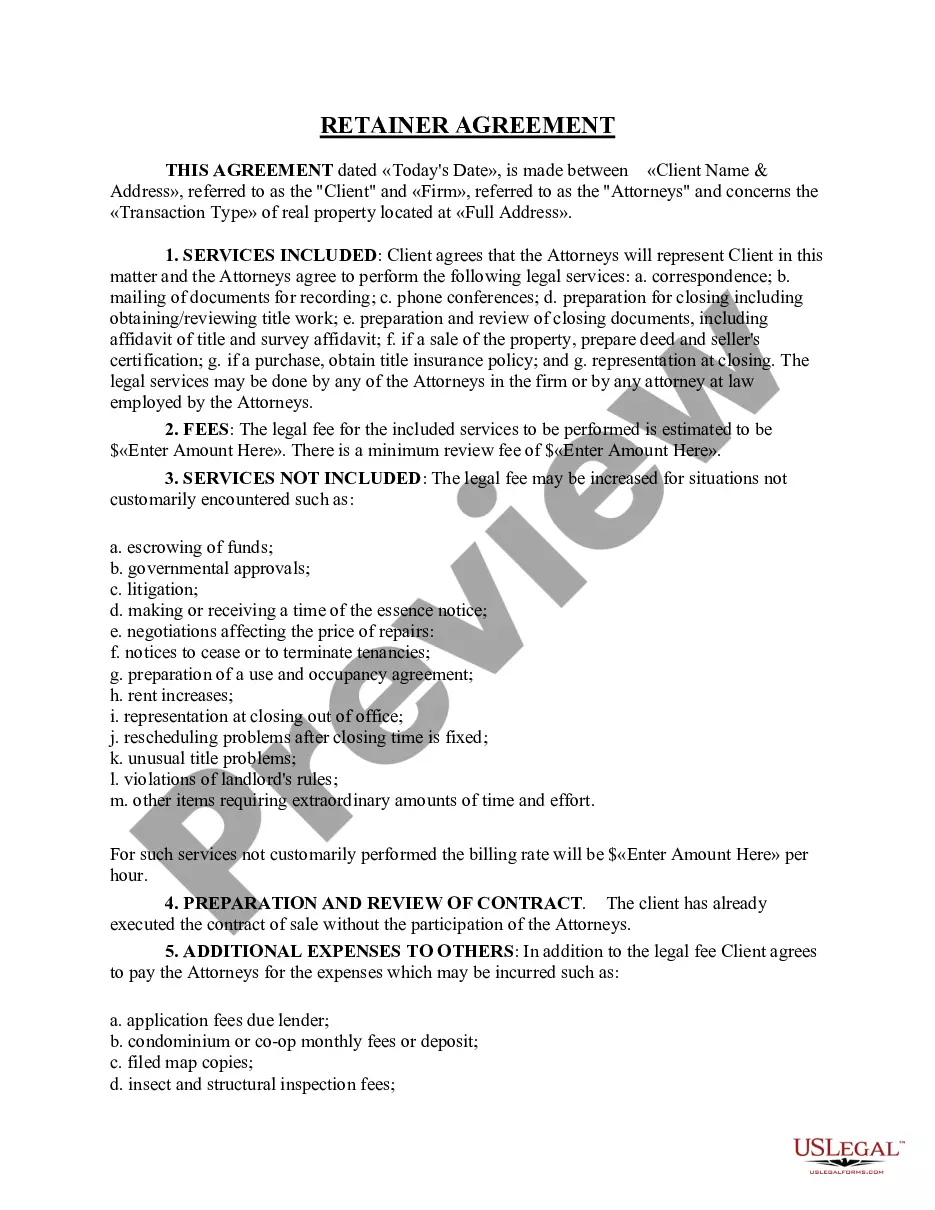
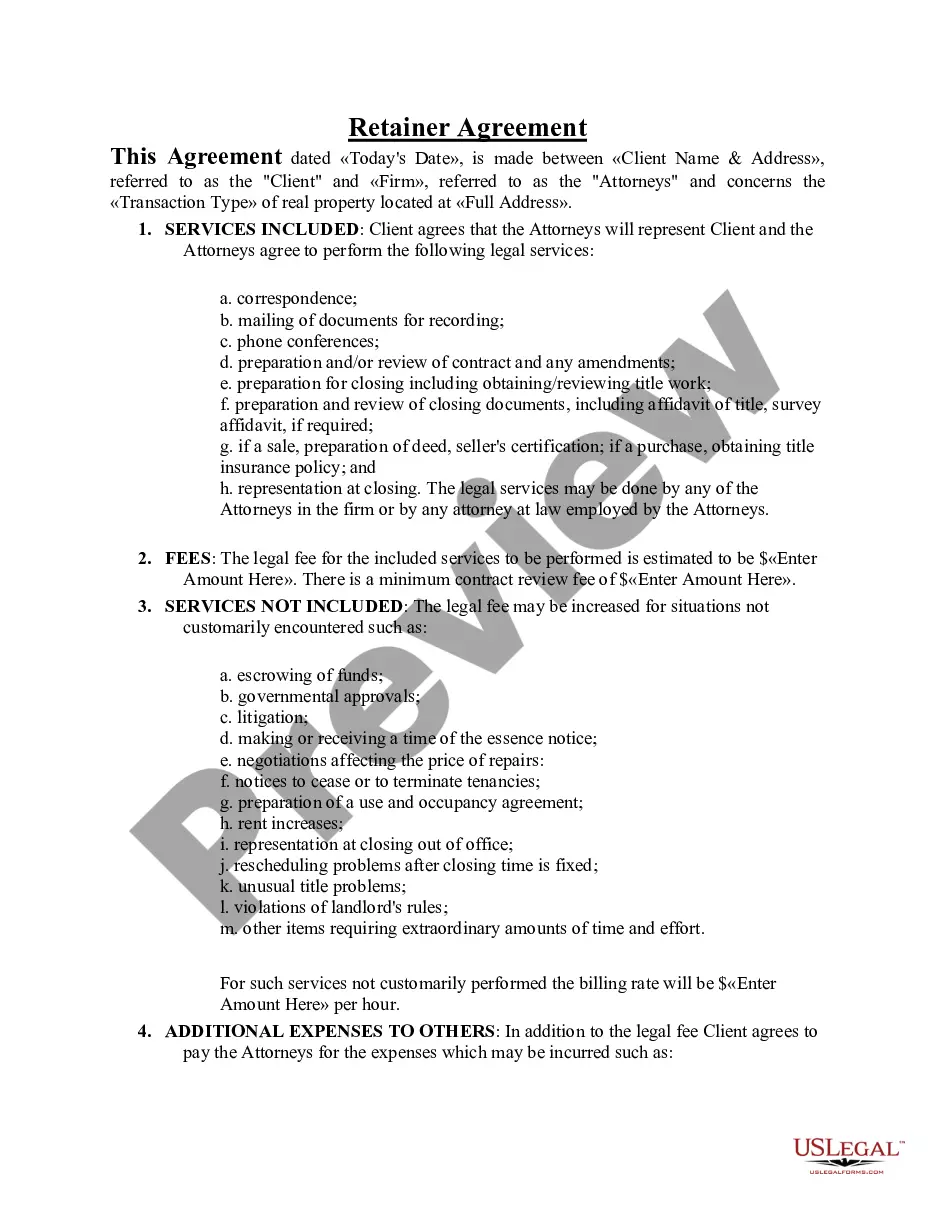
According to this agreement, client agrees to pay a retainer fee for legal services. The client and attorney agree that no attorney/client relationship will exist until the law firm has received the retainer fee from the client.
Minnesota Legal Services Agreement - Retainer
315 downloads
Description
Free preview


Get your form ready online
Our built-in tools help you complete, sign, share, and store your documents in one place.
Built-in online Word editor
Make edits, fill in missing information, and update formatting in US Legal Forms—just like you would in MS Word.
Export easily
Download a copy, print it, send it by email, or mail it via USPS—whatever works best for your next step.
E-sign your document
Sign and collect signatures with our SignNow integration. Send to multiple recipients, set reminders, and more. Go Premium to unlock E-Sign.
Notarize online 24/7
If this form requires notarization, complete it online through a secure video call—no need to meet a notary in person or wait for an appointment.
Store your document securely
We protect your documents and personal data by following strict security and privacy standards.

Make edits, fill in missing information, and update formatting in US Legal Forms—just like you would in MS Word.

Download a copy, print it, send it by email, or mail it via USPS—whatever works best for your next step.

Sign and collect signatures with our SignNow integration. Send to multiple recipients, set reminders, and more. Go Premium to unlock E-Sign.

If this form requires notarization, complete it online through a secure video call—no need to meet a notary in person or wait for an appointment.

We protect your documents and personal data by following strict security and privacy standards.
Looking for another form?

How to fill out Legal Services Agreement - Retainer?
Selecting the appropriate legal document template can be a challenge. Naturally, there are countless templates available online, but how do you locate the legal form you require? Use the US Legal Forms website. The service provides thousands of templates, including the Minnesota Legal Services Agreement - Retainer, which you can utilize for both business and personal purposes. All of the forms are reviewed by professionals and comply with state and federal regulations.
If you are already registered, Log In to your account and click the Download button to obtain the Minnesota Legal Services Agreement - Retainer. Use your account to search through the legal forms you have previously purchased. Navigate to the My documents tab of your account and download an additional copy of the document you need.
If you are a new user of US Legal Forms, here are simple instructions for you to follow: First, ensure that you have chosen the correct form for your city/region. You can preview the form using the Preview button and review the form details to confirm it is the right one for you. If the form does not meet your needs, utilize the Search field to find the appropriate form. Once you are confident that the form is correct, click the Purchase now button to obtain the form. Select the pricing plan you need and enter the required information. Create your account and complete the transaction using your PayPal account or credit card. Choose the file format and download the legal document template for your use. Fill out, modify, print, and sign the received Minnesota Legal Services Agreement - Retainer. US Legal Forms is the largest collection of legal forms where you can find numerous document templates. Use the service to obtain professionally-created documents that adhere to state requirements.
Form popularity
FAQ
Whether you're on the client side or the contractor side of a retainer, be sure to review that document carefully before agreeing to its terms. A retainer is a legally binding contract, and violating it could have serious consequences.
A retainer is the contract essential to the creation of any relationship between lawyer and client, entitling the lawyer to charge legal costs. A costs agreement is a second contract about the payment and quantification of the legal costs flowing from a retainer.
Be flexible. Be prepared to negotiate the terms of the retainer agreement. If the client is resistant to agreeing to a retainer, try offering a lower fee in exchange for a longer contract term. Or, propose a trial period to start off the relationship.
A retainer fee is the upfront cost of a service before the service has been performed. In other words, it's a form of advance payment often required by a consultant, lawyer or freelance professional. For example, a lawyer charges their client a retainer fee prior to the client using their services.
Finally, a retainer fee is sometimes considered a down payment on legal services that the client will need. This means the legal fees will be subtracted from the retainer until the retainer is used up. The lawyer would then bill you for any additional time spent on your case or ask you to pay an additional retainer.
The trust funds are not touched until it is time for you to be billed for the attorney's time and fees. This concept is like a savings account. The retainer remains very much ?your money? until it is used to pay for your attorney's time on the case.
The basic structure of retainer agreements is the same though: Agency agrees to provide a service(s) or a number of hours their client needs each month. In turn, the client agrees to the retainer payment that they'd pay in exchange for the agency reserving its time/service for them.