Minnesota Paternity Law and Procedure Handbook
About this form
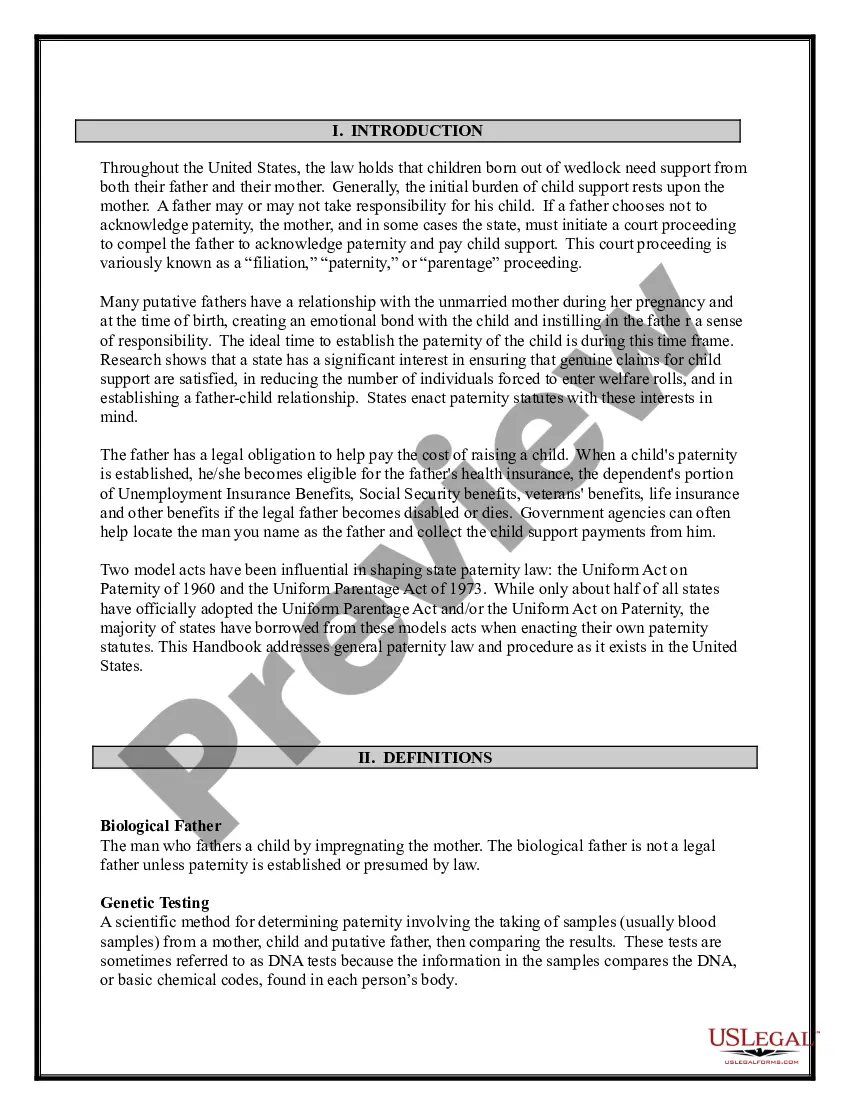
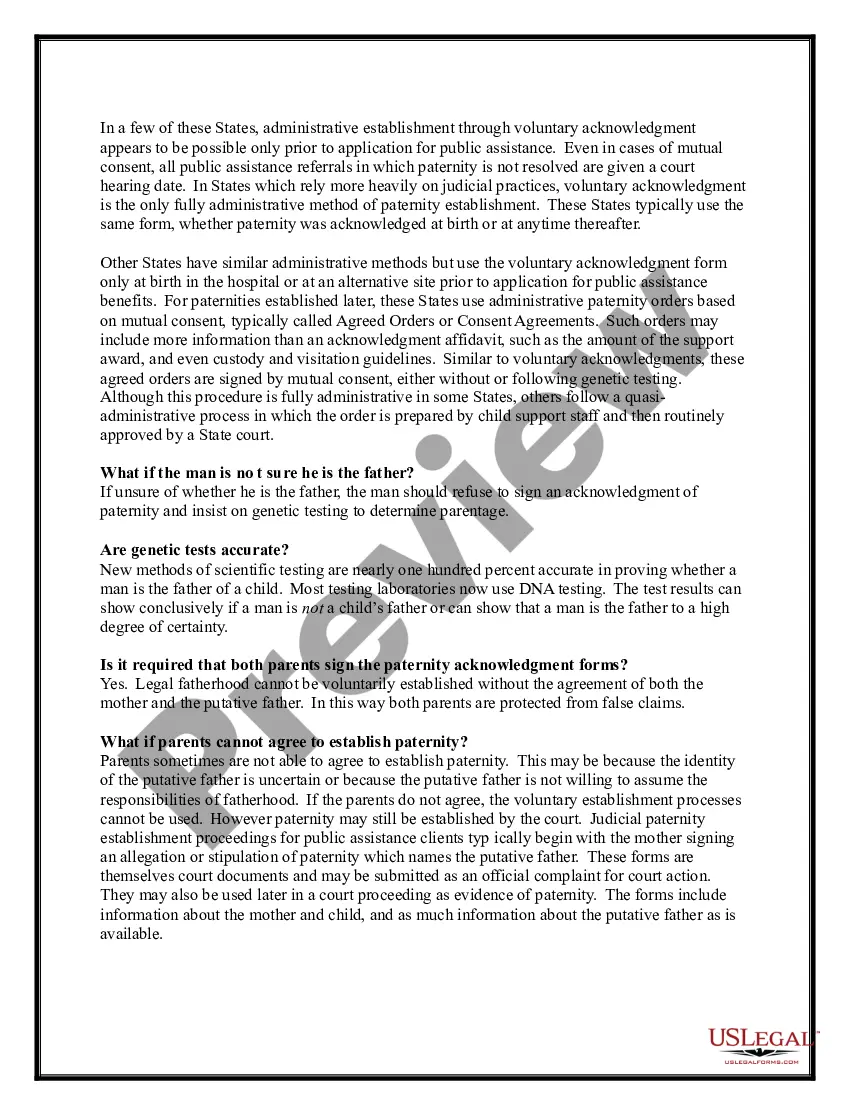
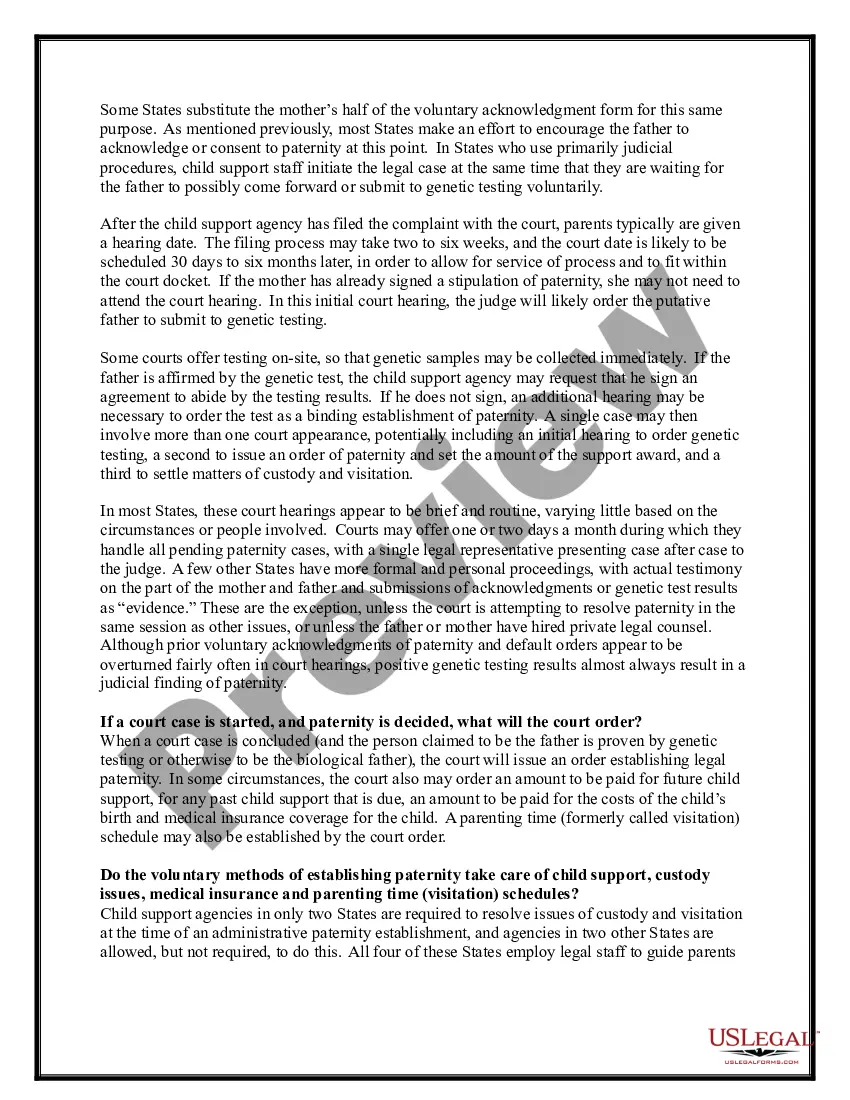
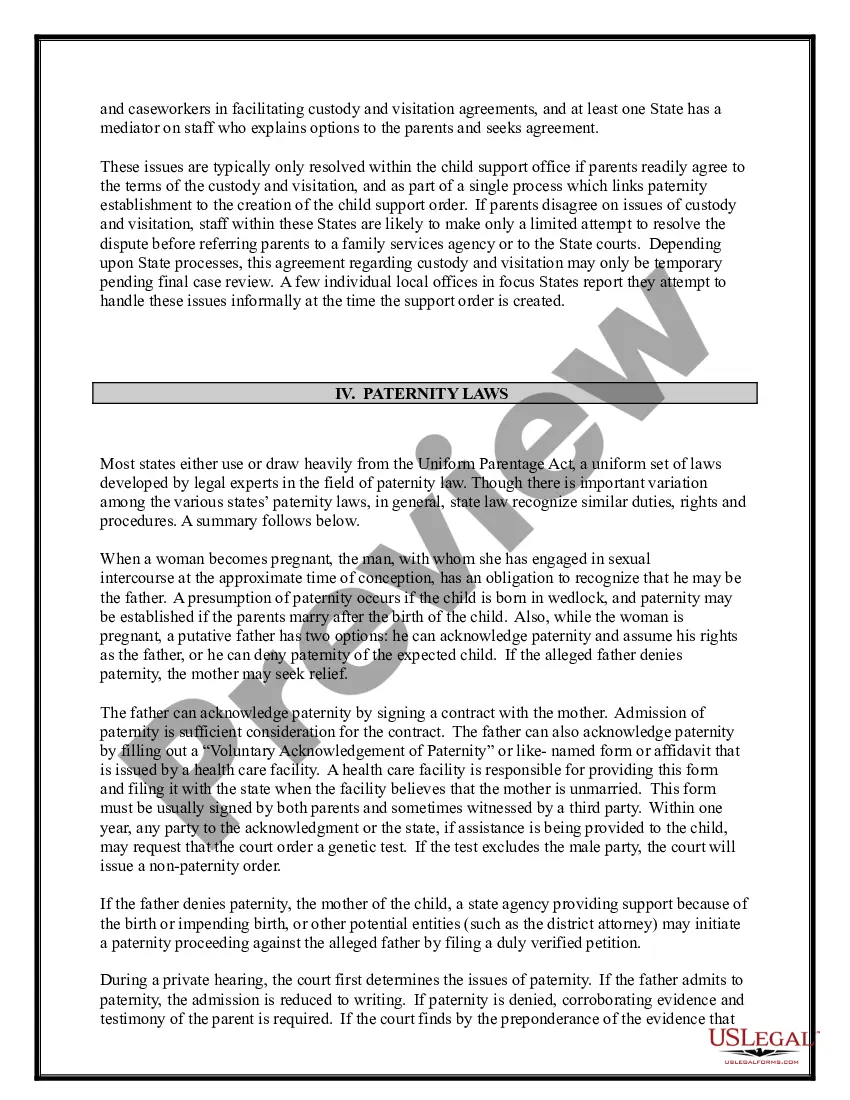
The Paternity Law and Procedure Handbook is a comprehensive guide designed to help individuals navigate the complexities of establishing paternity in the United States. It is tailored for unwed parents, providing them with crucial information about their rights and responsibilities, as well as the legal processes to confirm paternity. Unlike other legal documents, this handbook offers state-specific resources and straightforward explanations of paternity laws, making it an invaluable tool for parents unsure of how to proceed in these circumstances.
Key components of this form
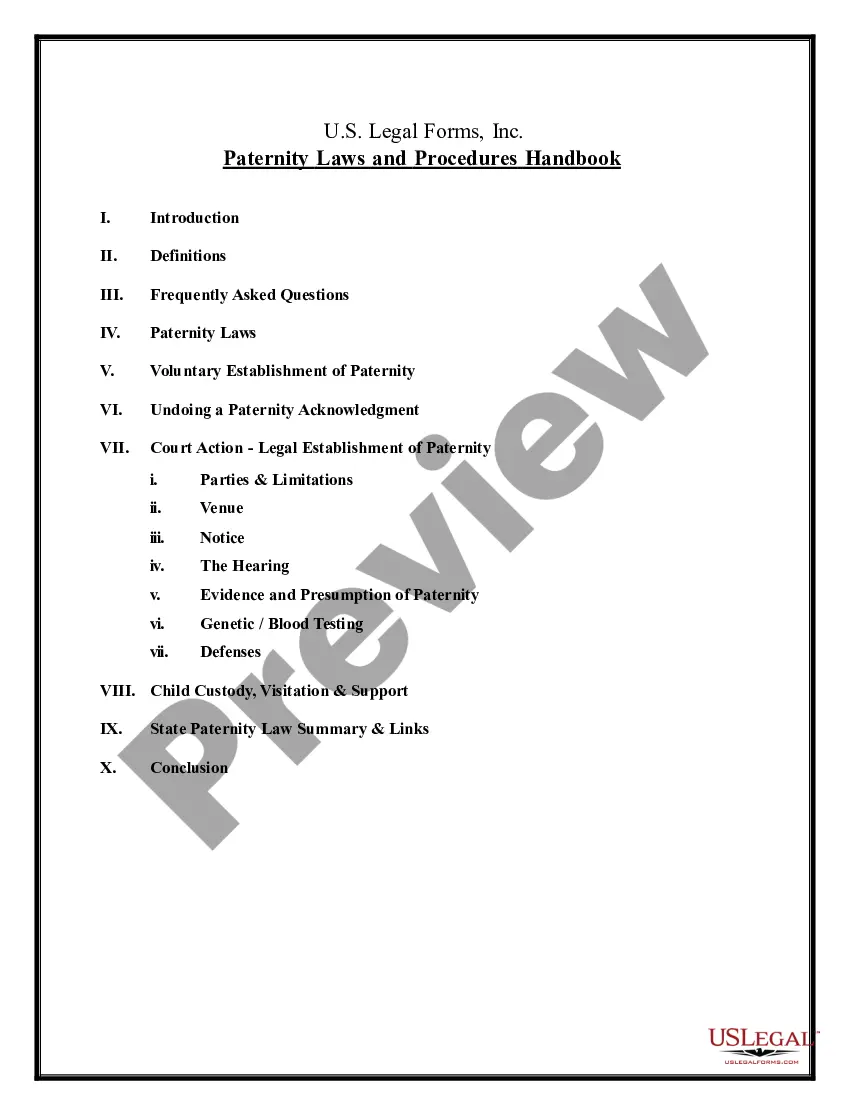
- Introduction to paternity laws in the U.S.
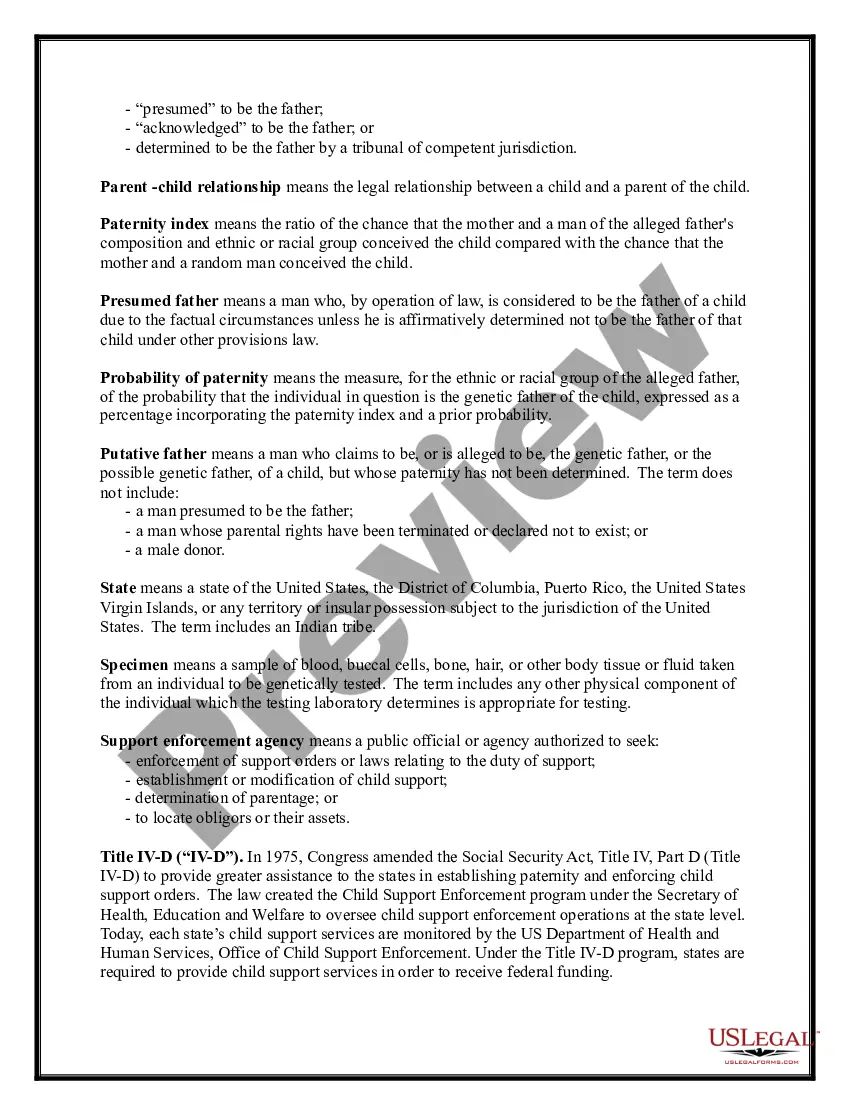
- Definitions of key terms, such as biological father, legal father, and paternity acknowledgment.
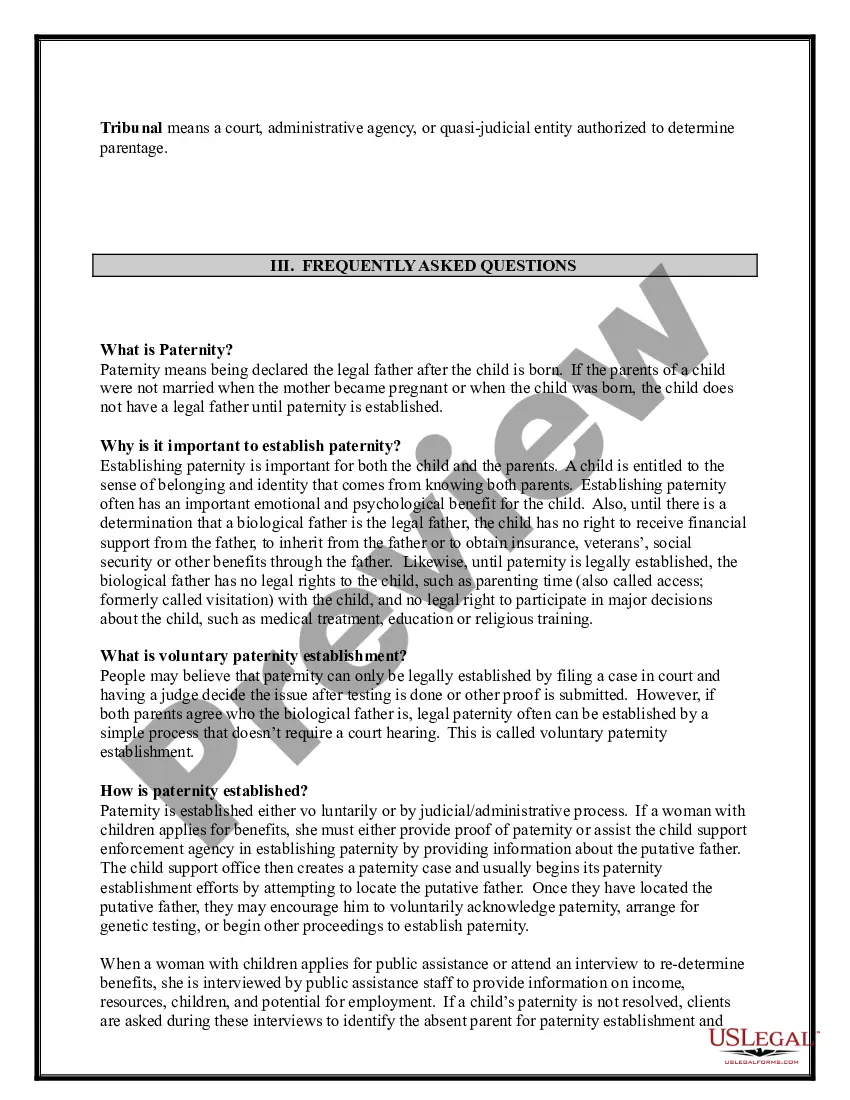
- Frequently asked questions regarding the importance of establishing paternity and methods for doing so.
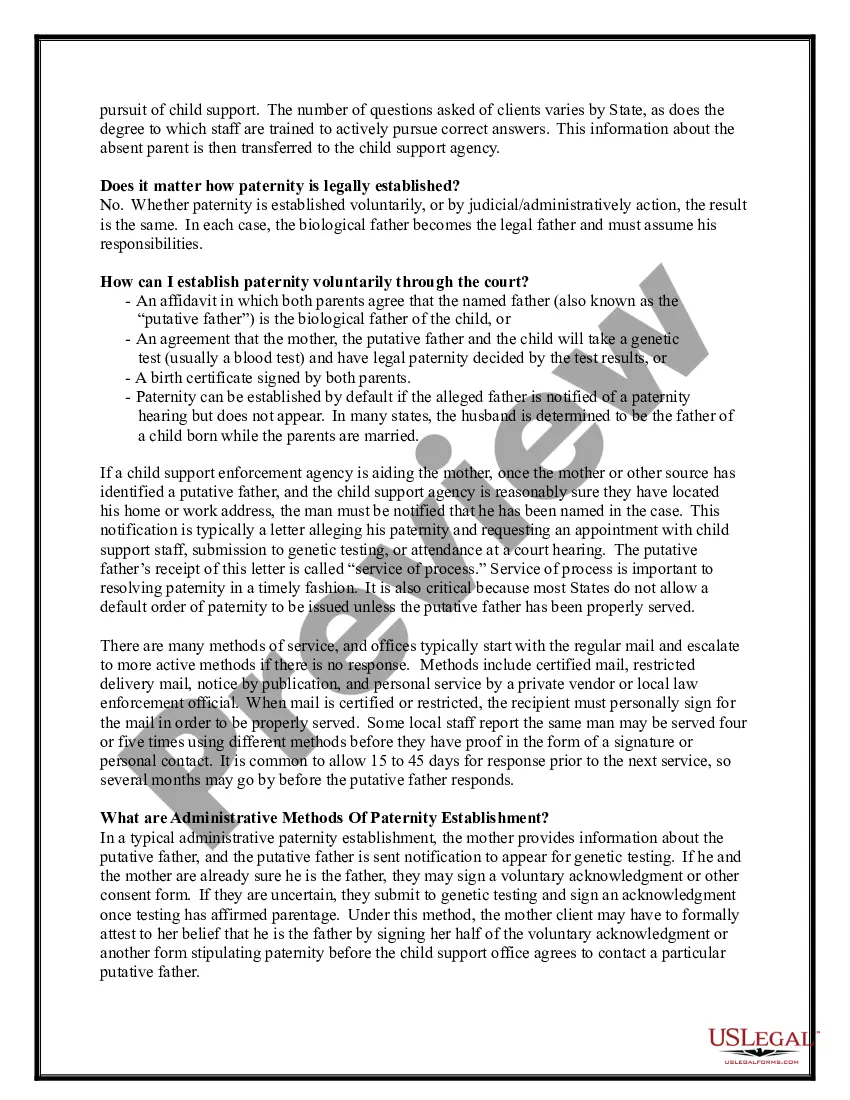
- Procedures for voluntary paternity establishment and court actions.
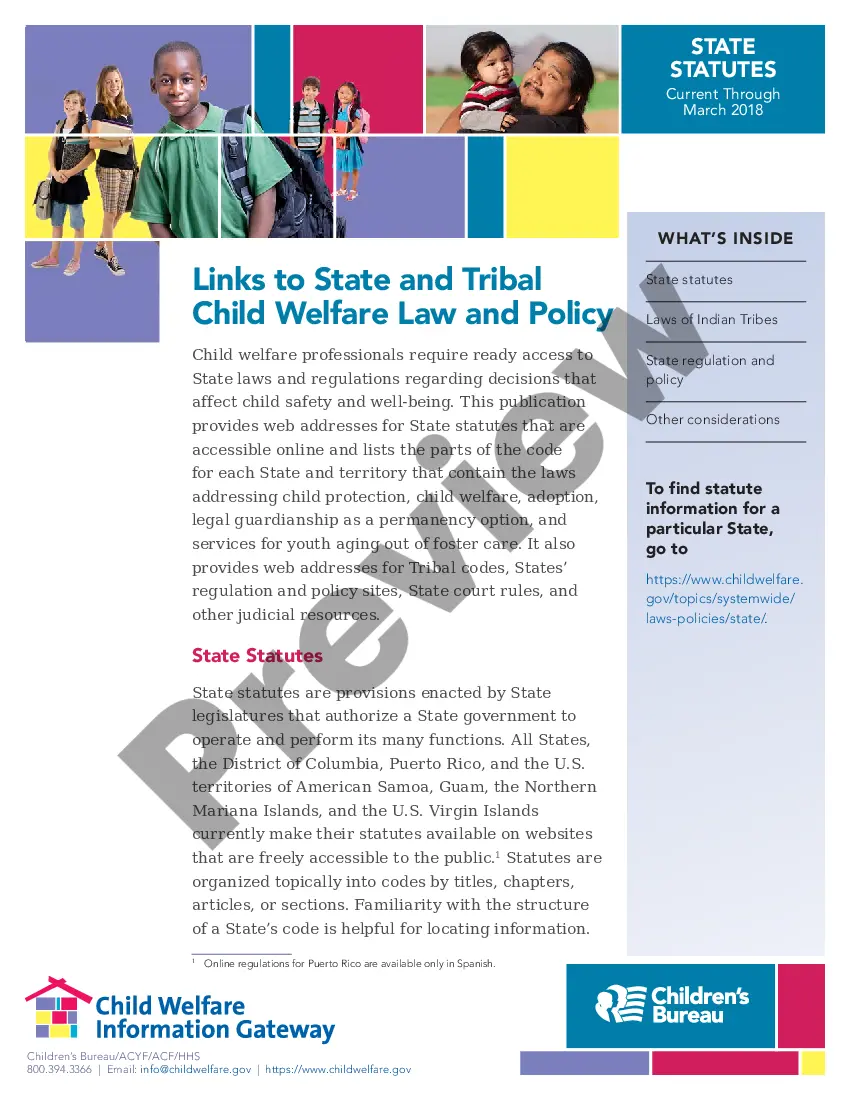
- State-specific paternity law summary and relevant resources.
- Conclusion outlining the importance of understanding paternity rights and responsibilities.

When to use this form
This handbook is beneficial in various scenarios, including when an unwed mother seeks financial support from the father, when a father wishes to acknowledge his relationship with his child, or when either party has doubts about paternity. It provides guidance on how to legally establish paternity, which is vital for gaining child support, custody rights, and access to state benefits.
Intended users of this form
This handbook is intended for:
- Unmarried parents wishing to establish paternity.
- Legal advisors and practitioners working with paternity cases.
- State agencies involved in child support enforcement.
- Individuals seeking to understand their rights in paternity matters.
Steps to complete this form
To effectively use this handbook, follow these steps:
- Familiarize yourself with the definitions of key terms related to paternity.
- Identify the appropriate method for establishing paternityâvoluntary acknowledgment or court action.
- Consult the state-specific laws provided in the handbook to understand your jurisdiction's requirements.
- Gather necessary documents and information, such as birth certificates and identification.
- Complete any required forms, ensuring both parties are informed of their rights and obligations.
- Submit documents as outlined in your state's procedures, either through a court or appropriate agency.
Does this document require notarization?
This form does not typically require notarization unless specified by local law. It is advised to check specific state regulations to confirm any notarization requirements related to paternity acknowledgment forms.
Get your form ready online
Our built-in tools help you complete, sign, share, and store your documents in one place.
Make edits, fill in missing information, and update formatting in US Legal Forms—just like you would in MS Word.
Download a copy, print it, send it by email, or mail it via USPS—whatever works best for your next step.
Sign and collect signatures with our SignNow integration. Send to multiple recipients, set reminders, and more. Go Premium to unlock E-Sign.
If this form requires notarization, complete it online through a secure video call—no need to meet a notary in person or wait for an appointment.
We protect your documents and personal data by following strict security and privacy standards.

Make edits, fill in missing information, and update formatting in US Legal Forms—just like you would in MS Word.

Download a copy, print it, send it by email, or mail it via USPS—whatever works best for your next step.

Sign and collect signatures with our SignNow integration. Send to multiple recipients, set reminders, and more. Go Premium to unlock E-Sign.

If this form requires notarization, complete it online through a secure video call—no need to meet a notary in person or wait for an appointment.

We protect your documents and personal data by following strict security and privacy standards.
Mistakes to watch out for
- Failing to fully understand the definitions of paternity terms, leading to incorrect filings.
- Not promptly establishing paternity, which could affect child support and custody rights.
- Assuming voluntary acknowledgment can be made without legal documentation.
- Neglecting to consult state-specific laws which may differ significantly from general guidelines.
Why complete this form online
- Convenient access to comprehensive paternity law information online.
- Downloadable legal forms drafted by licensed attorneys, ensuring reliability.
- Resource links for state-specific paternity laws and support services.
- Quickly understand complex legal terms and procedures with clear explanations.
This handbook serves as a legal guide to understanding paternity laws and procedures. It's important to keep in mind that while the information provided is accurate, users should consult with a qualified attorney to ensure compliance with their local regulations and to navigate any legal proceedings effectively.
Quick recap
- The Paternity Law and Procedure Handbook is essential for understanding paternity rights and responsibilities.
- Establishing paternity is crucial for access to child support and custody rights.
- State-specific resources help users navigate local laws efficiently.
- Consulting with legal professionals can help clarify any complex issues related to paternity.
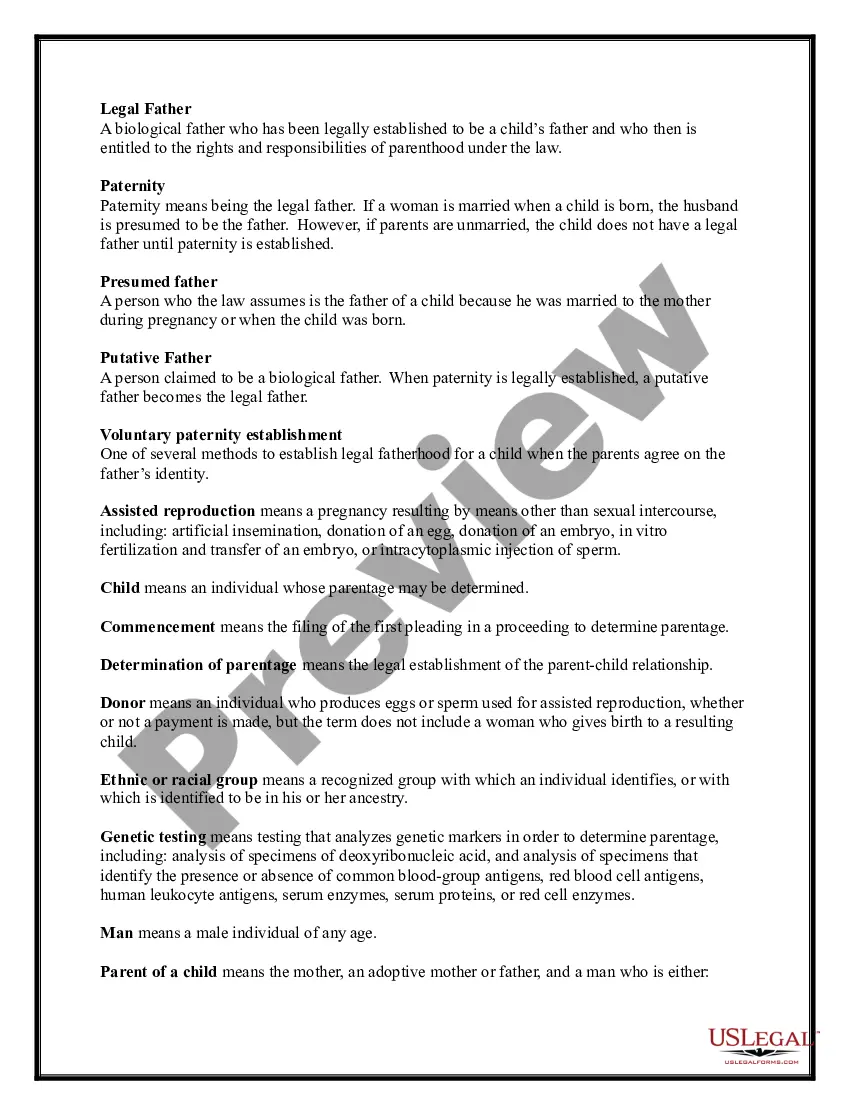
- Biological Father: The man who fathers a child by impregnating the mother.
- Legal Father: A biological father who has been legally established as such through acknowledgment or court order.
- Paternity: The legal acknowledgment of a man as the father of a child.
- Voluntary Acknowledgment: A legal procedure where both parents agree on the identity of the father without court intervention.
Looking for another form?

Form popularity
FAQ
To file a declaration of paternity, you need to complete the necessary forms, which are available in the Minnesota Paternity Law and Procedure Handbook. After filling out the forms, submit them to the appropriate court or agency. It's essential to ensure all information is accurate to avoid delays. For additional assistance, consider using the resources provided by uslegalforms, which can guide you through the filing process smoothly.
The easiest way to prove paternity is through a DNA test, which is the most reliable method. Both parents and the child can provide samples for testing. Additionally, the Minnesota Paternity Law and Procedure Handbook outlines other methods, such as establishing paternity through marriage or acknowledgment forms. Utilizing these resources can simplify the process and ensure accurate documentation.
Minnesota Paternity Law and Procedure Handbook outlines the legal framework for establishing paternity, which is crucial for both parents' rights. In Minnesota, paternity can be established through a voluntary acknowledgment by both parents or by court order. This legal recognition allows both parents to share responsibilities, such as custody and support. For a comprehensive understanding, consider reviewing resources provided by USLegalForms to navigate this important process.
Under Minnesota Paternity Law and Procedure Handbook, a mother cannot unilaterally refuse access to the father unless there are valid concerns regarding the child's safety. If the father has established paternity, both parents have rights and responsibilities regarding the child. It's important to seek legal guidance to navigate any disputes about access. Resources like USLegalForms can provide valuable information and templates to help you understand your rights.
Yes, a father can establish paternity in Minnesota without the mother's consent, typically through a court order or genetic testing. However, this process may be more complex and require legal assistance. The Minnesota Paternity Law and Procedure Handbook outlines the steps involved, making it easier for fathers to understand their rights and options.
In Minnesota, a father has until the child turns 18 years old to establish paternity. However, it is advisable to act sooner to secure legal rights and responsibilities. The Minnesota Paternity Law and Procedure Handbook provides timelines and legal recourse options for fathers seeking to establish paternity.
In Minnesota, a father cannot take his child without the mother's consent unless he has legal custody. If paternity is established, the father may have rights to custody or visitation, but these must be respected. The Minnesota Paternity Law and Procedure Handbook clarifies the legal boundaries and procedures for fathers in such situations.
Yes, if a father signs the birth certificate, he gains certain rights regarding his child. This includes the right to seek custody and visitation, as well as being involved in major decisions related to the child's life. The Minnesota Paternity Law and Procedure Handbook can help fathers understand how signing the birth certificate affects their legal rights.
A father can establish paternity in Minnesota by signing a Recognition of Parentage form, which is a legal document that acknowledges him as the child's father. Additionally, paternity can be established through court orders or genetic testing. The Minnesota Paternity Law and Procedure Handbook offers detailed guidance on these processes, ensuring fathers understand their options.
In Minnesota, if a father is listed on the birth certificate, he has certain legal rights regarding his child. These rights include the ability to seek custody, visitation, and participate in decision-making about the child's upbringing. The Minnesota Paternity Law and Procedure Handbook provides crucial information to help fathers navigate their rights and responsibilities.