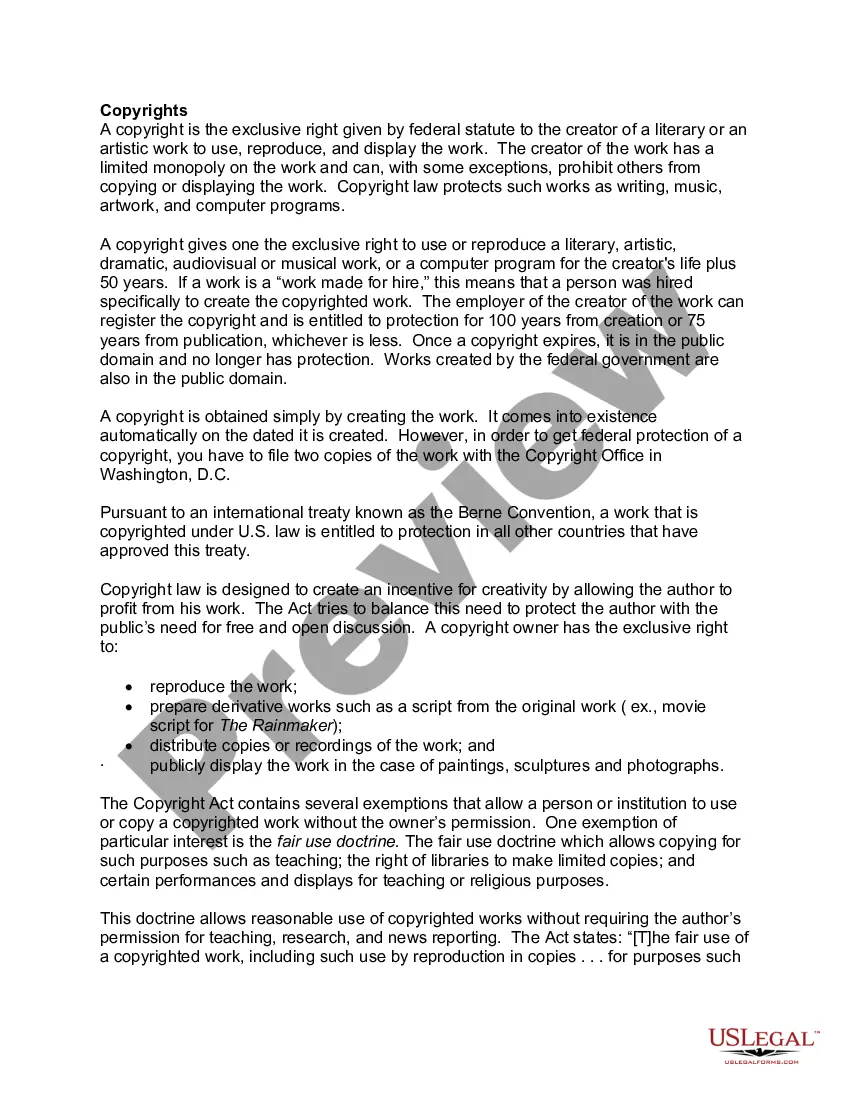
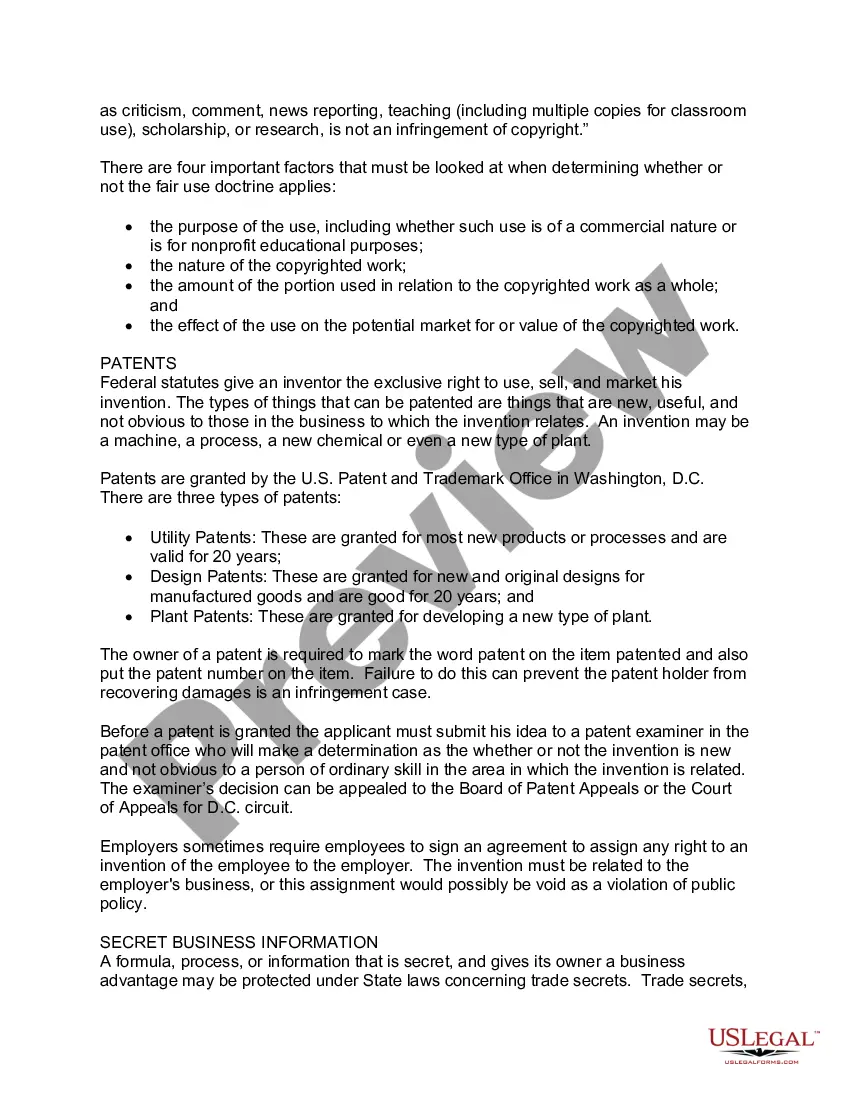
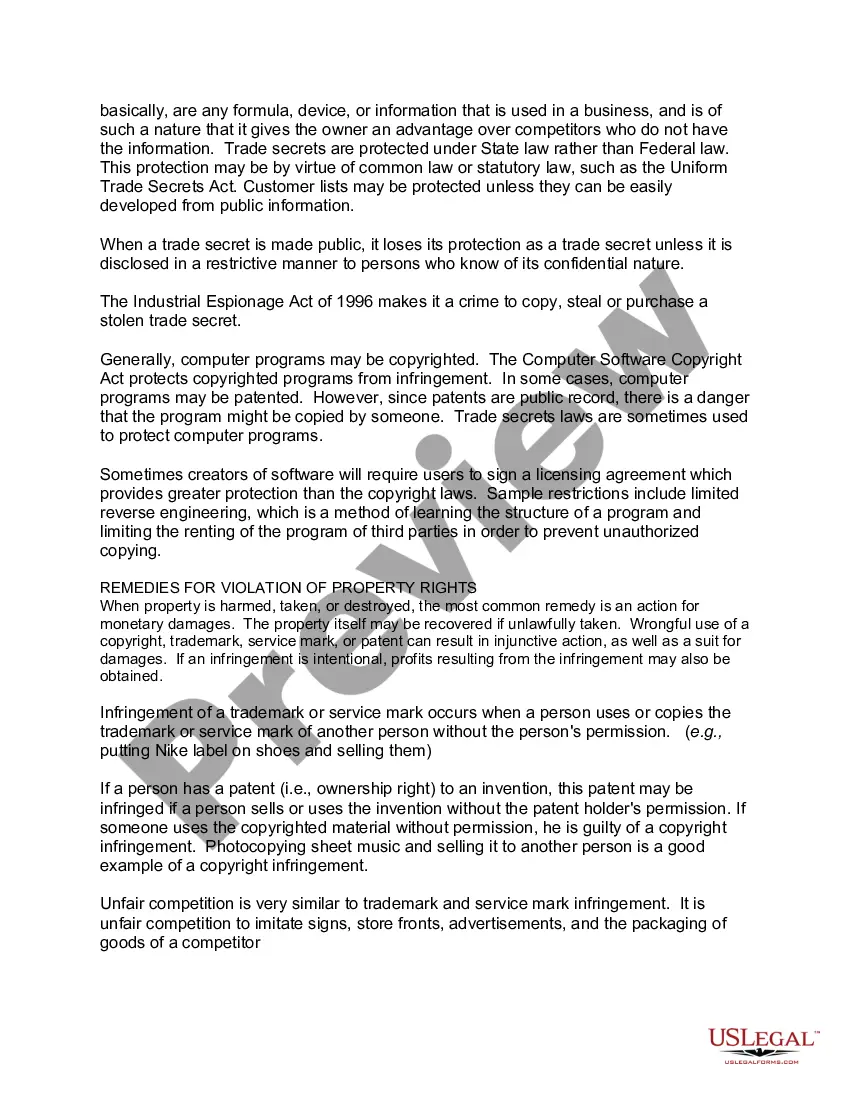
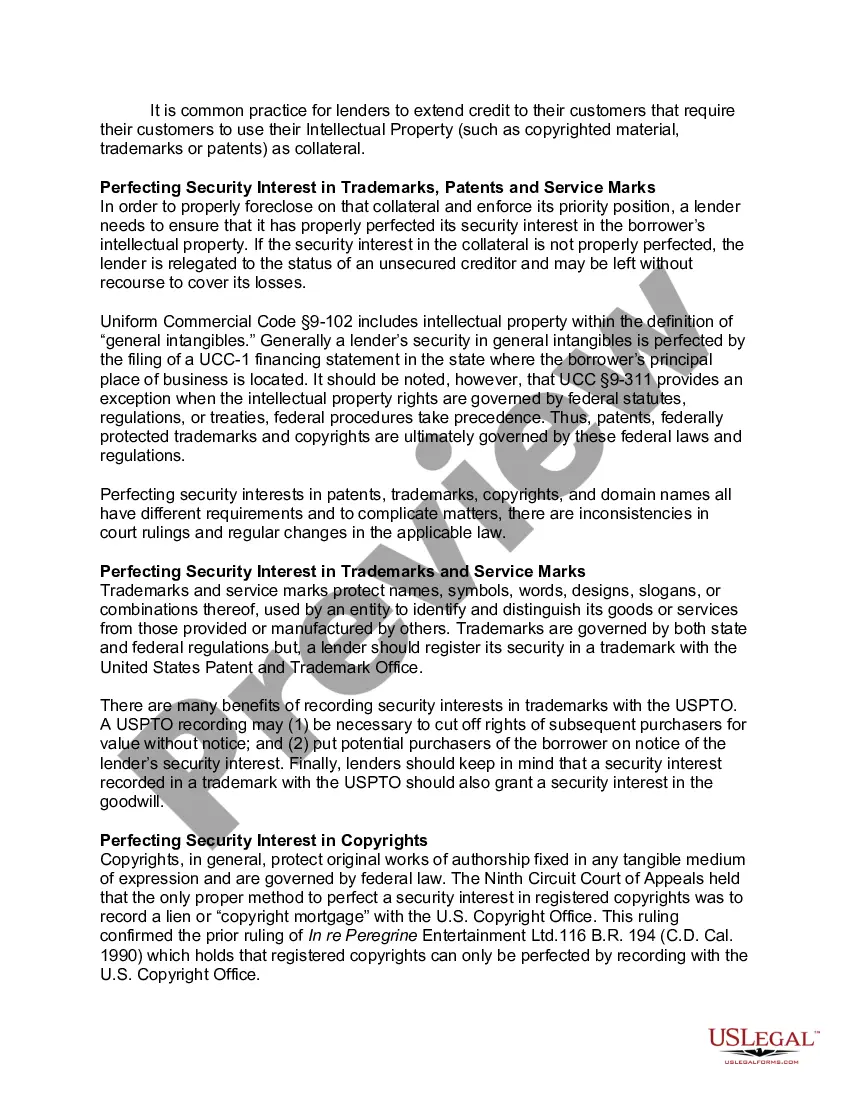
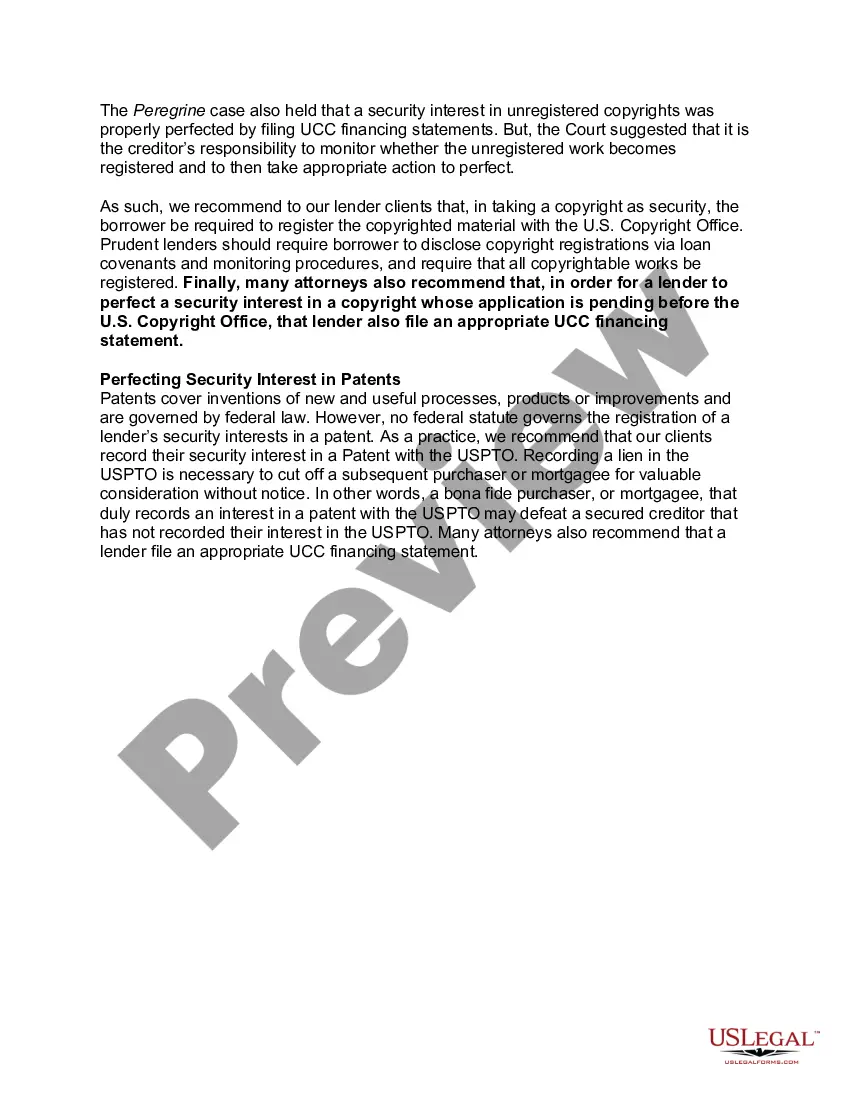
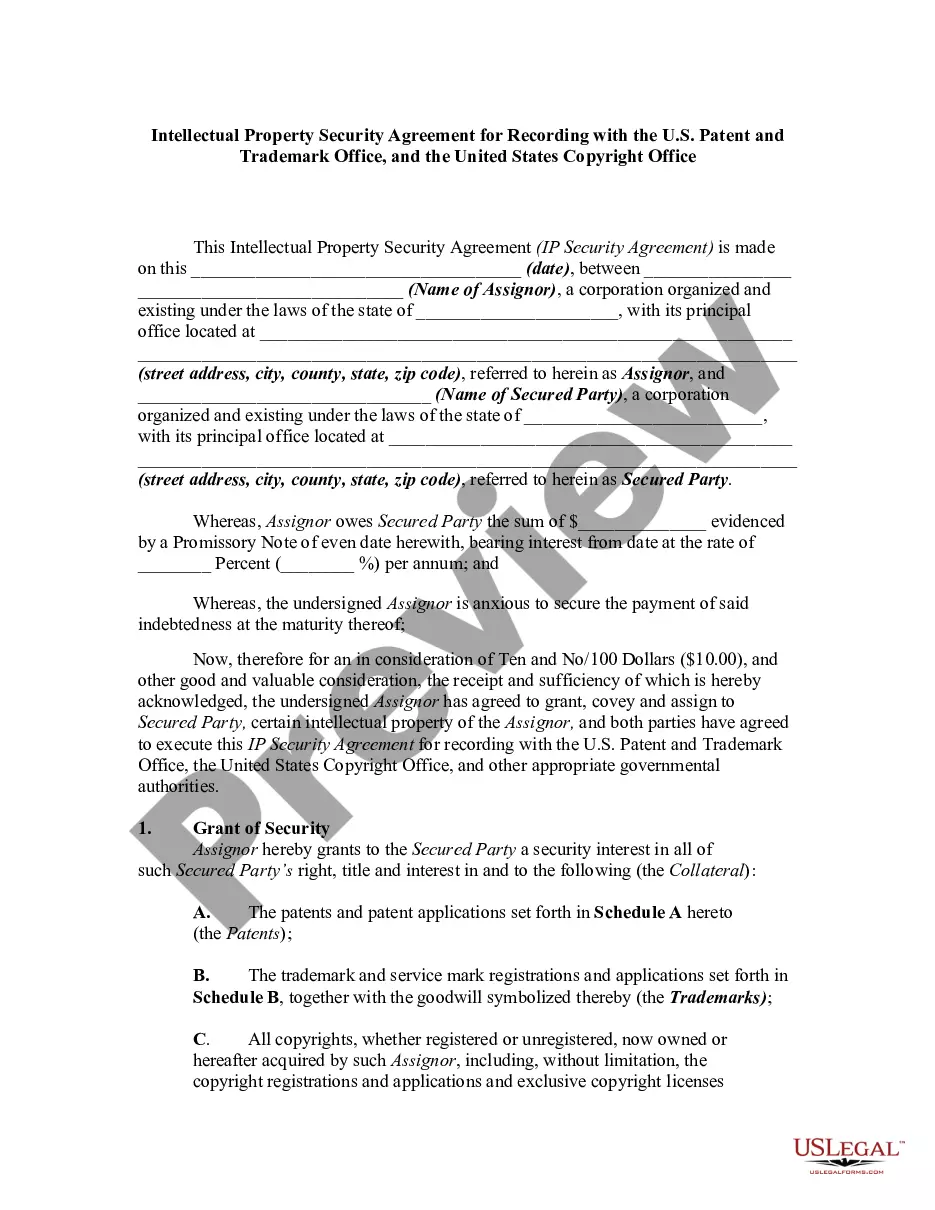
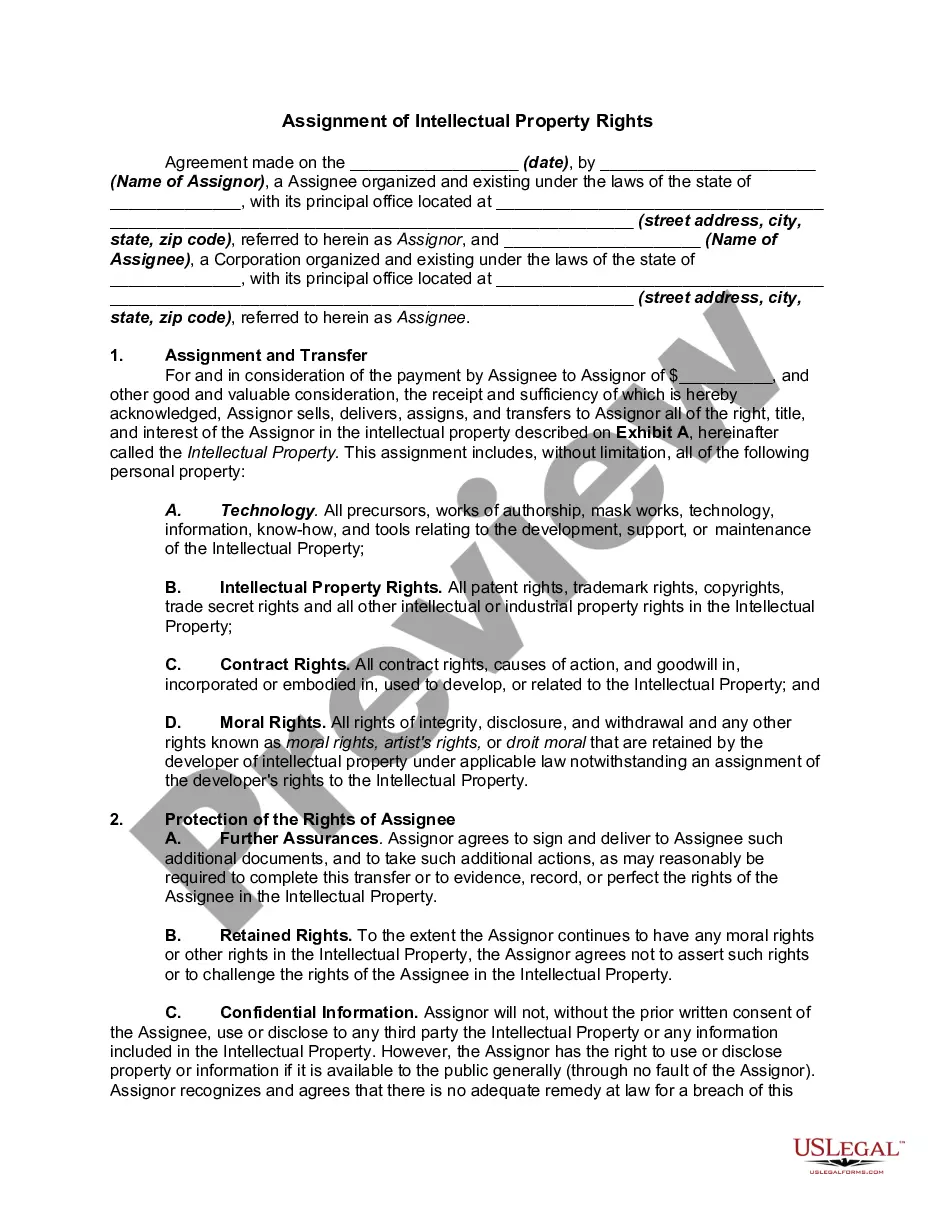
This guide provides an overview of intellectual property rights. Topics included cover trademarks, service marks, copyrights, patents, and trade secrets. Information on remedies for infringement is also provided.
Michigan USLegal Guide to Intellectual Property Rights
State:
Multi-State
Control #:
US-GDE-22
Format:
Word;
Rich Text
Instant download
Description
Free preview


How to fill out USLegal Guide To Intellectual Property Rights?
Are you currently in a situation where you need documents for either business or personal use on a daily basis.
There are numerous legitimate document templates available online, but finding ones you can rely on isn’t easy.
US Legal Forms provides a wide array of form templates, including the Michigan USLegal Guide to Intellectual Property Rights, which is designed to meet both state and federal requirements.
Once you find the right form, click on Buy now.
Choose the pricing plan you want, fill in the necessary details to create your account, and complete the payment using your PayPal or credit card.
- If you are already familiar with the US Legal Forms website and have an account, simply Log In.
- After that, you can download the Michigan USLegal Guide to Intellectual Property Rights template.
- If you do not have an account and wish to start using US Legal Forms, follow these steps.
- Locate the form you need and ensure it is for the correct area/county.
- Utilize the Preview button to review the form.
- Check the description to confirm that you have selected the appropriate form.
- If the form isn’t what you are looking for, use the Lookup section to find the form that meets your needs and requirements.
Form popularity
FAQ
Acquiring intellectual property rights involves identifying your creation and choosing the appropriate legal mechanism for protection. Common methods include applying for a trademark or patent, or documenting your work for copyright. The Michigan USLegal Guide to Intellectual Property Rights provides comprehensive resources and guidance to help you navigate these processes effectively and confidently.
To acquire intellectual property rights, you must follow specific processes depending on the type of IP you seek. For example, you can register trademarks and file for patents through appropriate governmental agencies. The Michigan USLegal Guide to Intellectual Property Rights simplifies this journey, offering step-by-step instructions and valuable resources to help you secure the protection you need.
The four primary types of intellectual property rights include copyrights, trademarks, patents, and trade secrets. Each type serves a specific purpose in protecting unique aspects of your creations, whether it's a book, a logo, an invention, or proprietary business information. By utilizing the Michigan USLegal Guide to Intellectual Property Rights, you can gain valuable insights on how to effectively utilize and defend these rights.
IP guidelines are essential frameworks that help individuals and businesses understand how to protect their intellectual property. In the Michigan USLegal Guide to Intellectual Property Rights, these guidelines outline the processes and best practices related to trademarks, copyrights, patents, and trade secrets. Clear understanding of these guidelines ensures you're well-equipped to safeguard your creative and innovative work.
When crafting an intellectual property statement, focus on clarity regarding ownership and the specific rights associated with your work. Make sure to include any relevant registration information if applicable. Resources like the Michigan USLegal Guide to Intellectual Property Rights can provide more detailed insights into the elements that should be included in your statement.
A good sentence reflecting the importance of intellectual property might state, 'Protecting intellectual property ensures innovation thrives while securing the creator’s rights.' This sentence highlights the vital role of intellectual property rights in fostering creativity and economic growth, a key takeaway from the Michigan USLegal Guide to Intellectual Property Rights.
Filing for intellectual property rights typically involves determining the appropriate type of protection for your creation, such as a copyright, trademark, or patent. You will need to prepare the necessary documentation and submit it to the respective government agency. The Michigan USLegal Guide to Intellectual Property Rights provides detailed steps that will walk you through the filing process for your specific needs.
A strong example of intellectual property includes a unique logo or branding, which qualifies for trademark protection. Additionally, inventions and original literary works fall under patent and copyright laws respectively. Understanding these examples through the Michigan USLegal Guide to Intellectual Property Rights can help you identify and protect your creations effectively.
An intellectual property statement should express the ownership and the nature of your intellectual property. It can highlight the types of rights you hold, such as copyright, trademarks, or patents. Referring to the Michigan USLegal Guide to Intellectual Property Rights can provide you with specific guidelines on how to structure your statement effectively.
To write an effective intellectual property disclaimer, start by clearly stating the ownership of your intellectual property. You may include a statement that protects your rights by informing others of what is copyrighted, trademarked, or patented. A well-crafted disclaimer can help reinforce the message found in the Michigan USLegal Guide to Intellectual Property Rights, ensuring that your creative works remain safeguarded.