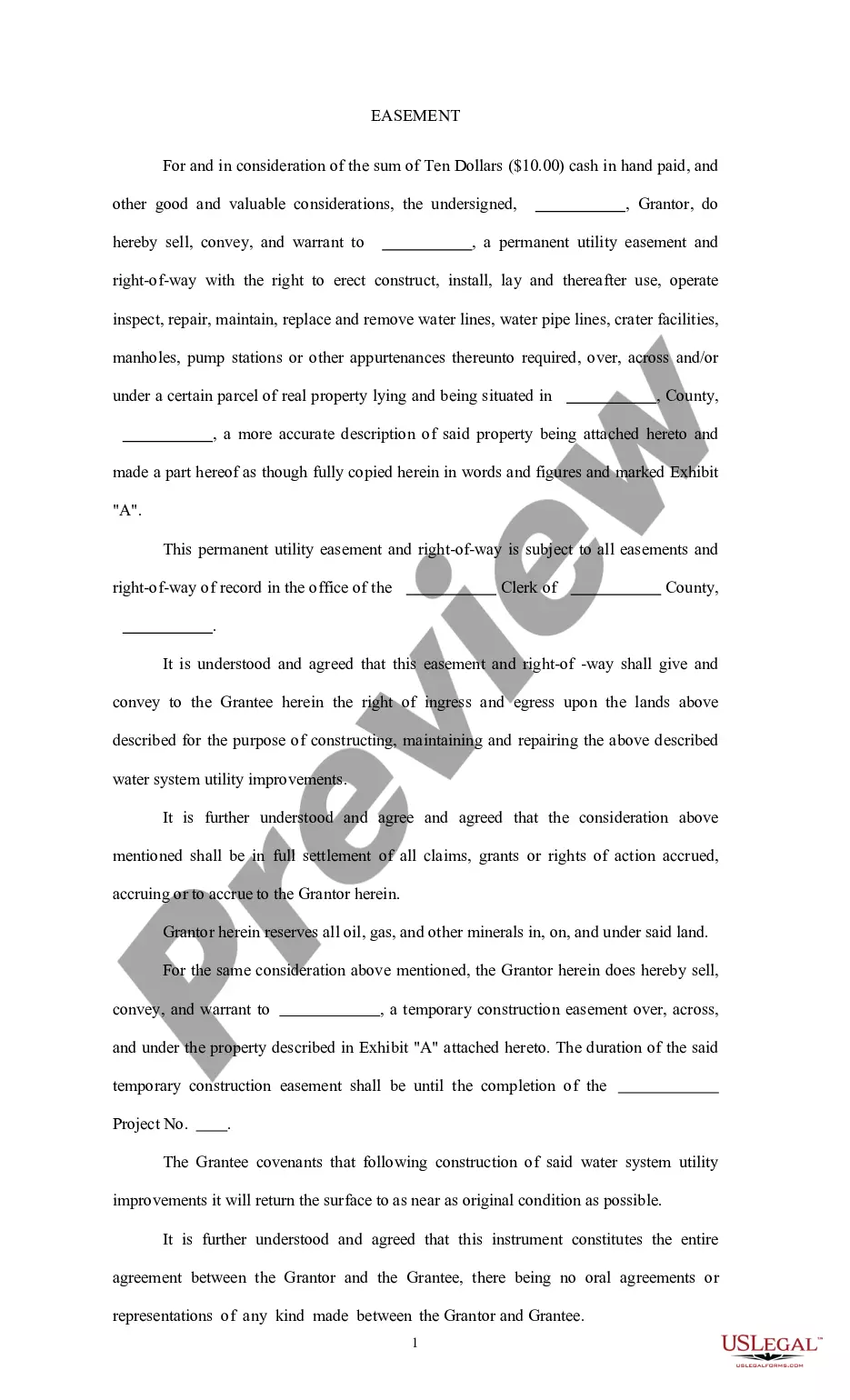
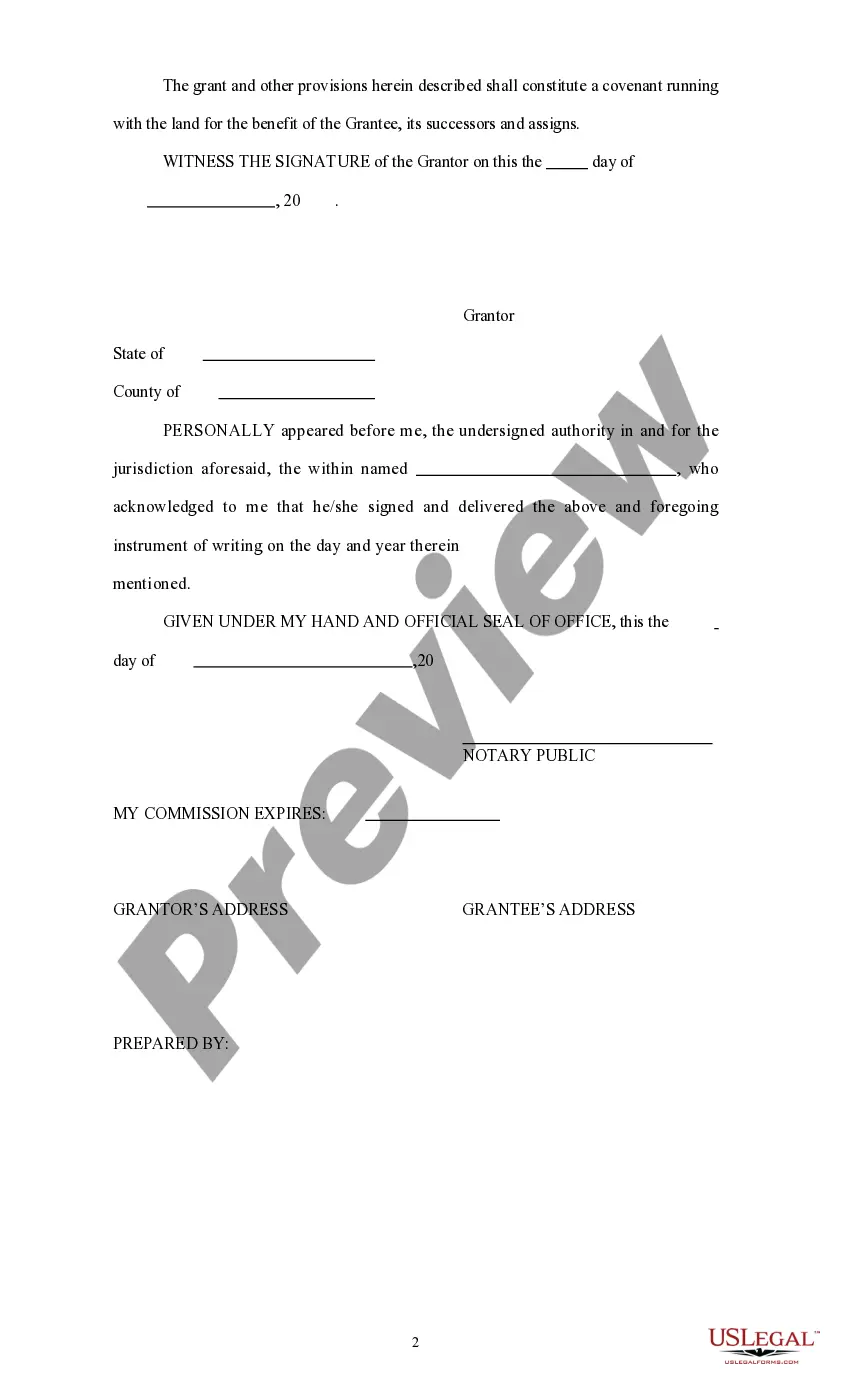
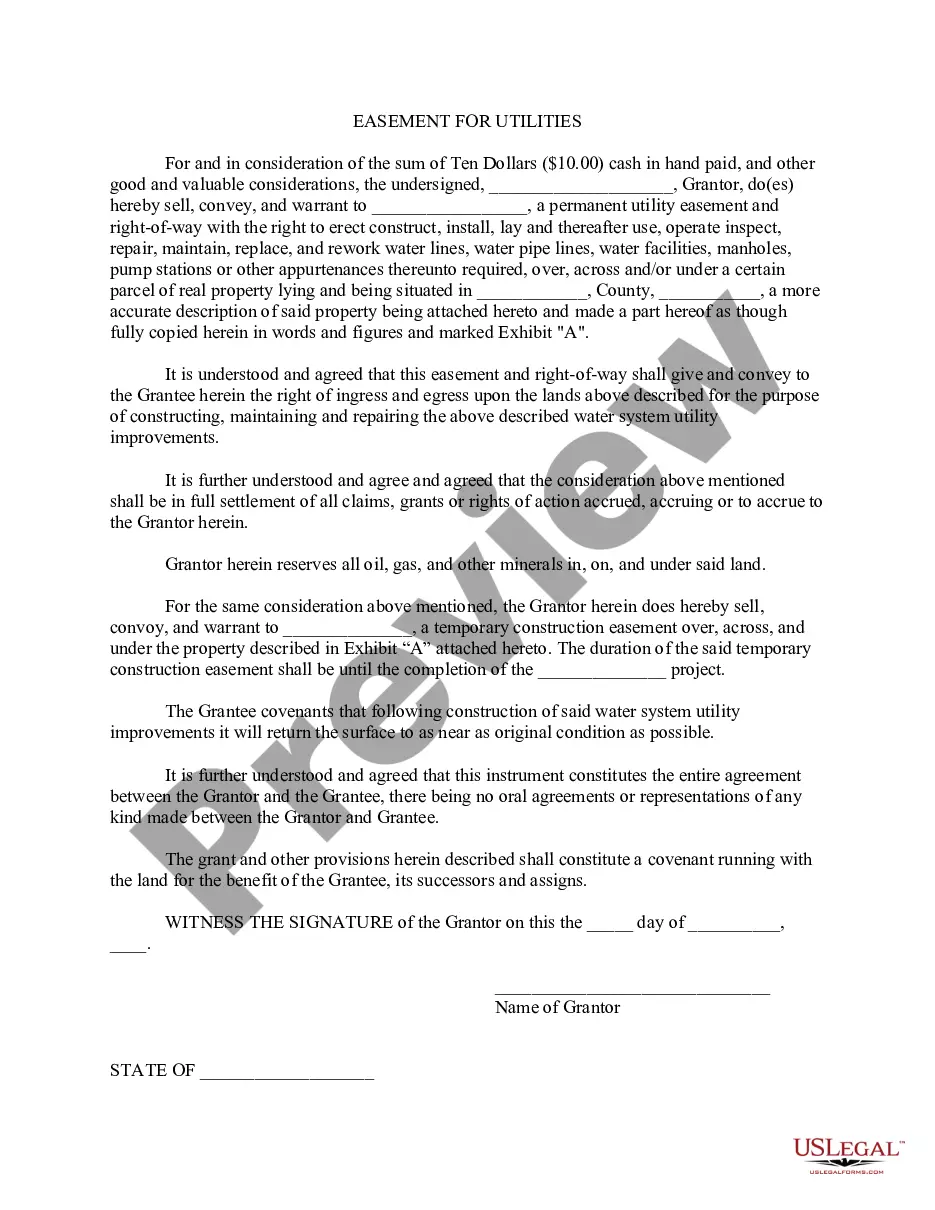
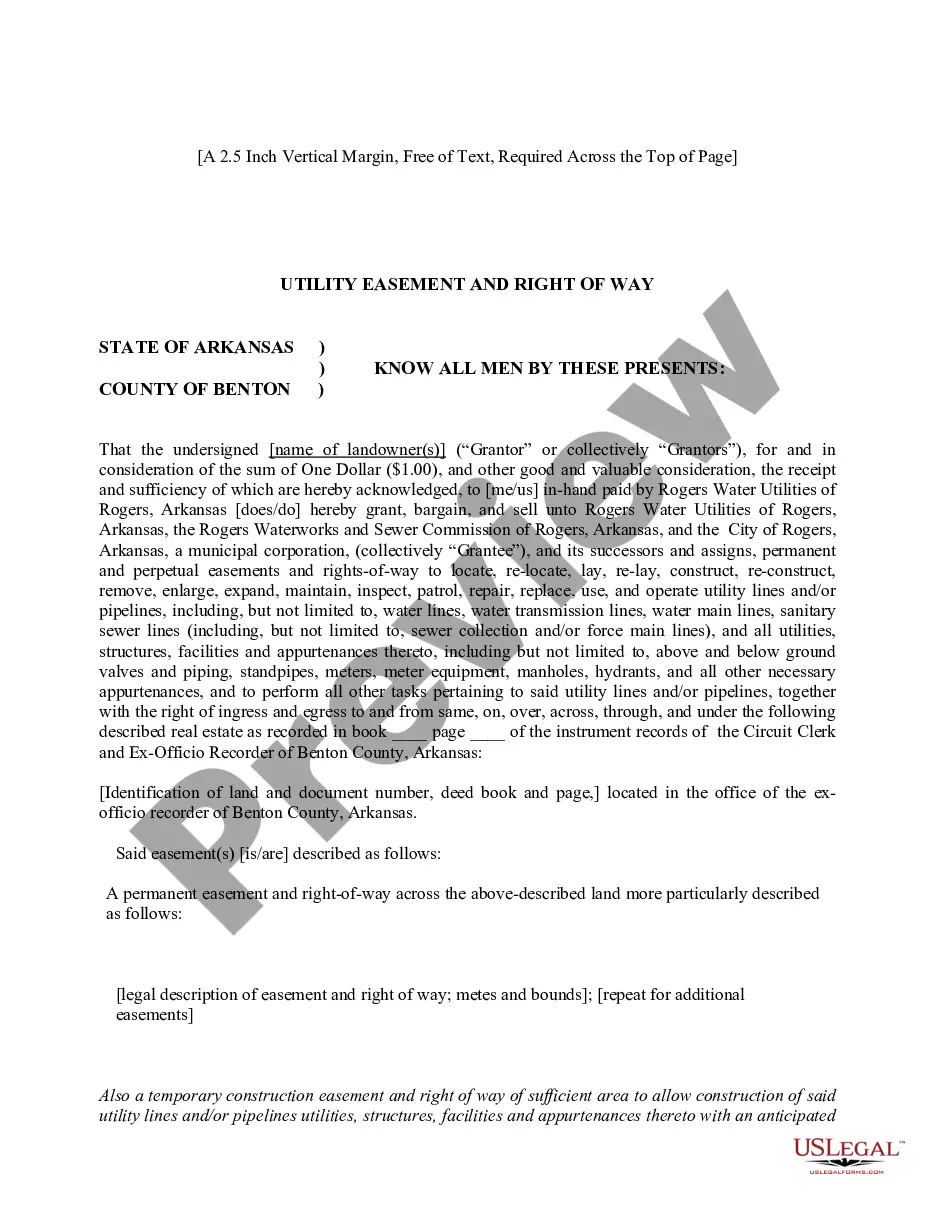
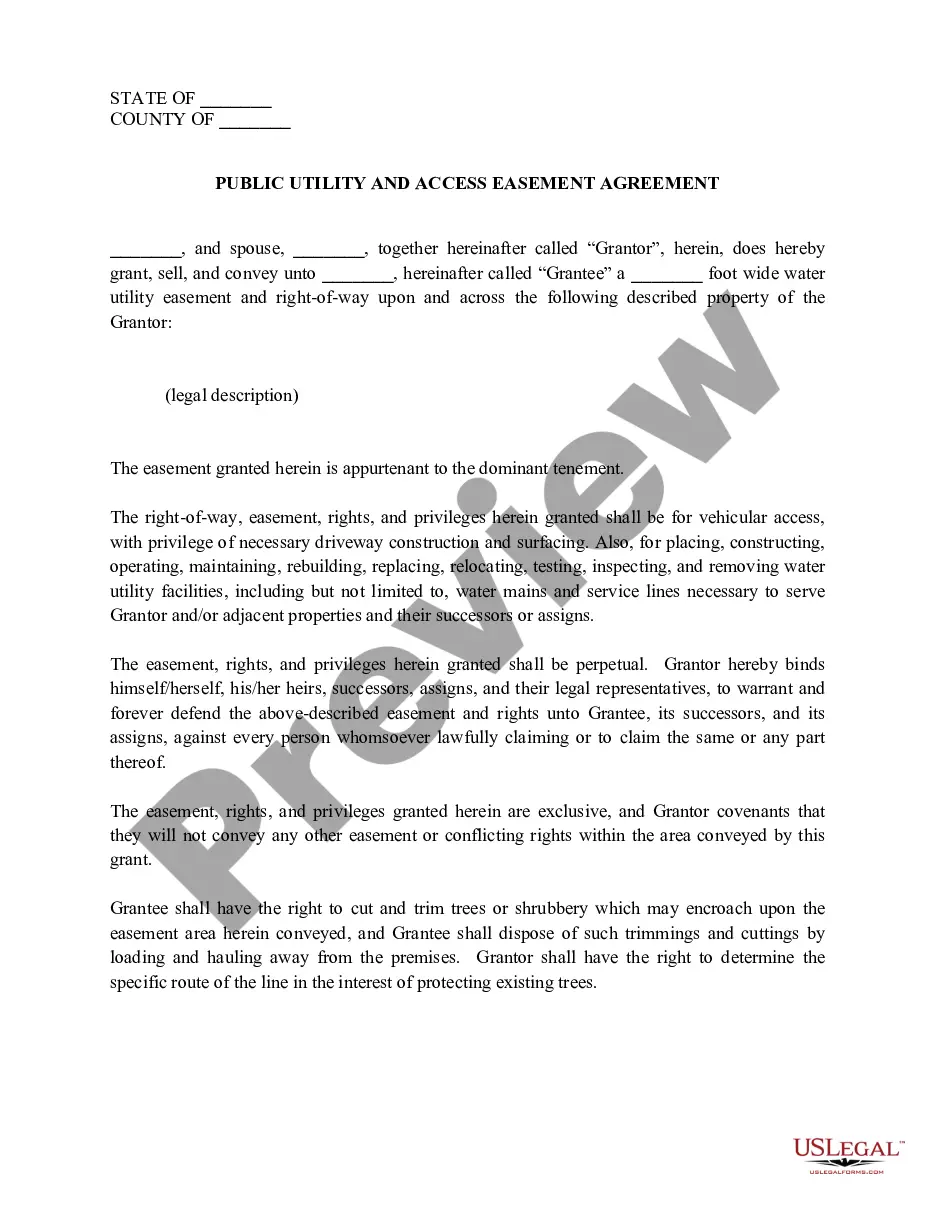
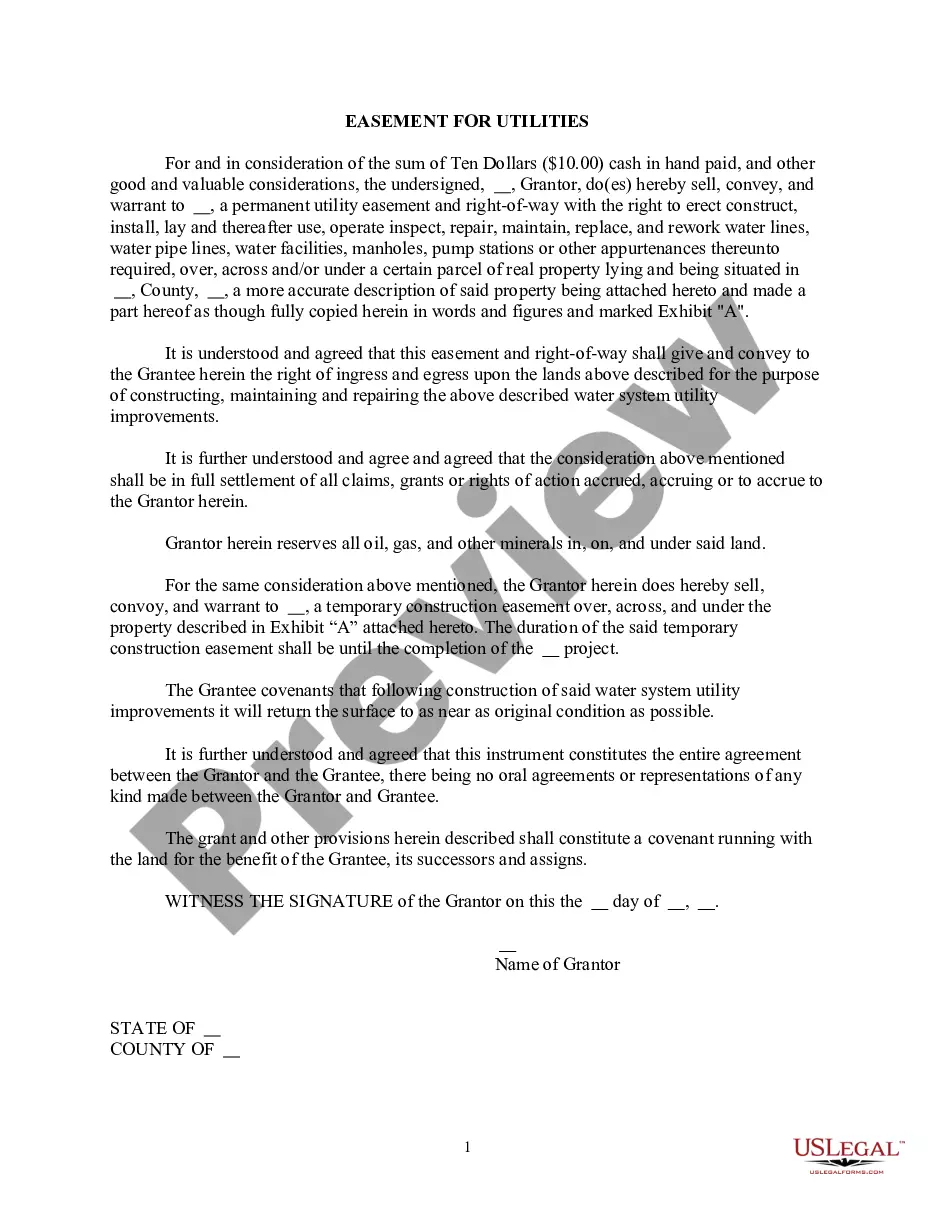
This is a sample form for use in transactions involving easements, a Utility Easement. Allows a permanent utility easement and right of way for water facilities.
An easement gives one party the right to go onto another party's property. That property may be owned by a private person, a business entity, or a group of owners. Utilities often get easements that allow them to run pipes or phone lines beneath private property. Easements may be obtained for access to another property, called "access and egress", use of spring water, entry to make repairs on a fence or slide area, drive cattle across and other uses. The easement is a real property interest, but separate from the legal title of the owner of the underlying land.
Michigan Utility Easement
State:
Multi-State
Control #:
US-EAS-28
Format:
Word;
Rich Text
124 downloads
Description
Free preview
Get your form ready online
Our built-in tools help you complete, sign, share, and store your documents in one place.
Built-in online Word editor
Make edits, fill in missing information, and update formatting in US Legal Forms—just like you would in MS Word.
Export easily
Download a copy, print it, send it by email, or mail it via USPS—whatever works best for your next step.
E-sign your document
Sign and collect signatures with our SignNow integration. Send to multiple recipients, set reminders, and more. Go Premium to unlock E-Sign.
Notarize online 24/7
If this form requires notarization, complete it online through a secure video call—no need to meet a notary in person or wait for an appointment.
Store your document securely
We protect your documents and personal data by following strict security and privacy standards.

Make edits, fill in missing information, and update formatting in US Legal Forms—just like you would in MS Word.

Download a copy, print it, send it by email, or mail it via USPS—whatever works best for your next step.

Sign and collect signatures with our SignNow integration. Send to multiple recipients, set reminders, and more. Go Premium to unlock E-Sign.

If this form requires notarization, complete it online through a secure video call—no need to meet a notary in person or wait for an appointment.

We protect your documents and personal data by following strict security and privacy standards.
Looking for another form?



How to fill out Utility Easement?
You may commit time online attempting to find the legitimate papers web template that fits the federal and state demands you will need. US Legal Forms supplies 1000s of legitimate varieties that are reviewed by pros. It is simple to download or print out the Michigan Utility Easement from the services.
If you already have a US Legal Forms profile, it is possible to log in and then click the Download switch. After that, it is possible to complete, modify, print out, or indicator the Michigan Utility Easement. Every legitimate papers web template you purchase is the one you have permanently. To obtain one more version for any obtained type, check out the My Forms tab and then click the related switch.
If you use the US Legal Forms web site the first time, follow the basic recommendations below:
- Initial, make certain you have selected the right papers web template to the region/city of your liking. Read the type description to make sure you have picked the correct type. If readily available, make use of the Review switch to appear from the papers web template as well.
- If you would like locate one more model from the type, make use of the Lookup area to obtain the web template that fits your needs and demands.
- When you have located the web template you need, simply click Get now to carry on.
- Pick the pricing program you need, key in your references, and register for a merchant account on US Legal Forms.
- Comprehensive the transaction. You can utilize your bank card or PayPal profile to pay for the legitimate type.
- Pick the structure from the papers and download it for your device.
- Make alterations for your papers if required. You may complete, modify and indicator and print out Michigan Utility Easement.
Download and print out 1000s of papers layouts while using US Legal Forms Internet site, that provides the greatest assortment of legitimate varieties. Use professional and state-certain layouts to handle your organization or specific needs.
Form popularity
FAQ
Types of Easements. An easement by necessity is sometimes created when a parcel is landlocked, meaning there is no access to a road. Finally, a prescriptive easement can be created when one parcel has been using another parcel for access rights, without permission, for over fifteen years.
Easement in Michigan? Generally, the easement holder ? the person who uses the other person's land for access ? is responsible for maintaining the easement.
Easements can also terminate when the easement was created by necessity and the necessity no longer exists. The owner of the dominant estate requiring the easement may also voluntarily release the easement to terminate the easement.
Who is Responsible for Maintaining an Easement in Michigan? Who is responsible for maintaining an easement? The short answer is the owner of the easement. A landowner that has an easement over the property of another landowner is the holder of the dominant estate.
An easement can be terminated through a written agreement between the easement holder and the property owner. Additionally, an easement by necessity can be terminated if there is no longer a need for the easement.
A utility easement gives a utility the right to use and access a specific area of a property without owning the parcel. As with any contract, though, there are legal factors to consider, and landowners are encouraged to consult an attorney before agreeing to a utility easement.
Basically, one portion of your land may be considered a public property under Rights of Way. Easements exist as negative and affirmative. An affirmative easement basically allows a group or a person to carry out activity on another person's land. For example, erect electrical posts.
Utility easements 6 feet in width are permissible along rear property lines, in cases where the rear property lines abut unplatted land.