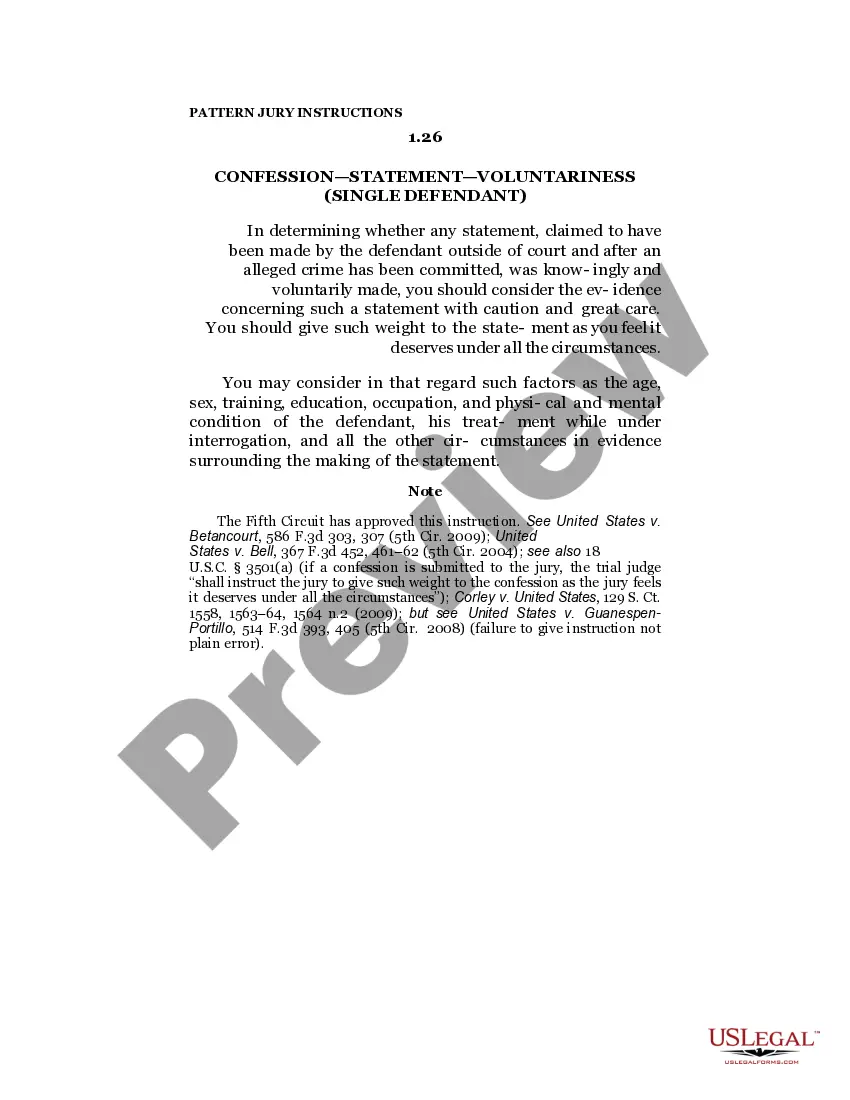
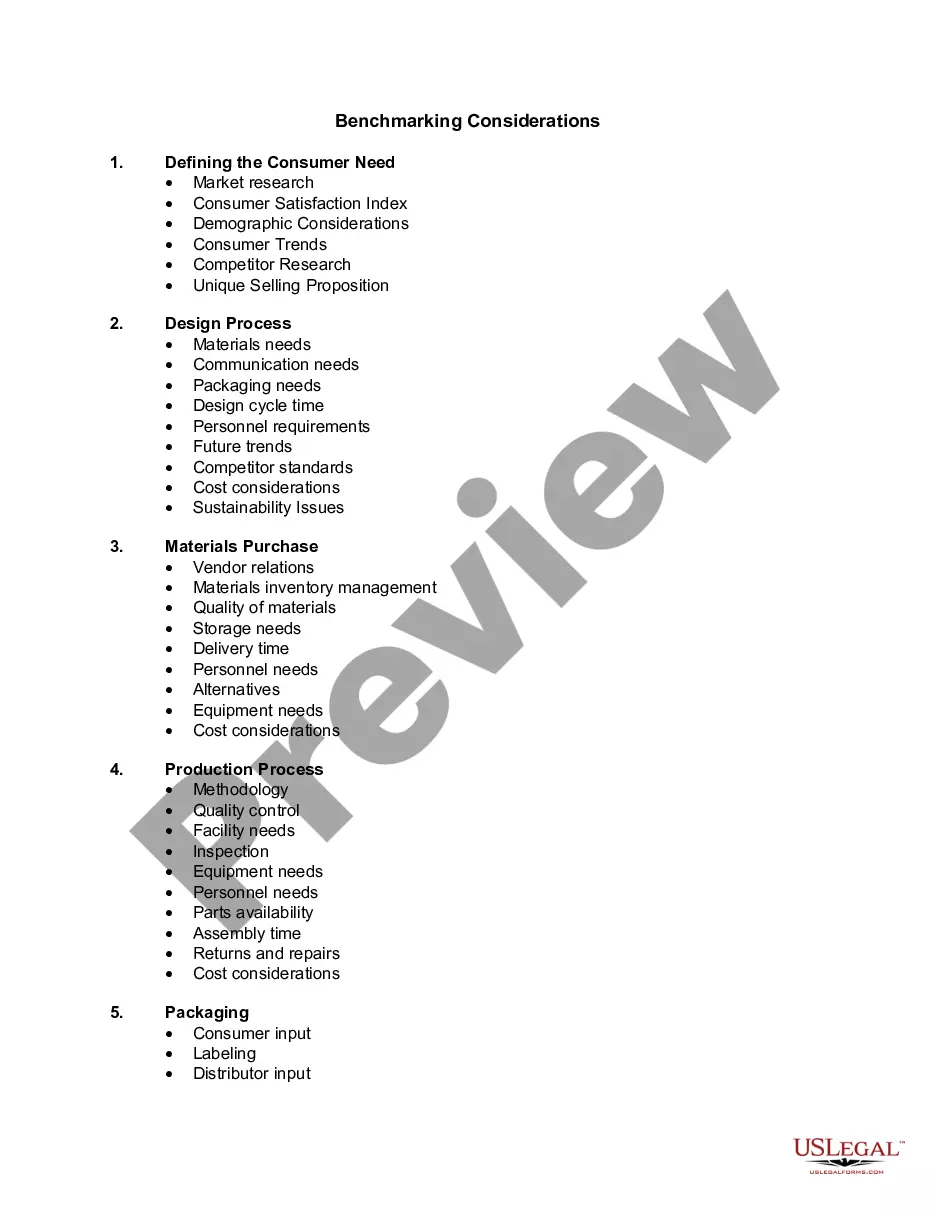
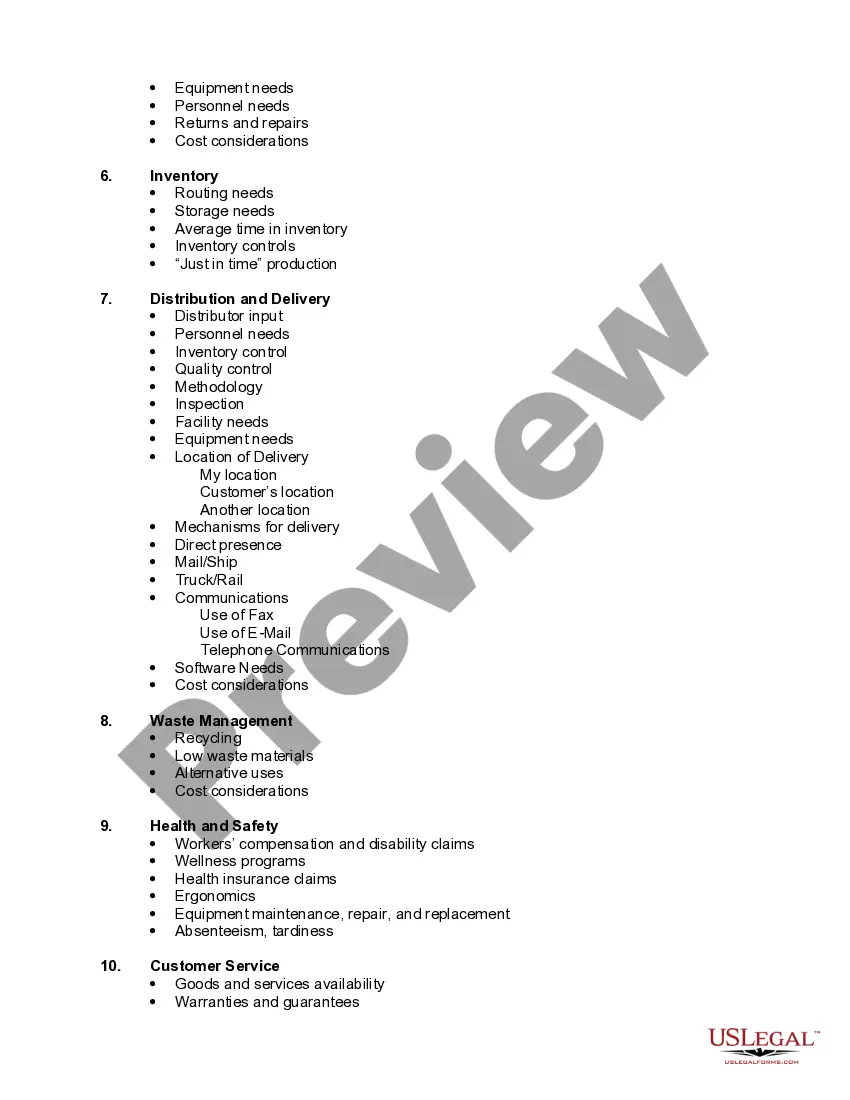
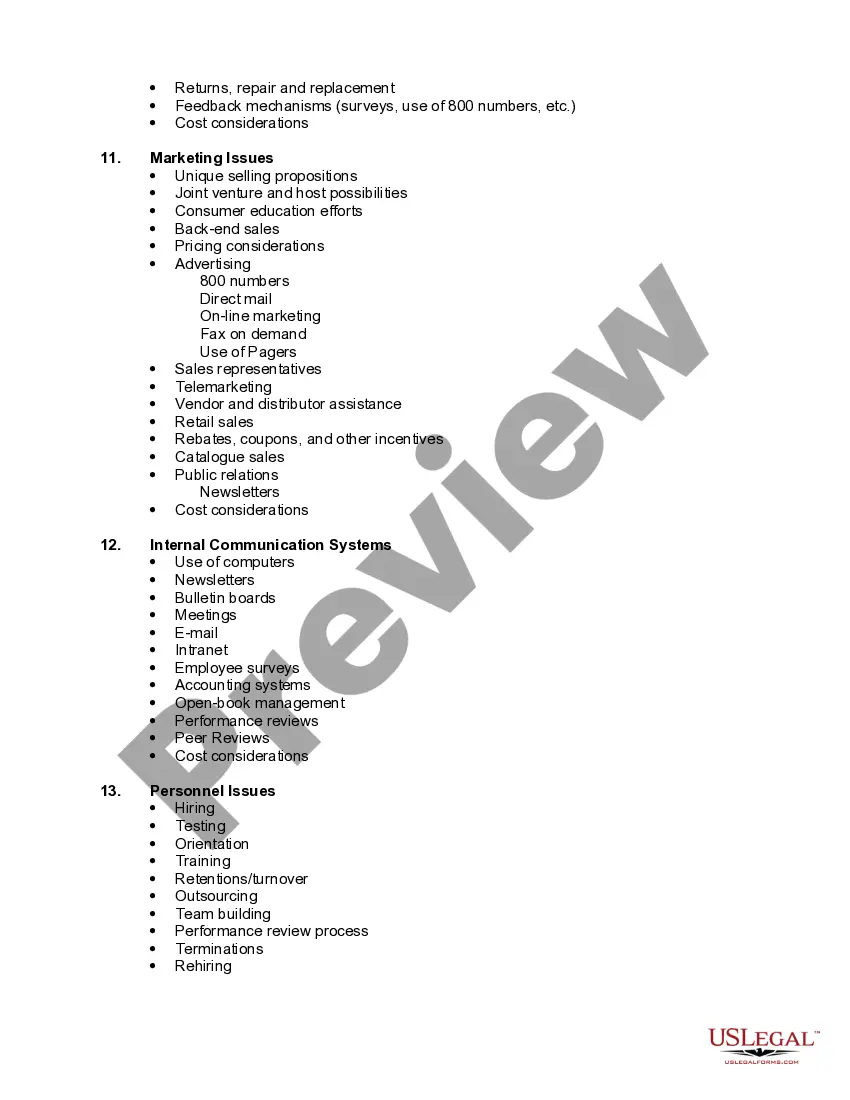
Michigan Benchmarking Considerations
Description
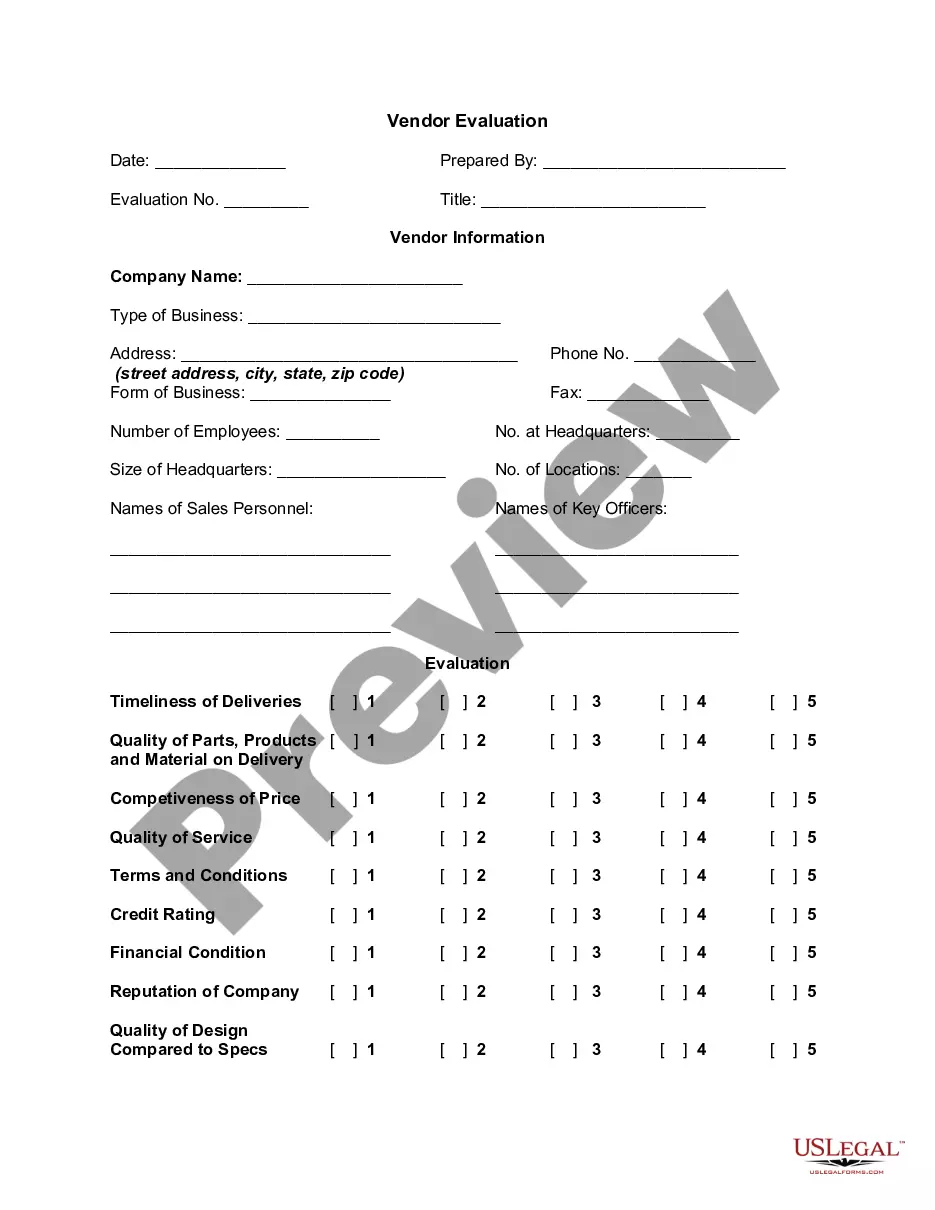
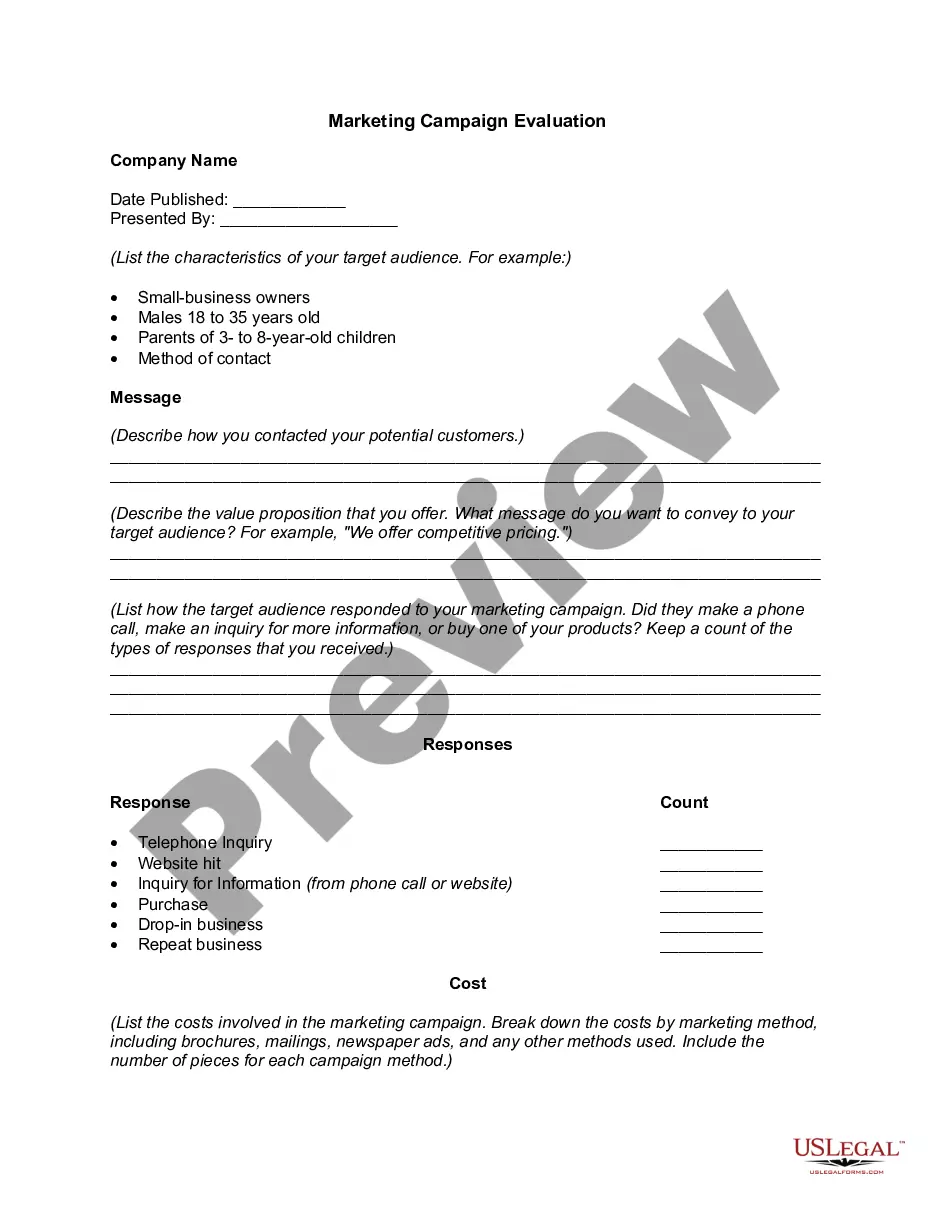
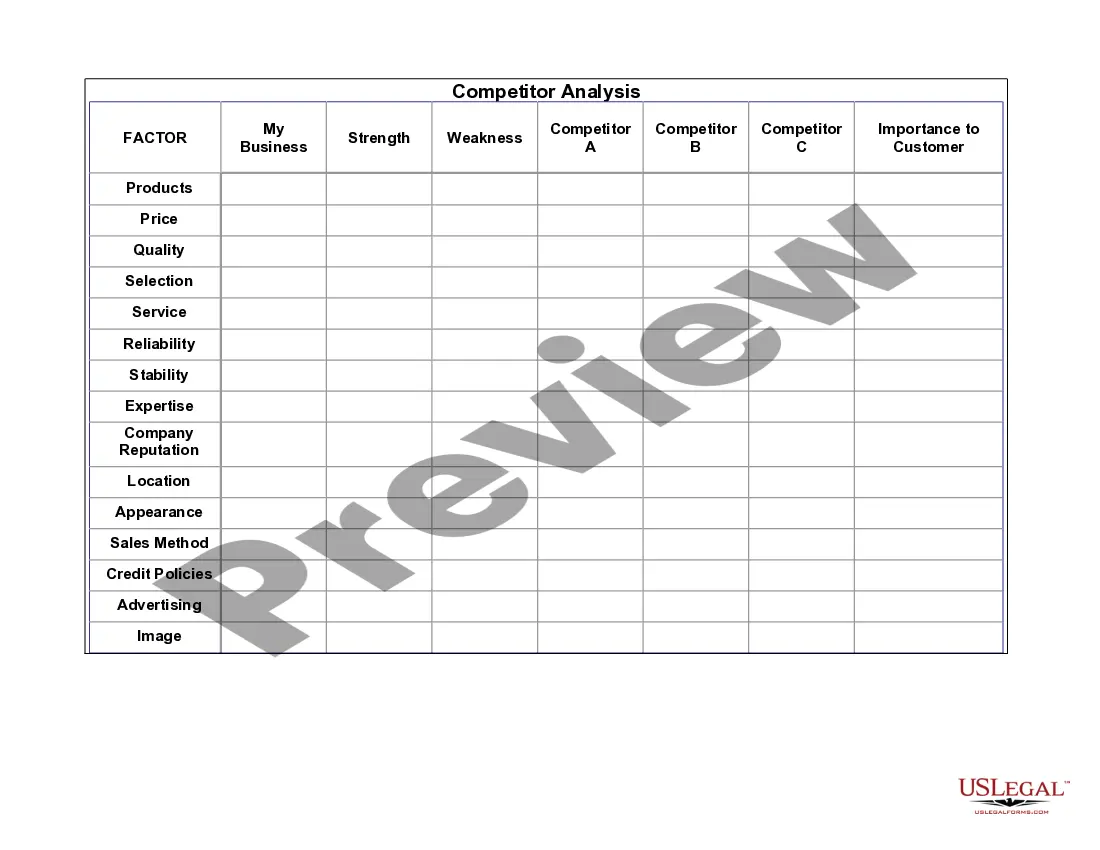
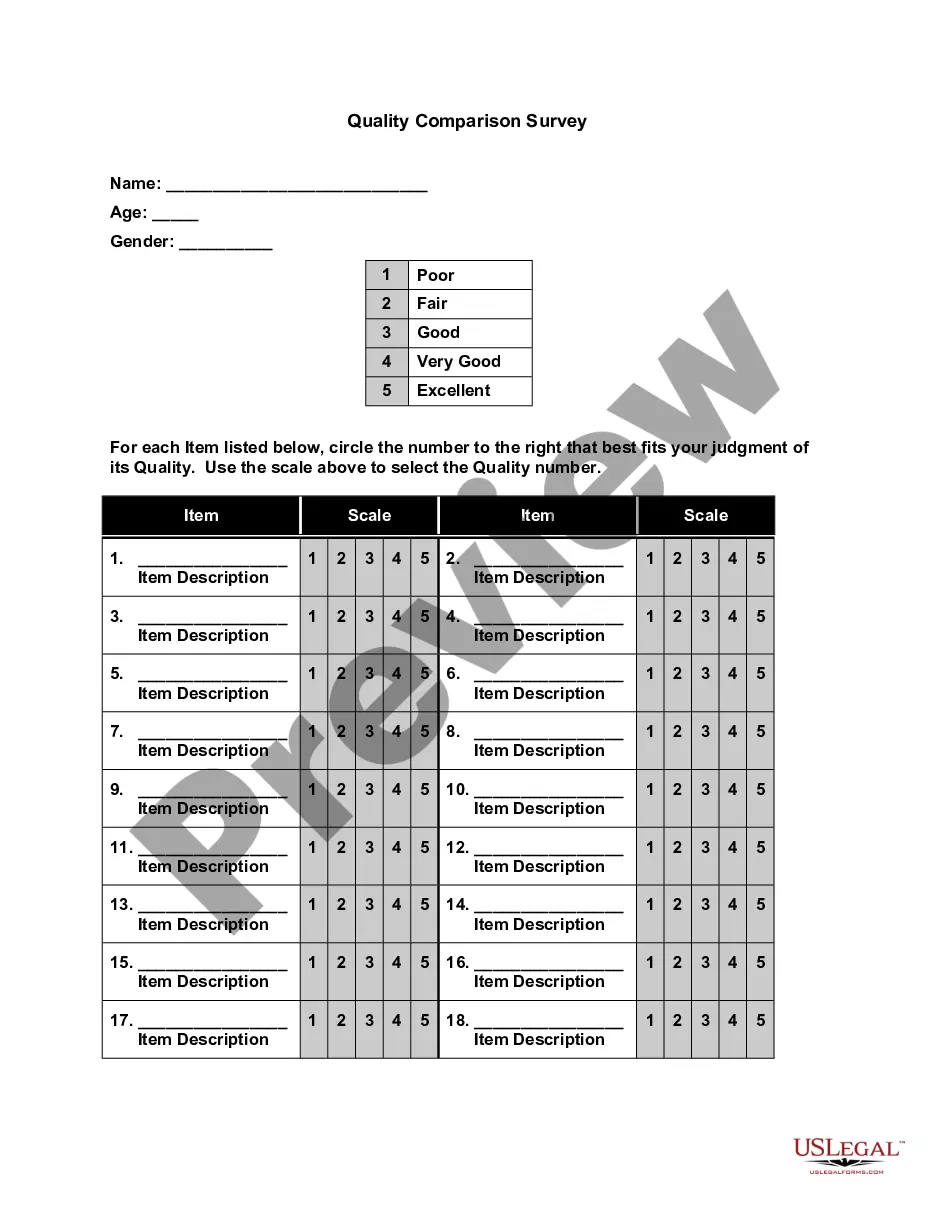
Get your form ready online
Our built-in tools help you complete, sign, share, and store your documents in one place.
Make edits, fill in missing information, and update formatting in US Legal Forms—just like you would in MS Word.
Download a copy, print it, send it by email, or mail it via USPS—whatever works best for your next step.
Sign and collect signatures with our SignNow integration. Send to multiple recipients, set reminders, and more. Go Premium to unlock E-Sign.
If this form requires notarization, complete it online through a secure video call—no need to meet a notary in person or wait for an appointment.
We protect your documents and personal data by following strict security and privacy standards.

Make edits, fill in missing information, and update formatting in US Legal Forms—just like you would in MS Word.

Download a copy, print it, send it by email, or mail it via USPS—whatever works best for your next step.

Sign and collect signatures with our SignNow integration. Send to multiple recipients, set reminders, and more. Go Premium to unlock E-Sign.

If this form requires notarization, complete it online through a secure video call—no need to meet a notary in person or wait for an appointment.

We protect your documents and personal data by following strict security and privacy standards.
Looking for another form?

How to fill out Benchmarking Considerations?
You can spend time on the web searching for the appropriate legal form template that complies with state and federal requirements you will need.
US Legal Forms offers a vast selection of legal templates that can be reviewed by experts.
It is easy to obtain or create the Michigan Benchmarking Considerations with the assistance.
If available, use the Preview button to review the form template as well. If you wish to obtain another copy of your form, utilize the Search field to find the template that meets your requirements.
- If you already have a US Legal Forms account, you can sign in and click the Download button.
- After that, you can complete, modify, print, or sign the Michigan Benchmarking Considerations.
- Every legal form template you purchase is yours permanently.
- To retrieve another copy of an acquired form, go to the My documents tab and click the appropriate button.
- If this is your first time using the US Legal Forms website, follow the simple steps below.
- First, make sure you've selected the correct form template for the county/city of your choice.
- Review the form description to ensure you've selected the right one.
Form popularity
FAQ
Some examples of benchmarking include financial benchmarking, operational benchmarking, and educational benchmarking. For instance, a company may compare its profit margins against its competitors to identify areas for improvement. By considering Michigan Benchmarking Considerations, companies and educational institutions can implement effective strategies to enhance overall performance.
An example of a benchmarking assessment could involve evaluating corporate performance metrics such as employee productivity or customer satisfaction. Businesses can look at industry standards to determine their standing. By applying Michigan Benchmarking Considerations, organizations can identify their strengths and weaknesses, leading to strategic growth.
A benchmark test for elementary students measures their academic progress throughout the school year. These tests assess knowledge in subjects like math and reading, providing teachers insights into areas where students may need additional support. Incorporating Michigan Benchmarking Considerations helps educators tailor their teaching strategies to meet diverse learning needs.
An example of a benchmark assessment is comparing student performance across different schools in Michigan. By assessing test scores, attendance rates, and graduation rates, you can see how well your institution stacks up. This process highlights key areas for improvement and illustrates the role of Michigan Benchmarking Considerations in driving educational success.
To conduct a benchmark assessment, first choose the processes or outcomes to evaluate. Utilize reliable sources for data comparison, such as industry reports or tools like USLegalForms. Incorporate Michigan Benchmarking Considerations to align your process with best practices. Finally, analyze the gaps between your performance and the benchmarks to identify improvement areas.
Preparing for a benchmark involves defining your objectives, collecting relevant data, and selecting the appropriate metrics. Start by identifying what you want to achieve and how Michigan Benchmarking Considerations can guide you. Next, gather baseline data from your current operations. This foundation will help you compare against industry standards effectively.
Benchmarking is measured by comparing your organization's performance against quantified standards and metrics. This comparison can reveal areas of strength and opportunities for improvement. By utilizing templates and resources offered by US Legal Forms, you can create a more structured approach to measuring and tracking your benchmarking results effectively.
The M step in the benchmarking process typically varies depending on the complexity of your project. Generally, it may take several weeks to gather data, analyze results, and implement findings. It's important to remain patient and work through the process methodically, and using structured tools from US Legal Forms can help streamline this phase.
Finding a benchmark begins with performing thorough market research to gather industry-specific performance data. Use databases, industry reports, and surveys to discover relevant metrics in Michigan. Platforms like US Legal Forms can simplify this process, providing templates and examples to guide you in your search for accurate benchmarks.
Identifying a benchmark requires you to define your key performance indicators and research relevant data in Michigan. Focus on metrics that directly align with your operational goals. Consider using resources from US Legal Forms, which can assist you in finding and selecting the most applicable benchmarks for your specific industry.