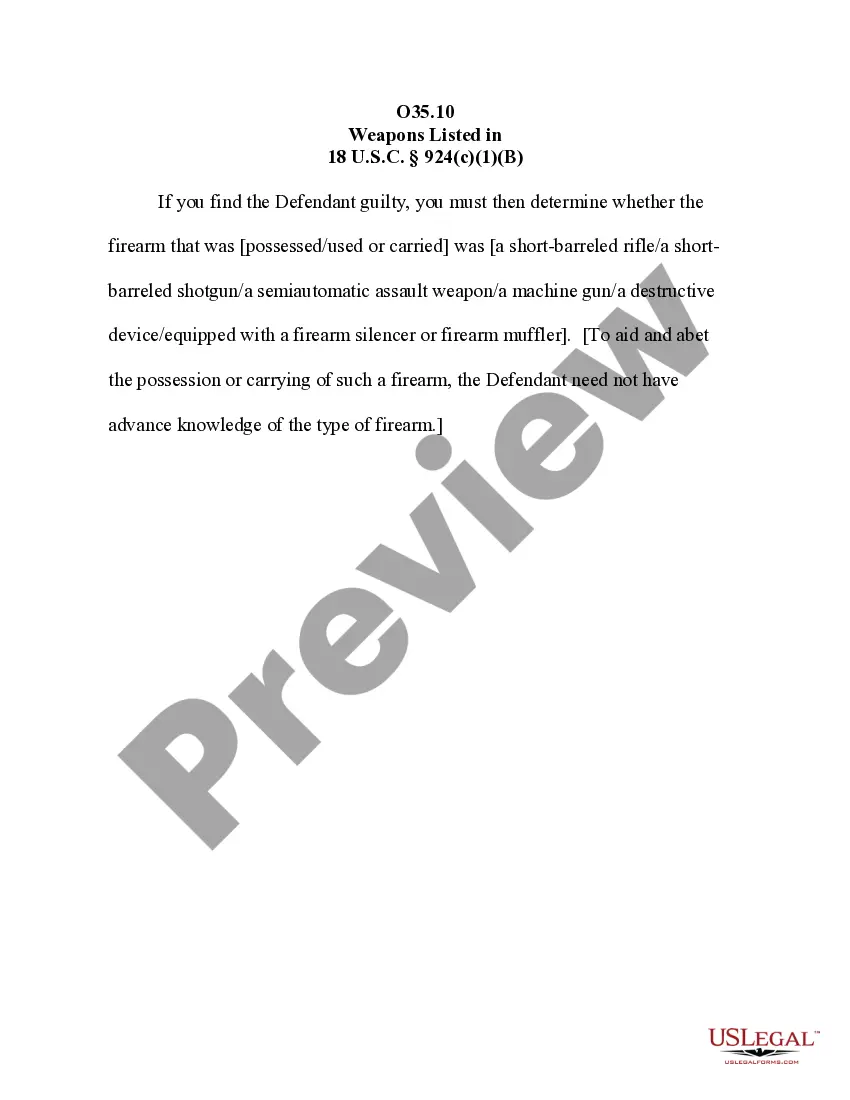
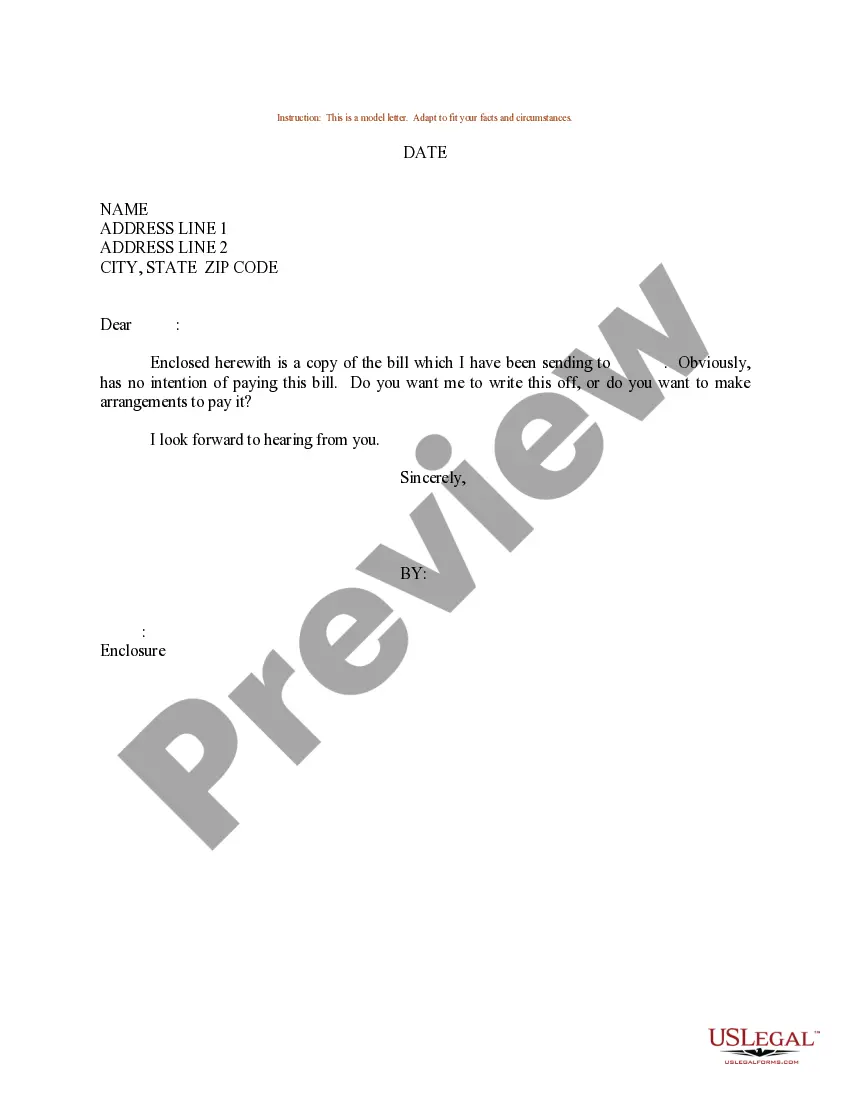
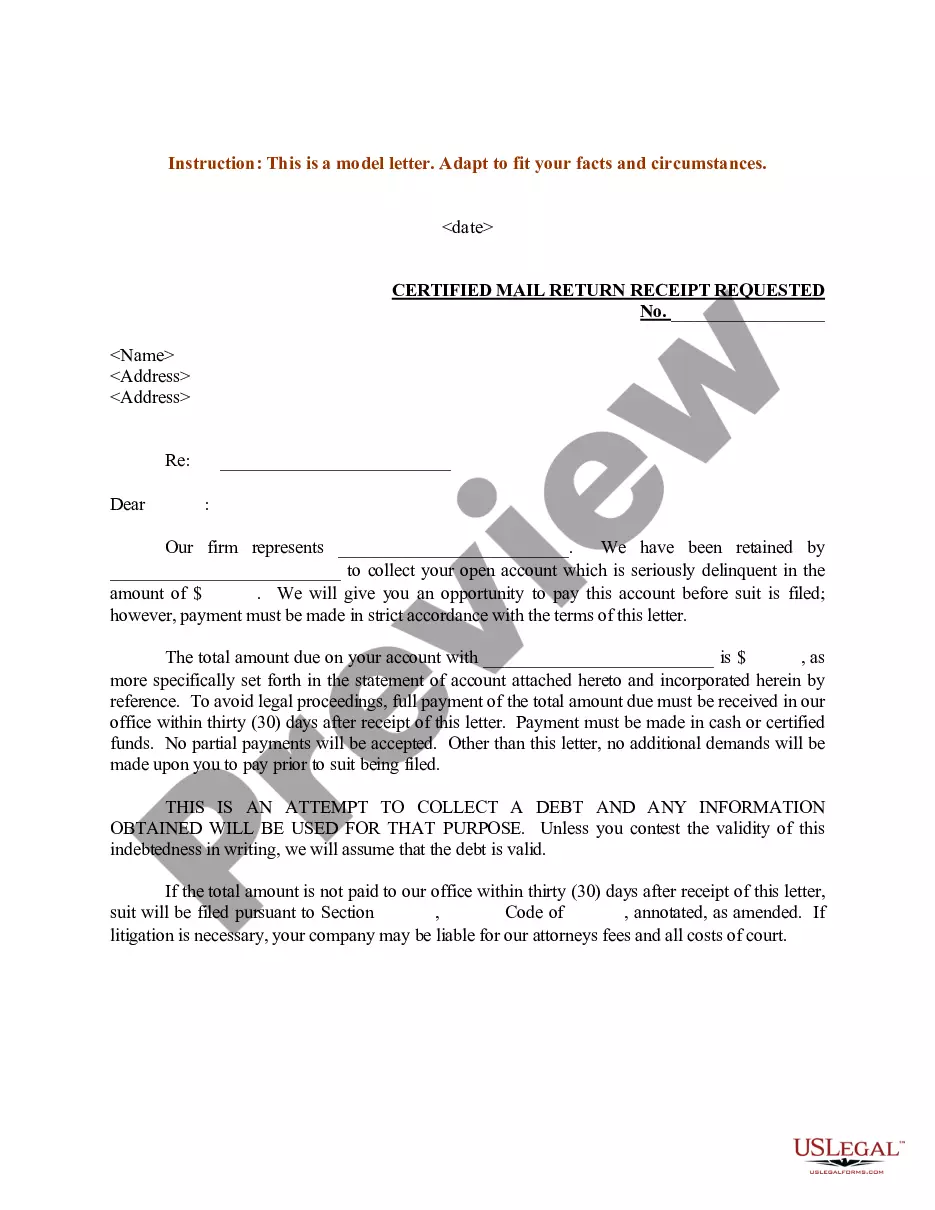
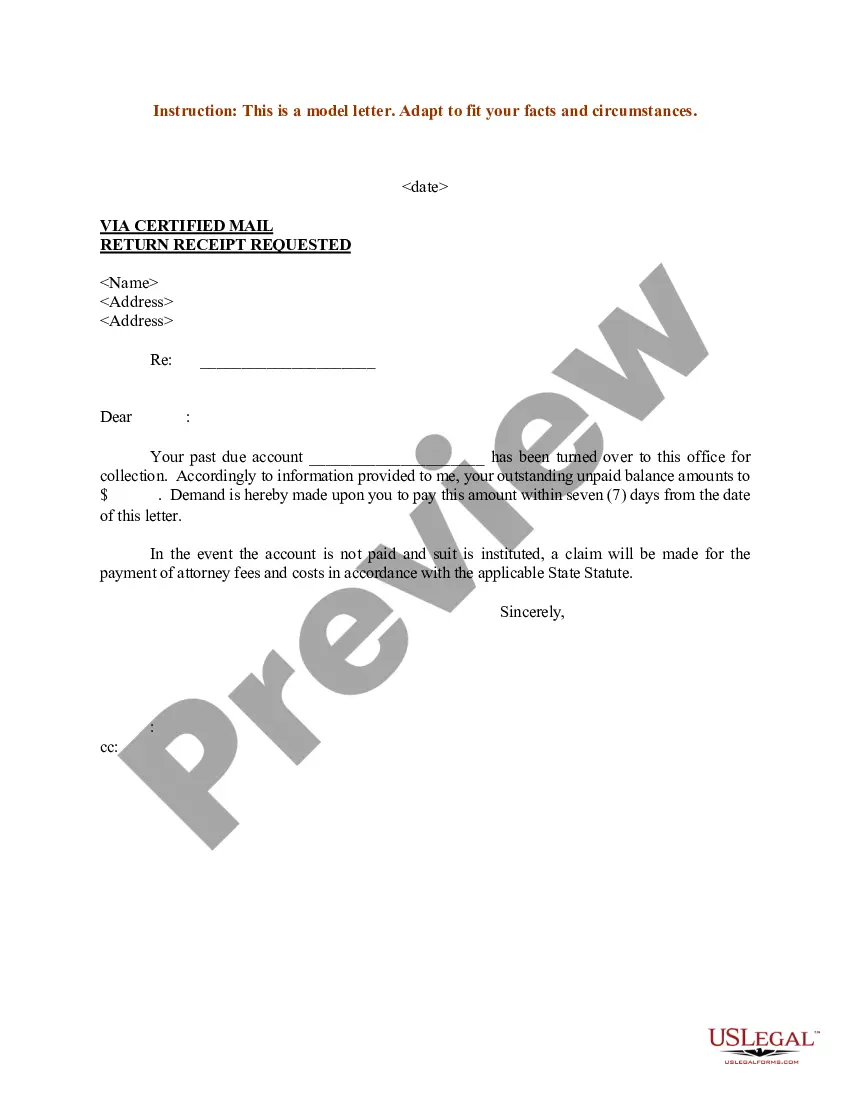
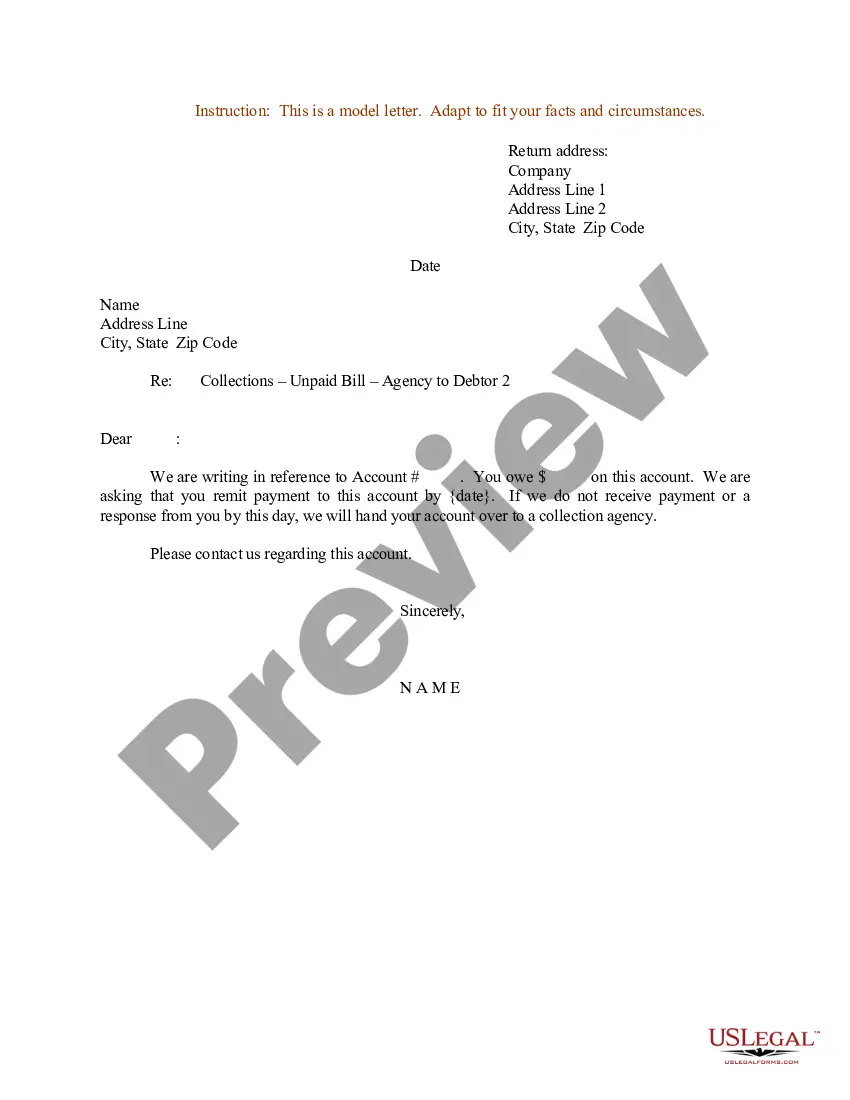
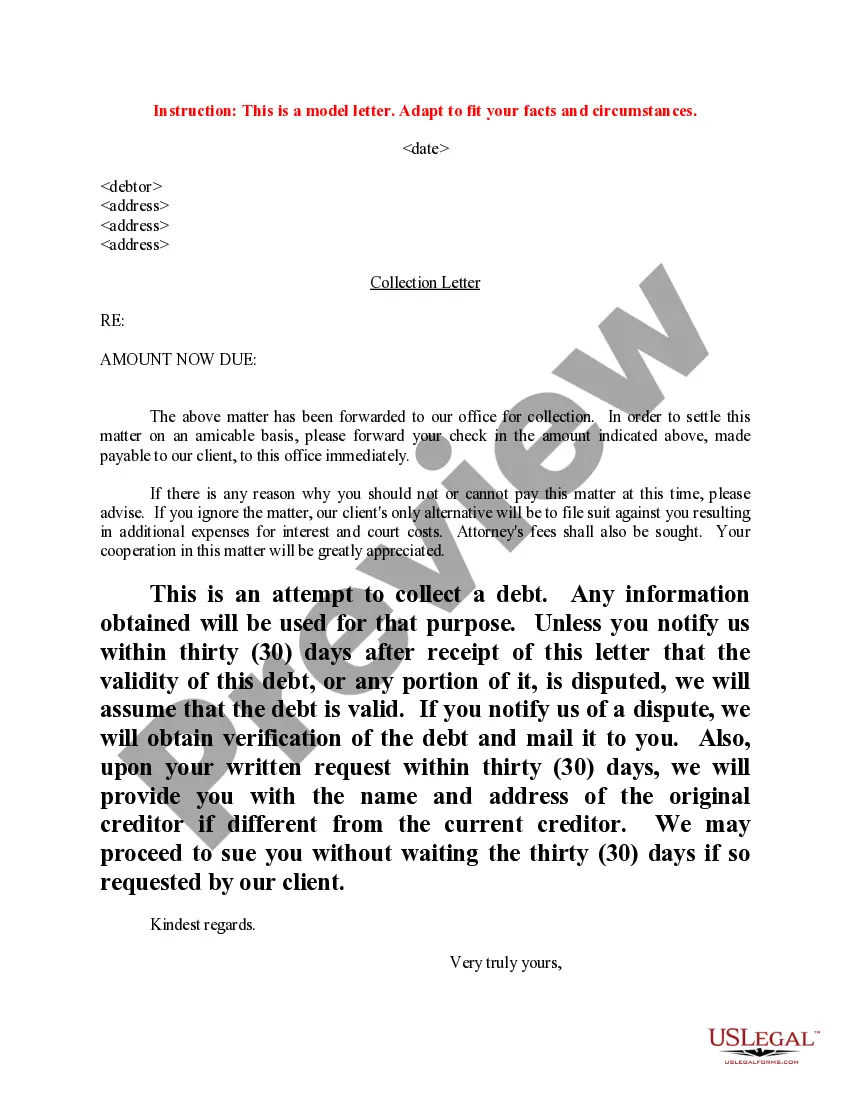
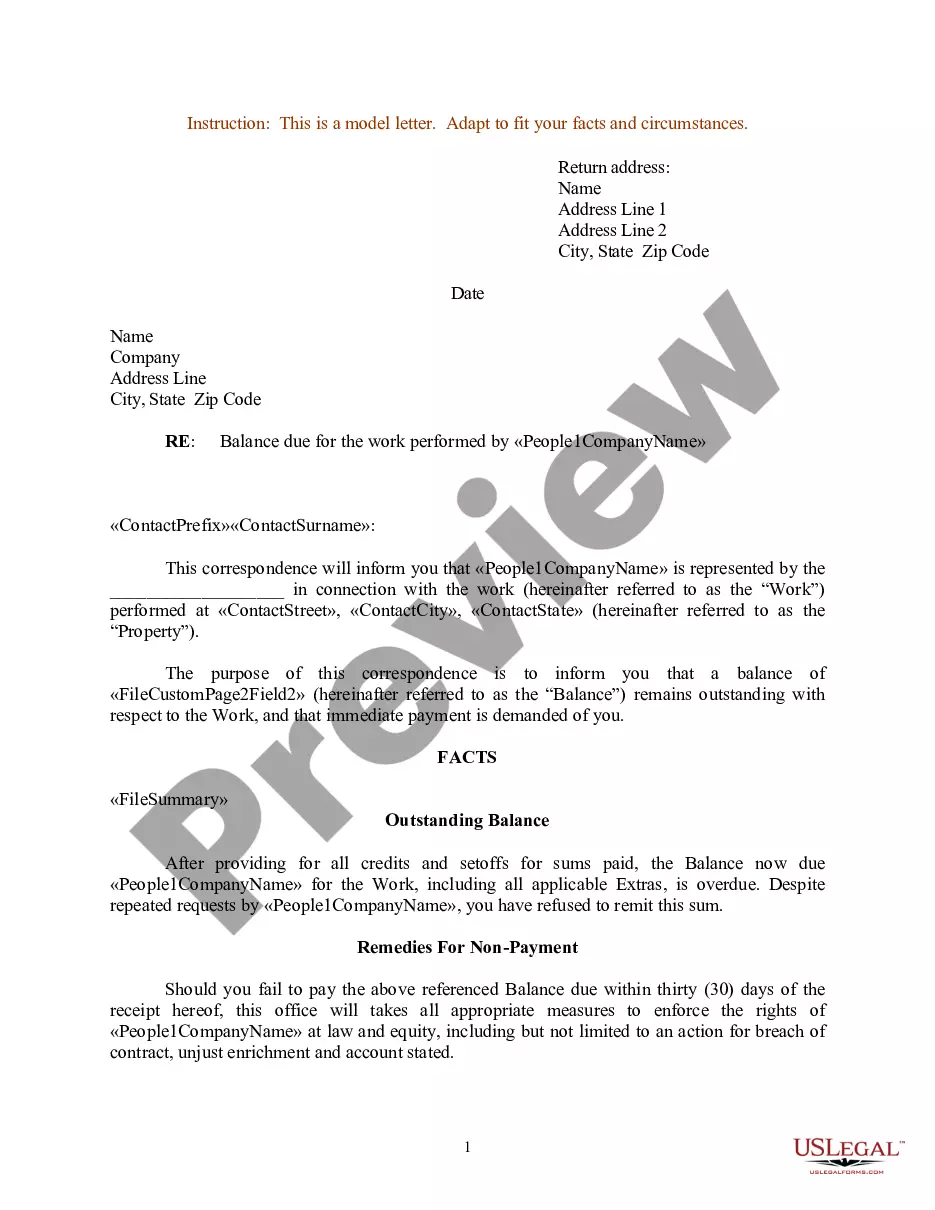
Michigan Sample Letter regarding Bill
Description
Get your form ready online
Our built-in tools help you complete, sign, share, and store your documents in one place.
Make edits, fill in missing information, and update formatting in US Legal Forms—just like you would in MS Word.
Download a copy, print it, send it by email, or mail it via USPS—whatever works best for your next step.
Sign and collect signatures with our SignNow integration. Send to multiple recipients, set reminders, and more. Go Premium to unlock E-Sign.
If this form requires notarization, complete it online through a secure video call—no need to meet a notary in person or wait for an appointment.
We protect your documents and personal data by following strict security and privacy standards.

Make edits, fill in missing information, and update formatting in US Legal Forms—just like you would in MS Word.

Download a copy, print it, send it by email, or mail it via USPS—whatever works best for your next step.

Sign and collect signatures with our SignNow integration. Send to multiple recipients, set reminders, and more. Go Premium to unlock E-Sign.

If this form requires notarization, complete it online through a secure video call—no need to meet a notary in person or wait for an appointment.

We protect your documents and personal data by following strict security and privacy standards.
Looking for another form?



How to fill out Sample Letter Regarding Bill?
Are you presently in a situation where you need documents for both business or personal purposes nearly every day.
There is a multitude of legal document templates accessible online, but finding versions you can rely on isn't easy.
US Legal Forms offers thousands of form templates, including the Michigan Sample Letter regarding Bill, that are designed to comply with federal and state regulations.
Once you find the correct form, click on Purchase now.
Select the pricing plan you require, complete the necessary information to create your account, and pay for the order using your PayPal or Visa or Mastercard. Choose a convenient file format and download your copy. Retrieve all the document templates you have purchased in the My documents section. You can obtain an additional copy of the Michigan Sample Letter regarding Bill at any time, if needed. Just click on the desired form to download or print the document template. Utilize US Legal Forms, the most comprehensive collection of legal documents, to save time and prevent errors. This service provides expertly crafted legal document templates that you can use for various purposes. Create an account on US Legal Forms and start simplifying your life.
- If you are already familiar with the US Legal Forms website and have an account, simply Log In.
- After that, you can download the Michigan Sample Letter regarding Bill template.
- If you do not have an account and wish to start using US Legal Forms, follow these steps.
- Obtain the form you need and ensure it is for the correct region/state.
- Utilize the Review button to examine the form.
- Read the description to confirm that you have selected the correct document.
- If the form is not what you are looking for, use the Search field to find the document that meets your needs.
Form popularity
FAQ
If you owe money to a federal agency and you did not pay it on time, you have a delinquent debt. You will receive a letter first from the agency to whom you owe the debt. If you do not pay the agency, the debt then goes to Treasury and we send you a letter about that debt.
The most effective way to stop garnishments or other levies is to pay in full. After you have paid, contact the number listed on your order. Have your payroll, bank, or other payor fax number prior to calling.
The best way to prevent a Michigan tax levy is to pay your tax liability in full or make payment arrangements with the Michigan Department of Treasury. If the department can see that you're making a good faith effort to pay your tax liability, it generally will not bring a levy against you.
Michigan Tax Levy Overview: How to Release or Stop a Tax Levy. If you don't pay your state taxes, the Michigan Department of Treasury (MI DOT) has the right to levy your assets. A levy is when the state seizes your assets and uses them to reduce your tax debt.
The IRS assessed the tax and sent you a Notice and Demand for Payment (a tax bill); You neglected or refused to pay the tax; and. The IRS sent you a Final Notice of Intent to Levy and Notice of Your Right to A Hearing (levy notice) at least 30 days before the levy.
Every wage-earning person that lives or works in Michigan pays a flat 4.25% for Michigan state income tax. View more information about Michigan tax rates.
A levy is a legal seizure of your property to satisfy a tax debt. Levies are different from liens. A lien is a legal claim against your property to secure payment of your tax debt, while a levy actually takes the property to satisfy the tax debt.
We will send a letter/notice if: You have an unpaid balance. You are due a larger or smaller refund. We have a question about your tax return. We need to verify your identity.