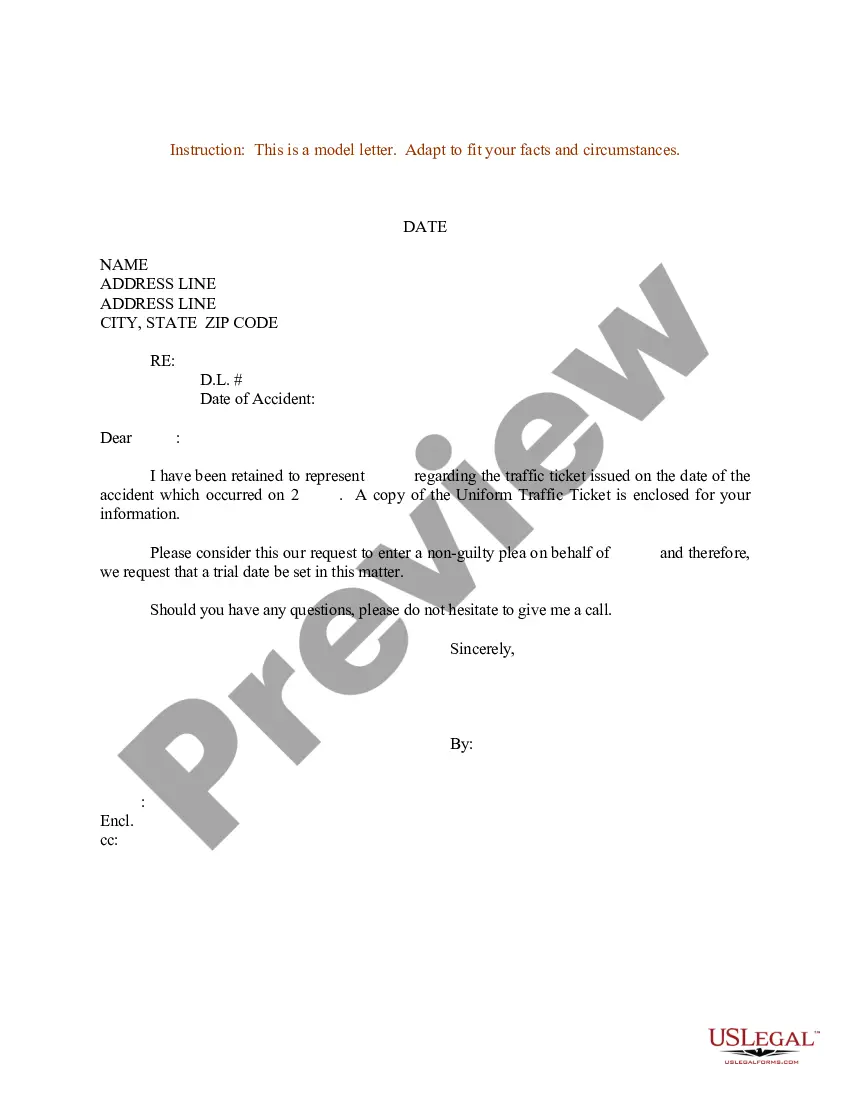
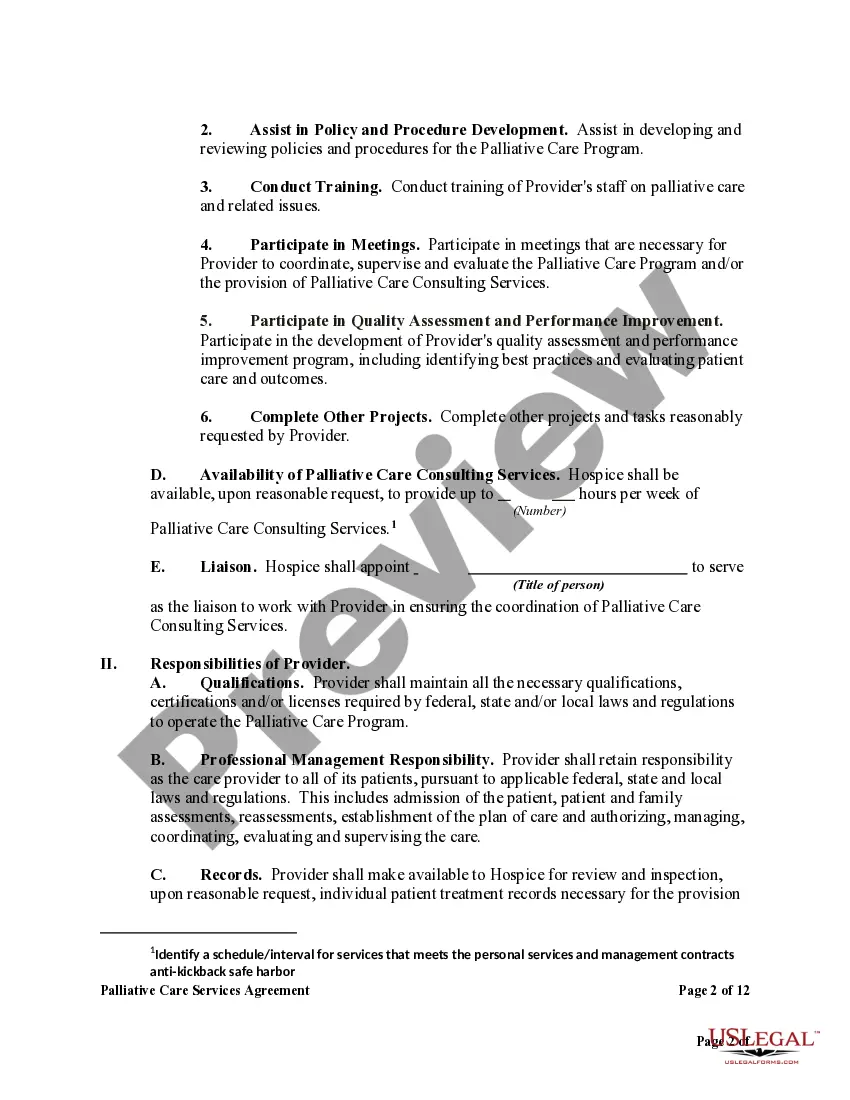
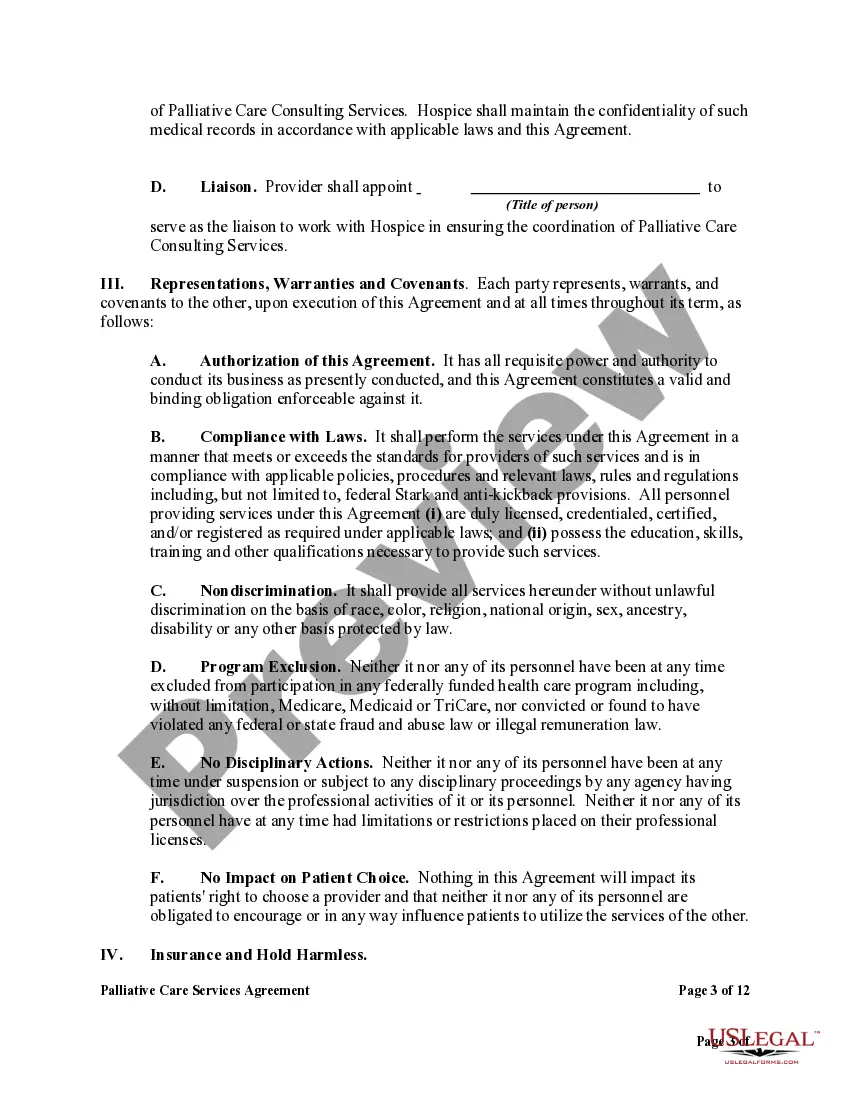
Michigan Palliative Care Services Agreement
Description




Get your form ready online
Our built-in tools help you complete, sign, share, and store your documents in one place.
Make edits, fill in missing information, and update formatting in US Legal Forms—just like you would in MS Word.
Download a copy, print it, send it by email, or mail it via USPS—whatever works best for your next step.
Sign and collect signatures with our SignNow integration. Send to multiple recipients, set reminders, and more. Go Premium to unlock E-Sign.
If this form requires notarization, complete it online through a secure video call—no need to meet a notary in person or wait for an appointment.
We protect your documents and personal data by following strict security and privacy standards.

Make edits, fill in missing information, and update formatting in US Legal Forms—just like you would in MS Word.

Download a copy, print it, send it by email, or mail it via USPS—whatever works best for your next step.

Sign and collect signatures with our SignNow integration. Send to multiple recipients, set reminders, and more. Go Premium to unlock E-Sign.

If this form requires notarization, complete it online through a secure video call—no need to meet a notary in person or wait for an appointment.

We protect your documents and personal data by following strict security and privacy standards.
Looking for another form?

How to fill out Palliative Care Services Agreement?
It is feasible to invest time online trying to locate the legal document format that complies with the federal and state requirements you seek.
US Legal Forms offers thousands of legal templates that have been reviewed by experts.
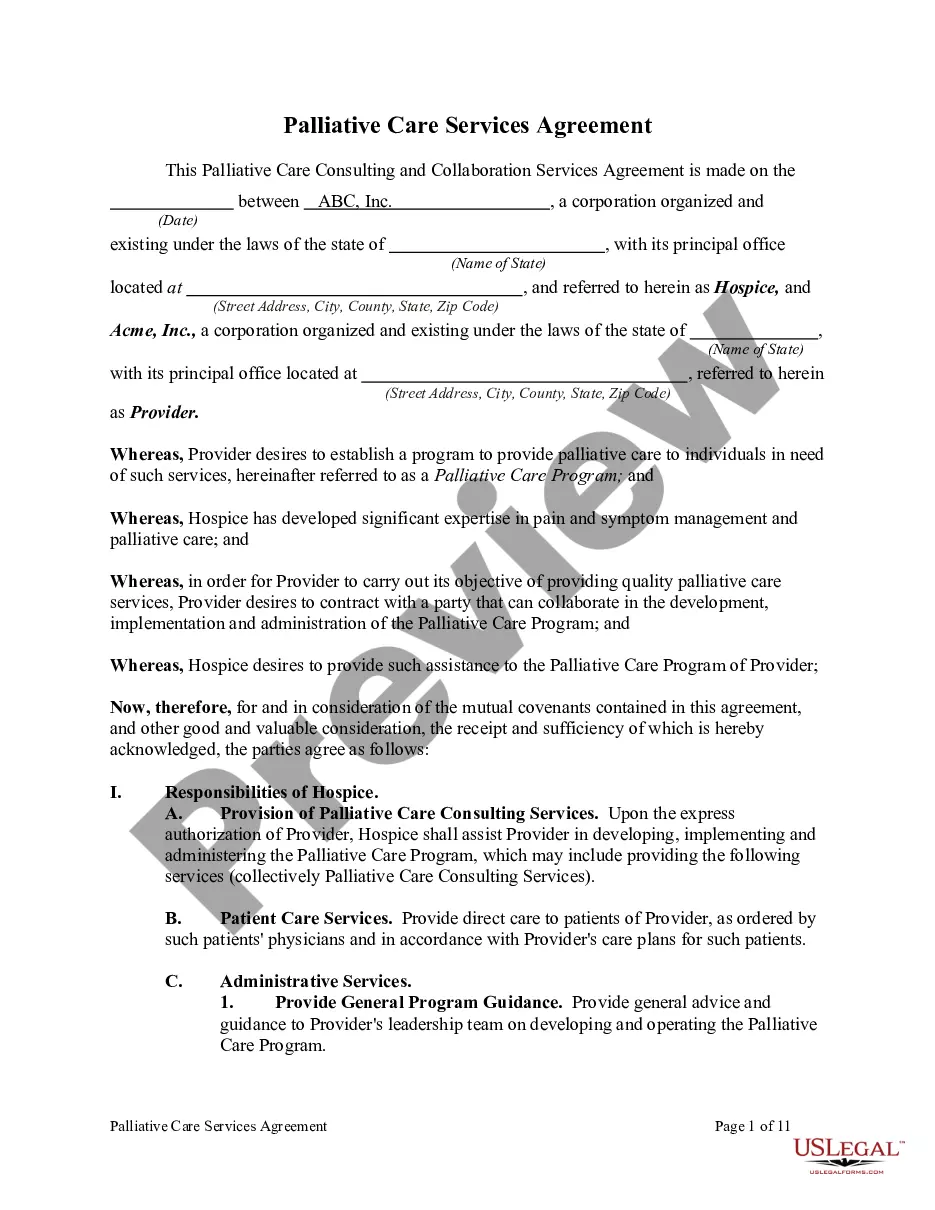
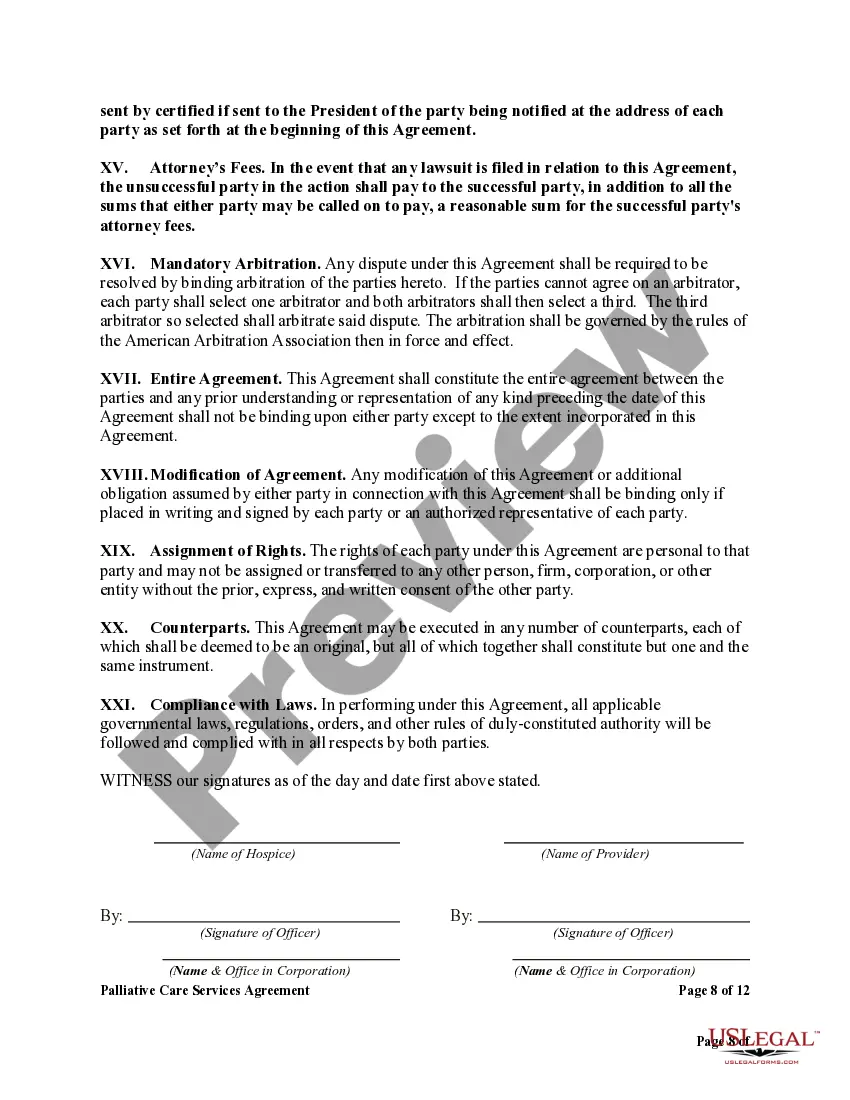
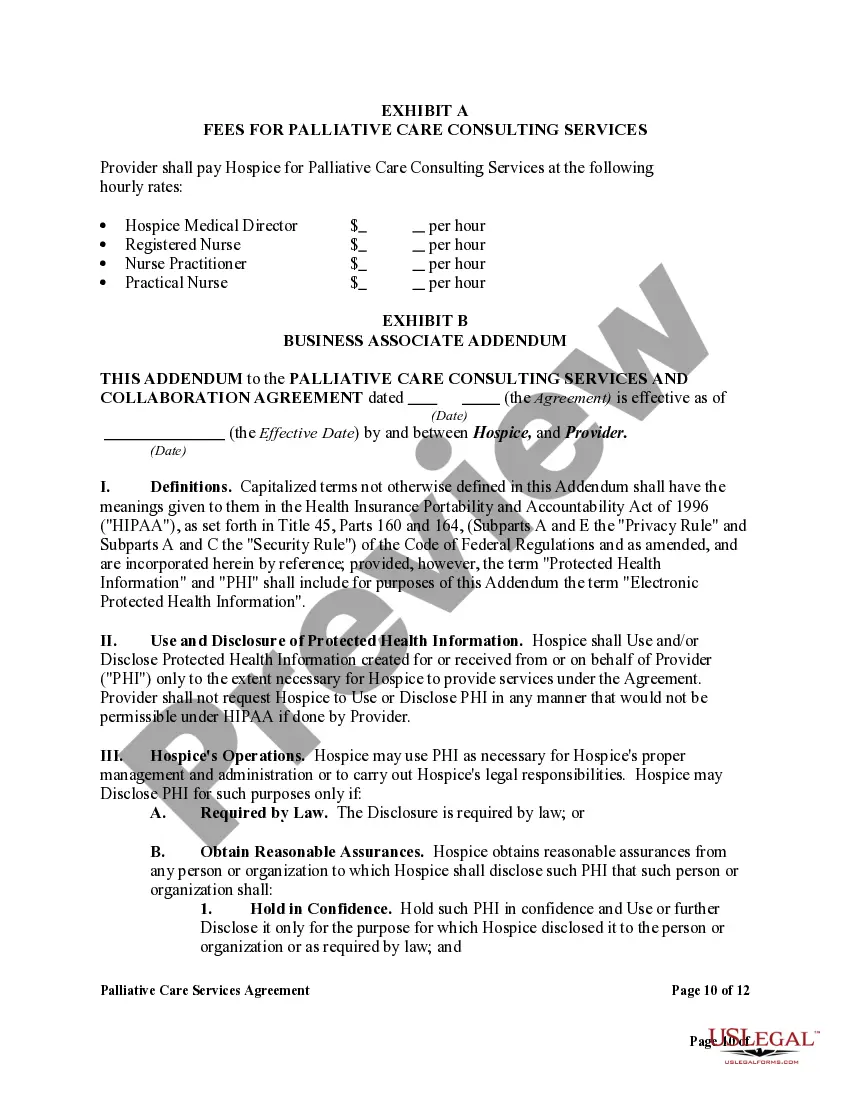
You can easily download or print the Michigan Palliative Care Services Agreement from my services.
If available, utilize the Preview button to review the document format as well.
- If you already possess a US Legal Forms account, you can Log In and click the Acquire button.
- Subsequently, you can complete, modify, print, or sign the Michigan Palliative Care Services Agreement.
- Every legal document format you download belongs to you permanently.
- To obtain another copy of the purchased document, visit the My documents tab and click the relevant button.
- If you are accessing the US Legal Forms site for the first time, follow the simple instructions below.
- First, ensure that you have selected the correct document format for your desired state/city.
- Check the document description to confirm you have chosen the appropriate form.
Form popularity
FAQ
To get admitted to palliative care, you should start by discussing your situation with your primary healthcare provider. They will assess your needs and initiate the process for a Michigan Palliative Care Services Agreement. Once admitted, a specialized team will work with you to address your symptoms and enhance your overall well-being.
Several factors can make a person eligible for palliative care, including the presence of a serious illness and the need for symptom management. If you find that your illness significantly impacts your daily life, you should consider pursuing a Michigan Palliative Care Services Agreement. Your healthcare provider will guide you through evaluating your eligibility.
Billing for palliative care services typically involves using specific codes designated for this type of care. Healthcare providers submit claims based on services provided under a Michigan Palliative Care Services Agreement. Ensure that your care team understands how to navigate insurance policies to maximize reimbursement for palliative care.
Candidates for palliative care include individuals facing serious illnesses, regardless of age or stage of disease. If you experience symptoms that affect your quality of life, you may benefit from a Michigan Palliative Care Services Agreement. This service focuses on improving comfort and providing support to both patients and families.
To get approved for palliative care, first, consult your healthcare provider to discuss your symptoms and needs. Your provider will assess your condition and determine if a Michigan Palliative Care Services Agreement fits your situation. This process often includes discussing your treatment goals and evaluating how palliative care can provide support.
When referring to palliative care, it is essential to communicate its purpose clearly. Palliative care focuses on providing relief from symptoms of serious illnesses and improving quality of life, aligning with the Michigan Palliative Care Services Agreement. Use straightforward language to describe the benefits, including emotional support and care coordination. This approach fosters understanding and acceptance among patients and families, making it easier for them to seek the care they need.
Creating a palliative care plan involves assessing the patient's medical condition, preferences, and goals of care. Health care providers should collaborate and utilize the Michigan Palliative Care Services Agreement as a framework to outline necessary services. This plan should also include regular evaluations to adapt to the patient's changing needs while ensuring a supportive network for the patient and family. A well-structured palliative care plan enhances overall quality of life and helps in long-term health management.
Coding for palliative care involves matching the services provided with the appropriate CPT codes. Start by evaluating the services rendered and the patient's needs according to the Michigan Palliative Care Services Agreement. Accurate coding not only improves the chances of reimbursement but also enhances communication among health care providers. It is essential to stay updated on coding practices, as regulations can change frequently.
CPT codes for palliative care are crucial for proper billing and patient documentation. Commonly used codes include 99497 for advanced care planning, along with several others that address palliative care consultations and medical evaluations. Using the correct code ensures providers follow the guidelines set by the Michigan Palliative Care Services Agreement. This practice also helps avoid delays in payment and ensures compliance with insurance policies.
The 7 C's of palliative care include consultation, communication, collaboration, coordination, comfort, continuity, and compassion. These principles are essential in ensuring that patients receive holistic care that addresses their physical, emotional, and spiritual needs. Providers engaging in a Michigan Palliative Care Services Agreement often implement these elements to optimize patient outcomes. Understanding these C's helps foster better relationships between patients, families, and healthcare providers.