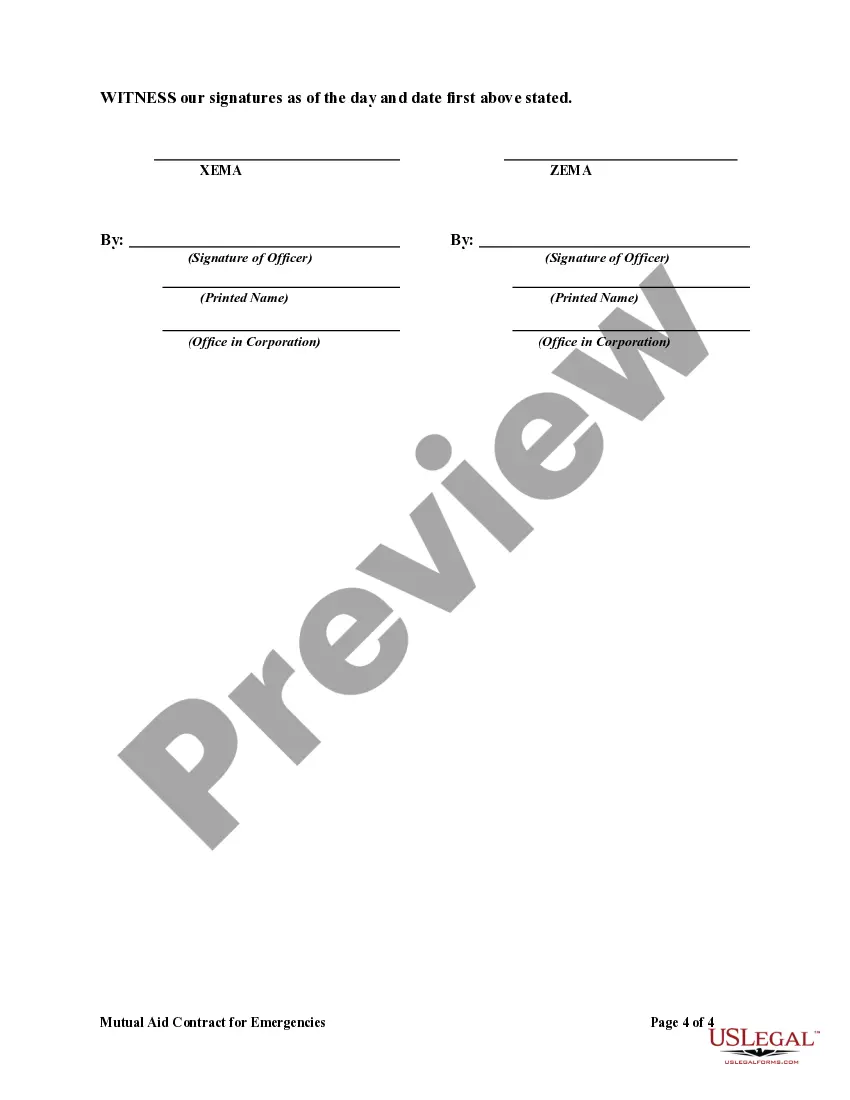
Michigan Mutual Aid Contract for Emergencies
Description
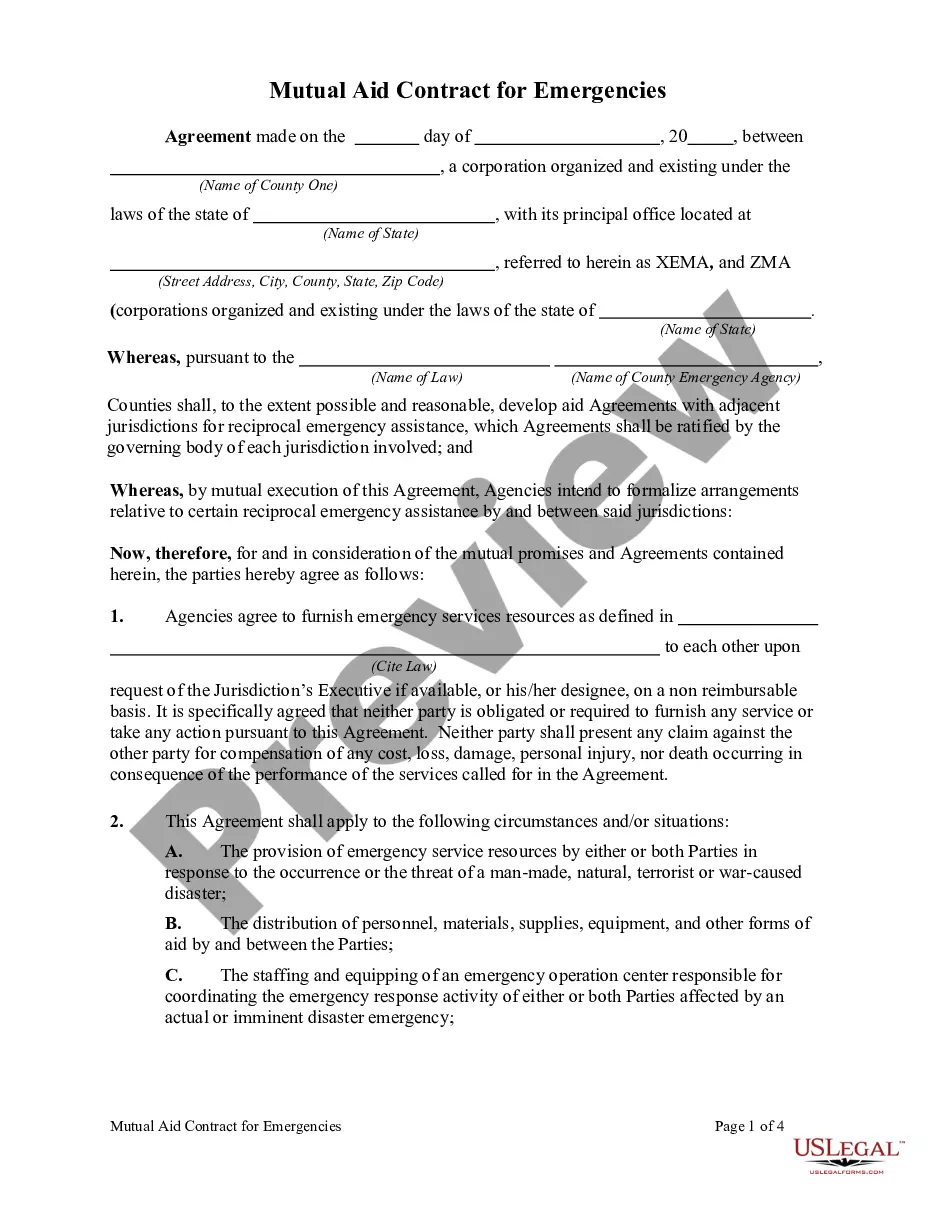

Get your form ready online
Our built-in tools help you complete, sign, share, and store your documents in one place.
Make edits, fill in missing information, and update formatting in US Legal Forms—just like you would in MS Word.
Download a copy, print it, send it by email, or mail it via USPS—whatever works best for your next step.
Sign and collect signatures with our SignNow integration. Send to multiple recipients, set reminders, and more. Go Premium to unlock E-Sign.
If this form requires notarization, complete it online through a secure video call—no need to meet a notary in person or wait for an appointment.
We protect your documents and personal data by following strict security and privacy standards.
Make edits, fill in missing information, and update formatting in US Legal Forms—just like you would in MS Word.
Download a copy, print it, send it by email, or mail it via USPS—whatever works best for your next step.
Sign and collect signatures with our SignNow integration. Send to multiple recipients, set reminders, and more. Go Premium to unlock E-Sign.
If this form requires notarization, complete it online through a secure video call—no need to meet a notary in person or wait for an appointment.
We protect your documents and personal data by following strict security and privacy standards.
Looking for another form?
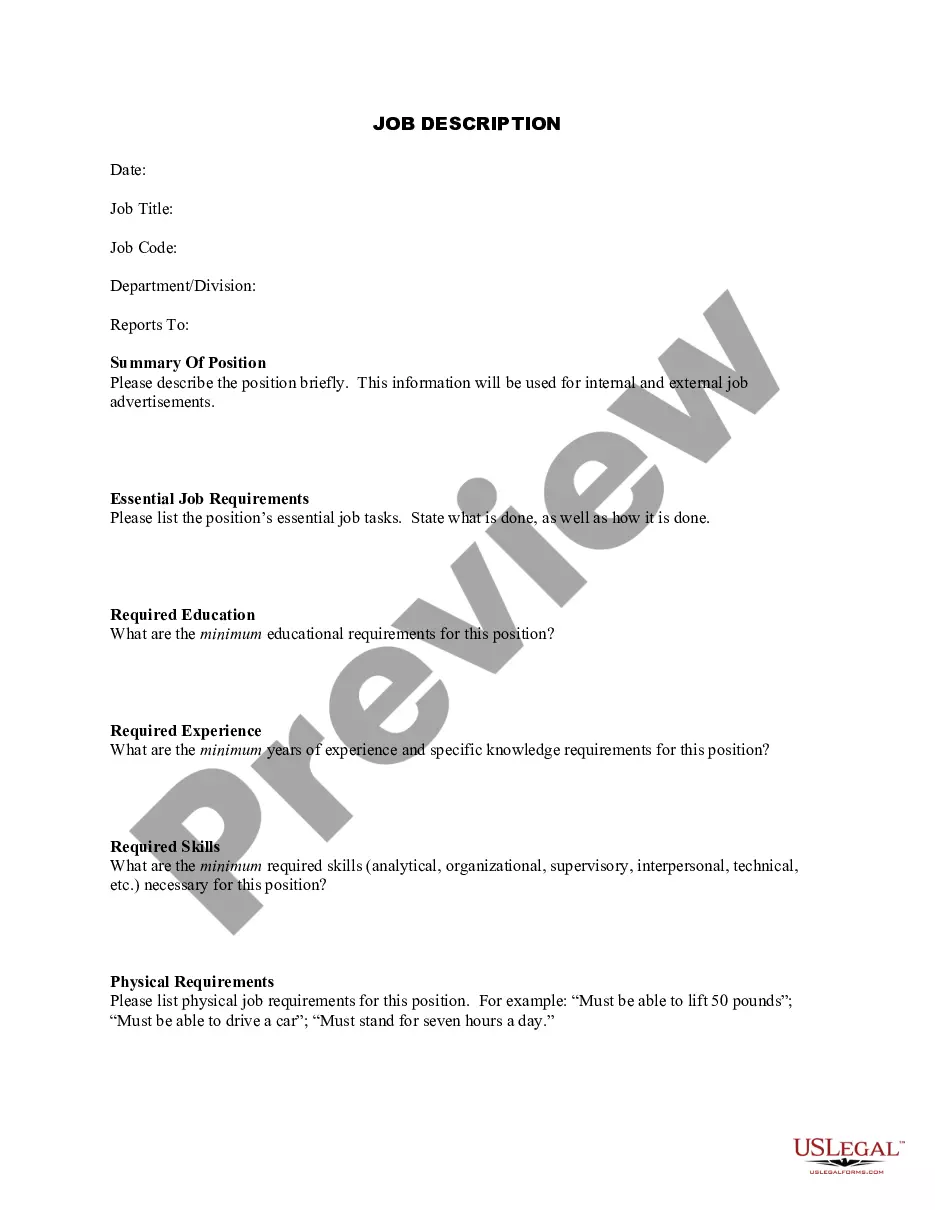
How to fill out Mutual Aid Contract For Emergencies?
You can spend hours online looking for the valid document template that meets the state and federal regulations you need.
US Legal Forms offers a vast selection of valid forms that are reviewed by experts.
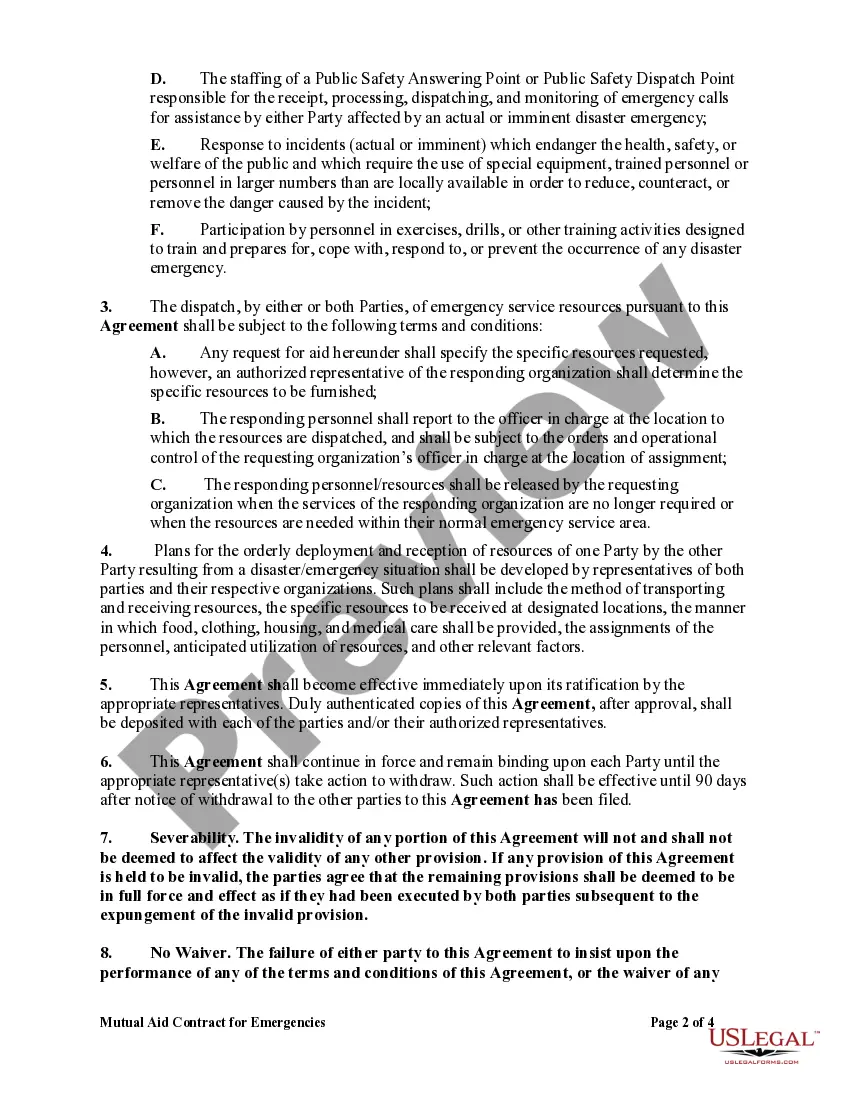
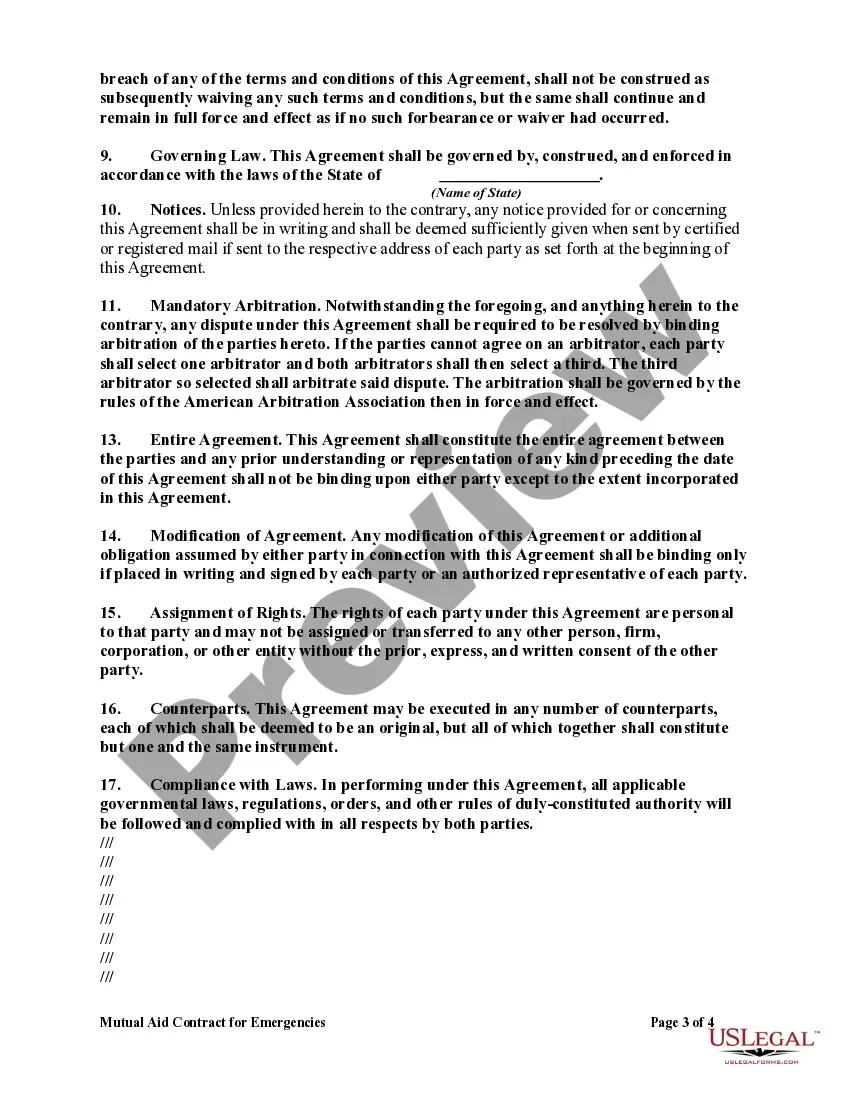
You can download or print the Michigan Mutual Aid Agreement for Emergencies from the services.
If available, use the Review option to view the document template as well. To obtain another version of your form, use the Search field to find the template that suits you and your requirements. Once you have located the template you need, click Buy now to proceed. Choose the payment plan you prefer, enter your information, and register for an account on US Legal Forms. Complete the transaction. You can use your Visa, Mastercard, or PayPal account to purchase the valid form. Select the format of your document and download it to your device. Make changes to the document if necessary. You can complete, modify, and sign and print the Michigan Mutual Aid Agreement for Emergencies. Access and print a wide range of document layouts using the US Legal Forms website, which provides the most extensive selection of valid forms. Utilize professional and state-specific templates to address your business or personal needs.
- If you already have a US Legal Forms account, you can Log In and click on the Obtain button.
- After that, you can complete, modify, print, or sign the Michigan Mutual Aid Agreement for Emergencies.
- Each valid document template you receive belongs to you permanently.
- To get another version of the downloaded form, go to the My documents section and select the appropriate option.
- If this is your first time using the US Legal Forms website, follow the simple instructions below.
- First, ensure that you have selected the correct document template for the state/city that you choose.
- Check the form description to make sure you have selected the right template.
Form popularity
FAQ
Requesting mutual aid requires a systematic approach. Begin by reviewing your jurisdiction's protocols for engaging with the Michigan Mutual Aid Contract for Emergencies. Document the resources you need and the situation at hand, and then enact the established communication methods to contact your mutual aid partners. By staying organized and open throughout the process, you enhance your chances of receiving the support you require.
To request mutual aid, follow the guidelines outlined in the Michigan Mutual Aid Contract for Emergencies. First, evaluate the needs of your jurisdiction and prepare to provide specific details to your partner agencies. Then, reach out directly using the contact information established in your agreements and communicate the situation clearly. Timely and transparent communication ensures that assistance arrives promptly and effectively.
Automatic aid refers to a pre-established agreement where assistance is provided without a formal request during emergencies, while mutual aid requires a request for support. Under the Michigan Mutual Aid Contract for Emergencies, mutual aid promotes cooperation and resource sharing between jurisdictions when conditions escalate. Understanding this difference helps you determine which system works best for your specific needs during a crisis.
Getting started with mutual aid involves understanding the Michigan Mutual Aid Contract for Emergencies and forming agreements with neighboring jurisdictions. Begin by identifying potential partners and discussing resource sharing, response capabilities, and support systems. You can also explore uslegalforms as they provide templates to help you create contracts that facilitate these arrangements. Establishing these connections sets the foundation for efficient emergency response.
To initiate a mutual aid request under the Michigan Mutual Aid Contract for Emergencies, you should assess the situation to identify your needs. Next, contact your mutual aid partner as specified in your agreements, and clearly communicate the details of your request. Documentation of the incident and the needs is crucial for ensuring a smooth response. Finally, maintain communication throughout the process to address any changes or additional requirements.
The three key elements of mutual aid are cooperation, communication, and coordination. In the context of the Michigan Mutual Aid Contract for Emergencies, these elements play a crucial role in effectively responding to crises. Building strong relationships and establishing clear lines of communication ensure that resources are deployed efficiently and effectively when needed.
A best practice for updating your mutual aid agreement is to regularly review and practice the terms with all participating agencies. By doing so, organizations ensure that the Michigan Mutual Aid Contract for Emergencies remains relevant and effective. Regular training and discussions about needs and resources can lead to timely updates and improvements.
The key components of mutual aid consist of defined roles, communication protocols, and logistical support. In a Michigan Mutual Aid Contract for Emergencies, these components work together to create a framework for effective collaboration. Clear guidelines help all parties understand their responsibilities, fostering trust and reliability.
A mutual aid agreement typically includes provisions for resource sharing, responsibilities of each party, and procedures for requesting aid during emergencies. In the Michigan Mutual Aid Contract for Emergencies, you may find details regarding liability, equipment use, and reimbursement procedures. This clarity helps ensure smooth operations and cooperation between participating entities.
Examples of mutual aid include resource sharing among neighboring communities during natural disasters, joint training exercises for first responders, and collaborative response plans for specific incidents. In the context of a Michigan Mutual Aid Contract for Emergencies, municipalities can agree to provide personnel, equipment, and support to each other during emergencies. This collaboration enhances public safety and efficiency in crisis situations.