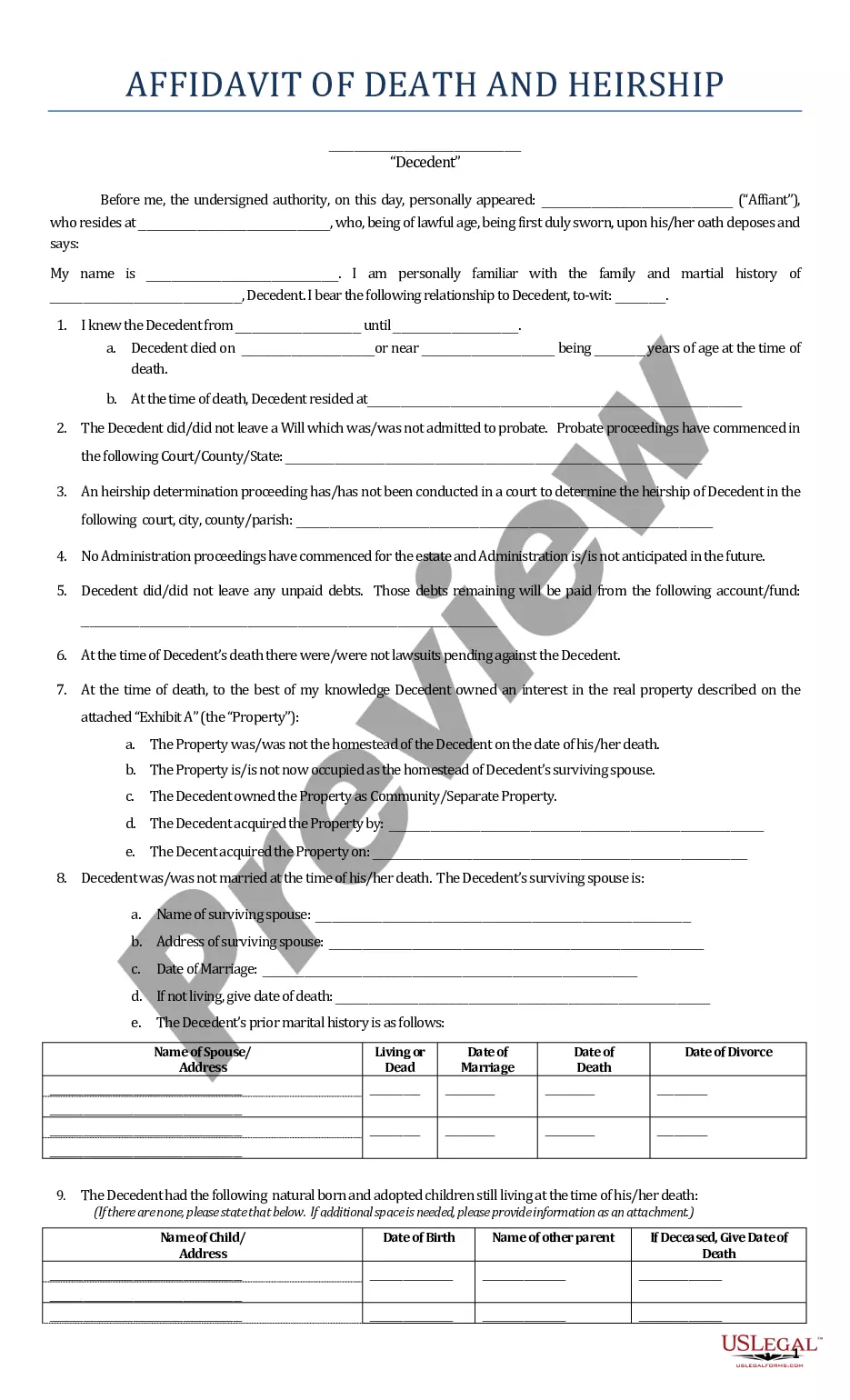
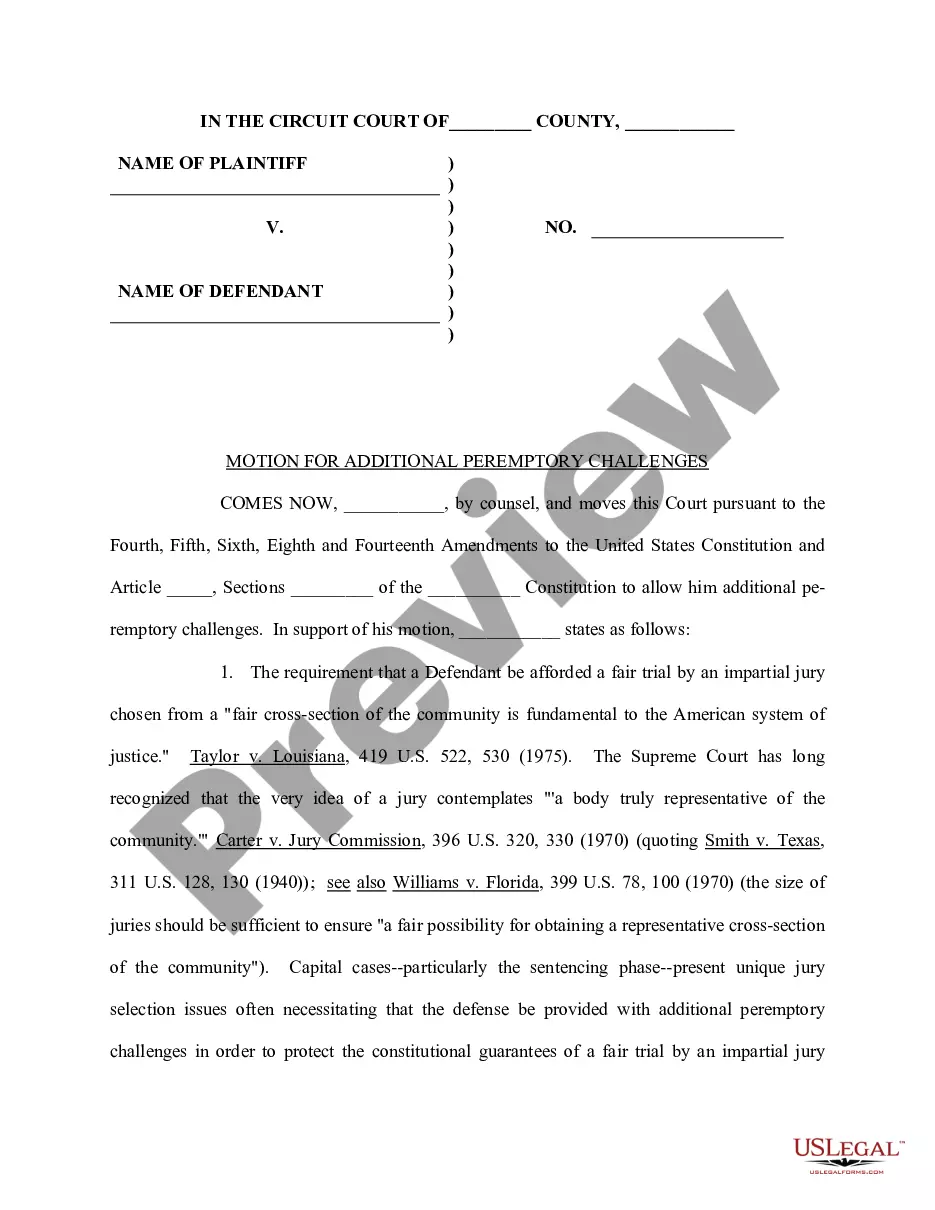
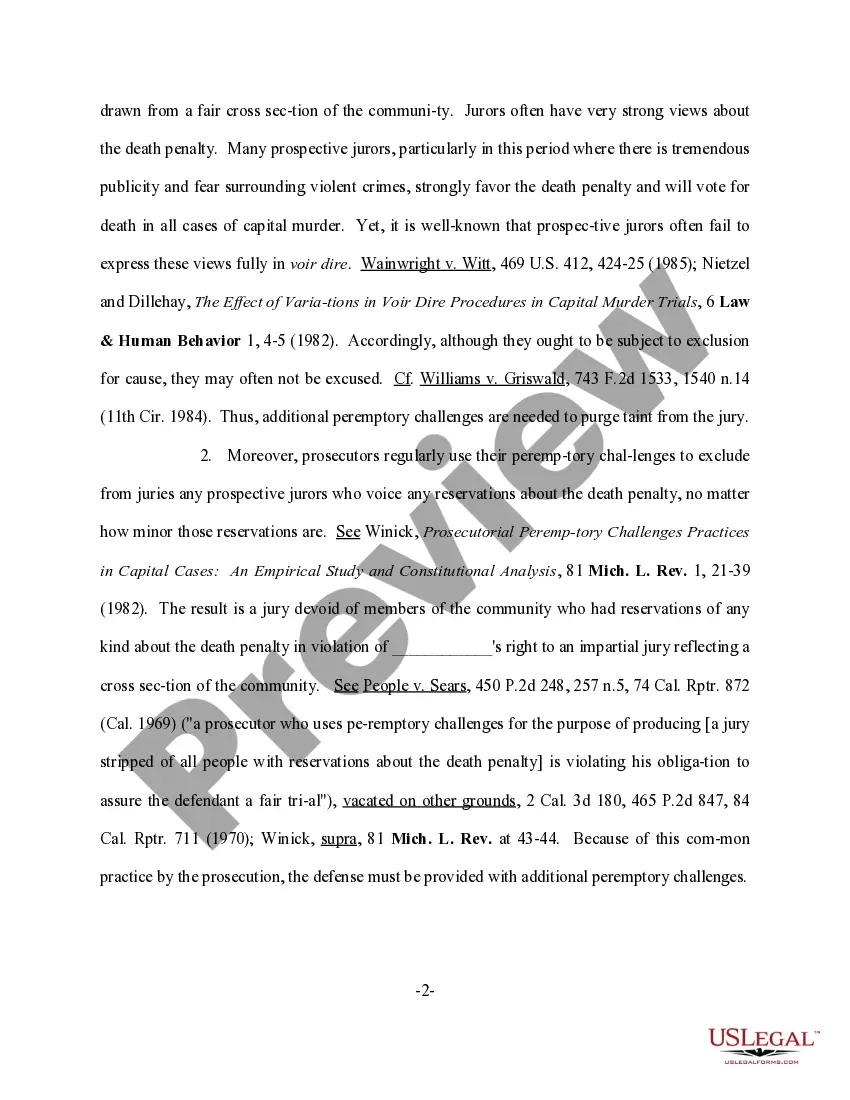
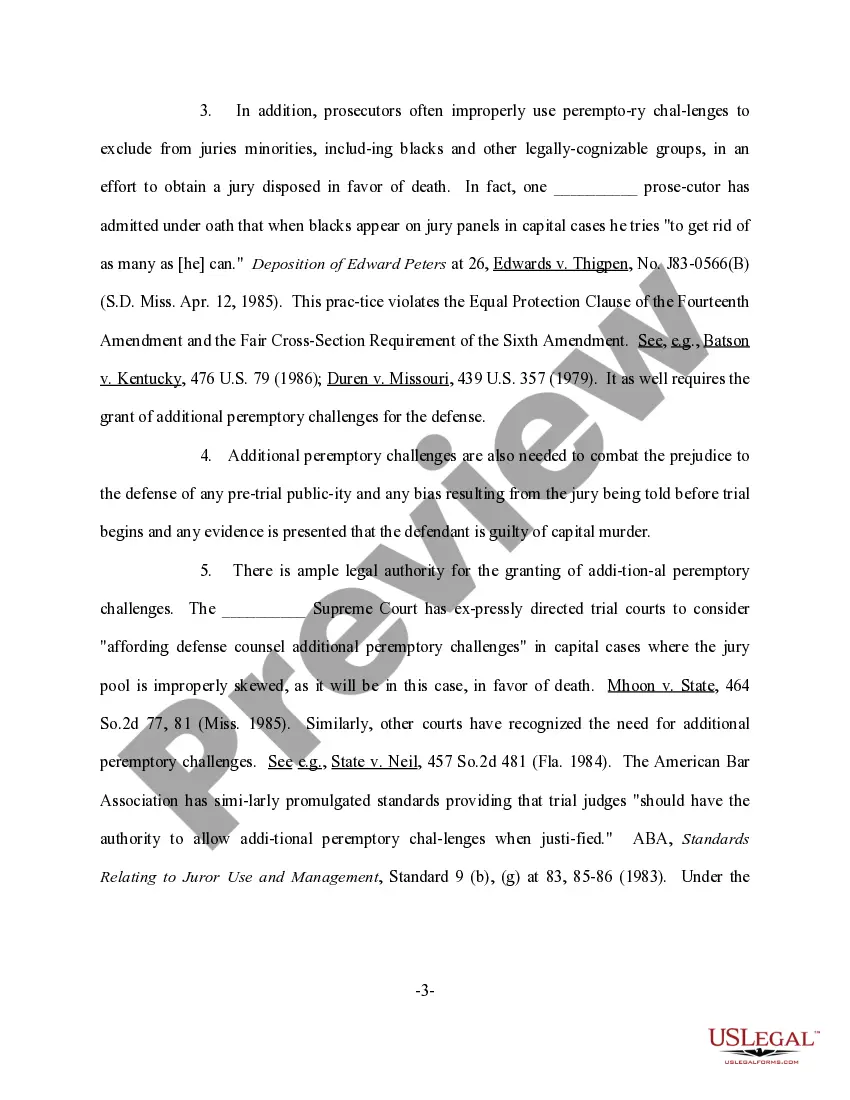
Michigan Motion for Additional Peremptory Challenges
Description
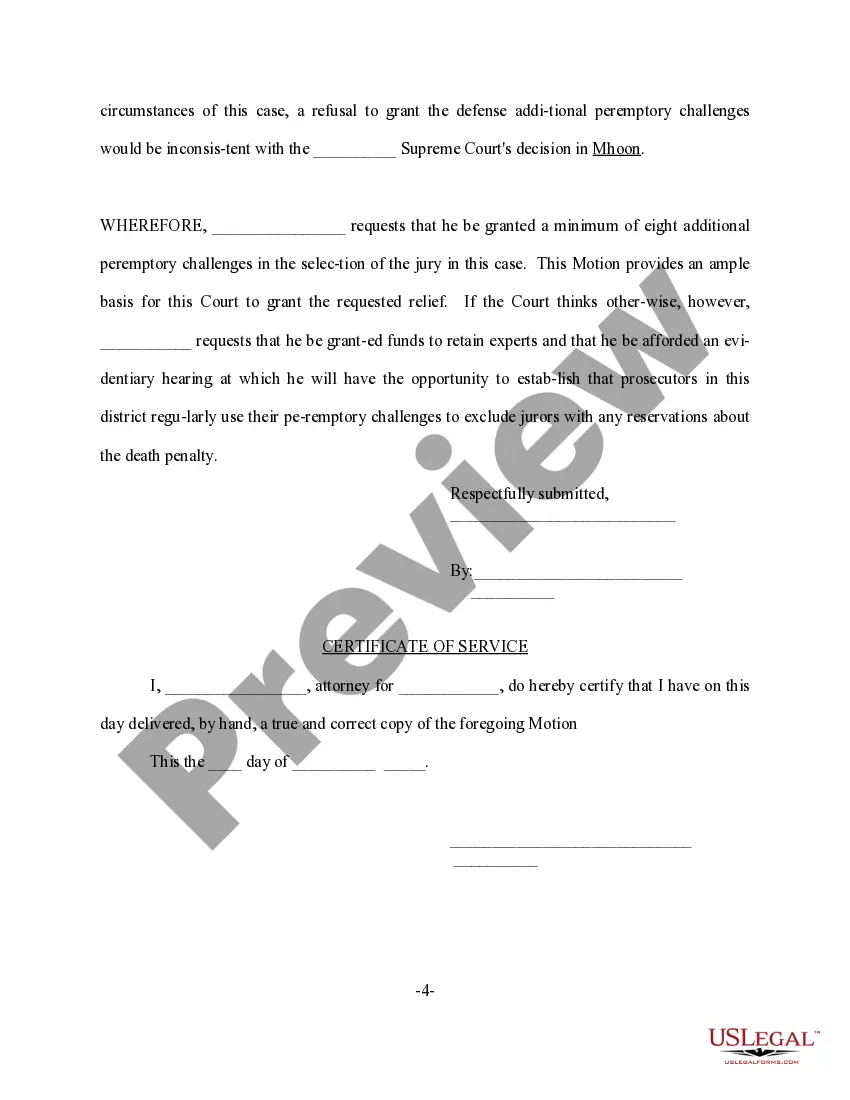
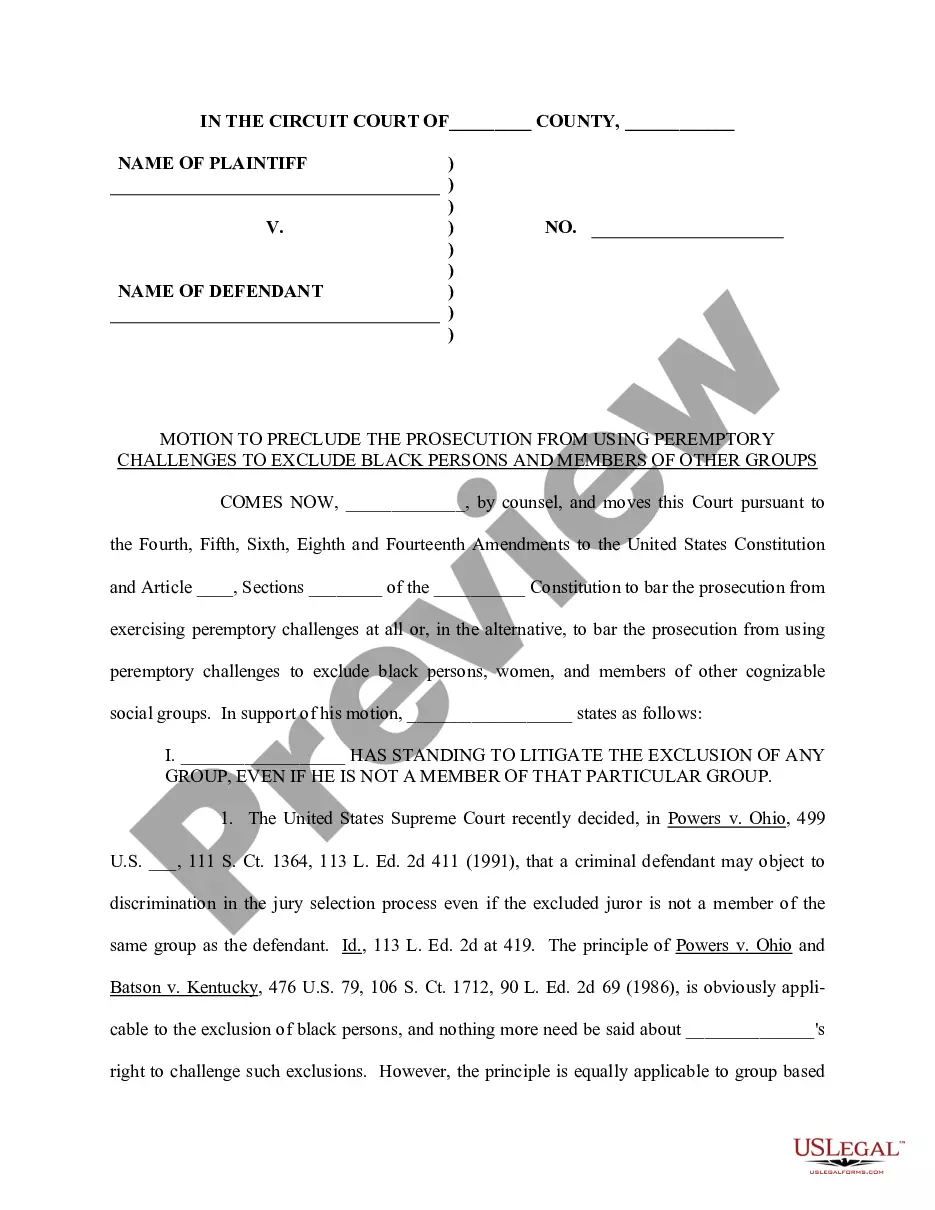
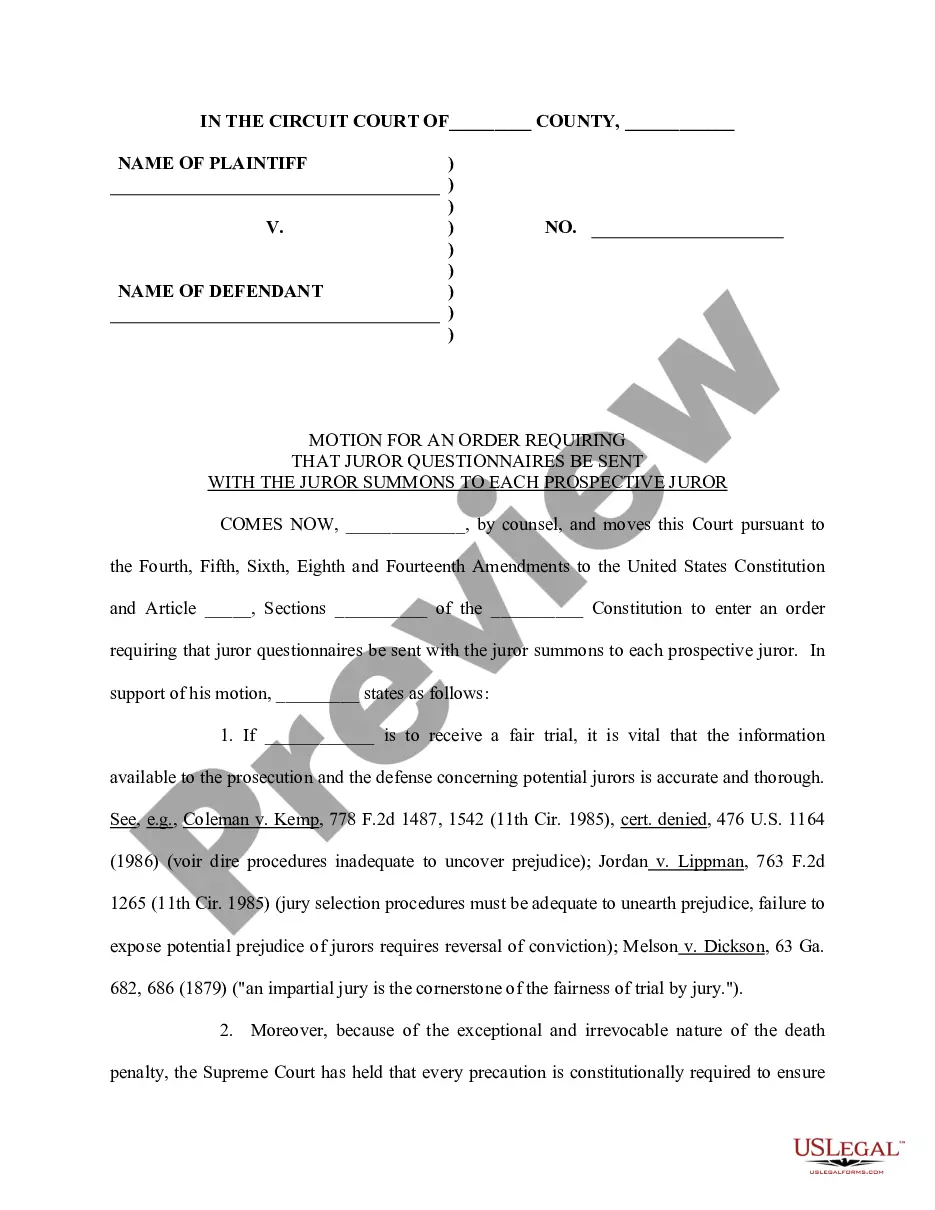
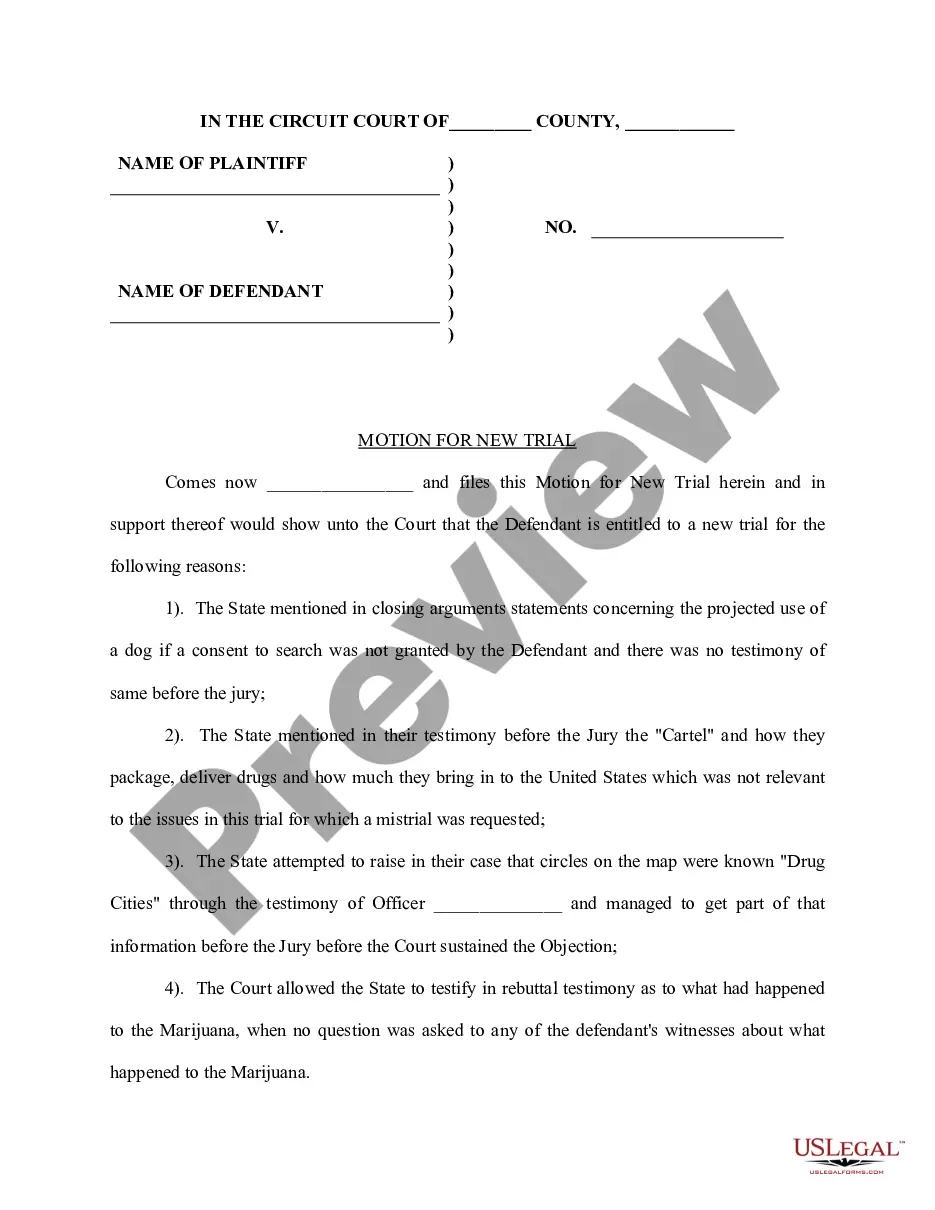
Get your form ready online
Our built-in tools help you complete, sign, share, and store your documents in one place.
Make edits, fill in missing information, and update formatting in US Legal Forms—just like you would in MS Word.
Download a copy, print it, send it by email, or mail it via USPS—whatever works best for your next step.
Sign and collect signatures with our SignNow integration. Send to multiple recipients, set reminders, and more. Go Premium to unlock E-Sign.
If this form requires notarization, complete it online through a secure video call—no need to meet a notary in person or wait for an appointment.
We protect your documents and personal data by following strict security and privacy standards.

Make edits, fill in missing information, and update formatting in US Legal Forms—just like you would in MS Word.

Download a copy, print it, send it by email, or mail it via USPS—whatever works best for your next step.

Sign and collect signatures with our SignNow integration. Send to multiple recipients, set reminders, and more. Go Premium to unlock E-Sign.

If this form requires notarization, complete it online through a secure video call—no need to meet a notary in person or wait for an appointment.

We protect your documents and personal data by following strict security and privacy standards.
Looking for another form?








How to fill out Motion For Additional Peremptory Challenges?
US Legal Forms - one of the largest collections of legal documents in the United States - provides a range of legal document templates that you can download or print.
By using the website, you can find numerous forms for business and personal purposes, organized by categories, states, or keywords. You can access the latest versions of forms such as the Michigan Motion for Additional Peremptory Challenges in just a few minutes.
If you already have a subscription, Log In and download the Michigan Motion for Additional Peremptory Challenges from the US Legal Forms library. The Download button will be visible on every form you view. You can access all previously downloaded forms from the My documents section of your account.
Select the format and download the form to your device.
Make adjustments. Fill in, modify, print, and sign the downloaded Michigan Motion for Additional Peremptory Challenges. Each template you add to your account has no expiration date and is yours indefinitely. Therefore, if you wish to download or print another version, simply go to the My documents section and click on the form you desire.
- Ensure you have selected the correct form for your city/state. Click the Review button to examine the form's content.
- Read the form description to confirm you have selected the right document.
- If the form does not meet your needs, use the Search field at the top of the screen to locate one that does.
- If you are satisfied with the form, confirm your selection by clicking the Get now button.
- Then, choose the payment plan you prefer and provide your credentials to register for an account.
- Complete the purchase. Use a credit card or PayPal account to finalize the transaction.
Form popularity
FAQ
768.13 Peremptory challenge; offense punishable by death or life imprisonment; number. Sec. 13. (1) A person who is being tried alone for an offense punishable by death or imprisonment for life, shall be allowed to challenge peremptorily 12 of the persons drawn to serve as jurors.
If the offense charged is punishable by death, each side is entitled to 20 peremptory challenges. If the offense charged is punishable by imprisonment for more than one year, the government is entitled to 6 peremptory challenges and the defendant or defendants jointly to 10 peremptory challenges.
In criminal cases, parties may challenge jurors for cause during jury selection (for example, when a juror expresses an inability to be fair and impartial) or may use a certain number of peremptory challenges to remove jurors without cause.
Except as provided in subdivision (b), in a trial for any other offense, the defendant is entitled to 10 and the state to 10 peremptory challenges.
In California, for most cases the number of peremptory challenges available to each lawyer is ten so long as there is one defendant. For death penalty or life imprisonment cases where a single defendant is involved, each attorney is permitted 20 peremptory challenges.
When selecting a jury, both parties may remove potential jurors using an unlimited number of challenges for cause (e.g., stated reasons such as bias) and a limited number of peremptory challenges (i.e., do not need to state a reason).
Each side shall be entitled to eight peremptory challenges. If there are several parties on a side, the court shall divide the challenges among them as nearly equally as possible.
A peremptory challenge results in the exclusion of a potential juror without the need for any reason or explanation - unless the opposing party presents a prima facie argument that this challenge was used to discriminate on the basis of race, ethnicity, or sex.