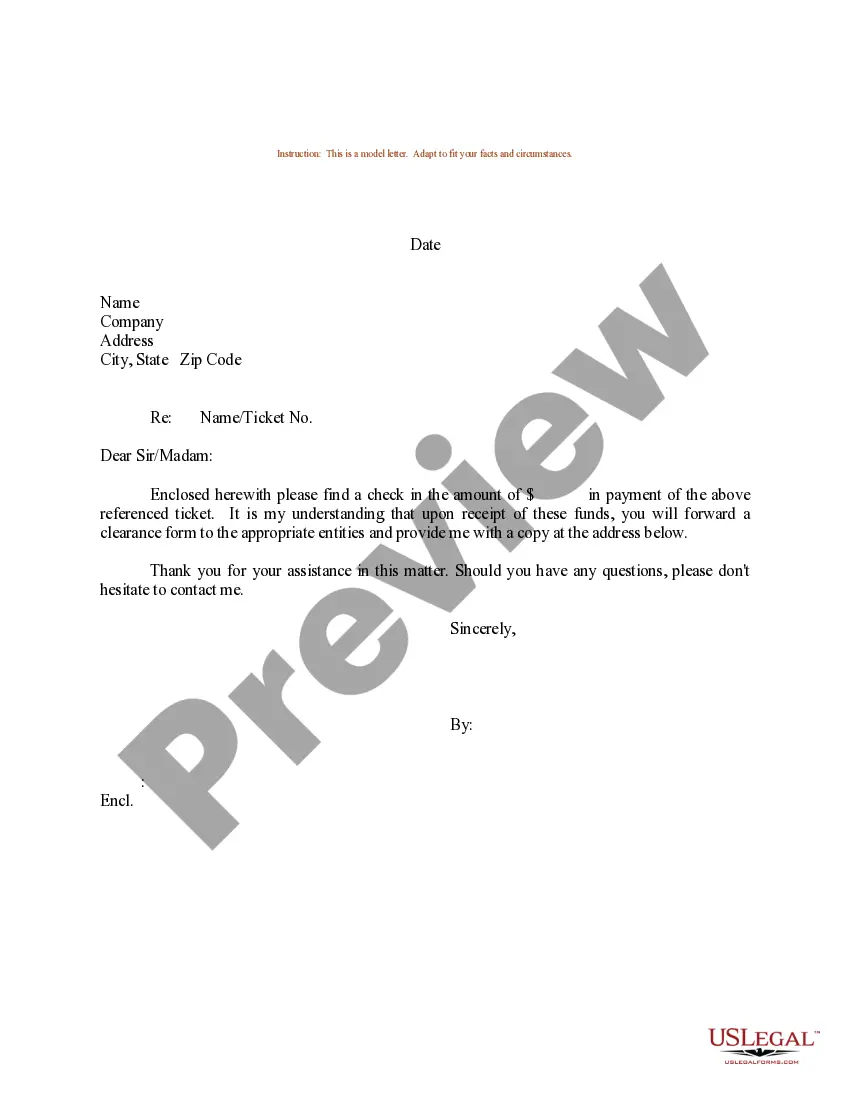
Michigan Waiver and Consent
Overview of this form
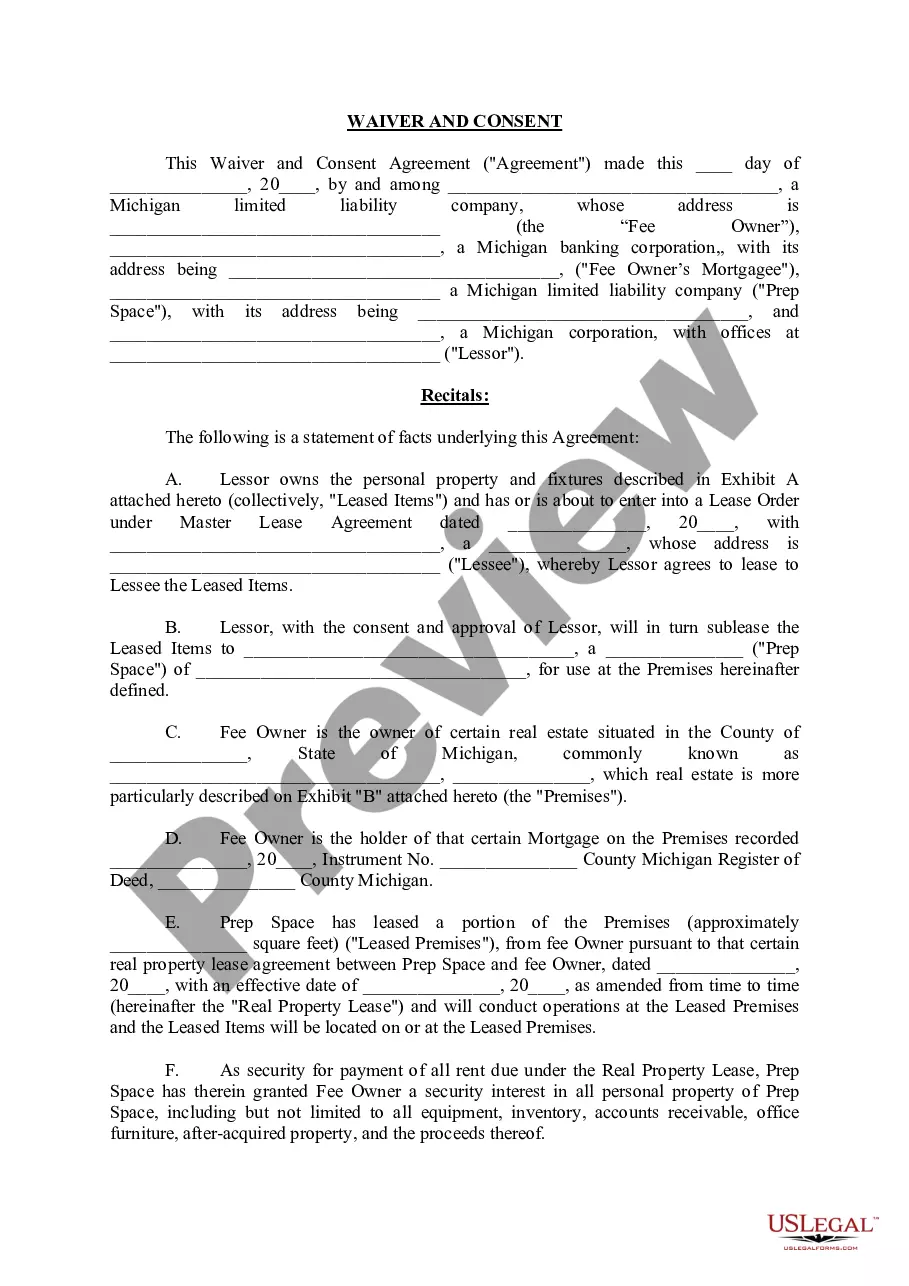
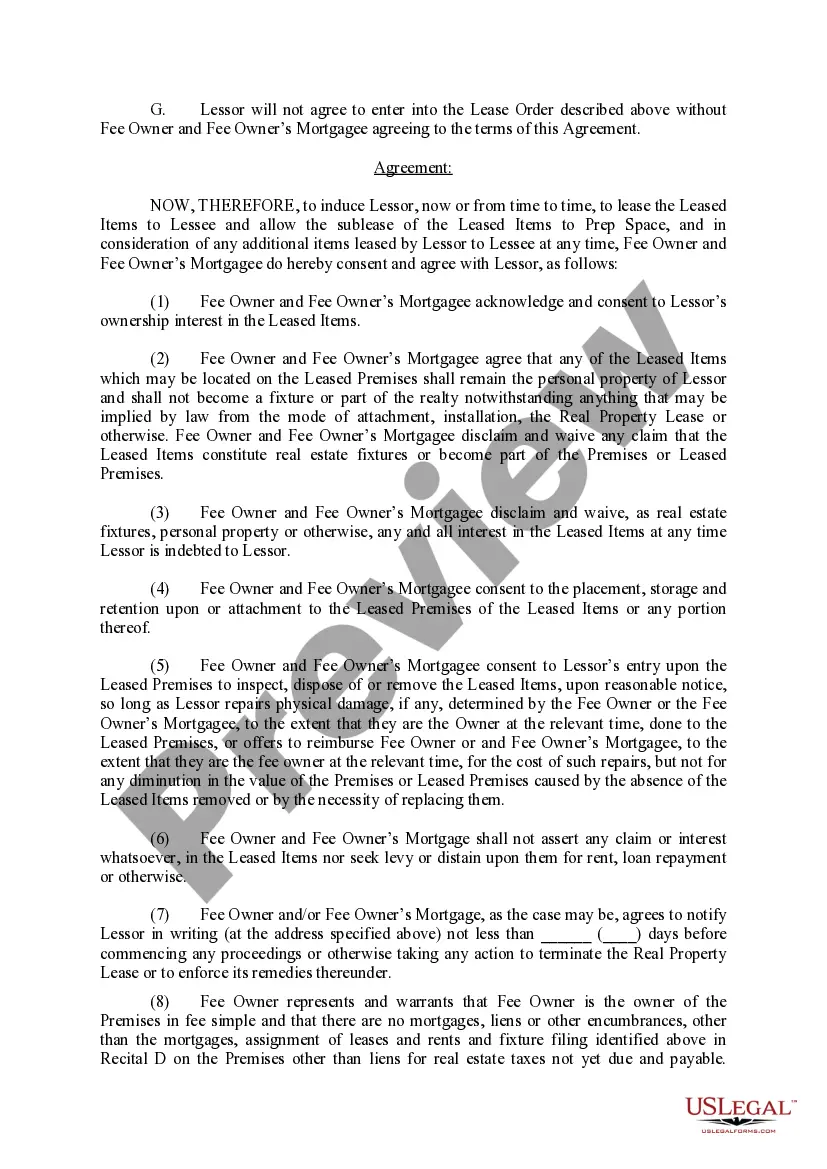
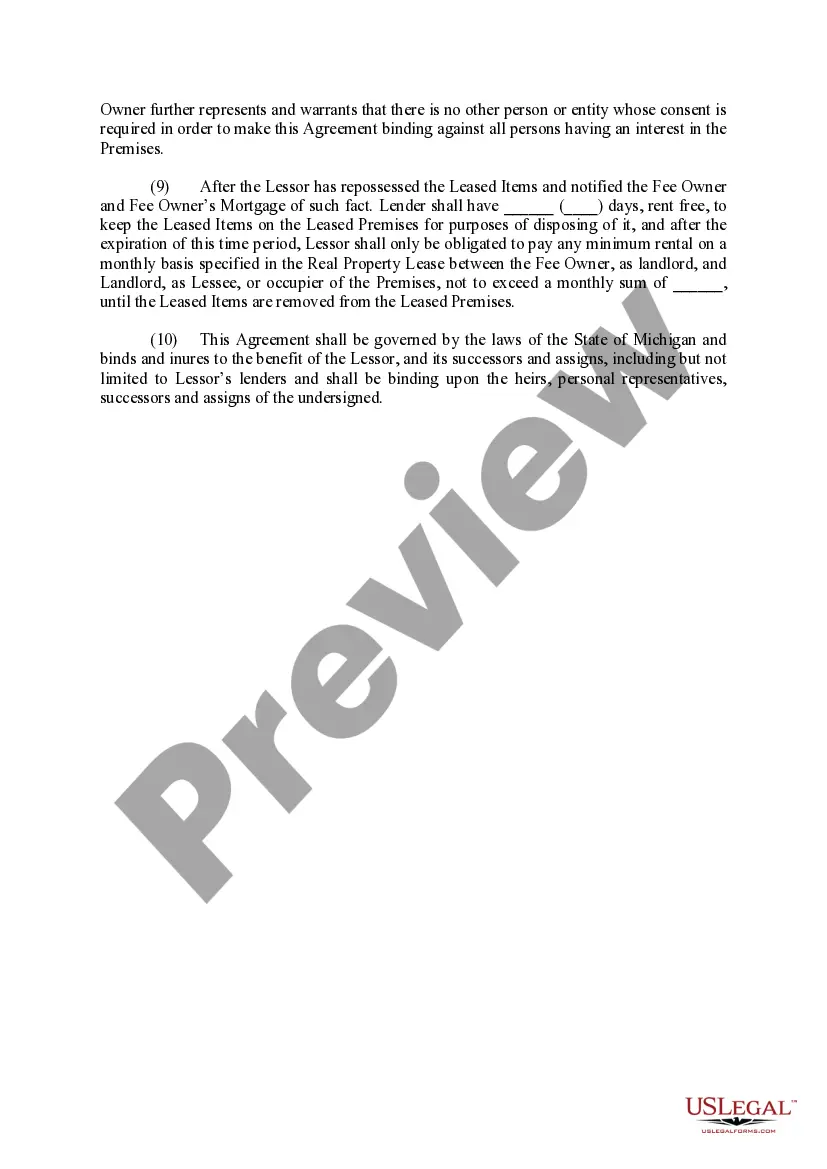
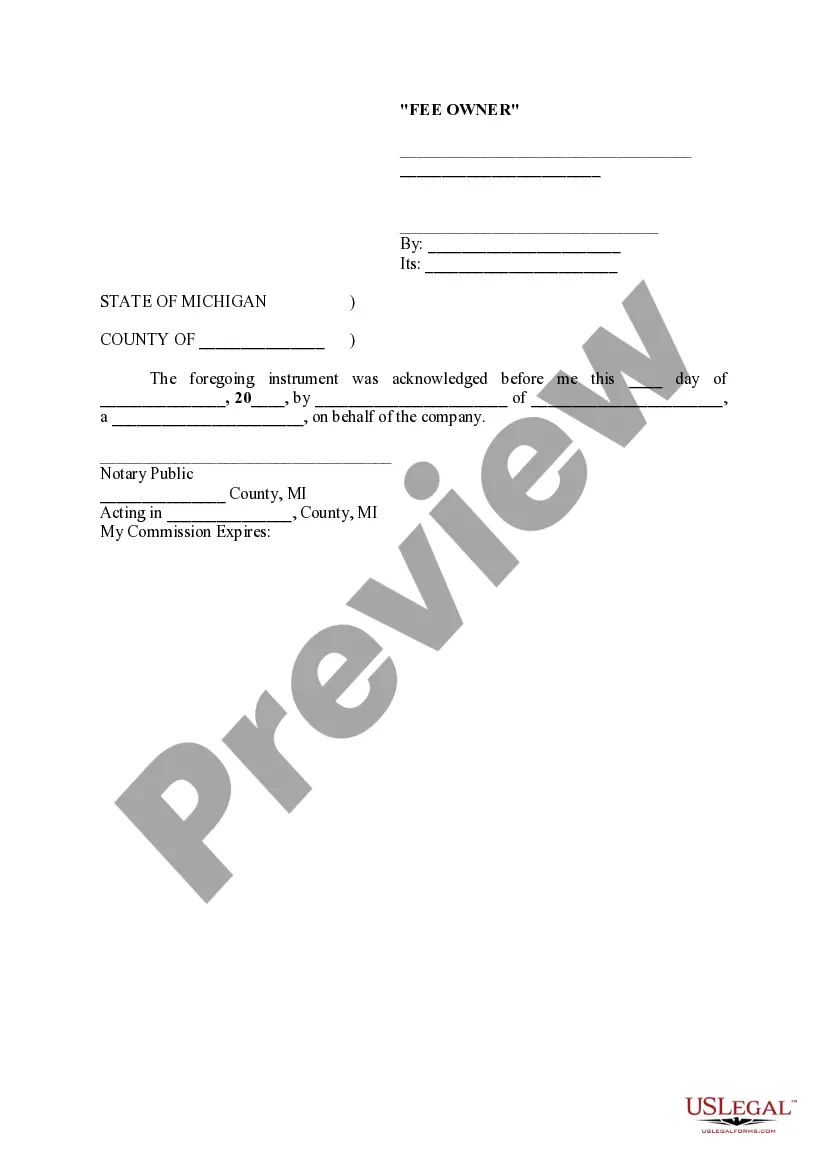
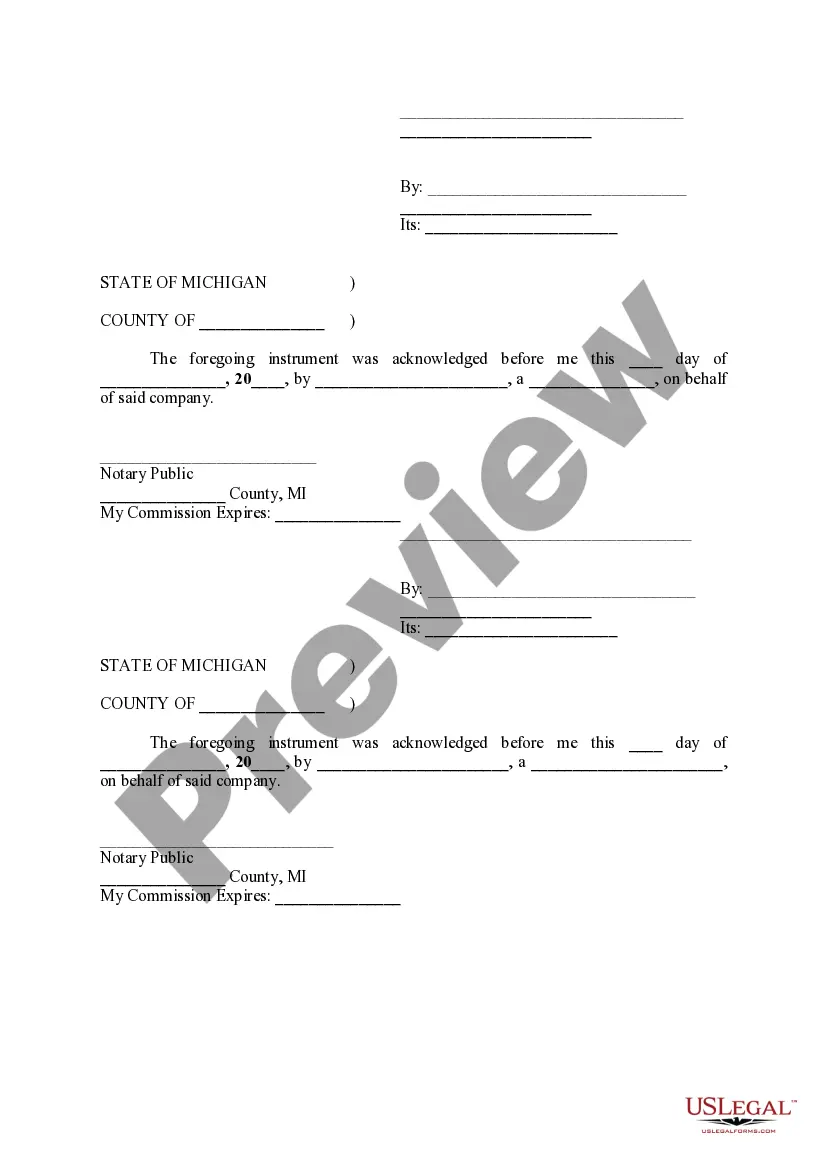
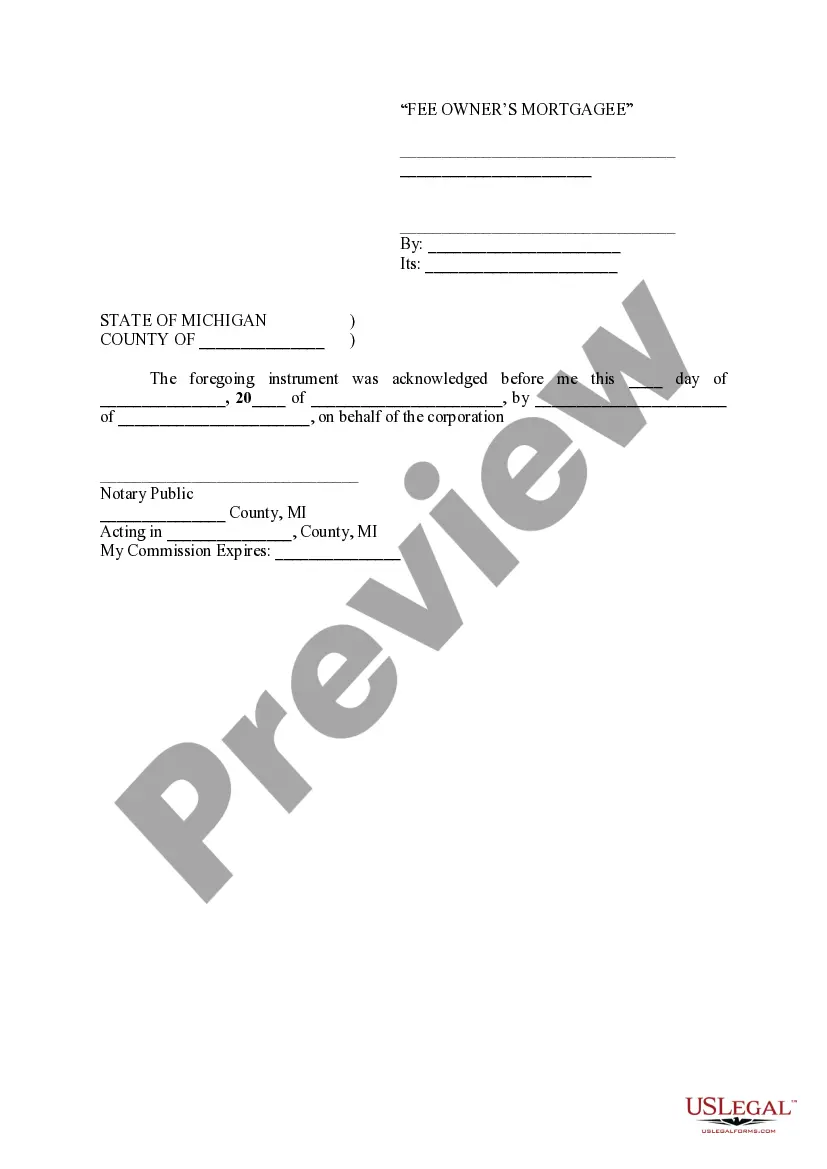
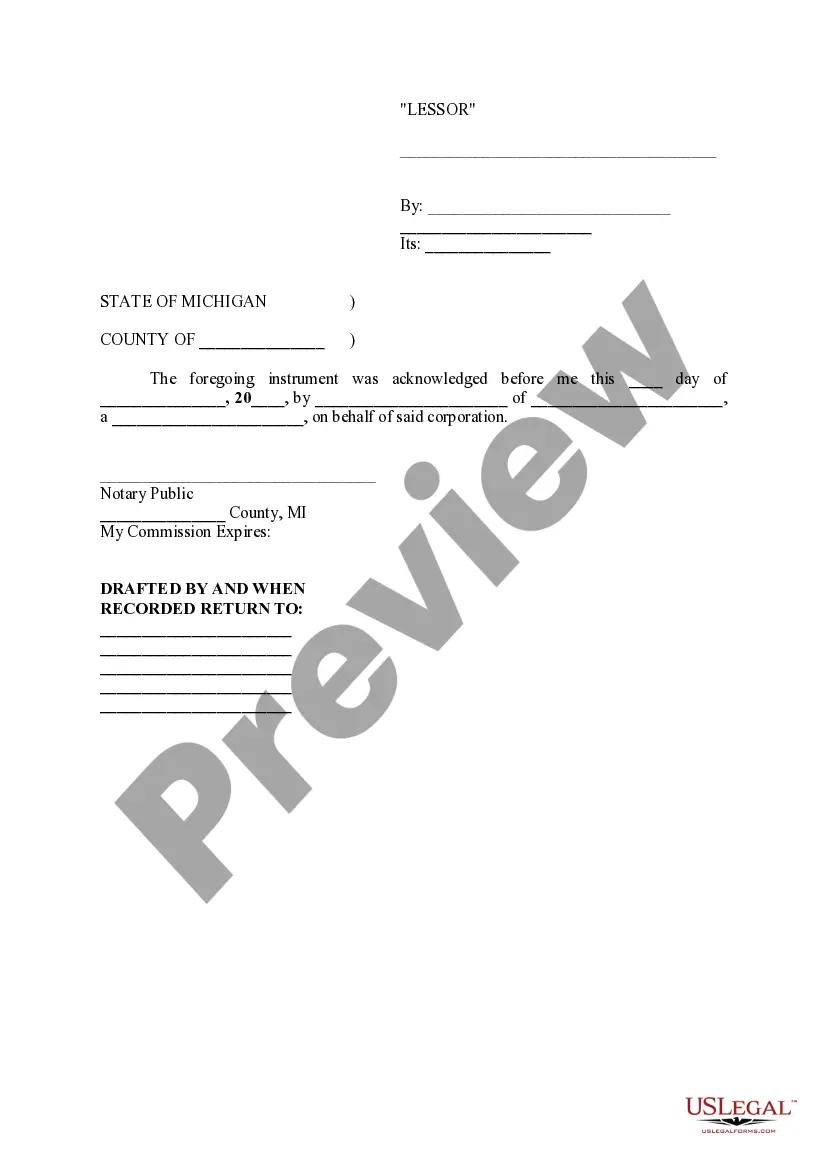
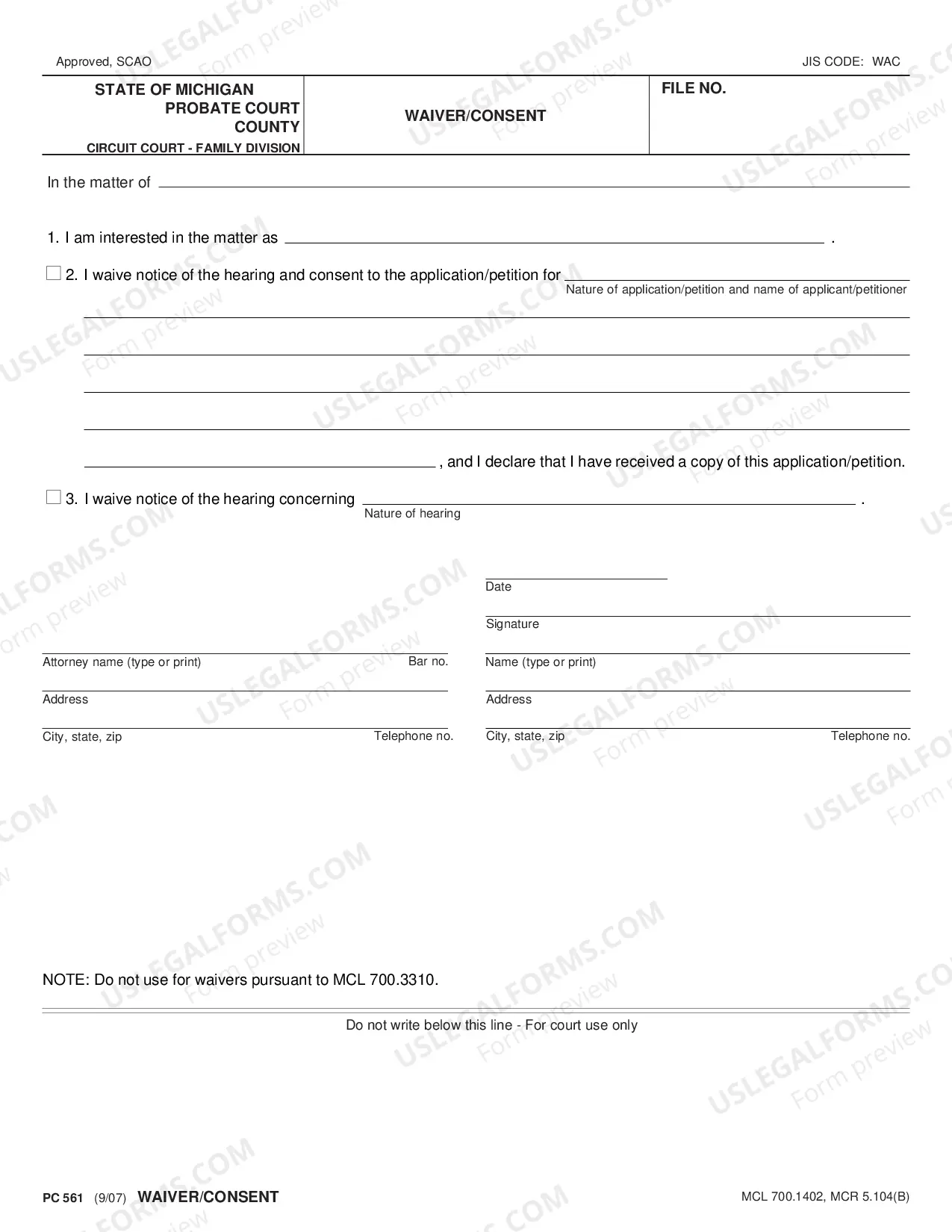
The Waiver and Consent form is a legal document that allows a lessor to sublease personal property while acknowledging the rights of the property owner. This form outlines the agreement between the lessor, fee owner, and fee owner's mortgagee, ensuring that the lessor maintains ownership of the leased items and that these items do not become part of the real property. It ensures clarity in the relationship between all parties regarding the use and lease of personal property.
Key parts of this document
- Identification of all parties involved including lessor, fee owner, and mortgagee.
- Recitals outlining the ownership and leasing arrangements.
- Terms of consent for subleasing personal property.
- Clauses disavowing claims to the leased items by the fee owner and mortgagee.
- Conditions for entering the leased premises for inspection or removal of items.
- Legal responsibilities and notification requirements of all parties.
Situations where this form applies
This Waiver and Consent form is essential when a lessor wishes to sublease personal property that is part of a larger leasing agreement. It is particularly useful in situations where the fee owner requires formal acknowledgment of the lessor's rights and responsibilities regarding the leased items being subleased. This form is commonly utilized in commercial leasing contexts to prevent disputes over property ownership and usage rights.
Intended users of this form
- Lessor involved in leasing personal property.
- Fee owners who want to acknowledge and consent to subleasing of property.
- Mortgagees needing to protect their financial interests in the leased premises.
- Businesses engaged in subleasing equipment or property as part of larger real estate agreements.
How to complete this form
- Fill in the names and addresses of all parties: fee owner, mortgagee, prep space, and lessor.
- Specify the lease order and the specific personal property being leased.
- Complete the sections that describe the leased premises and any attached exhibits.
- Detail any rental payment terms and acknowledgment of ownership interests.
- Ensure all parties sign the document before a notary public.
Is notarization required?
Yes, this form must be notarized to be legally valid. This is important to verify the identities of the parties involved. US Legal Forms offers an integrated online notarization service that is secure, available 24/7, and allows you to complete your notarization via video call, eliminating the need for travel.
Get your form ready online
Our built-in tools help you complete, sign, share, and store your documents in one place.
Make edits, fill in missing information, and update formatting in US Legal Forms—just like you would in MS Word.
Download a copy, print it, send it by email, or mail it via USPS—whatever works best for your next step.
Sign and collect signatures with our SignNow integration. Send to multiple recipients, set reminders, and more. Go Premium to unlock E-Sign.
If this form requires notarization, complete it online through a secure video call—no need to meet a notary in person or wait for an appointment.
We protect your documents and personal data by following strict security and privacy standards.

Make edits, fill in missing information, and update formatting in US Legal Forms—just like you would in MS Word.

Download a copy, print it, send it by email, or mail it via USPS—whatever works best for your next step.

Sign and collect signatures with our SignNow integration. Send to multiple recipients, set reminders, and more. Go Premium to unlock E-Sign.

If this form requires notarization, complete it online through a secure video call—no need to meet a notary in person or wait for an appointment.

We protect your documents and personal data by following strict security and privacy standards.
Avoid these common issues
- Failing to properly identify all involved parties, leading to potential disputes.
- Not fully completing all sections, particularly the exhibit references for the leased items.
- Neglecting to obtain necessary signatures from all parties, which invalidates the agreement.
- Forgetting to record the document, when required, which could affect enforceability.
Summary of main points
- The Waiver and Consent form clarifies the ownership rights of lessors and fee owners over leased items.
- It serves as a mutual agreement among parties involved in leasing and subleasing arrangements.
- This form is specific to Michigan and complies with local legal requirements.
- Proper completion and notarization are essential for legal enforceability.
Looking for another form?



Form popularity
FAQ
To apply for the Michigan Waiver and Consent program, start by reviewing the eligibility requirements set by the state. You can gather all necessary documents, such as identification and any relevant medical forms. Next, complete the application process through the official state portal or consult a certified professional for guidance. Utilizing platforms like USLegalForms can streamline your application process, ensuring that you meet all criteria effectively and understand each step clearly.
A waiver of process consent to probate is a legal document that allows an individual to bypass the formal notice process in probate court. In the context of Michigan Waiver and Consent, this document enables beneficiaries or heirs to agree to the probate proceedings without requiring formal service of notice. By signing this waiver, parties can expedite the probate process and often reduce related costs. Utilizing platforms like US Legal Forms can simplify the creation of this document, ensuring compliance with Michigan laws.
A consent form and a waiver are related but not the same. A consent form indicates your agreement to something, usually after being informed of the risks involved. On the other hand, a waiver typically involves giving up a right or claim, often related to liability. Understanding the distinctions between Michigan Waiver and Consent documents can help you navigate legal terms more effectively, and USLegalForms offers clear templates to assist with both.
Yes, it is legal to write your own will in Michigan, provided it meets the state's requirements. A valid will must be signed by you, and two witnesses should also sign it. Writing your own will can be a straightforward process with the right guidance. For added convenience, consider using Michigan Waiver and Consent templates available on USLegalForms, which ensure your will complies with Michigan laws.