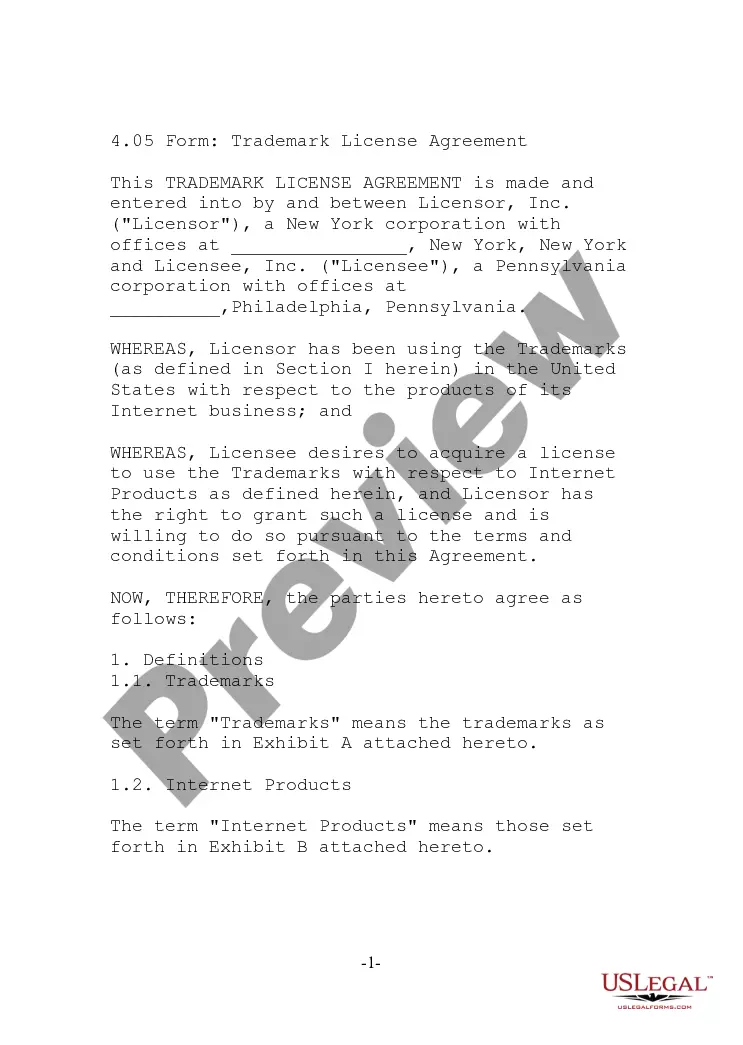
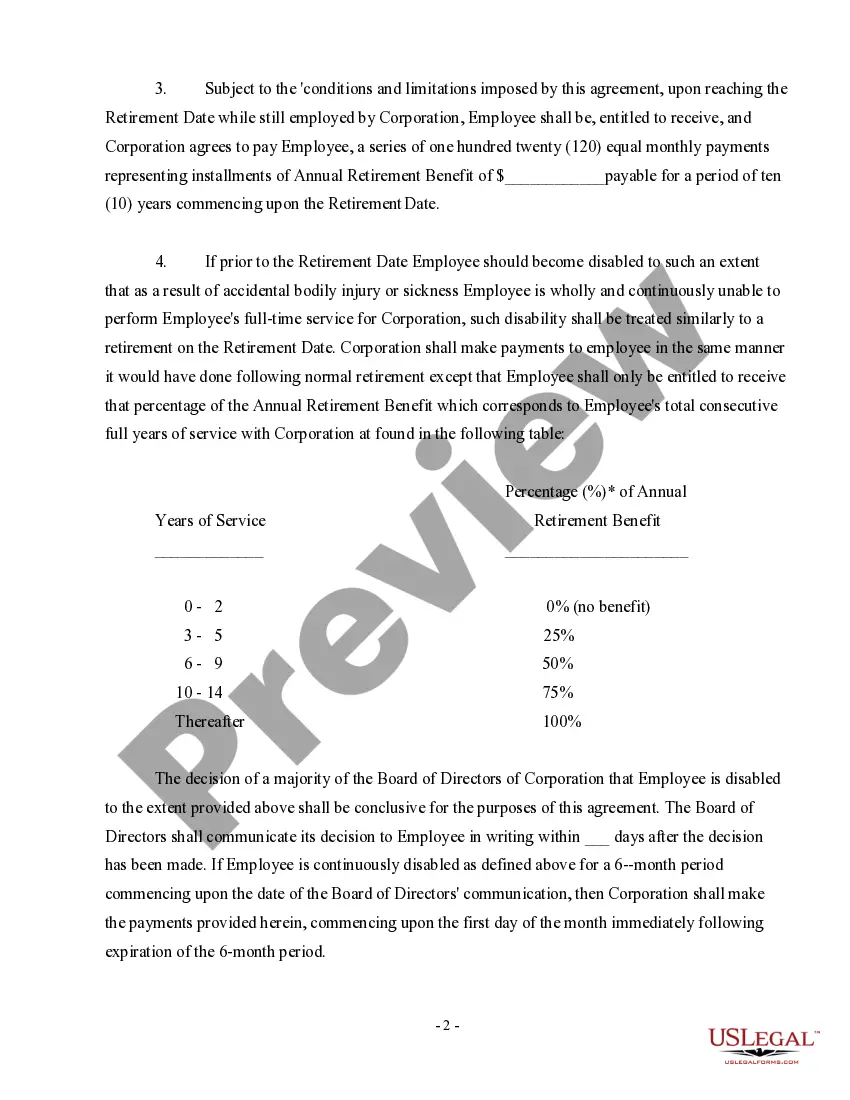
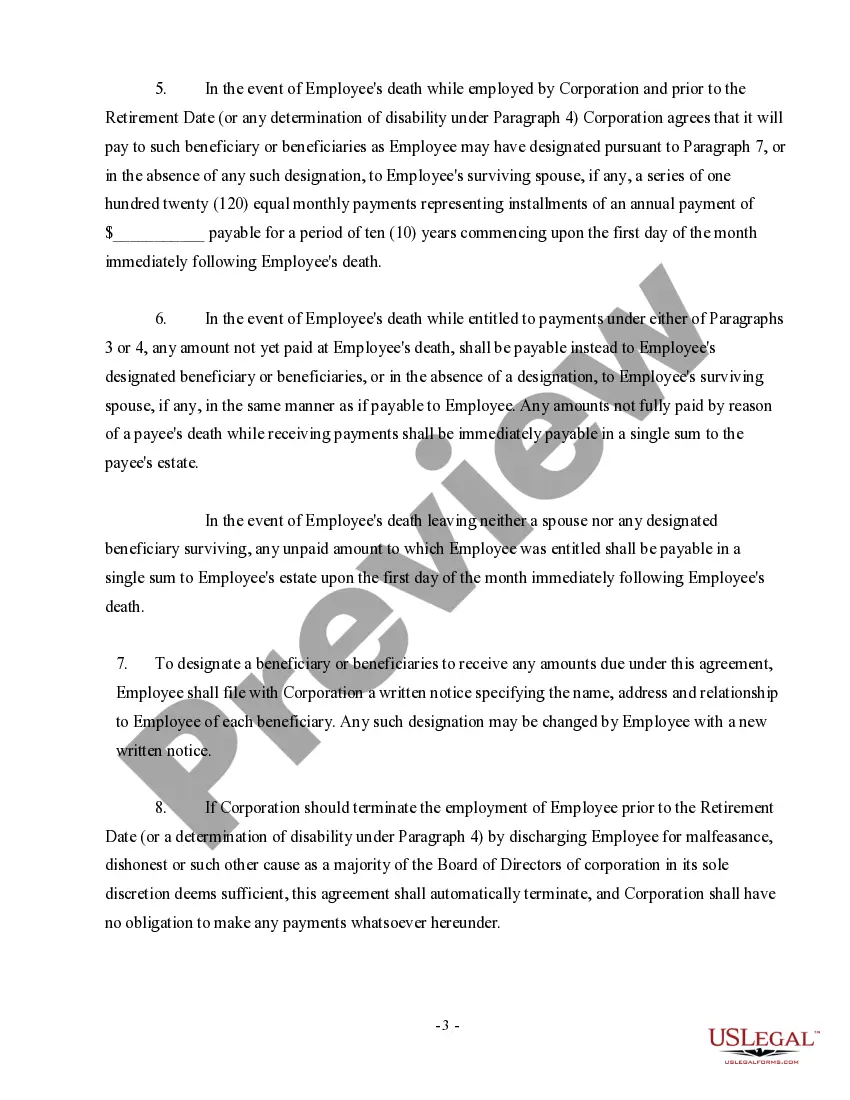
Maine Nonqualified Defined Benefit Deferred Compensation Agreement
Description
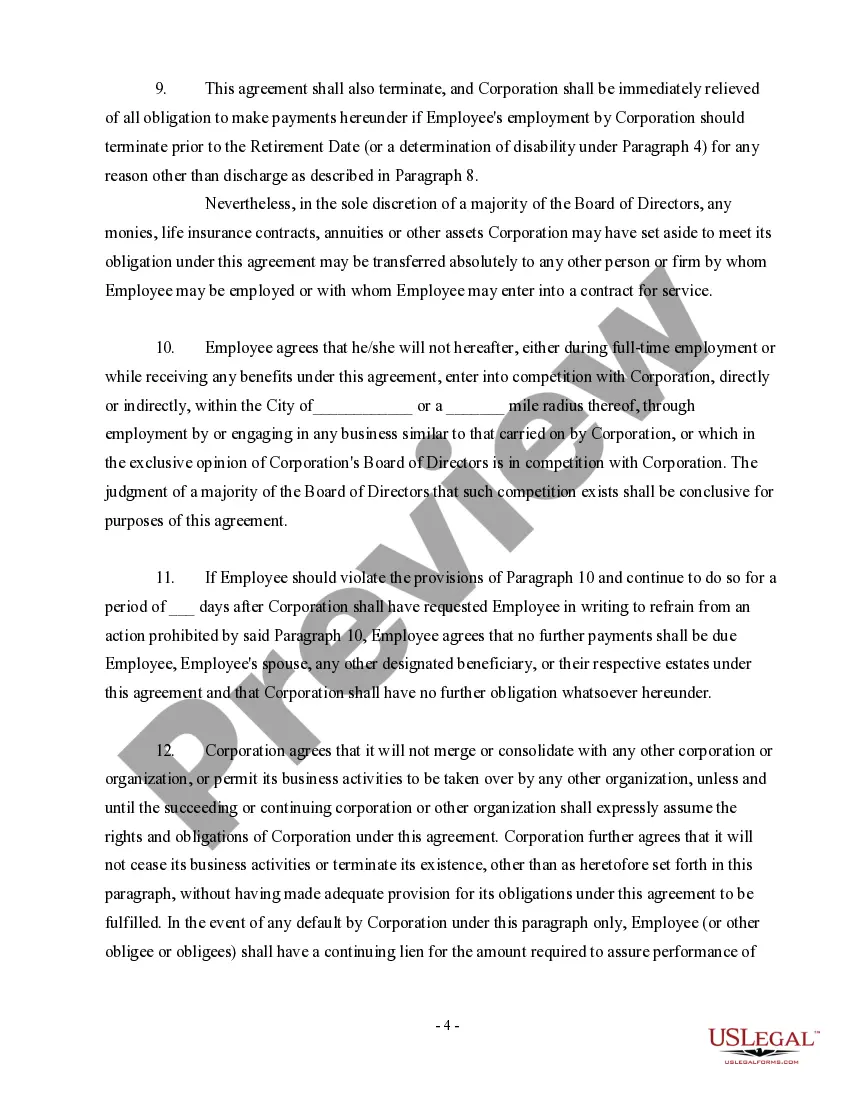
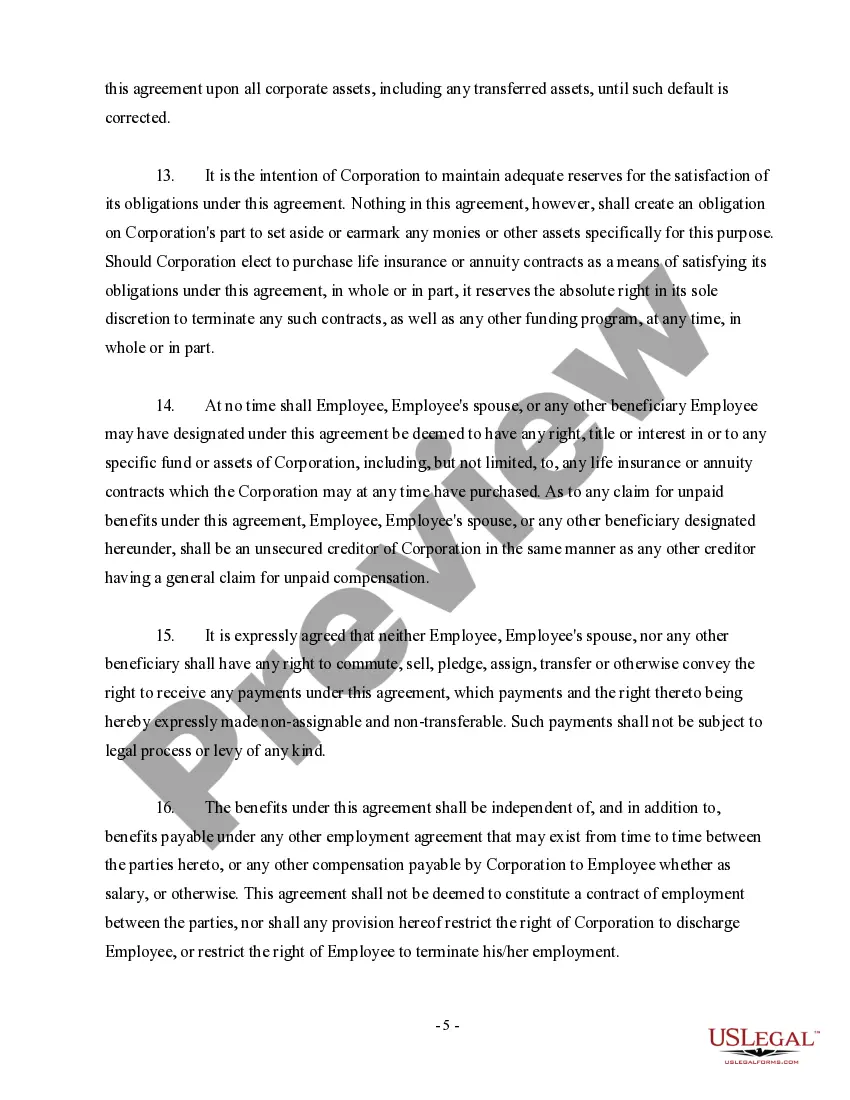
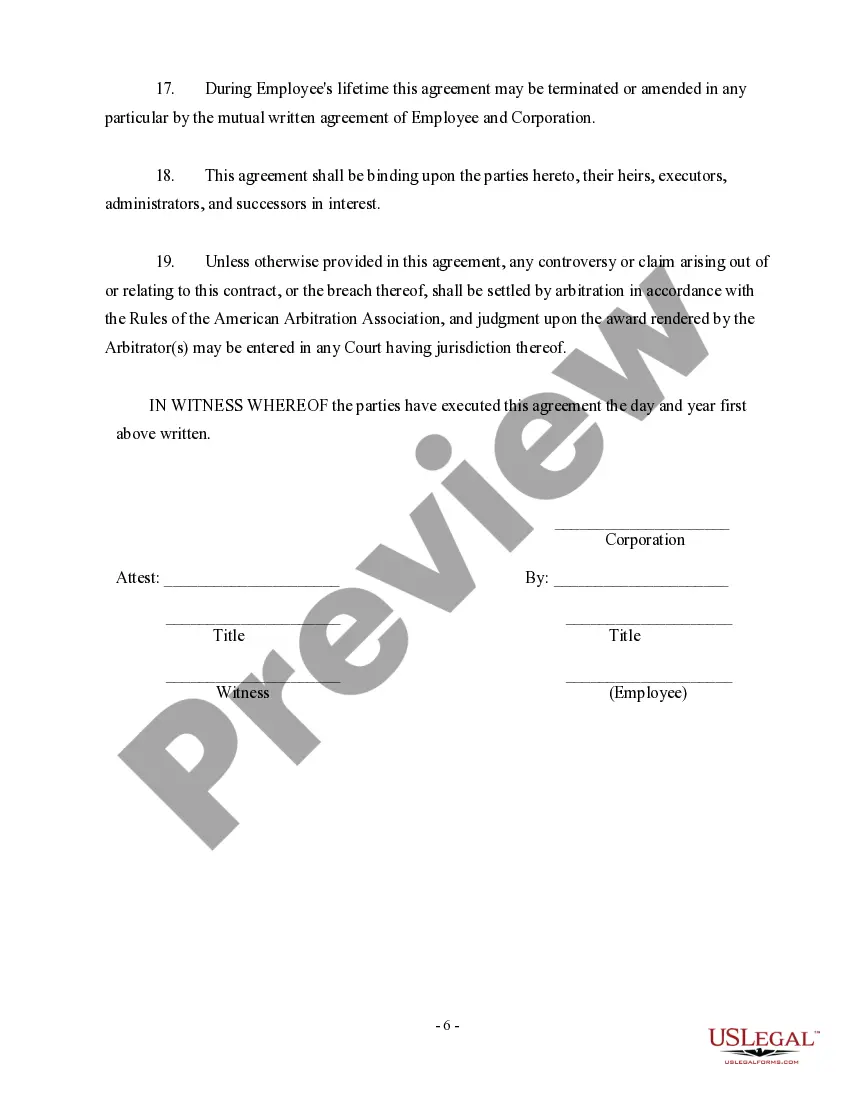


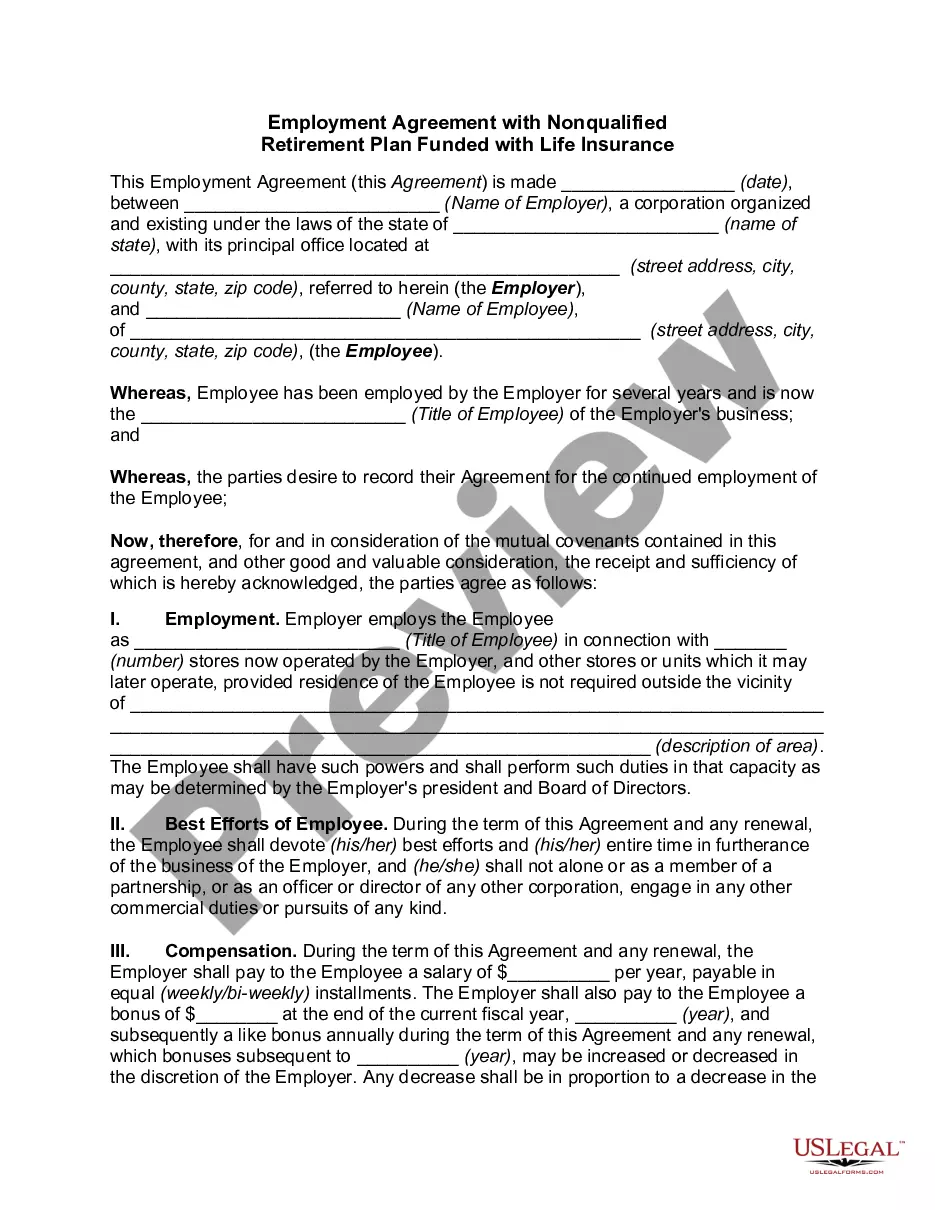
Get your form ready online
Our built-in tools help you complete, sign, share, and store your documents in one place.
Make edits, fill in missing information, and update formatting in US Legal Forms—just like you would in MS Word.
Download a copy, print it, send it by email, or mail it via USPS—whatever works best for your next step.
Sign and collect signatures with our SignNow integration. Send to multiple recipients, set reminders, and more. Go Premium to unlock E-Sign.
If this form requires notarization, complete it online through a secure video call—no need to meet a notary in person or wait for an appointment.
We protect your documents and personal data by following strict security and privacy standards.

Make edits, fill in missing information, and update formatting in US Legal Forms—just like you would in MS Word.

Download a copy, print it, send it by email, or mail it via USPS—whatever works best for your next step.

Sign and collect signatures with our SignNow integration. Send to multiple recipients, set reminders, and more. Go Premium to unlock E-Sign.

If this form requires notarization, complete it online through a secure video call—no need to meet a notary in person or wait for an appointment.

We protect your documents and personal data by following strict security and privacy standards.
Looking for another form?



How to fill out Nonqualified Defined Benefit Deferred Compensation Agreement?
It is feasible to invest hours online attempting to locate the sanctioned document template that satisfies the state and federal requirements you need.
US Legal Forms offers numerous legal forms that are assessed by professionals.
You can conveniently download or print the Maine Nonqualified Defined Benefit Deferred Compensation Agreement from your services.
Read the form description to make sure you have chosen the correct form.
- If you already possess a US Legal Forms account, you can Log In and click the Obtain button.
- Then, you can fill out, modify, print, or sign the Maine Nonqualified Defined Benefit Deferred Compensation Agreement.
- Every legal document template you acquire is yours permanently.
- To obtain another copy of a purchased form, visit the My documents tab and click the relevant option.
- If this is your first time using the US Legal Forms website, follow the simple instructions below.
- First, ensure you have selected the correct document template for the state/city of your preference.
Form popularity
FAQ
Individuals who meet certain income thresholds or who have specific types of income are required to file a Maine income tax return. This includes residents and non-residents with Maine source income, including earnings from a Maine Nonqualified Defined Benefit Deferred Compensation Agreement. Filing is necessary to ensure compliance with state tax laws and to take advantage of any applicable deductions or credits. When in doubt, it's best to consult the Maine Revenue Services guidelines or use a reliable platform like uslegalforms for assistance.
In Maine, the pension deduction allows taxpayers to exclude certain pension income from state tax calculations. This includes benefits from qualified retirement plans, which may overlap with income received from a Maine Nonqualified Defined Benefit Deferred Compensation Agreement. To utilize the pension deduction, you must meet specific criteria and provide the necessary documentation. This deduction can significantly reduce your tax burden if you qualify.
The 183 day rule in Maine is a guideline for determining tax residency. If you spend 183 days or more in Maine during the tax year, you are generally considered a resident for tax purposes. This means your income, including benefits from a Maine Nonqualified Defined Benefit Deferred Compensation Agreement, will be subject to Maine state tax. Understanding this rule helps you plan effectively for your taxes.
Yes, you can file a Maine extension electronically. This process simplifies extending your filing deadline for your Maine taxes, including those related to a Maine Nonqualified Defined Benefit Deferred Compensation Agreement. By using the state’s e-filing system, you can ensure accuracy and prompt confirmation of your request. Make sure to submit your extension by the original due date to avoid penalties.
The new retirement law in Maine includes provisions that enhance retirement savings options for employees. It aims to broaden access to retirement plans, including the Maine Nonqualified Defined Benefit Deferred Compensation Agreement, which offers flexibility in saving for the future. This law encourages employers to provide innovative retirement solutions, thereby promoting financial security for workers across the state. Understanding these changes can help you make informed decisions about your retirement planning.
An example of a nonqualified deferred compensation plan is a Maine Nonqualified Defined Benefit Deferred Compensation Agreement. This type of agreement allows employees to defer a portion of their earnings until retirement or another specified date. It is commonly used by high earners to enhance their retirement savings without immediate tax implications. Such plans can also help businesses attract and retain top talent by offering additional financial benefits.
A nonqualified deferred compensation arrangement allows employees to defer a portion of their income until a later date, typically retirement. This unique financial strategy can help individuals manage their tax liabilities and secure additional income in the future. The Maine Nonqualified Defined Benefit Deferred Compensation Agreement specifically caters to the needs of residents in Maine, providing them with an effective way to save for retirement while enjoying tax benefits. By using a platform like US Legal Forms, you can easily set up this agreement and ensure compliance with state regulations.
A nonqualified deferred compensation plan is an agreement that allows employees to defer a portion of their income until a later date, typically retirement. Unlike qualified plans, these agreements do not have to adhere to strict IRS rules, offering more flexibility in design. Essentially, a Maine Nonqualified Defined Benefit Deferred Compensation Agreement enables you to customize benefits tailored to your organization's needs while also maximizing retirement savings for employees.
Setting up a nonqualified deferred compensation plan requires careful planning and documentation. Start by identifying the key features you wish to include, such as investment options and payout triggers. Using a resource like USLegalForms can help streamline this process, ensuring your Maine Nonqualified Defined Benefit Deferred Compensation Agreement is both compliant and effective in achieving your financial goals.
Yes, nonqualified deferred compensation plans can be beneficial for both employers and employees. They provide a vehicle for employees to defer a part of their income, potentially lowering their current tax burden. Additionally, for employers, offering a Maine Nonqualified Defined Benefit Deferred Compensation Agreement can enhance employee retention and attract top talent.