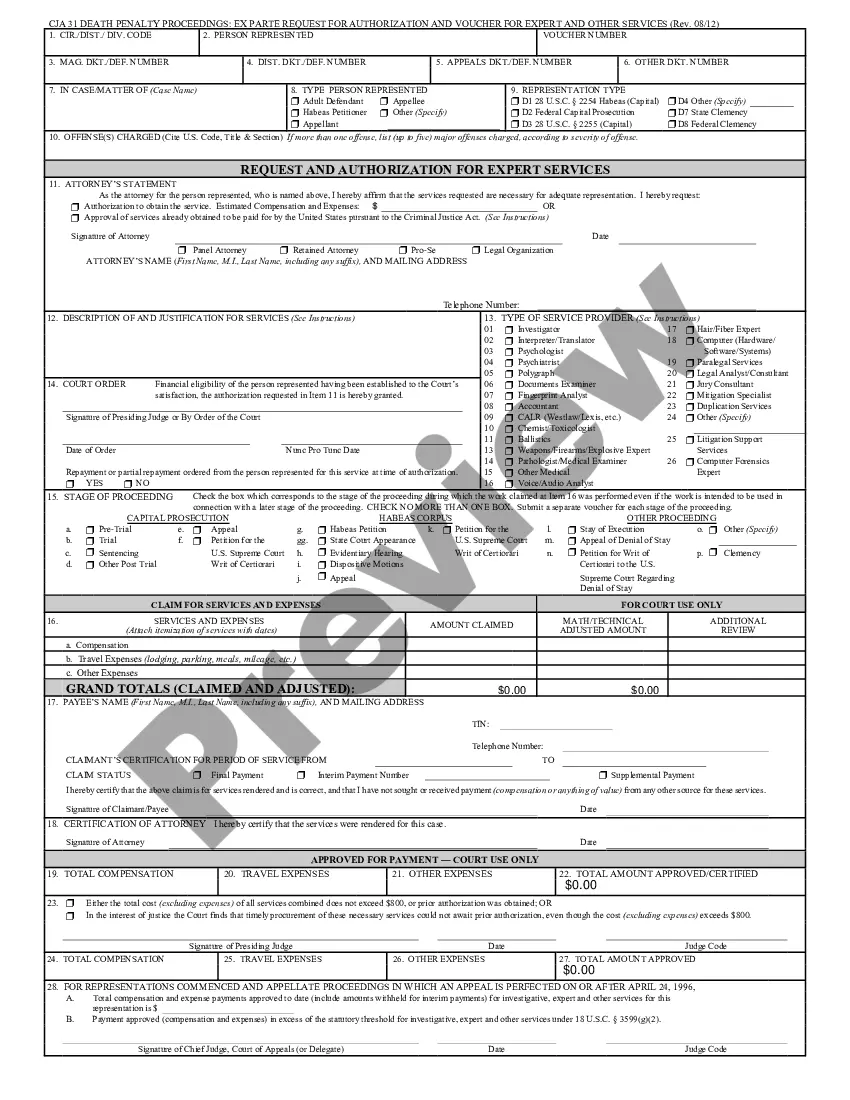
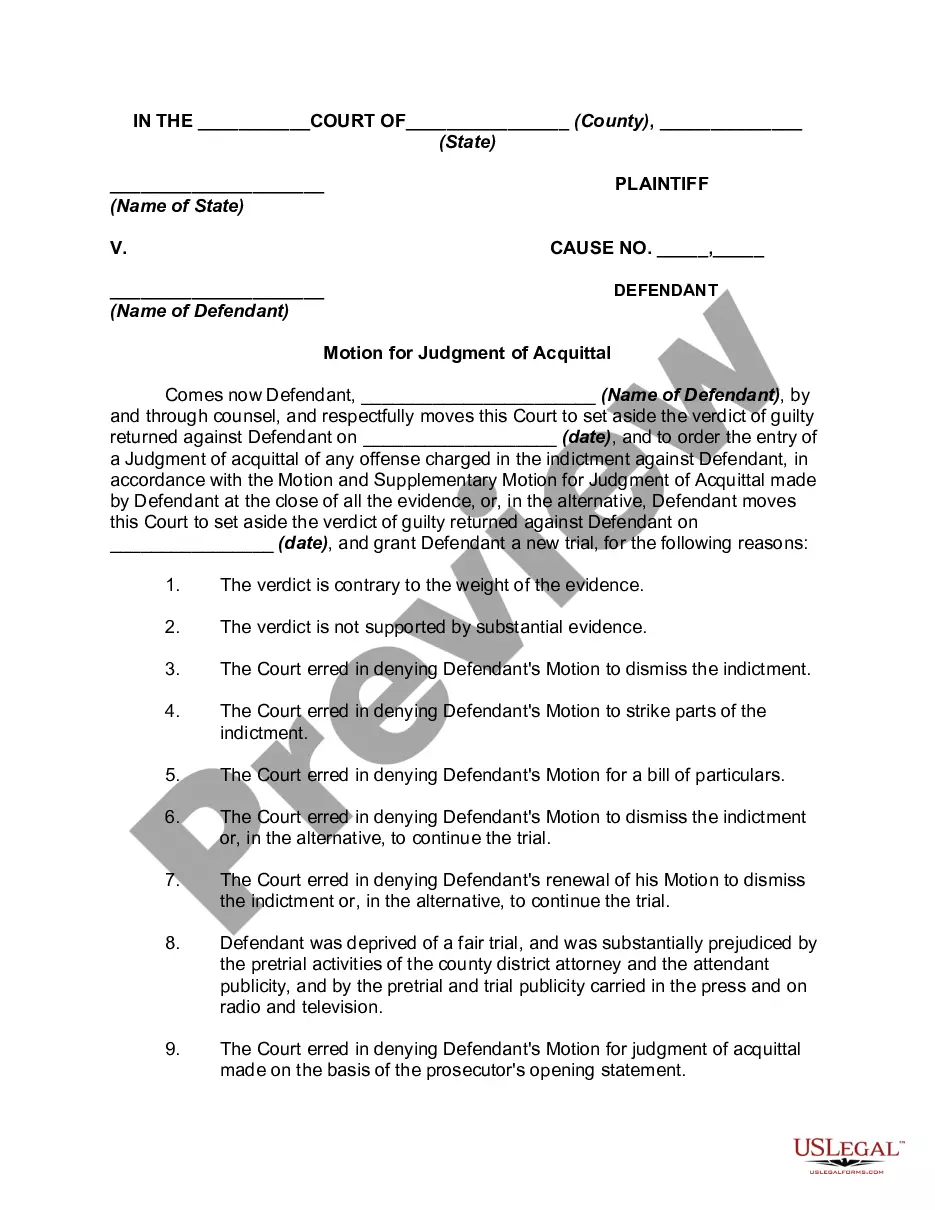
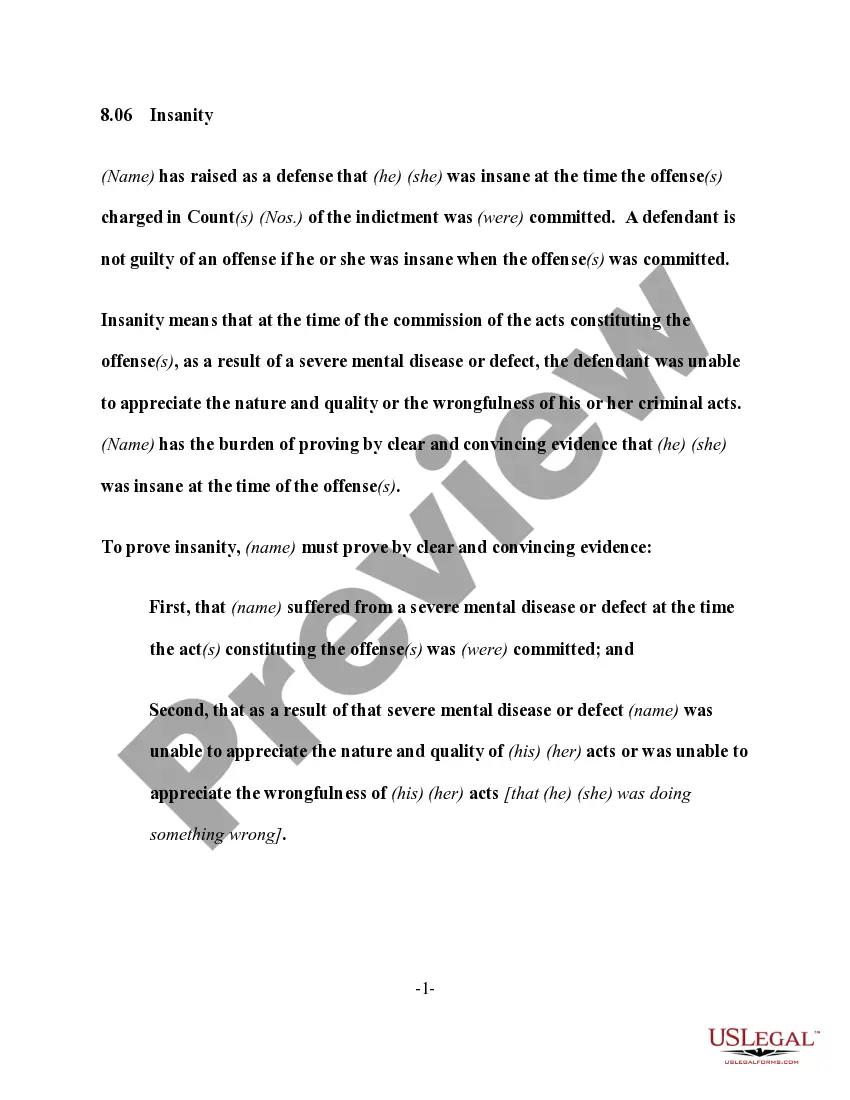
Defendant, through his/her attorney moves the court that he/she be acquitted of certain matters because he/she is both-feeble minded and insane
Maine Motion for Acquittal Based on Insanity
Instant download
Description
Free preview
Get your form ready online
Our built-in tools help you complete, sign, share, and store your documents in one place.
Built-in online Word editor
Make edits, fill in missing information, and update formatting in US Legal Forms—just like you would in MS Word.
Export easily
Download a copy, print it, send it by email, or mail it via USPS—whatever works best for your next step.
E-sign your document
Sign and collect signatures with our SignNow integration. Send to multiple recipients, set reminders, and more. Go Premium to unlock E-Sign.
Notarize online 24/7
If this form requires notarization, complete it online through a secure video call—no need to meet a notary in person or wait for an appointment.
Store your document securely
We protect your documents and personal data by following strict security and privacy standards.

Make edits, fill in missing information, and update formatting in US Legal Forms—just like you would in MS Word.

Download a copy, print it, send it by email, or mail it via USPS—whatever works best for your next step.

Sign and collect signatures with our SignNow integration. Send to multiple recipients, set reminders, and more. Go Premium to unlock E-Sign.

If this form requires notarization, complete it online through a secure video call—no need to meet a notary in person or wait for an appointment.

We protect your documents and personal data by following strict security and privacy standards.
Looking for another form?
How to fill out Motion For Acquittal Based On Insanity?
You can spend hours online searching for the legal document template that meets the federal and state requirements you need.
US Legal Forms provides a vast array of legal forms that have been reviewed by experts.
You can download or print the Maine Motion for Acquittal Based on Insanity from the service.
If available, use the Preview button to view the document template as well. To find another version of the form, use the Search section to locate the template that fits your needs and requirements. Once you have found the template you want, click Purchase now to proceed. Select the pricing plan you prefer, enter your details, and register for an account on US Legal Forms. Complete the purchase. You can use your credit card or PayPal account to pay for the legal form. Choose the format of the document and download it to your device. Make adjustments to your document if necessary. You can complete, modify, sign, and print the Maine Motion for Acquittal Based on Insanity. Download and print a vast number of document templates using the US Legal Forms site, which offers the largest variety of legal forms. Utilize professional and state-specific templates to manage your business or personal needs.
- If you have a US Legal Forms account, you can Log In and click on the Download button.
- After that, you can complete, modify, print, or sign the Maine Motion for Acquittal Based on Insanity.
- Every legal document template you purchase is yours forever.
- To obtain another copy of the purchased form, go to the My documents tab and click on the corresponding button.
- If you are using the US Legal Forms website for the first time, follow the simple instructions below.
- First, ensure you have selected the correct document template for the region/city you choose.
- Review the form description to ensure you have chosen the correct form.
Form popularity
FAQ
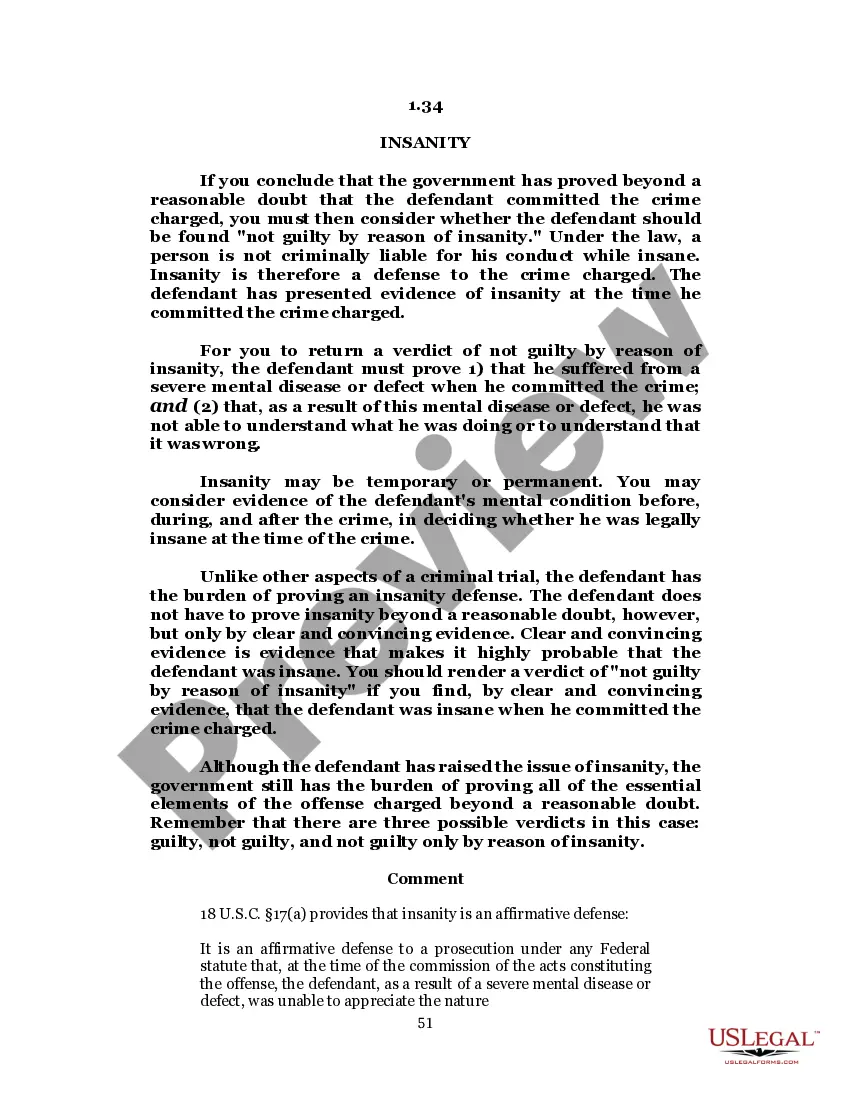
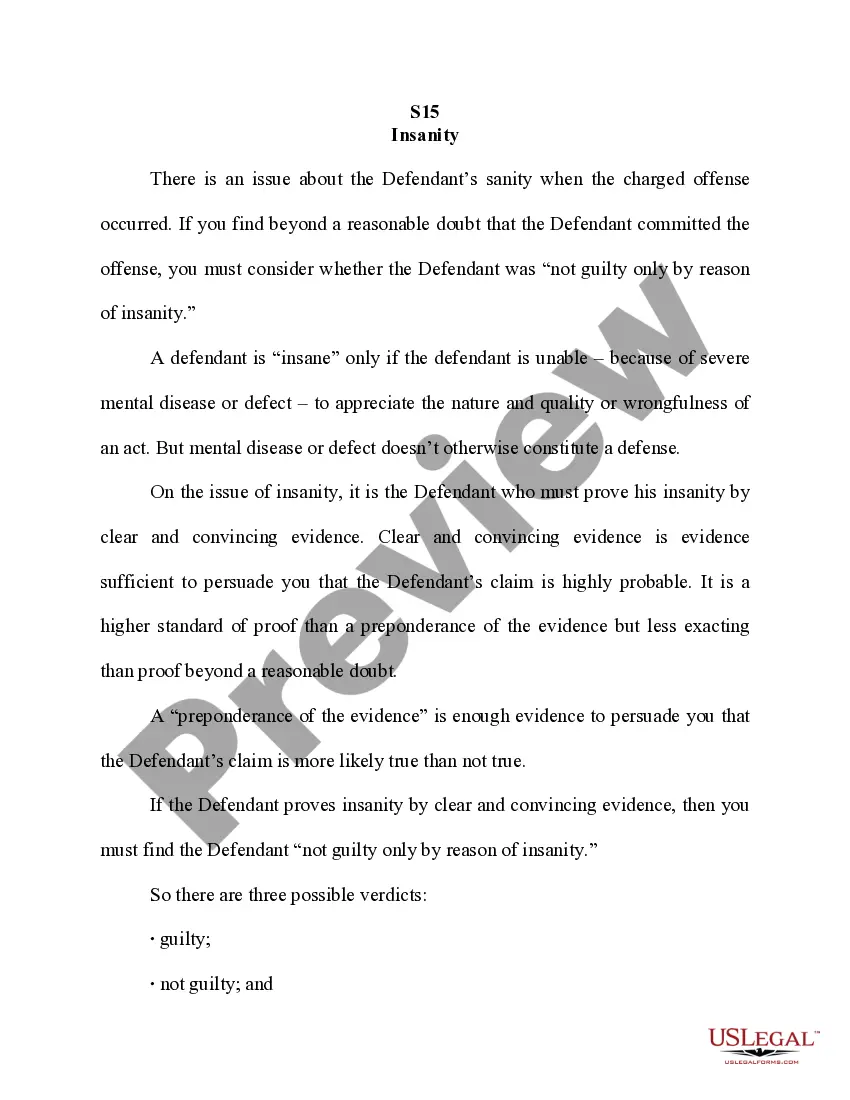
The insanity defense, also known as the mental disorder defense, is an affirmative defense by excuse in a criminal case, arguing that the defendant is not responsible for their actions due to a psychiatric disease at the time of the criminal act.
A defendant can be found legally insane if he/she can prove that: They did not know that their actions were illegal. They did not know they were committing the act. They were forced to commit the offense by an irresistible force.
Competency to Stand Trial refers to a defendant's ability to understand the nature and consequences of the legal proceedings against them, and to assist in their own defense. If a defendant is deemed incompetent to stand trial, they may be placed in a treatment facility in an effort to restore their competency.
Rule 41A - Motion to Suppress Evidence (a) Grounds of Motion. A defendant may move to suppress as evidence any of the following, on the ground that it was illegally obtained: (1) property; (2) statements of the defendant; (3) test results; (4) out-of-court or in-court eyewitness identifications of the defendant.
If the grand jury indicts you, as mentioned above, you will return to court for your arraignment ? the date upon which to enter a plea of guilty or not guilty. If the plea is guilty, you will be sentenced at that time.
Overview. The insanity defense refers to a defense that a defendant can plead in a criminal trial. In an insanity defense, the defendant admits the action but asserts a lack of culpability based on mental illness.
The insanity defense is essentially the claim that the state of mind of the agent at the time of his/her unlawful act prevents conclusive inference from the act to a defective level of moral/legal motivation (as being its necessary condition), hence it provides a release from culpability.
Insanity. The legal concept referring to the criminal's state of mind at the time the crime was committed. It requires that, due to a mental illness, a defendant lacks moral responsibility and culpability for the crime, and therefore should not be punished.