Maryland Last Will and Testament for Domestic Partner with Adult and Minor Children
About this form
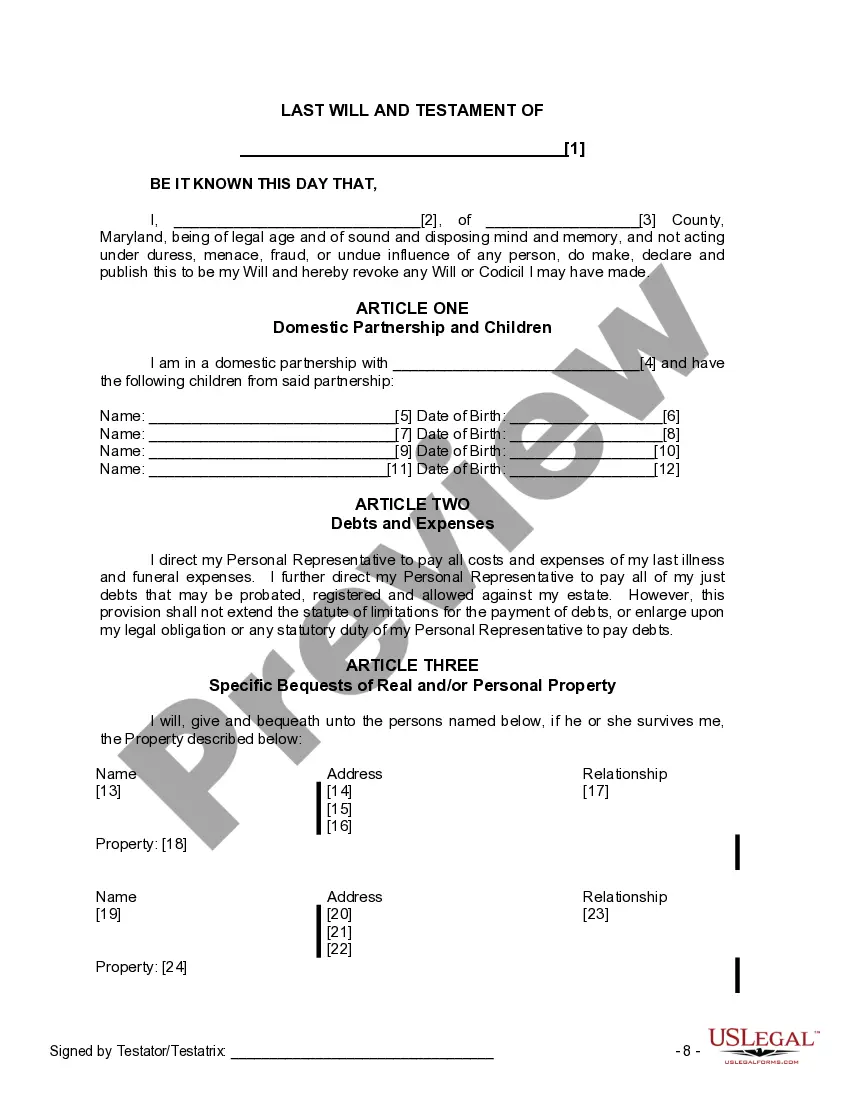
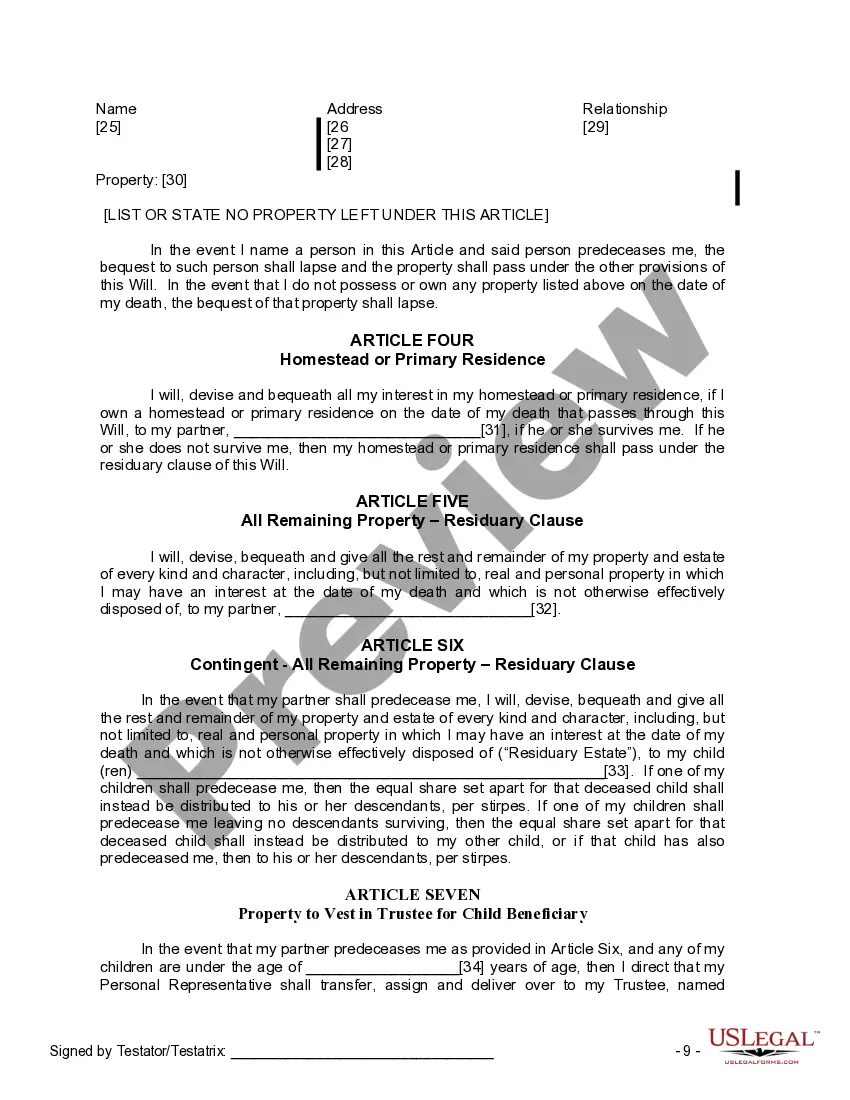
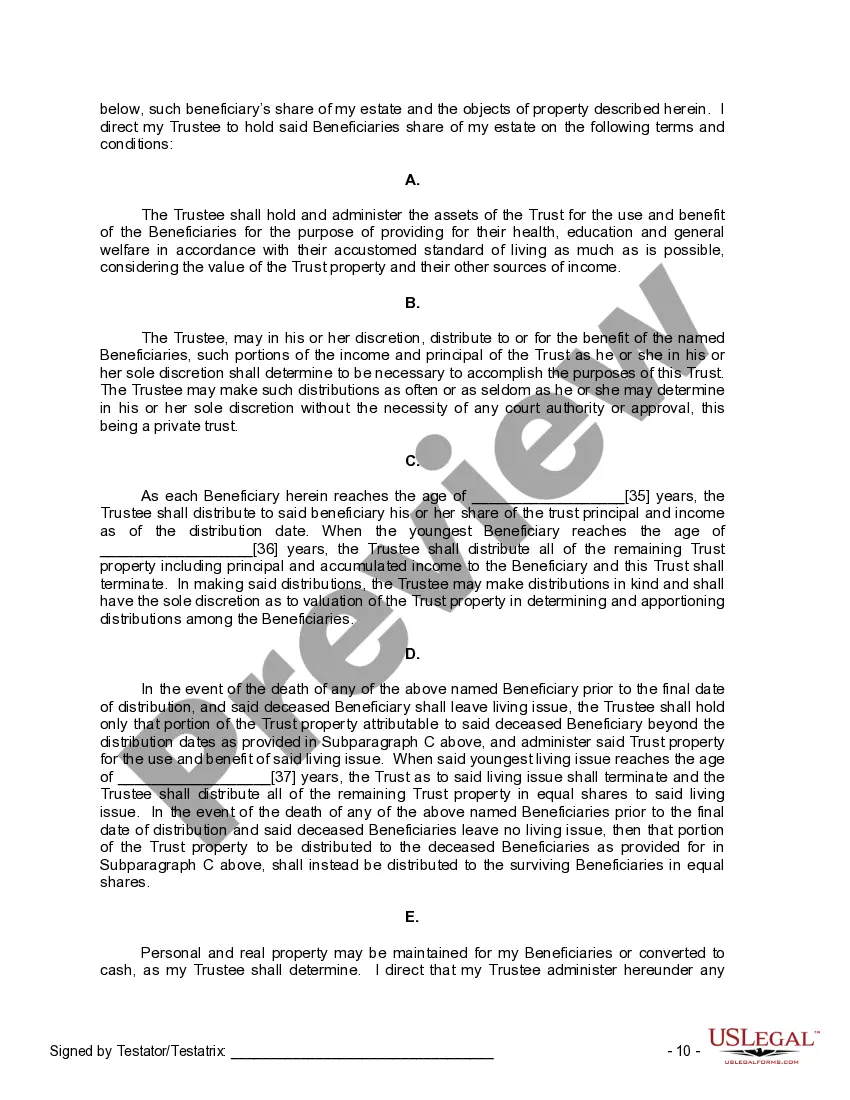
This form is a Last Will and Testament specifically designed for domestic partners with adult and minor children. It outlines how your assets will be distributed after your death, appoints a personal representative or executor, and makes provisions for your partner and children. This form also includes instructions for establishing a trust for the benefit of minor children, distinguishing it from standard wills that do not address domestic partnerships or minors.
Key components of this form
- Appointment of a personal representative or executor to manage your estate.
- Designation of beneficiaries, including provisions for your partner and children.
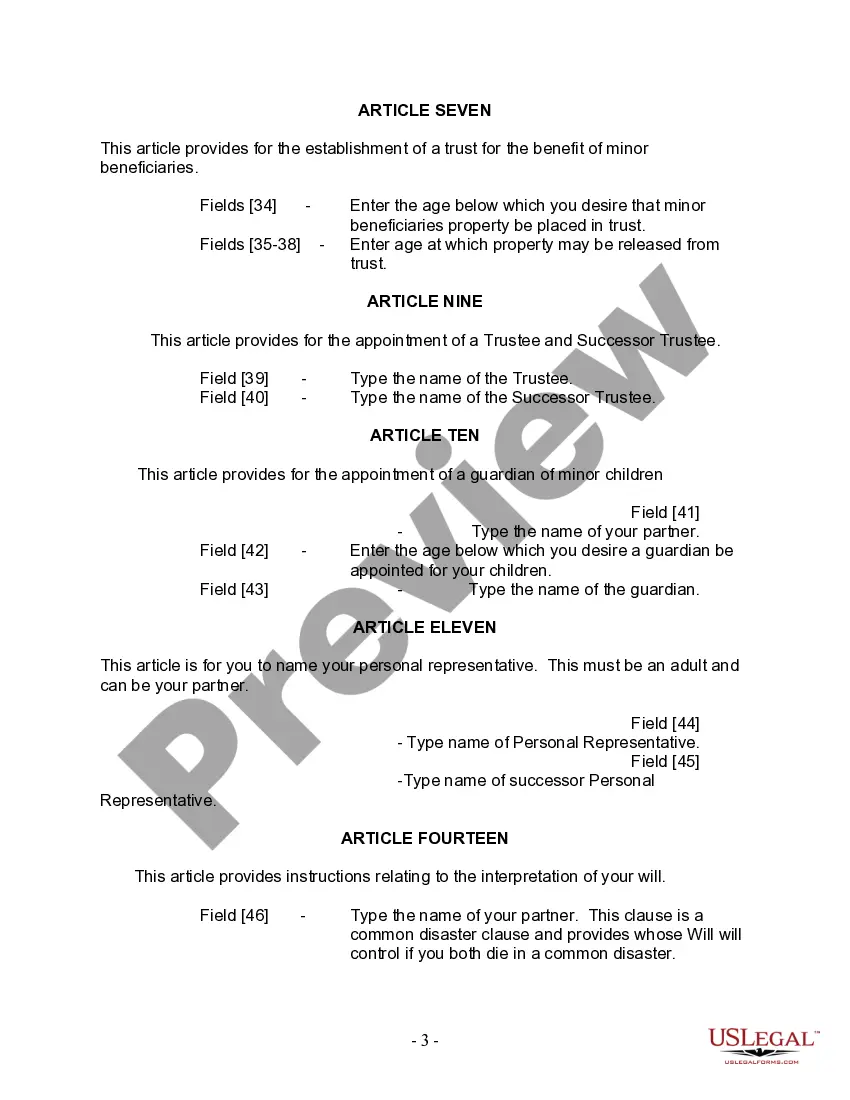
- Creation of a trust for minor beneficiaries, specifying terms for asset distribution.
- Appointment of a guardian for minor children in the event of both parents' death.
- Provisions for alternative distributions if primary beneficiaries predecease you.



When this form is needed
This form should be used when a domestic partner wishes to ensure their assets are distributed according to their wishes, particularly when they have both adult and minor children. It is crucial for making legal arrangements for guardianship of minors, establishing trusts, and preventing disputes among potential heirs after one's passing.
Who this form is for
- Domestic partners who want to formalize their estate planning.
- Parents with minor children who want to ensure their welfare in case of a tragedy.
- Individuals seeking to appoint a personal representative for their estate.
- Those looking to create specific bequests to family members or other beneficiaries.
How to complete this form
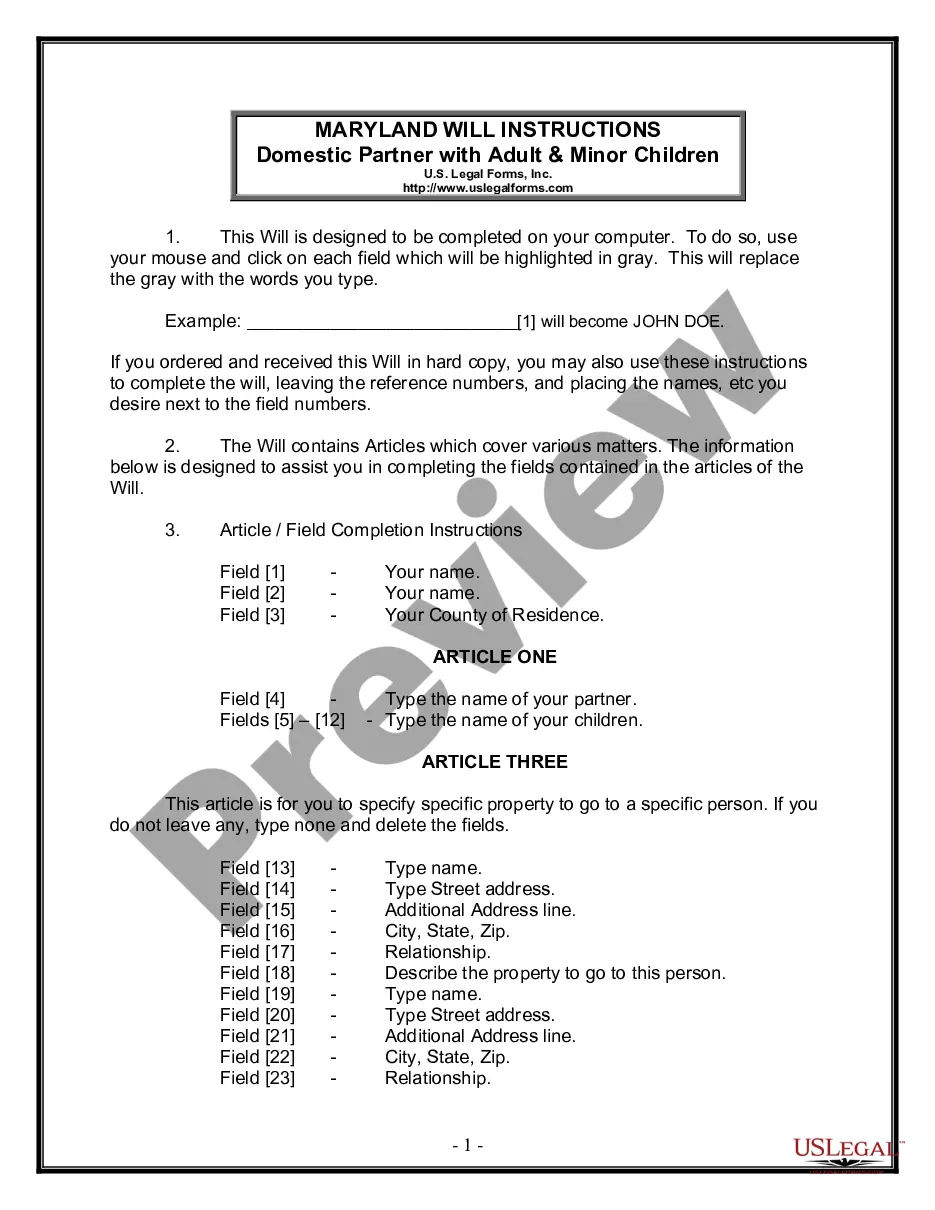
- Begin by entering your personal details, including your name and county of residence.
- Specify the name of your domestic partner and your children.
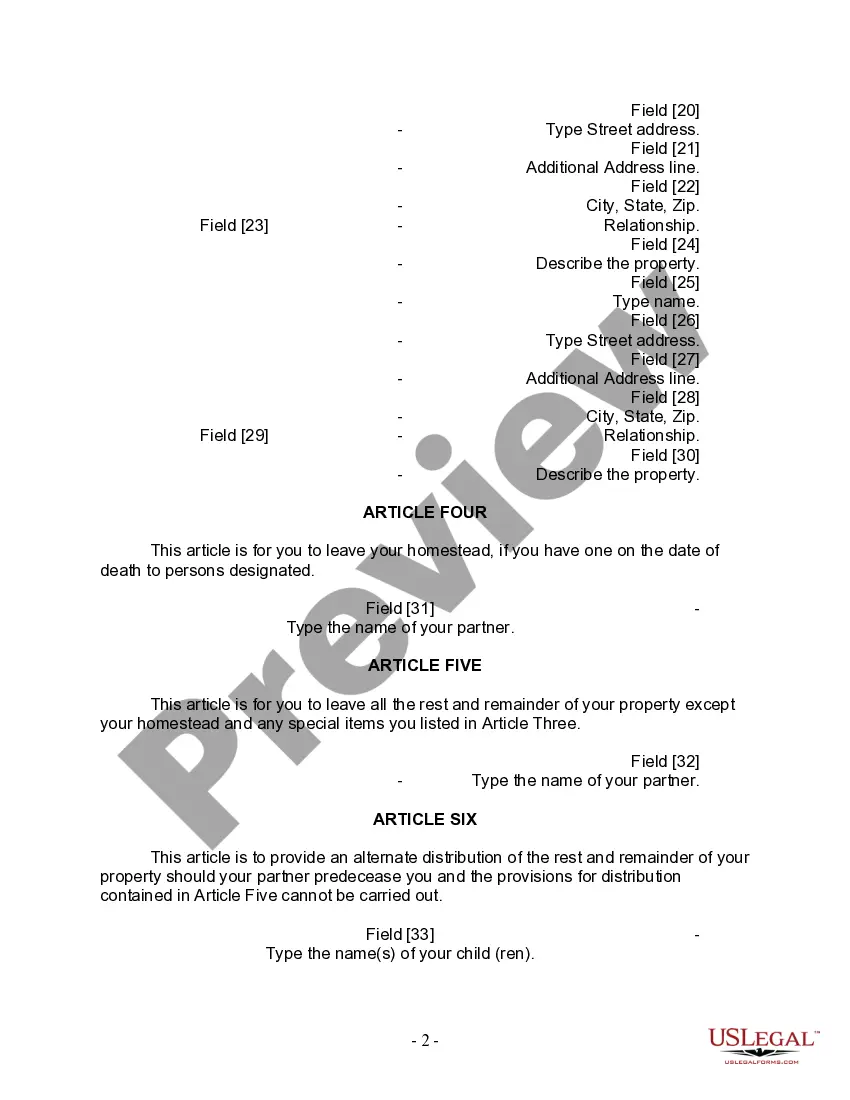
- Detail specific property you wish to bequeath to individuals, or state "none" if not applicable.
- Appoint a guardian for minor children and a personal representative for your estate.
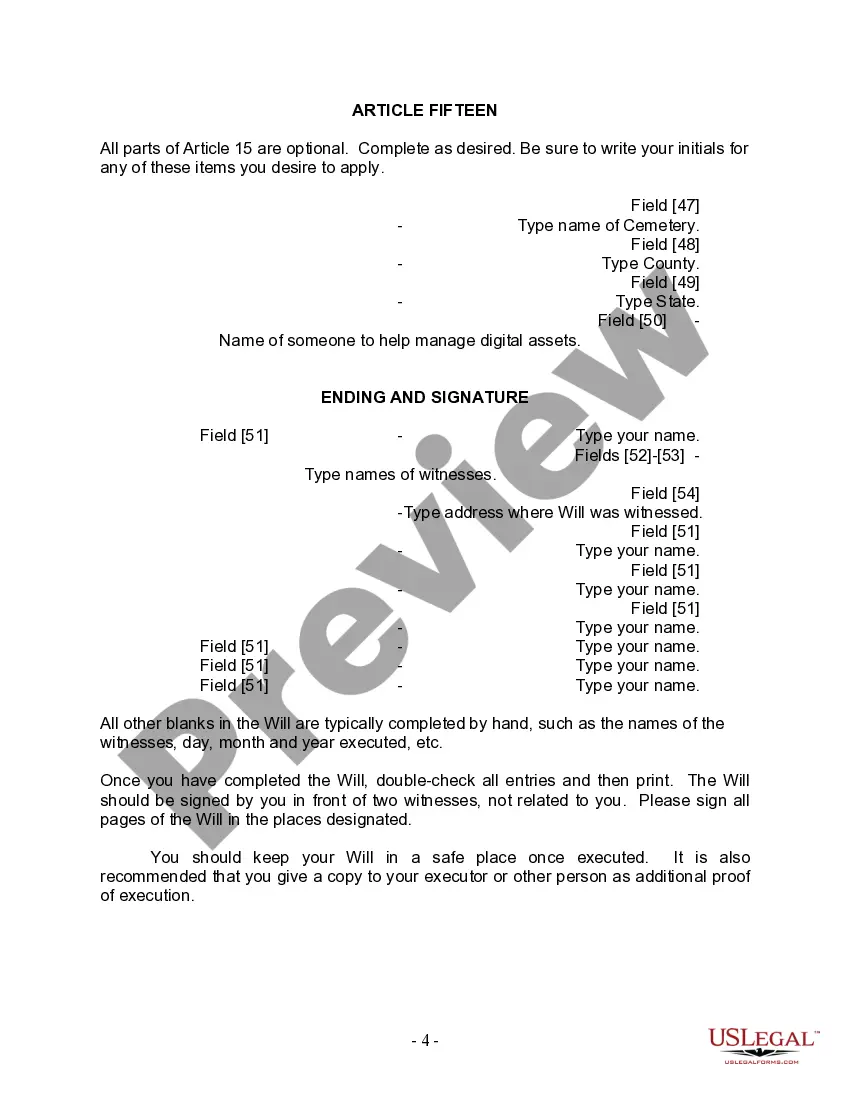
- Have the completed will signed by you and two witnesses, ensuring all signatures are dated correctly.
Does this document require notarization?
This form does not typically require notarization unless specified by local law. However, checking for state-specific guidelines is advised to ensure compliance.
Get your form ready online
Our built-in tools help you complete, sign, share, and store your documents in one place.
Make edits, fill in missing information, and update formatting in US Legal Forms—just like you would in MS Word.
Download a copy, print it, send it by email, or mail it via USPS—whatever works best for your next step.
Sign and collect signatures with our SignNow integration. Send to multiple recipients, set reminders, and more. Go Premium to unlock E-Sign.
If this form requires notarization, complete it online through a secure video call—no need to meet a notary in person or wait for an appointment.
We protect your documents and personal data by following strict security and privacy standards.

Make edits, fill in missing information, and update formatting in US Legal Forms—just like you would in MS Word.

Download a copy, print it, send it by email, or mail it via USPS—whatever works best for your next step.

Sign and collect signatures with our SignNow integration. Send to multiple recipients, set reminders, and more. Go Premium to unlock E-Sign.

If this form requires notarization, complete it online through a secure video call—no need to meet a notary in person or wait for an appointment.

We protect your documents and personal data by following strict security and privacy standards.
Avoid these common issues
- Failing to sign the will in the presence of the required witnesses.
- Not updating the will after significant life events such as marriage, divorce, or the birth of a child.
- Leaving out key details about beneficiaries or property descriptions.
Advantages of online completion
- Convenience of accessing and completing the form from home.
- Editability allows for changes without the hassle of drafting a new document.
- Reliability, as the form is crafted by licensed attorneys to ensure it meets legal standards.
Main things to remember
- A valid Last Will and Testament for Domestic Partner can secure your wishes regarding asset distribution.
- Ensure to include all beneficiaries and provisions for minor children.
- Review your will regularly to keep it aligned with your current life situation.
Looking for another form?
Form popularity
FAQ
Holographic wills are wills that have been written entirely in the hand of the testator. Although Maryland does recognize holographic wills, they must comply with Maryland law. Unless holographic wills are written properly, there is a chance the courts may not recognize the document as a valid last will and testament.
It must be in writing. Generally, of course, wills are composed on a computer and printed out. The person who made it must have signed and dated it. A will must be signed and dated by the person who made it. Two adult witnesses must have signed it. Witnesses are crucial.
Maryland law requires that your will be in writing, signed by the testator (you) and witnessed by two individuals in the testator's presence. This is called "executing a will." When you are ready to execute your will, you should have at least two witnesses, although three is better.
Is a holographic (handwritten) Will legal in Maryland ? Yes, if it complies with Maryland Law.
A joint will is a legal document executed by two (or more) people, which merges their individual wills into a single, combined last will and testament. Like most wills, a joint will lets the will-makers name who will get their property and assets after they die. Joint wills are usually created by married couples.
No, in Maryland, you do not need to notarize your will to make it legal. Maryland does allow you to make your will "self-proving," which speeds up probate because the court can accept the will without contacting the witnesses who signed it.