Maryland Last Will and Testament for a Domestic Partner with No Children
What is this form?
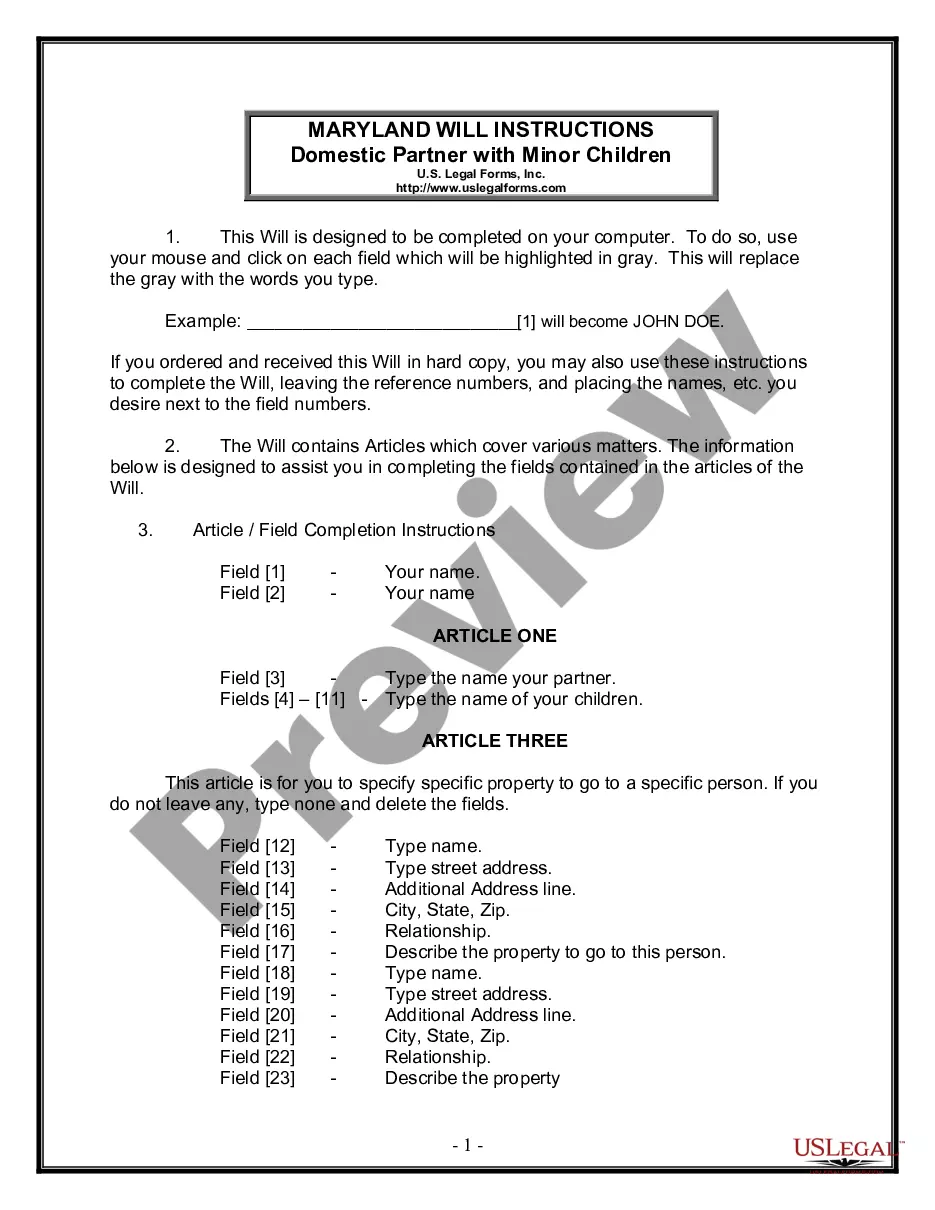
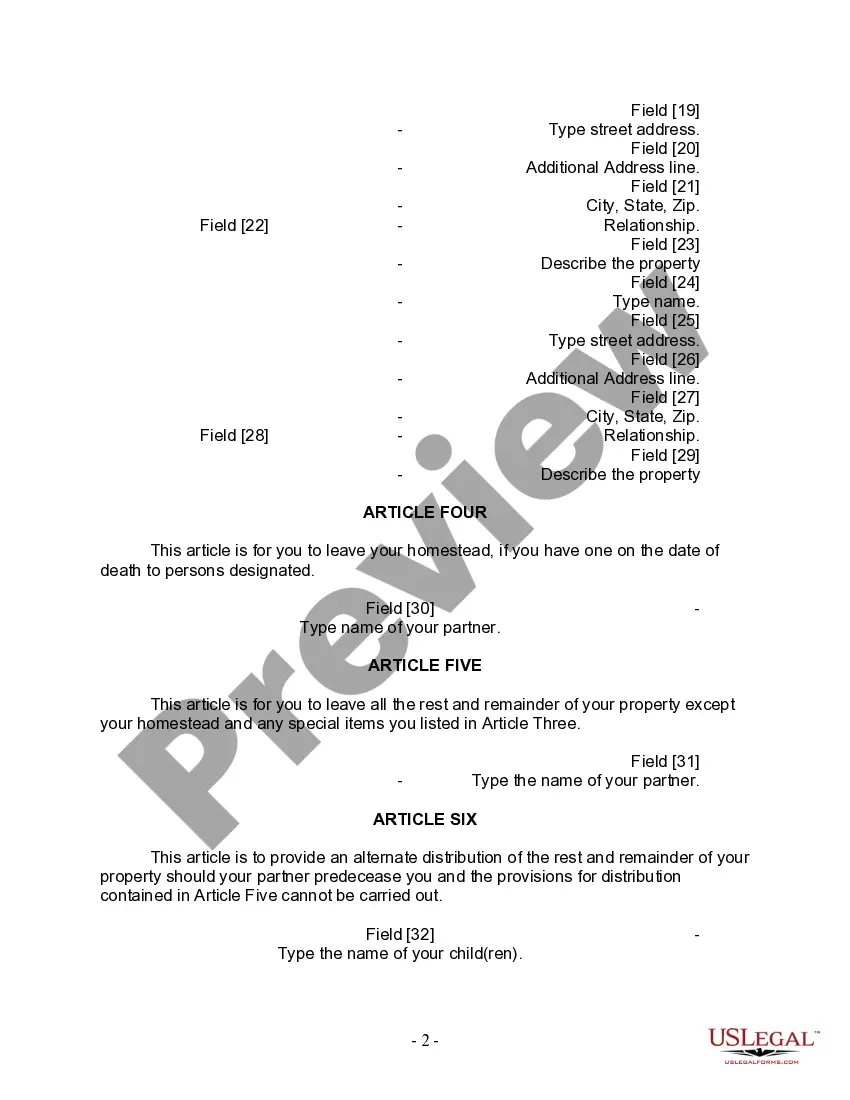
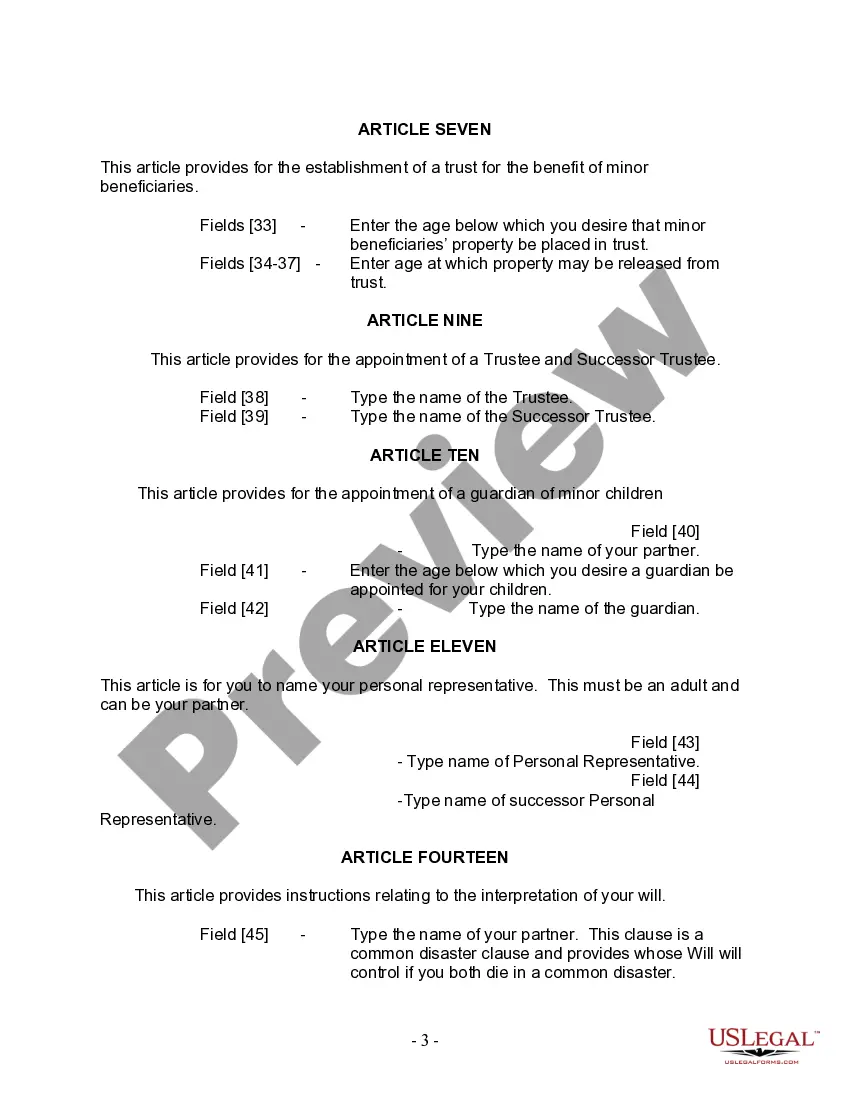
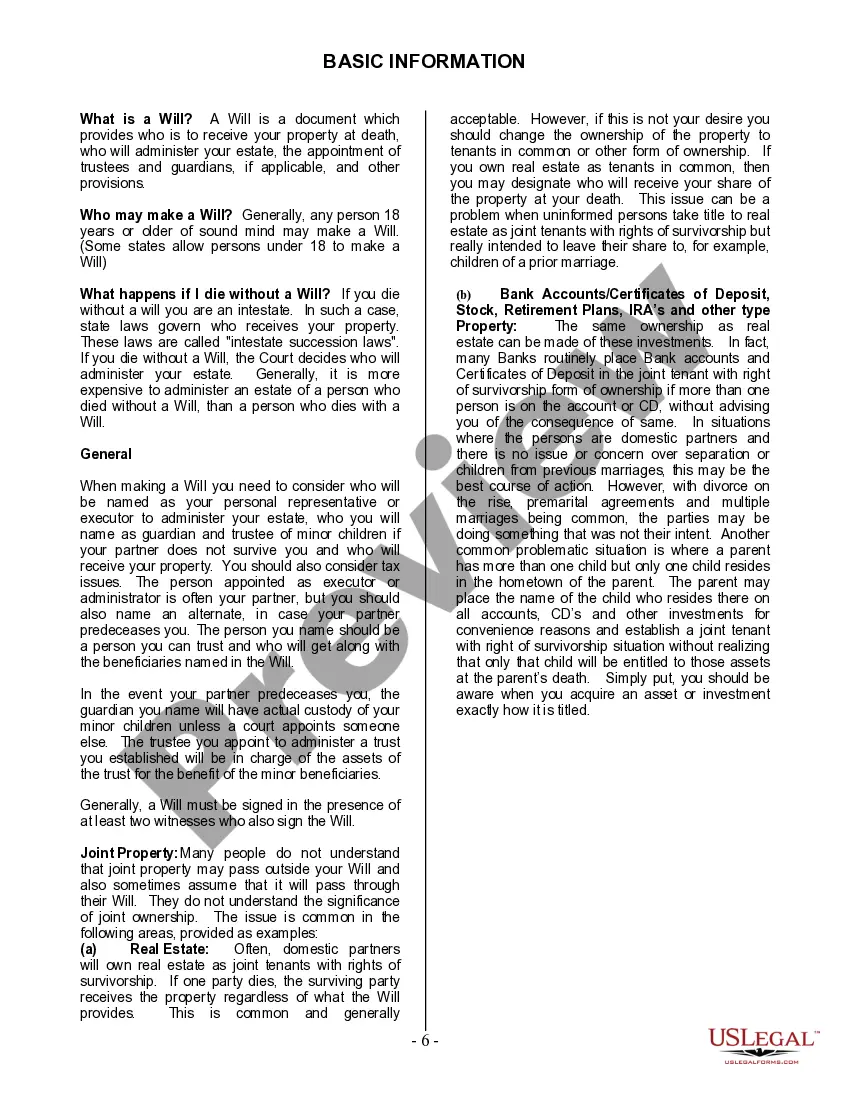
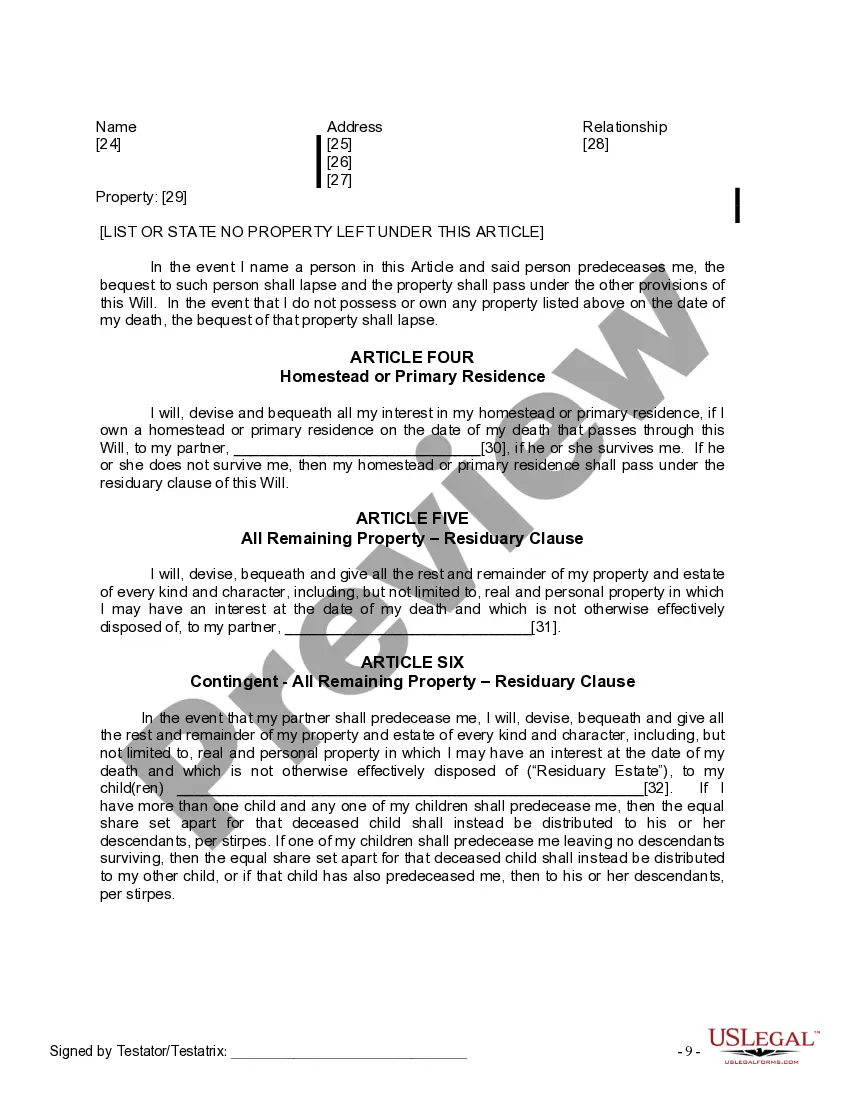
This Last Will and Testament for a Domestic Partner with No Children is a legal document that outlines how you would like your property distributed after your death if you do not have children. It allows you to appoint an executor, determine who will inherit your assets, and establish other legal provisions relevant to your estate. Unlike standard wills designed for traditional families, this form specifically addresses the circumstances of domestic partners, clearly prioritizing your desired beneficiaries without the complications often associated with children or different family structures.
What’s included in this form
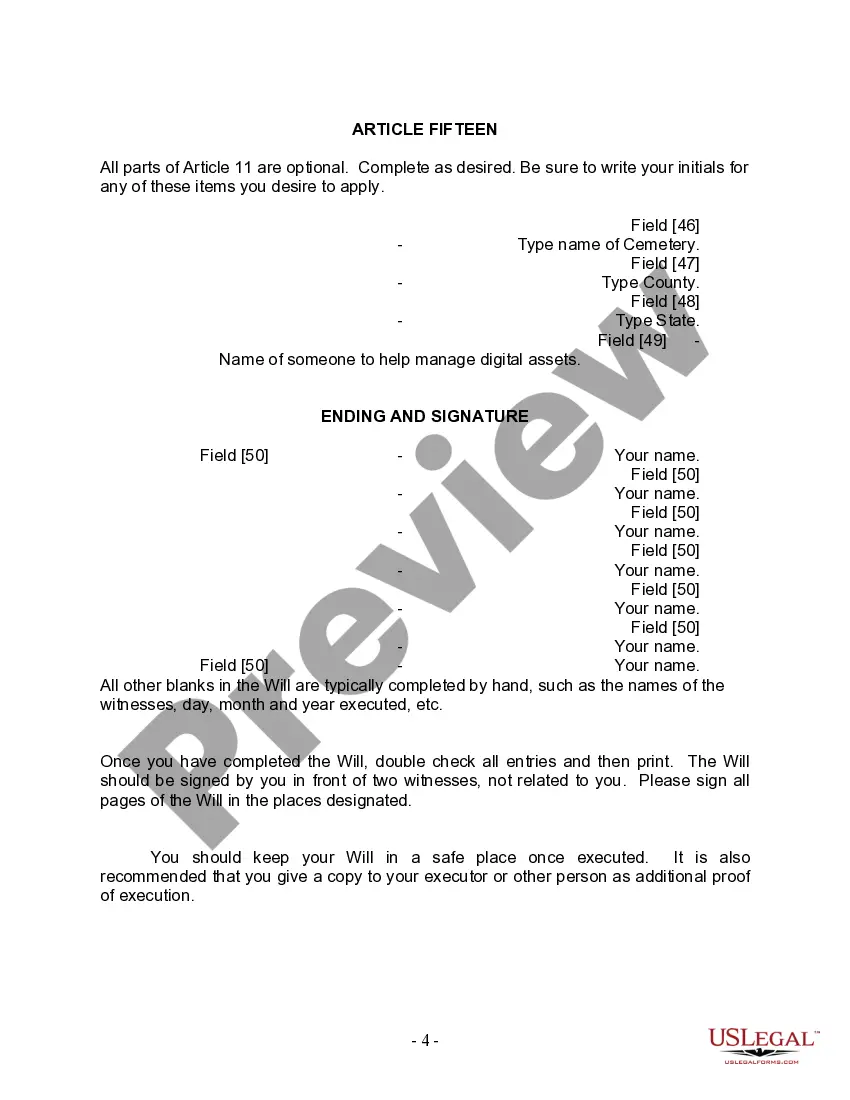
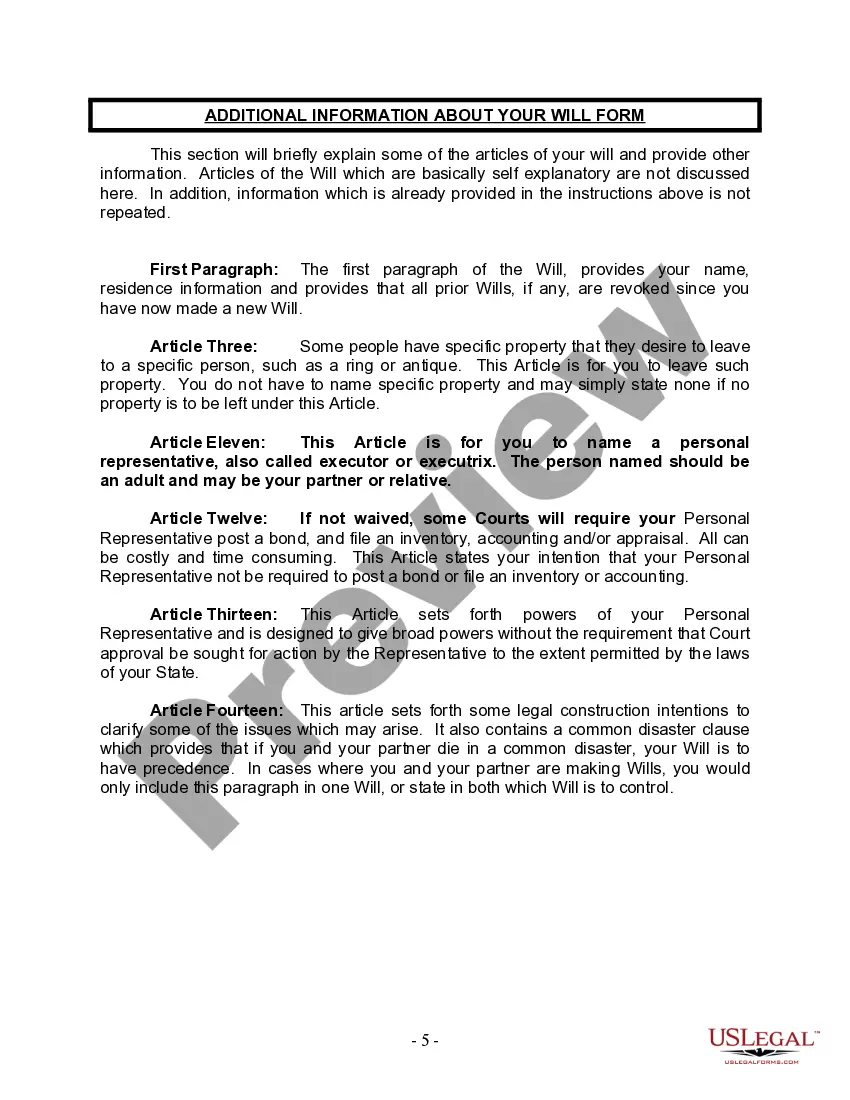
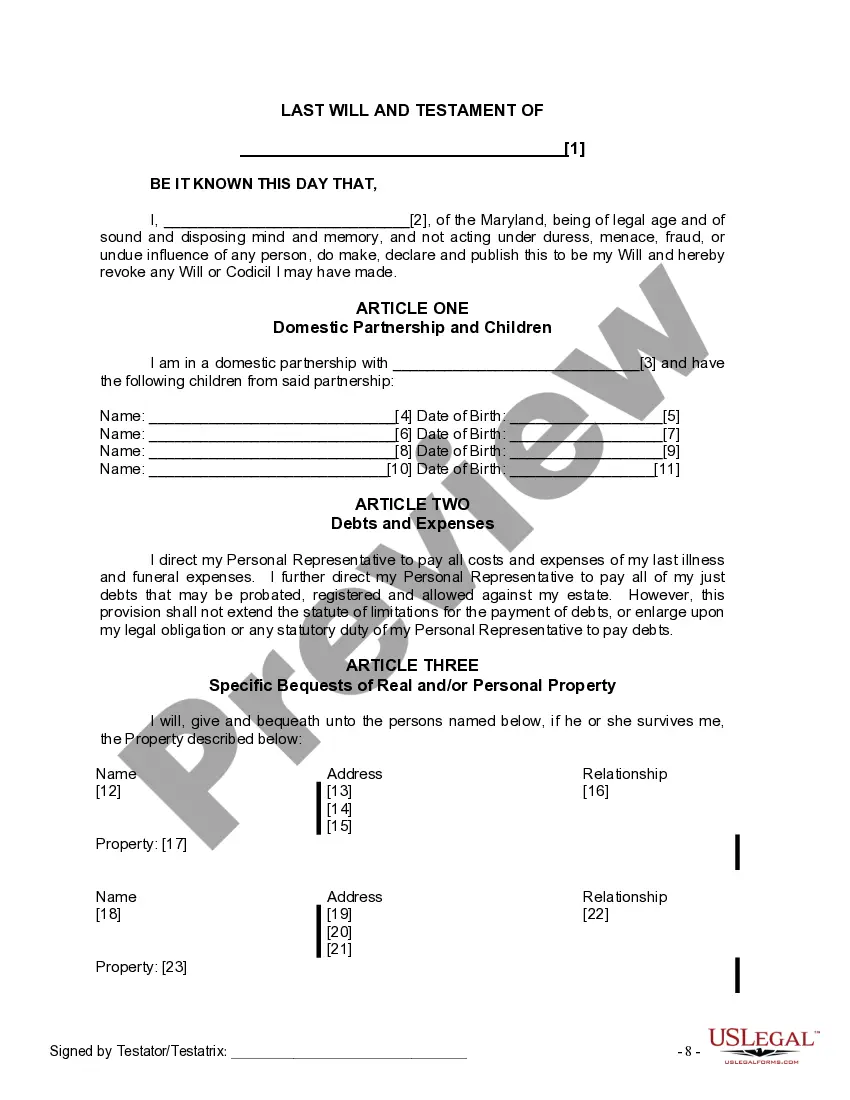
- Personal Representative: Designates an individual to administer your estate.
- Specific Bequests: Allows you to specify particular items or properties to be distributed to chosen beneficiaries.
- Residuary Clause: Details how any remaining assets should be distributed after specific bequests are made.
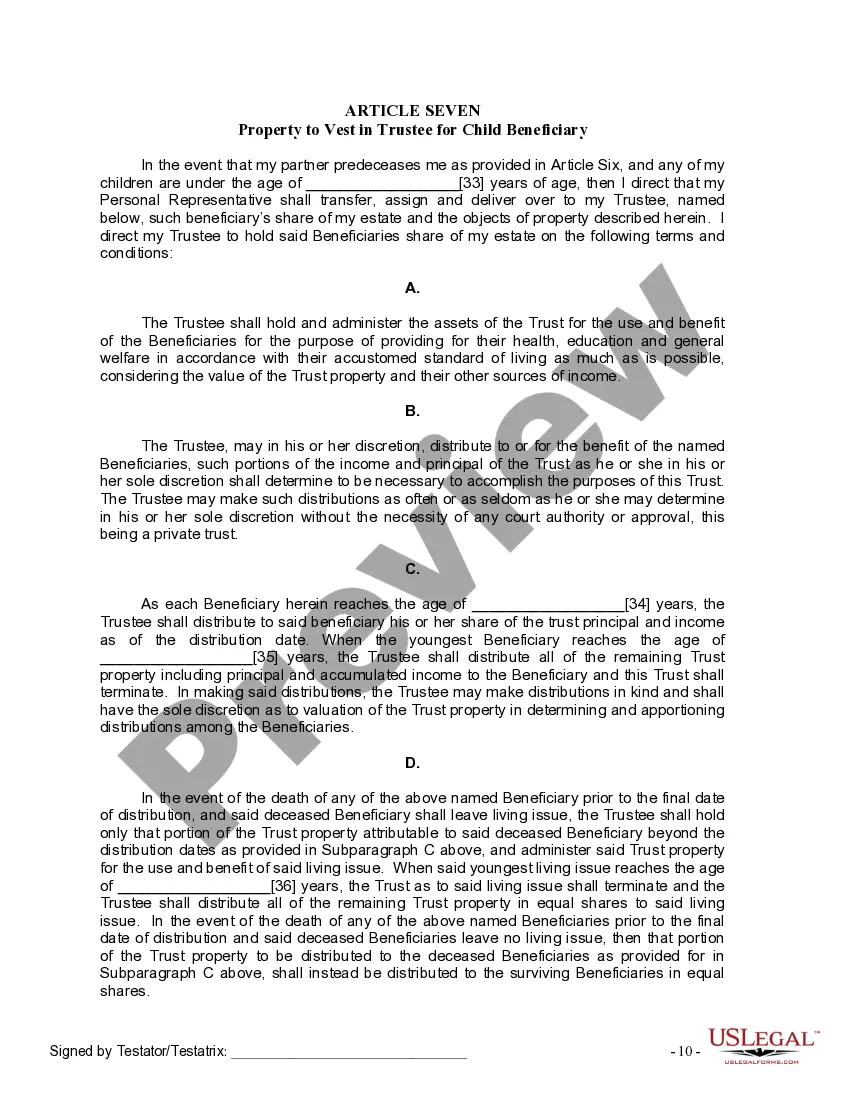
- Trust Provisions: Establishes a trust for the benefit of any beneficiaries if they are minors at your death.
- Guardian Designation: Appoints a guardian for your minor children in the event of your passing.
- Witness and Notarization Requirements: Outlines the requirements for witnessing and notarizing the will to ensure legal validity.




When to use this document
This form is needed when individuals in a domestic partnership wish to create a clear and legally binding document specifying how their assets should be distributed upon their death. It is particularly useful for partners without children, simplifying estate planning by eliminating the complexities that typically arise from child custodianship and inheritance issues. This is essential for ensuring that both partnersâ wishes are respected and fulfilled.
Who should use this form
- Individuals in domestic partnerships without children.
- Partners who want to ensure their property is distributed according to their wishes.
- Adults who are of sound mind and wish to designate an executor or guardianship for any minor dependents.
Completing this form step by step
- Enter your personal information, including your full name and address.
- Clearly designate your domestic partner's name and any specific properties or assets you wish to bequeath.
- Identify and appoint a personal representative to handle your estate.
- Designate any guardian for children if applicable and outline provisions for their care.
- Ensure the will is signed in the presence of two witnesses and consider notarization if required by state law.
Is notarization required?
This form does not typically require notarization unless specified by local law. However, some jurisdictions may benefit from notarization to enhance the document's validity, especially if a self-proving affidavit is utilized. If necessary, U.S. Legal Forms offers integrated online notarization for added convenience.
Get your form ready online
Our built-in tools help you complete, sign, share, and store your documents in one place.
Make edits, fill in missing information, and update formatting in US Legal Forms—just like you would in MS Word.
Download a copy, print it, send it by email, or mail it via USPS—whatever works best for your next step.
Sign and collect signatures with our SignNow integration. Send to multiple recipients, set reminders, and more. Go Premium to unlock E-Sign.
If this form requires notarization, complete it online through a secure video call—no need to meet a notary in person or wait for an appointment.
We protect your documents and personal data by following strict security and privacy standards.

Make edits, fill in missing information, and update formatting in US Legal Forms—just like you would in MS Word.

Download a copy, print it, send it by email, or mail it via USPS—whatever works best for your next step.

Sign and collect signatures with our SignNow integration. Send to multiple recipients, set reminders, and more. Go Premium to unlock E-Sign.

If this form requires notarization, complete it online through a secure video call—no need to meet a notary in person or wait for an appointment.

We protect your documents and personal data by following strict security and privacy standards.
Mistakes to watch out for
- Failing to have the will signed in front of witnesses.
- Not specifying alternative beneficiaries in case a primary beneficiary predeceases you.
- Leaving blank fields that should be filled out or missing signatures on all pages.
Benefits of using this form online
- Convenience: Complete the form at your own pace from the comfort of home.
- Editability: Modify the document easily until it reflects your final wishes.
- Reliability: Forms are drafted by licensed attorneys, ensuring they meet legal standards.
Main things to remember
- The form is tailored for domestic partners without children, ensuring fair and clear distribution of assets.
- Proper witnessing and potential notarization are critical for the form's legal validity.
- It is a straightforward process that can provide peace of mind for both partners regarding their estate plans.
Looking for another form?
Form popularity
FAQ
Include personal identifying information. Include a statement about your age and mental status. Designate an executor. Decide who will take care of your children. Choose your beneficiaries. List your funeral details. Sign and date your Last Will and Testament.
Maryland does allow you to make your will "self-proving," which speeds up probate because the court can accept the will without contacting the witnesses who signed it. However, unlike many other states, Maryland doesn't require you to have a self-proving affidavit notarized.
Find an online template or service. Make a list of your assets. Be specific about who gets what. If you have minor children, choose a guardian. Give instructions for your pet. Choose an executor. Name a 'residuary beneficiary' List your funeral preferences.
Maryland law requires that the will be in writing, signed by the testator, and witnessed by two individuals in the testator's presence. This is called "executing a will." When you are ready to execute your will, you should have at least two disinterested witnesses, although three is preferable.
Can a will be contested? Yes, although the person contesting the will must be a spouse, child, cohabitee or a person who is expressly mentioned in the will, or a previous will. The person must also ensure they have valid legal grounds to contest a last will and testament successfully.
If you are not family and were never named in a previous will, you have no standing to contest the will. If the testator (the deceased) discussed an inheritance with you previously, write down as much as you can remember. Using this, estimate the dollar value (whether money or possessions).
Contrary to popular belief, you do not need to have an attorney draft a will for you. Anyone can write this document on their own, and as long as it meets all of the legal requirements of the state, courts will recognize one you wrote yourself.
A will can also be declared invalid if someone proves in court that it was procured by undue influence. This usually involves some evil-doer who occupies a position of trust -- for example, a caregiver or adult child -- manipulating a vulnerable person to leave all, or most, of his property to the manipulator instead
A trust does not pass through the court for the probate process and cannot be contested in most cases. Revocable living trusts remain private, so if someone is not listed in it, they are not privy to the details of it.