Maryland Employee Evaluation Form for Teacher
Description
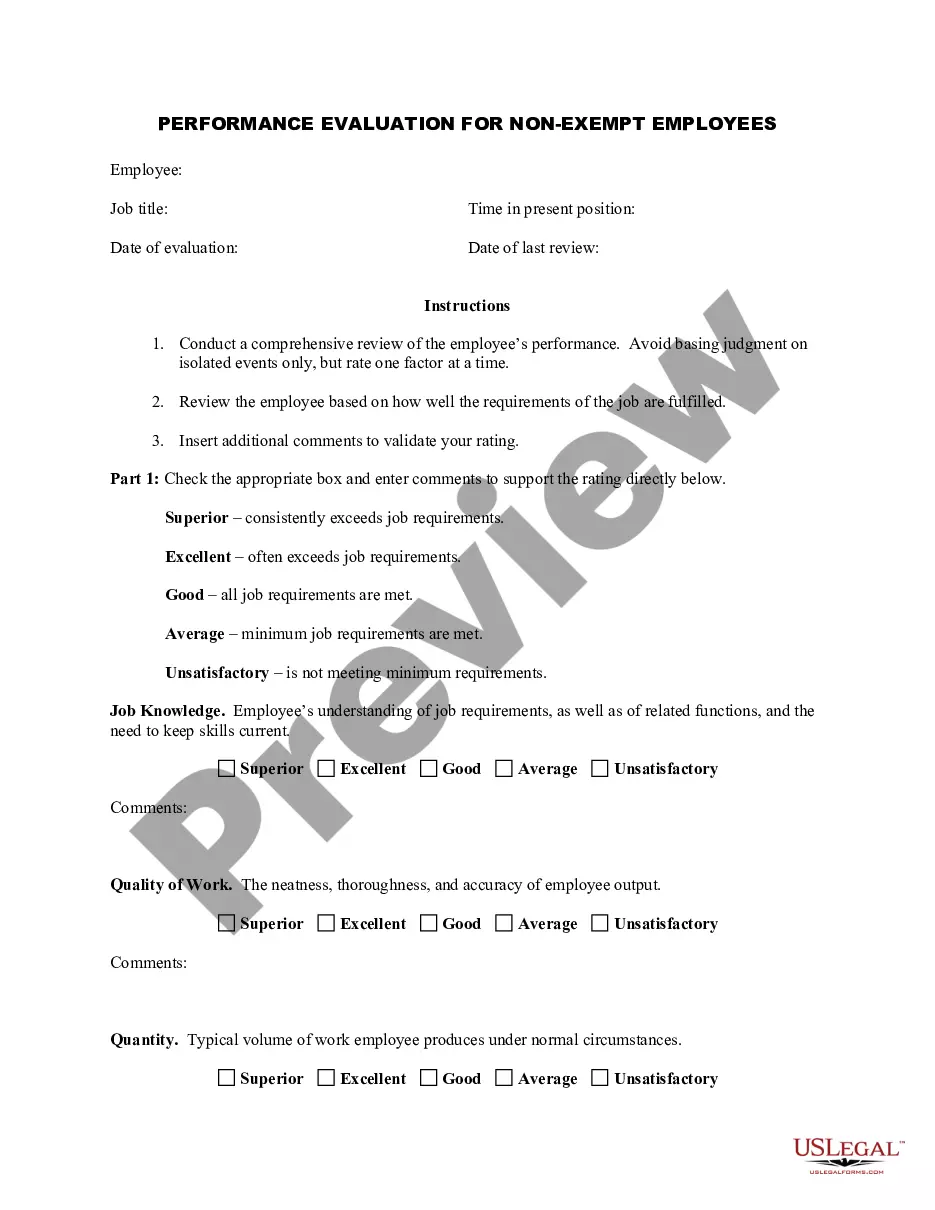
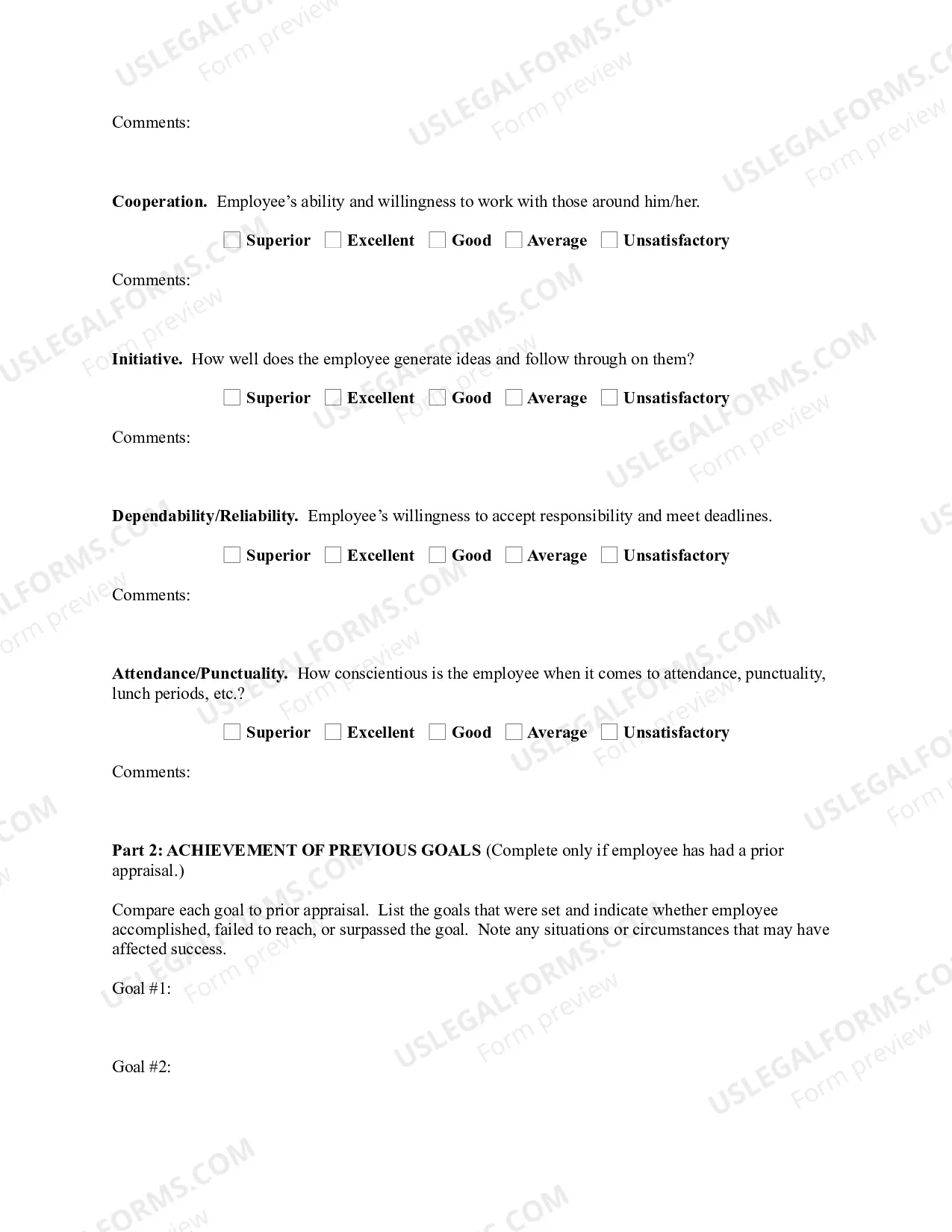
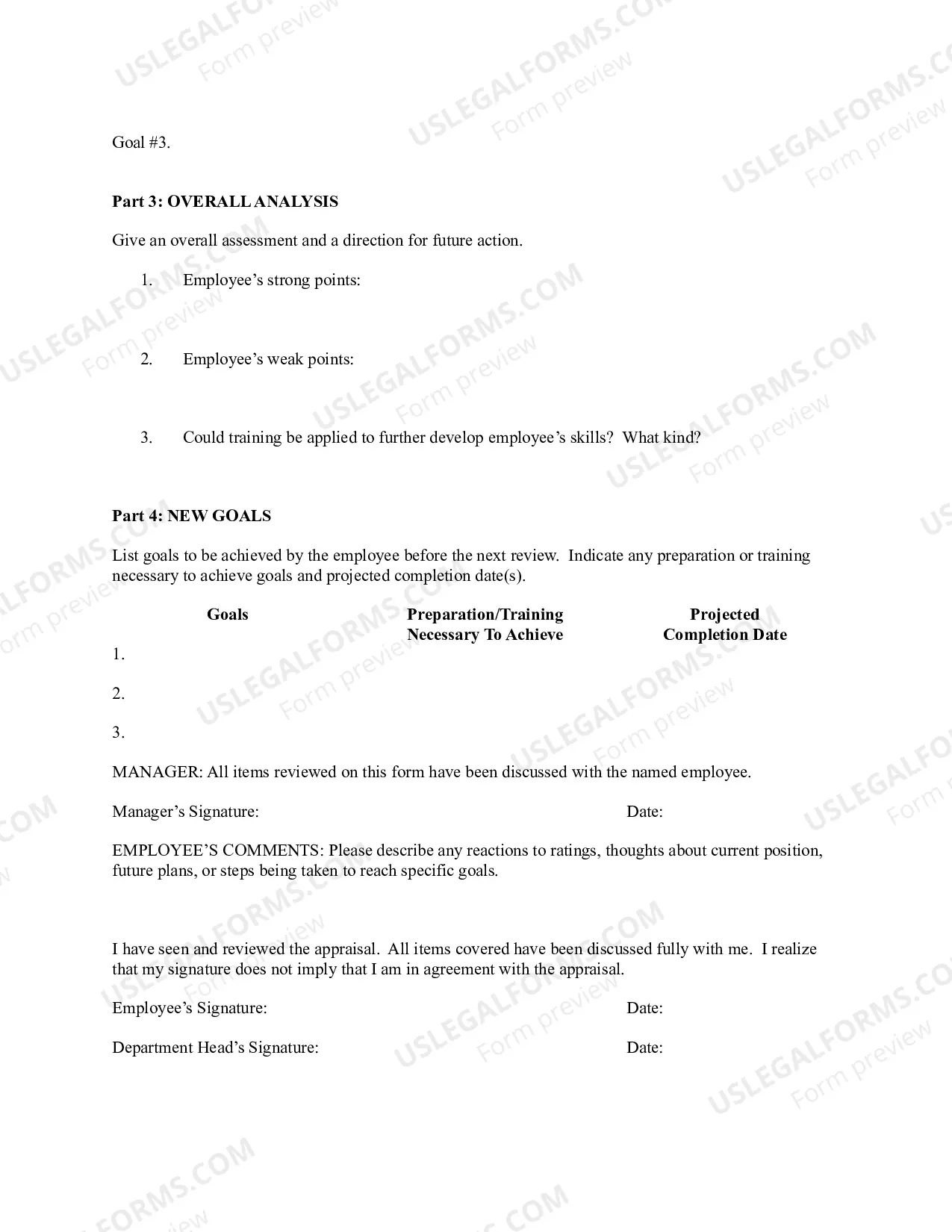
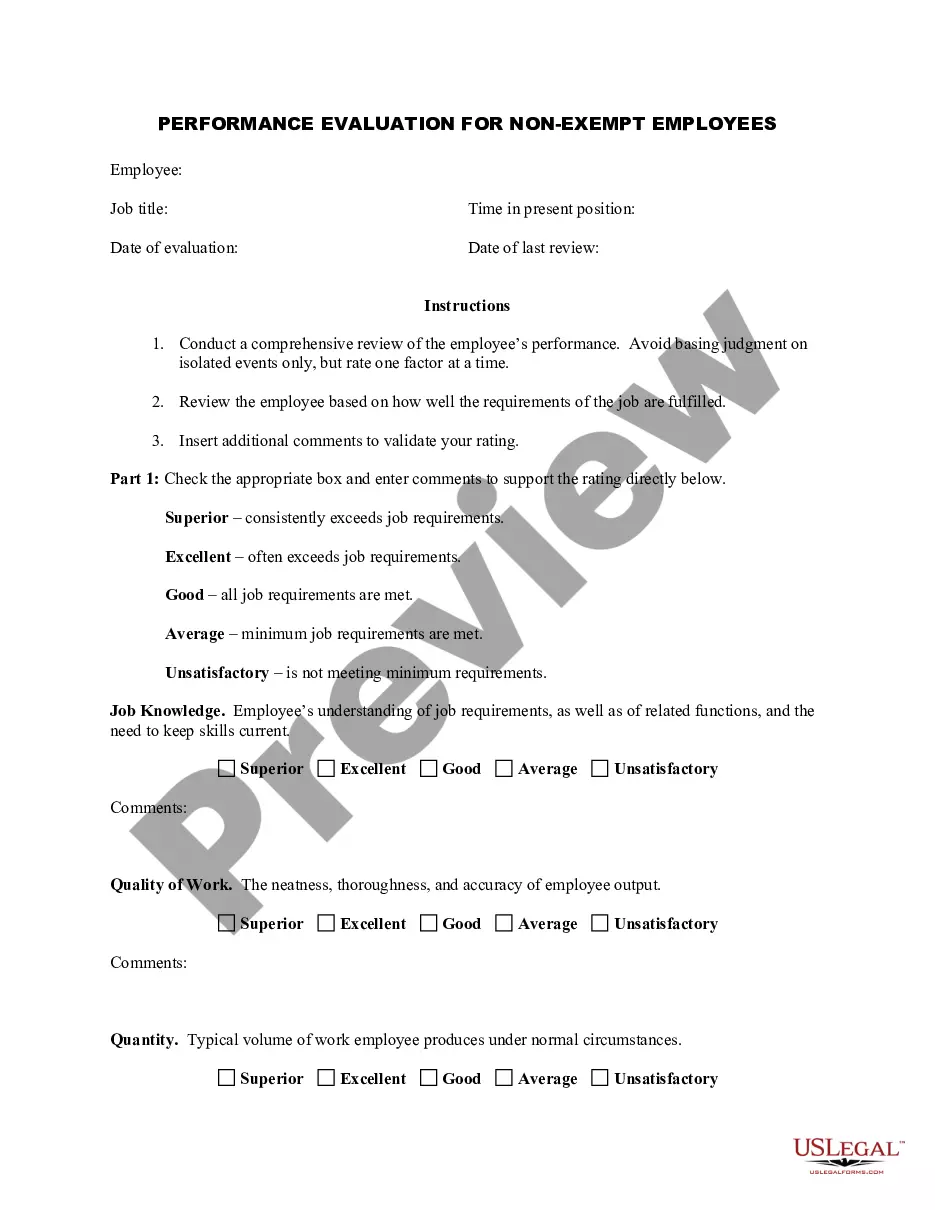
How to fill out Employee Evaluation Form For Teacher?
Are you currently facing a scenario where you require documents for either professional or personal purposes almost daily.
There is a multitude of authentic document templates accessible online, but finding ones you can trust is not easy.
US Legal Forms provides thousands of template options, such as the Maryland Employee Evaluation Form for Teacher, designed to meet federal and state requirements.
Select a convenient file format and download your version.
Access all the document templates you have purchased in the My documents section. You can download an additional copy of the Maryland Employee Evaluation Form for Teacher whenever needed. Click the desired document to download or print the file template.
- If you are already familiar with the US Legal Forms website and have an account, simply Log In.
- After logging in, you can download the Maryland Employee Evaluation Form for Teacher template.
- If you do not have an account yet and wish to start using US Legal Forms, follow these steps.
- Find the document you need and confirm it is for the correct municipality/county.
- Use the Review feature to check the document.
- Read the details to ensure you have selected the correct document.
- If the document is not what you are looking for, utilize the Search box to find the document that meets your needs and criteria.
- Once you find the correct document, click Acquire now.
- Choose the payment plan you prefer, provide the necessary information to create your account, and complete your order using PayPal or a credit card.
Form popularity
FAQ
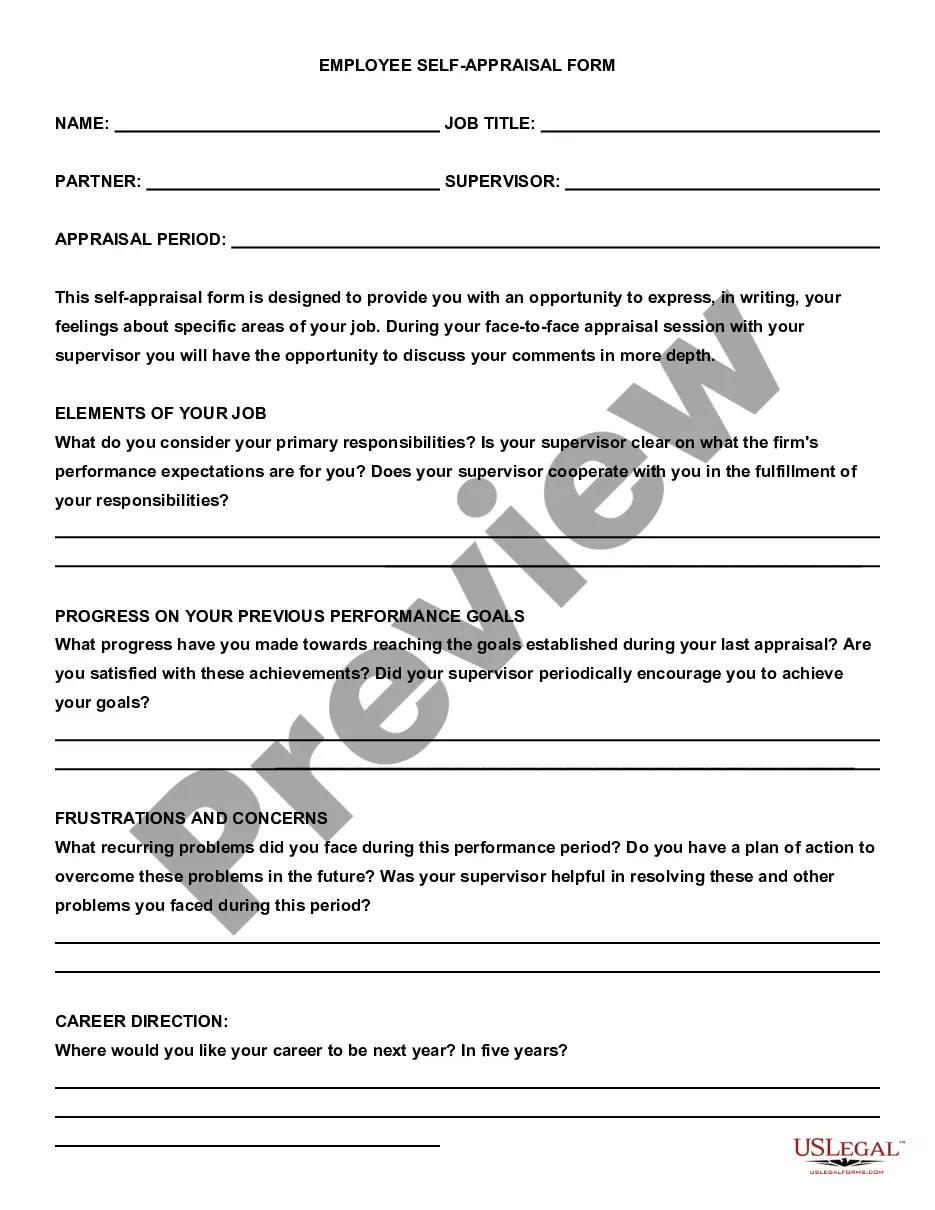
Filling a self-appraisal form as a teacher involves honest reflection on your teaching practices and student interactions. Utilize the Maryland Employee Evaluation Form for Teacher to assess your strengths and areas for improvement. Clearly outline your achievements, classroom management strategies, and professional development goals in your self-appraisal.
DURING A TEACHER EVALUATIONStart class right away.Incorporate differentiation.Talk to students.Reflect.Student contribution.Have your evidence ready.Show them your portfolio.Explain your rules and procedures.More items...?
Evaluations should include multi-faceted evidence of teacher practice, student learning, and professional contributions that are considered in an integrated fashion, in relation to one another and to the teaching context.
BEFORE A TEACHER EVALUATIONChoose a topic wisely. Select a subject about which you feel passionate and well-versed.Test drive the lesson.Talk to your evaluator.Explain the scope and sequence.Consider classroom decor and seating.Move around.
According to Danielson, the most important part of the teacher evaluation framework is the 3rd domain Instruction. Students should be intellectually involved in the learning process through activities.
Explain your relationship to the teacher, including details as to how long you have known the teacher in this capacity as well as outlining your history with the teacher if you have one. If, for example, you are a student writing an evaluation of a teacher who has instructed you in several courses, explain this.
See AlsoUnderstand Your Evaluation Tool. Get out of the compliance mindset.Pre-Game With the Teacher.Visit Classrooms Early and Often.Observe EverythingNot Just the Teacher.Provide Immediate Feedback.Find a 'Root Cause'Give Teachers a Voice.Provide Opportunities to Improve and Grow.
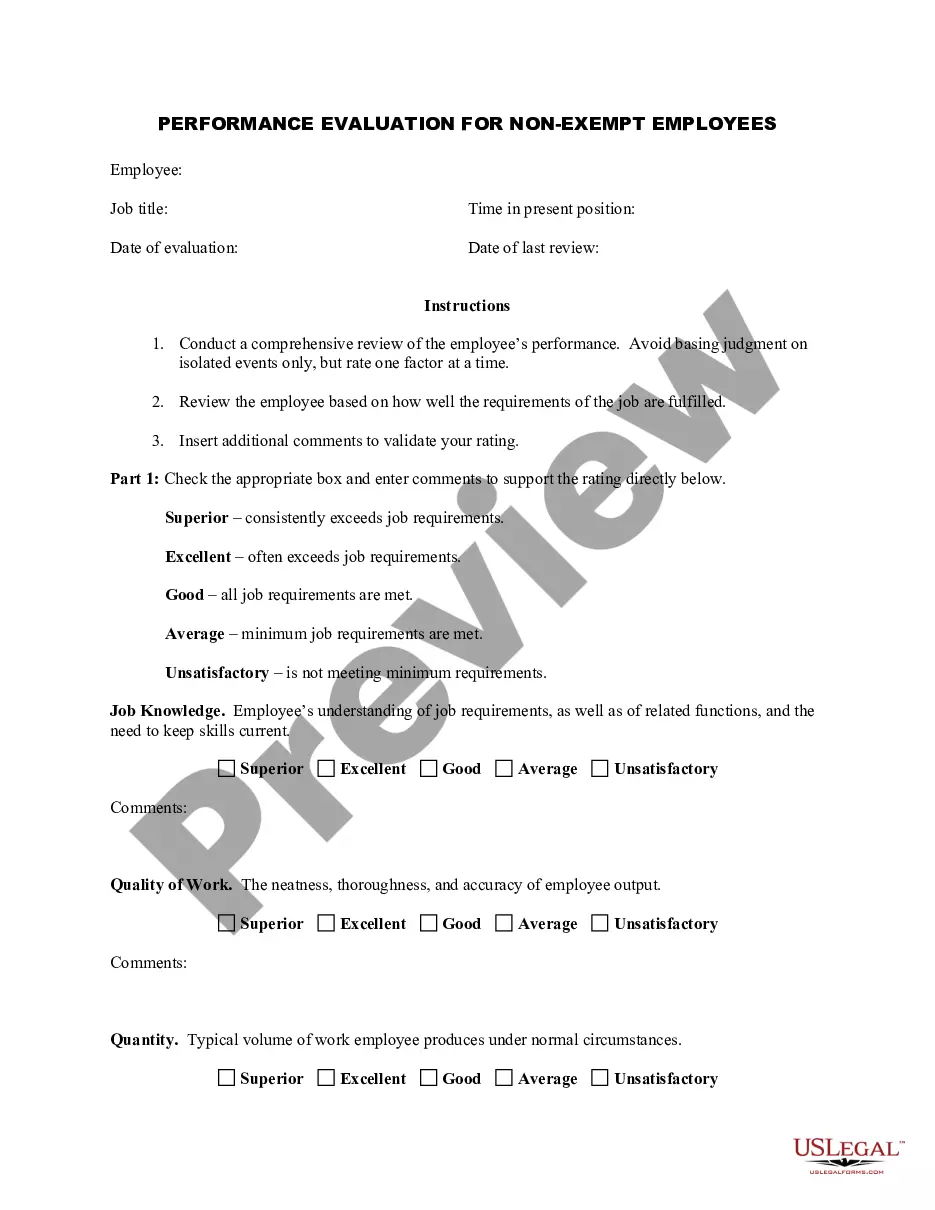
In general, teacher evaluation refers to the formal process a school uses to review and rate teachers' performance and effectiveness in the classroom. Ideally, the findings from these evaluations are used to provide feedback to teachers and guide their professional development.
Two of the most widely used measures of teacher effectiveness value-added models and classroom observationsare discussed. Then, other methodsprincipal evaluations, analyses of classroom artifacts, portfolios, self-reports of practice, and student evaluationsare examined.