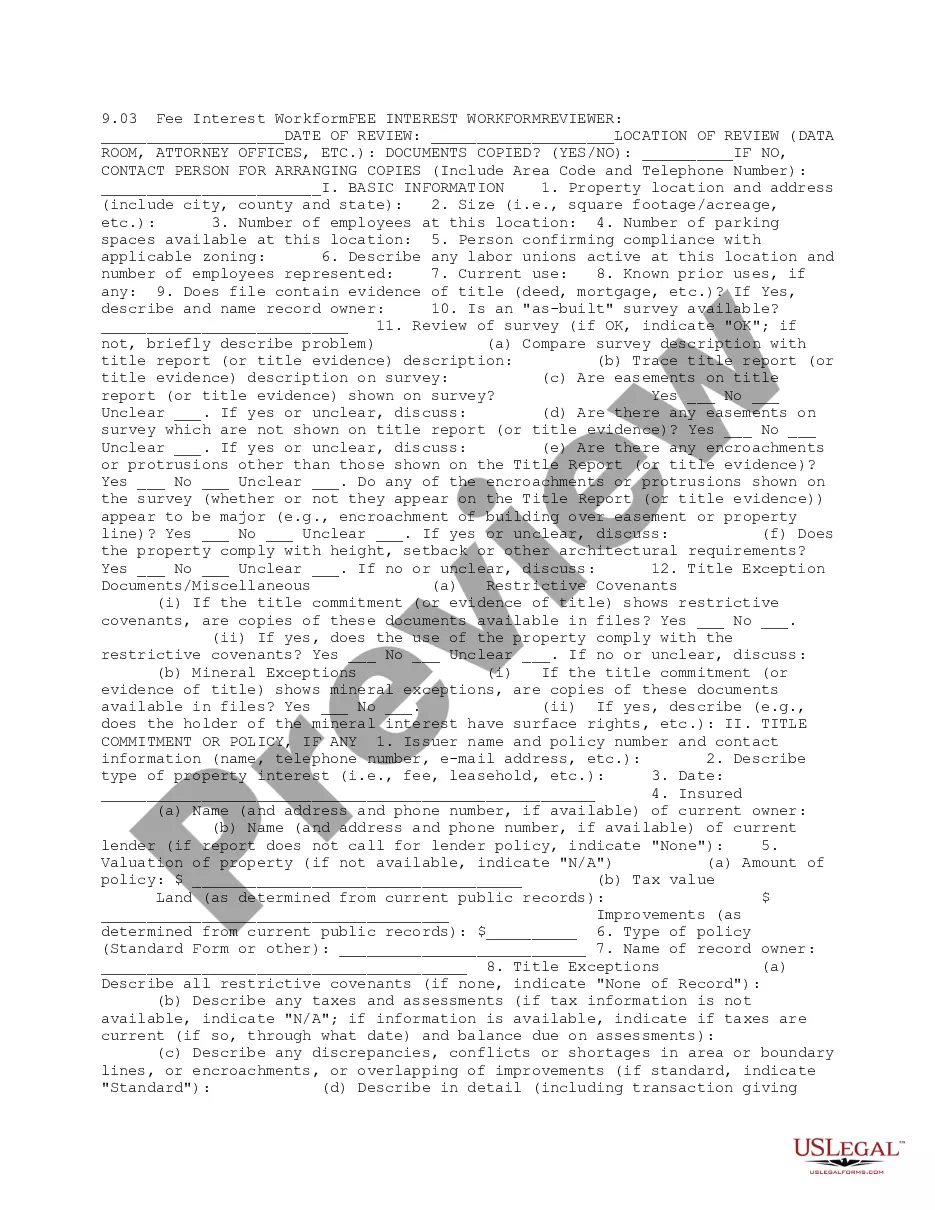
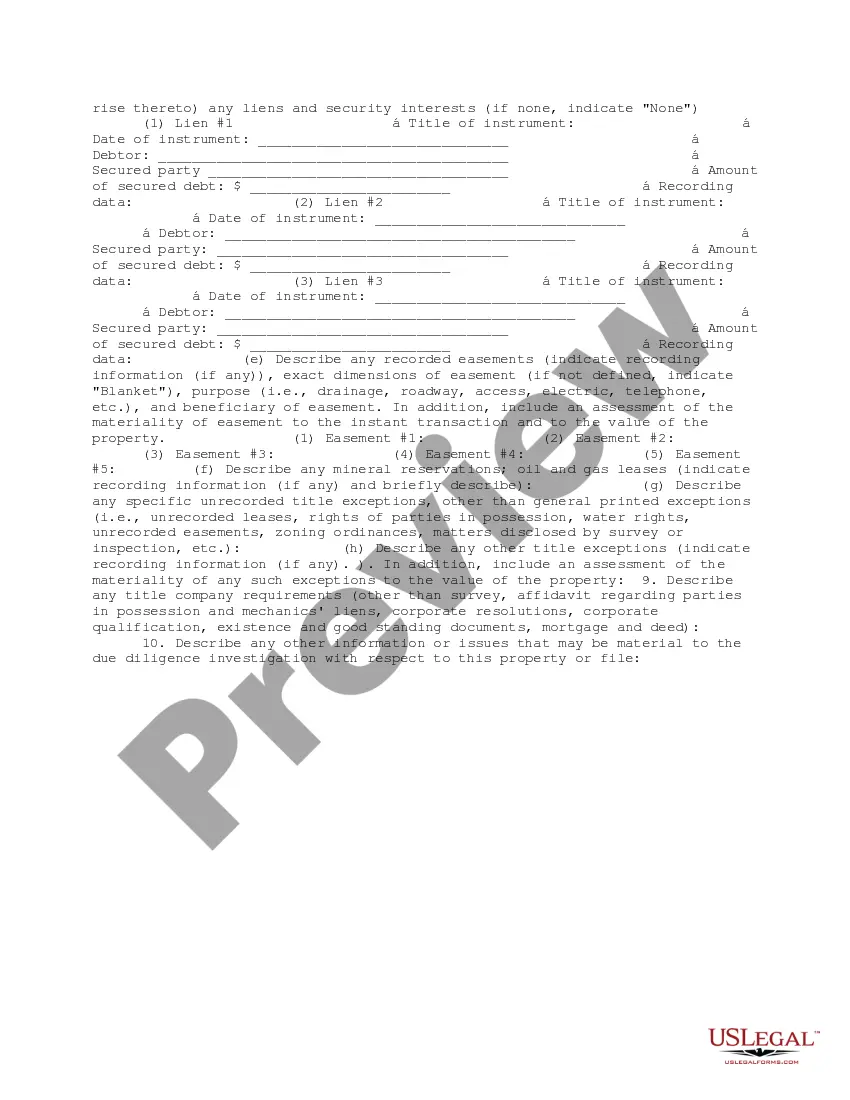
This due diligence workform is used to review property information and title commitments and policies in business transactions.
Massachusetts Fee Interest Workform
Category:
State:
Multi-State
Control #:
US-DD0903
Format:
Word;
PDF;
Rich Text
Instant download
Description
Free preview
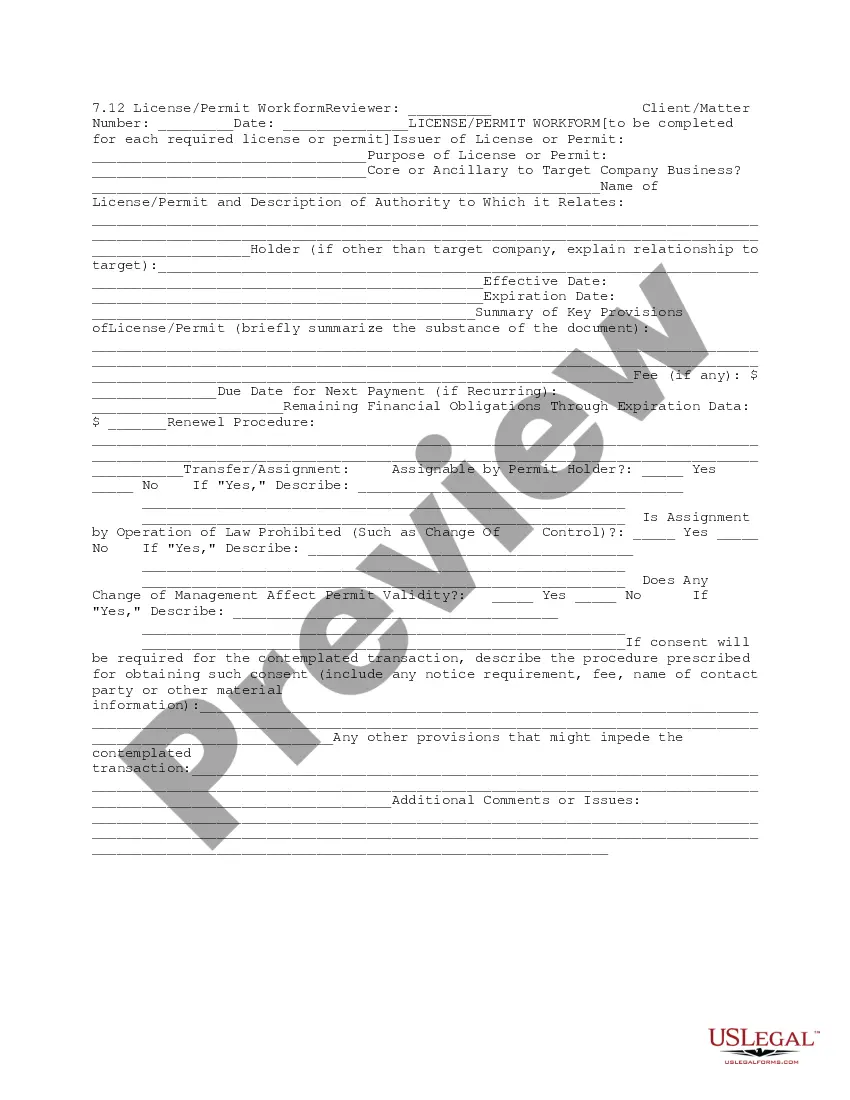
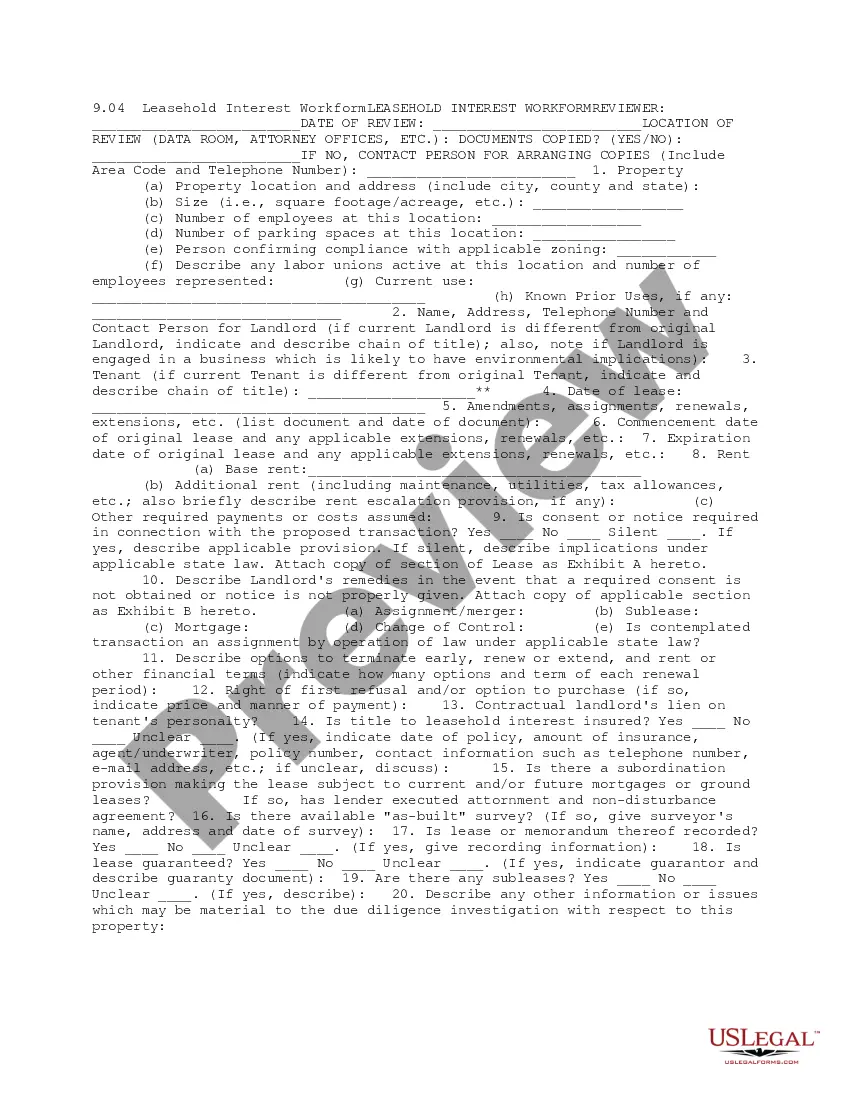
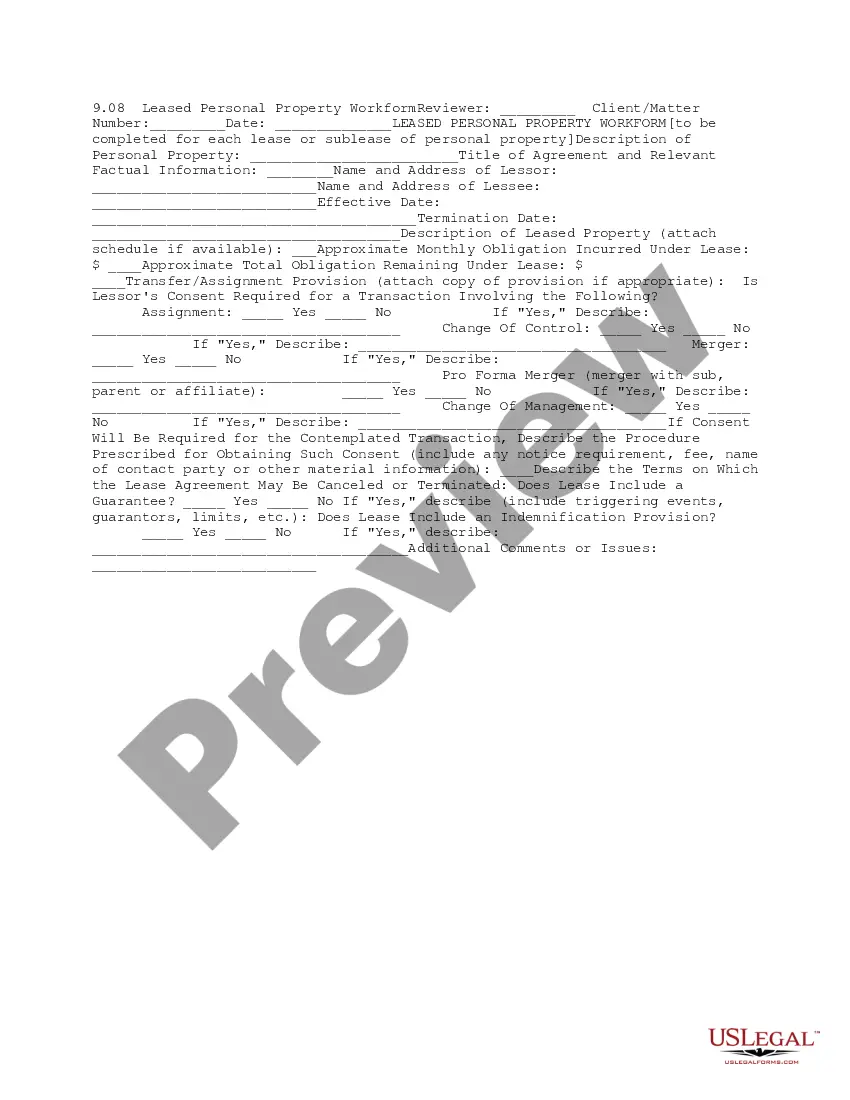
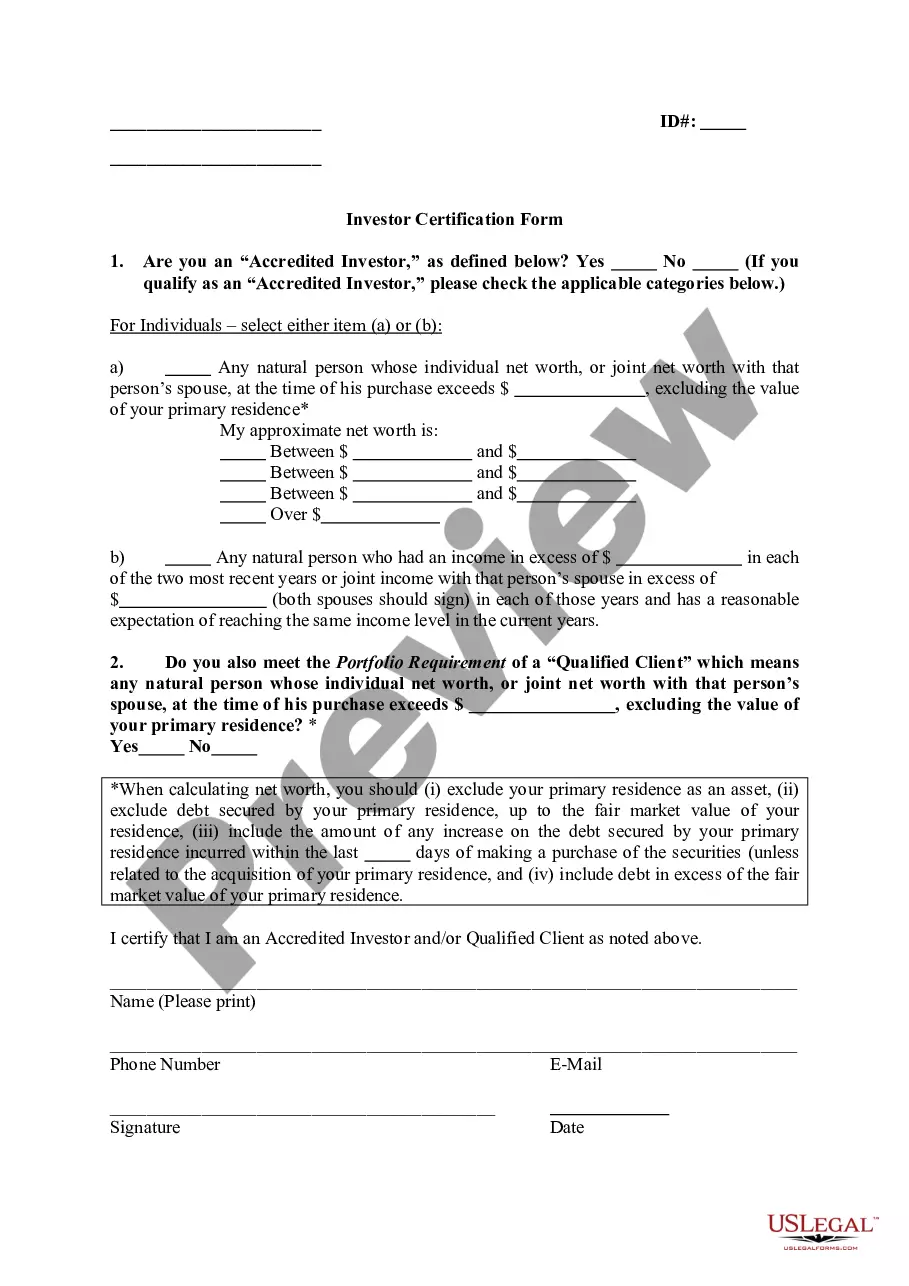
Get your form ready online
Our built-in tools help you complete, sign, share, and store your documents in one place.
Built-in online Word editor
Make edits, fill in missing information, and update formatting in US Legal Forms—just like you would in MS Word.
Export easily
Download a copy, print it, send it by email, or mail it via USPS—whatever works best for your next step.
E-sign your document
Sign and collect signatures with our SignNow integration. Send to multiple recipients, set reminders, and more. Go Premium to unlock E-Sign.
Notarize online 24/7
If this form requires notarization, complete it online through a secure video call—no need to meet a notary in person or wait for an appointment.
Store your document securely
We protect your documents and personal data by following strict security and privacy standards.

Make edits, fill in missing information, and update formatting in US Legal Forms—just like you would in MS Word.

Download a copy, print it, send it by email, or mail it via USPS—whatever works best for your next step.

Sign and collect signatures with our SignNow integration. Send to multiple recipients, set reminders, and more. Go Premium to unlock E-Sign.

If this form requires notarization, complete it online through a secure video call—no need to meet a notary in person or wait for an appointment.

We protect your documents and personal data by following strict security and privacy standards.
Looking for another form?

How to fill out Fee Interest Workform?
You might spend multiple hours online attempting to locate the legal document template that meets the federal and state requirements you need.
US Legal Forms offers thousands of legal documents that are vetted by experts.
You can easily download or print the Massachusetts Fee Interest Workform from the platform.
If available, utilize the Preview button to review the document template as well.
- If you already have a US Legal Forms account, you can sign in and click the Download button.
- After that, you can complete, modify, print, or sign the Massachusetts Fee Interest Workform.
- Every legal document template you obtain is yours permanently.
- To get another copy of any acquired form, visit the My documents section and click the appropriate button.
- If this is your first time using the US Legal Forms website, follow the simple instructions outlined below.
- First, confirm that you have chosen the correct document template for the state/city of your preference.
- Review the form description to ensure you have selected the right form.
Form popularity
FAQ
To report Massachusetts use tax, you will need to complete the appropriate section on your Massachusetts tax return. This can easily be done by using the Massachusetts Fee Interest Workform, which allows you to include any use tax owed on items purchased out of state. It is important to keep your records organized for these purchases to accurately complete your tax reporting. This will ensure you meet your tax obligations without unexpected surprises.
If your bank interest exceeds $10,000, it remains taxable in Massachusetts. You must report this higher amount on your Massachusetts Fee Interest Workform. Additionally, banks are required to report this interest to the IRS and the state, so be diligent about including the correct figures in your filings. Accurate reporting will help you stay compliant and avoid any potential audits.
Yes, your interest income is taxable in Massachusetts. All forms of interest, whether from savings accounts or other sources, must be reported on your tax return. Make sure to include this information on the Massachusetts Fee Interest Workform to ensure complete and accurate reporting. This is essential for avoiding any penalties or issues with the Department of Revenue.
You should send Massachusetts 1099 forms to the Massachusetts Department of Revenue. If you are filing multiple forms, ensure that they are bundled appropriately according to the requirements provided by the state. Utilizing the Massachusetts Fee Interest Workform can simplify reporting various forms of income, including those listed on 1099s. Always check the latest guidelines for submission.
In Massachusetts, interest income is generally taxable and is included in your taxable income. The state follows a flat tax rate for this income, making it straightforward to calculate. Ensure you report your interest income accurately on the Massachusetts Fee Interest Workform to comply with state regulations. This will help avoid any issues with your tax submission.
You can file Massachusetts Form 1 at the Massachusetts Department of Revenue. If you choose to file by mail, be sure to send it to the address specified on the form. Alternatively, you can e-file using the Massachusetts Fee Interest Workform through tax preparation software. This method often speeds up the processing of your tax return.
Interest for tax purposes generally includes the income you receive from savings accounts, bonds, and loans. When filing your taxes, make sure to include this income on your Massachusetts Fee Interest Workform. Understanding how interest is classified for tax purposes can help you accurately report your earnings and avoid potential issues with tax authorities.
Massachusetts bank interest includes any interest earned on accounts held at state banks, credit unions, and other financial institutions. This interest must be reported on your tax forms, particularly the Massachusetts Fee Interest Workform. Knowing exactly what qualifies as bank interest is vital for accurate tax reporting and compliance.
You can easily obtain a Massachusetts state tax form online through the official Massachusetts Department of Revenue website. Additionally, platforms like uslegalforms provide downloadable tax forms, including the Massachusetts Fee Interest Workform. By using these resources, you can ensure you have the correct forms for your tax needs.
Bank interest on a tax return includes any interest income you earned from bank accounts, which is taxable. This amount must be reported on your Massachusetts Fee Interest Workform, as it can influence your overall tax liability. Understanding how to properly declare this interest can help you avoid penalties and ensure compliance with state tax regulations.