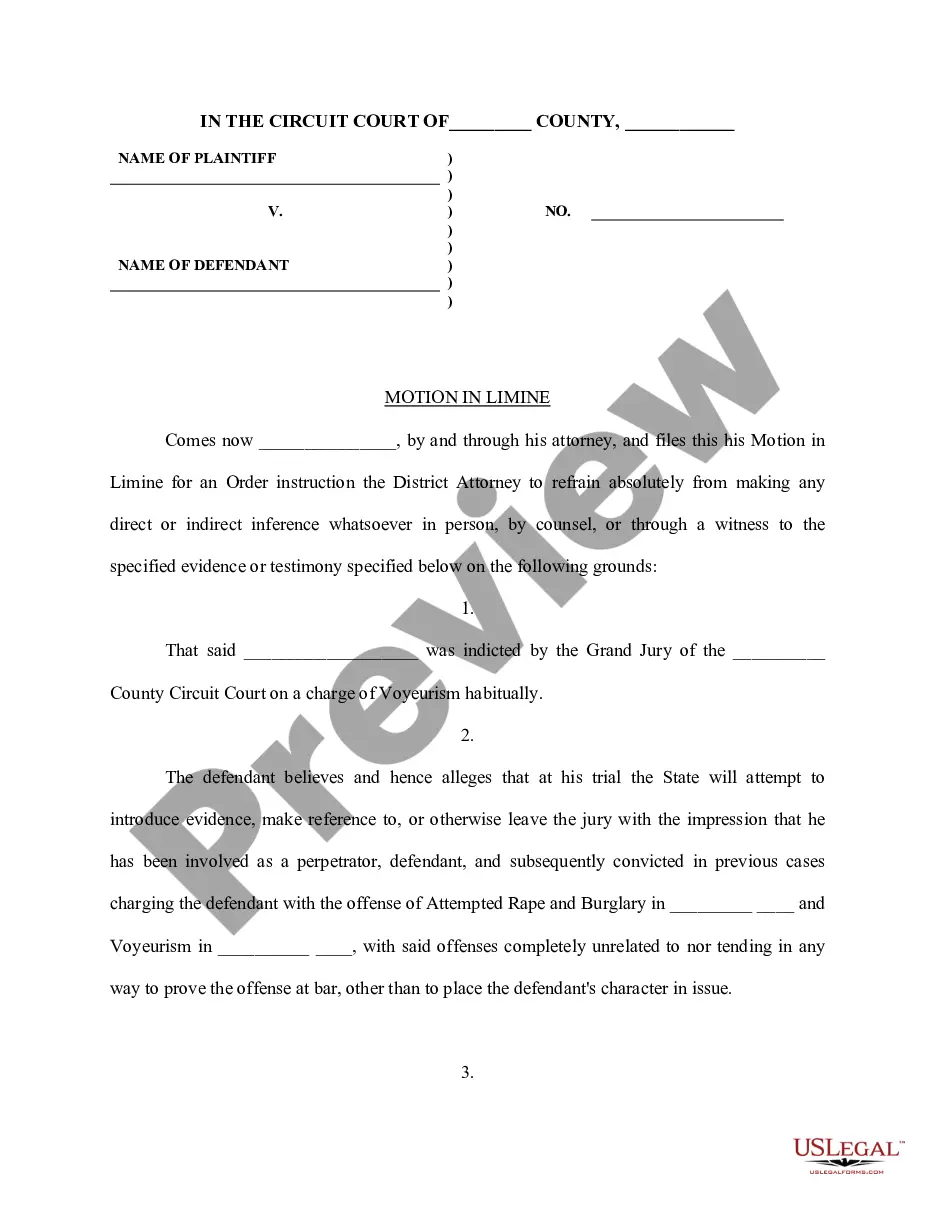
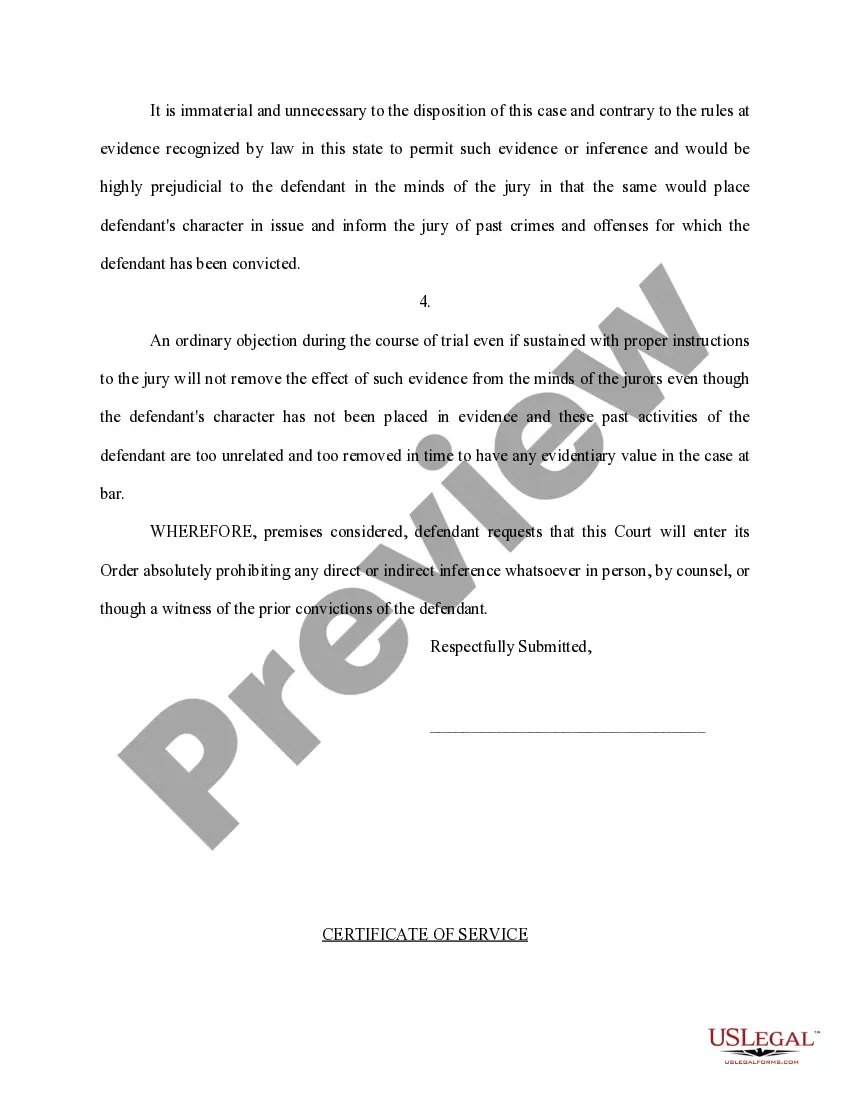
Massachusetts Motion in Limine
Description

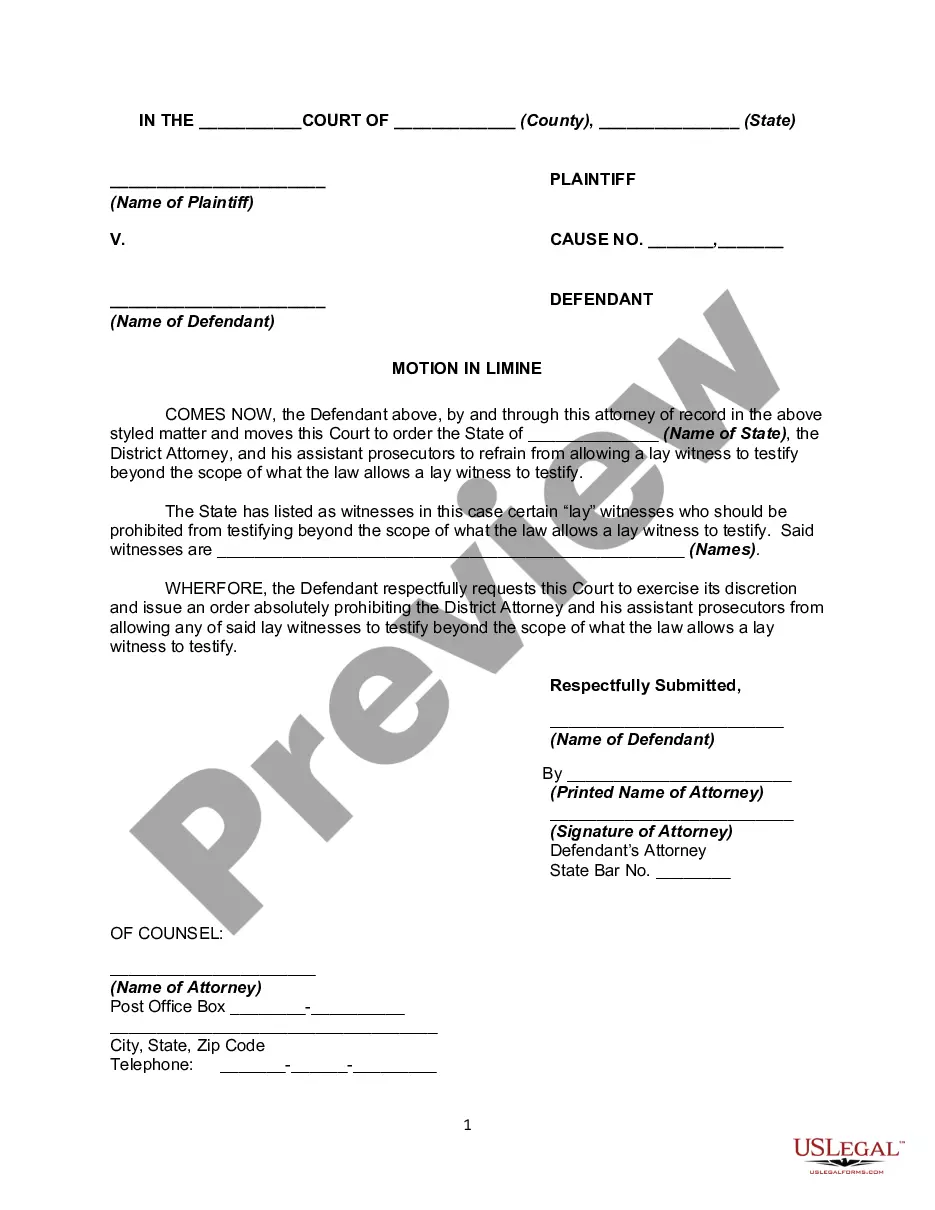
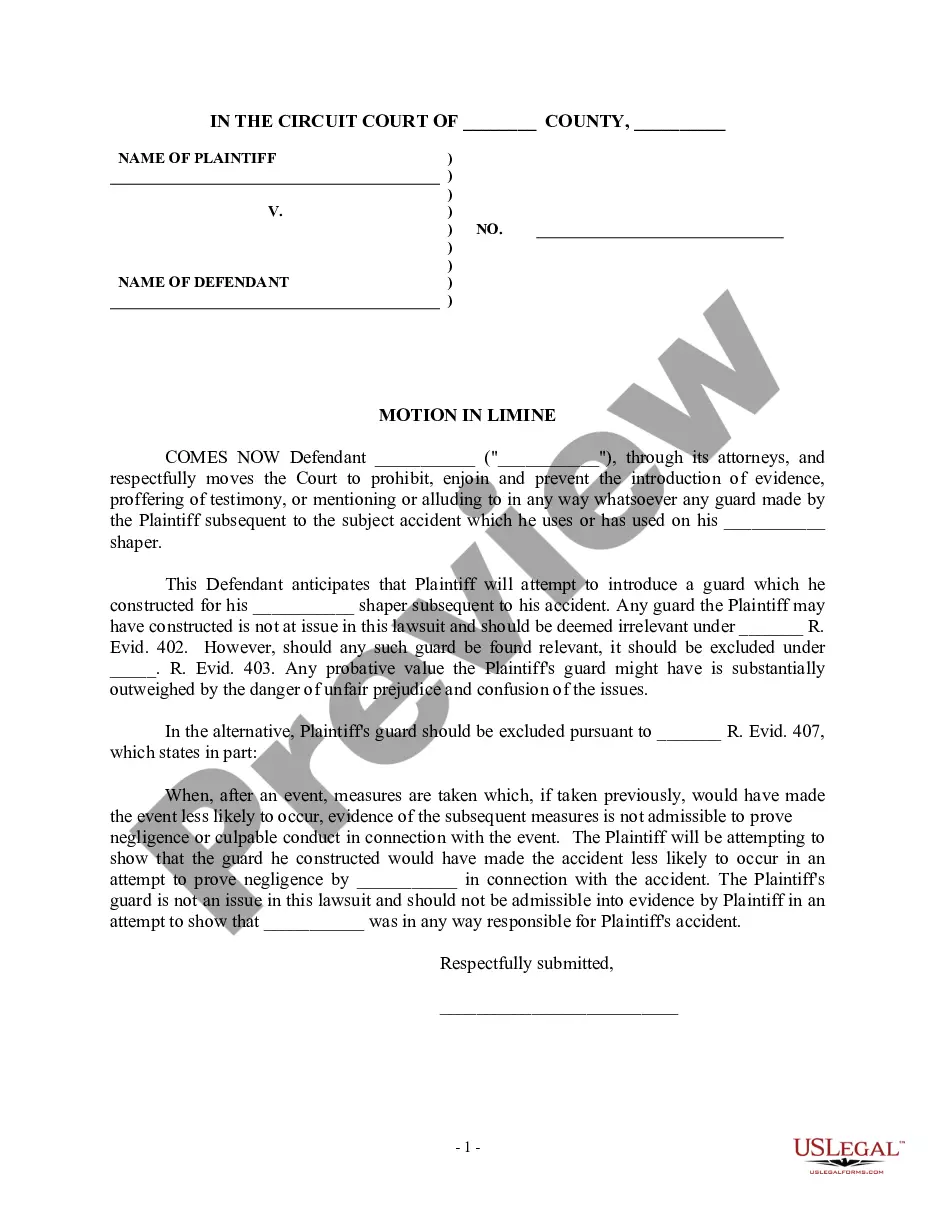
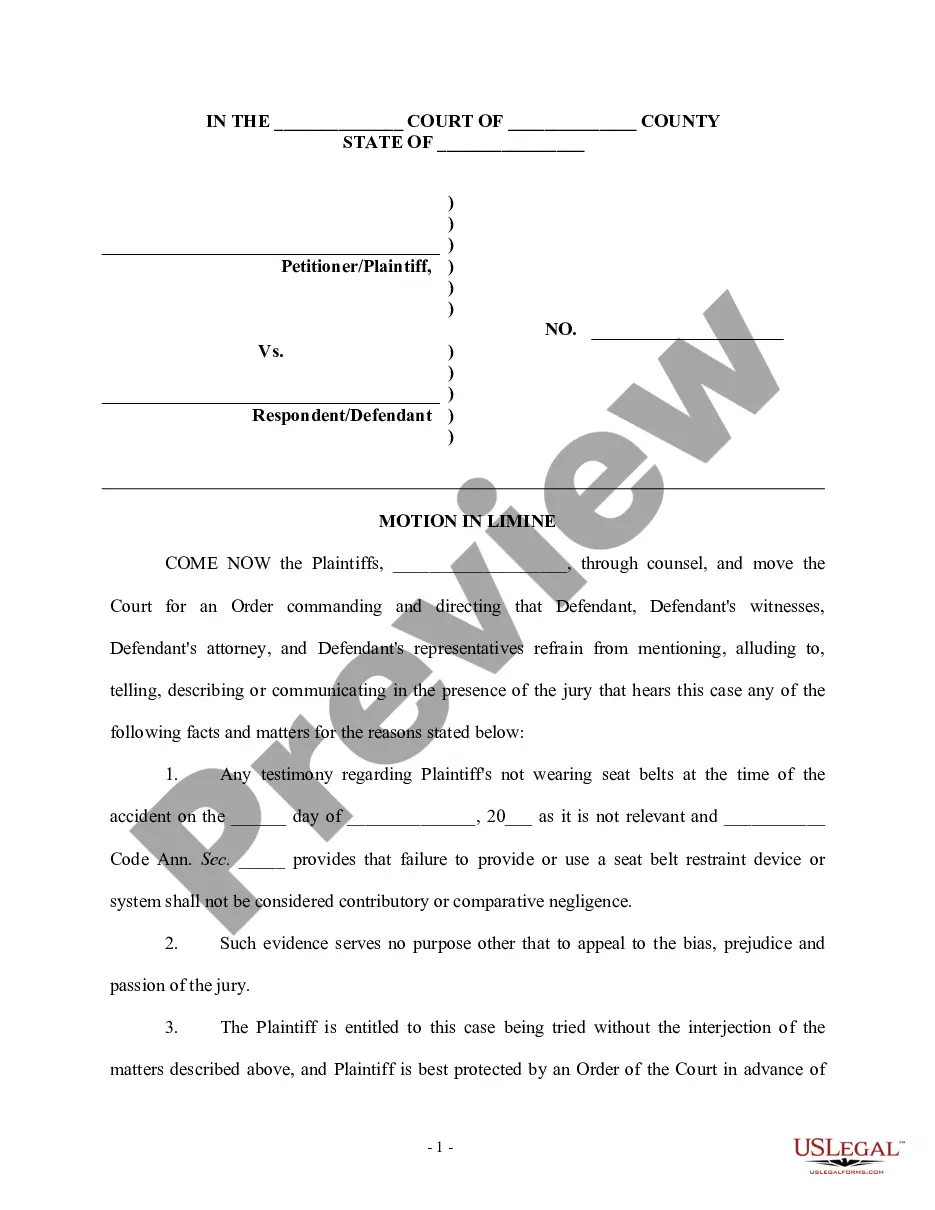
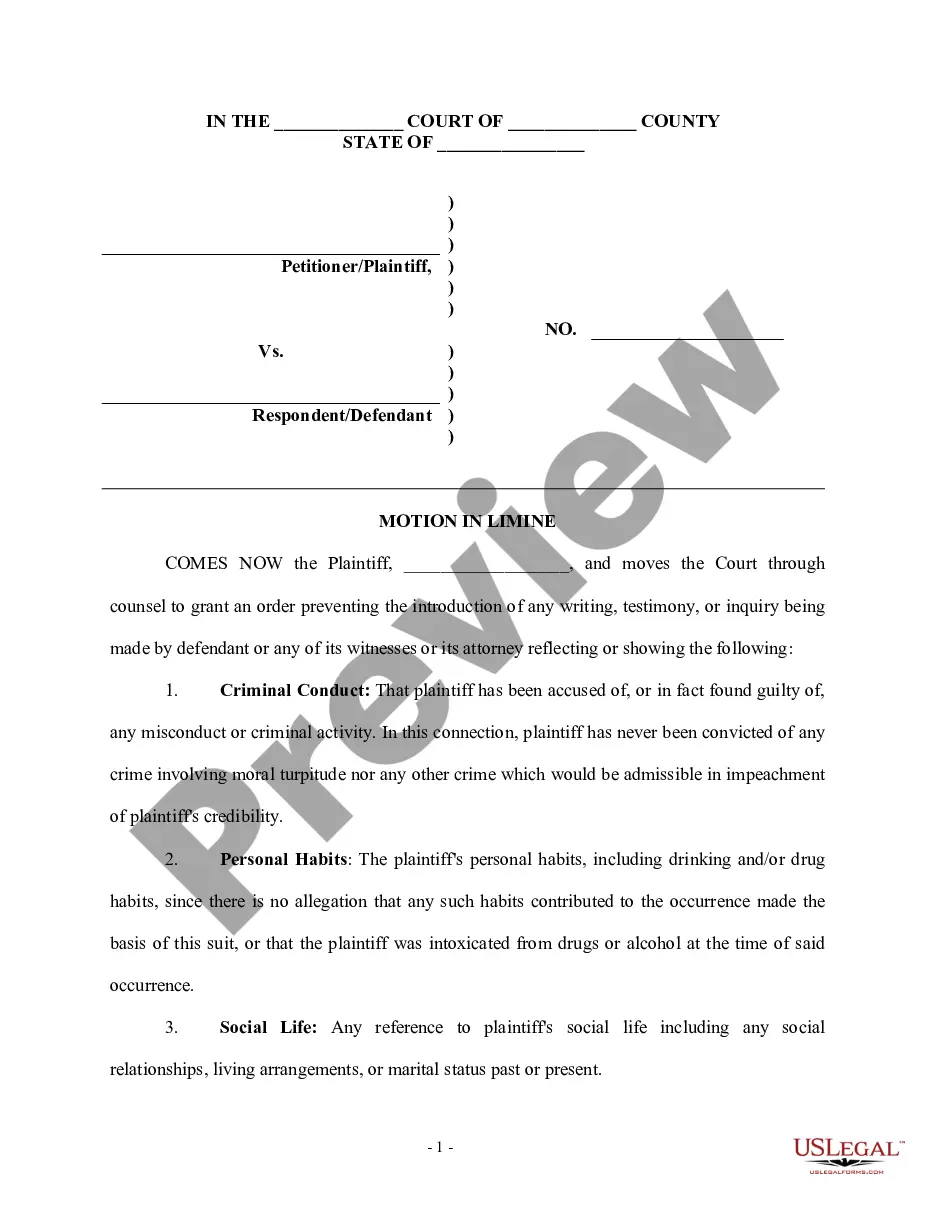
Get your form ready online
Our built-in tools help you complete, sign, share, and store your documents in one place.
Make edits, fill in missing information, and update formatting in US Legal Forms—just like you would in MS Word.
Download a copy, print it, send it by email, or mail it via USPS—whatever works best for your next step.
Sign and collect signatures with our SignNow integration. Send to multiple recipients, set reminders, and more. Go Premium to unlock E-Sign.
If this form requires notarization, complete it online through a secure video call—no need to meet a notary in person or wait for an appointment.
We protect your documents and personal data by following strict security and privacy standards.

Make edits, fill in missing information, and update formatting in US Legal Forms—just like you would in MS Word.

Download a copy, print it, send it by email, or mail it via USPS—whatever works best for your next step.

Sign and collect signatures with our SignNow integration. Send to multiple recipients, set reminders, and more. Go Premium to unlock E-Sign.

If this form requires notarization, complete it online through a secure video call—no need to meet a notary in person or wait for an appointment.

We protect your documents and personal data by following strict security and privacy standards.
Looking for another form?


How to fill out Motion In Limine?
Locating the appropriate legal template can be challenging. Clearly, there are numerous templates accessible online, but how do you find the legal document you require? Utilize the US Legal Forms website. The platform offers a vast array of templates, including the Massachusetts Motion in Limine, suitable for both business and personal purposes. All documents are reviewed by professionals and comply with federal and state regulations.
If you are already a member, Log In to your account and click on the Download button to obtain the Massachusetts Motion in Limine. Use your account to browse through the legal documents you have previously purchased. Navigate to the My documents section of your account and download an additional copy of the document you need.
If you are a new user of US Legal Forms, here are simple steps you should follow: First, ensure you have selected the correct document for your city/state. You can preview the form using the Preview button and read the form description to confirm it meets your needs. If the document does not satisfy your requirements, utilize the Search field to find the correct form. Once you are sure the document is appropriate, click on the Purchase now button to obtain the form. Choose the pricing plan you prefer and enter the necessary information. Create your account and complete your purchase using your PayPal account or credit card. Select the file format and download the legal template to your device. Complete, edit, print, and sign the acquired Massachusetts Motion in Limine.
Make the most of US Legal Forms to fulfill your legal documentation needs efficiently.
- US Legal Forms is the largest repository of legal documents where you can find various file templates.
- Utilize the service to download properly crafted paperwork that adheres to state requirements.
- Access a comprehensive selection of templates for different legal needs.
- Conveniently manage your documents through your user account.
- Ensure compliance with legal standards through expert-reviewed forms.
- Enjoy a user-friendly interface for easy navigation and document retrieval.
Form popularity
FAQ
Examples of motions in limine would be that the attorney for the defendant may ask the judge to refuse to admit into evidence any personal information, or medical, criminal or financial records, using the legal grounds that these records are irrelevant, immaterial, unreliable, or unduly prejudicial, and/or that their ...
Examples of motions in limine would be that the attorney for the defendant may ask the judge to refuse to admit into evidence any personal information, or medical, criminal or financial records, using the legal grounds that these records are irrelevant, immaterial, unreliable, or unduly prejudicial, and/or that their ...
All civil motions shall be governed, where applicable, by Superior Court Rules 9A through 9E. Any criminal motion must be in writing and filed before being placed upon a list for hearing, unless otherwise ordered by the court, or otherwise provided for under Superior Court Rule 61.
Most motions in limine are filed by a party to limit or prevent certain evidence from being presented by opposing counsel at the time of trial. The purpose of a motion in limine is to prevent the introduction of matters at trial which are irrelevant, inadmissible or prejudicial.
Your motion in limine should be broken into two sections: (1) Factual Background and (2) Argument. The ?Factual Background? section of your Memorandum should include all of the facts necessary for the judge to resolve every issue raised in your motion. appropriate, include procedural posture, as well.
The most common use of the in limine motion is to exclude irrelevant and/or prejudicial evidence.
The purpose of a motion in limine is to prevent the introduction of matters at trial which are irrelevant, inadmissible or prejudicial. Some key statutes to rely on in excluding those types of evidence from being introduced at trial are Evidence Code sections 350 and 352.
Importantly, motions in limine are generally made before a trial begins, and always argued outside the presence of the jury. Thus, a motion in limine allows key evidentiary questions to be decided without the jury present and, if the motion is granted, will preclude the jury from ever learning of the disputed evidence.