Massachusetts Roommate Agreement for Homeowner
Description
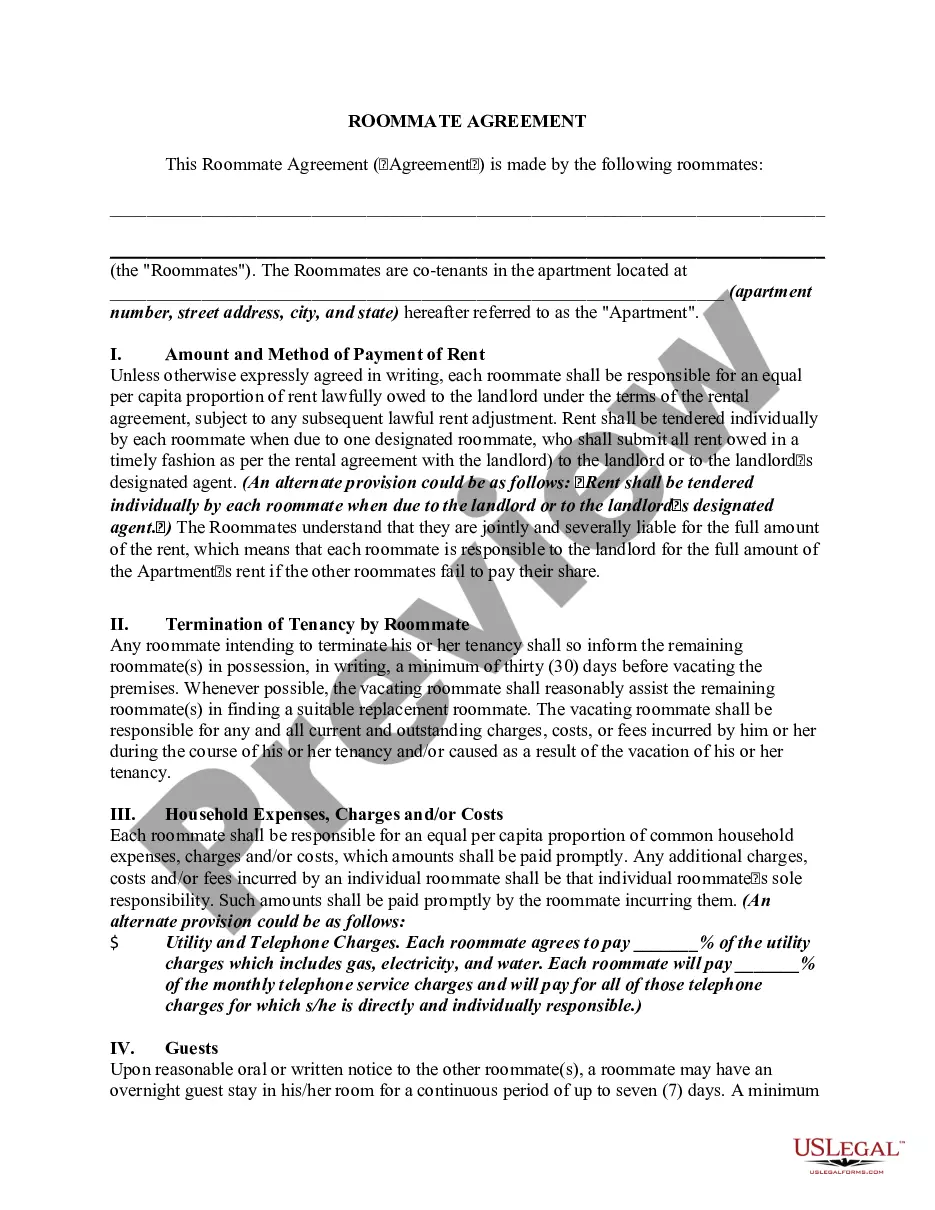
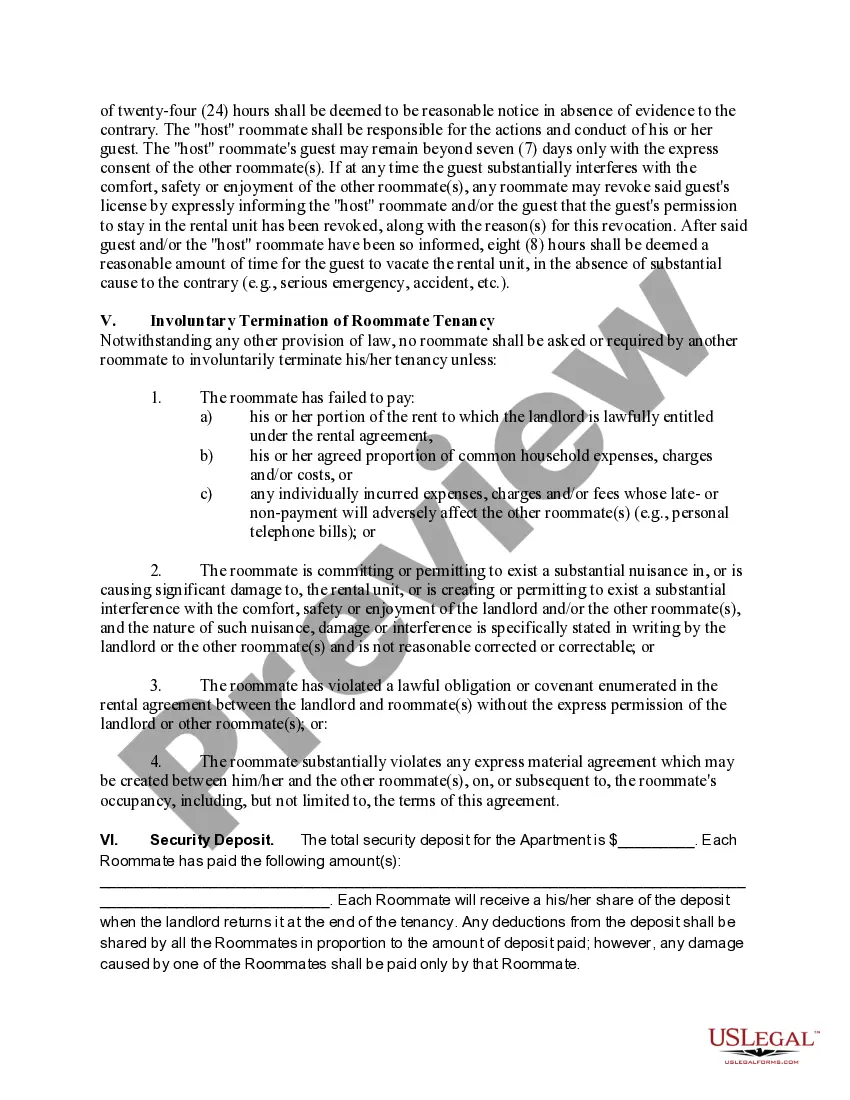
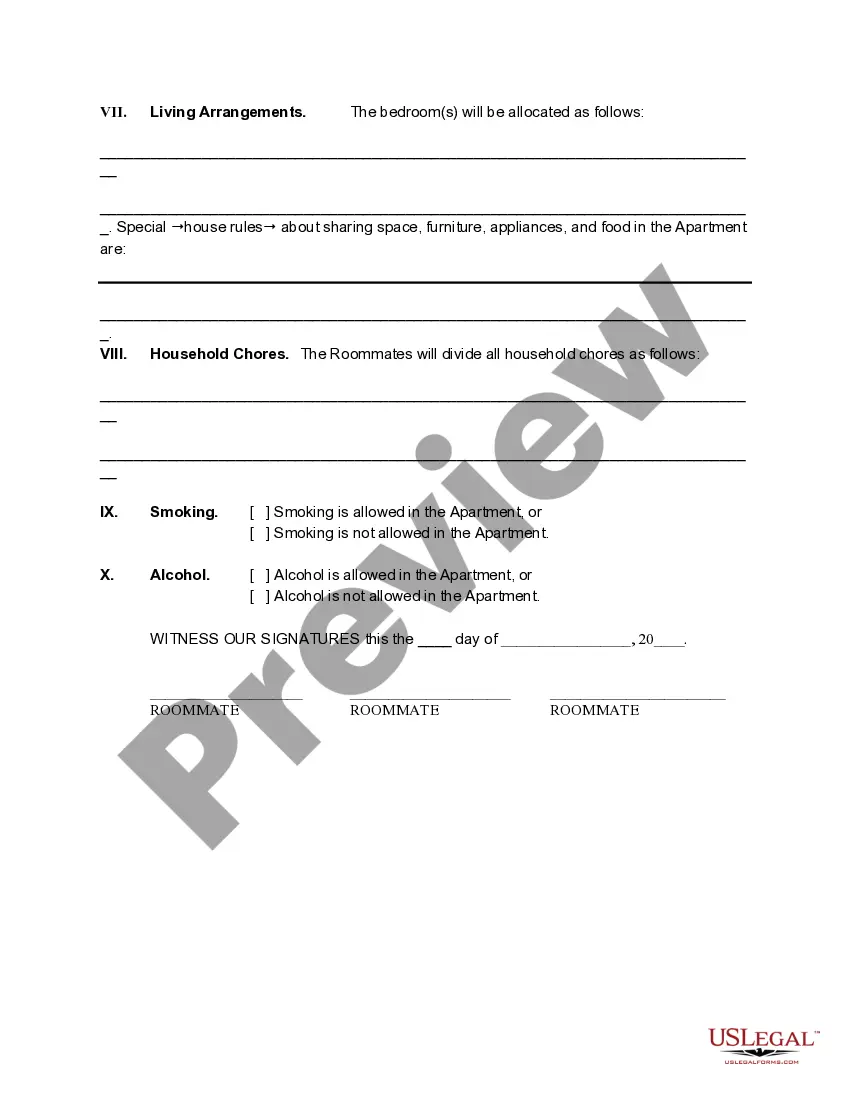

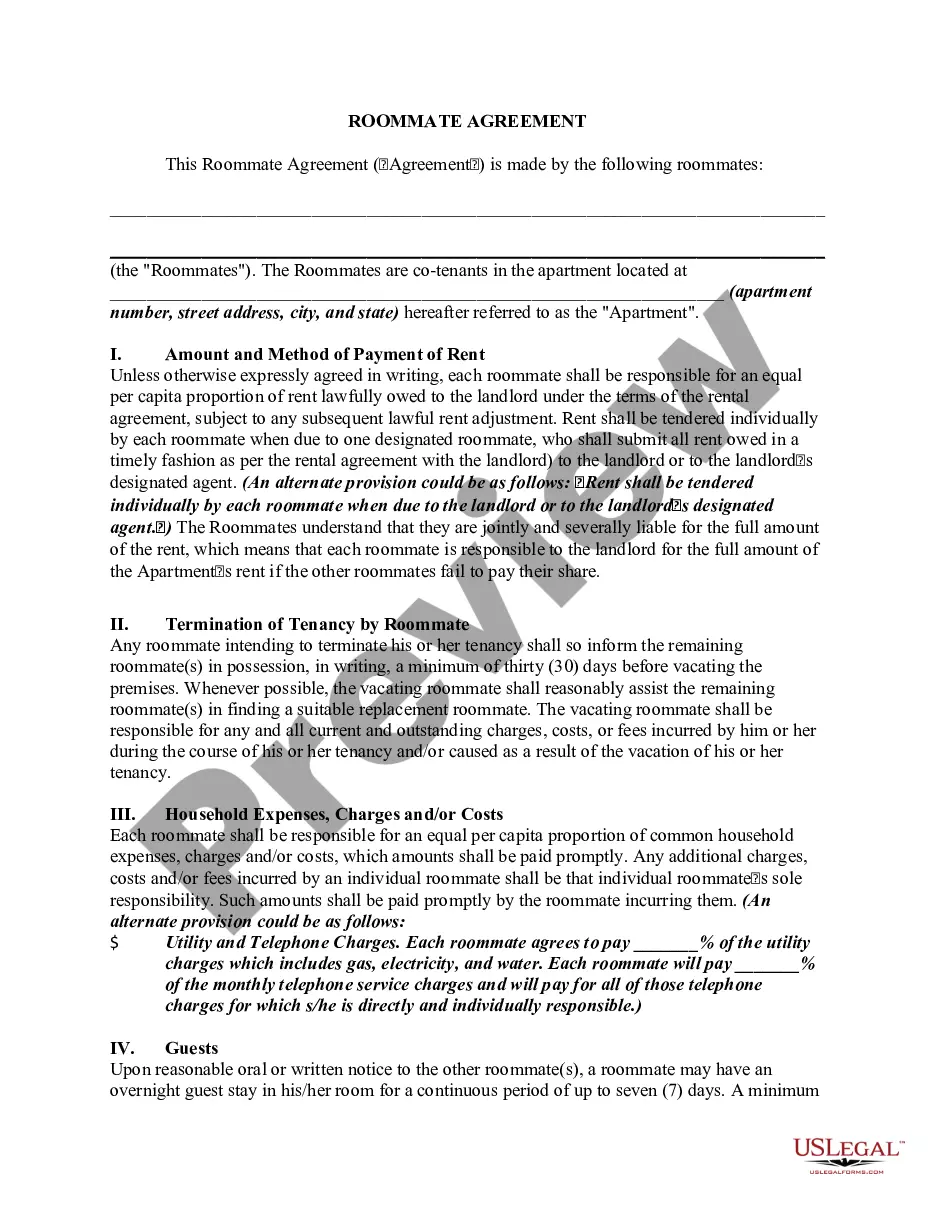
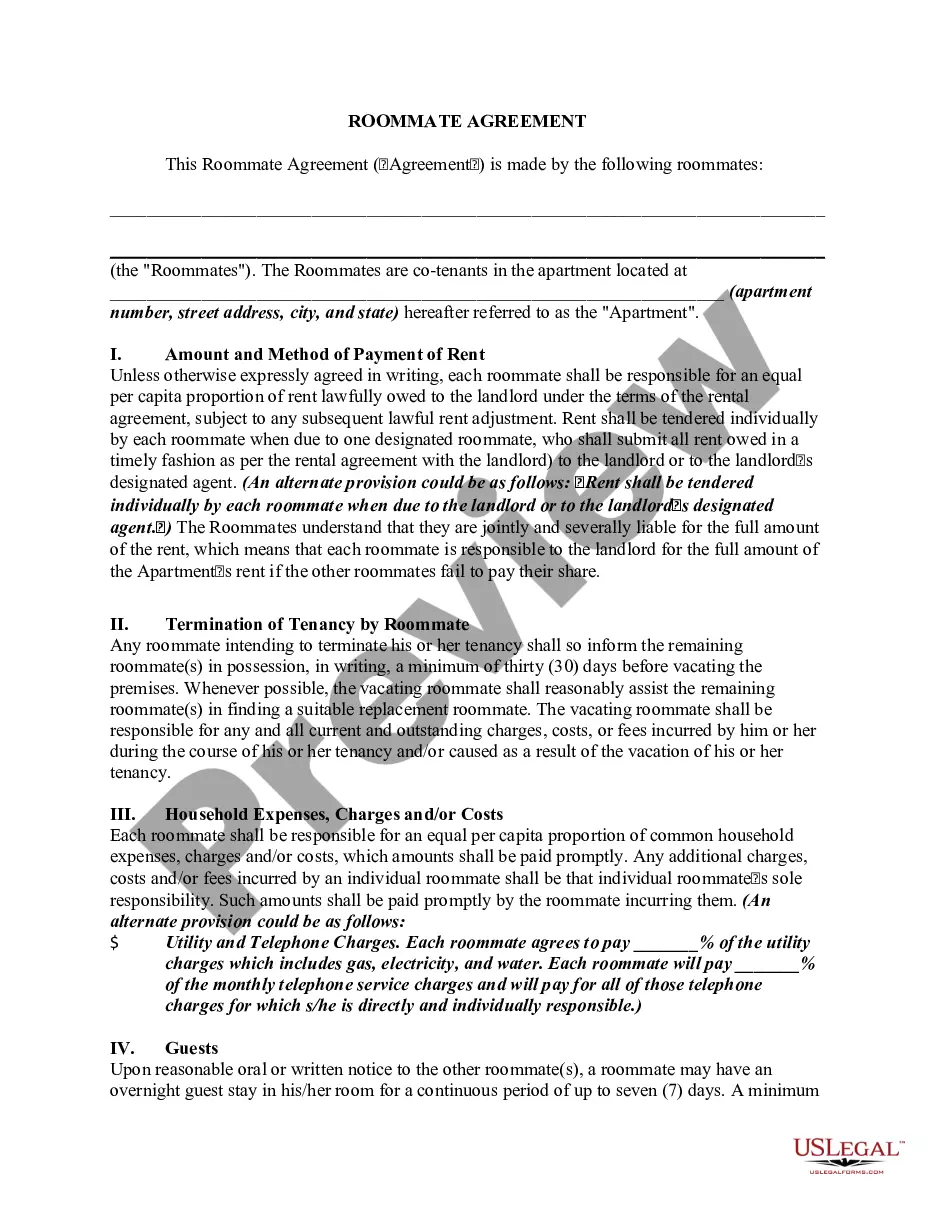
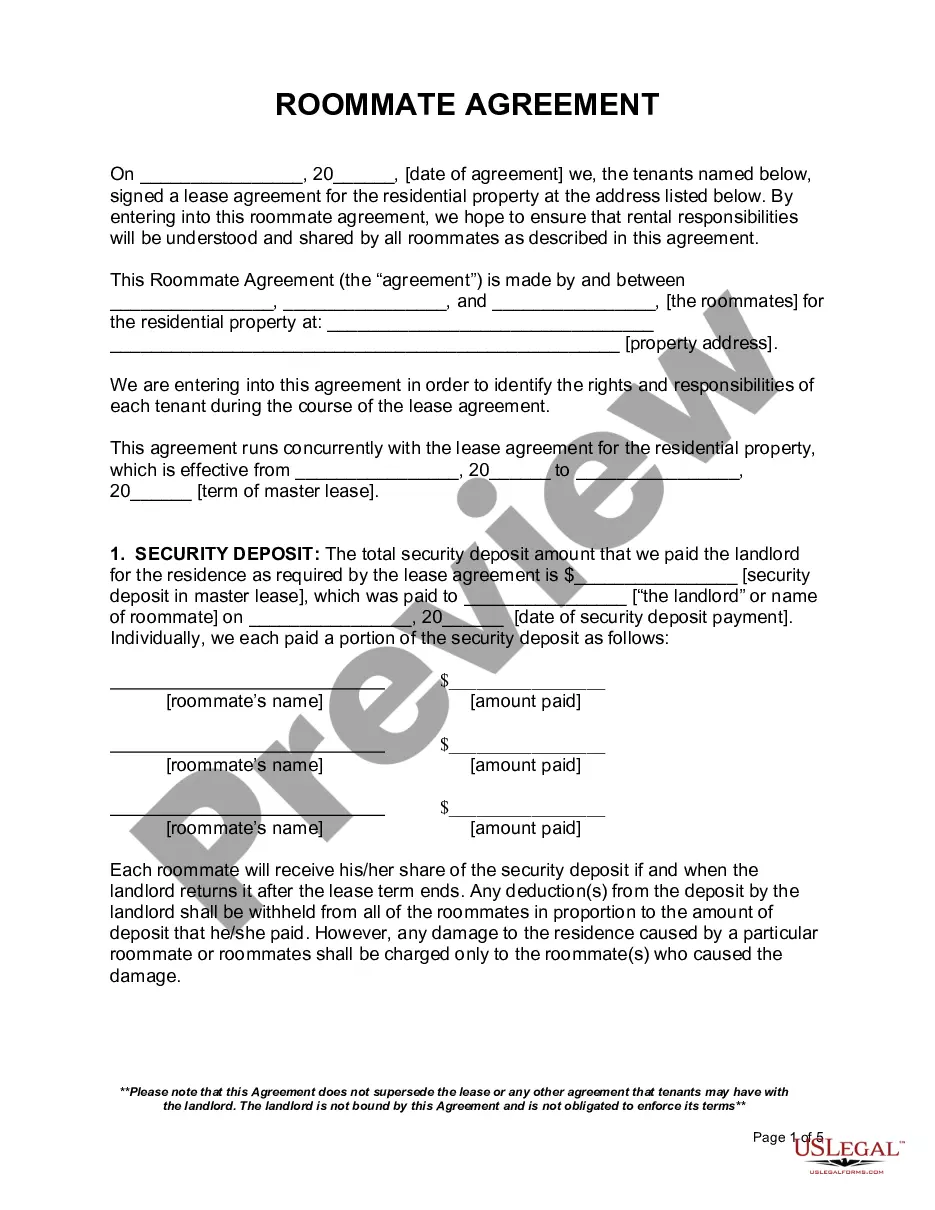
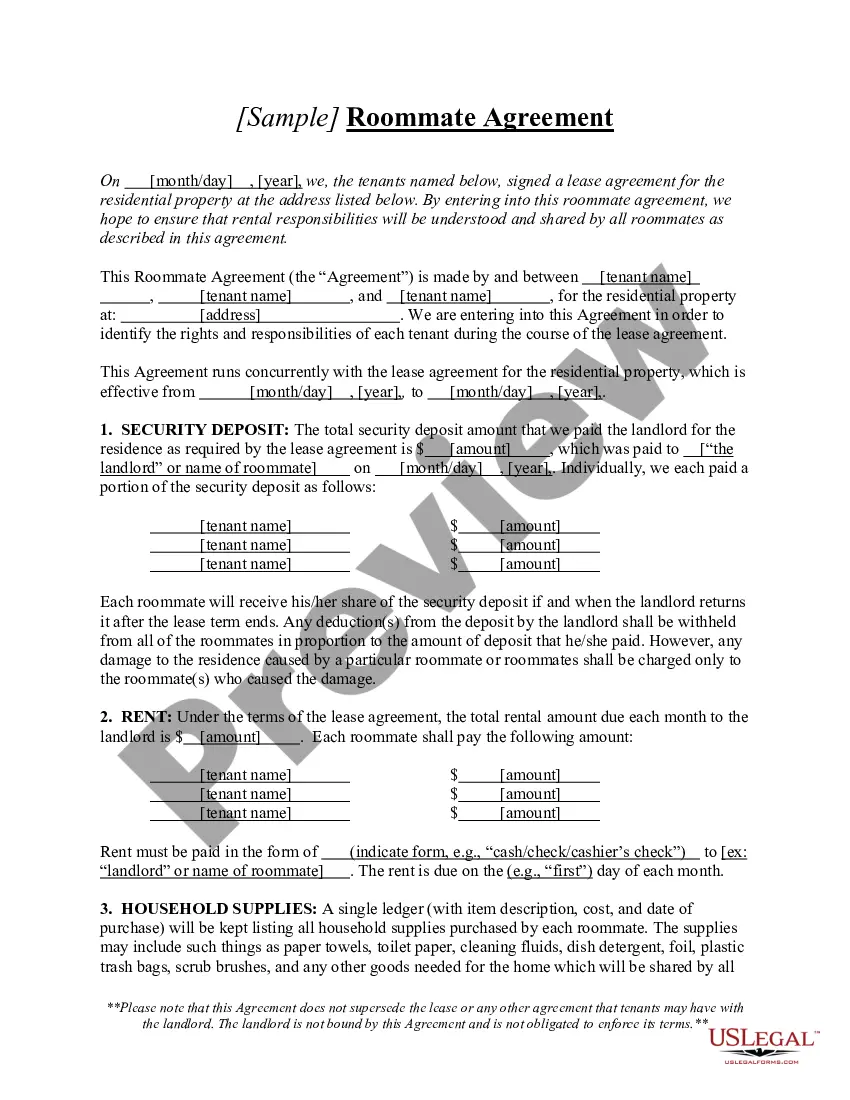
How to fill out Roommate Agreement For Homeowner?
You might spend several hours online looking for the legal documents template that meets the state and federal requirements you need.
US Legal Forms offers thousands of legal forms that are reviewed by professionals.
You can download or print the Massachusetts Roommate Contract for Homeowner from your service.
If available, use the Preview button to browse through the document template as well. If you wish to find another version of the form, utilize the Search section to discover the template that fits your needs and requirements. Once you have found the template you want, click on Get now to proceed. Choose the pricing plan you prefer, enter your credentials, and register for an account on US Legal Forms. Complete the transaction. You can use your Visa, Mastercard, or PayPal account to pay for the legal document. Select the format of the document and download it onto your device. Make modifications to your document if necessary. You can complete, edit, and sign and print the Massachusetts Roommate Contract for Homeowner. Download and print thousands of document templates using the US Legal Forms site, which offers the largest selection of legal forms. Use professional and state-specific templates to address your business or personal needs.
- If you already have a US Legal Forms account, you can Log In and click on the Download button.
- After that, you can complete, modify, print, or sign the Massachusetts Roommate Contract for Homeowner.
- Every legal document template you purchase is yours indefinitely.
- To obtain another copy of any purchased document, go to the My documents tab and click on the corresponding button.
- If you are using the US Legal Forms website for the first time, follow the simple instructions below.
- First, ensure you have selected the correct document template for the area/town you desire.
- Check the document description to confirm you have chosen the right form.
Form popularity
FAQ
Getting out of a roommate agreement often requires mutual consent, especially if signed. Review your agreement for any specific terms related to termination. If necessary, consider negotiating with your roommate or seeking legal advice. Using a Massachusetts Roommate Agreement for Homeowner can provide clarity on exit procedures and help you navigate this situation.
In general, a residential lease agreement in Massachusetts does not require notarization to be valid. However, a Massachusetts Roommate Agreement for Homeowner and other important documents can benefit from notarization for added security. This process provides proof of authenticity and protects all parties involved. If you're unsure, consider consulting a legal expert for guidance.
To write a roommate rental agreement, start by clearly defining the terms, including rent, utilities, and house rules. Utilize a template for a Massachusetts Roommate Agreement for Homeowner to ensure you include all necessary legal elements. Be sure to outline each party's responsibilities and any consequences for not adhering to the agreement. Once drafted, have both parties review and sign to confirm understanding and commitment.
In Massachusetts, a roommate agreement does not typically need to be notarized. However, having a notarized agreement, like a Massachusetts Roommate Agreement for Homeowner, can add an extra layer of formality and security. It can help prevent disputes and clarify the terms of your arrangement. Notarization is especially helpful if you anticipate any disagreements in the future.
Yes, you can evict a roommate in Massachusetts, but the process must follow specific legal procedures. If there is no formal lease, the Massachusetts Roommate Agreement for Homeowner becomes important as it outlines the terms of living together and the grounds for eviction. Ensuring compliance with state laws will facilitate a smoother process.
In Massachusetts, someone can generally live with you for up to 30 days without being on the lease; however, this duration may vary depending on local laws. It is advisable to have a Massachusetts Roommate Agreement for Homeowner in place to outline their rights during this time. This agreement can help prevent misunderstandings as living situations change.
Format your Massachusetts Roommate Agreement for Homeowner by starting with a title, followed by the date and the names of all parties involved. Use clear headings for each section, such as 'Rent', 'Deposit', and 'Responsibilities'. A well-organized agreement will enhance clarity and provide an easy reference point for all roommates.
In Massachusetts, rooming houses must comply with specific regulations that include zoning laws, safety standards, and licensing requirements. The Massachusetts Roommate Agreement for Homeowner can help clarify the expectations and rules for living in shared housing situations. Being aware of these regulations can ensure a safe and compliant living arrangement.
Yes, someone can live with you without being on the lease in Massachusetts, but it is crucial to have a Massachusetts Roommate Agreement for Homeowner to outline their rights and responsibilities. Without this agreement, the person living with you may face eviction risks if disputes arise. Careful consideration and communication can prevent potential issues.
To make your Massachusetts Roommate Agreement for Homeowner legally binding, ensure that all roommates sign the document, and include necessary details such as the rental property address and the date. Additionally, consider having the agreement notarized to reinforce its legal standing. This step helps protect everyone's rights and obligations under the agreement.