Massachusetts Letter from Tenant to Landlord responding to Notice to Terminate for Noncompliance - Noncompliant condition caused by Landlord's own deliberate or negligent act
Overview of this form
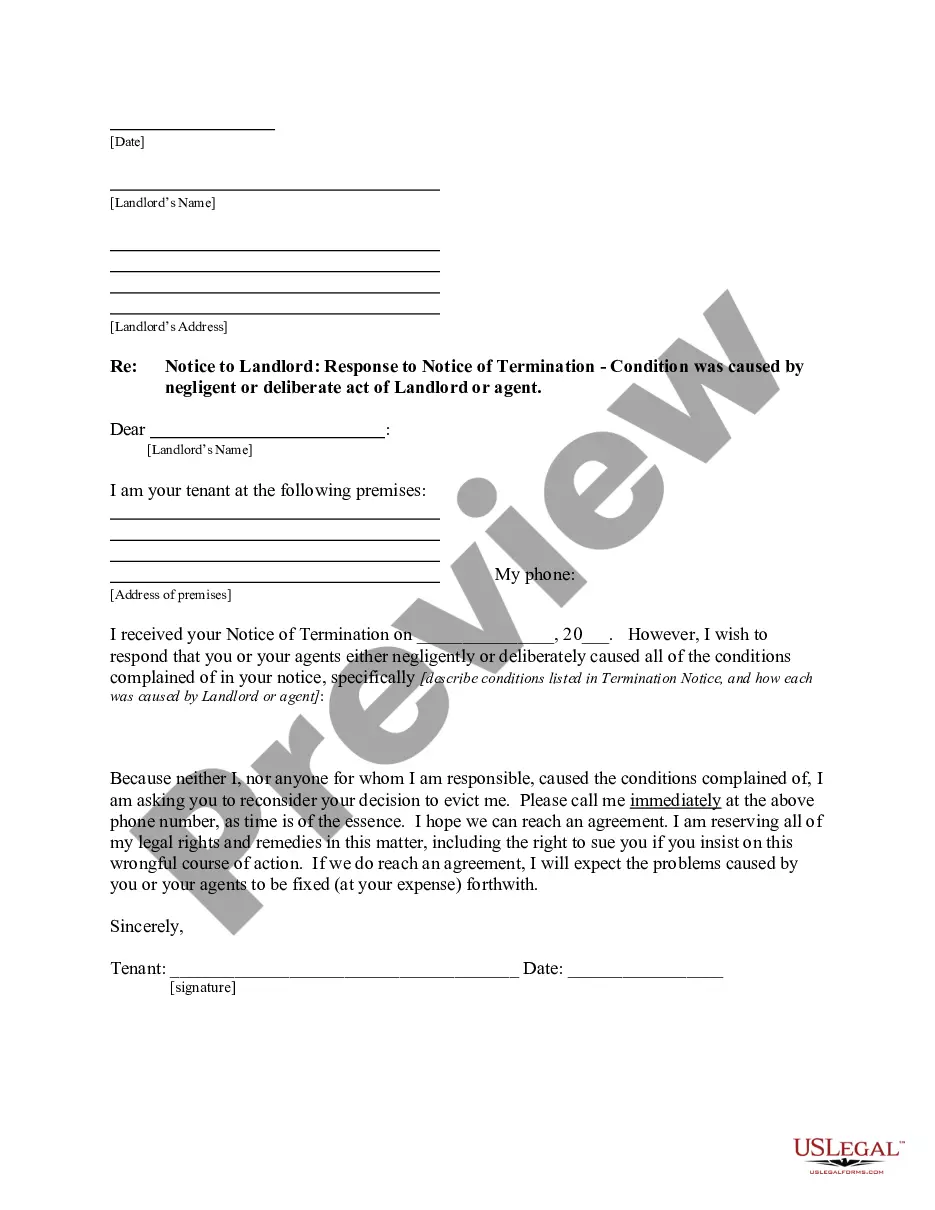
This form is a Letter from Tenant to Landlord responding to a Notice to Terminate for Noncompliance. It allows tenants to formally contest an eviction notice by asserting that the noncompliant condition leading to the eviction was caused by the landlord's own actions. This letter requests the landlord to halt the eviction process and make necessary repairs, while reserving the tenant's legal rights for possible future action.
What’s included in this form
- Tenant's contact information.
- Reference to the landlord's eviction notice.
- Assertion of the landlord's responsibility for the noncompliant condition.
- Request for immediate repairs and cessation of the eviction process.
- Statement reserving the tenant's legal rights.
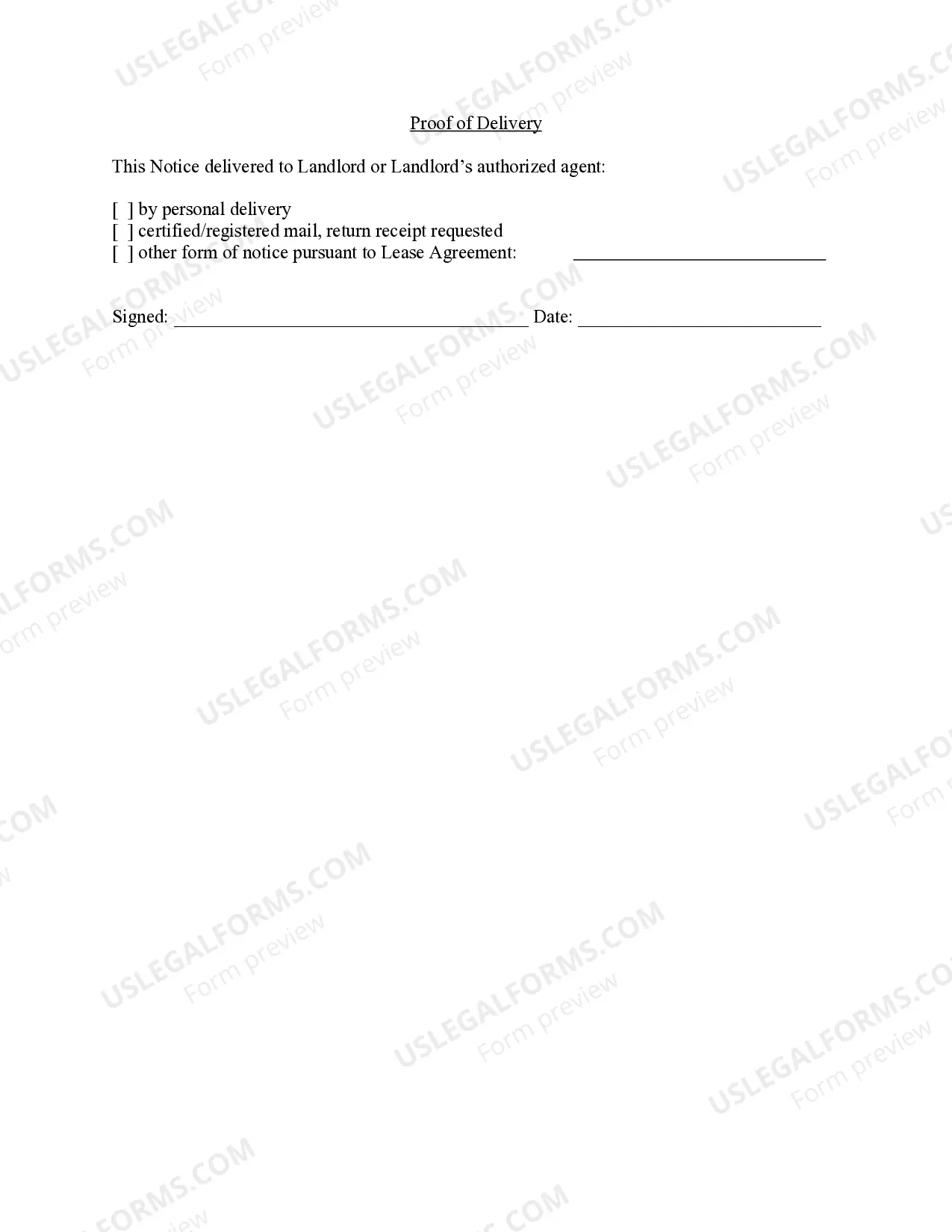
- Proof of delivery options to the landlord or their agent.



When to use this form
This form should be used by tenants who have received a notice of eviction from their landlord citing noncompliance with rental conditions. It is particularly relevant when the tenant believes that the issues leading to the eviction are a result of the landlord's negligence or deliberate action. Using this form helps to document the tenant's position and assert their rights to contest the eviction while seeking repairs.
Who should use this form
This letter is intended for:
- Tenants currently facing eviction due to alleged noncompliance.
- Individuals who believe the eviction notice is unjust and wish to formally respond.
- Tenants seeking to document the landlord's responsibilities for repair issues.
- Those who wish to preserve their legal rights while resolving the dispute.
Steps to complete this form
- Enter the tenant's contact information at the top of the letter.
- Clearly reference the eviction notice received from the landlord.
- State the reasons why the tenant believes the eviction is unwarranted, focusing on the landlord's actions or negligence.
- Request that the landlord cease eviction proceedings and make necessary repairs to the property.
- Sign and date the letter to confirm its validity.
- Select a method for delivering the letter to the landlord or their authorized agent, and include proof of delivery.
Notarization requirements for this form
In most cases, this form does not require notarization. However, some jurisdictions or signing circumstances might. US Legal Forms offers online notarization powered by Notarize, accessible 24/7 for a quick, remote process.
Get your form ready online
Our built-in tools help you complete, sign, share, and store your documents in one place.
Make edits, fill in missing information, and update formatting in US Legal Forms—just like you would in MS Word.
Download a copy, print it, send it by email, or mail it via USPS—whatever works best for your next step.
Sign and collect signatures with our SignNow integration. Send to multiple recipients, set reminders, and more. Go Premium to unlock E-Sign.
If this form requires notarization, complete it online through a secure video call—no need to meet a notary in person or wait for an appointment.
We protect your documents and personal data by following strict security and privacy standards.

Make edits, fill in missing information, and update formatting in US Legal Forms—just like you would in MS Word.

Download a copy, print it, send it by email, or mail it via USPS—whatever works best for your next step.

Sign and collect signatures with our SignNow integration. Send to multiple recipients, set reminders, and more. Go Premium to unlock E-Sign.

If this form requires notarization, complete it online through a secure video call—no need to meet a notary in person or wait for an appointment.

We protect your documents and personal data by following strict security and privacy standards.
Mistakes to watch out for
- Failing to clearly reference the eviction notice, which can create confusion.
- Neglecting to keep a copy of the letter for personal records.
- Not signing the letter, which can make it legally ineffective.
- Using an unclear or vague language that does not specify the requested actions.
Why complete this form online
- Convenience: Easily downloadable and usable at any time.
- Editability: Customize the letter to fit your specific situation and legal needs.
- Reliability: Drafted by licensed attorneys to ensure compliance with state laws.
Legal use & context
- This letter serves as a formal response to an eviction notice and is useful in court if disputes escalate.
- It strengthens the tenant's position by documenting their claims regarding the landlord's actions.
- Effective communication via this letter can sometimes prevent eviction proceedings altogether.
Quick recap
- The letter is essential for tenants facing eviction due to alleged noncompliance.
- It allows tenants to formally contest the eviction and assert their rights.
- Using this form helps to outline the responsibilities of the landlord clearly.
Looking for another form?

Form popularity
FAQ
Pay any delinquent rent that is due to the landlord within the allotted time of the notice. Move out of the premises within the allotted time of the notice. File an answer with the judicial court. File a motion to stay with the court.
A termination notice has to give the tenant 14 clear days before the tenant has to leave the residential premises. The day the notice is served on the tenant and the day the tenant moves out do not count as part of the 14 days.
Your landlord or their representatives may be allowed reasonable access to carry out inspections or repairs, but must first get your permission. According to Section 11, from The Landlord and Tenant Act 1985, your landlord needs to give you at least 24 hour notice before they come around and visit for any reason.
A landlord may enter the residential premises with the tenant's consent. If the landlord obtains the consent of the tenant, a notice of entry is not required.Landlords can phone or meet with tenants to obtain consent to enter the residential premises. Consent can be given verbally or in writing.
The law requires tenants at will to give landlords written notice that they are moving out at least one full rental period or 30 days (whichever is longer) before moving.
There is no notice of entry law in Massachusetts. The landlord does not need to provide any notice if they wish to enter the premises for the following reasons: Non-emergency maintenance and repairs.
Massachusetts law allows the landlord to enter your premises at reasonable times and under reasonable notice under the following conditions: To show the apartment to prospective tenants, purchasers, lenders or their agents;If the premises appear to be abandoned; or. Pursuant to a Court order.
If the tenant refuses, you are permitted to send them a notice to agree or quit the property. The tenant refusing you access constitutes a breach in the lease agreement, so they could be evicted if they continue to deny access.
You can immediately file an eviction if the tenant refuses to leave the property. However, this is likely only the case if you did not accept any additional payments. If you took a rental payment from the tenant after their lease expired, you'll need to provide all the normal notices.