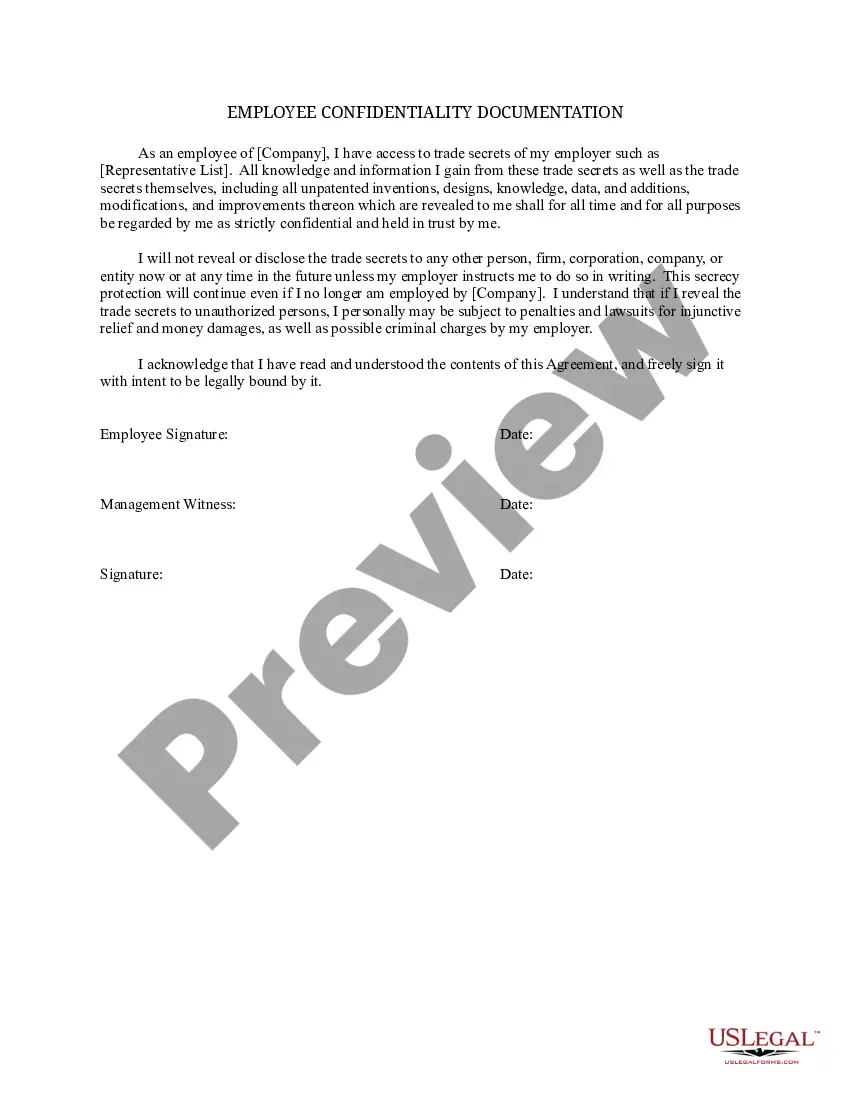
Louisiana Employee Confidentiality Documentation
Description
Get your form ready online
Our built-in tools help you complete, sign, share, and store your documents in one place.
Make edits, fill in missing information, and update formatting in US Legal Forms—just like you would in MS Word.
Download a copy, print it, send it by email, or mail it via USPS—whatever works best for your next step.
Sign and collect signatures with our SignNow integration. Send to multiple recipients, set reminders, and more. Go Premium to unlock E-Sign.
If this form requires notarization, complete it online through a secure video call—no need to meet a notary in person or wait for an appointment.
We protect your documents and personal data by following strict security and privacy standards.

Make edits, fill in missing information, and update formatting in US Legal Forms—just like you would in MS Word.

Download a copy, print it, send it by email, or mail it via USPS—whatever works best for your next step.

Sign and collect signatures with our SignNow integration. Send to multiple recipients, set reminders, and more. Go Premium to unlock E-Sign.

If this form requires notarization, complete it online through a secure video call—no need to meet a notary in person or wait for an appointment.

We protect your documents and personal data by following strict security and privacy standards.
Looking for another form?


How to fill out Employee Confidentiality Documentation?
Are you presently in a circumstance where you require documents for various business or personal purposes almost every day.
There is a multitude of legal document templates accessible online, but finding reliable ones isn’t straightforward.
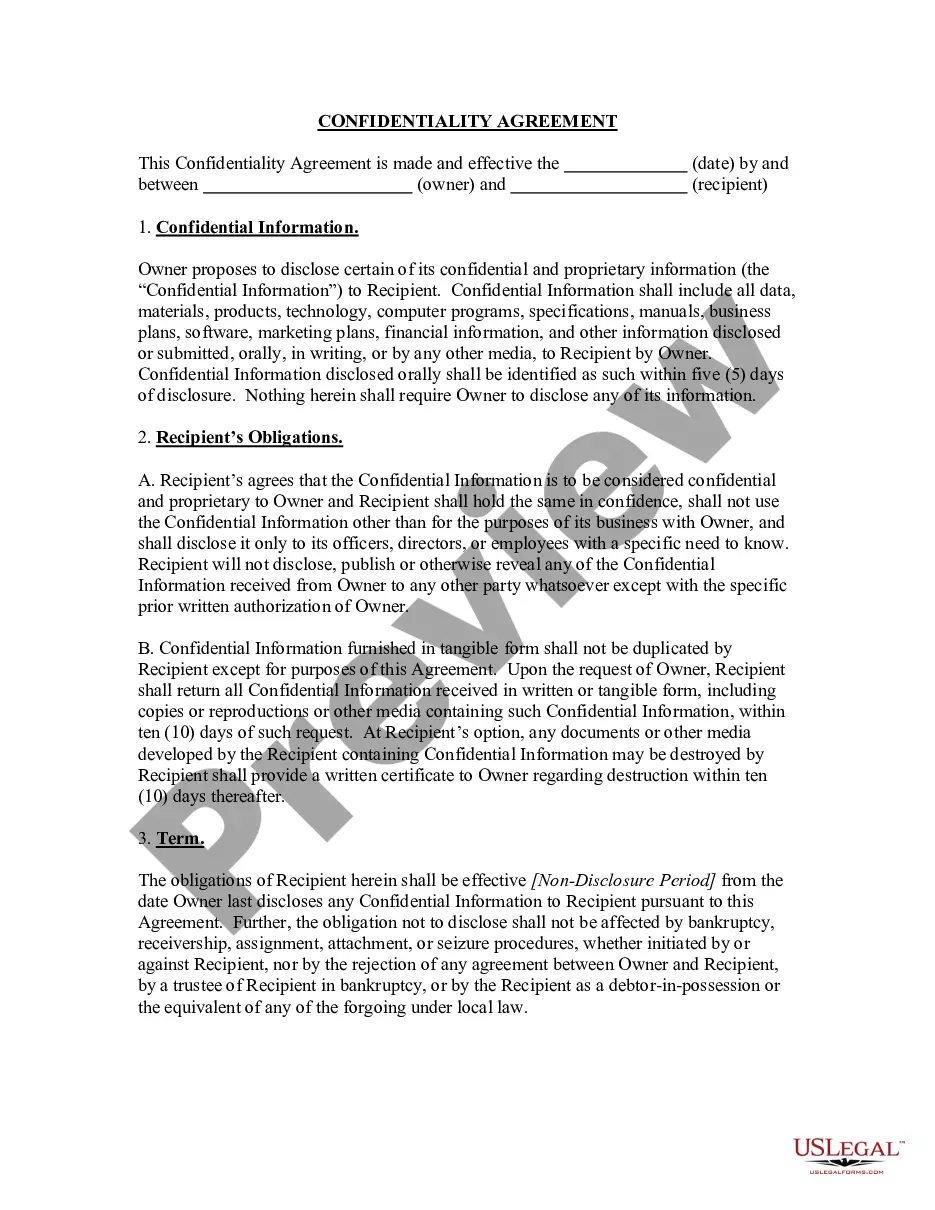
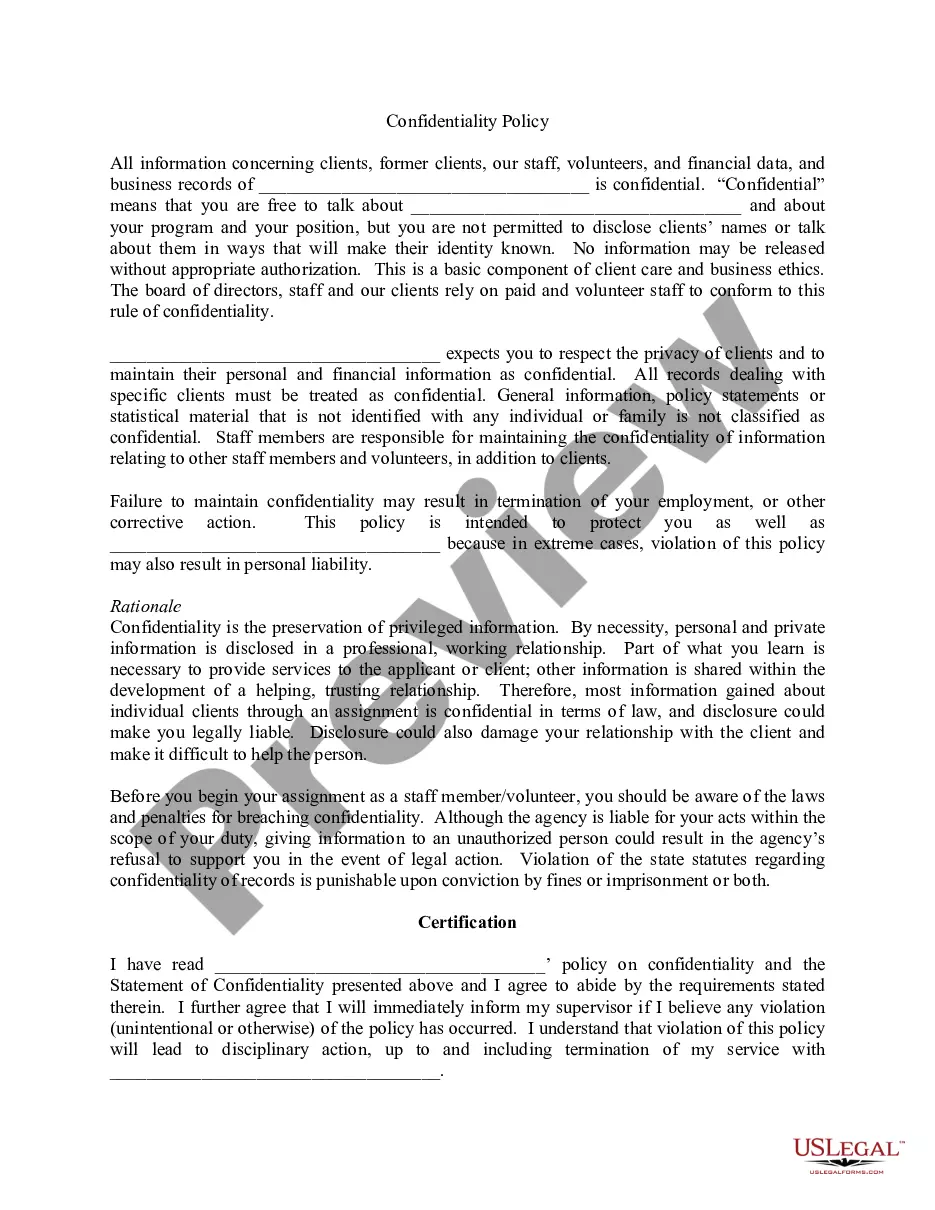
US Legal Forms offers an extensive array of document templates, including the Louisiana Employee Confidentiality Agreement, that are crafted to comply with state and federal regulations.
Once you find the right document, click Purchase now.
Select a convenient file format and download your version.
- If you are already familiar with the US Legal Forms website and have an account, simply Log In.
- Then, you can download the Louisiana Employee Confidentiality Agreement template.
- If you do not possess an account and wish to start using US Legal Forms, follow these steps.
- Obtain the document you need and ensure it corresponds to your specific city/state.
- Utilize the Review option to examine the form.
- Read the description to confirm that you have selected the correct document.
- If the document isn’t what you are looking for, use the Search field to find a document that suits your needs and requirements.
Form popularity
FAQ
This data, which can pertain to age, sex, religion, race or national origin, must remain confidential. Similarly, social security numbers, birth dates, home addresses and spousal information also must remain confidential within employee personnel files.
Confidential information is generally defined as information disclosed to an individual employee or known to that employee as a consequence of the employee's employment at a company. This information isn't generally known outside the company or is protected by law.
Employee Information: Many states have laws which govern the confidentiality and disposal of personal identifying information (e.g., an employee's Social Security number, home address or telephone number, e-mail address, Internet identification name or password, parent's surname prior to marriage or driver's license
This can include salaries, employee perks, client lists, trade secrets, sales numbers, customer information, news about pending terminations, reasons for a firing, phone codes or computer passwords. You may not divulge this information while you are working for an employer or after you leave.
Here is a list of five types of documents that must be confidential.Customer Lists. Your customers will not be very appreciative if you give away their sensitive information.Financial Accounts/Statements.Supplier List.Employee Contracts.Operation Manuals.
Confidential Employee Information Personal data: Social Security Number, date of birth, marital status, and mailing address. Job application data: resume, background checks, and interview notes. Employment information: employment contract, pay rate, bonuses, and benefits.
Personal employee information will be considered confidential and as such will be shared only as required and with those who have a need to have access to such information. All hard copy records will be maintained in locked, secure areas with access limited to those who have a need for such access.
Disclosure of Employees' Personal InformationEmployers are prohibited from disclosing the personal information of their employees without prior authorization. Failure to keep this information confidential may constitute a breach of confidentiality.