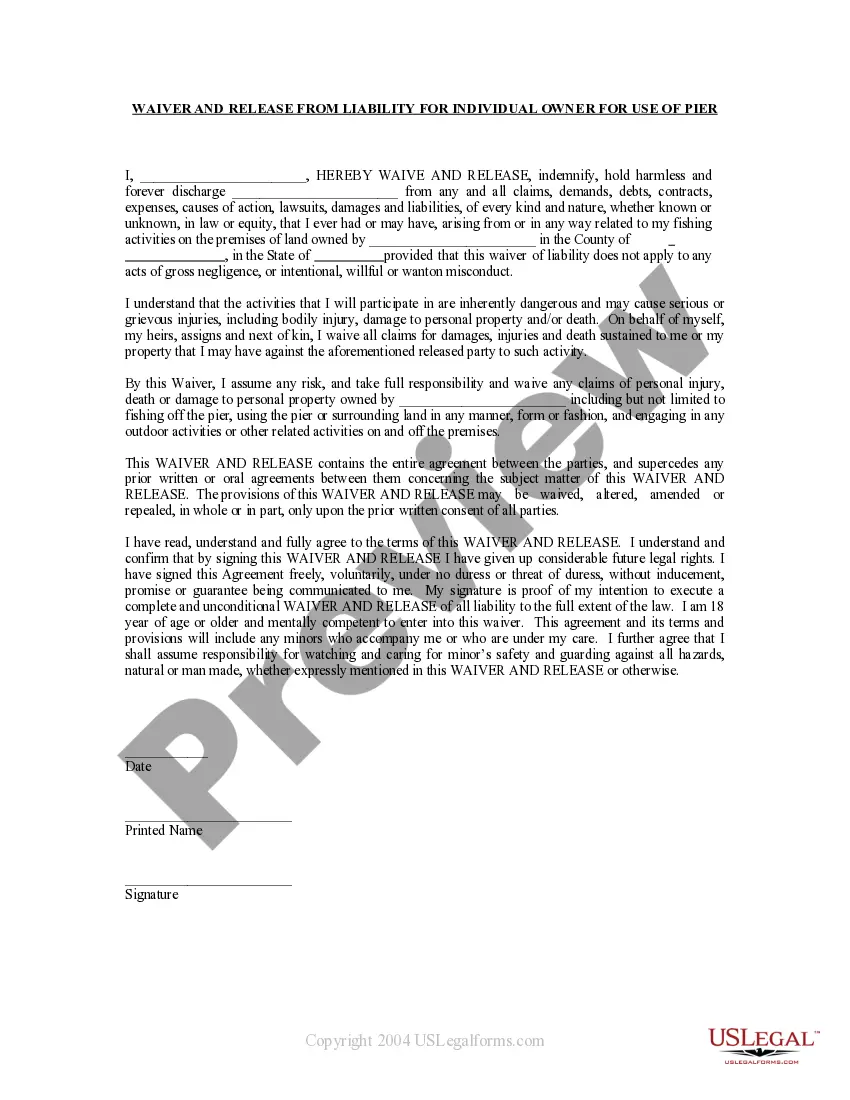
Louisiana Confidentiality Agreement for Intellectual Property
Description
Get your form ready online
Our built-in tools help you complete, sign, share, and store your documents in one place.
Make edits, fill in missing information, and update formatting in US Legal Forms—just like you would in MS Word.
Download a copy, print it, send it by email, or mail it via USPS—whatever works best for your next step.
Sign and collect signatures with our SignNow integration. Send to multiple recipients, set reminders, and more. Go Premium to unlock E-Sign.
If this form requires notarization, complete it online through a secure video call—no need to meet a notary in person or wait for an appointment.
We protect your documents and personal data by following strict security and privacy standards.

Make edits, fill in missing information, and update formatting in US Legal Forms—just like you would in MS Word.

Download a copy, print it, send it by email, or mail it via USPS—whatever works best for your next step.

Sign and collect signatures with our SignNow integration. Send to multiple recipients, set reminders, and more. Go Premium to unlock E-Sign.

If this form requires notarization, complete it online through a secure video call—no need to meet a notary in person or wait for an appointment.

We protect your documents and personal data by following strict security and privacy standards.
Looking for another form?




How to fill out Confidentiality Agreement For Intellectual Property?
Are you presently in a situation where you require documentation for either corporate or personal purposes almost every time.
There are many legitimate template forms accessible online, but locating ones you can trust isn't straightforward.
US Legal Forms offers thousands of template documents, such as the Louisiana Confidentiality Agreement for Intellectual Property, that are designed to fulfill both state and federal requirements.
If you locate the correct form, click Buy now.
Choose the pricing plan you desire, fill in the required information to create your account, and complete the purchase using your PayPal or Credit Card.
- If you are already acquainted with the US Legal Forms website and possess an account, simply Log In.
- After that, you can download the Louisiana Confidentiality Agreement for Intellectual Property template.
- If you do not have an account and wish to start utilizing US Legal Forms, follow these steps.
- Obtain the form you need and ensure it is for the correct city/region.
- Use the Review button to examine the form.
- Check the description to ensure you have selected the correct form.
- If the form isn’t what you are looking for, utilize the Search field to find the form that meets your needs.
Form popularity
FAQ
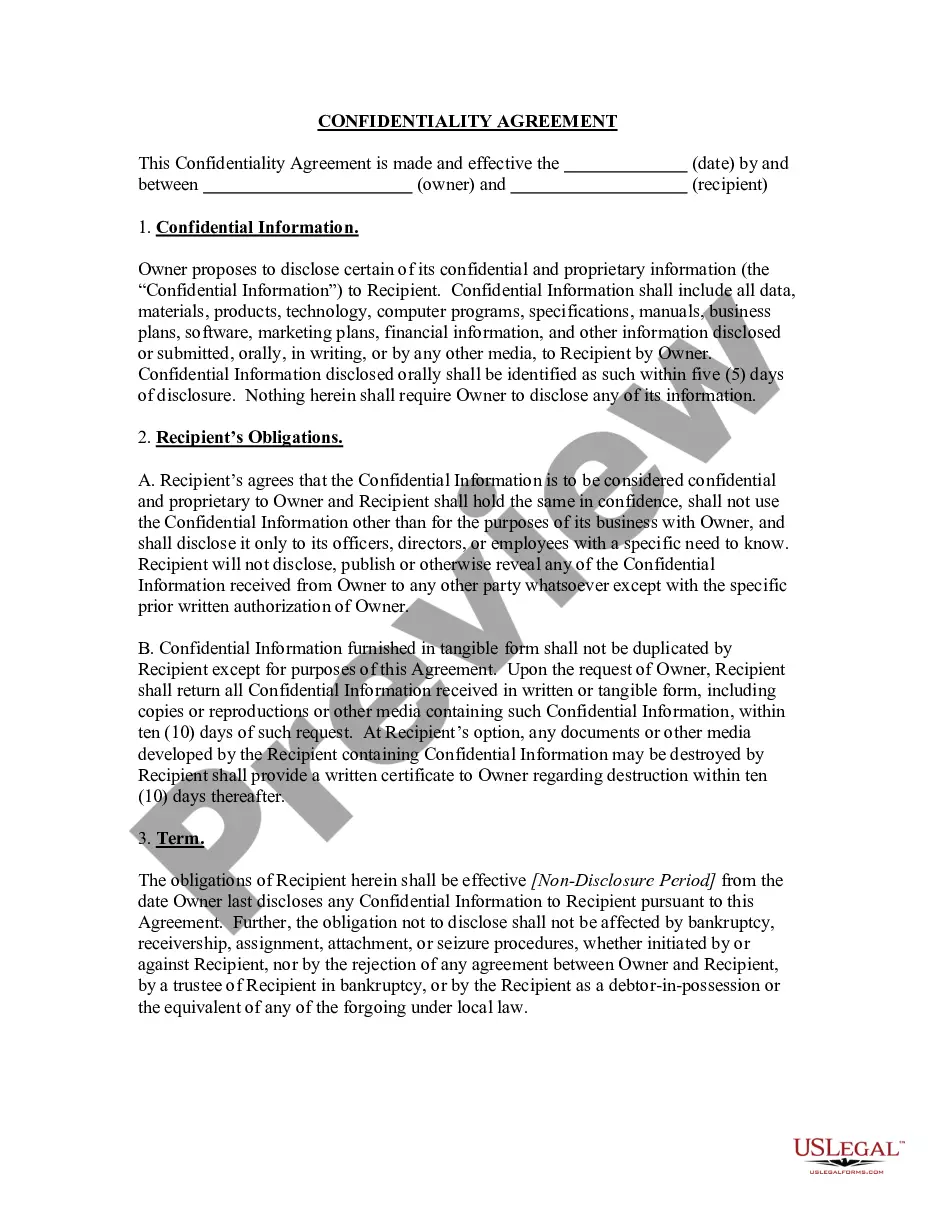
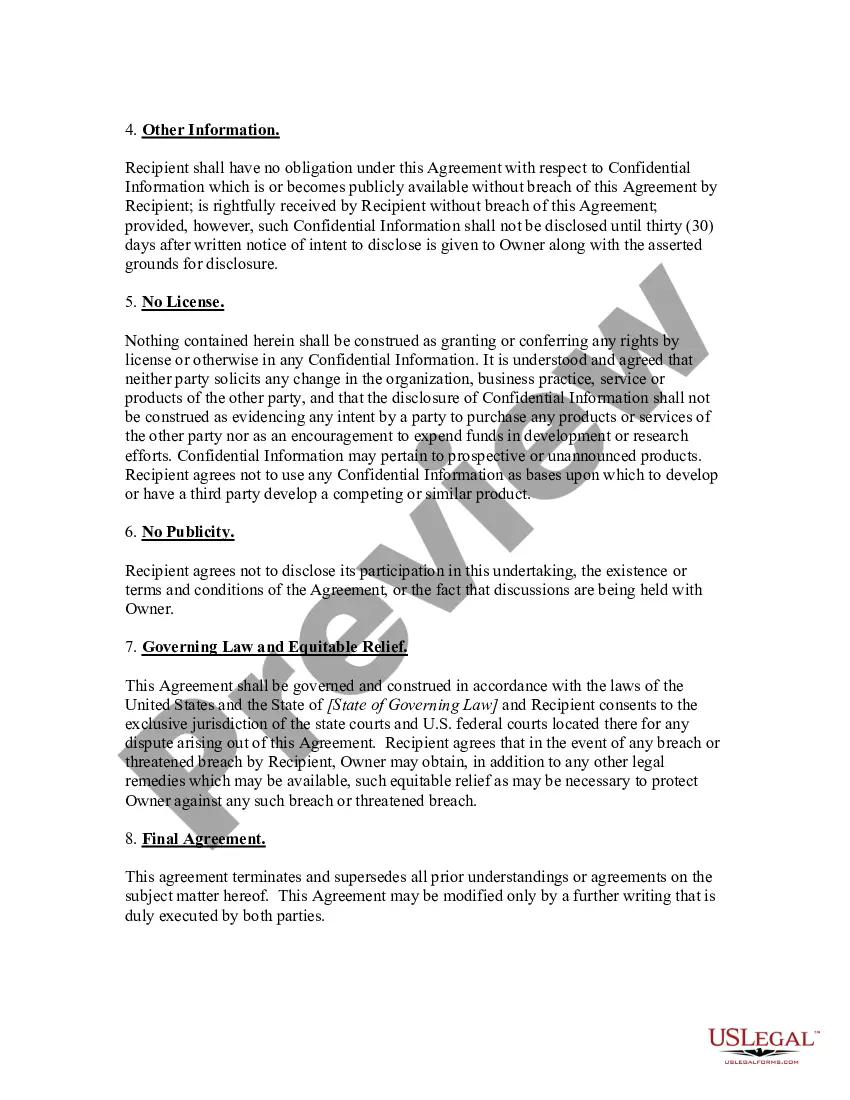
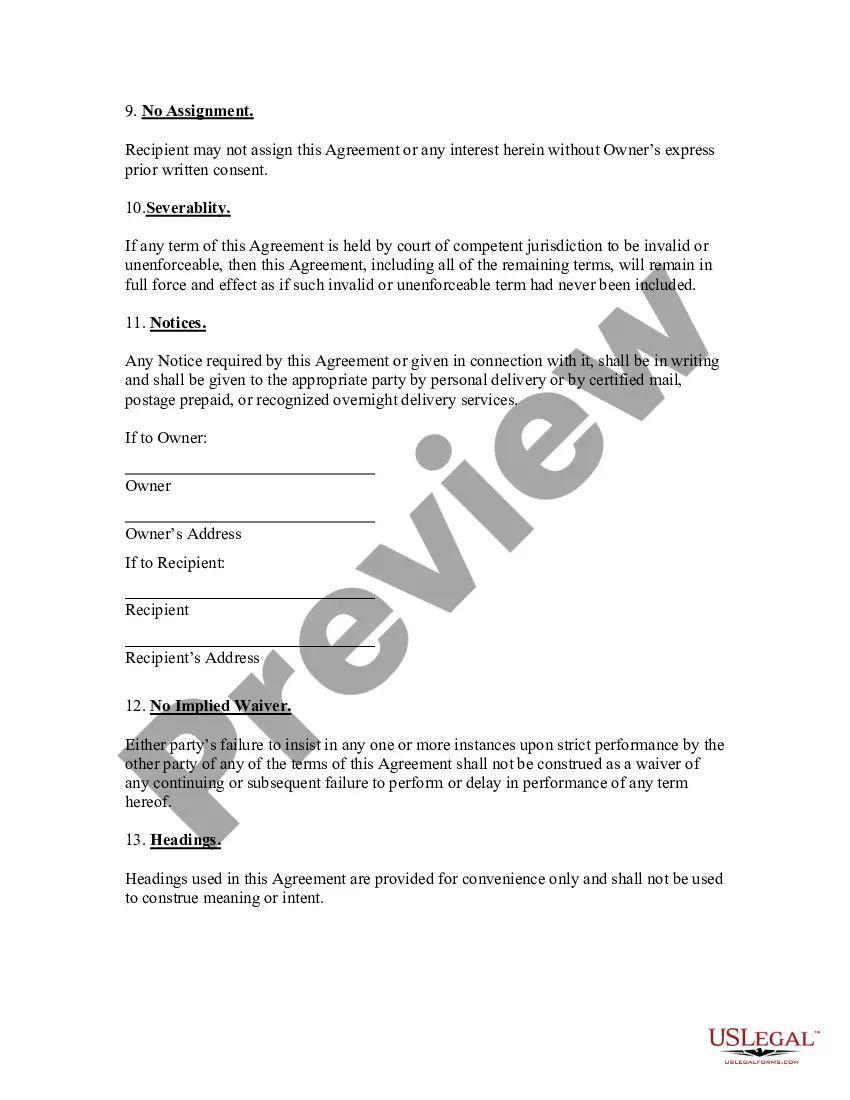
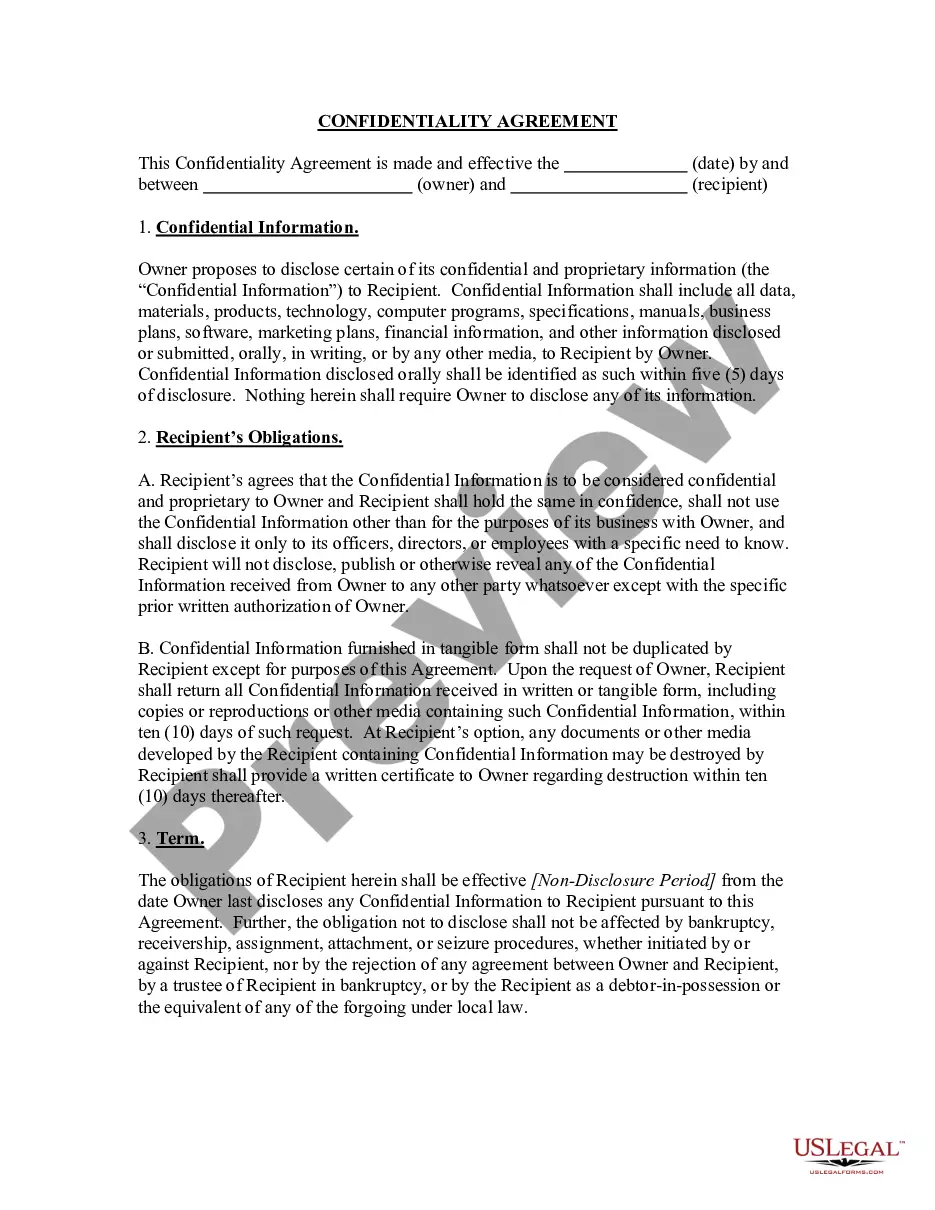
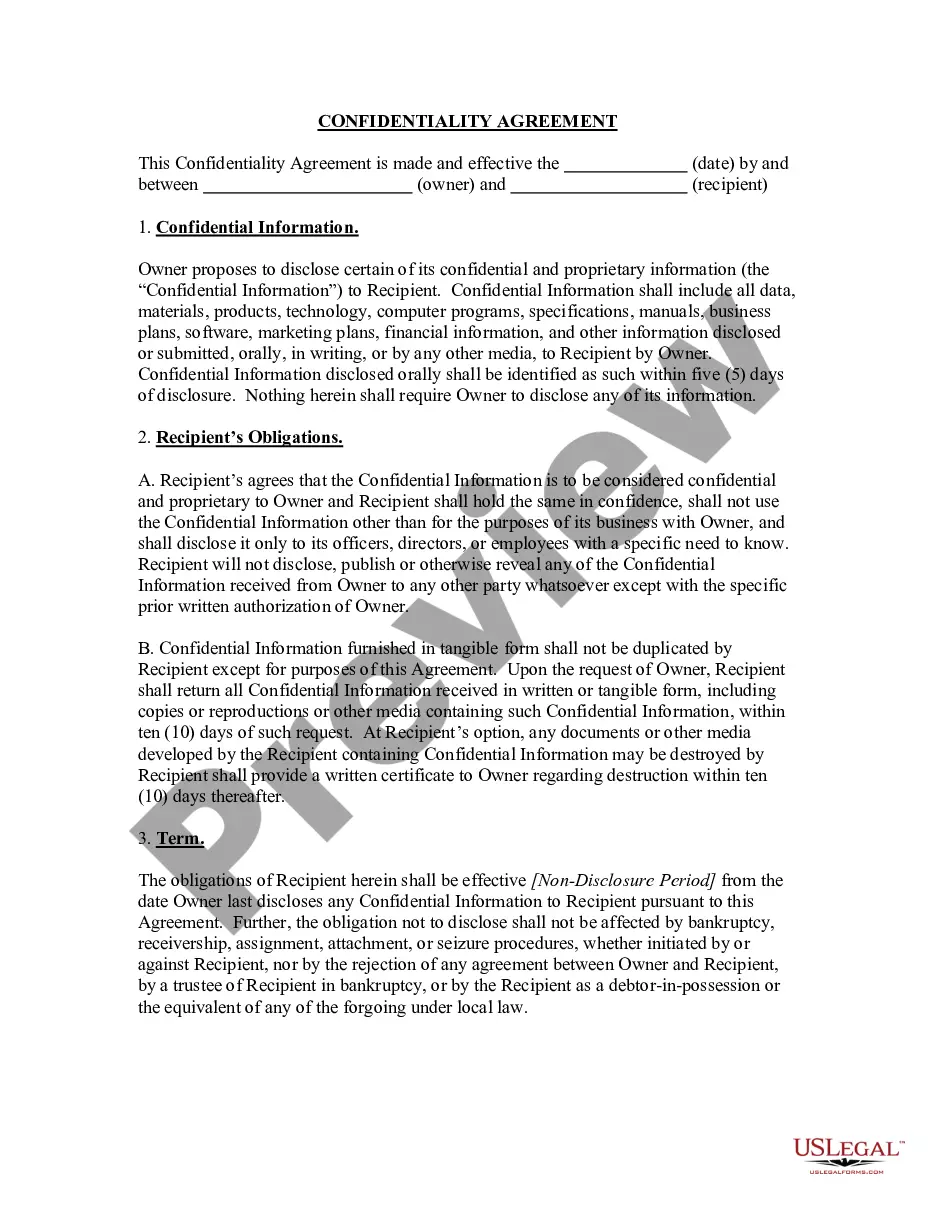
CONFIDENTIAL INFORMATIONOWNER agrees to disclose INFORMATION to RECIPIENT to facilitate possible future business dealings between the parties.
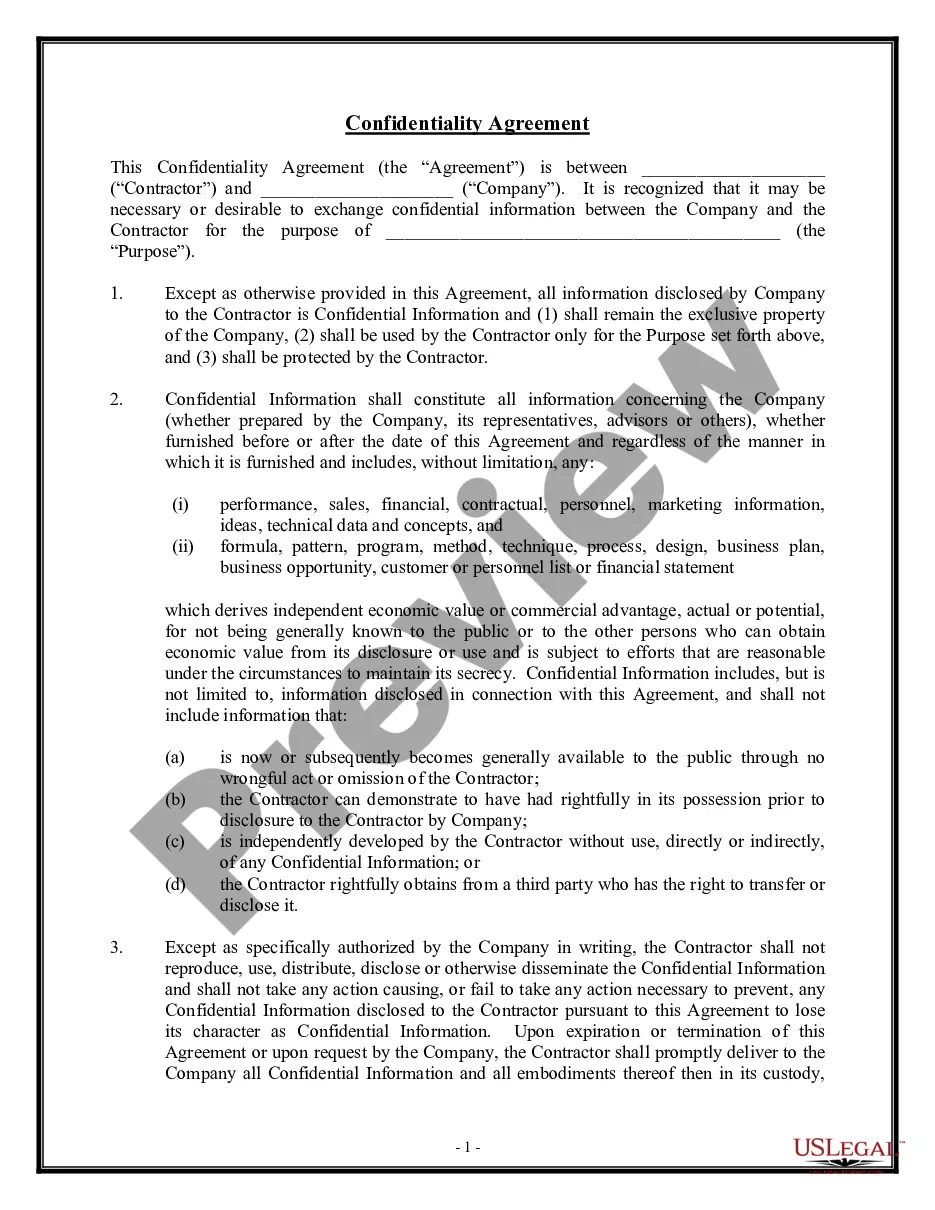
The agreement should identify the purpose to which the recipient can put the confidential information. All other uses of the confidential information should be prohibited. Sometimes a confidentiality agreement states that no rights are licensed by the confidentiality agreement. This is stating the obvious.
disclosure agreement is a legally binding contract that establishes a confidential relationship. The party or parties signing the agreement agree that sensitive information they may obtain will not be made available to any others. An NDA may also be referred to as a confidentiality agreement.
Since NDAs are civil contracts, breaking one isn't technically a crime. However, it could come with severe financial penalties. Violating an NDA leaves you open to lawsuits from your employer, and you could be required to pay financial damages and possibly associated legal costs.
Confidentiality agreements, sometimes called secrecy or nondisclosure agreements, are contracts entered into by two or more parties in which some or all of the parties agree that certain types of information that pass from one party to the other or that are created by one of the parties will remain confidential.
How to terminate the NDARead the Duration clauses. Good NDAs will have two different terms of duration.Read the termination clause. Like any other relationship, business partnerships can come to an early end unexpectedly.Read the Return of Information clause.
A confidentiality agreement is a written legal contract between an employer and an employee. The confidentiality agreement lays out binding terms and conditions that prohibit the employee from disclosing company confidential and proprietary information.
To create a legally-binding non-disclosure contract, you must use specific language when defining confidential information, parties, and scope. Broad language that can be interpreted many ways may not hold up in a legal dispute.
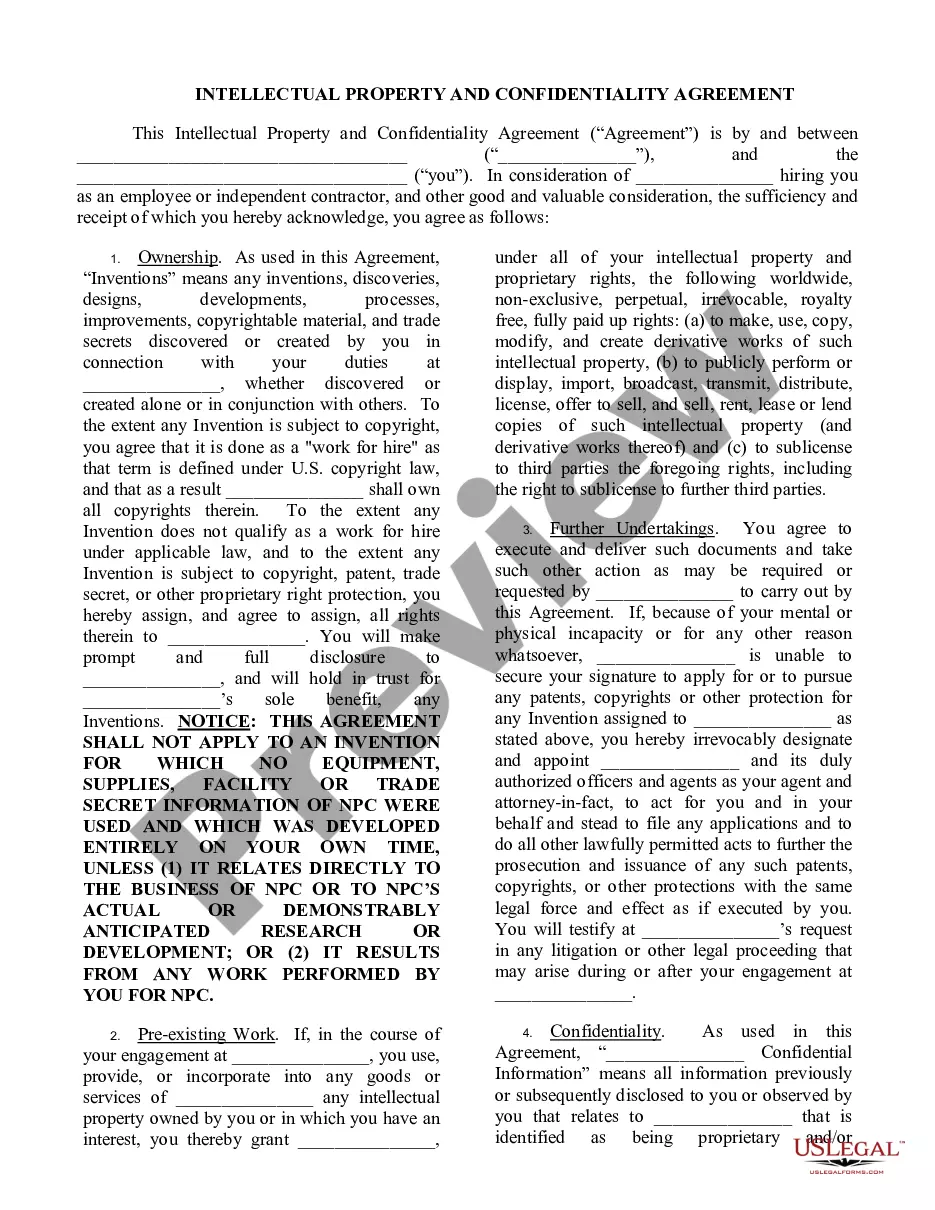
Also known as Proprietary Information and Inventions Assignment Agreements (or PIIAAs), Confidential Information and Inventions Assignment Agreements ensure that intellectual property and other proprietary rights created by employees during the course of their employment are assigned to the employer.
Confidentiality clauses are not legally binding if they try to stop you talking to the police or a regulator about issues between you and your employer or someone at work. An agreement may not be legally binding if you're not given reasonable time to think about it and/or get independent legal advice before signing it.