Louisiana Demand for Notice of Aggravating and for Disclosure of Evidence Supporting Mitigating Circumstances
Description
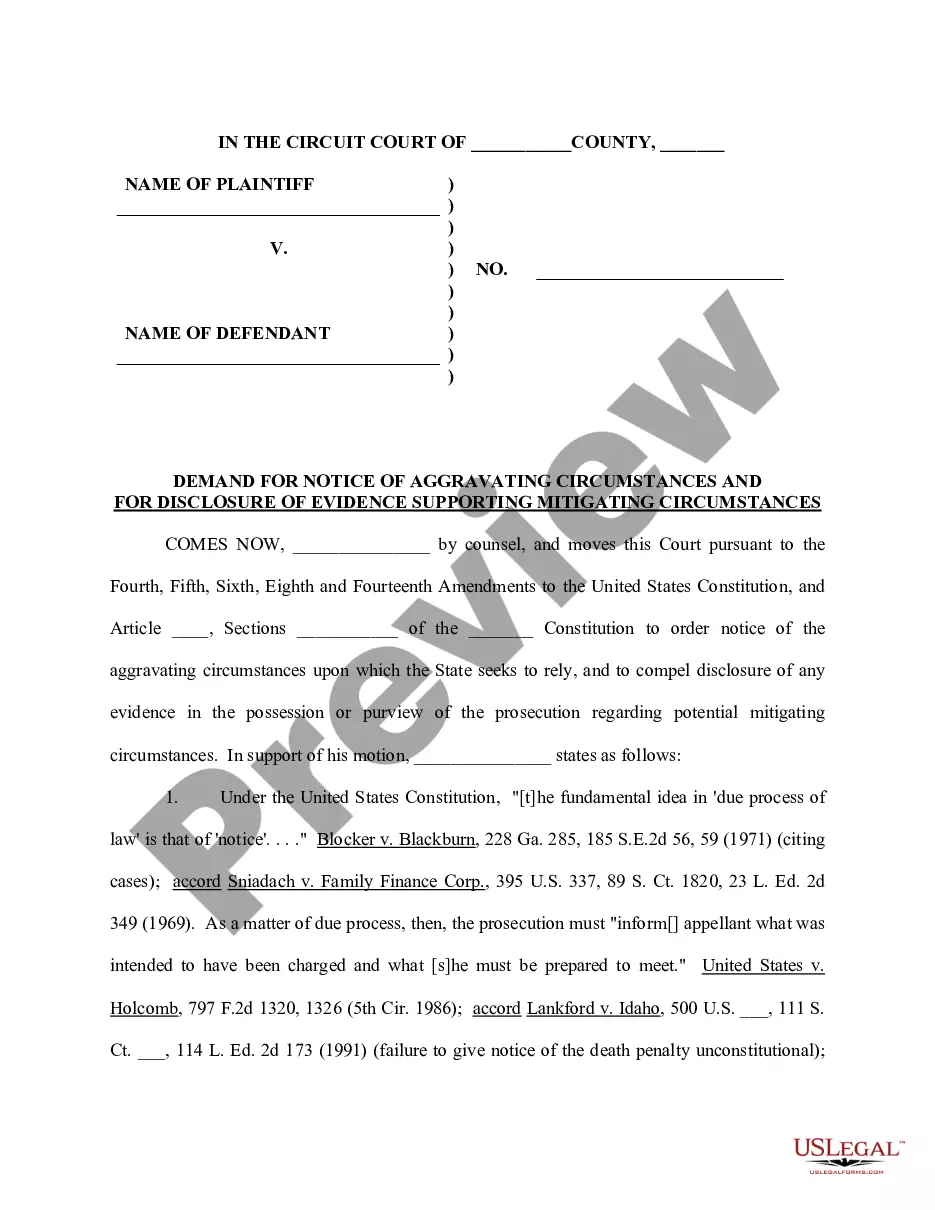
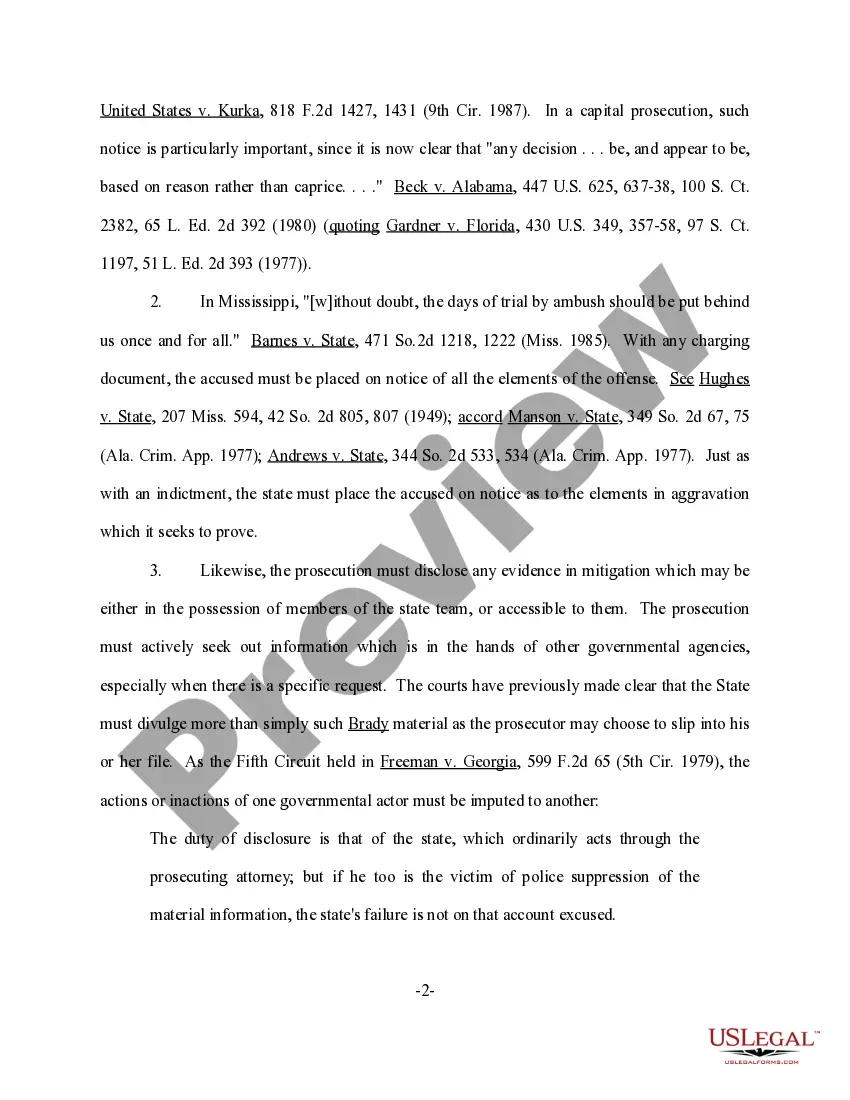
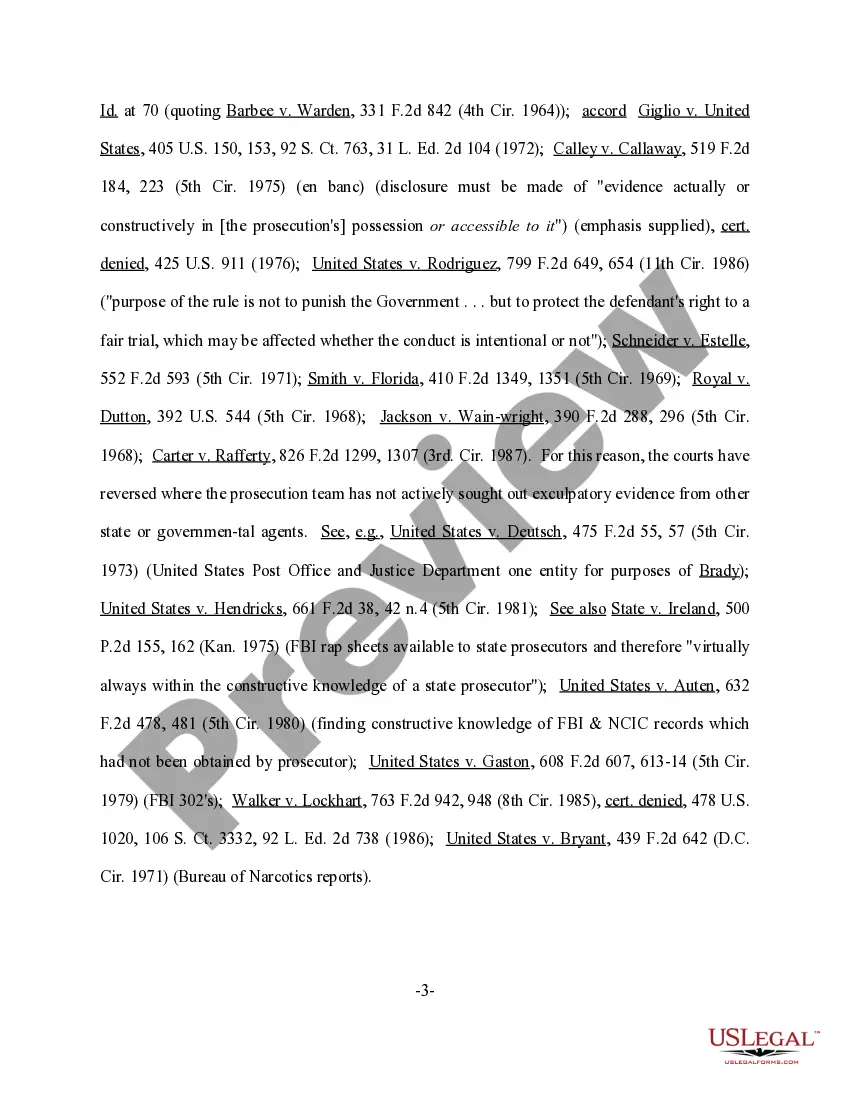
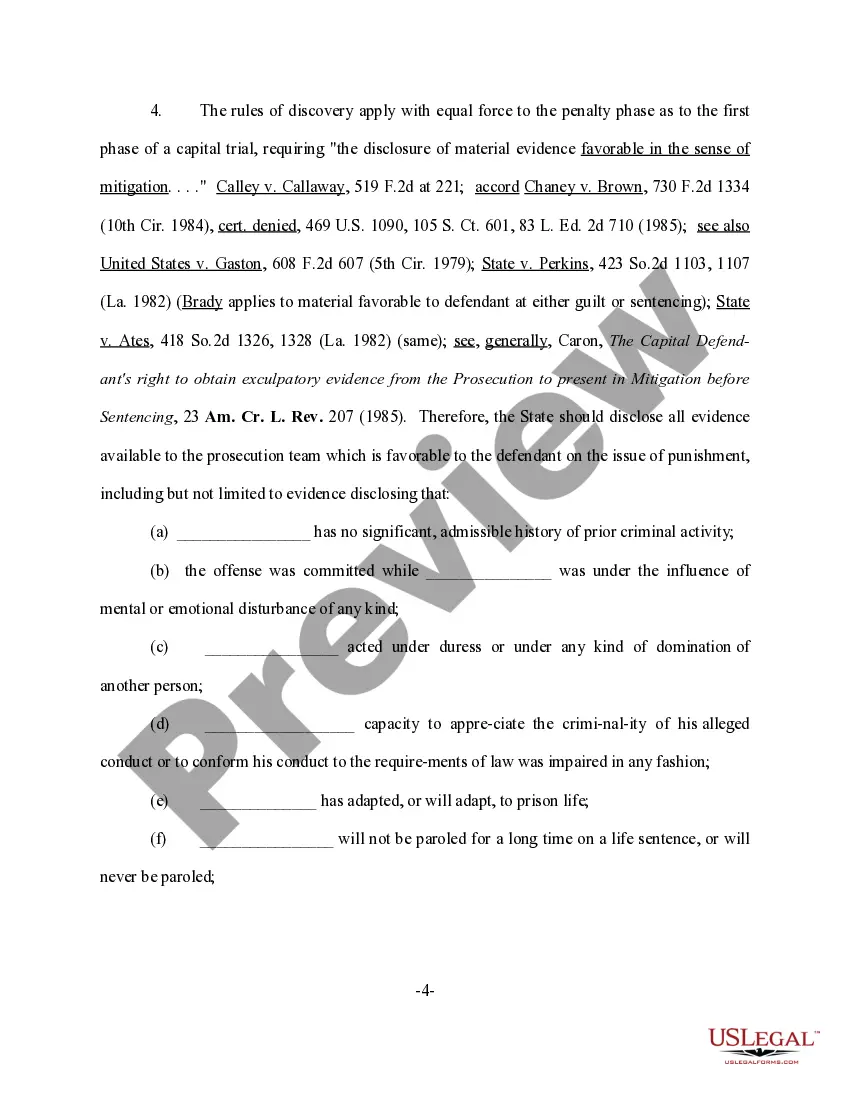
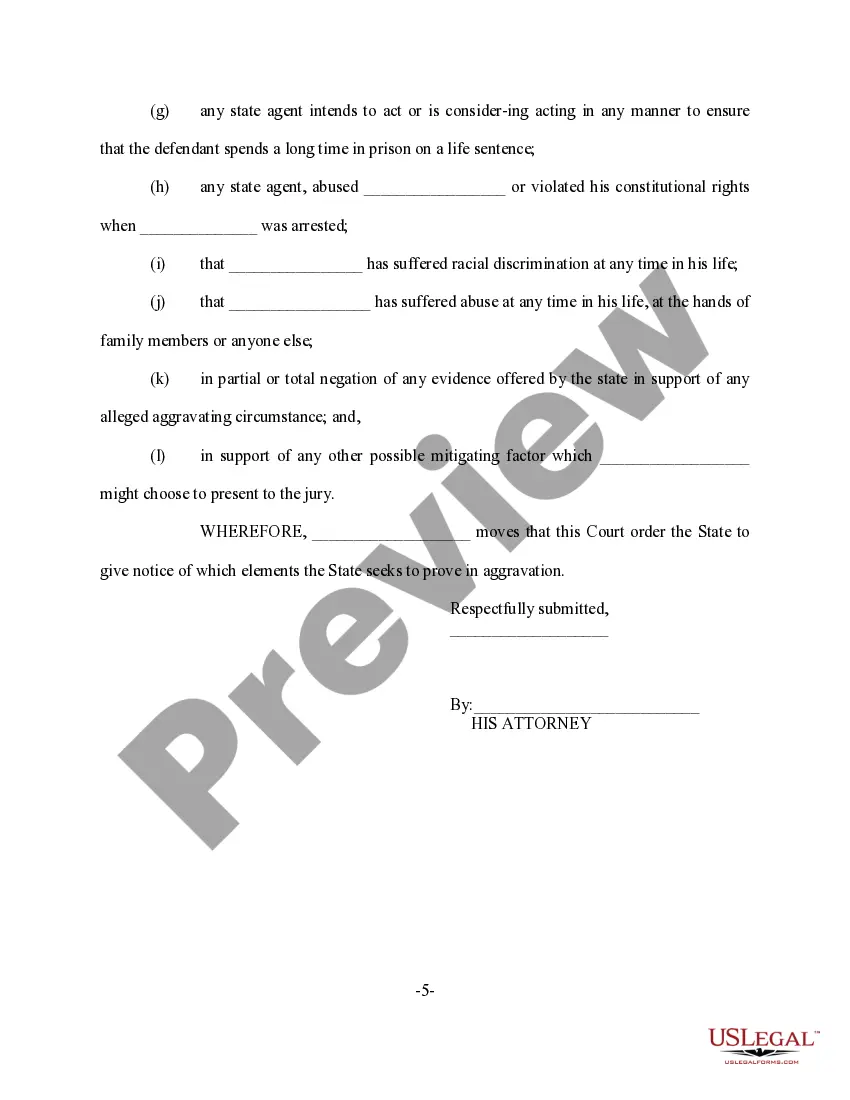
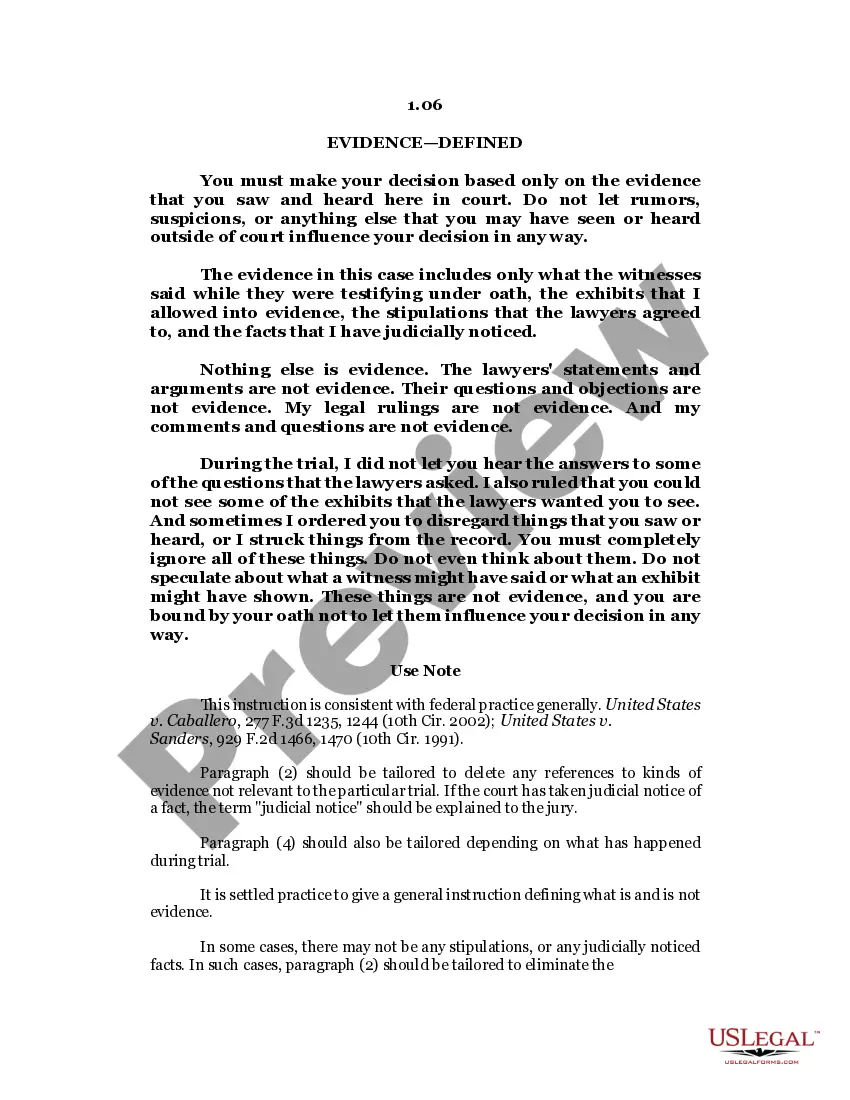
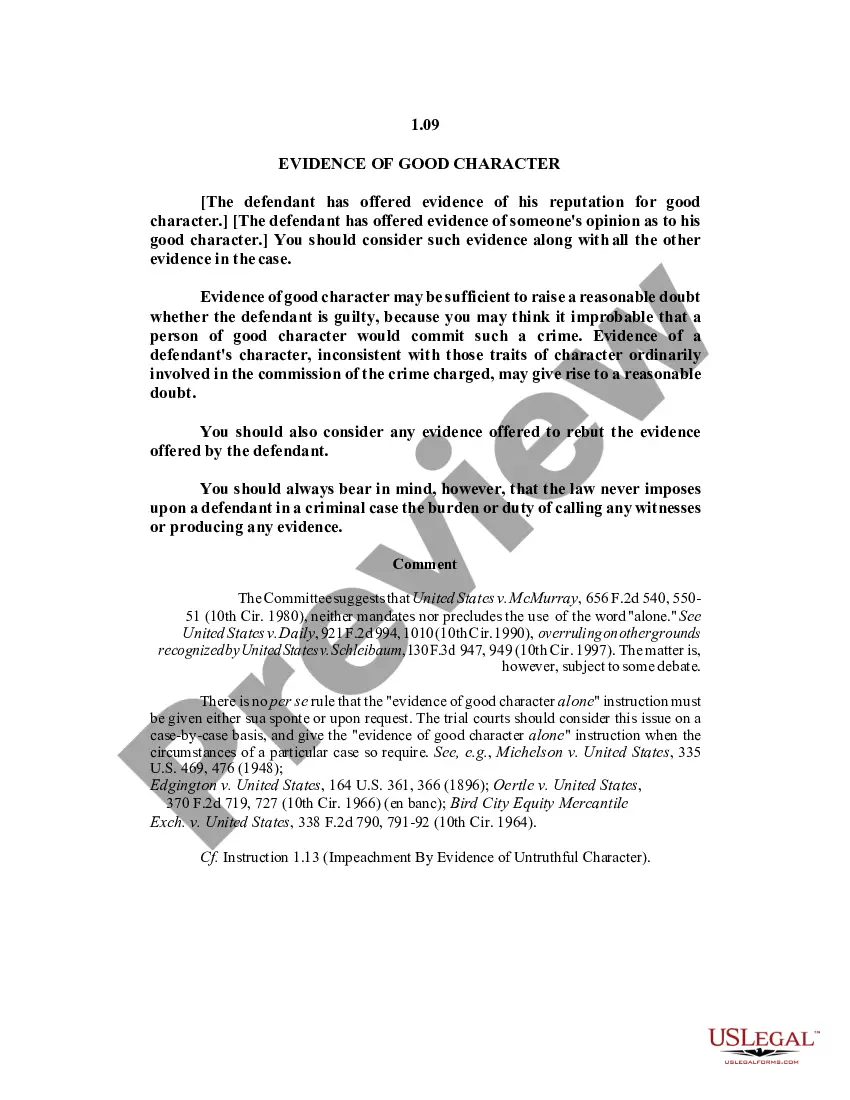
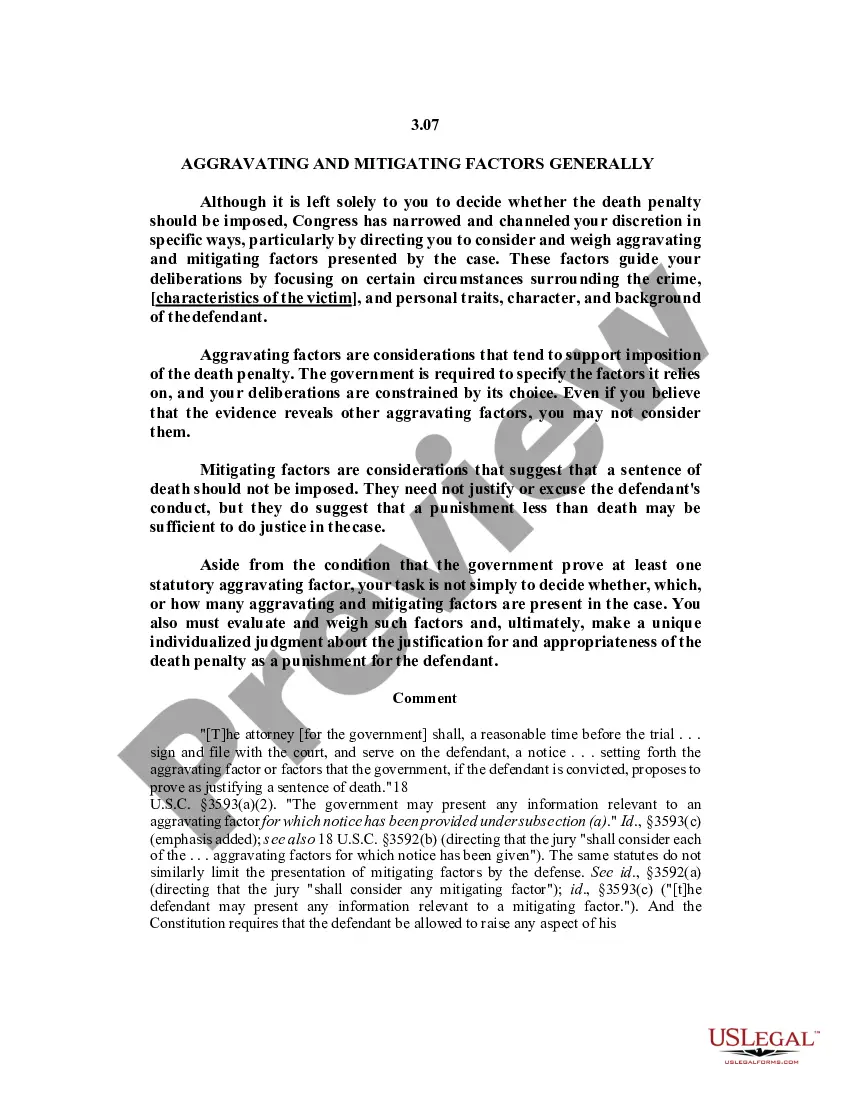

How to fill out Demand For Notice Of Aggravating And For Disclosure Of Evidence Supporting Mitigating Circumstances?
Are you currently in a situation where you require documents for various business or personal purposes nearly every day? There are numerous legal document templates accessible online, but finding reliable ones can be challenging.
US Legal Forms offers a vast array of form templates, including the Louisiana Demand for Notice of Aggravating and for Disclosure of Evidence Supporting Mitigating Circumstances, which are designed to comply with federal and state regulations.
If you are already familiar with the US Legal Forms website and have an account, simply Log In. After that, you can download the Louisiana Demand for Notice of Aggravating and for Disclosure of Evidence Supporting Mitigating Circumstances template.
Choose a convenient document format and download your copy.
Access all the document templates you have purchased in the My documents list. You can download an additional copy of the Louisiana Demand for Notice of Aggravating and for Disclosure of Evidence Supporting Mitigating Circumstances at any time, if needed. Just click on the desired form to download or print the document template. Use US Legal Forms, the most extensive collection of legal forms, to save time and prevent mistakes. The service provides professionally crafted legal document templates that can be utilized for various purposes. Create an account on US Legal Forms and start making your life easier.
- If you do not have an account and wish to use US Legal Forms, follow these steps.
- Find the form you need and ensure it is for the correct city/region.
- Use the Review option to examine the form.
- Check the description to confirm you have selected the correct form.
- If the form is not what you're looking for, utilize the Search field to find the form that meets your needs and requirements.
- Once you find the appropriate form, click Buy now.
- Select the pricing plan you prefer, fill in the necessary details to create your account, and complete your purchase using PayPal or a credit card.
Form popularity
FAQ
Simply put, aggravating factors can increase the severity of a punishment, while mitigating factors can reduce it. Predictably, prosecutors often try to highlight aggravating factors to procure a more severe sentence when trying your case. For example, repeat offenses will usually carry harsher penalties.
Aggravating circumstances generally include evidence of future dangerousness, evidence relating to the circumstances of the crime, the defendant's prior criminal record, and evidence about the victim and victim's family.
Common Aggravating Factors Prior convictions. The defendant's criminal record contains several prior convictions or convictions that are of increasing seriousness. Vulnerable victim. ... Weapon. ... Hate crime. ... Harm. ... Major offense. ... Leadership and sophistication.
Some generally recognized aggravating circumstances include heinousness of the crime, lack of remorse, and prior conviction of another crime.
Where there are aggravating circumstances, the defendant's penalty or punishment is usually more severe. For example, an assault happens whenever a person threatens to injure another person. If a dangerous weapon is used in the threat, it becomes an ?aggravated assault.?
A mitigating circumstance is a factor that lessens the severity of an act or the actor's culpability for the action. Mitigating circumstances can be found in both criminal and civil cases and may be used to justify a reduction in the severity of the punishment or damages.
Typical examples of aggravating factors include recidivism, lack of remorse, amount of harm to the victim, or committing the crime in front of a child, and many others. See also: Mitigating Factor, Criminal Procedure, and the Death Penalty.
A mitigating factor, also called a mitigating circumstance or extenuating circumstance, is any fact or circumstance that lessens the defendant's severity or culpability of a criminal offense. Unlike justification or excuse defenses, mitigating factors only affect the defendant's sentence.