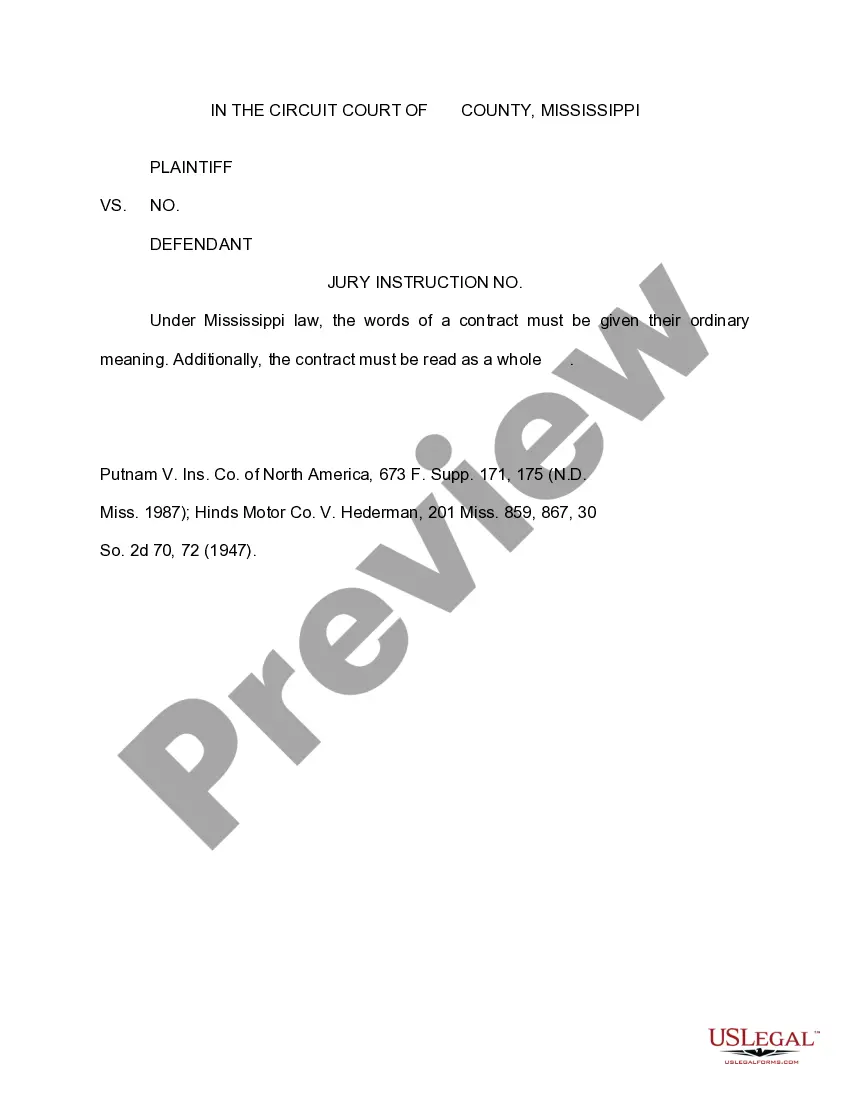
Louisiana Act of Donation
Understanding this form
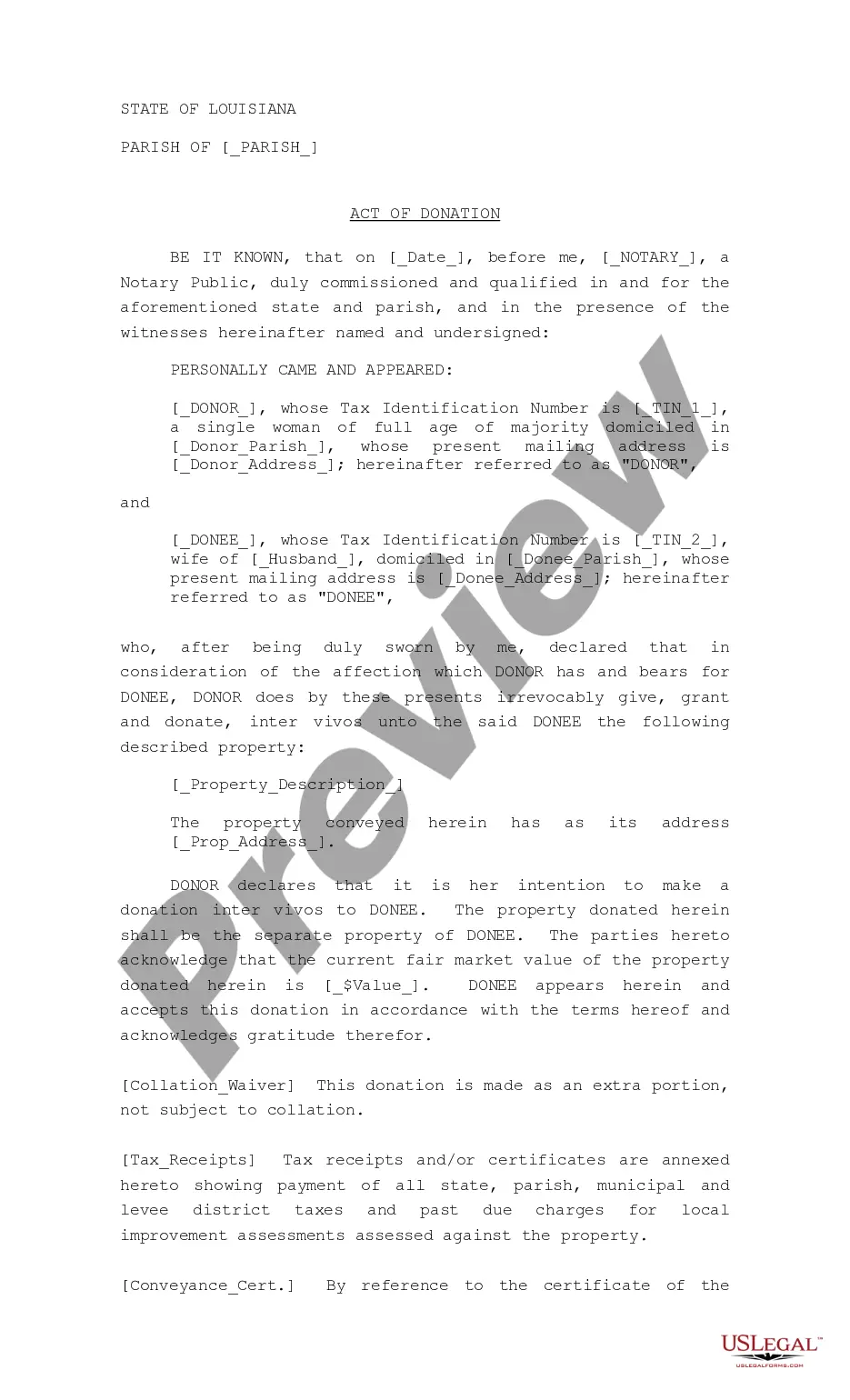
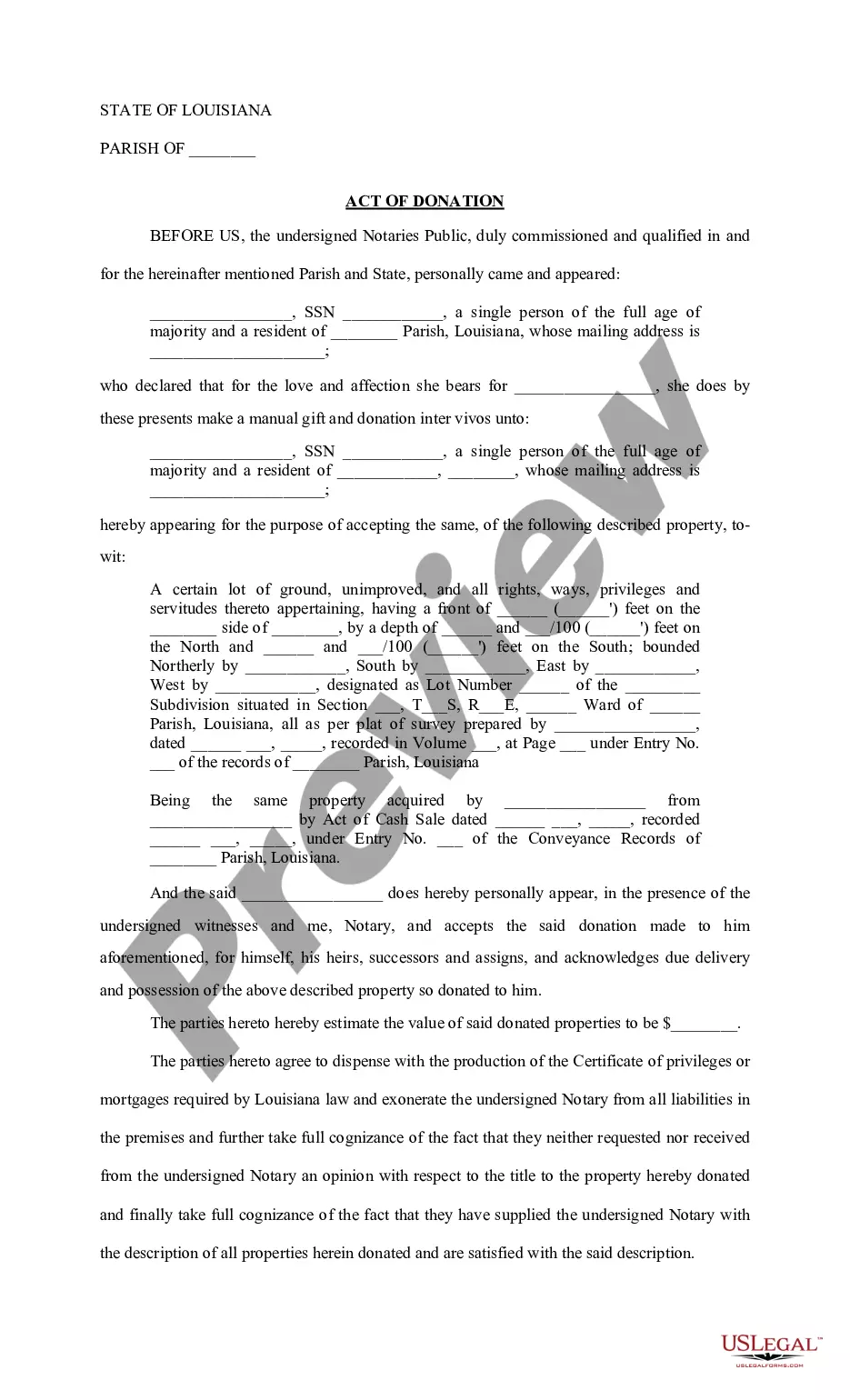
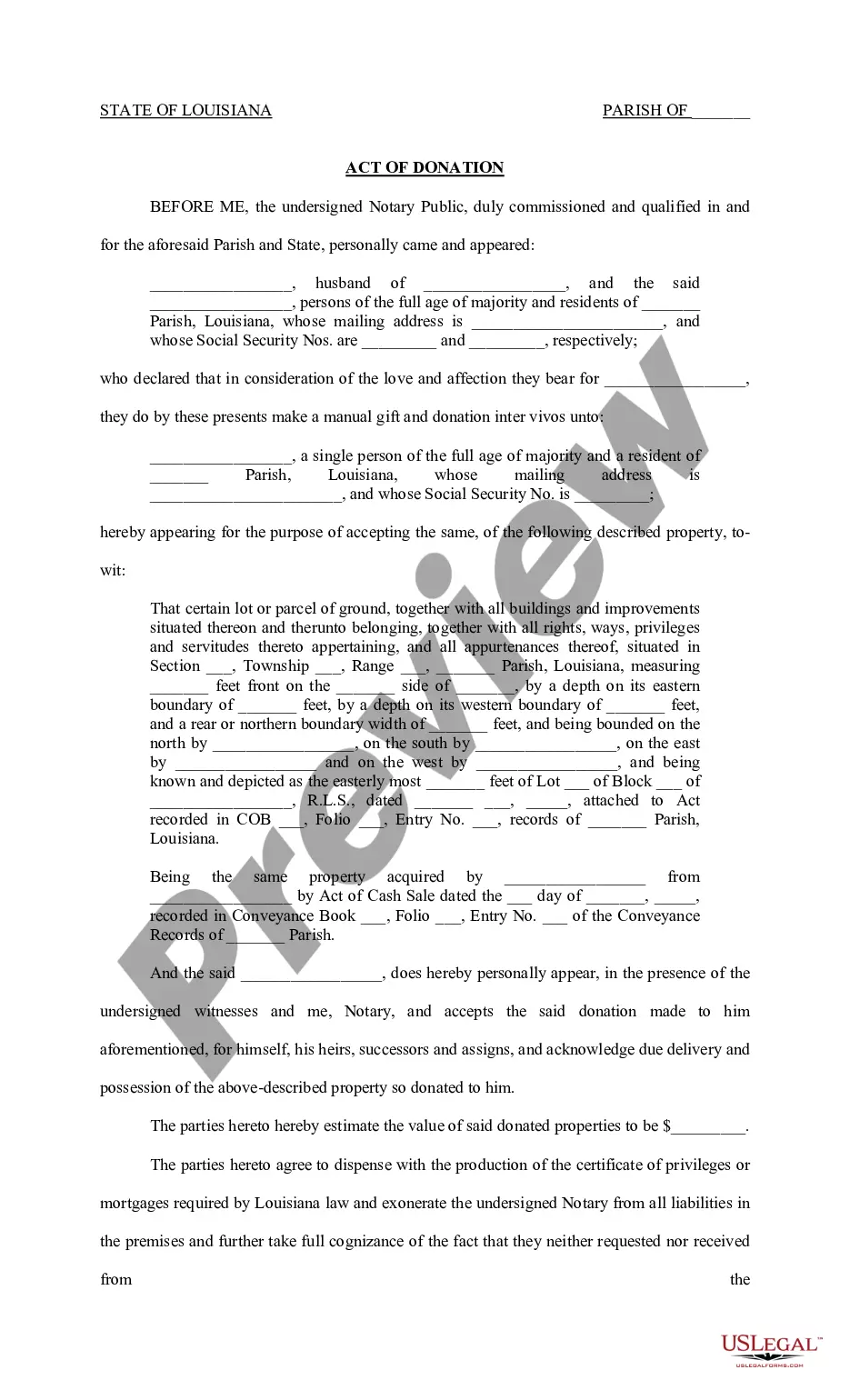
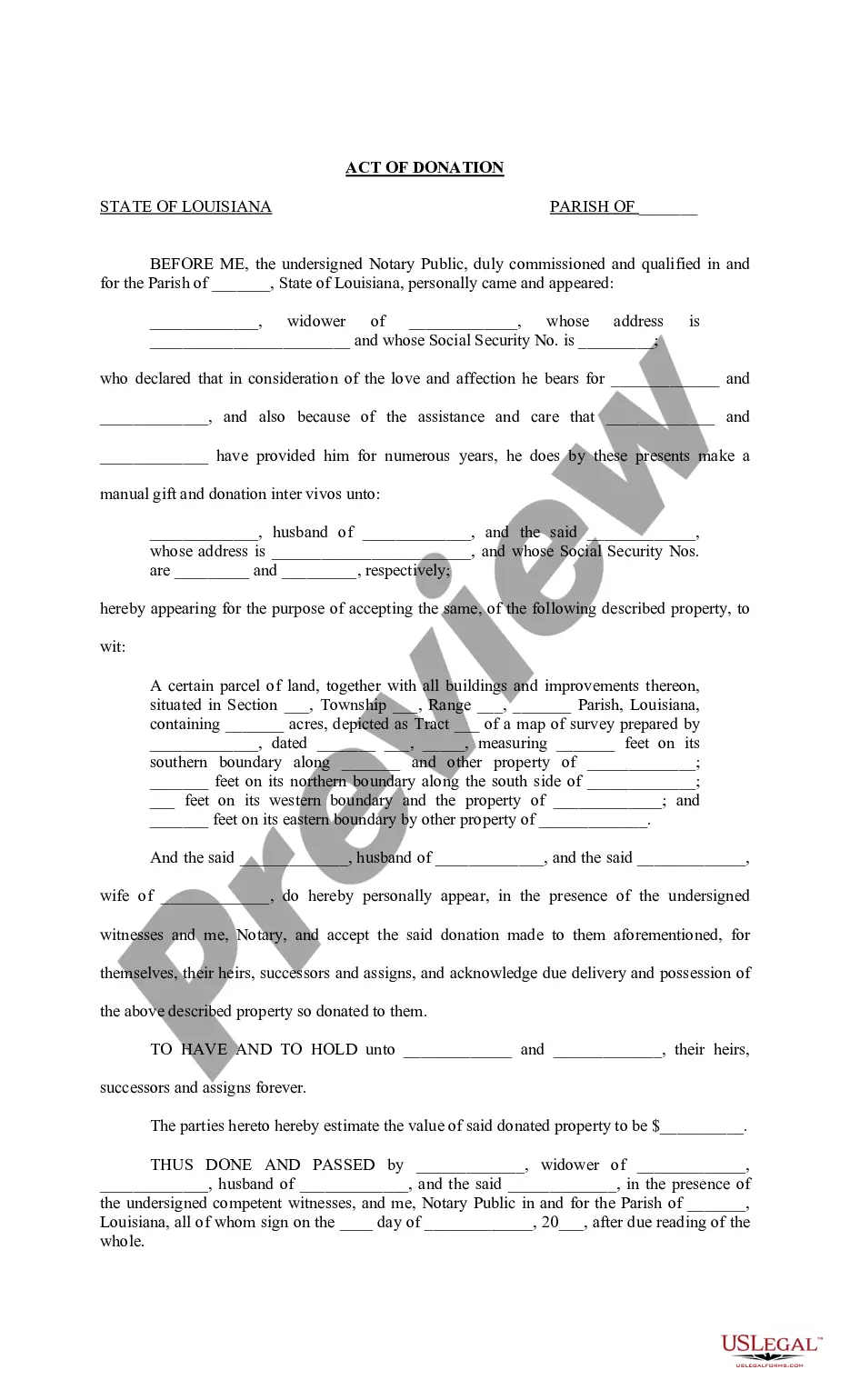
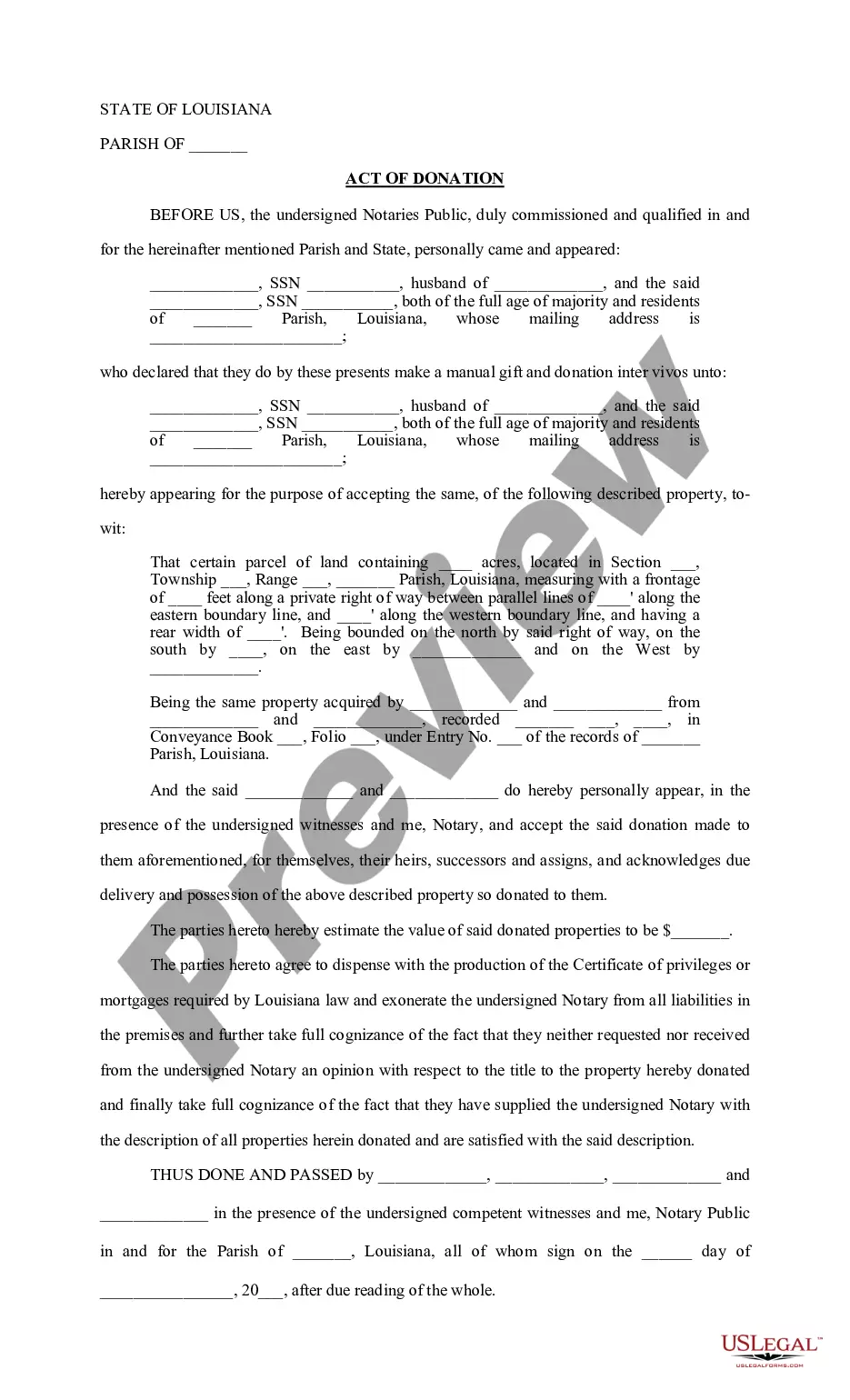
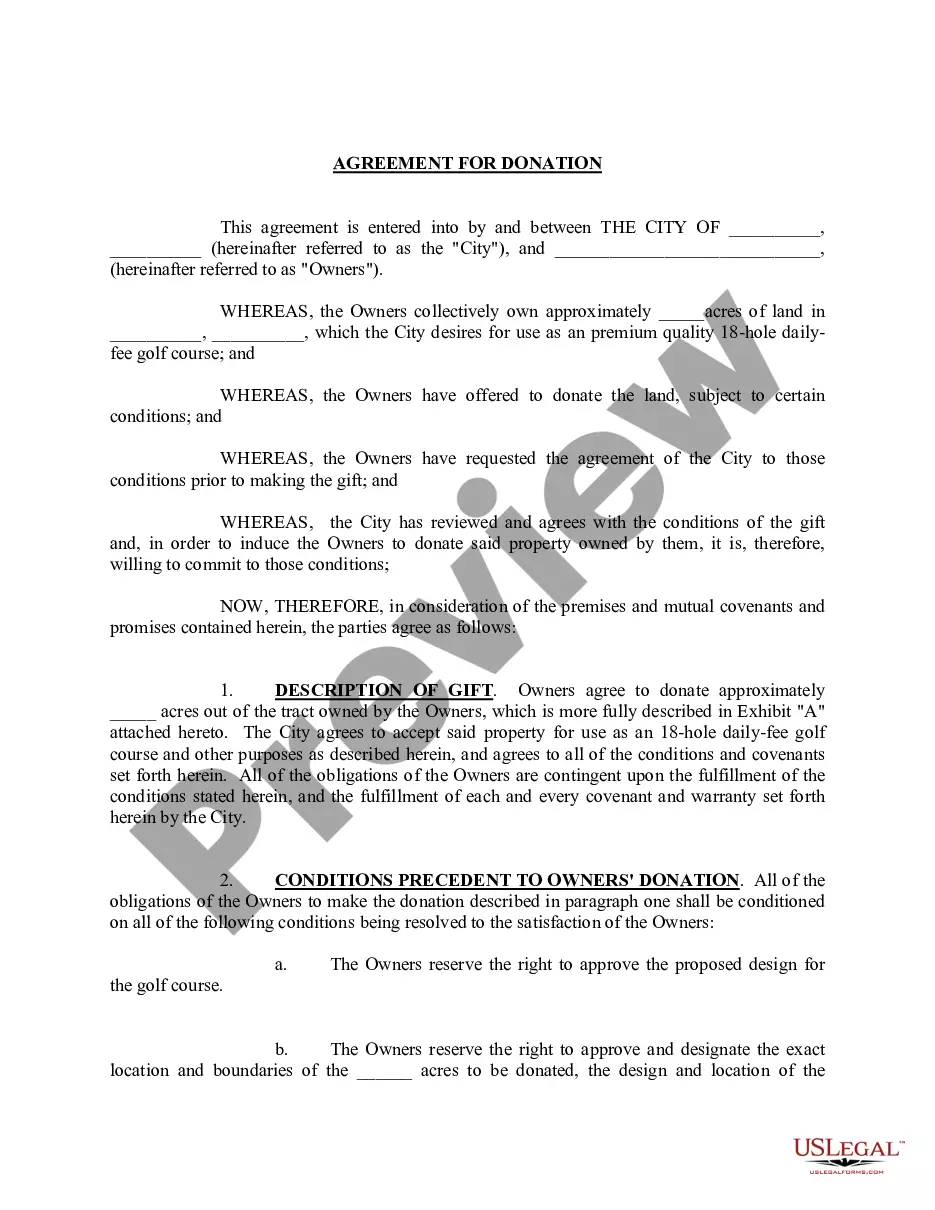
The Act of Donation is a legal document that serves to officially transfer ownership of immovable property from a donor to a donee, explicitly designating the property as the separate property of the married donee. This form is used when a donor wishes to make a gift of real estate, ensuring that the transaction complies with relevant legal requirements and recognizes any tax implications. It differs from other forms of property transfer by specifically outlining the nature of the donation, including provisions related to usufruct and collation waivers.
Key parts of this document
- Parties involved: Includes information about the donor and donee, such as their full names, addresses, and Tax Identification Numbers.
- Property description: Clearly describes the immovable property being donated, including its address.
- Intent of donation: States that the donation is inter vivos (between living persons) and that it is irrevocable.
- Property value: Provides the fair market value of the donated property.
- Waiver of collation: Indicates whether the donation is made as an extra portion not subject to collation.
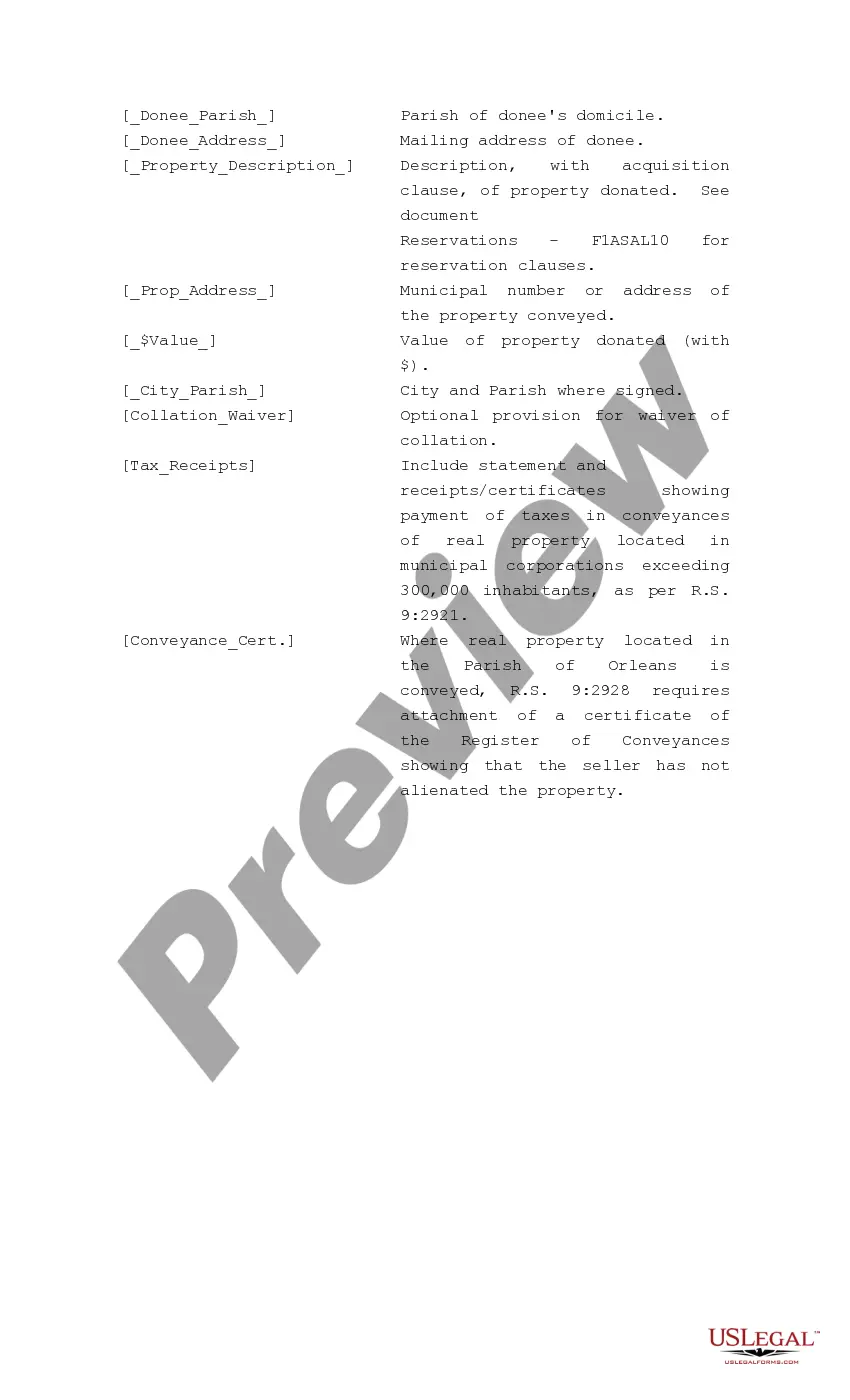
- Tax receipts: Inclusion of required documentation confirming that all related taxes have been paid.
Situations where this form applies
The Act of Donation should be used when a property owner wishes to legally donate real estate to another person, especially in a family context, such as gifting property to a spouse. It is also appropriate in situations involving estate planning or when a donor wants to ensure that the property remains a separate asset for the donee, avoiding complications in future inheritance or marital property claims.
Who needs this form
Individuals eligible to use the Act of Donation include:
- Property owners who wish to donate real estate to a spouse or other family member.
- Married couples seeking to clarify property ownership within their marriage.
- Estate planners aiming to simplify the transfer of assets and minimize inheritance disputes.
How to prepare this document
- Identify the parties: Fill in the full names and Tax Identification Numbers for both the donor and donee.
- Specify the property: Enter a clear description of the immovable property being donated, including its address.
- State the date: Provide the date on which the donation is executed.
- Value the property: Indicate the fair market value of the property being transferred.
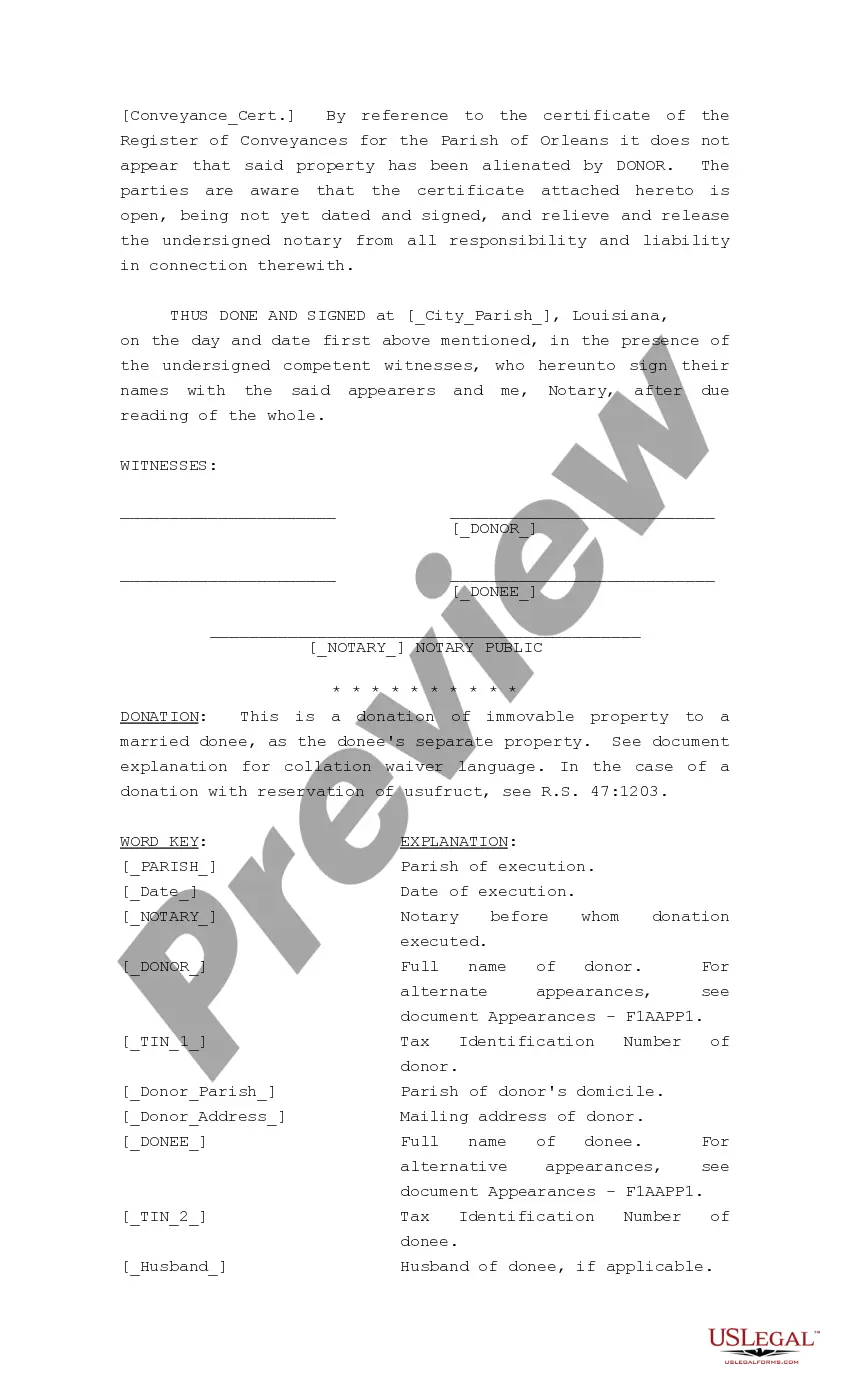
- Sign before a notary: Ensure that the document is signed in the presence of a licensed notary public and witnesses, as required.
Notarization requirements for this form
Yes, this form must be notarized to be legally valid. Notarization verifies the identities of the parties involved and ensures that the transaction is legitimate. US Legal Forms offers integrated online notarization services, allowing you to complete this process securely via video call without the need to travel.
Get your form ready online
Our built-in tools help you complete, sign, share, and store your documents in one place.
Make edits, fill in missing information, and update formatting in US Legal Forms—just like you would in MS Word.
Download a copy, print it, send it by email, or mail it via USPS—whatever works best for your next step.
Sign and collect signatures with our SignNow integration. Send to multiple recipients, set reminders, and more. Go Premium to unlock E-Sign.
If this form requires notarization, complete it online through a secure video call—no need to meet a notary in person or wait for an appointment.
We protect your documents and personal data by following strict security and privacy standards.

Make edits, fill in missing information, and update formatting in US Legal Forms—just like you would in MS Word.

Download a copy, print it, send it by email, or mail it via USPS—whatever works best for your next step.

Sign and collect signatures with our SignNow integration. Send to multiple recipients, set reminders, and more. Go Premium to unlock E-Sign.

If this form requires notarization, complete it online through a secure video call—no need to meet a notary in person or wait for an appointment.

We protect your documents and personal data by following strict security and privacy standards.
Common mistakes
- Failing to provide complete and accurate property descriptions can lead to disputes about what is being donated.
- Not notarizing the document, which may invalidate the act of donation.
- Omitting the value of the property, which is essential for tax purposes and legal clarity.
- Not ensuring that the donation is made with proper consent from both parties involved.
Benefits of using this form online
- Convenience: Downloadable forms are available instantly, allowing for quick access and completion.
- Editability: Easily fill in specific details directly on your device, minimizing the risk of hand-written errors.
- Compliance: The forms are drafted by licensed attorneys ensuring they meet legal requirements.
- Secure storage: Digital copies provide a safe way to keep important legal documents without risk of physical damage.
Main things to remember
- The Act of Donation is essential for legally transferring immovable property as a gift.
- Ensure all required fields are completed, including property details and the value.
- Notarization is mandatory; do not overlook this requirement.
- Utilizing this form helps simplify estate planning and clarify property ownership within families.
Looking for another form?
Form popularity
FAQ
The Louisiana Act of Donation is a standard form used to transfer ownership of immovable property from a donor to a donee, designating the property as the donee's separate property within a marriage. It records the donation as inter vivos and irrevocable and includes the property description, declared value, any waiver of collation, and required tax receipts to confirm tax compliance.
It documents a real estate gift from a donor to a donee by listing the parties, describing the immovable property, and stating the donation is inter vivos and irrevocable. The form also records the property's fair market value, any waiver of collation, and the required tax receipts, helping ensure the transfer follows Louisiana's rules and tax considerations.
The form itself lists the essential elements of the donation (parties, property, intent, value, waivers, and tax receipts) and notes the donation is inter vivos and irrevocable. It does not specify whether notarization is required; notarization depends on Louisiana practice and may be needed to record the transfer. Consult a licensed attorney.
Complete the form by entering the donor and donee details, a clear property description, the inter vivos and irrevocable donation intent, the property's fair market value, any waiver of collation, and the required tax receipts.
Yes. The Act of Donation is used to transfer real estate to a spouse or family member and to clarify the property as the donee's separate property in a marriage, aligning with the form's intended uses for estate planning and reducing disputes.
It stands out because it designates the donated property as the separate property of the married donee and may include provisions related to usufruct and waivers of collation, features not typically found in a generic real estate donation.