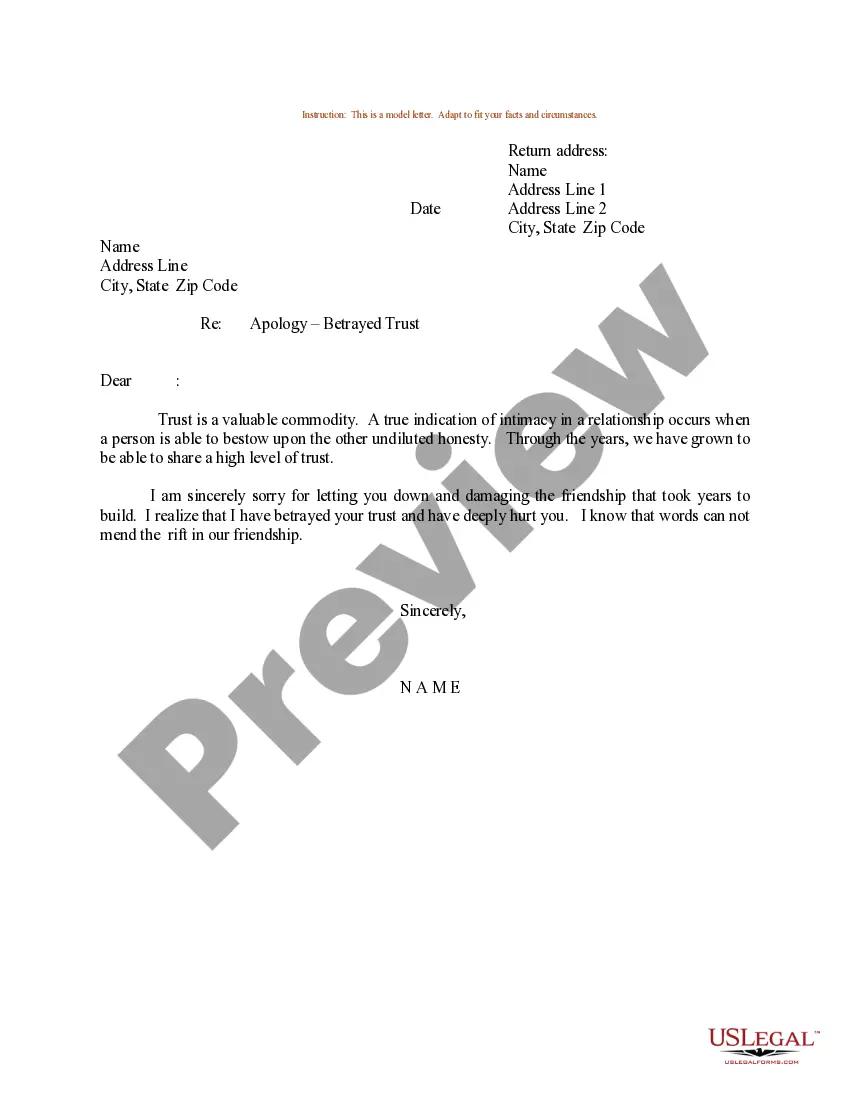
Kentucky Sample Letter for Betrayed Trust
Description
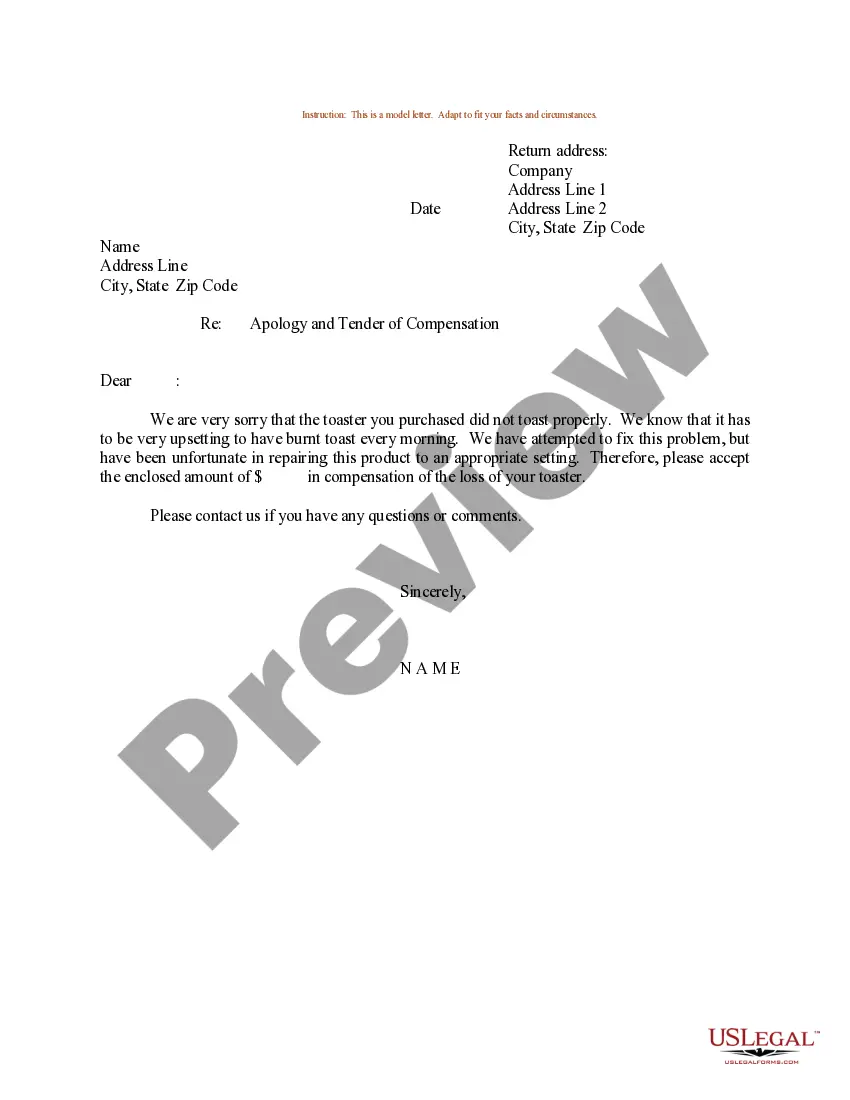
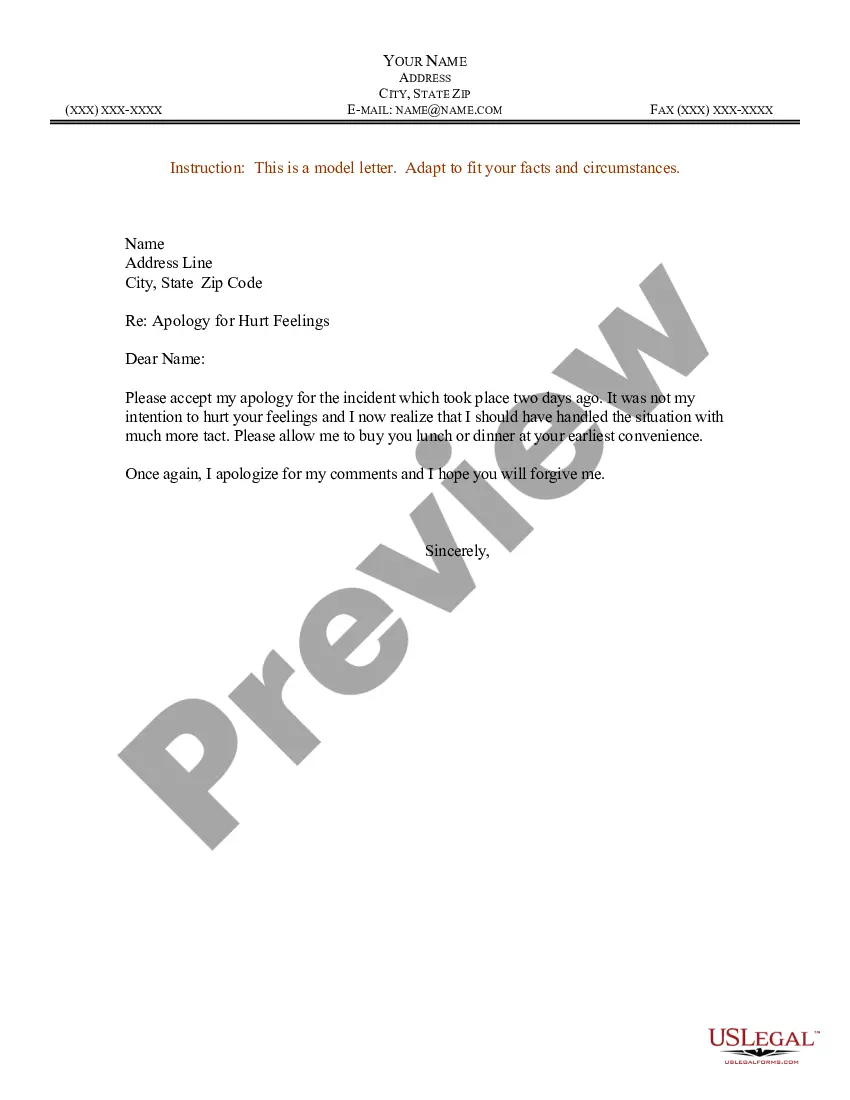


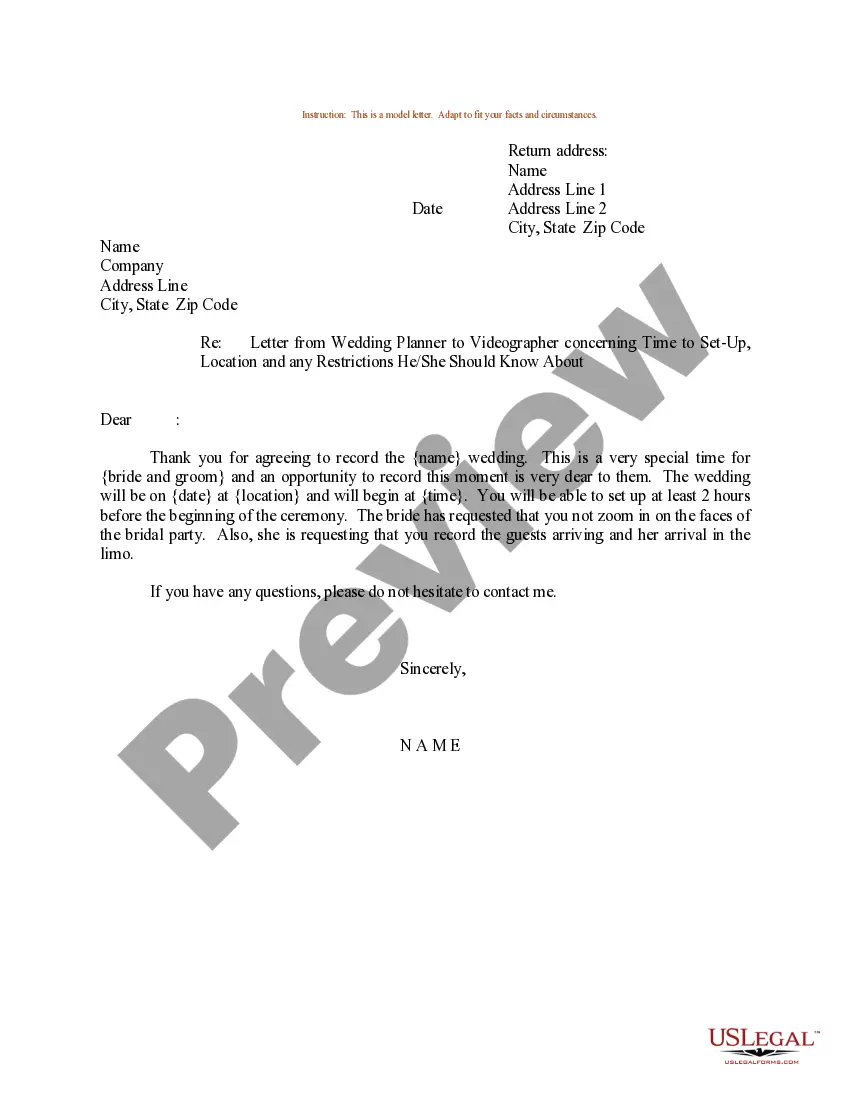
How to fill out Sample Letter For Betrayed Trust?
Are you currently in a position where you need documents for either business or specific purposes almost every day.
There are numerous legal document templates available online, but finding forms you can trust is not easy.
US Legal Forms offers thousands of template options, including the Kentucky Sample Letter for Betrayed Trust, which are designed to comply with federal and state regulations.
Choose a convenient document format and download your copy.
Access all the document templates you have purchased in the My documents section. You can obtain an additional copy of the Kentucky Sample Letter for Betrayed Trust whenever necessary; just select the needed form to download or print the document.
Utilize US Legal Forms, the largest collection of legal forms, to save time and avoid mistakes. This service provides professionally crafted legal document templates that can be used for a variety of purposes. Create an account on US Legal Forms and start making your life a bit easier.
- If you are already familiar with the US Legal Forms website and have an account, simply Log In.
- Then, you can download the Kentucky Sample Letter for Betrayed Trust form.
- If you do not have an account and wish to start using US Legal Forms, follow these steps.
- 1. Obtain the form you need and ensure it is for the right area/county.
- 2. Utilize the Review button to evaluate the form.
- 3. Check the description to confirm that you have selected the correct document.
- 4. If the form does not match your needs, use the Search field to find a form that suits your requirements.
- 5. If you locate the correct form, click on Acquire now.
- 6. Select the payment plan you prefer, fill in the required information to create your order, and complete the payment using PayPal or a credit card.
Form popularity
FAQ
The difference is that a living trust is also an entity that holds the property while the owner (also call the settlor in Kentucky) is alive. The primary aim of a living trust is to avoid probate, a court process that can take months and even years. The trustee, then, is the person who manages the trust.
To create a valid living trust, you must sign the trust document. In most places, a living trust document, unlike a will, does not need to be signed in front of witnesses.
No, in Kentucky, you do not need to notarize your will to make it legal. However, Kentucky allows you to make your will "self-proving" and you'll need to go to a notary if you want to do that. A self-proving will speeds up probate because the court can accept the will without contacting the witnesses who signed it.
The first step is to locate the deceased person's original will. The second step is to file a petition, using form AOC-805, which asks the District Court judge to admit the will to probate and to appoint an execu- tor to administer and settle the decedent's estate.
A legal document (which may be a deed or other instrument) that creates a trust. The trust document appoints the trustees and states the terms of the trust, including who the beneficiaries are and the trust property that will be subject to the trust.
No, in Kentucky, you do not need to notarize your will to make it legal. However, Kentucky allows you to make your will "self-proving" and you'll need to go to a notary if you want to do that. A self-proving will speeds up probate because the court can accept the will without contacting the witnesses who signed it.
In Kentucky, an estate must remain open for at least six months to allow time for creditors to submit their bills to the estate. Thus, a simple estate can be settled in as short a time as six months.
Kentucky law provides that any person who serves as executor has the right to request a fee for their services. In general , an executor's fee may not exceed five percent of the value of an estate, plus five percent of the income collected by the executor.
Probate must stay open for at least six months as stated in the Kentucky Revised Statutes 395.190. However, it can often take much longer, especially if there any disputes or other delays. Don't be surprised if it takes more than a year, especially if the estate is complicated.
The first step is to locate the deceased person's original will. The second step is to file a petition, using form AOC-805, which asks the District Court judge to admit the will to probate and to appoint an execu- tor to administer and settle the decedent's estate.