Kentucky Nonexclusive License Agreement for the Manufacture and Sale of a Product
Description
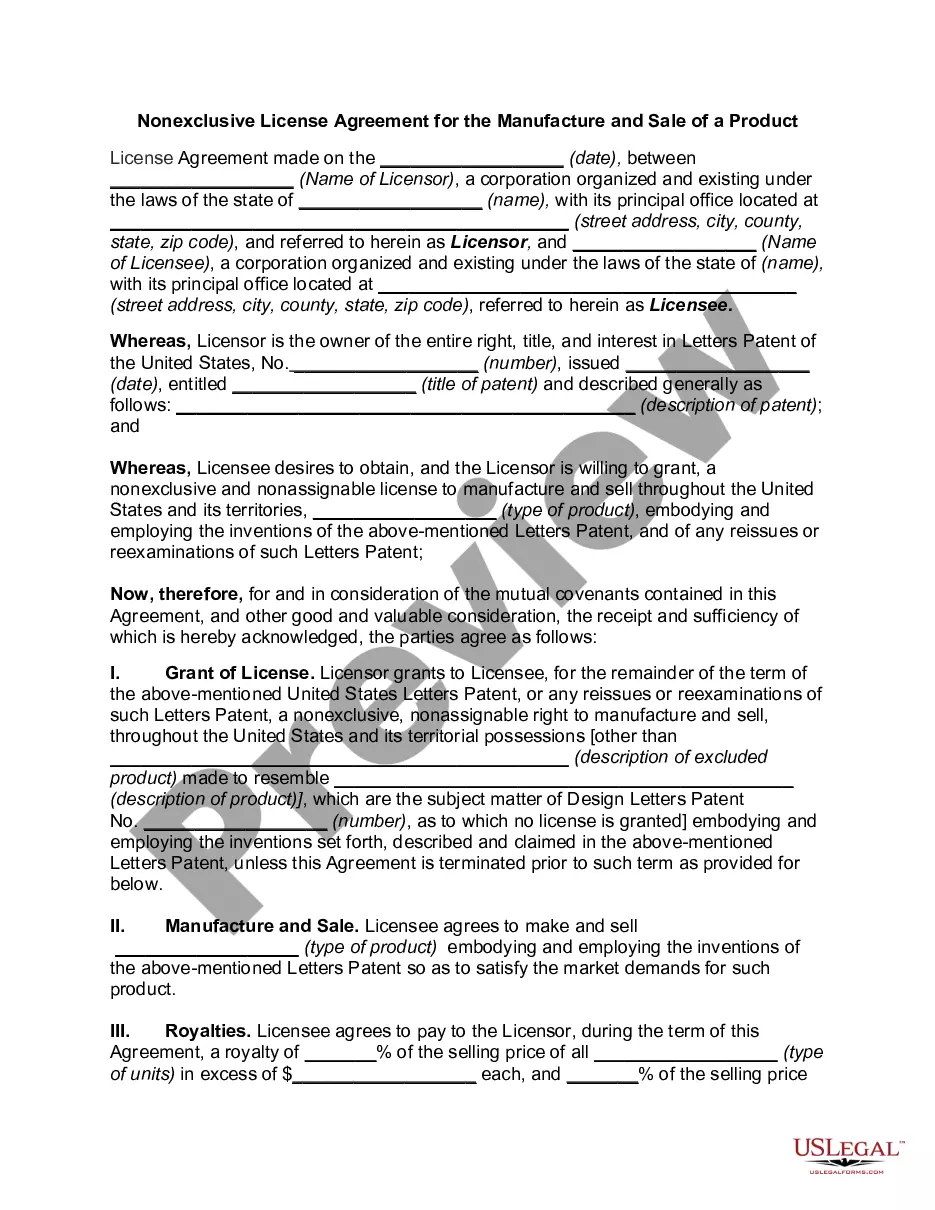
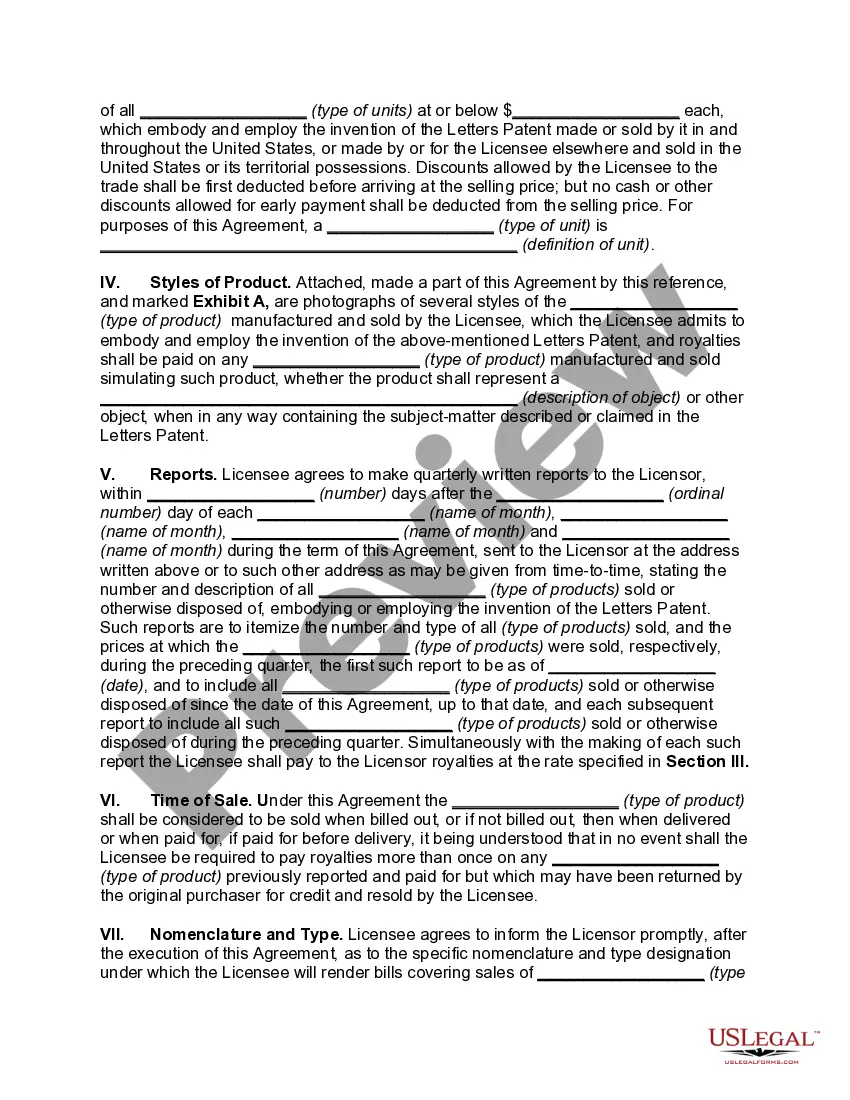
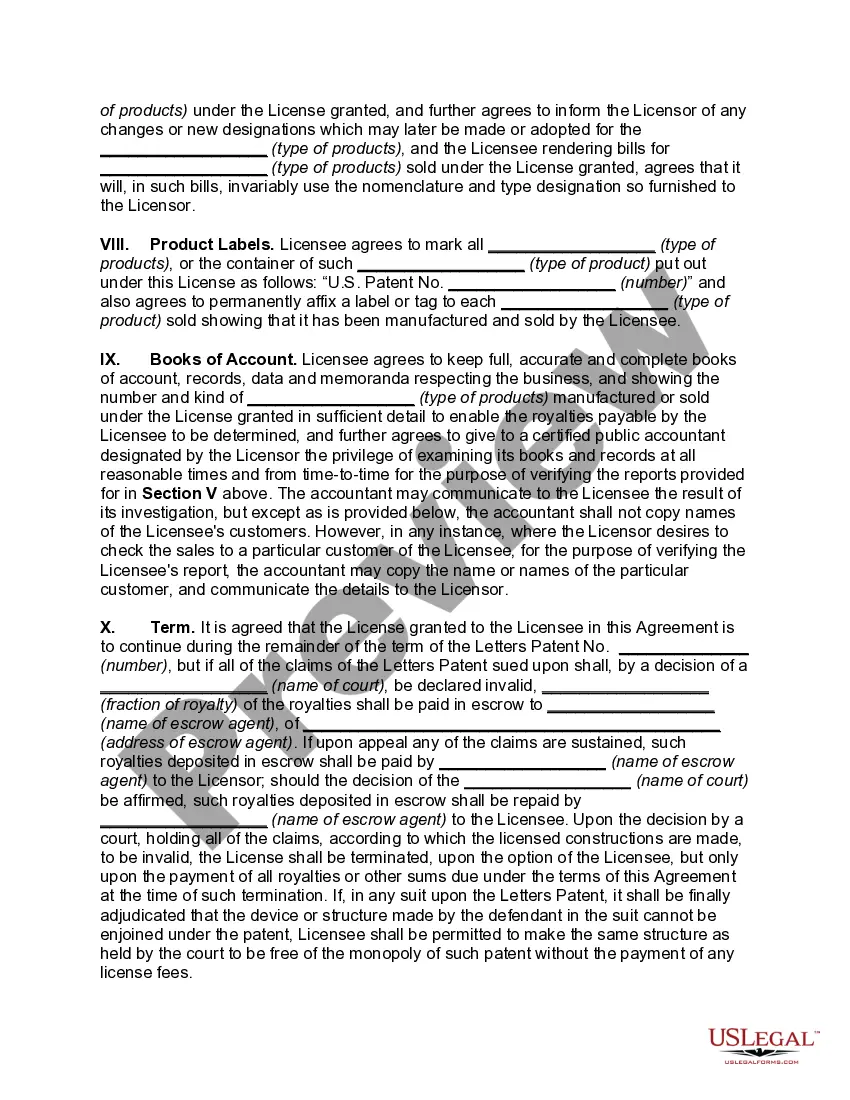

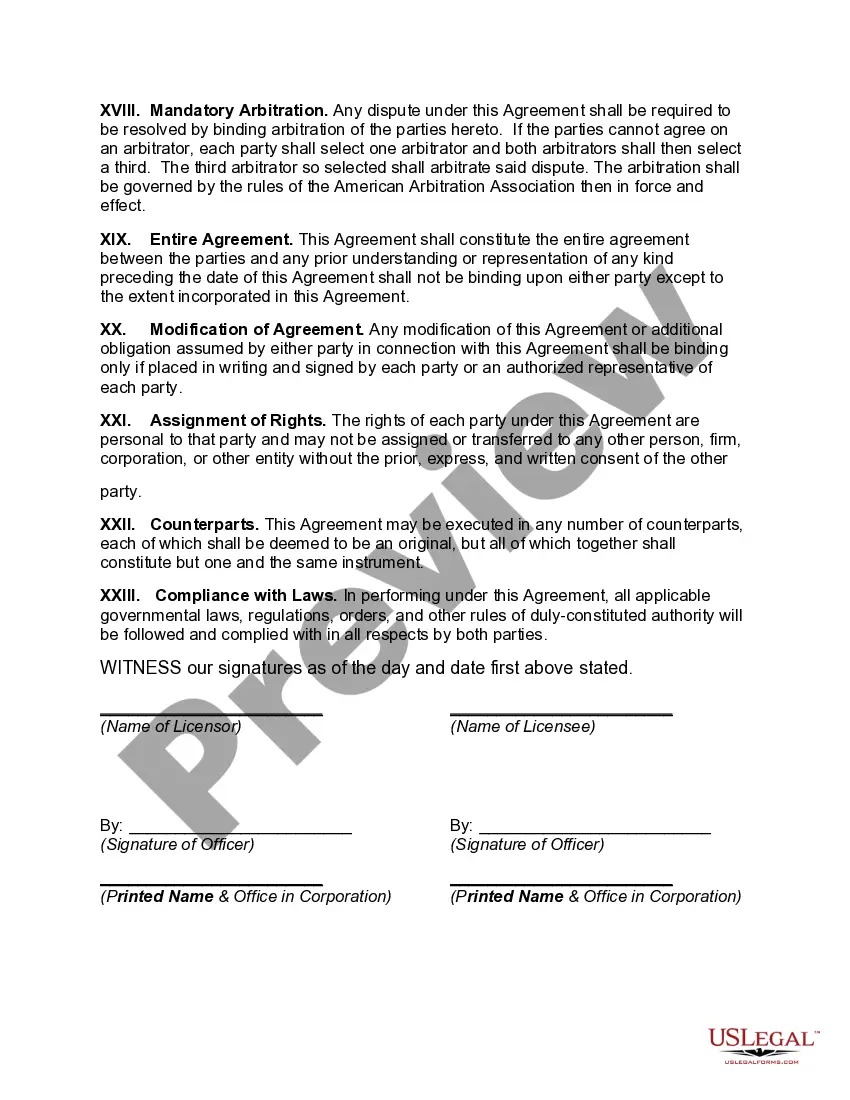
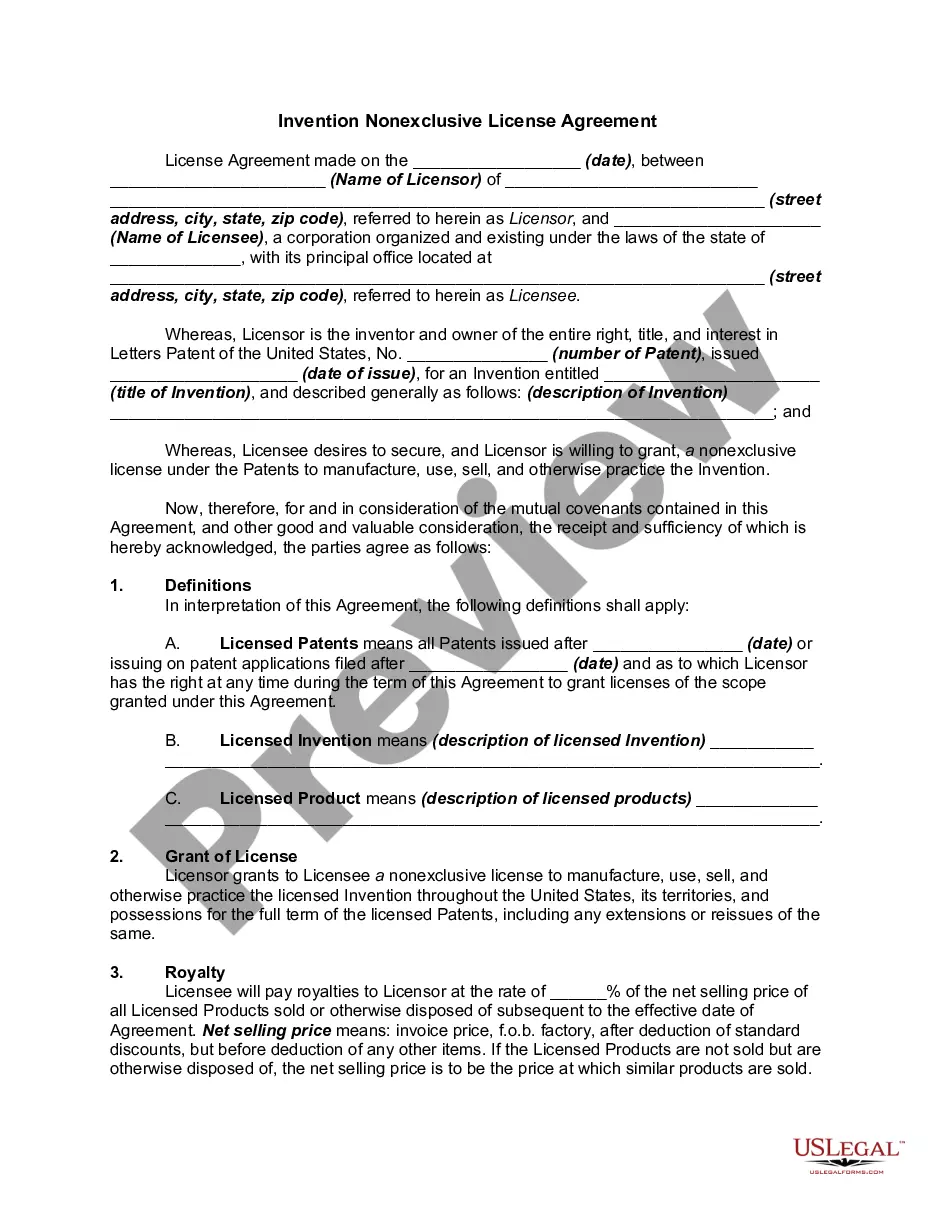
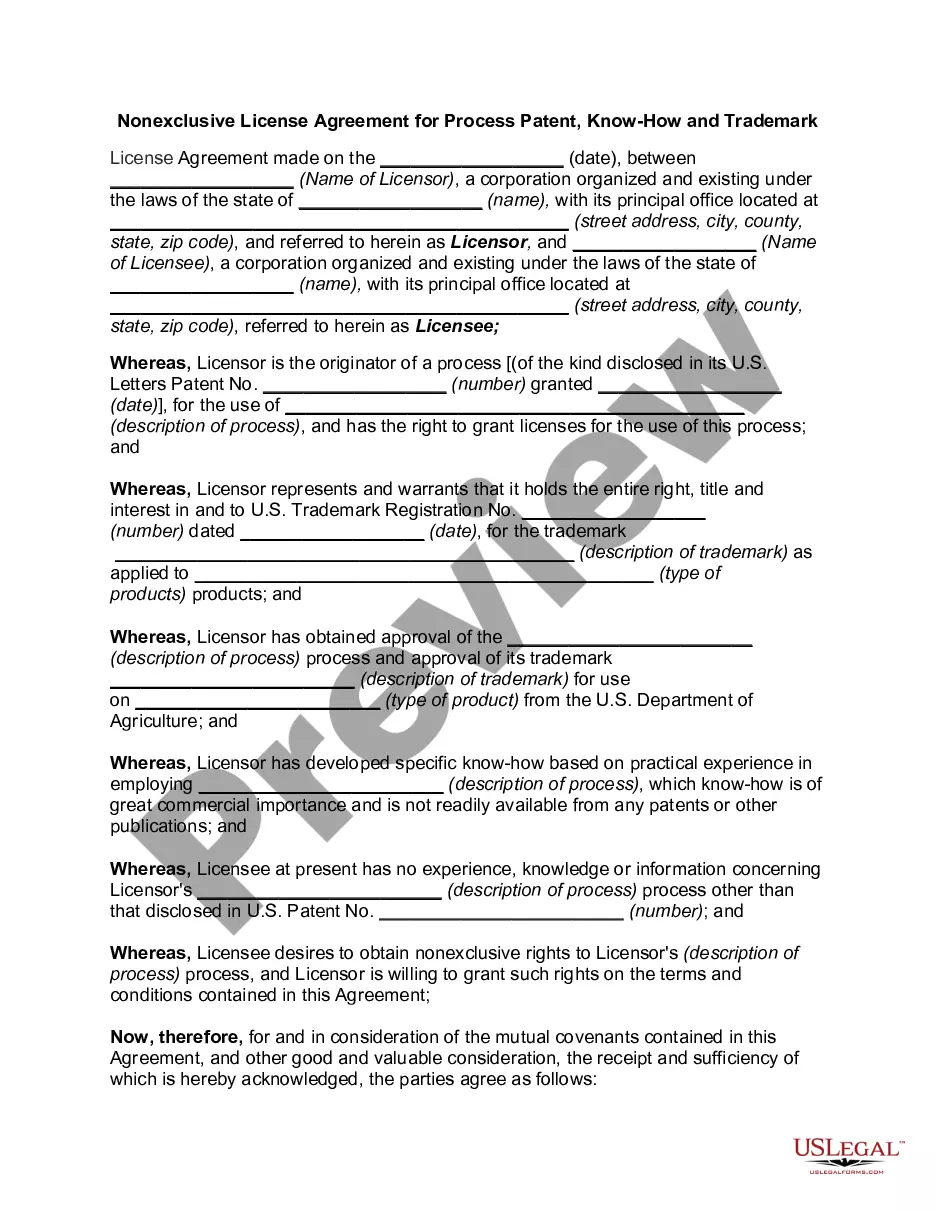
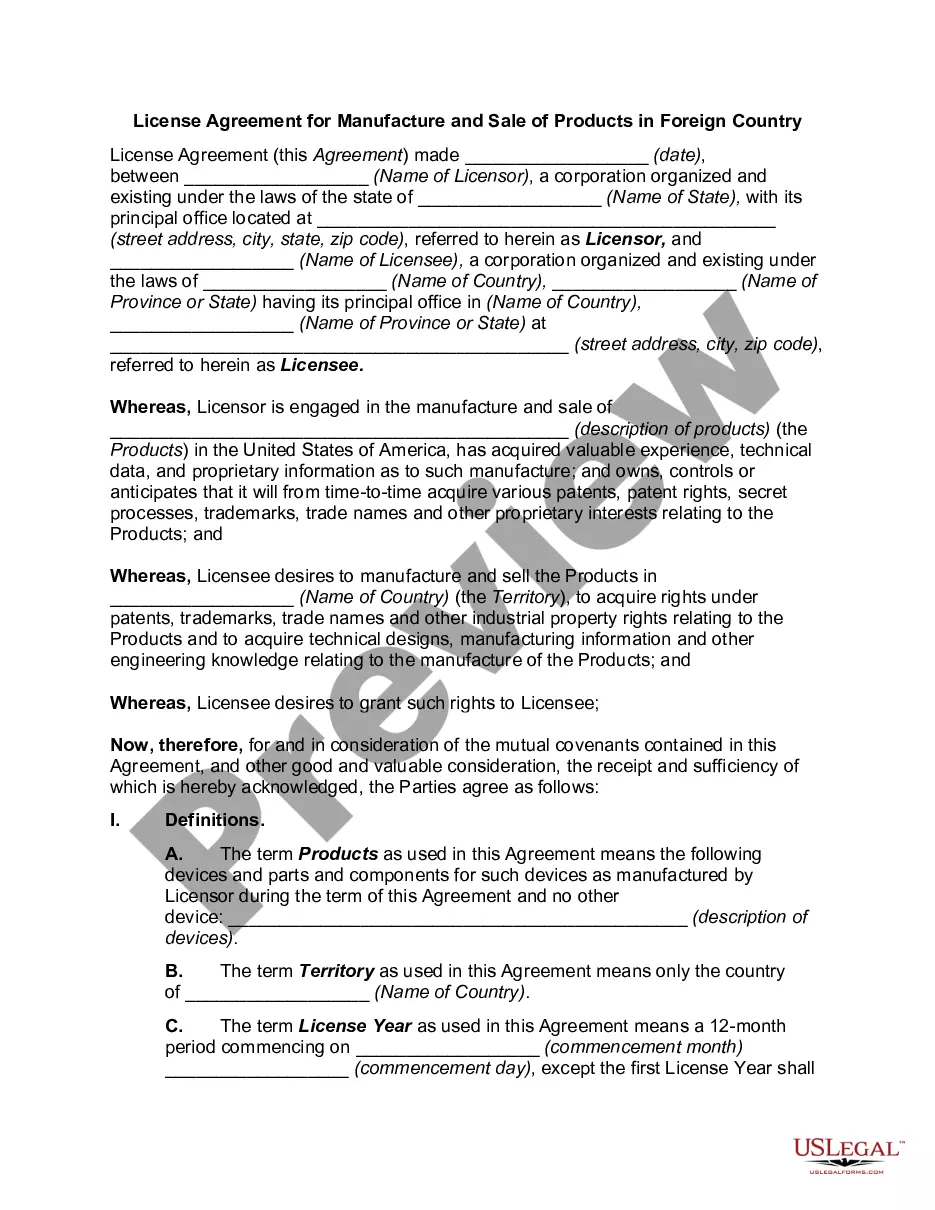
How to fill out Nonexclusive License Agreement For The Manufacture And Sale Of A Product?
If you wish to finish, acquire, or print accurate document templates, utilize US Legal Forms, the most extensive assortment of official forms available online.
Employ the site's simple and user-friendly search function to find the documents you need.
Numerous templates for business and personal applications are sorted by categories and recommendations, or keywords.
Every legal document template you purchase is yours forever.
You will have access to all forms you have saved within your account. Visit the My documents section and choose a form to print or download again.
- Step 1. Ensure you have selected the form for the correct city/state.
- Step 2. Use the Review feature to examine the form's content. Don't forget to read the description.
- Step 3. If you are not satisfied with the form, utilize the Search bar at the top of the screen to find other versions of the legal form template.
- Step 4. Once you have found the form you need, click on the Acquire now button. Choose the pricing plan you prefer and enter your details to sign up for an account.
- Step 5. Complete the transaction. You can use your credit card or PayPal account to finish the transaction.
- Step 6. Select the format of the legal form and download it to your device.
- Step 7. Complete, modify, and print or sign the Kentucky Nonexclusive License Agreement for the Manufacture and Sale of a Product.
Form popularity
FAQ
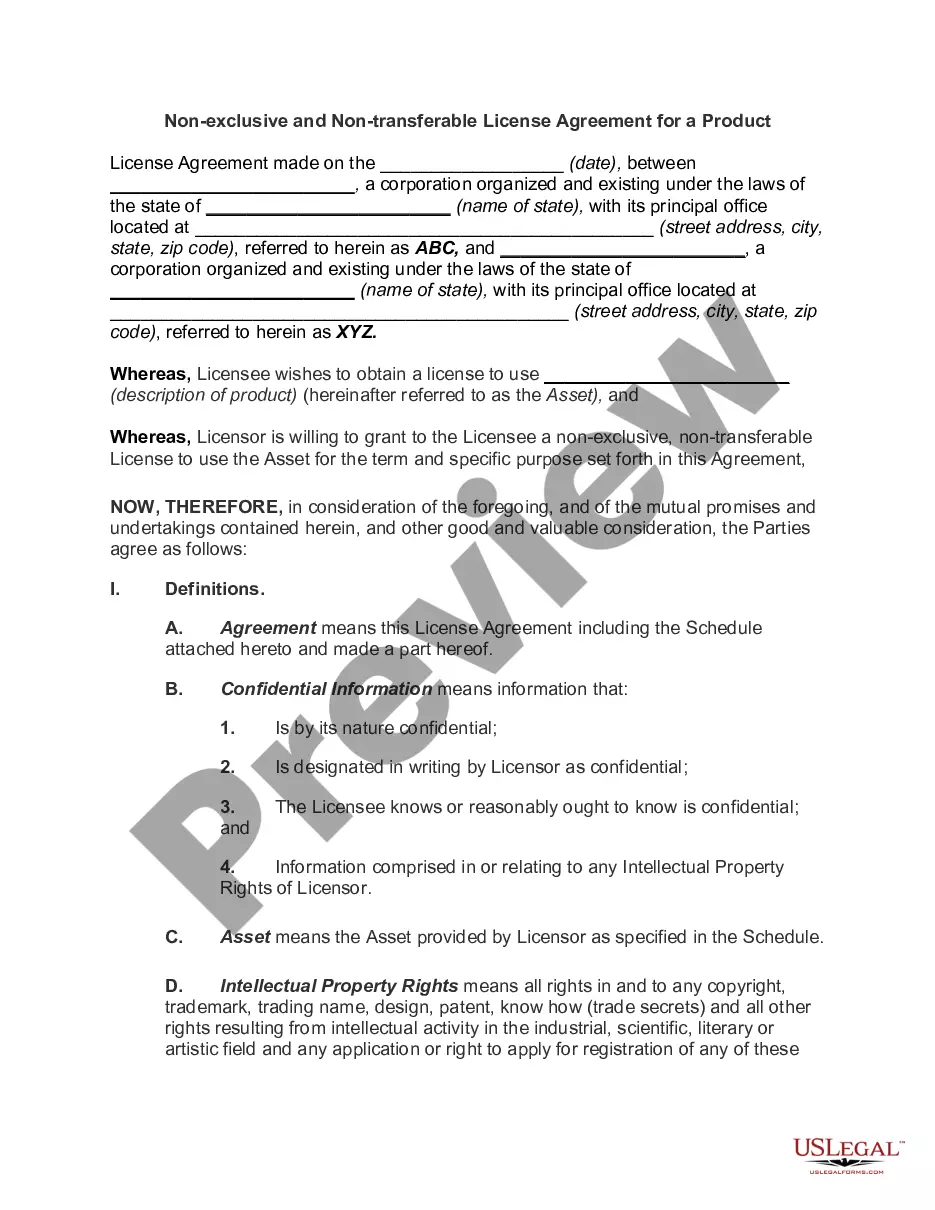
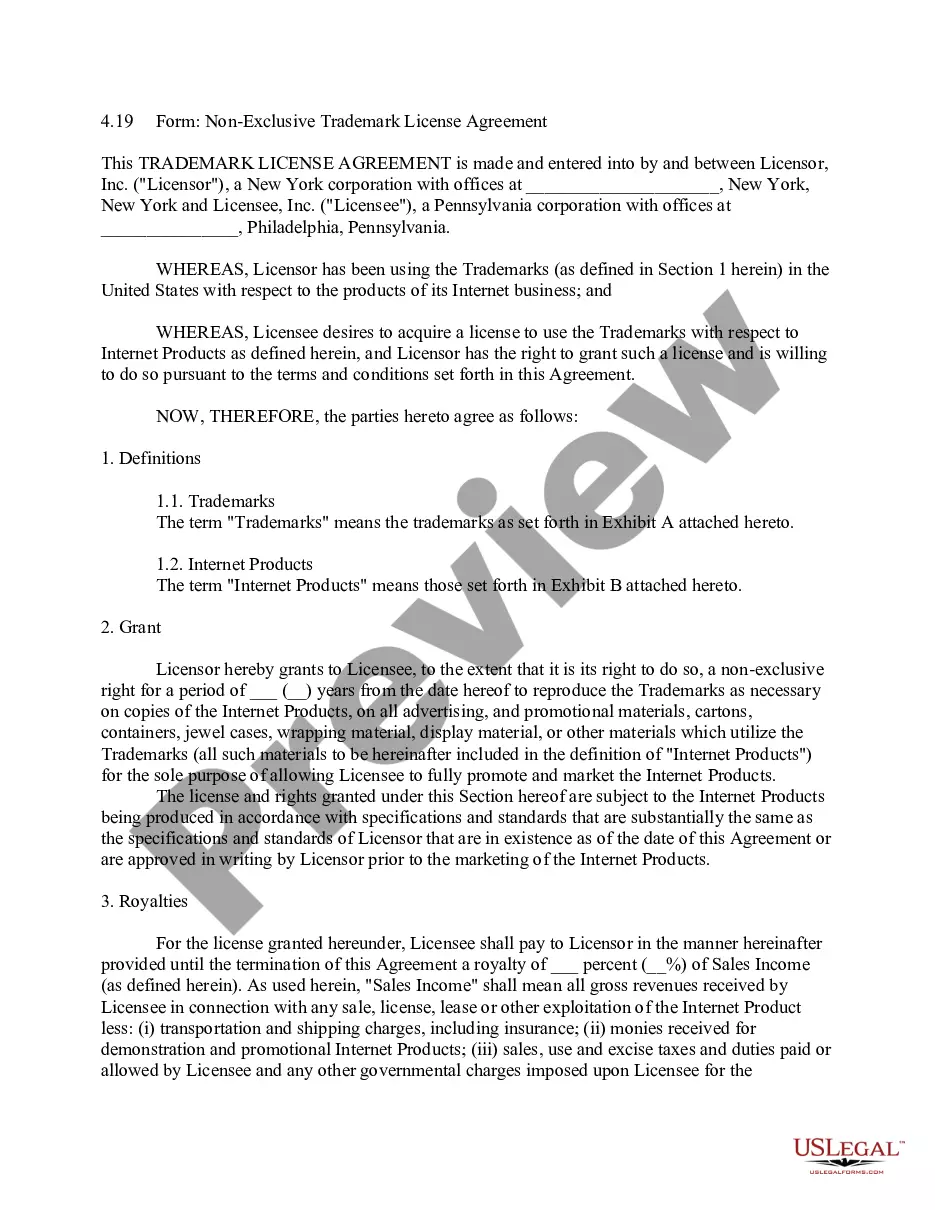
The two primary types of licensing agreements are exclusive licenses and non-exclusive licenses. Exclusive licenses grant the licensee sole rights to use the product, while non-exclusive licenses allow multiple parties to use the same product simultaneously. Understanding these types plays a vital role in establishing clear agreements like the Kentucky Nonexclusive License Agreement for the Manufacture and Sale of a Product.
An example of a non-exclusive license is when a software company allows multiple users to access and use its software while retaining ownership. This type of license permits the licensee to use the product without granting them exclusive rights. Businesses often utilize the Kentucky Nonexclusive License Agreement for the Manufacture and Sale of a Product to create similar arrangements without limiting their potential customer base.
exclusive license allows multiple entities to manufacture and sell a product without exclusive rights to any single entity. This means that several businesses can operate under a Kentucky Nonexclusive License Agreement for the Manufacture and Sale of a Product simultaneously. Such agreements can enhance market reach and foster healthy competition.
Types of licensing agreement The unique feature of this type of agreement is that even the licensor is excluded to use or exploit the licensed property during the term of the agreement. Copyright, trademark and patent licenses are the best examples of an exclusive license agreement.
A copyright license agreement outlines the entire licensing contract made between the copyright owner and the licensee. The license should include the following provisions: The names of the parties and the name and description of the work being licensed. A statement of ownership acknowledging who holds the copyright.
A license agreement is a business contract between two parties. The licensor (the seller of the license) owns the asset being licensed and the licensee (the buyer) pays for the right to use the license. The licensee pays the owner in exchange for the right to sell the product or use the technology.
Licensing agreements are found in many different industries. An example of a licensing agreement is a contract between the copyright holders of software and another company, allowing the latter to use the computer software for their daily business operations.
Practitioners and licensing executives often refer to three basic types of voluntary licenses: non-exclusive, sole, and exclusive. A non-exclusive licence allows the licensor to retain the right to use the licensed property and the right to grant additional licenses to third parties.
A licensing agreement is a contract between two parties (the licensor and licensee) in which the licensor grants the licensee the right to use the brand name, trademark, patented technology, or ability to produce and sell goods owned by the licensor.
A licensing agreement is a legal contract between two parties, known as the licensor and the licensee. In a typical licensing agreement, the licensor grants the licensee the right to produce and sell goods, apply a brand name or trademark, or use patented technology owned by the licensor.