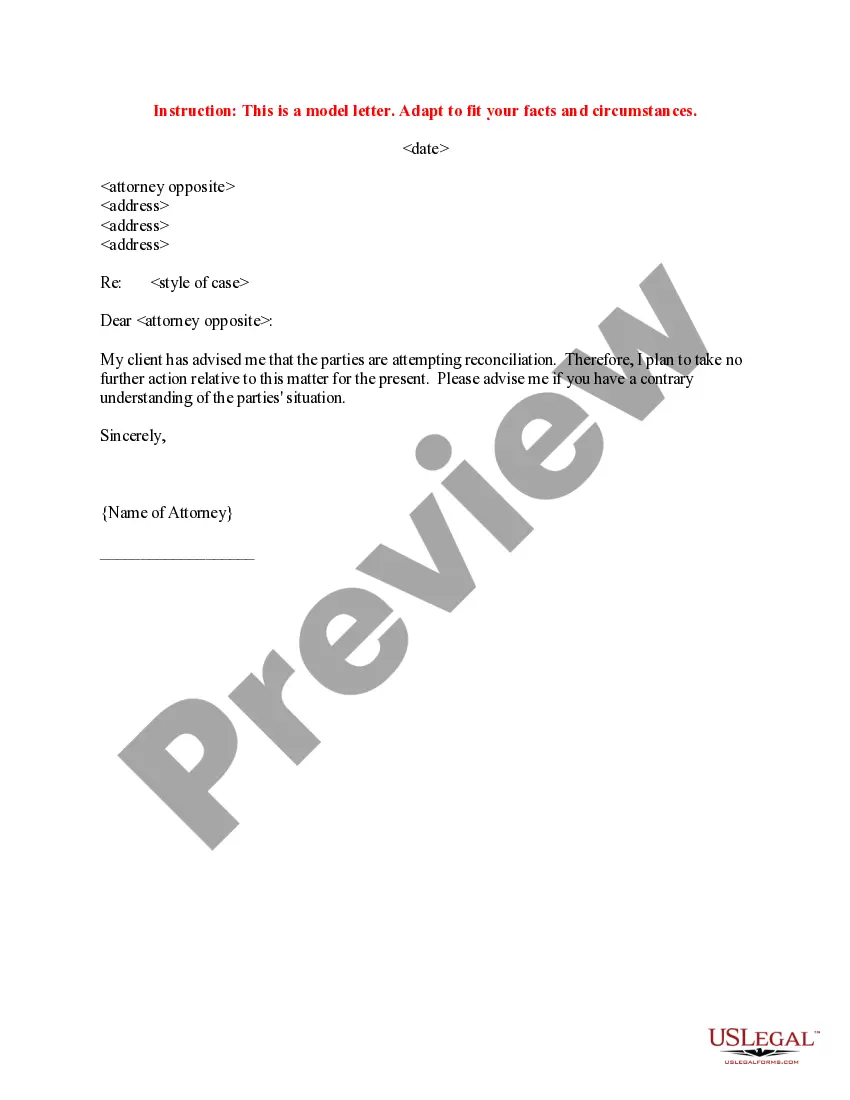
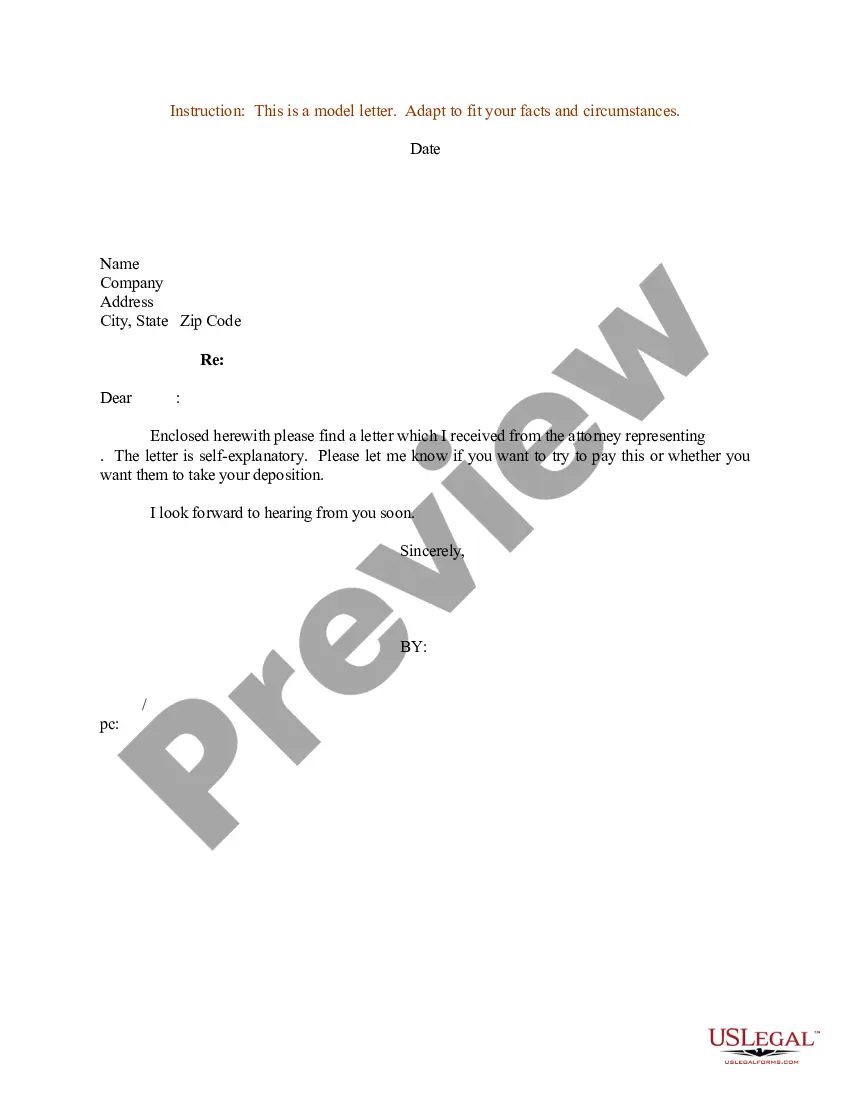
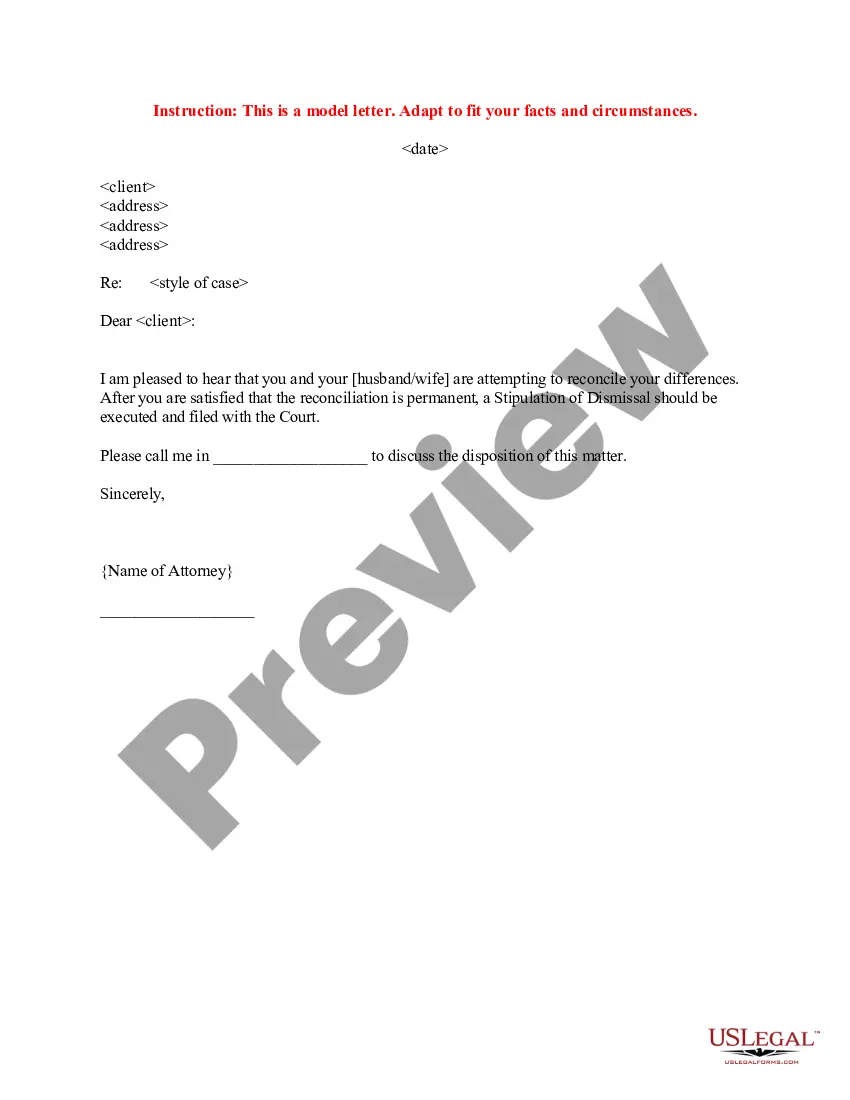
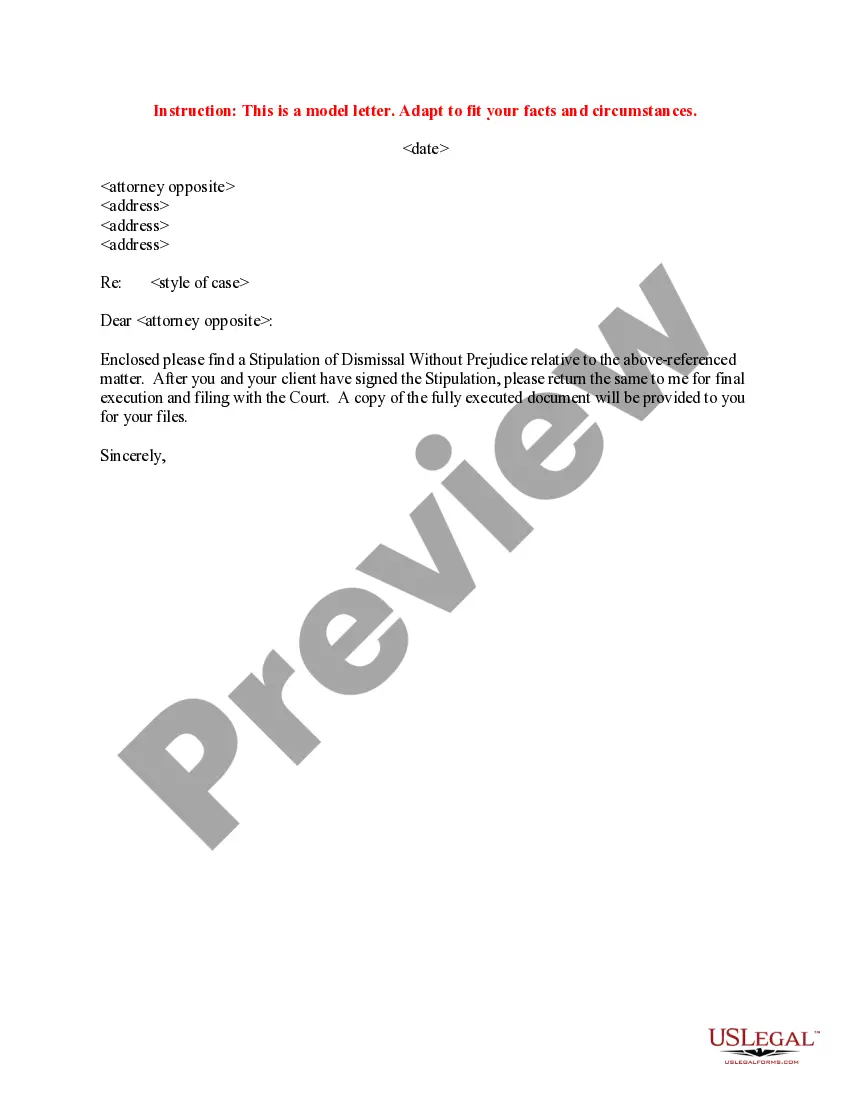
Kentucky Sample Letter to Attorney Opposite regarding Reconciliation
Description
Get your form ready online
Our built-in tools help you complete, sign, share, and store your documents in one place.
Make edits, fill in missing information, and update formatting in US Legal Forms—just like you would in MS Word.
Download a copy, print it, send it by email, or mail it via USPS—whatever works best for your next step.
Sign and collect signatures with our SignNow integration. Send to multiple recipients, set reminders, and more. Go Premium to unlock E-Sign.
If this form requires notarization, complete it online through a secure video call—no need to meet a notary in person or wait for an appointment.
We protect your documents and personal data by following strict security and privacy standards.

Make edits, fill in missing information, and update formatting in US Legal Forms—just like you would in MS Word.

Download a copy, print it, send it by email, or mail it via USPS—whatever works best for your next step.

Sign and collect signatures with our SignNow integration. Send to multiple recipients, set reminders, and more. Go Premium to unlock E-Sign.

If this form requires notarization, complete it online through a secure video call—no need to meet a notary in person or wait for an appointment.

We protect your documents and personal data by following strict security and privacy standards.
Looking for another form?



How to fill out Sample Letter To Attorney Opposite Regarding Reconciliation?
You can invest several hours online looking for the lawful document template that suits the federal and state specifications you require. US Legal Forms provides a huge number of lawful kinds which can be evaluated by professionals. You can easily download or print out the Kentucky Sample Letter to Attorney Opposite regarding Reconciliation from your services.
If you already possess a US Legal Forms profile, it is possible to log in and click on the Down load switch. Following that, it is possible to comprehensive, edit, print out, or sign the Kentucky Sample Letter to Attorney Opposite regarding Reconciliation. Every lawful document template you purchase is yours permanently. To obtain another backup of the acquired form, proceed to the My Forms tab and click on the corresponding switch.
If you work with the US Legal Forms website initially, keep to the easy directions listed below:
- Initial, make certain you have chosen the proper document template to the area/area of your liking. Look at the form outline to make sure you have chosen the proper form. If offered, use the Preview switch to search from the document template too.
- If you wish to find another model of the form, use the Look for field to find the template that suits you and specifications.
- Once you have located the template you want, click Buy now to carry on.
- Pick the costs plan you want, key in your credentials, and sign up for your account on US Legal Forms.
- Total the transaction. You can use your credit card or PayPal profile to purchase the lawful form.
- Pick the file format of the document and download it to your device.
- Make adjustments to your document if necessary. You can comprehensive, edit and sign and print out Kentucky Sample Letter to Attorney Opposite regarding Reconciliation.
Down load and print out a huge number of document layouts while using US Legal Forms web site, which offers the largest variety of lawful kinds. Use professional and condition-certain layouts to tackle your organization or specific needs.
Form popularity
FAQ
Close the letter with ?Respectfully." The proper way to close a letter to a judge is "Respectfully," followed by your full name on the line beneath. You may write "Respectfully yours," or "Respectfully submitted," if you prefer.
Every time you want to decline to represent a prospective client, you should use a non-engagement letter. Otherwise, you risk the possibility that the prospective client could mistakenly think you're their attorney on a matter.
Lead with the main purpose of your letter and then explain the reasons for your question or request. Be specific when referencing relevant information including names, dates and places. The more information you include, the better your attorney will be able to assist you.
How can lawyers write the perfect first email to a client? Pay Attention To The Subject Line. Keep It Short And Precise. Avoid Using Excessive Legal Terms. Always Mention If You Add Attachments. Use Templates. Make Sure It Is Correctly Written. Improve Your Email Signature. About the Author.
Be honestly kind, while sharing your genuine feelings. If angry or defensive feelings surface, remember underneath those feelings are softer ones such as sad, hurt, lonely, and worried. Only point out past experiences that you miss and want re-established.
The lawyer should send a disengagement letter to establish that the relationship is no longer continuing, and to refer the client to another lawyer. In the disengagement letter, the lawyer should warn the client of applicable time limitations, deadlines, and uncompleted investigation or casework.
Among them: ?If the relationship is very formal and deferential, stick with 'respectfully (yours),' or 'very respectfully (yours). '? If it's less formal, without deference (as in demand letters), try 'Very truly yours,' 'Yours very truly' or 'Yours truly.
At the end of the statement should be one's name, job description (for those signing on behalf of a business), and signature.