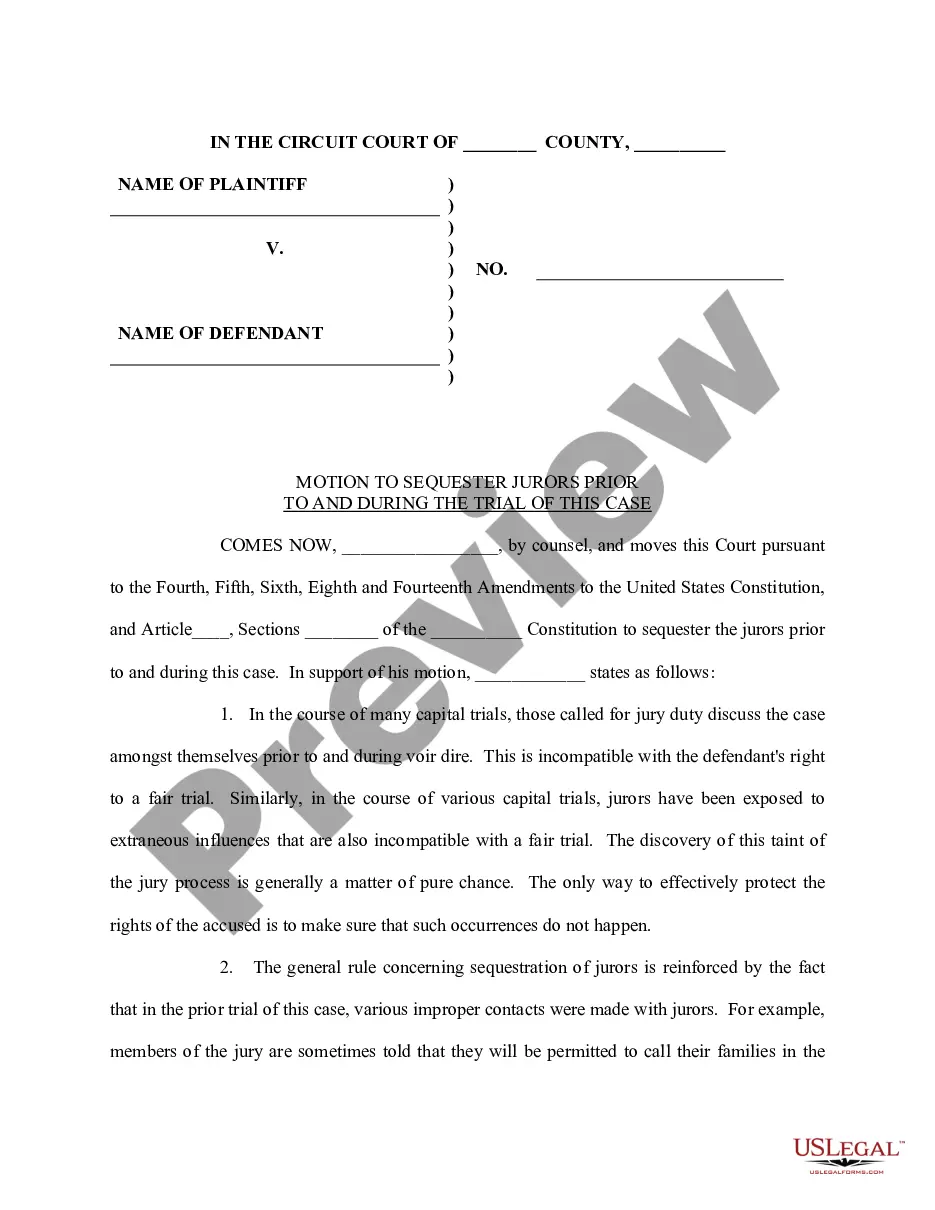
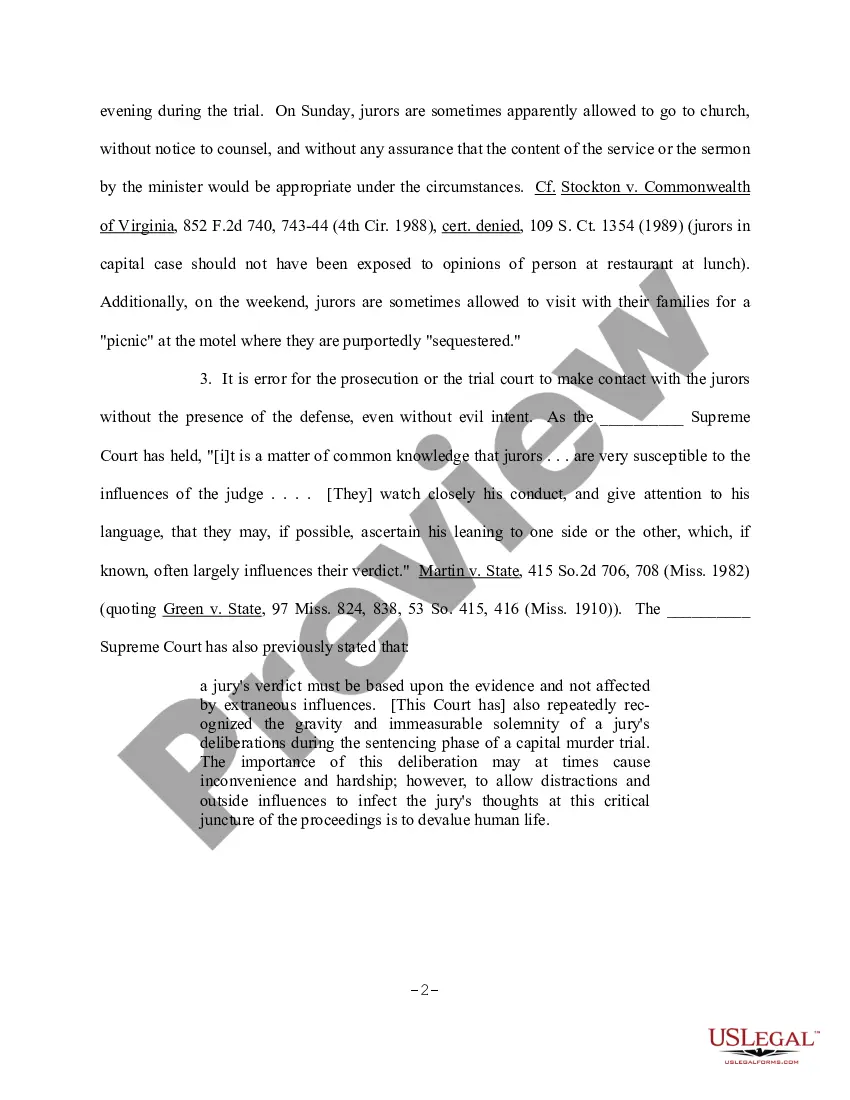
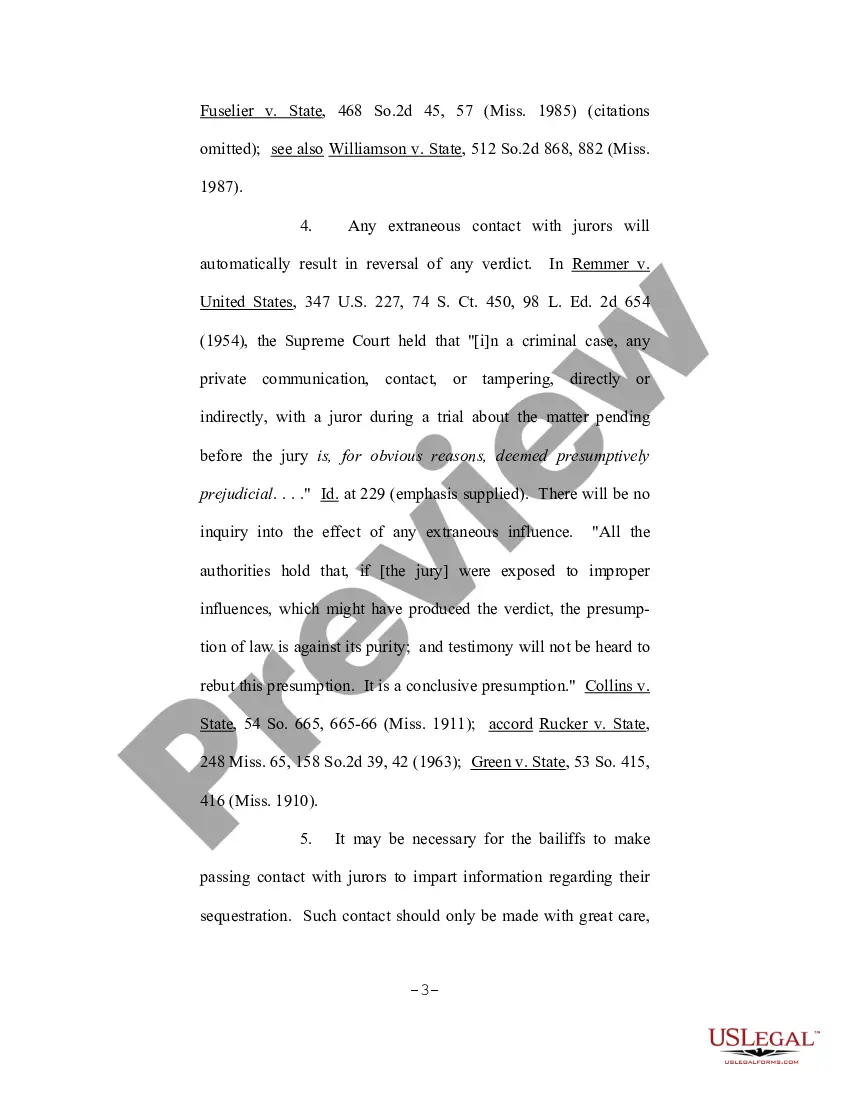
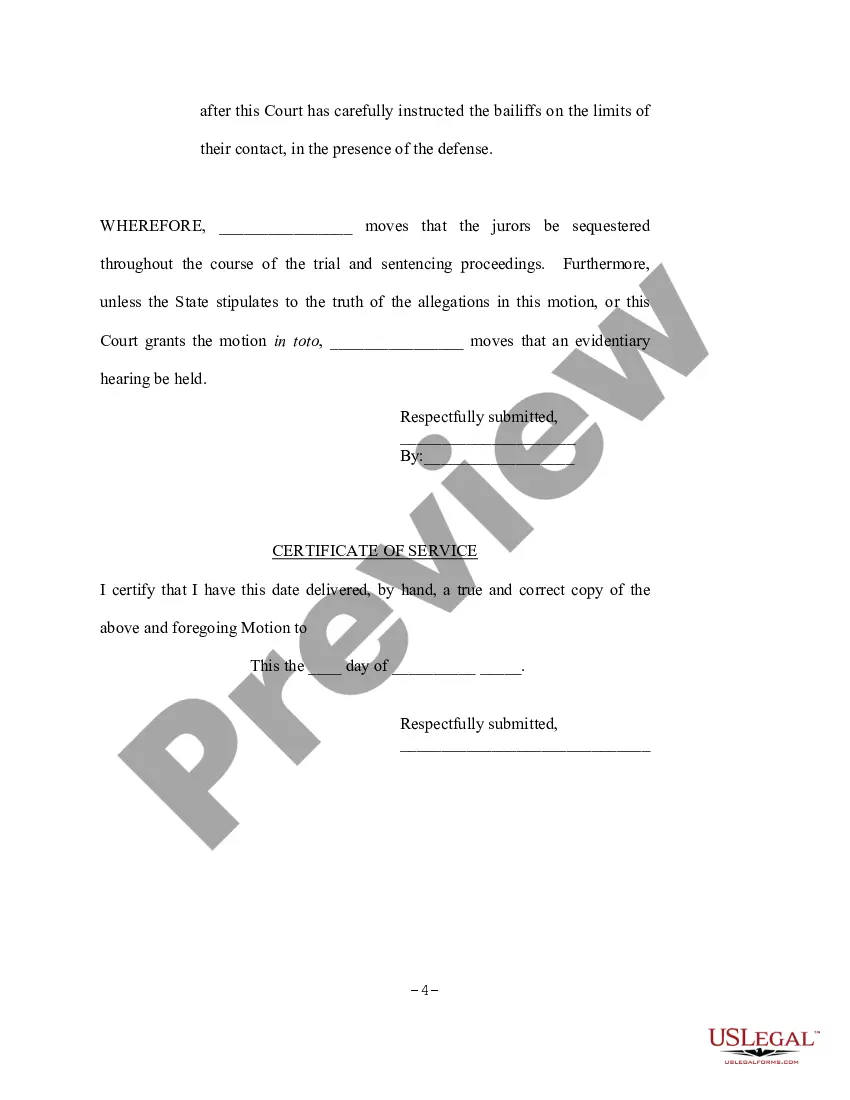
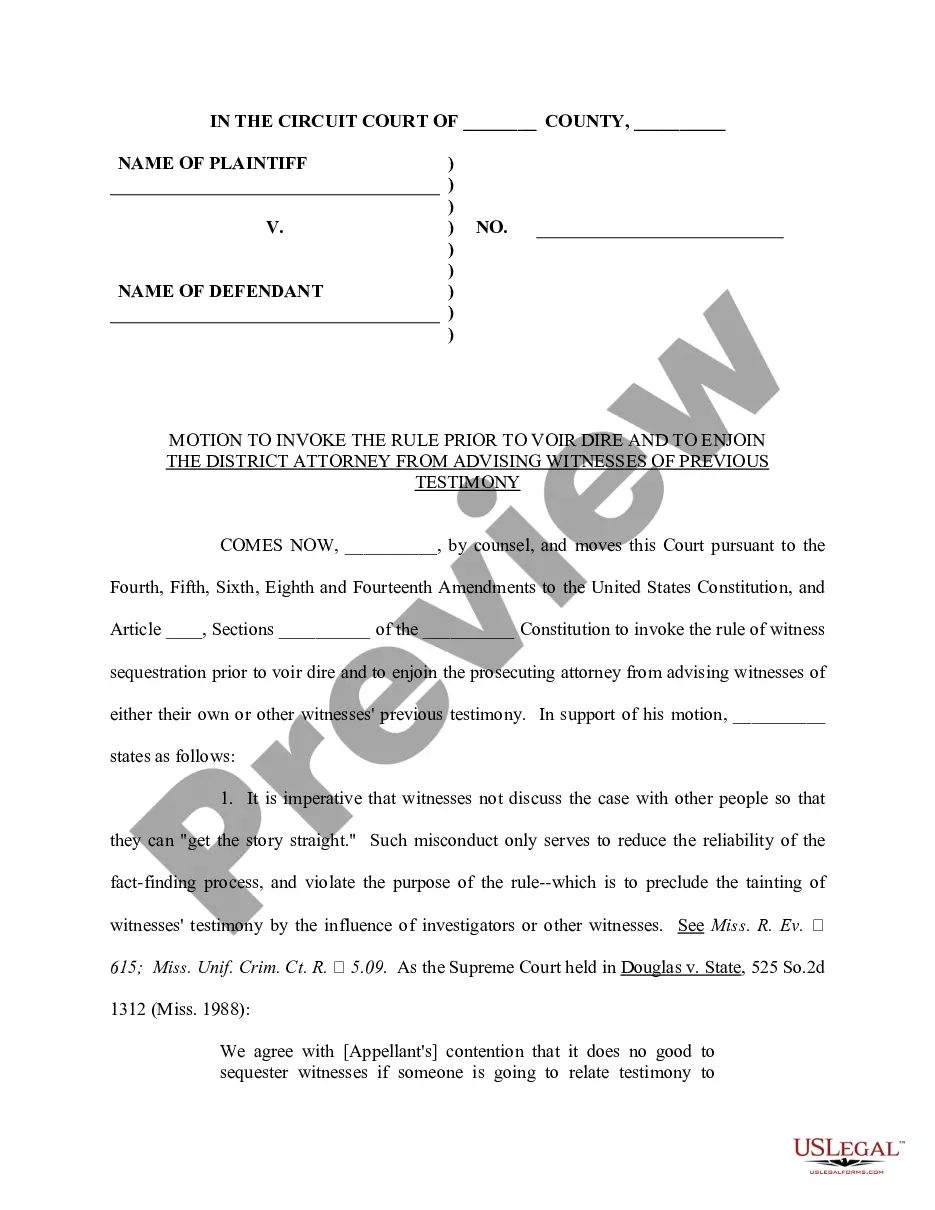
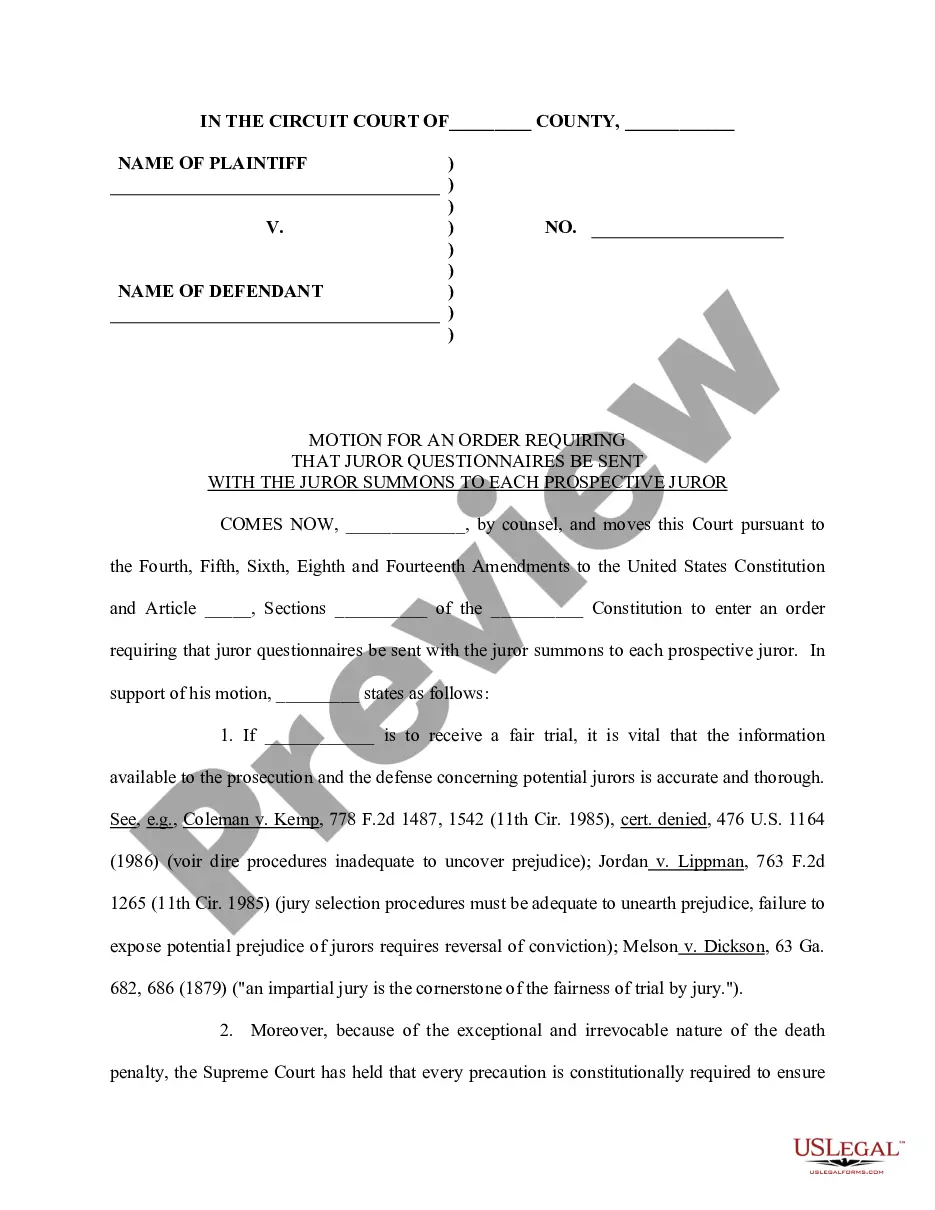
Kentucky Motion to Sequester Jurors Prior to and During the Trial of this Case
Description
Get your form ready online
Our built-in tools help you complete, sign, share, and store your documents in one place.
Make edits, fill in missing information, and update formatting in US Legal Forms—just like you would in MS Word.
Download a copy, print it, send it by email, or mail it via USPS—whatever works best for your next step.
Sign and collect signatures with our SignNow integration. Send to multiple recipients, set reminders, and more. Go Premium to unlock E-Sign.
If this form requires notarization, complete it online through a secure video call—no need to meet a notary in person or wait for an appointment.
We protect your documents and personal data by following strict security and privacy standards.

Make edits, fill in missing information, and update formatting in US Legal Forms—just like you would in MS Word.

Download a copy, print it, send it by email, or mail it via USPS—whatever works best for your next step.

Sign and collect signatures with our SignNow integration. Send to multiple recipients, set reminders, and more. Go Premium to unlock E-Sign.

If this form requires notarization, complete it online through a secure video call—no need to meet a notary in person or wait for an appointment.

We protect your documents and personal data by following strict security and privacy standards.
Looking for another form?
How to fill out Motion To Sequester Jurors Prior To And During The Trial Of This Case?
Have you ever been in a situation where you require documents for either business or personal reasons on a daily basis.
There are numerous legal document templates accessible online, but finding ones you can trust is challenging.
US Legal Forms offers thousands of form templates, including the Kentucky Motion to Sequester Jurors Prior to and During the Trial of this Case, which are designed to comply with state and federal requirements.
Once you find the appropriate form, click on Buy now.
Choose the payment plan you prefer, complete the required information to create your account, and pay for the order using your PayPal or credit card.
- If you are already familiar with the US Legal Forms website and possess an account, just Log In.
- After that, you can download the Kentucky Motion to Sequester Jurors Prior to and During the Trial of this Case template.
- If you do not have an account and wish to use US Legal Forms, follow these instructions.
- Obtain the form you need and ensure it is for the correct state/region.
- Utilize the Review option to assess the form.
- Read the description to confirm that you have selected the right form.
- If the form is not what you are seeking, use the Search field to find the form that suits your needs.
Form popularity
FAQ
Once a year, we draw several thousand names from the voter registration list. We send those people qualification forms. That form is used to determine whether you are qualified to serve as a juror. If the Court finds that you are qualified, you will be eligible to be summoned.
In the context of a trial, sequestration refers to the isolation of a jury to prevent its members from being tampered with or prejudiced by media coverage. Jury sequestration is rare, and is usually reserved for high-profile criminal cases.
270 Right to jury trial. (1) Defendants shall have the right to a jury trial in all criminal prosecutions, including prosecutions for violations of traffic laws, in the Circuit and District Courts. The defendant may request a jury trial at any time prior to the time his case is called for trial.
Under the Sixth Amendment and Article III, Section 2 of the Constitution, you have the right to a jury trial if a serious crime is charged. The right to a jury trial doesn't apply in all situations, and in some cases, it is not wise to exercise the right.
There have been many high-profile criminal cases over the years where juries were sequestered, such as Bill Cosby's sexual assault trial, and the murder trials of Casey Anthony and George Zimmerman. The O.J. Simpson trial required the longest sequestration in history: 265 days, at a cost of $2 million.
Amendment Seven to the Constitution was ratified on December 15, 1791. It protects the right for citizens to have a jury trial in federal courts with civil cases where the claim exceeds a certain dollar value. It also prohibits judges in these trials from overruling facts revealed by the jury.
(2) A prospective juror is disqualified to serve on a jury if he or she: (a) Is under 18 years of age; (b) Is not a citizen of the United States; (c) Is not a resident of the county; (d) Has insufficient knowledge of the English language; (e) Has been previously convicted of a felony and: 1.
(2) A prospective juror is disqualified to serve on a jury if he or she: (a) Is under 18 years of age; (b) Is not a citizen of the United States; (c) Is not a resident of the county; (d) Has insufficient knowledge of the English language; (e) Has been previously convicted of a felony and: 1.