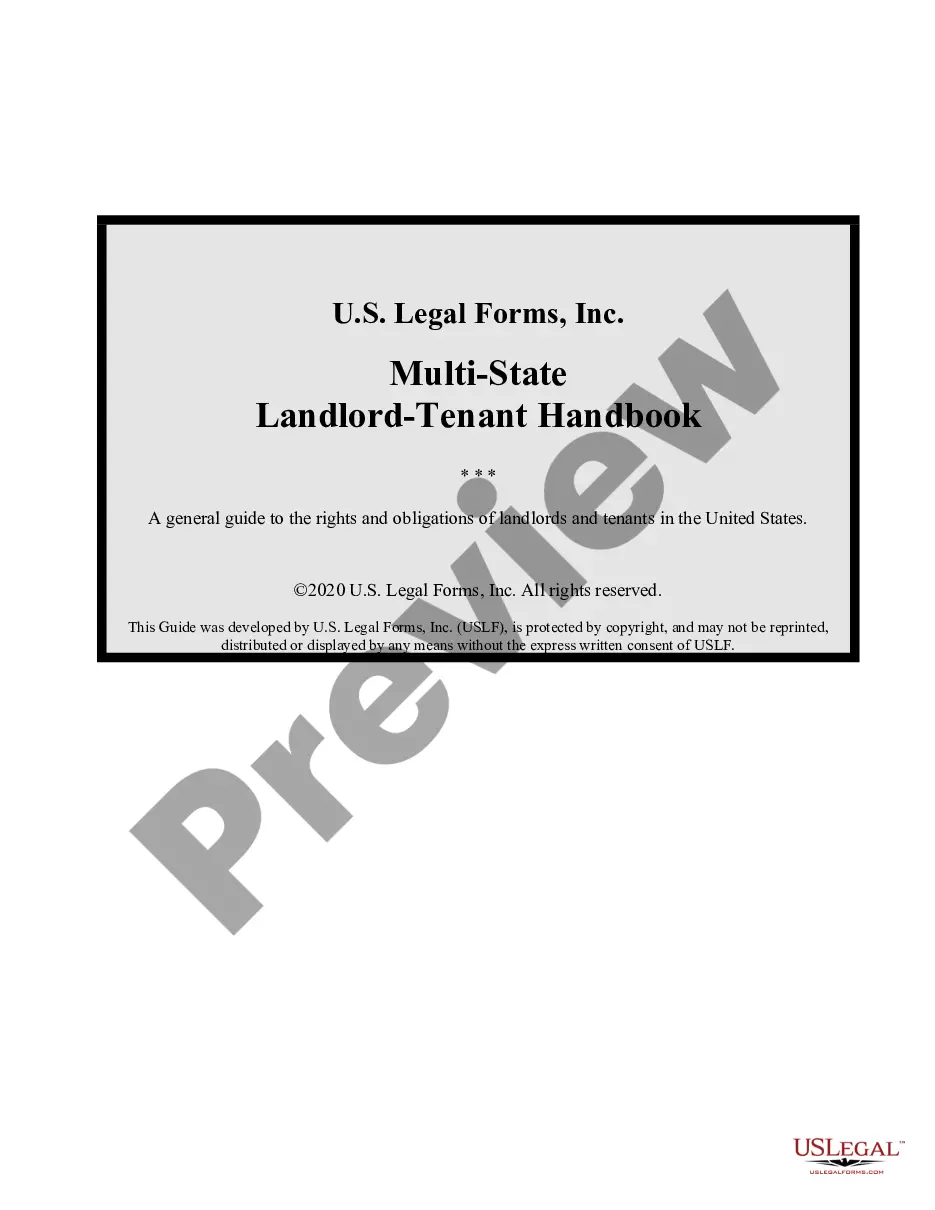
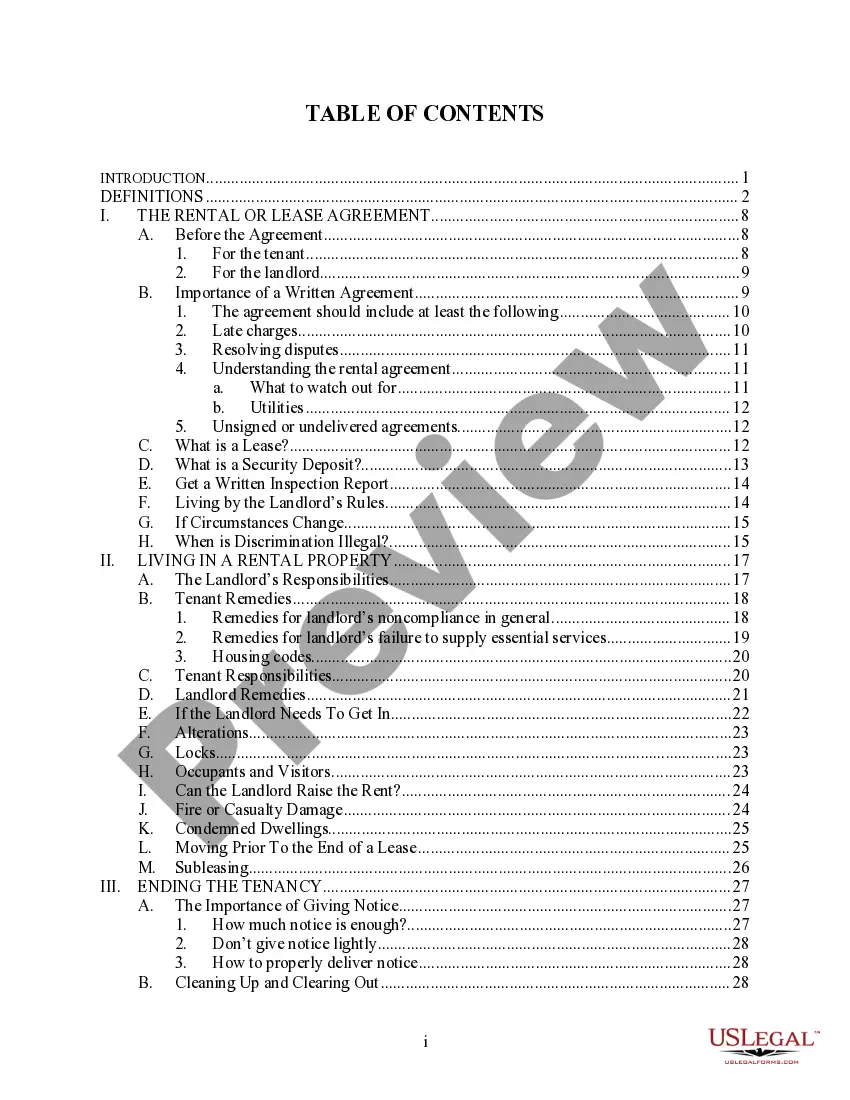
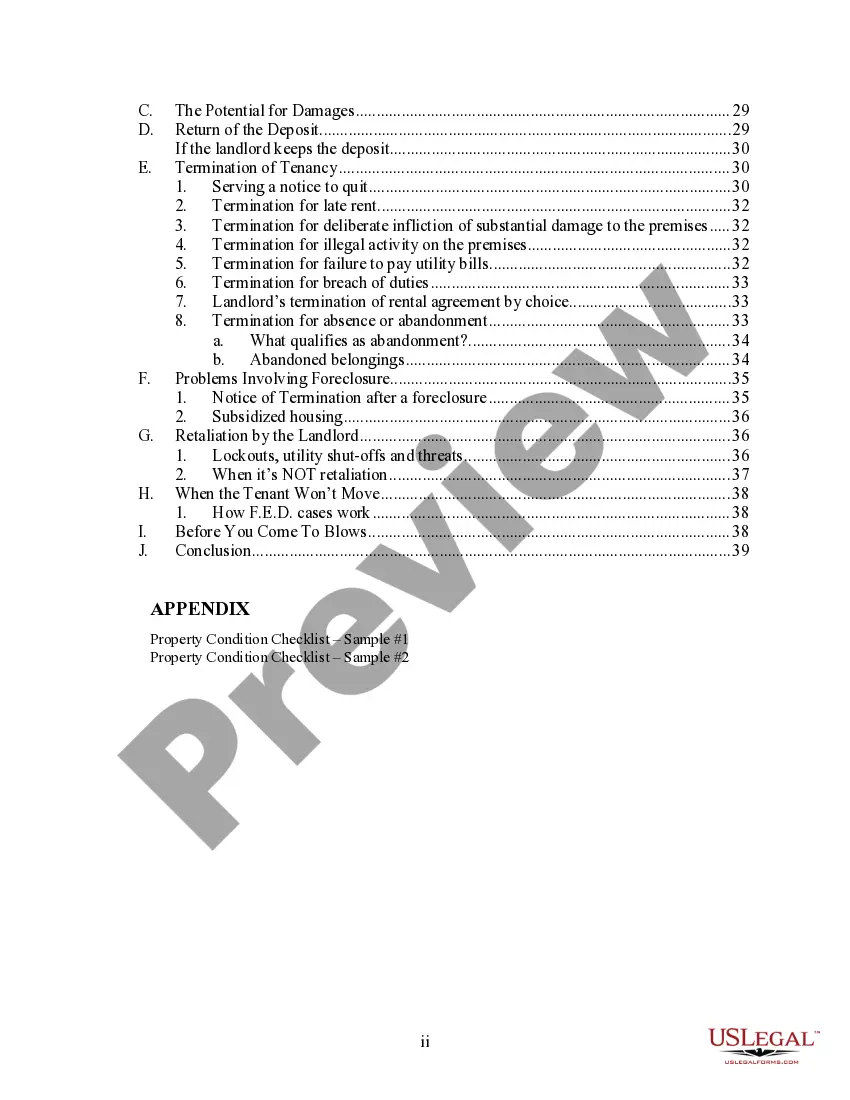
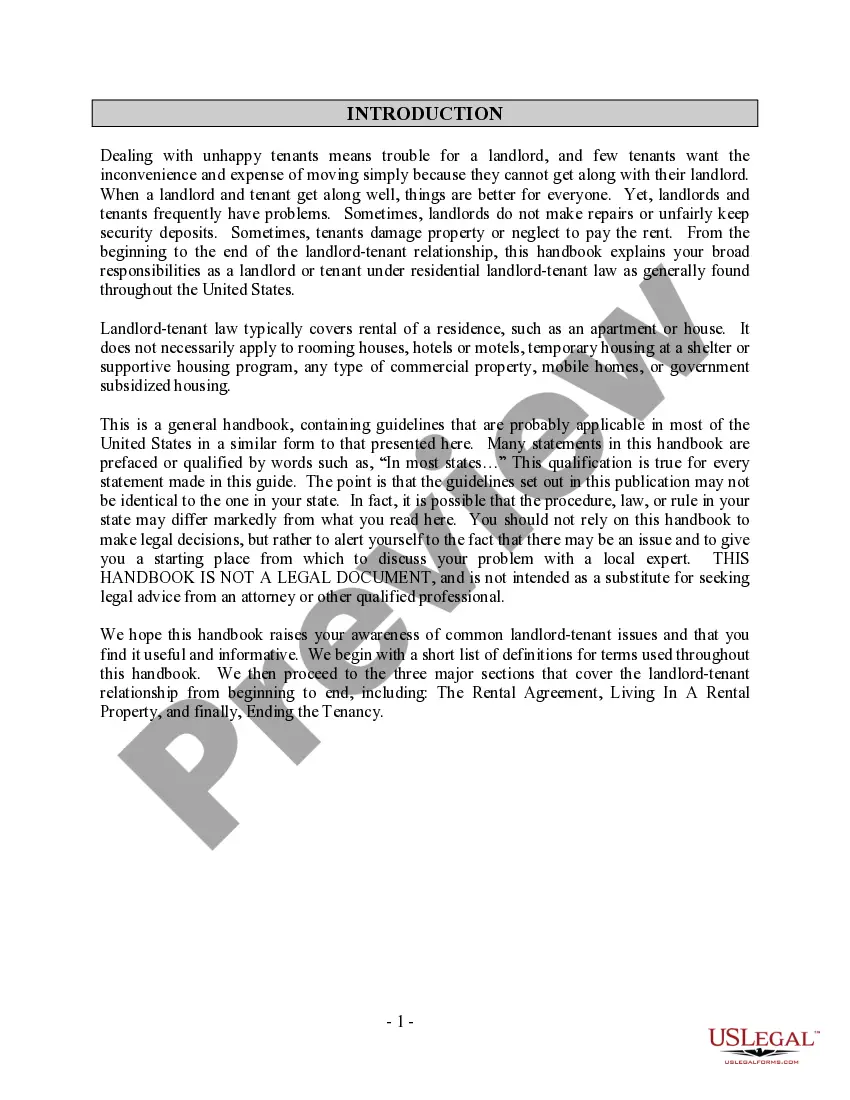
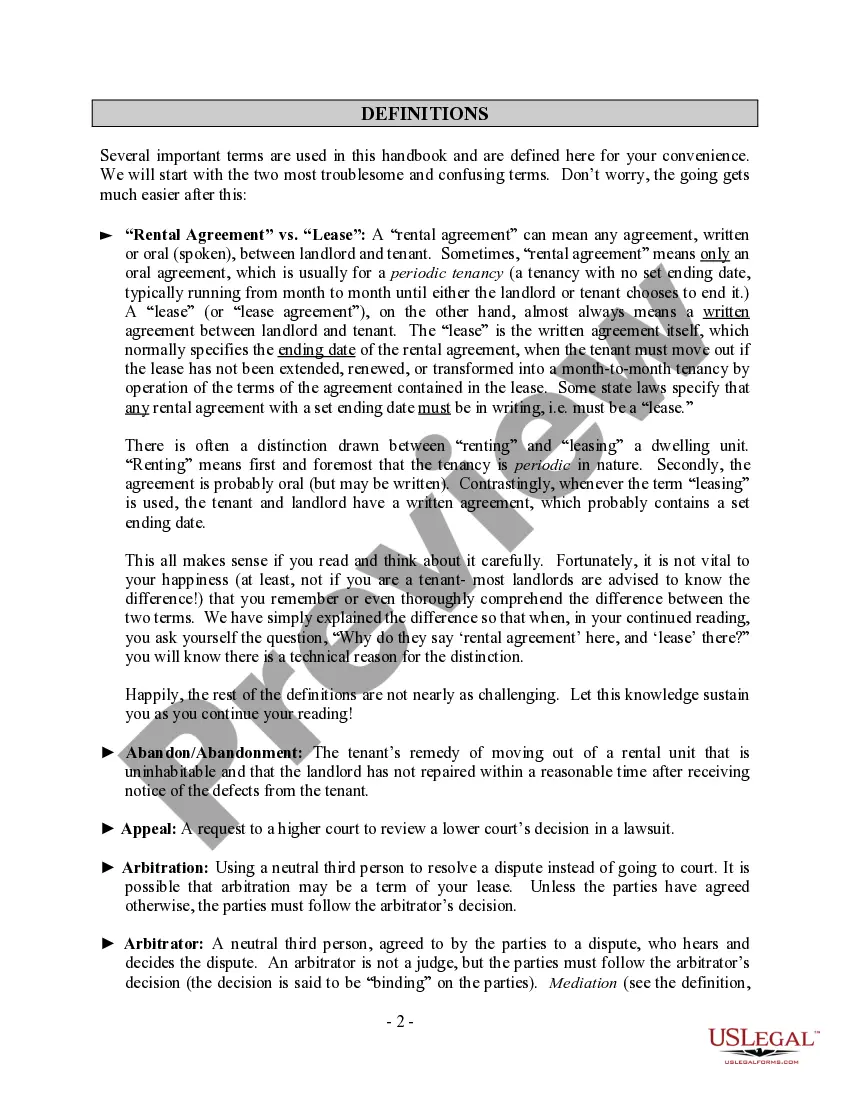
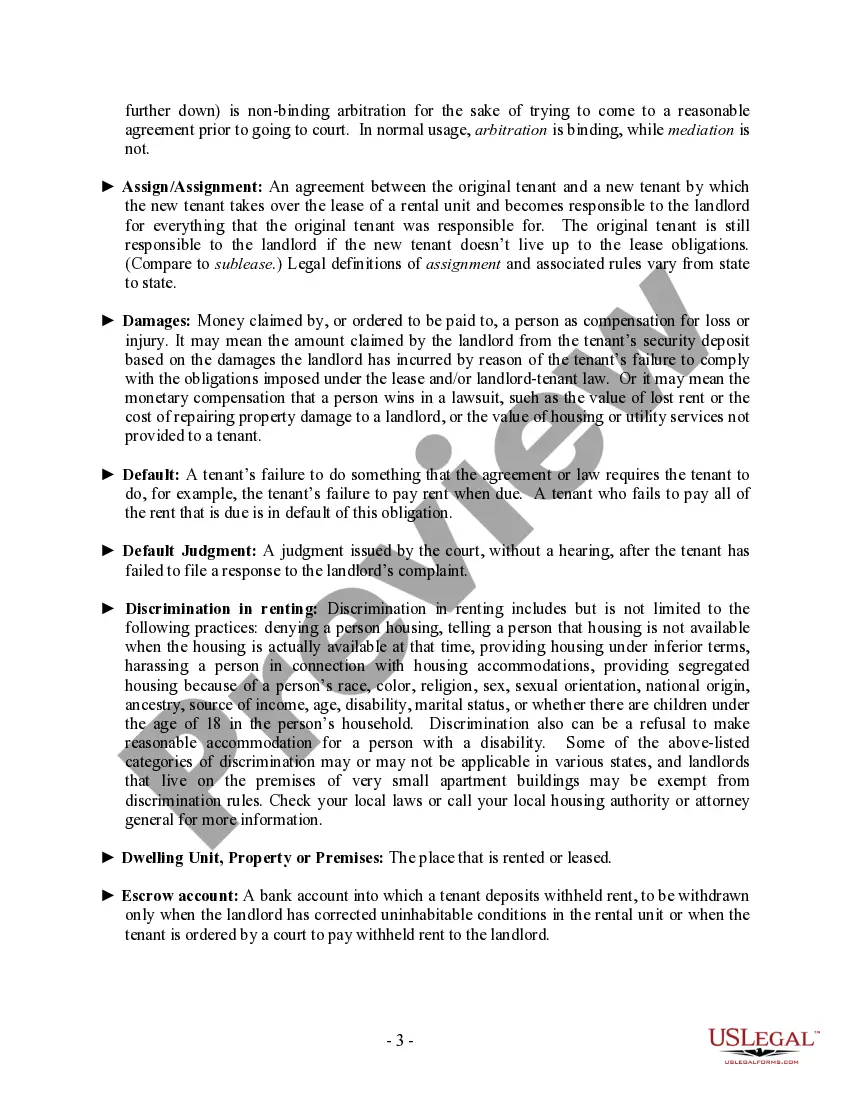
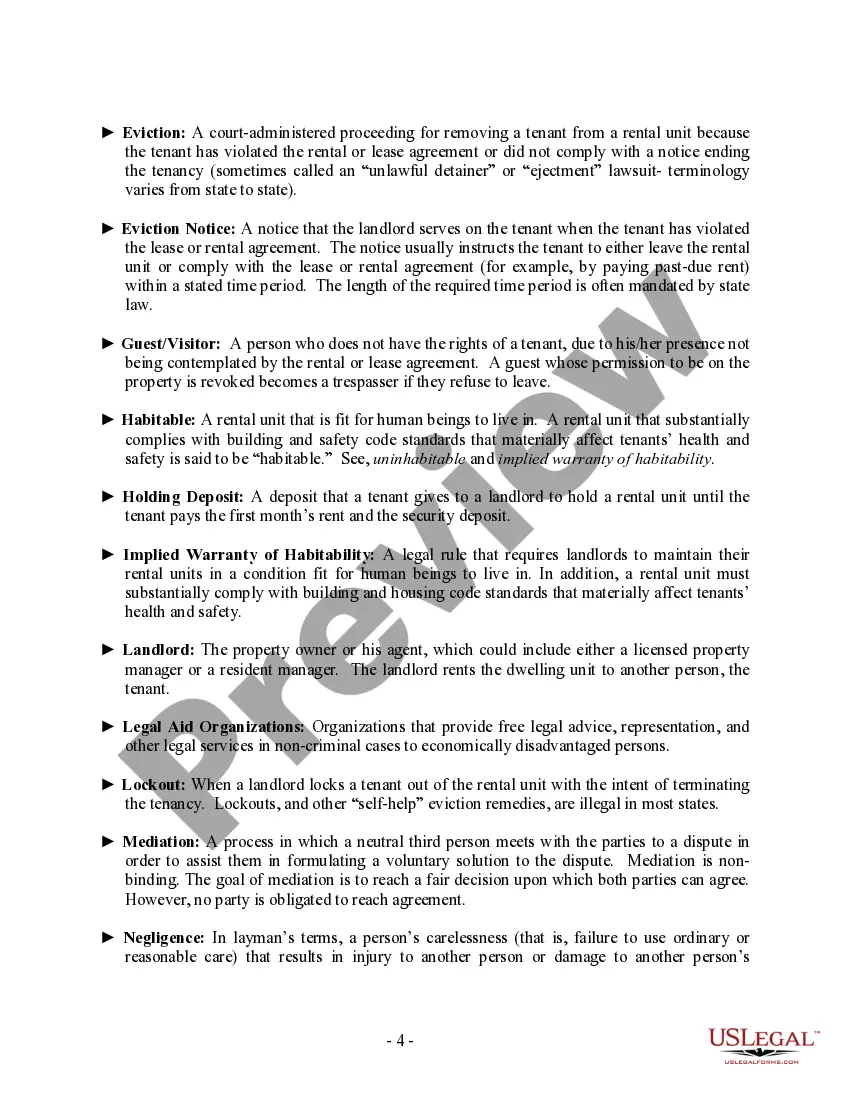
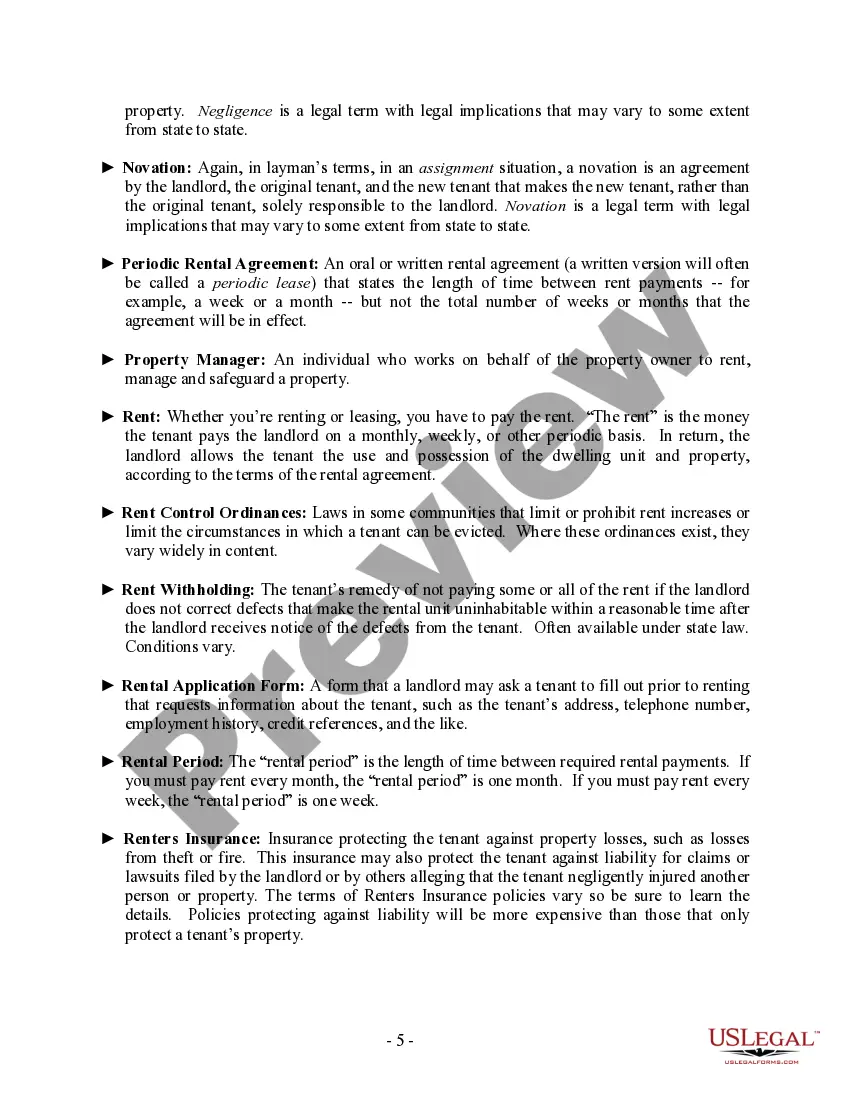
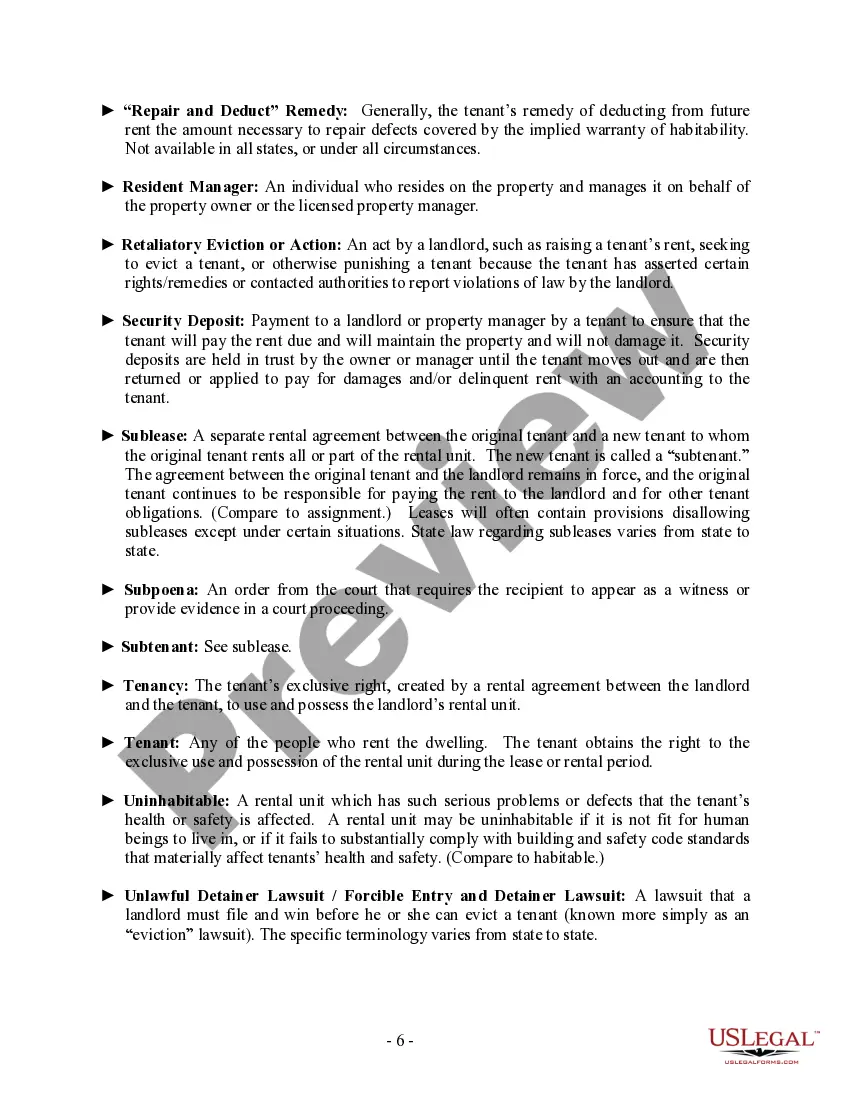
This Handbook summarizes the rights and obligations of landlords and tenants, and is designed to be a helpful guide to both landlords and tenants. Information about rental applications, leases, security deposits, inventory checklists, repair responsibilities, rent increases, termination of leases, eviction notices and much more is included in 40+ pages of materials.
Kansas Multistate Landlord Tenant Handbook - Guide - Laws
187 downloads
Description
Free preview

Get your form ready online
Our built-in tools help you complete, sign, share, and store your documents in one place.
Built-in online Word editor
Make edits, fill in missing information, and update formatting in US Legal Forms—just like you would in MS Word.
Export easily
Download a copy, print it, send it by email, or mail it via USPS—whatever works best for your next step.
E-sign your document
Sign and collect signatures with our SignNow integration. Send to multiple recipients, set reminders, and more. Go Premium to unlock E-Sign.
Notarize online 24/7
If this form requires notarization, complete it online through a secure video call—no need to meet a notary in person or wait for an appointment.
Store your document securely
We protect your documents and personal data by following strict security and privacy standards.

Make edits, fill in missing information, and update formatting in US Legal Forms—just like you would in MS Word.

Download a copy, print it, send it by email, or mail it via USPS—whatever works best for your next step.

Sign and collect signatures with our SignNow integration. Send to multiple recipients, set reminders, and more. Go Premium to unlock E-Sign.

If this form requires notarization, complete it online through a secure video call—no need to meet a notary in person or wait for an appointment.

We protect your documents and personal data by following strict security and privacy standards.
Looking for another form?
How to fill out Multistate Landlord Tenant Handbook - Guide - Laws?
Are you presently in a circumstance where you frequently require documents for either business or personal purposes? There are numerous legal document templates accessible online, but locating reliable ones can be challenging. US Legal Forms offers thousands of document templates, such as the Kansas Multistate Landlord Tenant Handbook - Guide - Laws, that are designed to meet federal and state requirements.
If you are already familiar with the US Legal Forms website and have an account, simply Log In. After that, you can download the Kansas Multistate Landlord Tenant Handbook - Guide - Laws template.
If you do not have an account and wish to start using US Legal Forms, follow these steps: Obtain the document you need and ensure it is for the correct city/state. Use the Preview button to review the form. Read the description to confirm you have selected the right document. If the document is not what you require, utilize the Search section to find the document that suits your needs and specifications. Once you find the correct document, click Purchase now. Choose the pricing plan you want, fill in the necessary information to set up your account, and pay for the transaction using your PayPal or credit card. Select a convenient document format and download your copy. Access all the document templates you have purchased in the My documents menu. You can obtain an additional copy of the Kansas Multistate Landlord Tenant Handbook - Guide - Laws at any time if needed. Just select the required document to download or print the template.
- Employ US Legal Forms, the most extensive collection of legal documents, to save time and prevent mistakes.
- The service offers professionally crafted legal document templates that can be utilized for various purposes.
- Create your account on US Legal Forms and start making your life easier.
Form popularity
FAQ
Landlord negligence occurs when a property owner fails to maintain safe living conditions for tenants. This can include ignoring necessary repairs, failing to provide adequate security, or not addressing health hazards like mold. Understanding these responsibilities is crucial, and the Kansas Multistate Landlord Tenant Handbook - Guide - Laws can provide detailed insights into your rights and obligations as a tenant or landlord. By being informed, you can better protect yourself and ensure a safe, habitable environment.
When speaking with your landlord, avoid making accusations or threats. Instead, focus on discussing issues calmly and respectfully. You should not say things like, 'You never fix anything,' as this can escalate tensions. The Kansas Multistate Landlord Tenant Handbook - Guide - Laws emphasizes the importance of maintaining a professional relationship, ensuring clear communication to resolve disputes effectively.
Landlords in Kansas are prohibited from engaging in illegal practices such as retaliating against tenants for exercising their rights or discriminating based on race, gender, or other protected statuses. Additionally, they cannot enter a tenant's unit without proper notice or fail to address essential repairs. The Kansas Multistate Landlord Tenant Handbook - Guide - Laws outlines these illegal actions clearly. By using this handbook, tenants can better protect themselves against unfair treatment from landlords.
In Kansas, a 14/30 notice refers to the timeframe in which a landlord must address specific lease violations or end a tenancy. The 14-day notice allows landlords to inform tenants of lease violations, while the 30-day notice provides the tenant with time to vacate the property. Understanding these notices is crucial for both landlords and tenants, and the Kansas Multistate Landlord Tenant Handbook - Guide - Laws offers detailed explanations. This handbook can help both parties navigate their responsibilities under the law.
When communicating with a landlord, it's wise to avoid confrontational language or ultimatums that could escalate tensions. Instead, focus on clear and respectful communication regarding your concerns. The Kansas Multistate Landlord Tenant Handbook - Guide - Laws advises maintaining professionalism to foster a positive landlord-tenant relationship. This approach can help resolve issues amicably and effectively.
Renters in Kansas have specific rights outlined in the Kansas Multistate Landlord Tenant Handbook - Guide - Laws. These rights include the right to a habitable living space, protection from discrimination, and the right to privacy. It's essential for tenants to understand these rights to ensure they are treated fairly by their landlords. The handbook serves as a valuable resource for renters to navigate their rights effectively.
The 14 30 law in Kansas outlines the notice periods landlords must provide tenants before terminating a lease or evicting them. This law specifies a 14-day notice for lease violations and a 30-day notice for non-renewal of month-to-month leases. By consulting the Kansas Multistate Landlord Tenant Handbook - Guide - Laws, you can ensure compliance with these regulations and protect your rights.
Your landlord cannot engage in illegal eviction practices, such as changing locks or shutting off utilities to force you out. They also cannot discriminate against you based on your background or retaliate for asserting your rights. For a comprehensive understanding of these restrictions, the Kansas Multistate Landlord Tenant Handbook - Guide - Laws serves as an essential resource.
A 14 30 notice to a tenant serves as a formal communication regarding lease termination and compliance with lease terms. Specifically, a 14-day notice addresses lease violations, while a 30-day notice signals non-renewal for month-to-month agreements. Familiarizing yourself with the Kansas Multistate Landlord Tenant Handbook - Guide - Laws can clarify how to properly issue these notices.
In Kansas, landlords cannot retaliate against tenants for reporting code violations or exercising their legal rights. Additionally, they cannot enter a tenant's premises without proper notice, nor can they discriminate against tenants based on race, color, religion, or other protected categories. The Kansas Multistate Landlord Tenant Handbook - Guide - Laws provides further details on prohibited landlord actions to ensure tenant protections.