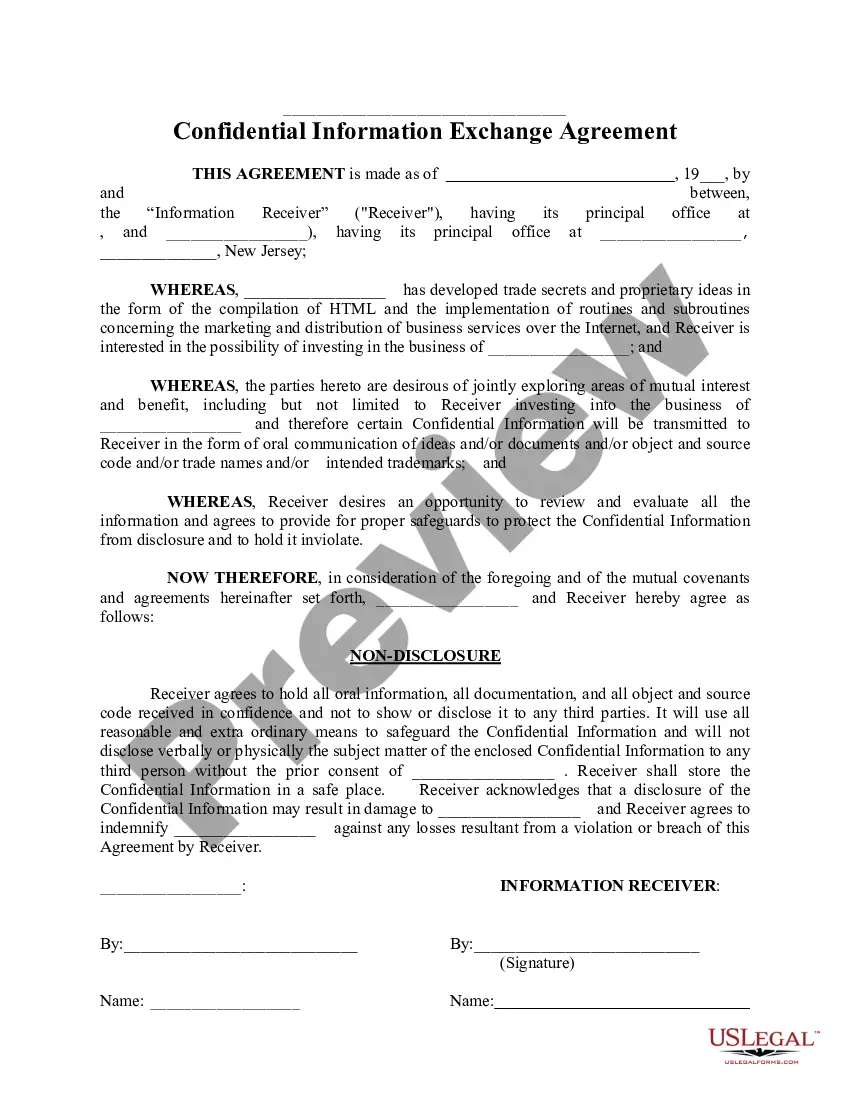
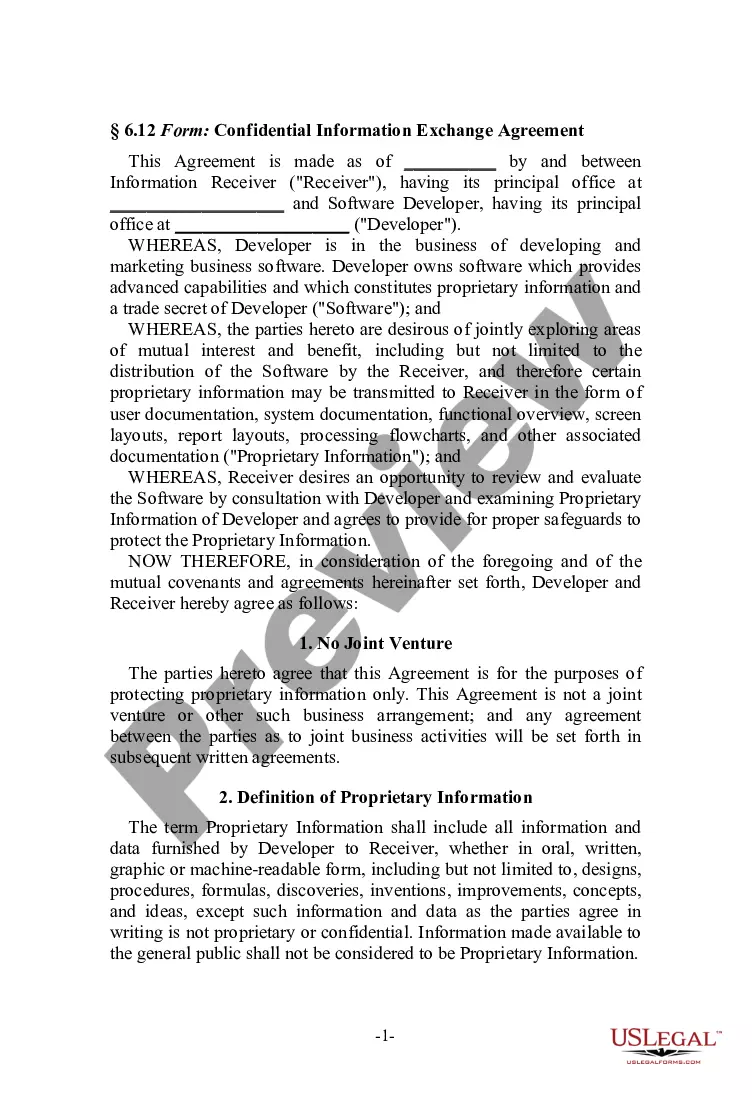
This form is a Confidential Information Exchange Agreement. The information receiver is interested in the possibility of investing in a corporation's business venture. The agreement provides that the information receiver will hold all documentation in confidence and will not disclose the information to any third parties.
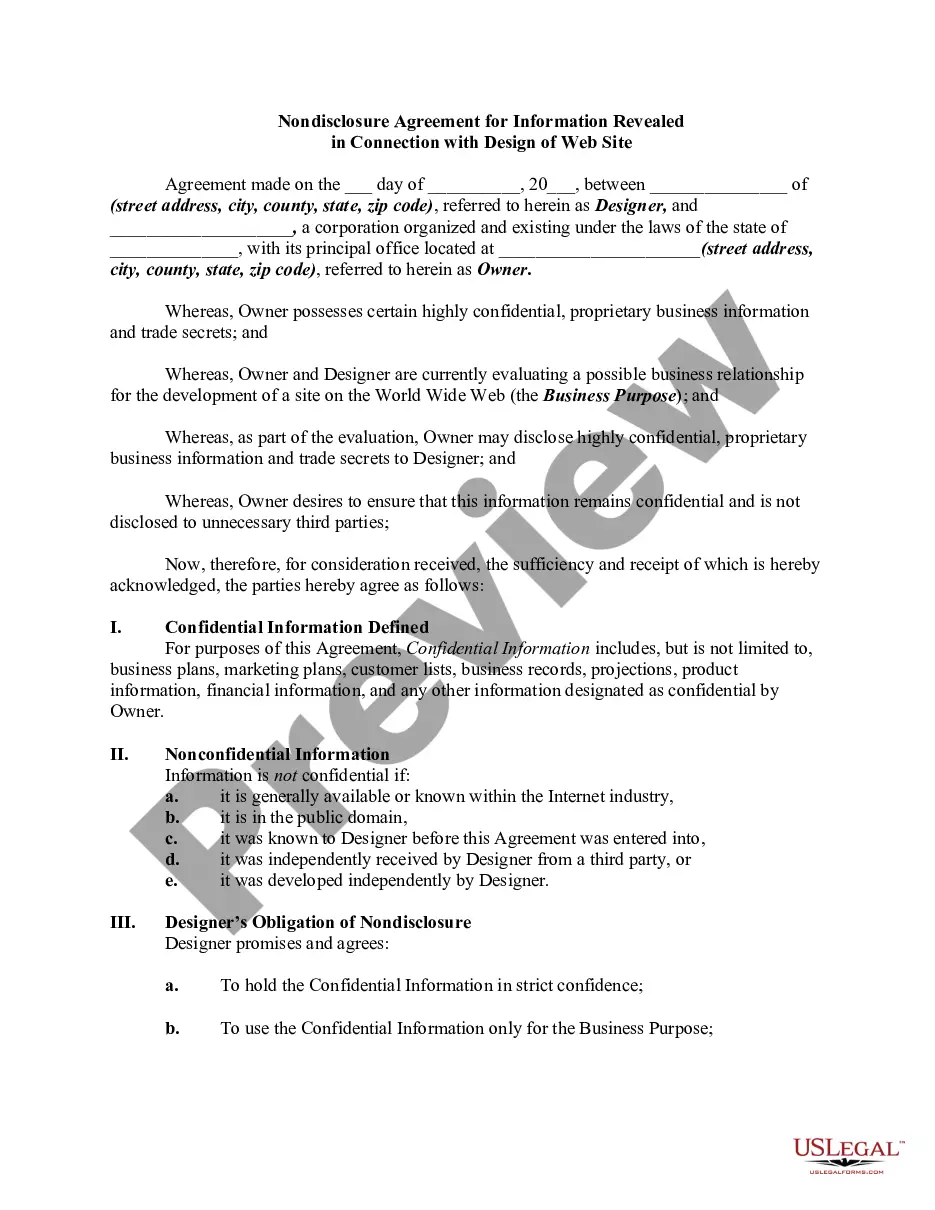
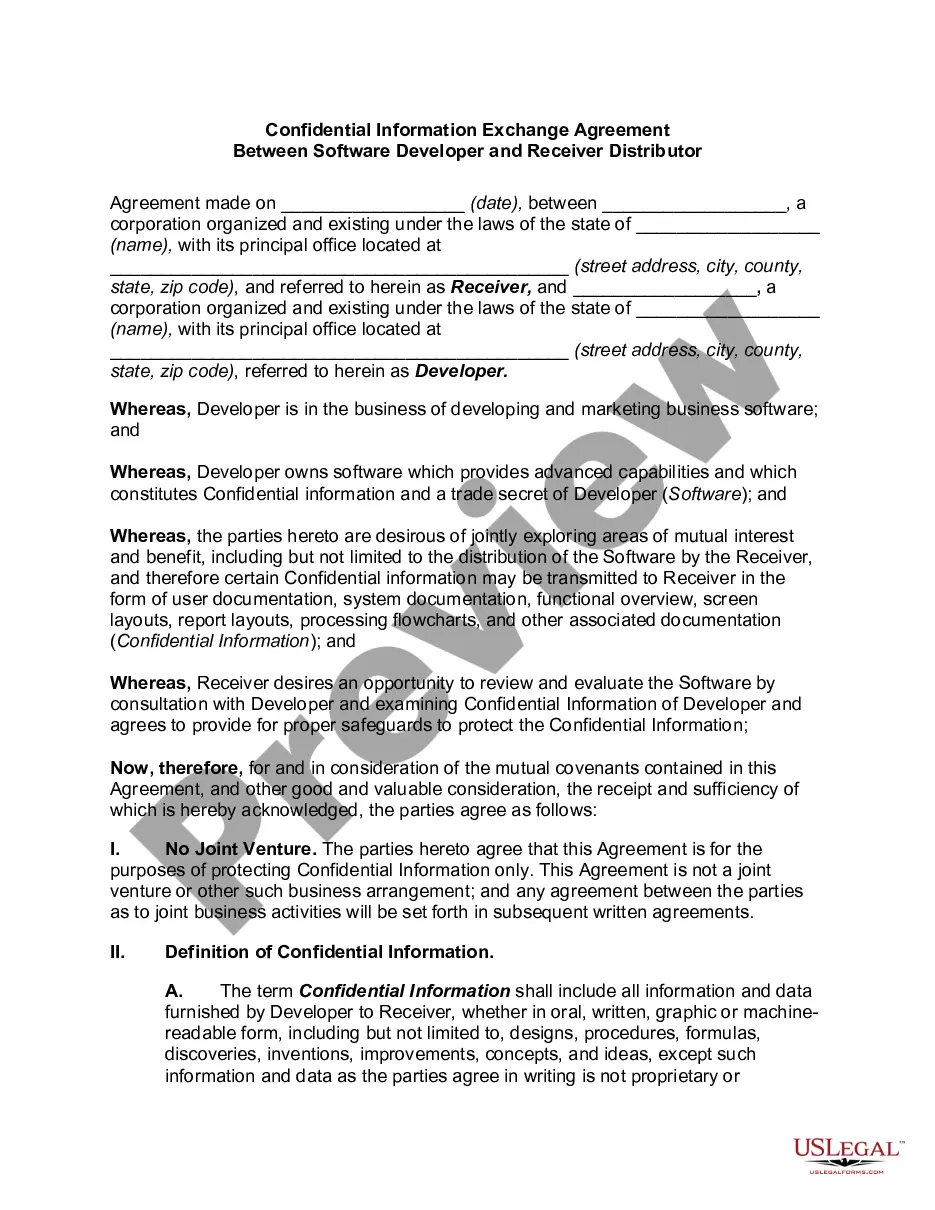
Kansas Confidential Information Exchange Agreement between Website Service Provider and Receiver of Trade Secrets
Instant download
Description
Free preview

How to fill out Confidential Information Exchange Agreement Between Website Service Provider And Receiver Of Trade Secrets?
If you need to thorough, obtain, or print legal document templates, utilize US Legal Forms, the largest collection of legal forms available online. Take advantage of the site’s simple and efficient search to find the documents you require. Various templates for business and personal purposes are organized by categories and states, or keywords. Use US Legal Forms to find the Kansas Confidential Information Exchange Agreement between Website Service Provider and Receiver of Trade Secrets in just a few clicks.
If you are already a US Legal Forms user, Log In to your account and click on the Download option to retrieve the Kansas Confidential Information Exchange Agreement between Website Service Provider and Receiver of Trade Secrets. You can also access forms you previously downloaded in the My documents tab of your account.
If you are using US Legal Forms for the first time, follow the steps below: Step 1. Ensure you have selected the form for the correct city/state. Step 2. Utilize the Review feature to examine the form’s content. Don’t forget to read the details. Step 3. If you are not satisfied with the form, use the Search field at the top of the screen to find other forms in the legal form template. Step 4. Once you have found the form you need, click the Get now button. Choose the pricing plan you prefer and enter your information to register for the account. Step 5. Complete the transaction. You can use your credit card or PayPal account to finalize the purchase. Step 6. Select the format of the legal form and download it to your device. Step 7. Complete, modify, and print or sign the Kansas Confidential Information Exchange Agreement between Website Service Provider and Receiver of Trade Secrets.
- Each legal document template you acquire is yours permanently.
- You will have access to each form you downloaded within your account.
- Click the My documents section and choose a form to print or download again.
- Complete and download, and print the Kansas Confidential Information Exchange Agreement between Website Service Provider and Receiver of Trade Secrets with US Legal Forms.
- There are millions of professional and state-specific forms available for your business or personal needs.
Form popularity
FAQ
To create a Kansas Confidential Information Exchange Agreement between Website Service Provider and Receiver of Trade Secrets, start by defining the confidential information that will be protected. Clearly outline the obligations of both parties regarding the use and sharing of this information. It is also important to include the duration of confidentiality and any consequences of breach. Using platforms like uslegalforms can simplify this process, providing templates that ensure all legal requirements are met.
The Kansas Uniform Trade Secret Act is a state law designed to protect confidential information from unauthorized use or disclosure. It defines what constitutes a trade secret and outlines the legal remedies available for misappropriation. Understanding this act is crucial when forming a Kansas Confidential Information Exchange Agreement between Website Service Provider and Receiver of Trade Secrets, as it offers a legal framework for protecting your most sensitive information. Leveraging this understanding ensures your business stays competitive and compliant.
To write an effective confidentiality policy, start by identifying the types of information that require protection. Then, outline the procedures for handling confidential information, including sharing, storing, and disposing of it. The Kansas Confidential Information Exchange Agreement between Website Service Provider and Receiver of Trade Secrets provides a helpful framework that can guide you in establishing clear regulations and expectations. Finally, communicate the policy to your team and provide training to ensure compliance.
The confidentiality clause of trade secrets acts as a protective measure, ensuring that parties cannot misuse or disclose sensitive information shared between them. This clause often stipulates the consequences of unauthorized disclosure and highlights periods of confidentiality. By incorporating this into the Kansas Confidential Information Exchange Agreement between Website Service Provider and Receiver of Trade Secrets, you strengthen your protection against potential threats. Clarity in this area is vital for maintaining trust in business relationships.
The confidentiality clause for trade secrets establishes the obligations of the parties involved regarding the handling of confidential information. Such clauses usually define what constitutes confidential information and outline permitted disclosures. In the context of the Kansas Confidential Information Exchange Agreement between Website Service Provider and Receiver of Trade Secrets, this clause is crucial for safeguarding your competitive edge. It helps create clear expectations and reduces the potential for misunderstandings.
Yes, employer trade secrets are typically protected under various laws and agreements. Companies often utilize NDAs and confidentiality clauses to ensure that sensitive information remains secure. The Kansas Confidential Information Exchange Agreement between Website Service Provider and Receiver of Trade Secrets can serve as a useful tool for creating a formal understanding regarding trade secrets. Employers must also educate employees about their responsibilities in maintaining confidentiality.
Confidentiality Agreements (CDAs) are generally enforceable as long as they meet specific legal requirements. Factors like specificity of the information and mutual agreement on confidentiality contribute to their enforceability. In Kansas, the framework established by the Kansas Confidential Information Exchange Agreement between Website Service Provider and Receiver of Trade Secrets ensures that such agreements are legally binding. It’s essential to consult with legal experts to draft an effective CDA that safeguards your interests.
A confidentiality clause typically stipulates that the receiving party must keep shared information private and must not use it for any unauthorized purposes. For instance, in the context of the Kansas Confidential Information Exchange Agreement between Website Service Provider and Receiver of Trade Secrets, the clause may outline that any trade secrets disclosed during collaboration must remain confidential and only be used for the agreed project. Including such clauses minimizes risks and protects your valuable information.
A trade secret refers to valuable, confidential business information that provides a competitive edge, such as formulas or processes. An NDA, or Non-Disclosure Agreement, is a legal contract where parties agree not to disclose specific information. While trade secrets are often protected by laws like the Kansas Uniform Trade Secret Act, NDAs serve as a mechanism to enforce confidentiality. Understanding the Kansas Confidential Information Exchange Agreement between Website Service Provider and Receiver of Trade Secrets can help clarify these distinctions.
The five key elements of a non-disclosure agreement include a clear definition of confidential information, obligations of the receiving party, the duration of the agreement, exclusions from confidentiality, and consequences for breach of contract. In the context of a Kansas Confidential Information Exchange Agreement between a Website Service Provider and a Receiver of Trade Secrets, these elements ensure both parties have a mutual understanding of their rights and responsibilities. Ensuring these elements are well-articulated can prevent future conflicts and protect critical business information.