Kansas Guarantor - Consignor Notice Required by FTC on certain Transactions

State:
Multi-State
Control #:
US-GUARANTY
Format:
Word; 
Rich Text
Instant download

Description

The Rule applies to consumer credit contracts offered by finance companies, retailers (such as auto dealers and furniture and department stores), and credit unions for any personal purpose except to buy real estate.


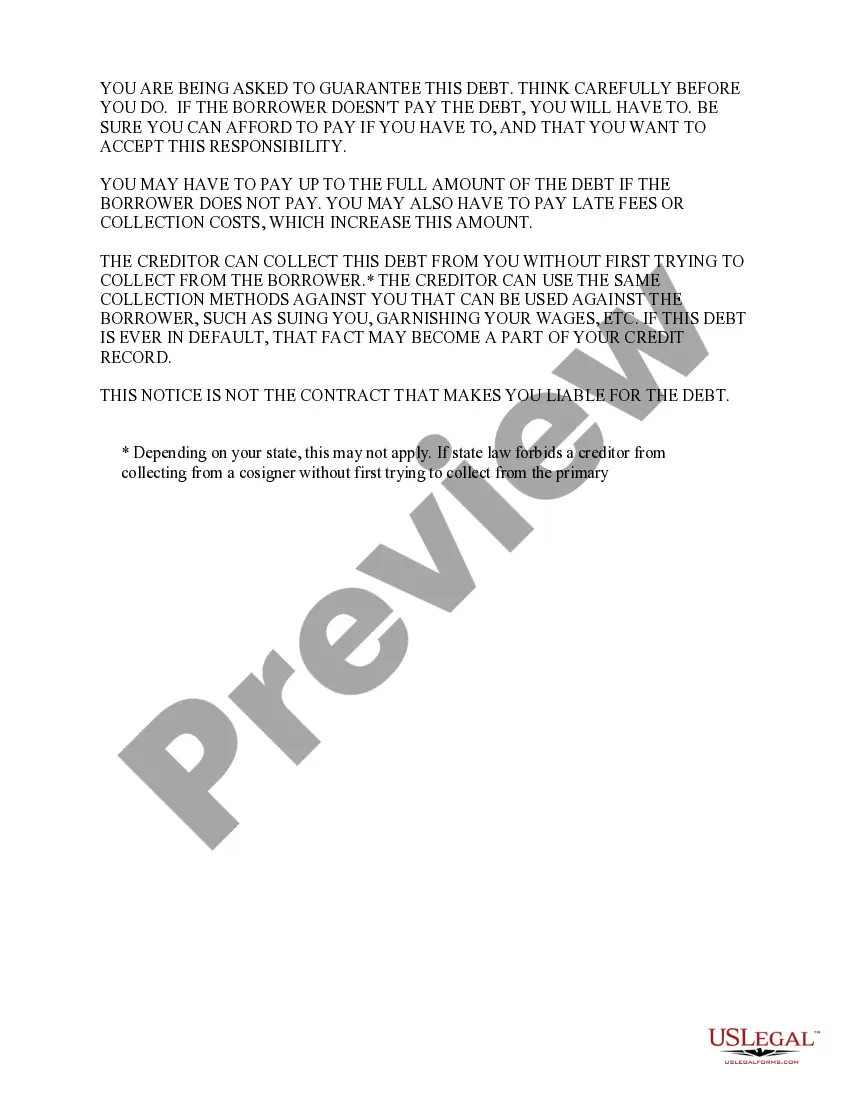
When you agree to be a cosigner for someone else's debt, you are guaranteeing to pay if that person fails to pay the debt. The Rule requires that you be given a notice that explains the responsibility you are undertaking. Under the Rule, the cosigner notice must say:


You are being asked to guarantee this debt. Think carefully before you do. If the borrower doesn't pay the debt, you will have to. Be sure you can afford to pay if you have to, and that you want to accept this responsibility.
You may have to pay up to the full amount of the debt if the borrower does not pay. You may also have to pay late fees or collection costs, which increase this amount.


The creditor can collect this debt from you without first trying to collect from the borrower.* The creditor can use the same collection methods against you that can be used against the borrower, such as suing you, garnishing your wages, etc. If this debt is ever in default, that fact may become a part of your credit record.


This notice is not the contract that makes you liable for the debt.


* Depending on your state, this may not apply. If state law forbids a creditor from collecting from a cosigner without first trying to collect from the primary debtor, this sentence may be crossed out or omitted on your cosigner notice.


This notice is not required when you receive benefits from the contract, such as when you buy goods, take out a loan, or open a joint credit-card account with another person. In these cases, you would be a co-buyer, co-borrower, or co-applicant (co-cardholder) rather than a cosigner. Therefore, the creditor would not be required to provide the notice.
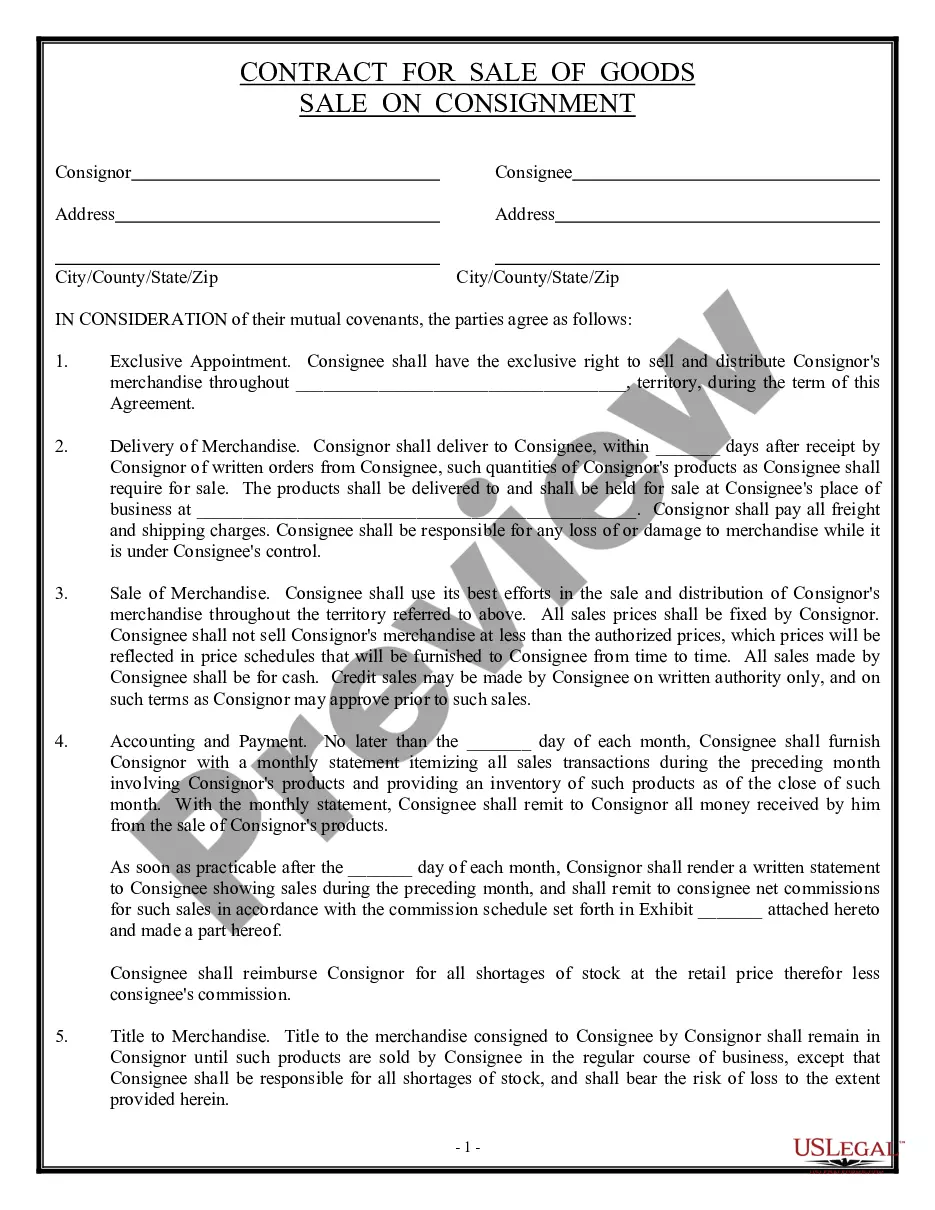
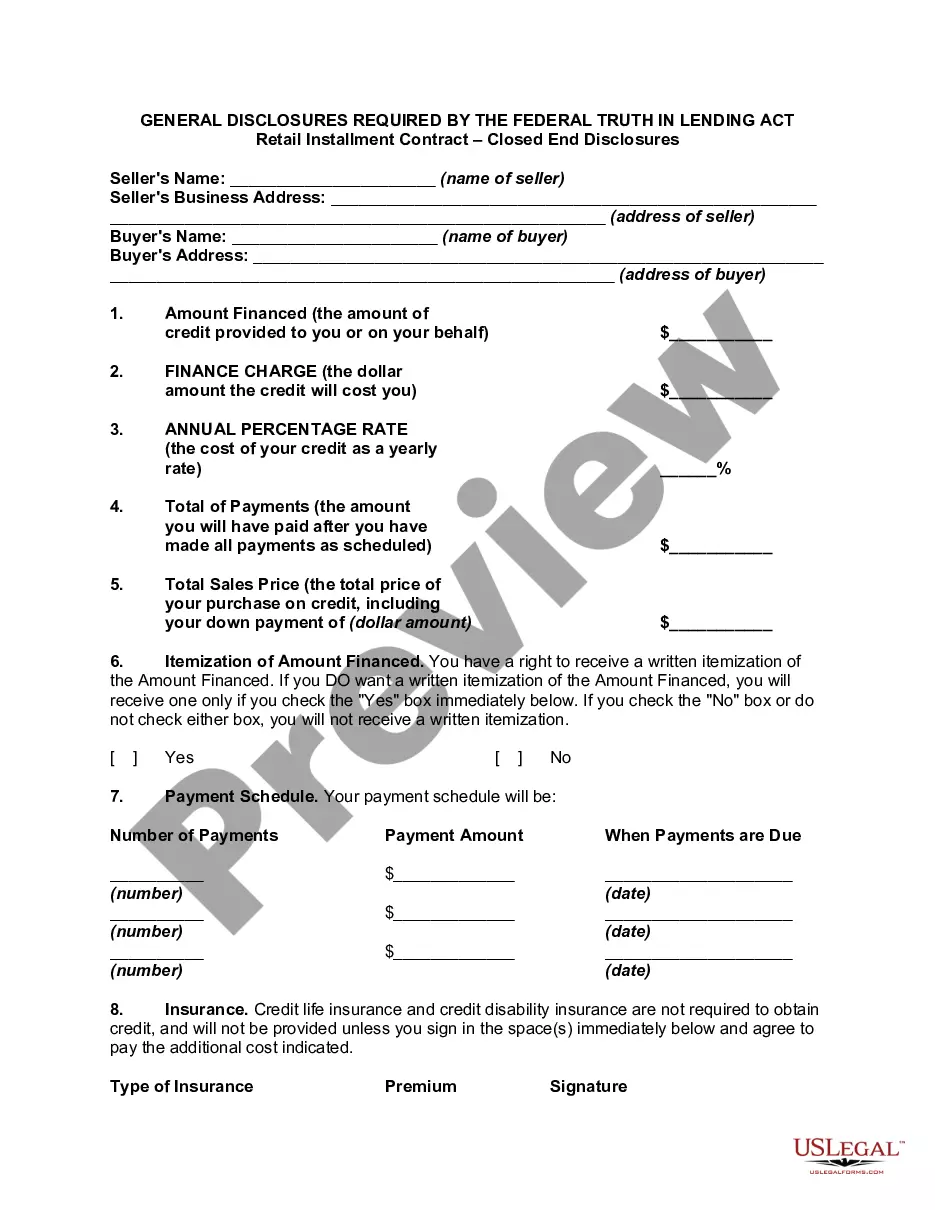
How to fill out Guarantor - Consignor Notice Required By FTC On Certain Transactions?

Selecting the optimal legal document template can be a challenge. Naturally, there are numerous templates available online, but how can you find the legal document you require? Utilize the US Legal Forms website. This service provides thousands of templates, such as the Kansas Guarantor - Consignor Notice Mandated by FTC for specific Transactions, which you can use for both business and personal needs. All of the forms are verified by experts and comply with state and federal regulations.

If you are already registered, Log In to your account and then click the Obtain button to access the Kansas Guarantor - Consignor Notice Mandated by FTC for specific Transactions. Use your account to browse through the legal forms you have previously purchased. Navigate to the My documents section of your account and download another copy of the document you need.

If you are a new user of US Legal Forms, here are some simple steps to assist you: First, ensure that you have selected the correct document for your specific area/region. You can view the form using the Review option and read the form description to ensure it is the right one for you. If the form does not fulfill your requirements, use the Search field to find the appropriate document. Once you are confident that the form is correct, click on the Acquire now button to get the document. Choose the pricing plan you prefer and enter the required information. Create your account and process the payment through your PayPal account or credit card. Select the file format and download the legal document template to your device. Complete, modify, and print and sign the obtained Kansas Guarantor - Consignor Notice Mandated by FTC for specific Transactions.

  1. US Legal Forms is the largest repository of legal documents where you can find various document templates.
  2. Utilize the service to download professionally created documents that conform to state regulations.

Form popularity

FAQ

The terry stop law in Kansas allows law enforcement officers to briefly detain a person if they have reasonable suspicion that the individual is involved in criminal activity. This law is significant as it balances public safety with individual rights. It's important to understand that, under the Kansas Guarantor - Consignor Notice Required by FTC on certain Transactions, there are protections for individuals regarding their personal property and transactions. For further guidance on legal processes in Kansas, consider using the resources available on the uslegalforms platform, which can help you navigate these laws effectively.

Yes, Kansas has fully adopted the Uniform Commercial Code. This adoption plays a crucial role in setting guidelines for commercial transactions within the state. It enhances trust and security in business dealings, especially when dealing with necessary notifications like the Kansas Guarantor - Consignor Notice Required by FTC on certain Transactions. By understanding the UCC, you can navigate Kansas’s commercial landscape more effectively.

The Uniform Commercial Code, or UCC, has been adopted by all 50 states, including Kansas. This comprehensive code regulates commercial transactions and ensures consistency across jurisdictions. By adhering to UCC standards, businesses and consumers can engage in transactions with confidence, particularly in terms of the Kansas Guarantor - Consignor Notice Required by FTC on certain Transactions. This adoption simplifies legal processes and protects parties involved.

Yes, Kansas has adopted the Uniform Trust Code. This allows for clearer guidelines on managing and administering trusts. The adoption ensures that trust laws align with best practices across states, enhancing protection for Kansas guarantors and beneficiaries. Understanding this code is essential, especially regarding the Kansas Guarantor - Consignor Notice Required by FTC on certain Transactions.

In Kansas, while you have the right to refuse to show identification in some situations, failing to provide ID during a legal stop can result in complications. Authorities may take additional steps to confirm your identity. It is essential to know your rights, especially when entering agreements that relate to the Kansas Guarantor - Consignor Notice Required by FTC on certain Transactions.

A notice to appear is a legal document that requires an individual to appear in court. This notice typically arises from a misdemeanor or traffic violation and serves to notify you of the charges. Comprehending such legal notices is critical, particularly when addressing matters surrounding the Kansas Guarantor - Consignor Notice Required by FTC on certain Transactions.

Article 9 of the Uniform Commercial Code (UCC) in Kansas primarily governs secured transactions. It provides guidelines about how security interests in personal property are created, perfected, and enforced. Anyone engaged in commercial transactions can benefit from understanding this article, particularly in light of the Kansas Guarantor - Consignor Notice Required by FTC on certain Transactions.

Statute 21 6203 outlines the definitions and classifications of assault within Kansas law. Understanding this statute is important for anyone encountering legal matters related to aggression or violence, especially in terms of agreements impacted by the Kansas Guarantor - Consignor Notice Required by FTC on certain Transactions.

Statute 21 6207 deals with unlawful acts related to the unlawful possession of firearms. This law specifies the penalties for violations and helps maintain public safety. For businesses and individuals navigating legal agreements, being aware of such statutes can aid in compliance with the Kansas Guarantor - Consignor Notice Required by FTC on certain Transactions.

Statute 47-645 pertains to the regulation of specific transactions within Kansas, particularly in the area of consumer protection. This statute involves ensuring that businesses comply with certain guidelines when engaging with consumers. Familiarity with this statute is beneficial, especially in the context of transactions regulated under the Kansas Guarantor - Consignor Notice Required by FTC on certain Transactions.

Trusted and secure by over 3 million people of the world’s leading companies

Kansas Guarantor - Consignor Notice Required by FTC on certain Transactions