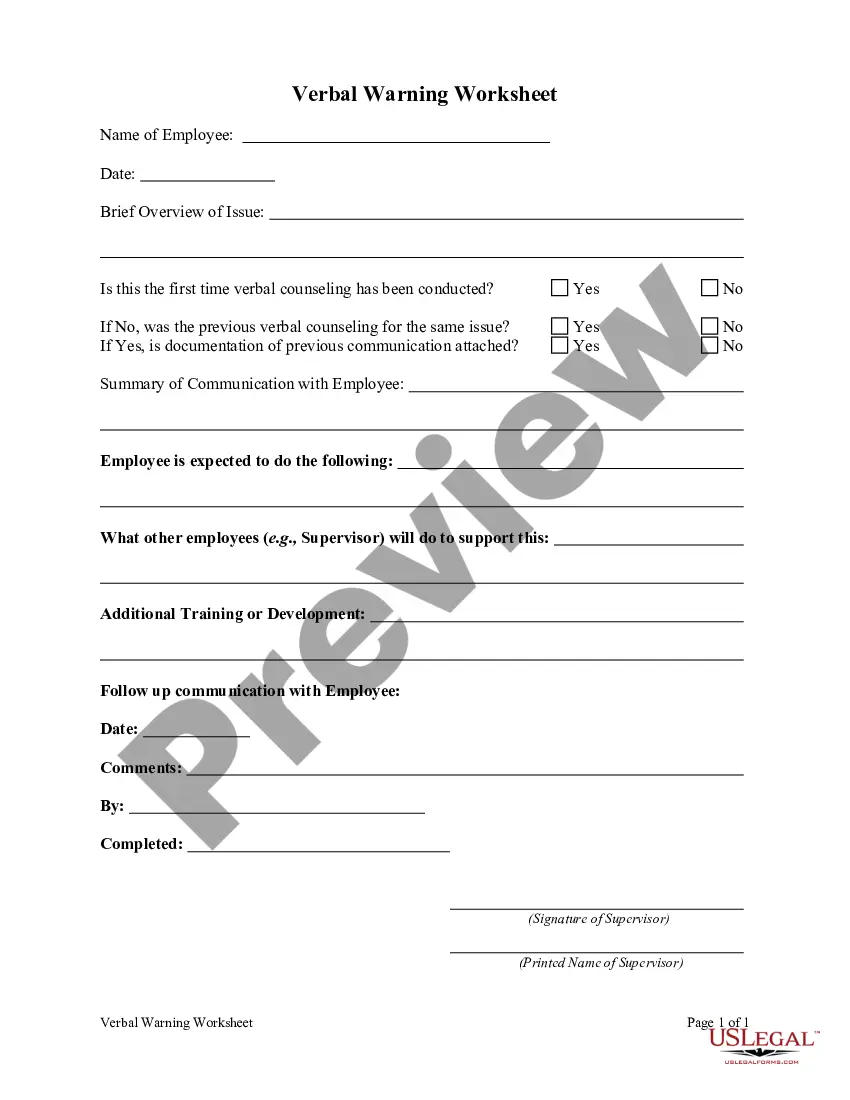
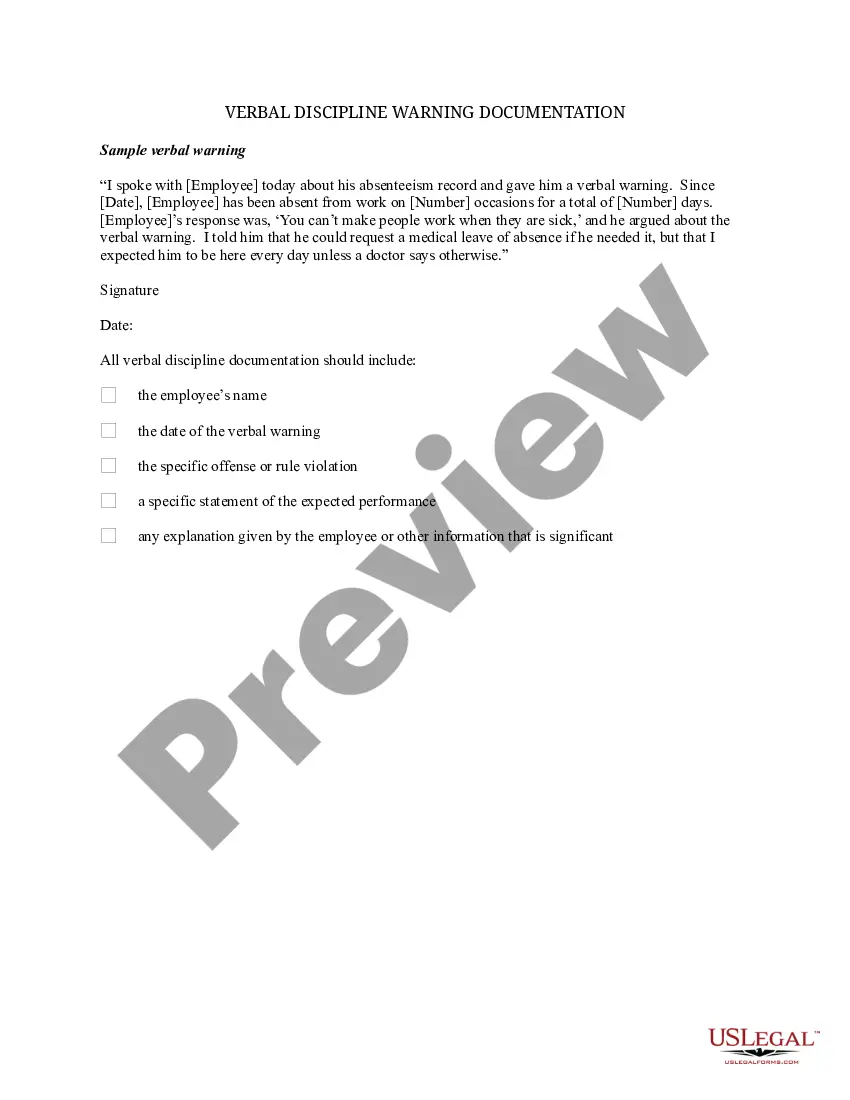
Kansas Verbal Warning Worksheet
Description
Get your form ready online
Our built-in tools help you complete, sign, share, and store your documents in one place.
Make edits, fill in missing information, and update formatting in US Legal Forms—just like you would in MS Word.
Download a copy, print it, send it by email, or mail it via USPS—whatever works best for your next step.
Sign and collect signatures with our SignNow integration. Send to multiple recipients, set reminders, and more. Go Premium to unlock E-Sign.
If this form requires notarization, complete it online through a secure video call—no need to meet a notary in person or wait for an appointment.
We protect your documents and personal data by following strict security and privacy standards.

Make edits, fill in missing information, and update formatting in US Legal Forms—just like you would in MS Word.

Download a copy, print it, send it by email, or mail it via USPS—whatever works best for your next step.

Sign and collect signatures with our SignNow integration. Send to multiple recipients, set reminders, and more. Go Premium to unlock E-Sign.

If this form requires notarization, complete it online through a secure video call—no need to meet a notary in person or wait for an appointment.

We protect your documents and personal data by following strict security and privacy standards.
Looking for another form?








How to fill out Verbal Warning Worksheet?
Finding the appropriate authorized document template can be challenging.
Of course, there are numerous formats available online, but how can you locate the authorized form you require.
Utilize the US Legal Forms website. The platform offers thousands of formats, such as the Kansas Verbal Warning Worksheet, which you can utilize for both business and personal needs.
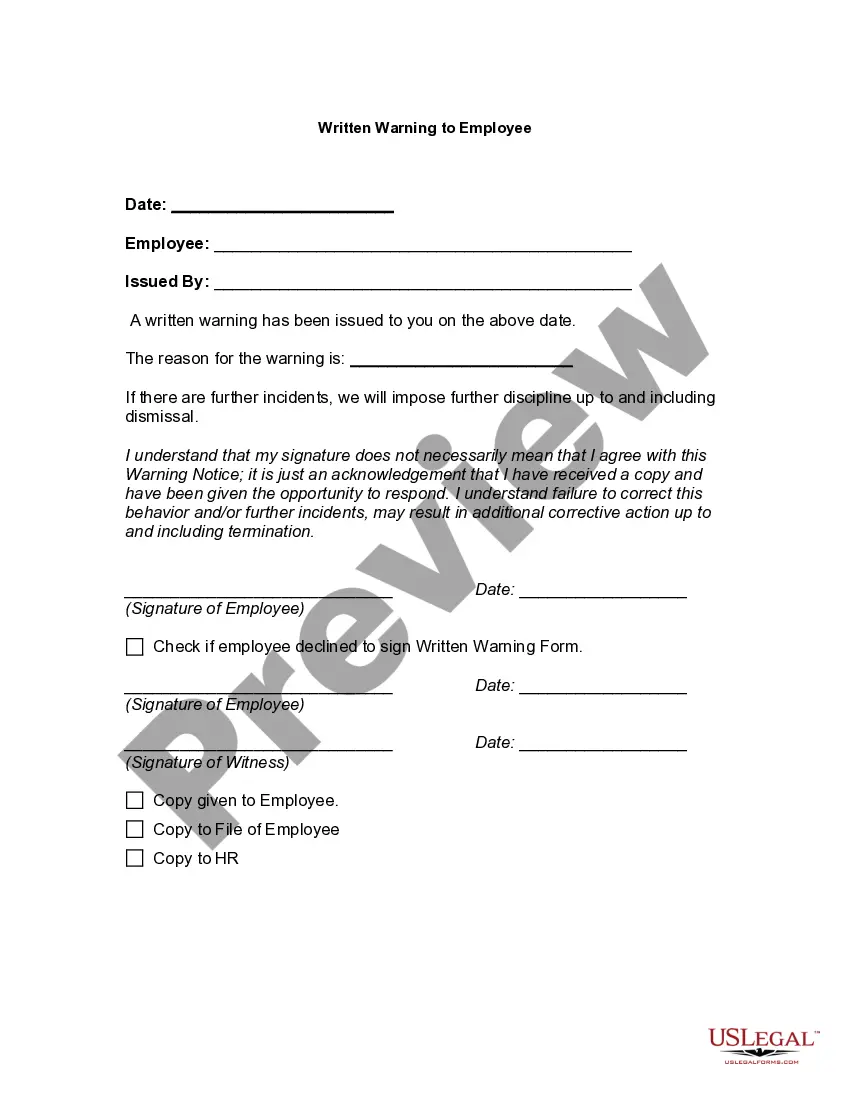
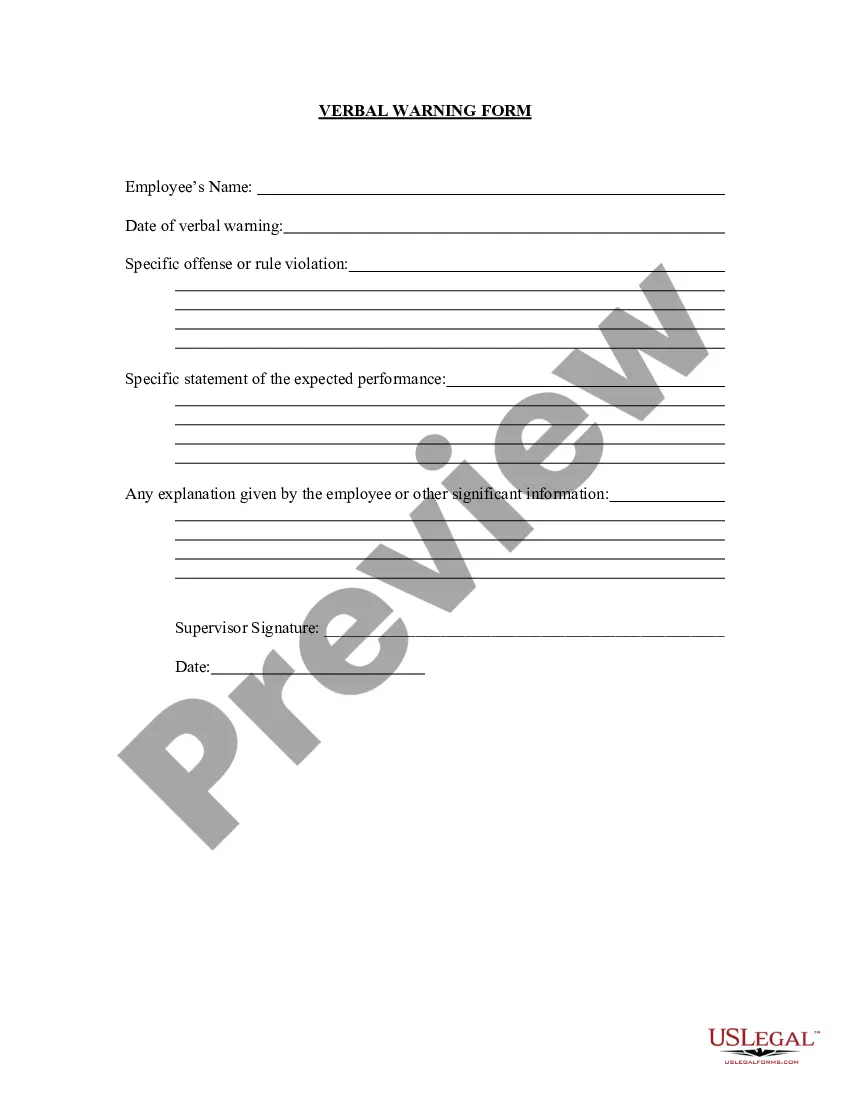
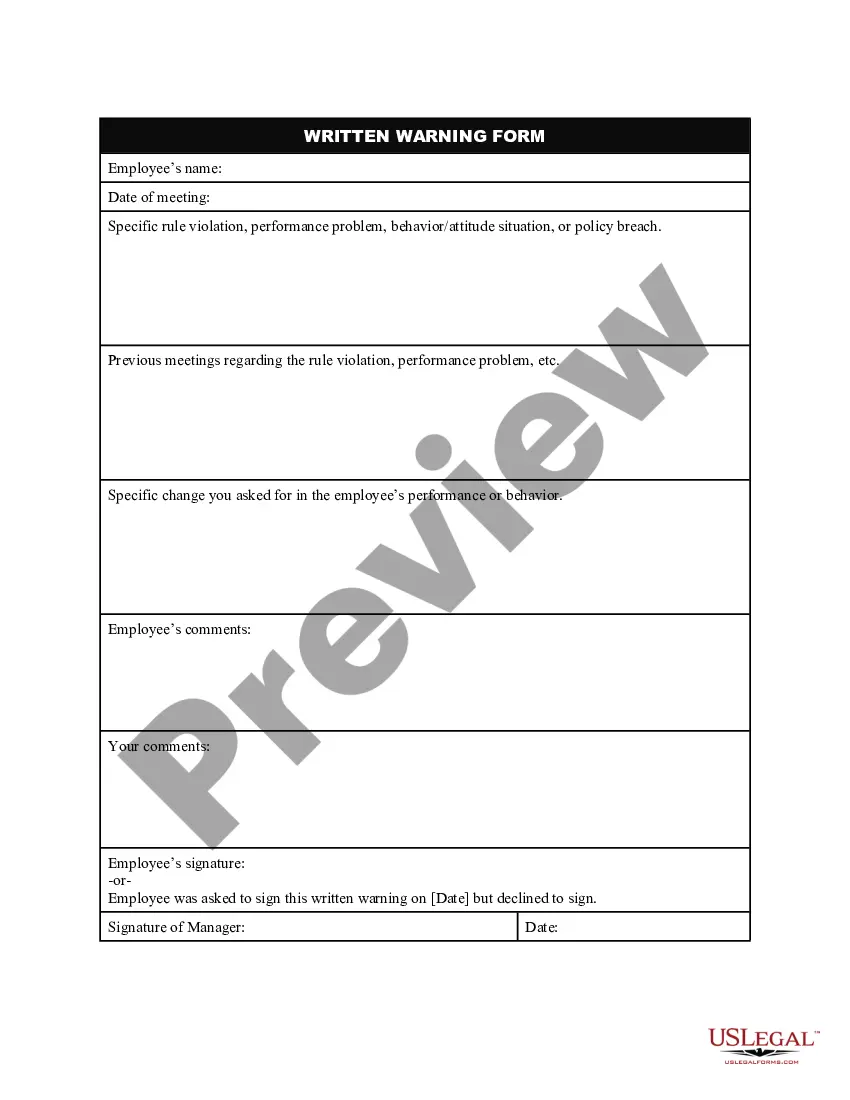
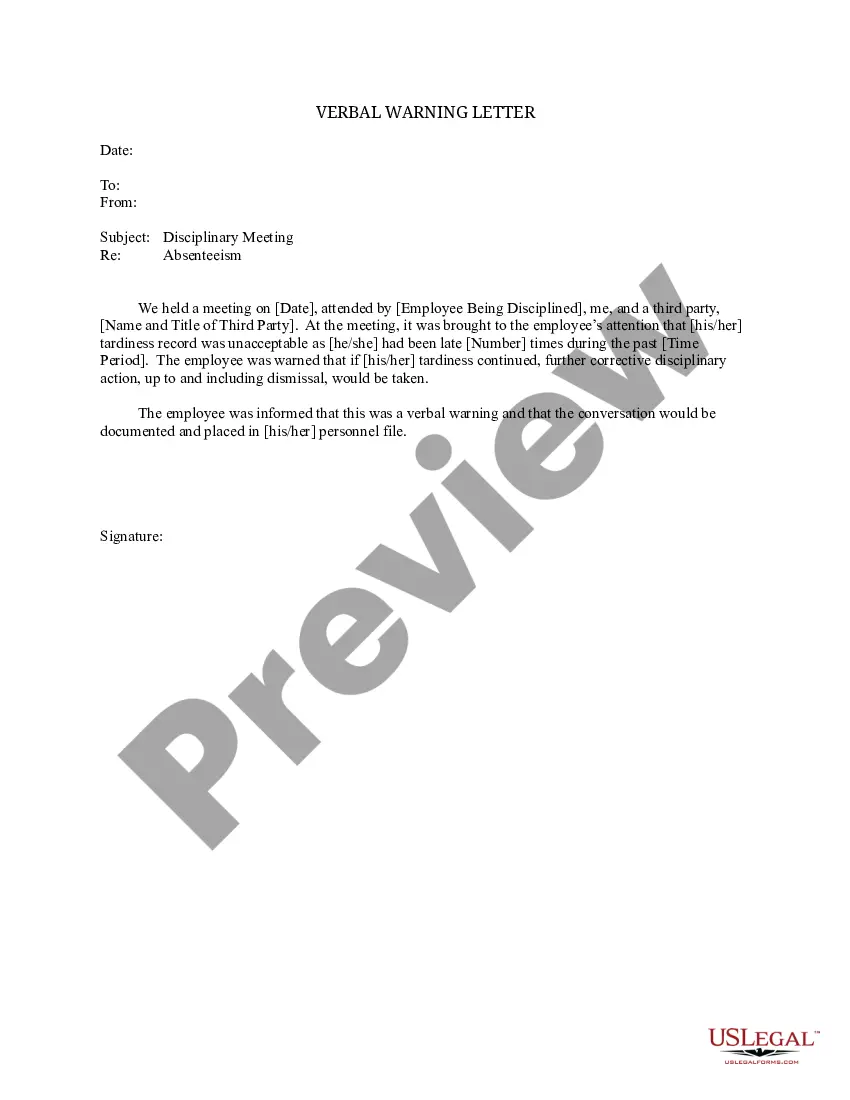
You can preview the document using the Preview button and review the document description to confirm it is suitable for you.
- All templates are reviewed by experts and comply with state and federal regulations.
- If you are currently signed up, Log Into your account and click the Download button to obtain the Kansas Verbal Warning Worksheet.
- Use your account to check the authorized templates you have previously purchased.
- Go to the My documents section of your account and get another copy of the document you need.
- If you are a new user of US Legal Forms, here are some simple instructions to guide you.
- Firstly, ensure you have selected the correct document for your specific area/county.
Form popularity
FAQ
Do you have to give a verbal warning first? If your disciplinary policy states so, you can issue a written warning before verbal one. But generally, verbal warnings are the first step in a disciplinary procedure; and a written warning comes during or after.
Does a verbal warning need to be documented? A verbal warning should definitely be documented. Employers should keep the documentation of the verbal warning in their informal notes, and you as the employee should sign the documentation to indicate that you have received it.
If an employee refuses to sign the disciplinary report or warning, you might ask him or her to submit a signed rebuttal document instead. The rebuttal should reference the concerns raised in the written warning. This shows that the employee was notified about the problem.
This depends on the employer and their policy. Typically, a verbal warning will be in effect for three to six months, though the verbal warning letter may permanently stay on their employee record.
How to issue a verbal warningTake the employee into a private room. Always discuss issues with employees in a private office/room or video call (if your company is remote).State the issue clearly.Discuss the changes they should make.Provide a timeframe for correction.State consequences.Provide support for change.
Verbal warnings do not have to be documented. Managers should always document a verbal warning in some manner, such as in a manager's log or e-mailing themselves the specifics about the verbal warning.
The verbal warning is generally followed, in disciplinary action procedures, by a written verbal warning that begins the documentation of disciplinary action in the employee's personnel file. The written verbal warning provides the beginning of the documentation necessary for an organization to fire an employee.
Here are some steps you can take to issue a verbal warning easily and appropriately:Take the employee into a private room.State the issue clearly.Discuss the changes they should make.Provide a timeframe for correction.State consequences.Provide support for change.
What to include in an employee warning noticeCompany name.Warning number.Name of employee and job title.Name of supervisor.Name of HR representative.Date of issue.Introductory statement.Infractions incurred by the employee.More items...
A verbal warning typically comes before a written warning since a write-up at work tends to be more serious. If the same issue happens again after the verbal warning or the employee doesn't improve, you might issue a written warning. However, you can skip the verbal warning, especially for a serious issue.