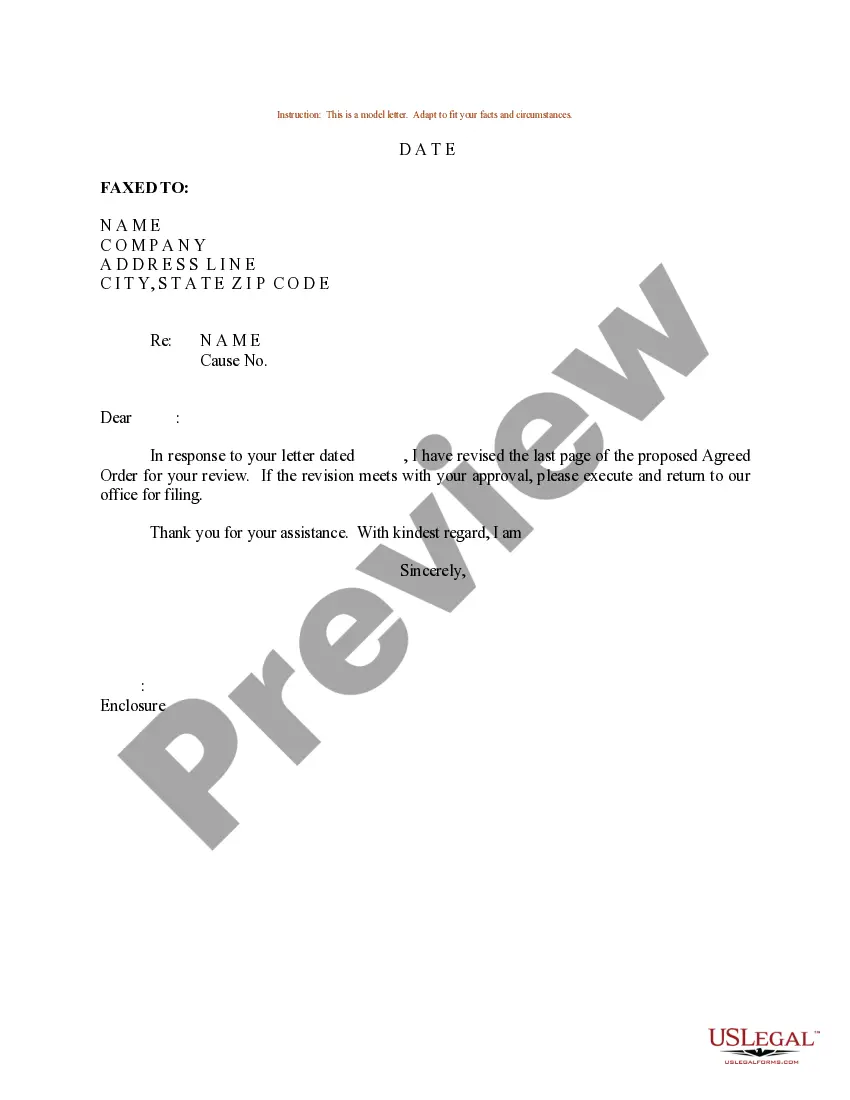
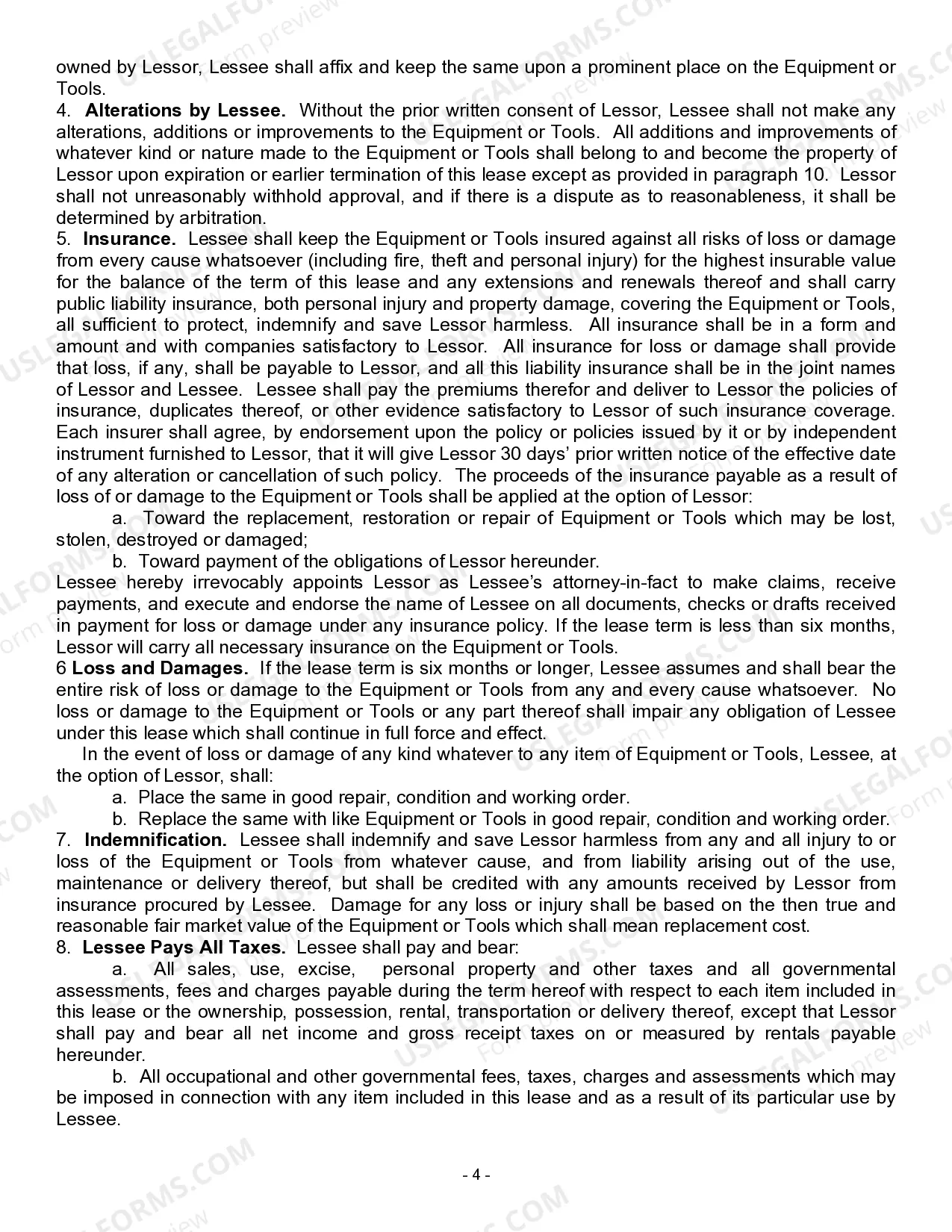
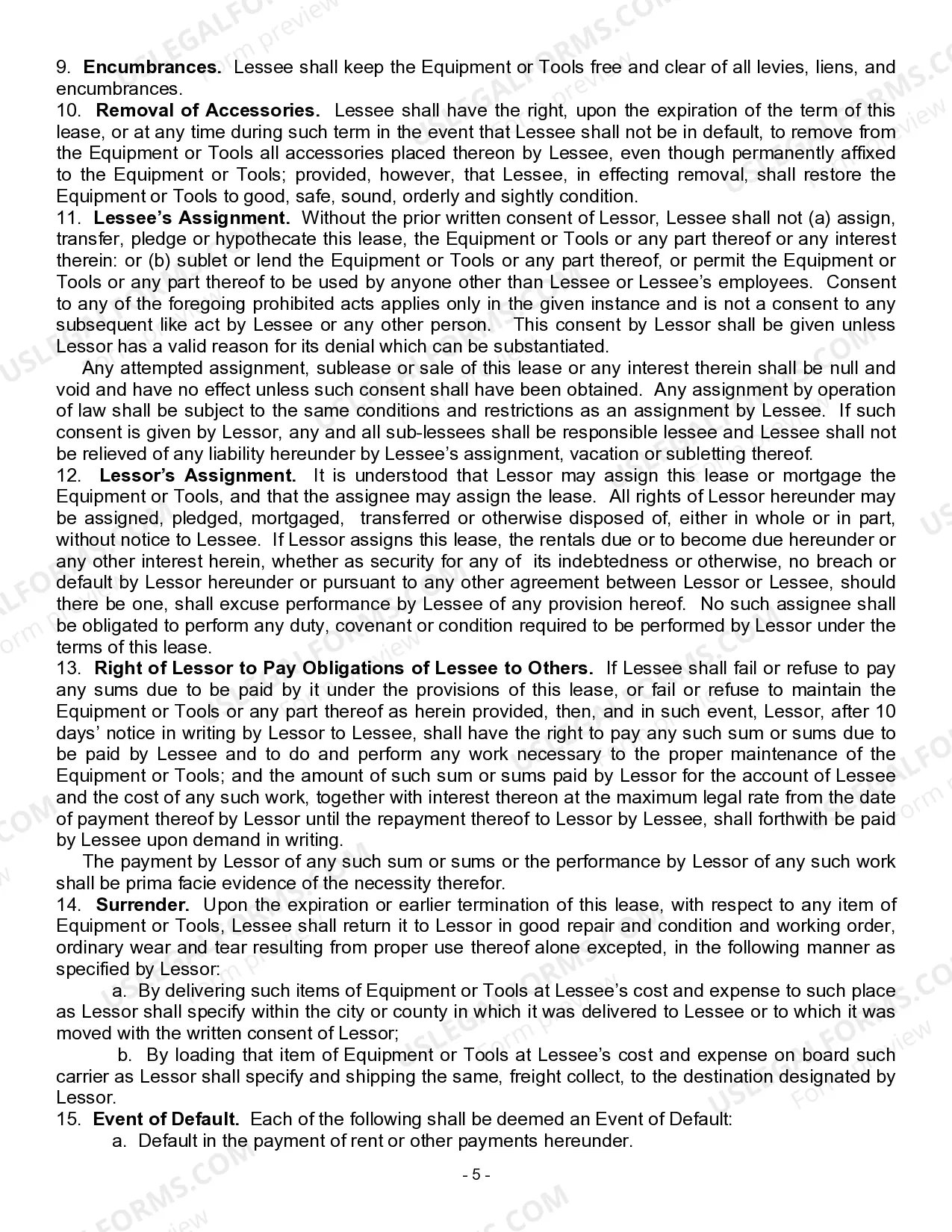
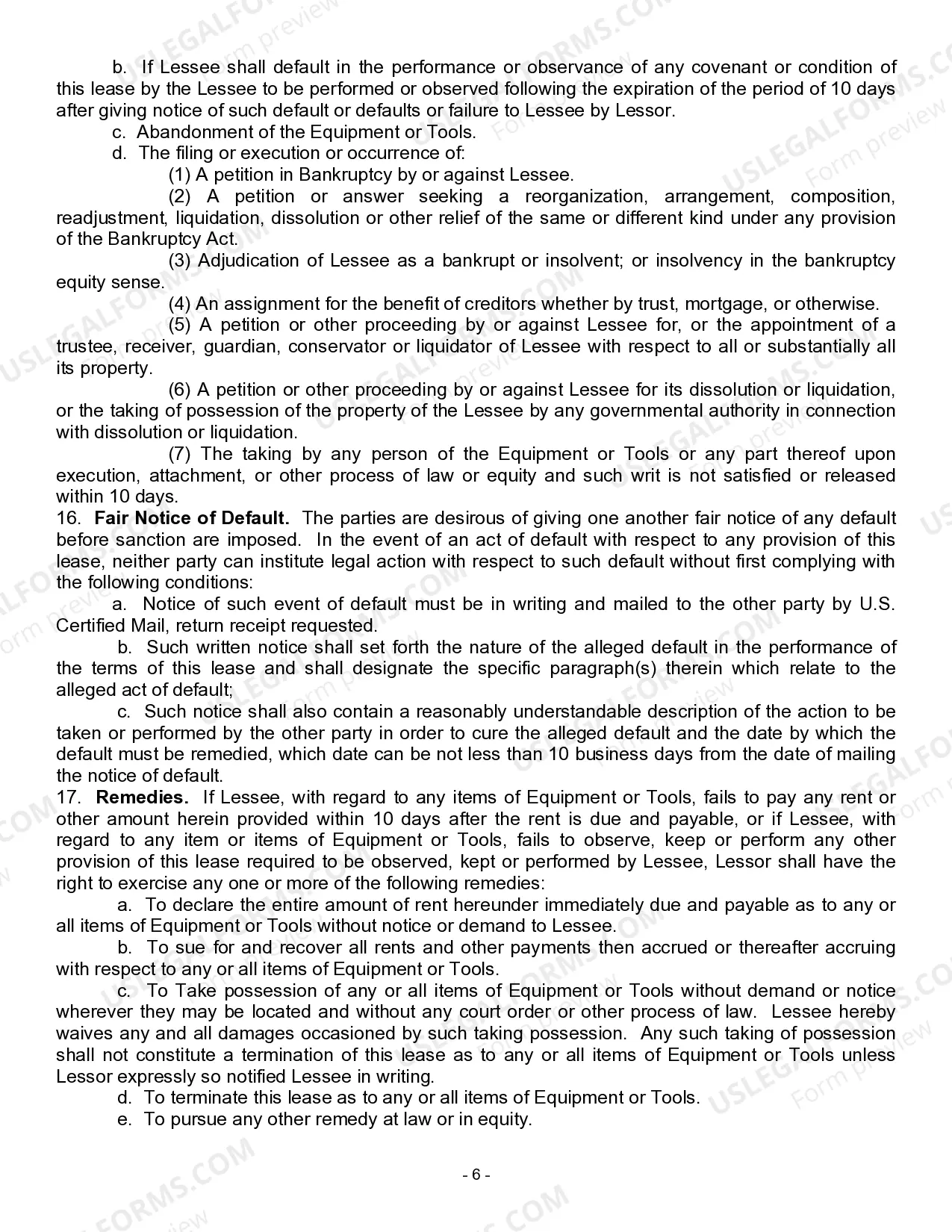
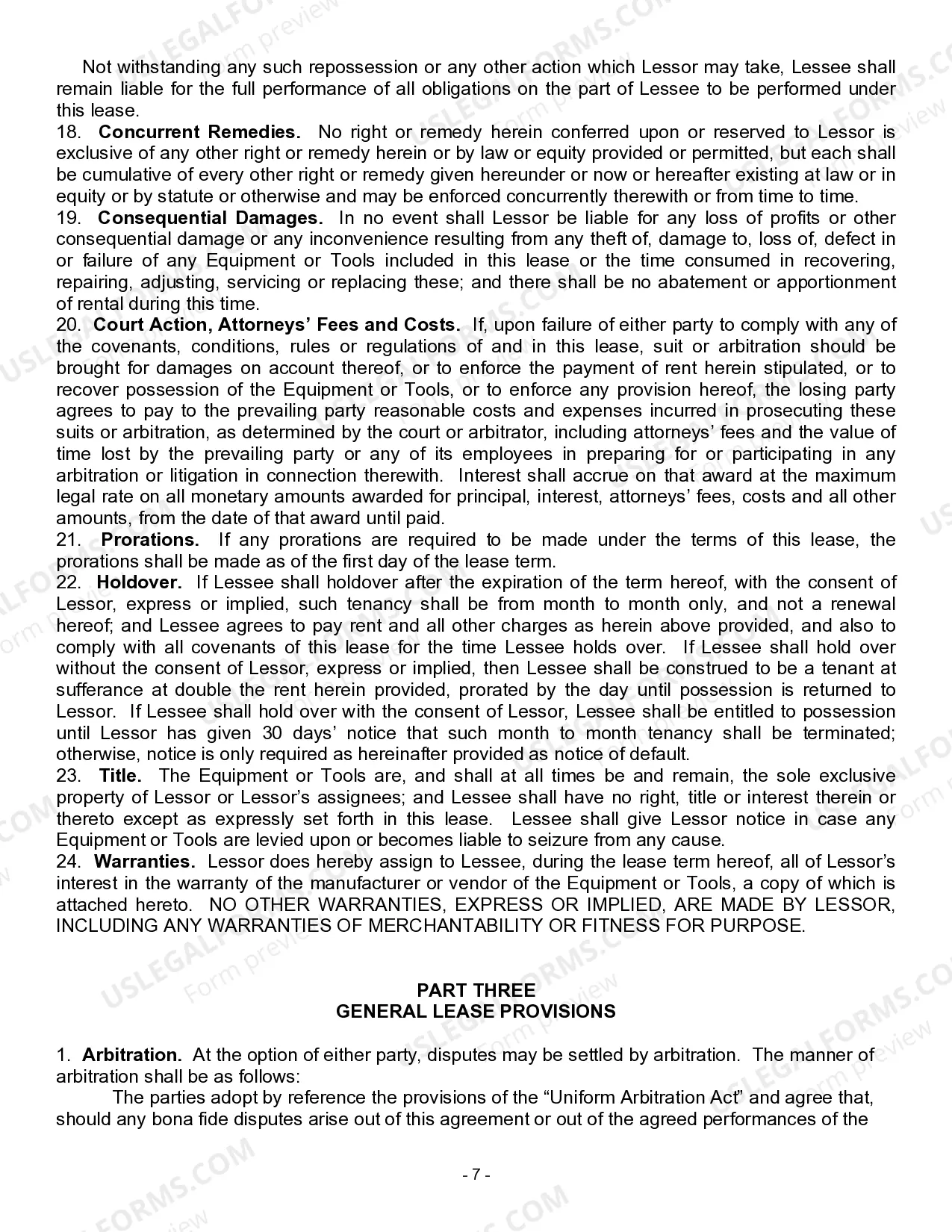
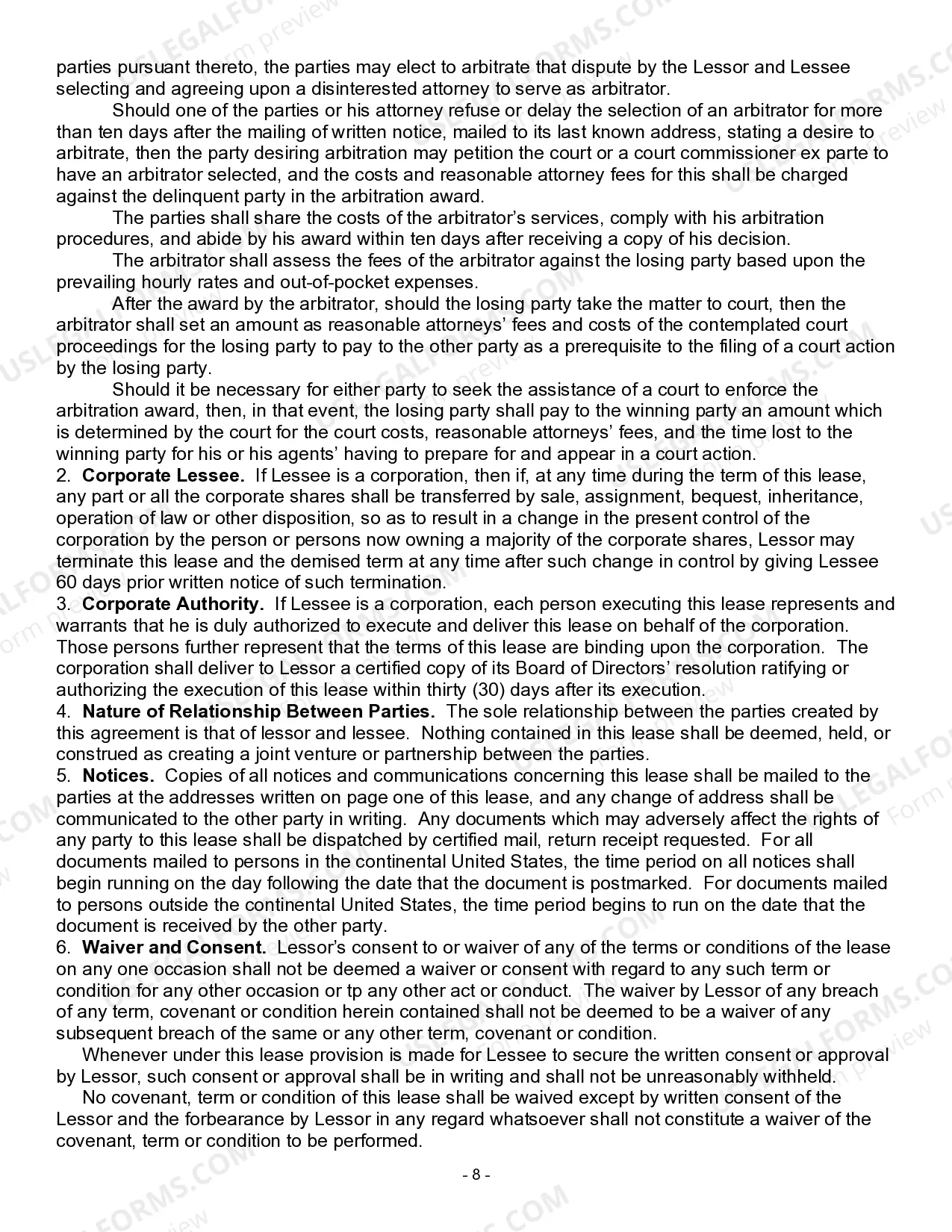
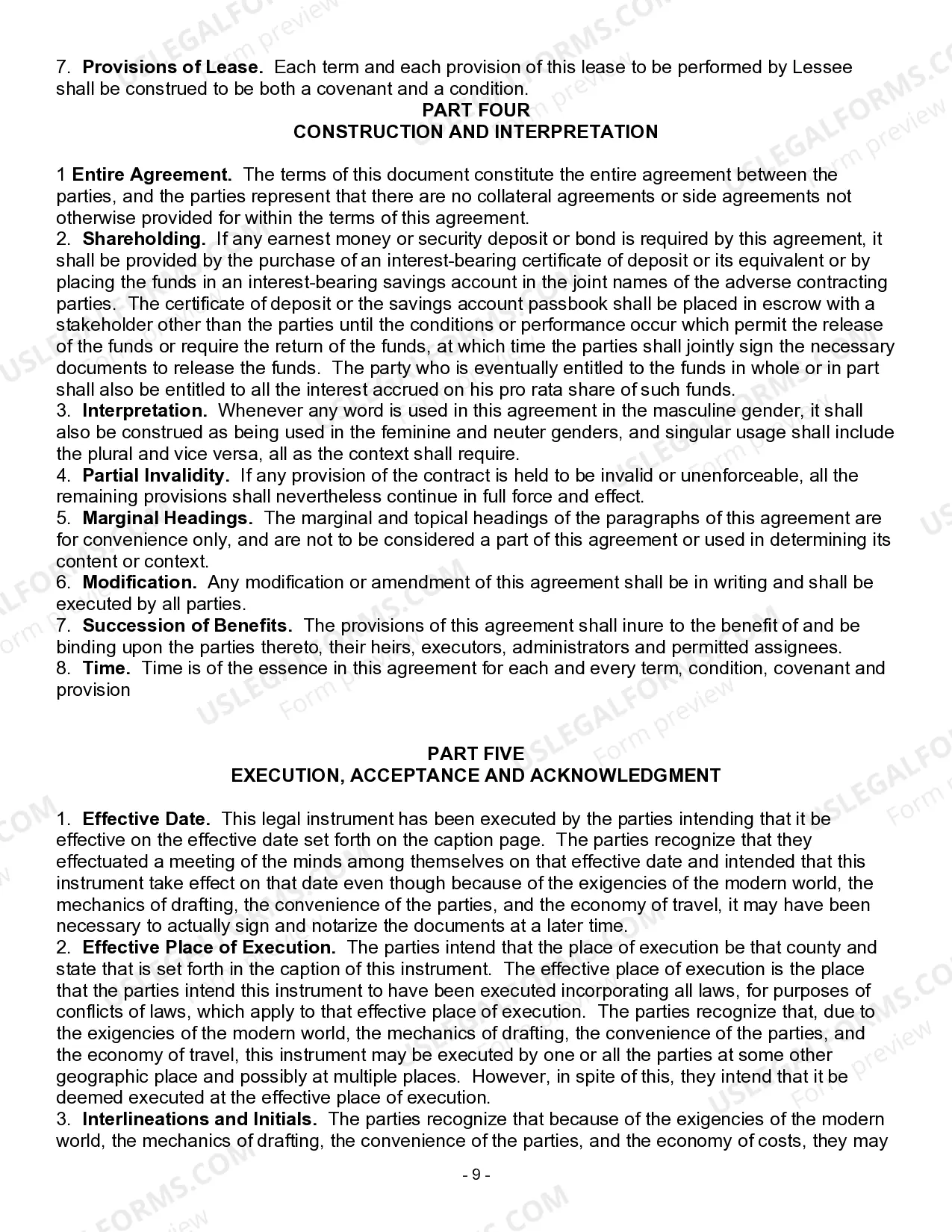
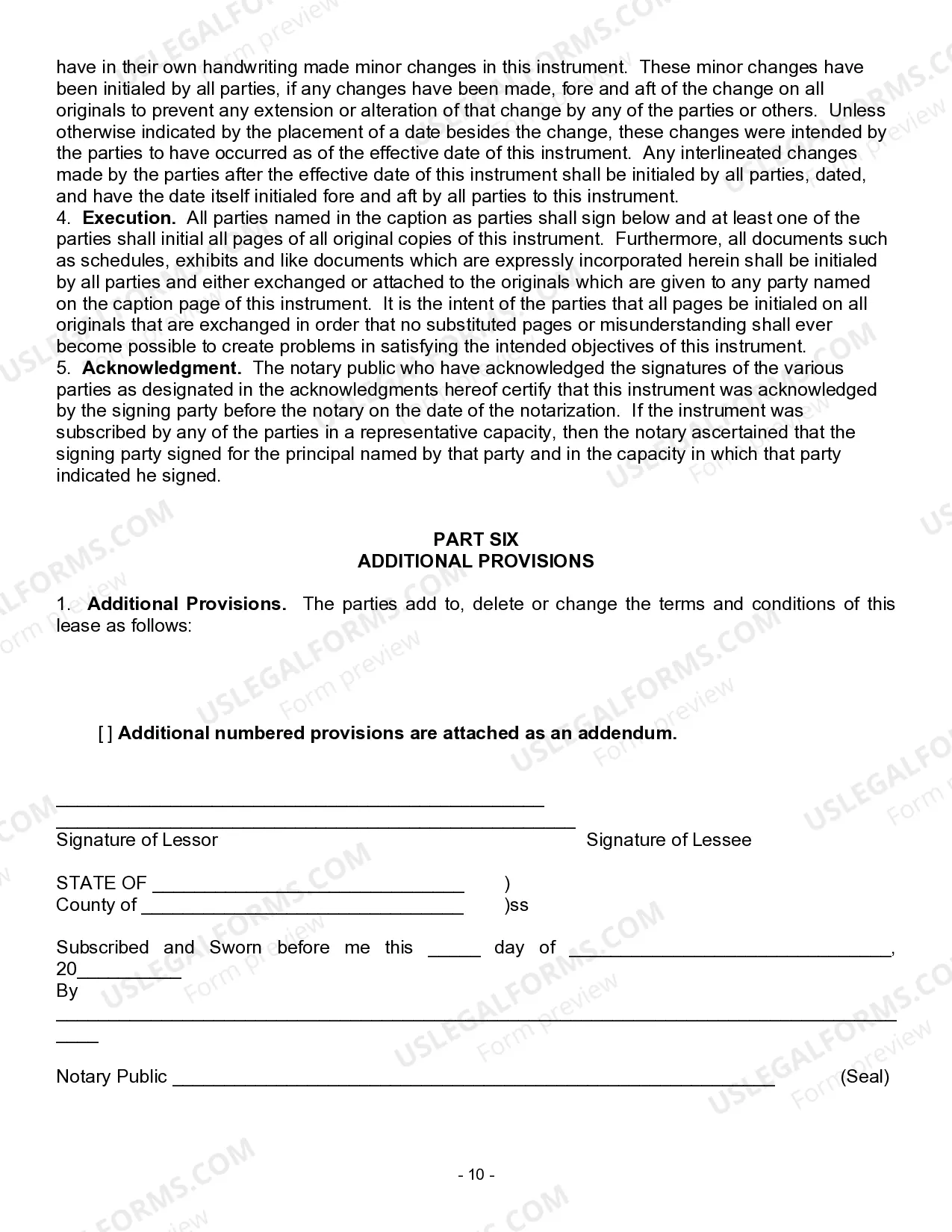
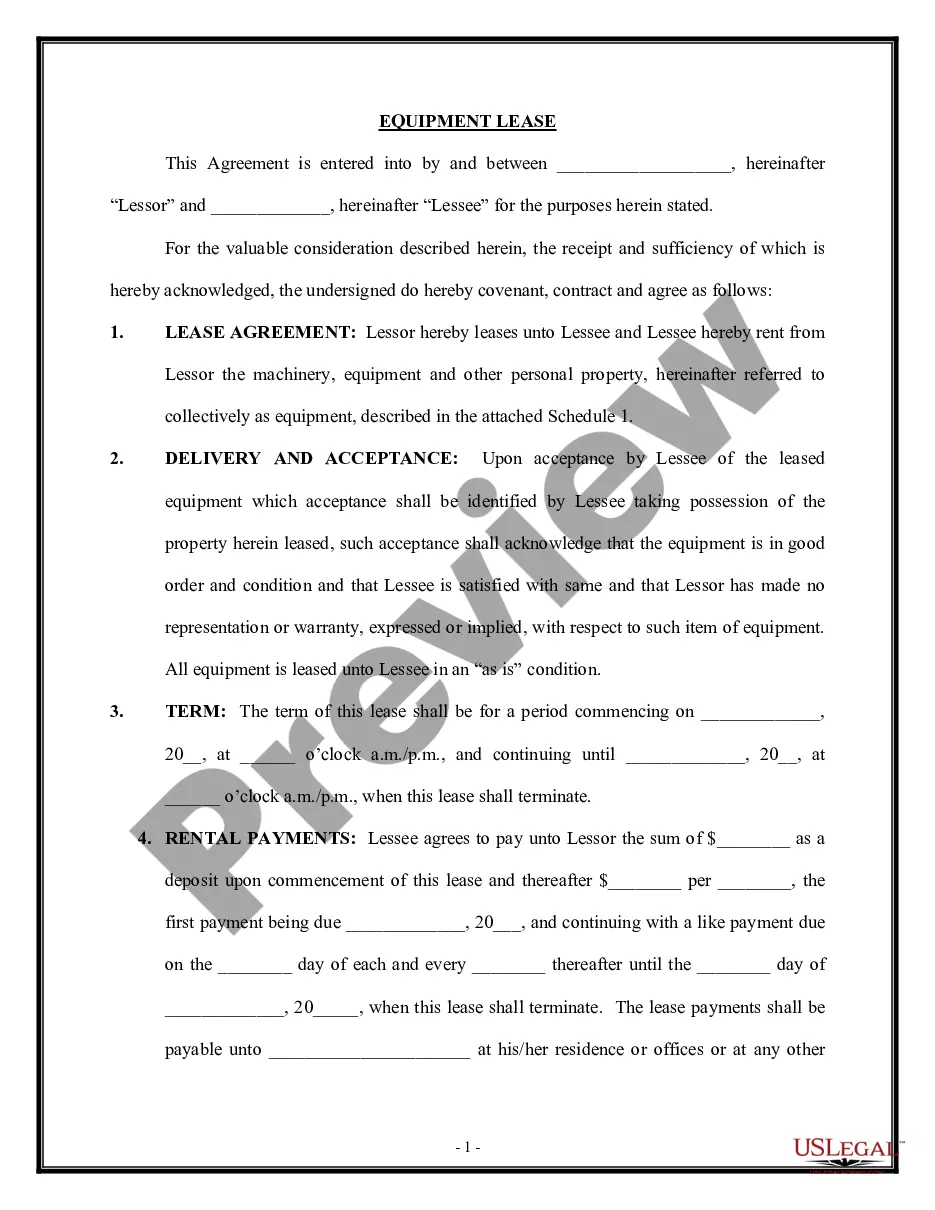
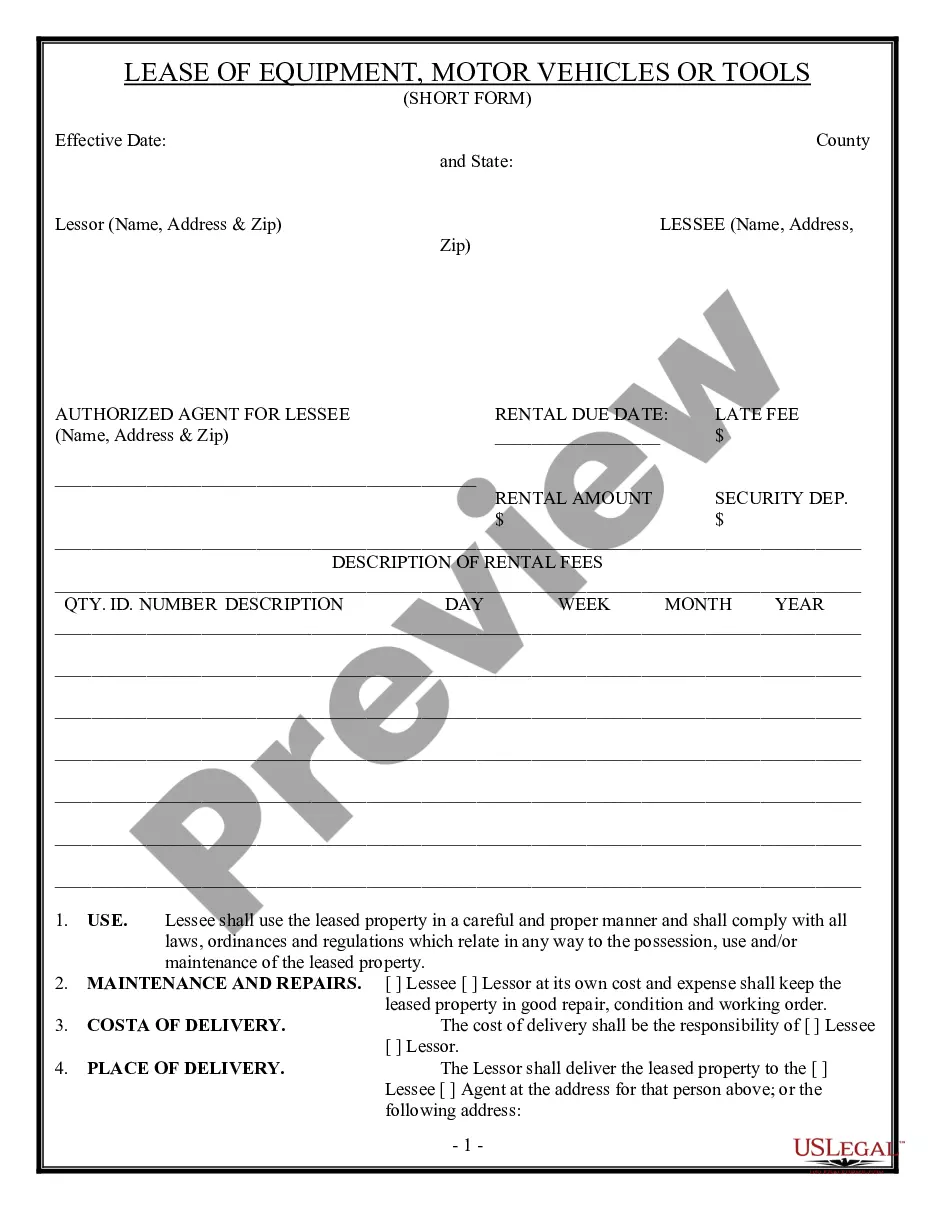
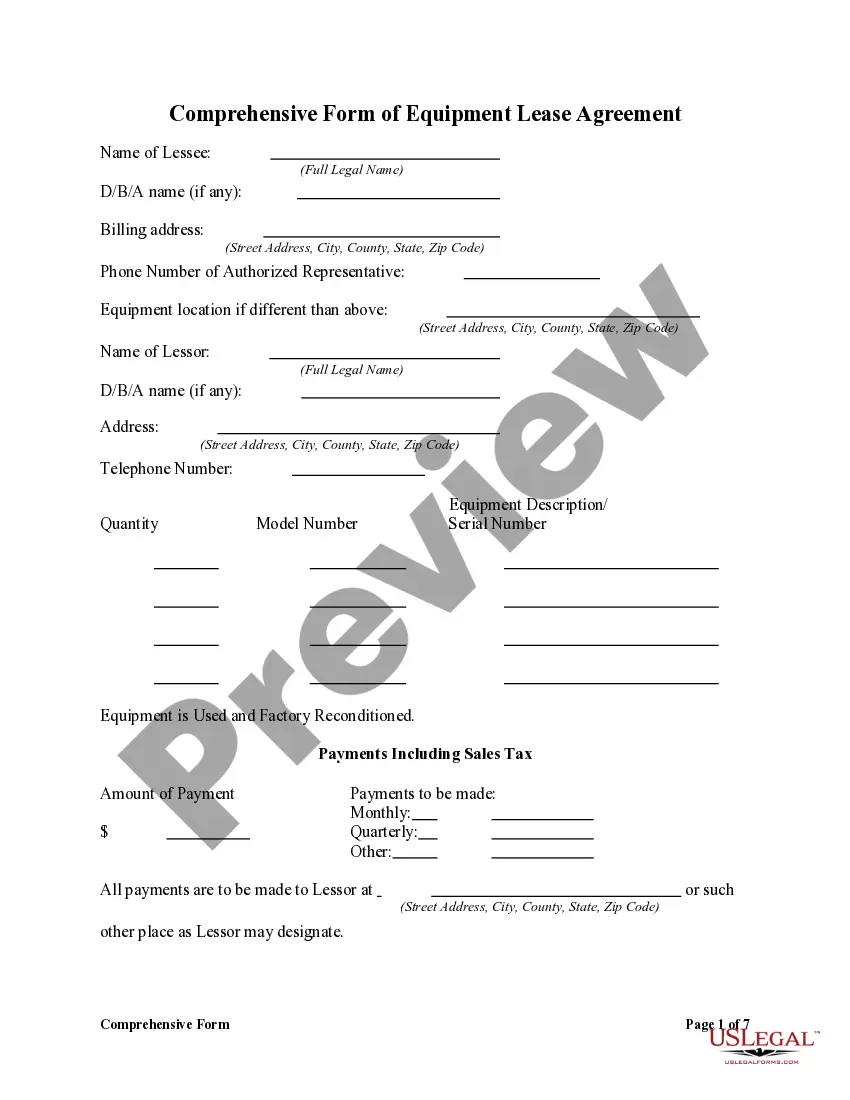
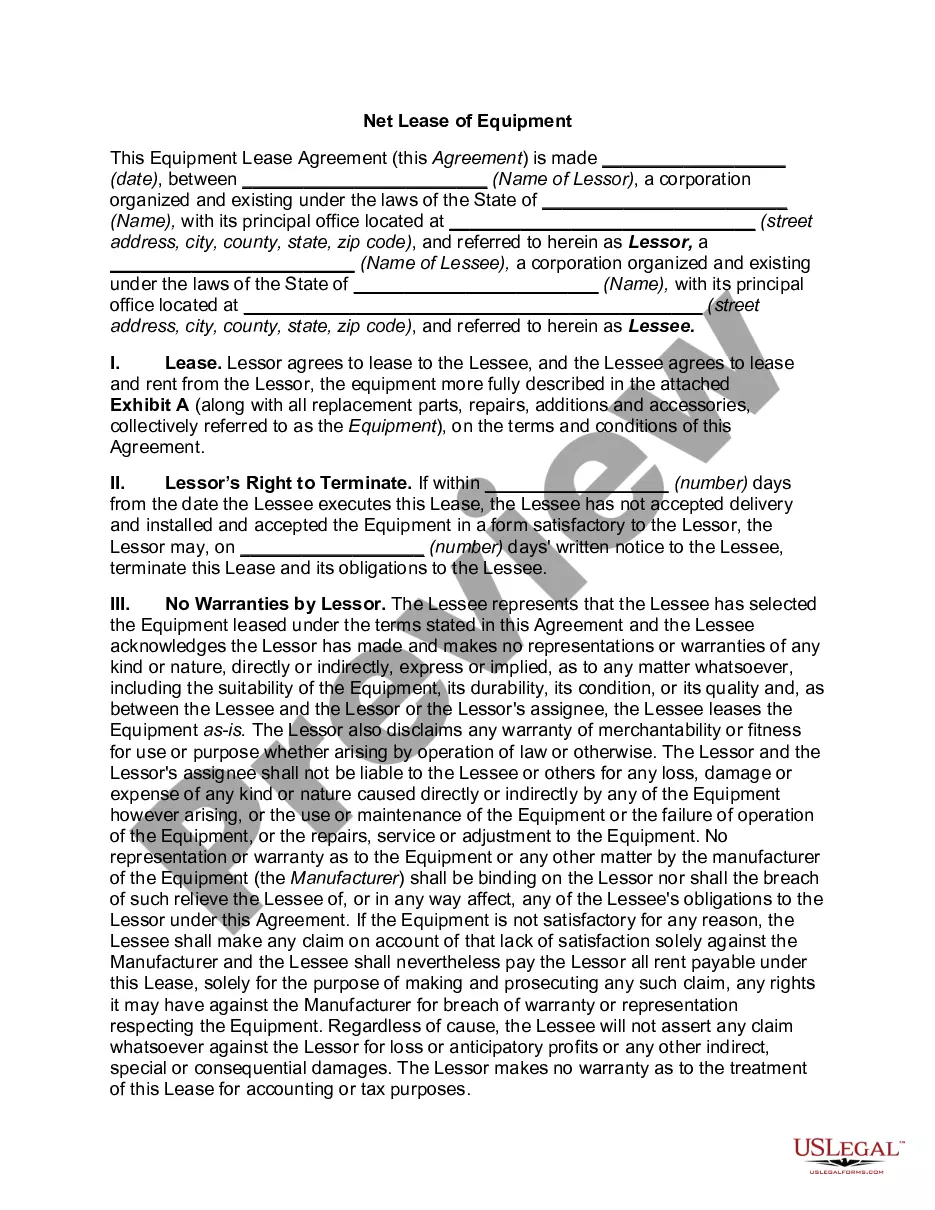
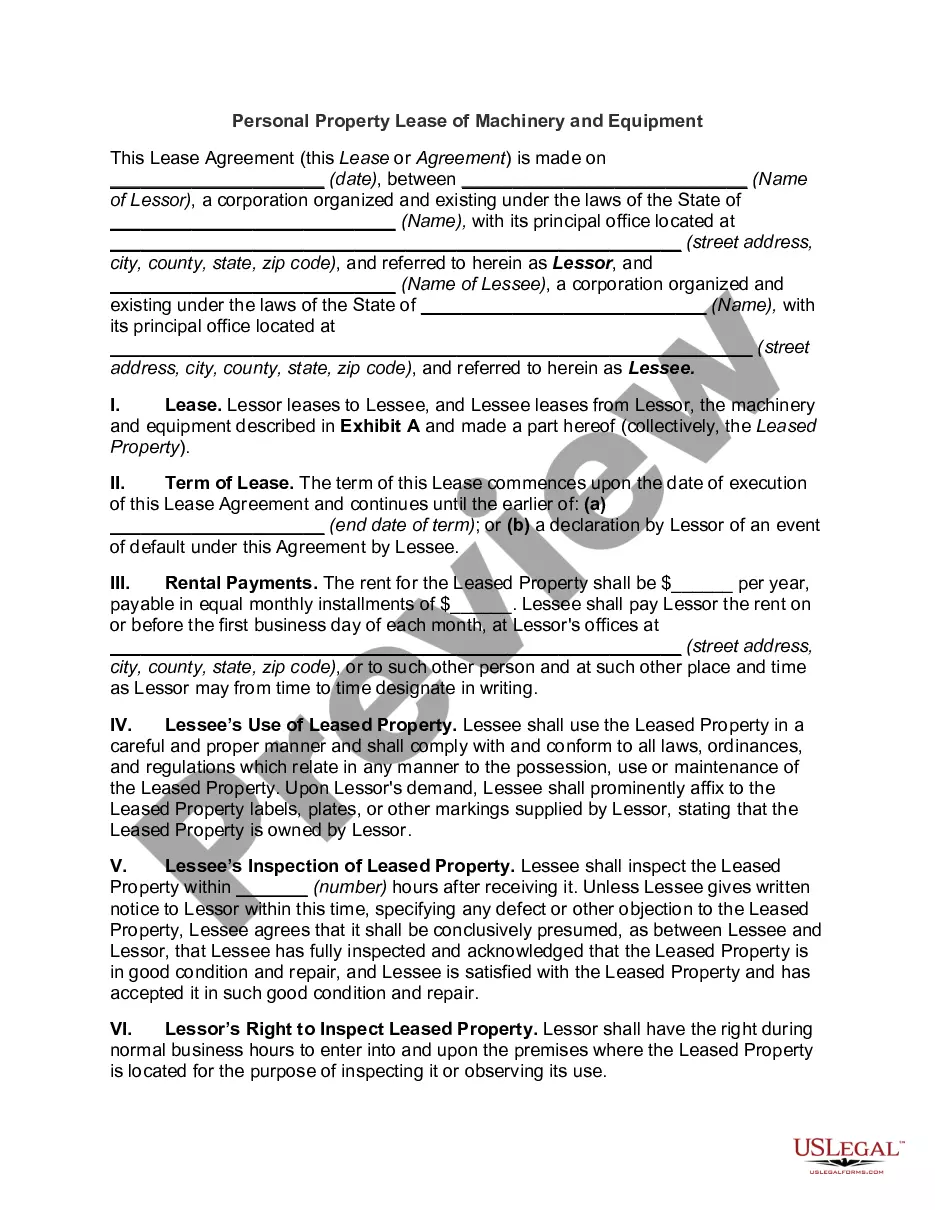
This form provides for the lease of equipment, motor vehicles, or tools. It is also understood that the lessor may assign this lease or mortgage, the equipment or tools, and that the assignee may assign the lease. All rights of the lessor may be assigned, pledged, mortgaged, transferred or otherwise disposed of, either in whole or in part, without notice to the lessee.
Kansas Equipment Lease - Detailed
Instant download
Description
Free preview
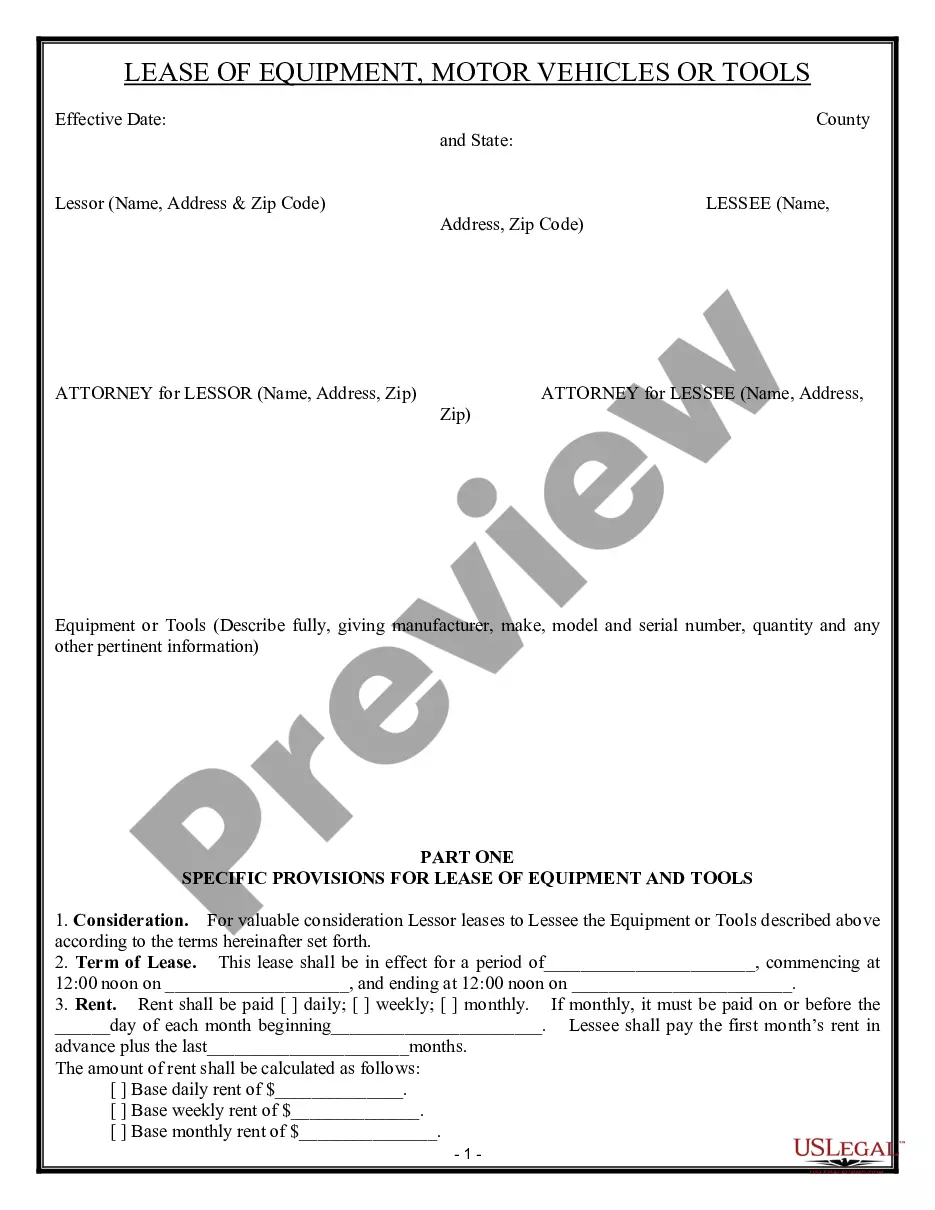
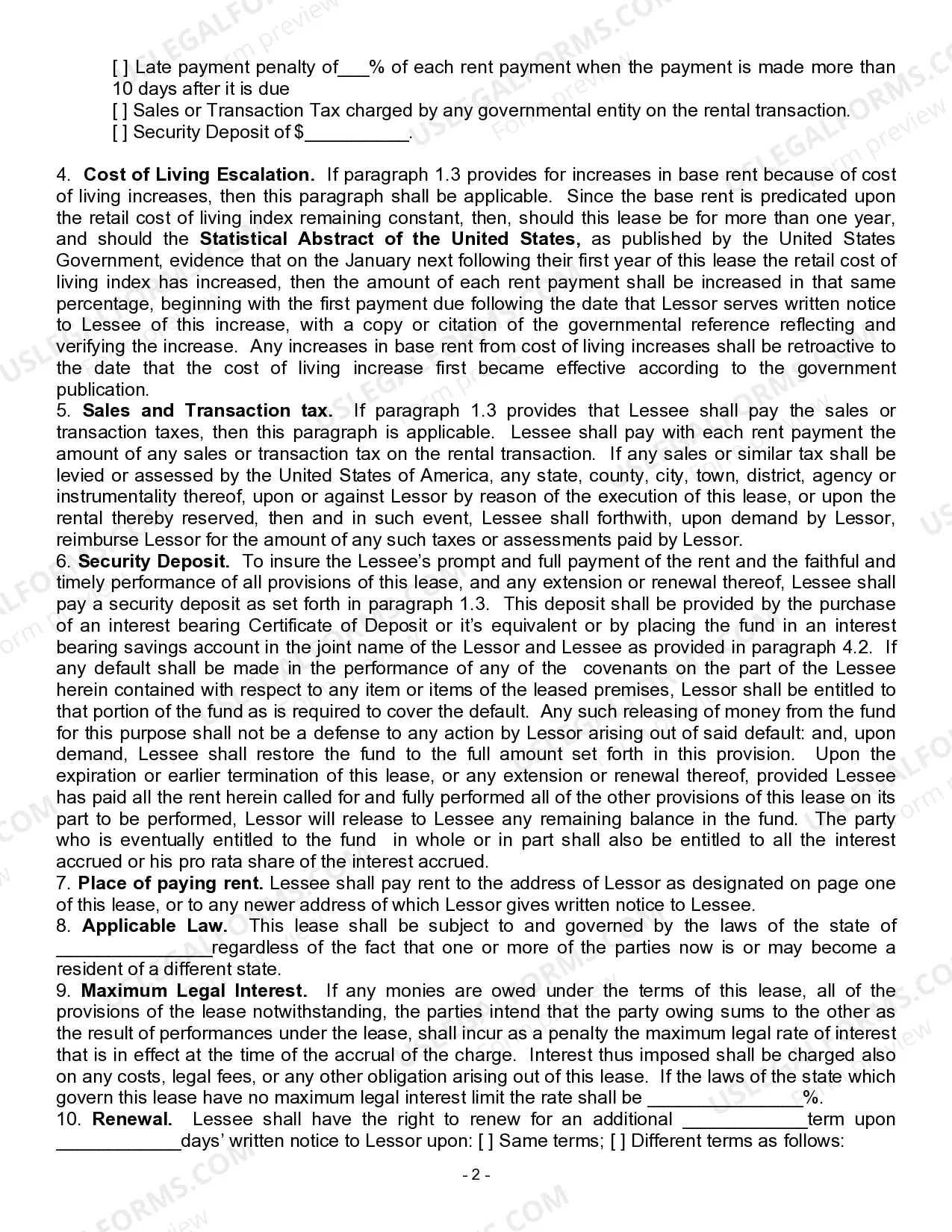
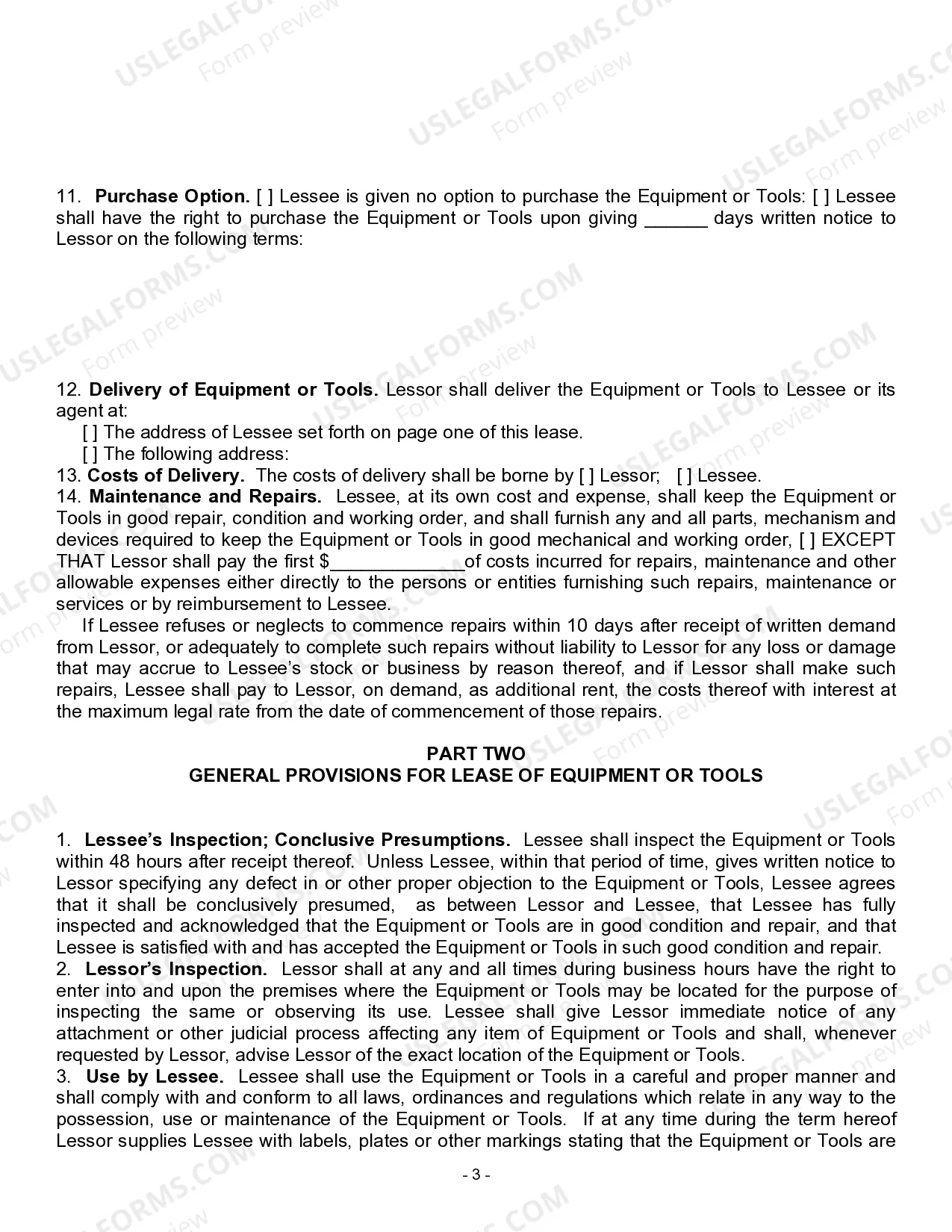

How to fill out Equipment Lease - Detailed?
US Legal Forms - one of the largest collections of legal documents in the USA - provides a broad selection of legal template records that you can download or print.
By using the website, you can access thousands of documents for business and personal needs, organized by categories, states, or keywords.
You can find the latest versions of forms such as the Kansas Equipment Lease - Detailed in a matter of seconds.
If the form does not meet your needs, use the Search field at the top of the page to find a suitable one.
If you are satisfied with the form, confirm your choice by clicking the Purchase now button, then select your preferred pricing plan and provide your details to register for an account.
- If you have a monthly subscription, Log In and download Kansas Equipment Lease - Detailed from the US Legal Forms collection.
- The Download button will be visible on every template you view.
- You have access to all previously saved documents in the My documents section of your account.
- To use US Legal Forms for the first time, here are simple steps to get started.
- Ensure you have chosen the correct template for your region/county.
- Click the Review button to see the details of the form.
Form popularity
FAQ
To structure an effective equipment lease, start with an outline that includes key components, such as lease duration, rent payment details, and equipment maintenance. Define the responsibilities of both the lessor and lessee to eliminate ambiguity. Crafting a well-structured Kansas Equipment Lease - Detailed protects your investment and fosters a reliable leasing relationship.
Equipment rental can be highly profitable, especially if you choose high-demand items and maintain quality service. Factors like market trends and competition significantly influence the profitability of your equipment rental business. By optimizing your offerings and forming a solid Kansas Equipment Lease - Detailed, you can maximize your investment returns.
Creating an equipment rental agreement starts with gathering all pertinent information, including the parties involved and equipment details. Clearly outline the rental terms, payment structure, and maintenance obligations to avoid misunderstandings. A comprehensive approach to your Kansas Equipment Lease - Detailed will safeguard your interests throughout the rental period.
Yes, you can type up your own rental agreement, provided you include all necessary legal elements. Make sure to clearly define the terms, such as rental duration, payment details, and maintenance responsibilities. A well-crafted rental agreement ensures compliance and protects both parties, making your Kansas Equipment Lease - Detailed effective and enforceable.
To lease equipment to your LLC, start by drafting a formal agreement that specifies the terms, responsibilities, and duration of the lease. Ensure the document outlines the payment schedule and penalties for late payments. It’s essential to document the transaction correctly to maintain your legal protection and benefits under a Kansas Equipment Lease - Detailed.
As mentioned earlier, at the end of a Kansas Equipment Lease - Detailed, you have options regarding the equipment's fate. You may return it, buy it, or possibly renew the lease. Each option carries different financial implications, so it’s wise to consider what best fits your business strategy.
The structure of equipment leasing generally includes the lease duration, payment schedule, and maintenance responsibilities. In a Kansas Equipment Lease - Detailed, the terms can vary based on the type of equipment and the lessor's policies. Understanding these elements helps businesses plan their financial commitments effectively.
Exiting a Kansas Equipment Lease - Detailed can be complex, but several strategies may help. Review your lease terms for any possible early termination clauses. You may also negotiate with the lessor or consider subleasing the equipment, depending on the agreement’s provisions.
Equipment leasing is a financing option for acquiring equipment while keeping your capital flexible. With a Kansas Equipment Lease - Detailed, businesses can obtain essential tools for operations without the burden of high initial costs. This approach facilitates growth and allows companies to stay competitive.
In a finance lease, the lessor retains ownership of the equipment throughout the lease term. The lessee, however, has the right to use the equipment as agreed, and may have options to buy it at the end of the lease. Understanding ownership terms is vital for those considering a Kansas Equipment Lease - Detailed to avoid confusion and ensure compliance.