This form is a listing of various Causes of Action. This form lists a variety of lawsuits which may be filed against a tortfeasor.
Kansas List of Causes of Action
140 downloads
Description
Free preview





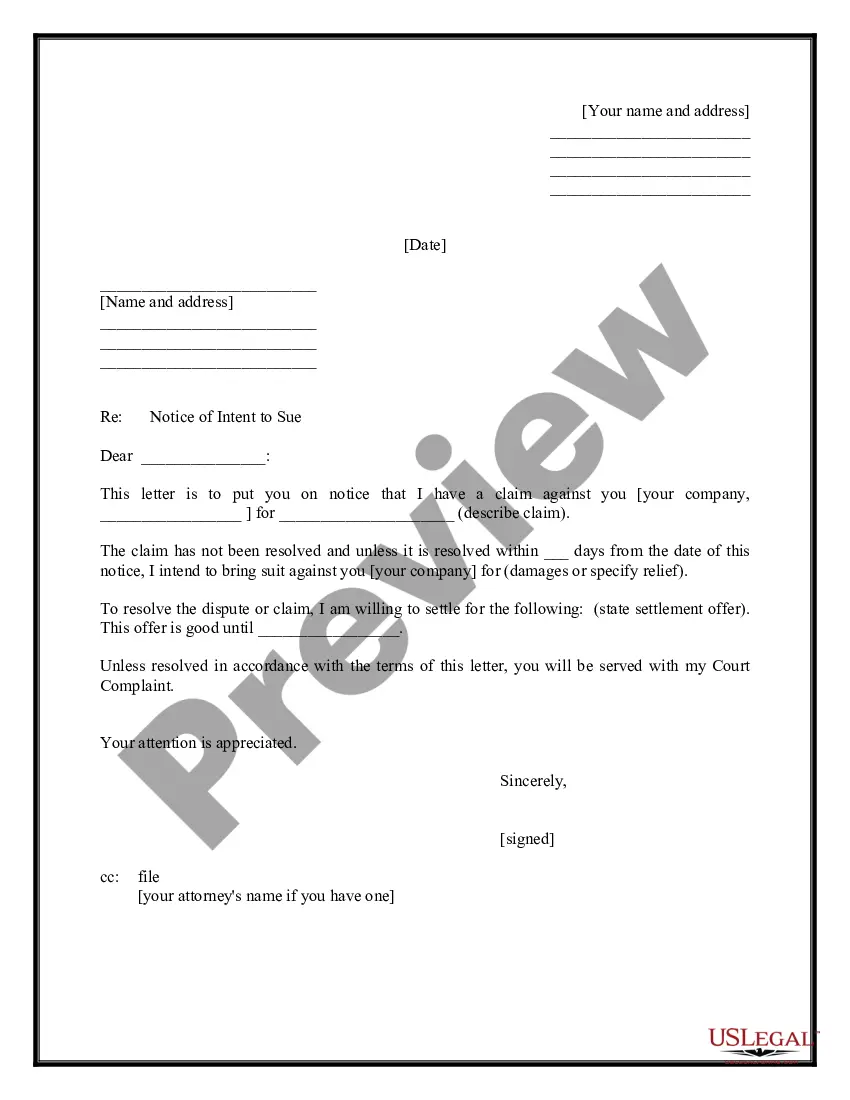
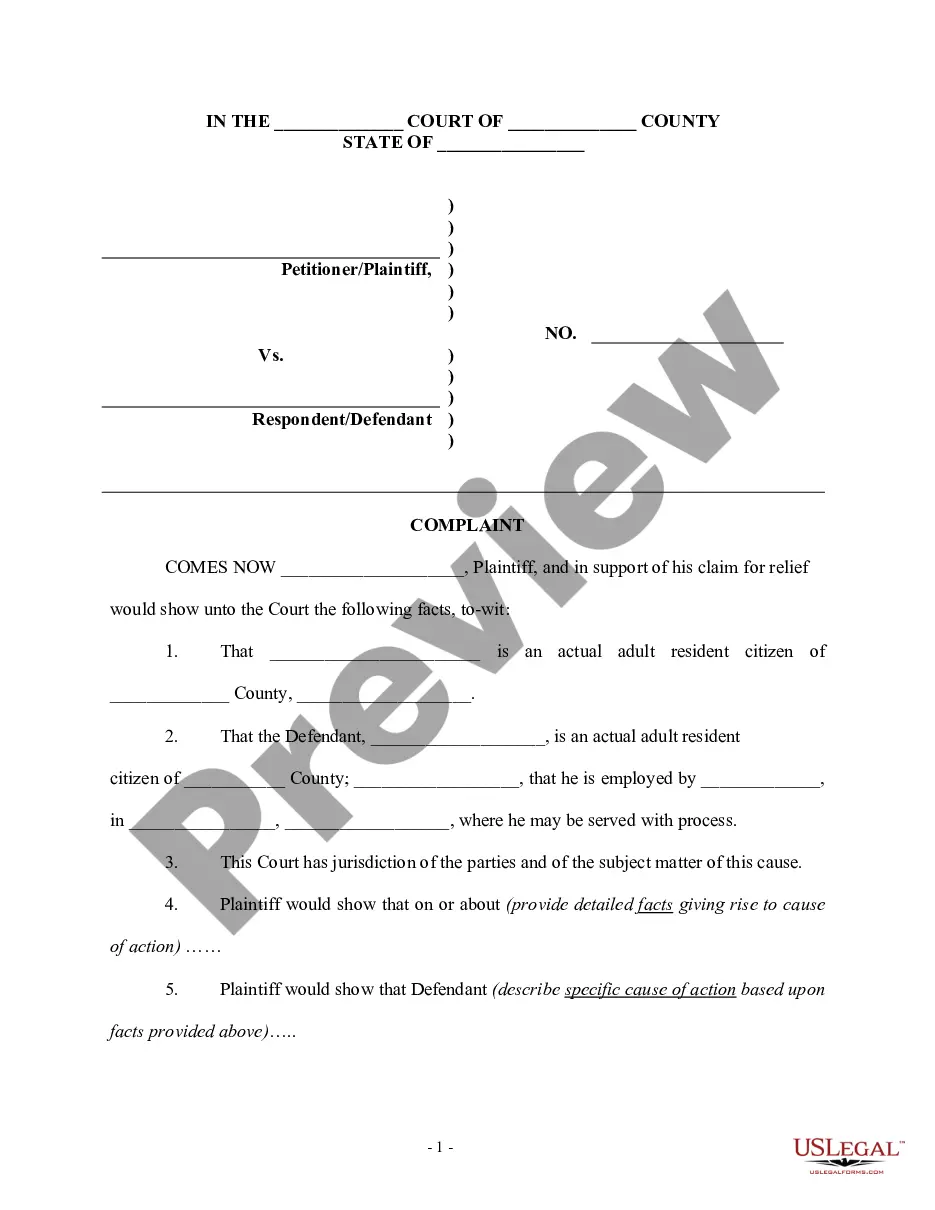
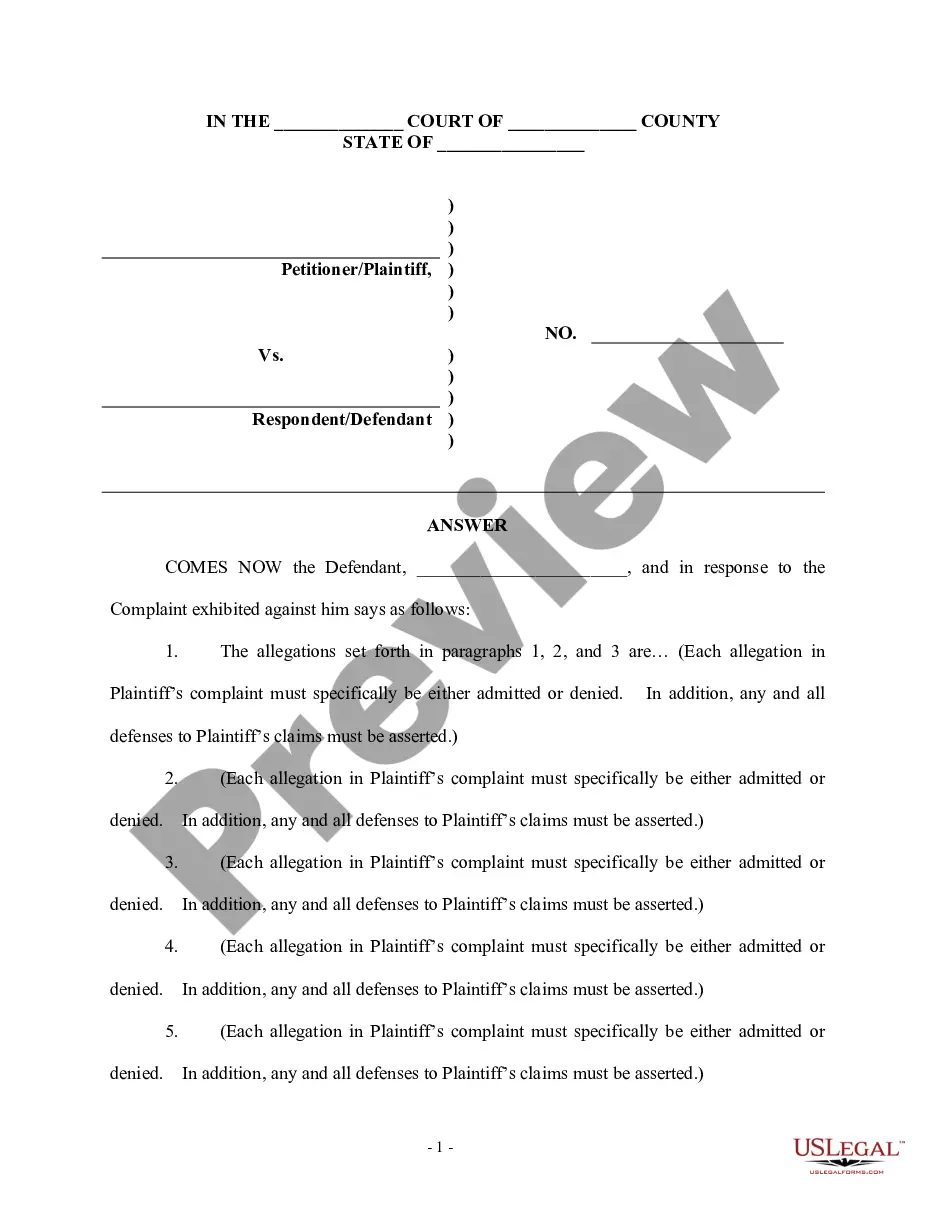
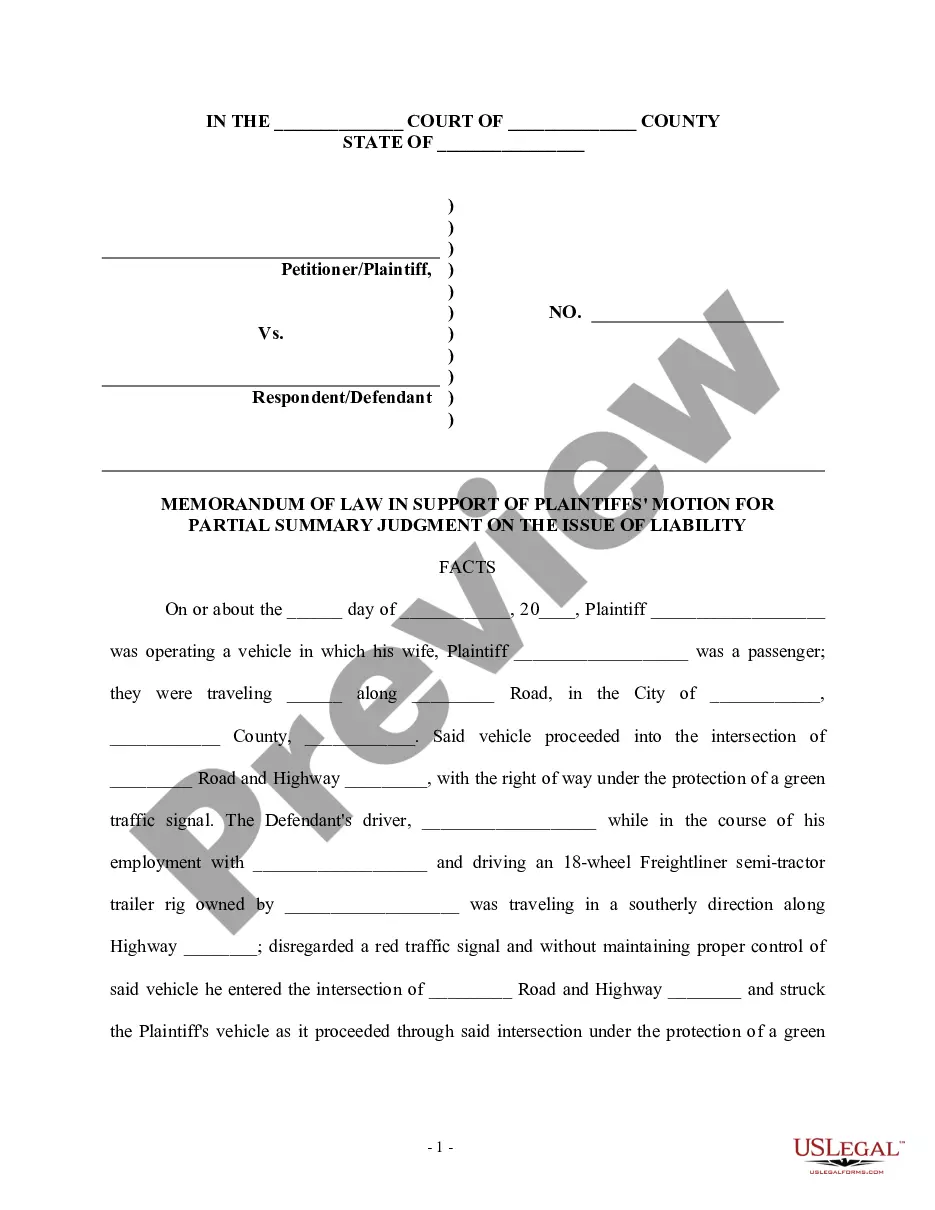
Get your form ready online
Our built-in tools help you complete, sign, share, and store your documents in one place.
Built-in online Word editor
Make edits, fill in missing information, and update formatting in US Legal Forms—just like you would in MS Word.
Export easily
Download a copy, print it, send it by email, or mail it via USPS—whatever works best for your next step.
E-sign your document
Sign and collect signatures with our SignNow integration. Send to multiple recipients, set reminders, and more. Go Premium to unlock E-Sign.
Notarize online 24/7
If this form requires notarization, complete it online through a secure video call—no need to meet a notary in person or wait for an appointment.
Store your document securely
We protect your documents and personal data by following strict security and privacy standards.

Make edits, fill in missing information, and update formatting in US Legal Forms—just like you would in MS Word.

Download a copy, print it, send it by email, or mail it via USPS—whatever works best for your next step.

Sign and collect signatures with our SignNow integration. Send to multiple recipients, set reminders, and more. Go Premium to unlock E-Sign.

If this form requires notarization, complete it online through a secure video call—no need to meet a notary in person or wait for an appointment.

We protect your documents and personal data by following strict security and privacy standards.
Looking for another form?
How to fill out List Of Causes Of Action?
If you wish to total, obtain, or print out legal document templates, utilize US Legal Forms, the largest collection of legal forms available online. Leverage the site’s straightforward and user-friendly search feature to find the documents you require. Numerous templates for business and personal purposes are organized by categories and states, or keywords. Use US Legal Forms to acquire the Kansas List of Causes of Action with just a few clicks.
If you are already a US Legal Forms user, Log In to your account and click the Download button to obtain the Kansas List of Causes of Action. You can also access forms you previously saved in the My documents section of your account.
If you are using US Legal Forms for the first time, follow the instructions below: Step 1. Ensure you have selected the form for the correct city/state. Step 2. Use the Preview option to review the form’s content. Don’t forget to read the description. Step 3. If you are not satisfied with the form, utilize the Search area at the top of the screen to find other versions of the legal form template. Step 4. Once you have identified the form you need, click the Purchase Now button. Choose the pricing plan you prefer and enter your details to register for an account. Step 5. Complete the transaction. You can use your credit card or PayPal account to finalize the payment. Step 6. Select the format of the legal form and download it to your device. Step 7. Complete, amend, and print or sign the Kansas List of Causes of Action.
- Every legal document template you purchase is yours forever.
- You have access to every form you saved in your account.
- Choose the My documents section and select a form to print or download again.
- Stay competitive and obtain, and print the Kansas List of Causes of Action with US Legal Forms.
- There are millions of professional and state-specific forms you can utilize for your business or personal needs.
Form popularity
FAQ
For crimes not specifically listed in the statute, a general statute of limitations of five years applies for all crimes (felonies, misdemeanors, and infractions).
Burden of proof; defendant presumed innocent. (a) In all criminal proceedings, the state has the burden to prove beyond a reasonable doubt that a defendant is guilty of a crime. This standard requires the prosecution to prove beyond a reasonable doubt each required element of a crime.
(1) A prosecution for murder may be commenced at any time. (2) Except as otherwise provided in this statute, prosecutions for other crimes must be commenced within five years after it is committed.
The liability for claims within the scope of the Act may not exceed Five Hundred Thousand Dollars ($500,000) per occurrence.
Usually, states will have a misdemeanor statute of limitations that's far shorter than for felonies. It depends on the crime. Some states, like Kentucky, North Carolina, South Carolina, Virginia, and Wyoming, have no statute of limitations on felony crimes at all, meaning a victim can come forward at any time.
Kansas, like all states, sets time limits for filing lawsuits and other civil/criminal actions under its statutes of limitations laws. These are imposed to create a fair system for all parties involved, allowing both the plaintiff and the defendant to plan and prepare ingly.
In order to recover on a claim for emotional distress, plaintiff must prove: (1) intentional conduct; (2) the conduct must be extreme and outrageous; (3) a causal connection between defendant's conduct and plaintiff's mental distress; and (4) plaintiff's mental distress must be extreme and severe.
The statute of limitation does have exceptions. Federal law says that the general 5-year statute of limitations applies in every case unless there is a specific code section that extends the statute of limitations for that particular offense.