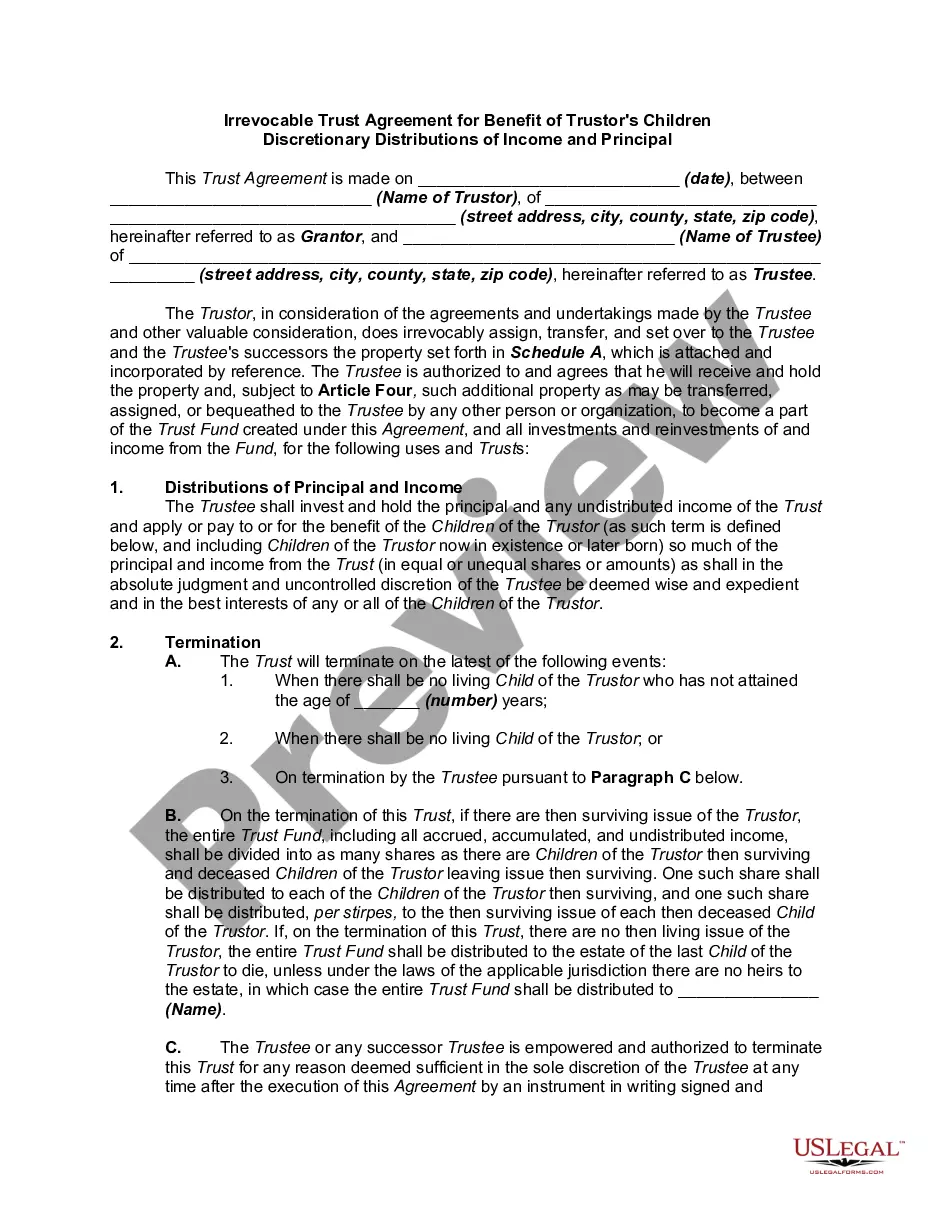
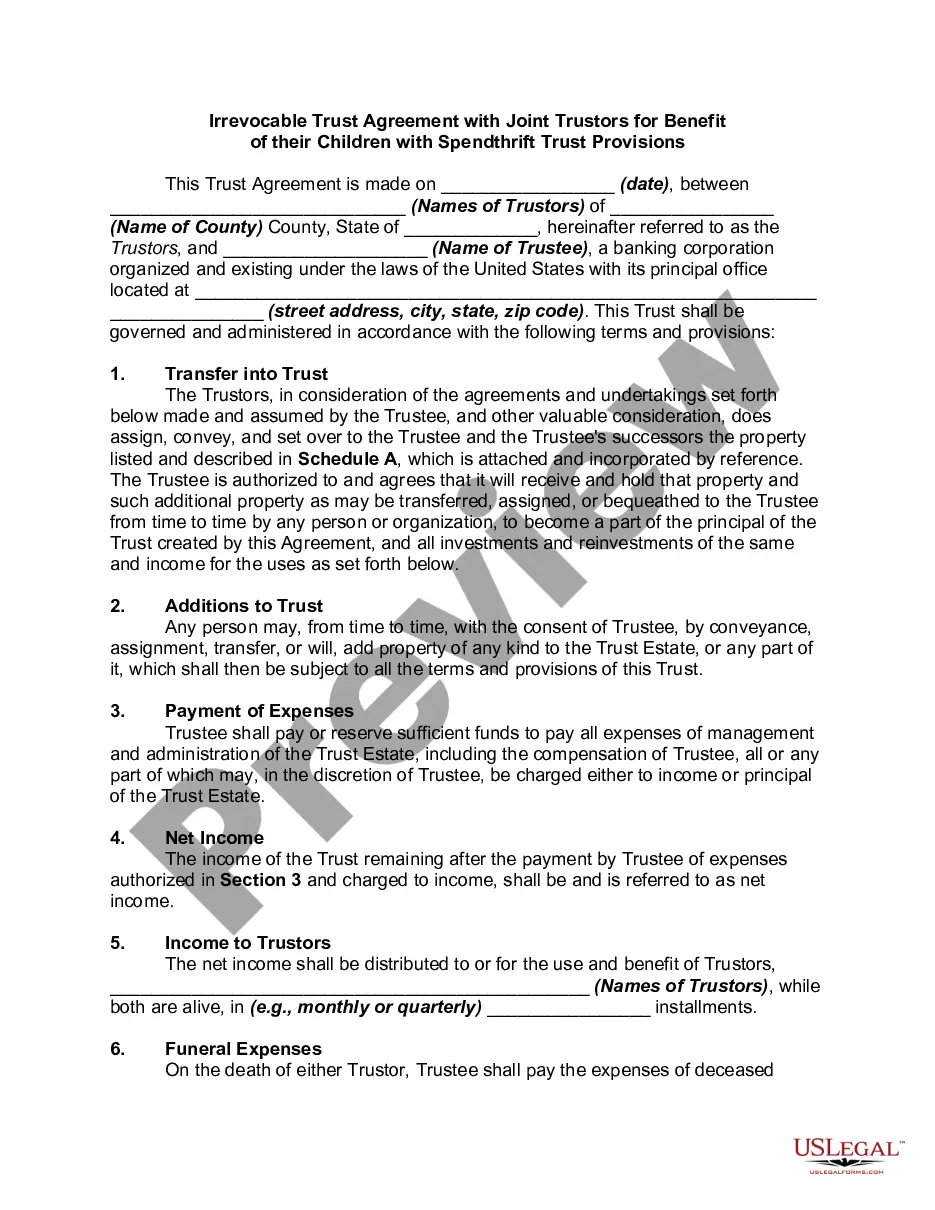
Indiana Irrevocable Trust Agreement Setting up Special Needs Trust for Benefit of Multiple Children
Description


Get your form ready online
Our built-in tools help you complete, sign, share, and store your documents in one place.
Make edits, fill in missing information, and update formatting in US Legal Forms—just like you would in MS Word.
Download a copy, print it, send it by email, or mail it via USPS—whatever works best for your next step.
Sign and collect signatures with our SignNow integration. Send to multiple recipients, set reminders, and more. Go Premium to unlock E-Sign.
If this form requires notarization, complete it online through a secure video call—no need to meet a notary in person or wait for an appointment.
We protect your documents and personal data by following strict security and privacy standards.

Make edits, fill in missing information, and update formatting in US Legal Forms—just like you would in MS Word.

Download a copy, print it, send it by email, or mail it via USPS—whatever works best for your next step.

Sign and collect signatures with our SignNow integration. Send to multiple recipients, set reminders, and more. Go Premium to unlock E-Sign.

If this form requires notarization, complete it online through a secure video call—no need to meet a notary in person or wait for an appointment.

We protect your documents and personal data by following strict security and privacy standards.
Looking for another form?



How to fill out Irrevocable Trust Agreement Setting Up Special Needs Trust For Benefit Of Multiple Children?
Locating the appropriate legal document template can be quite a challenge.
Naturally, there are numerous templates accessible online, but how can you find the legal form you require.
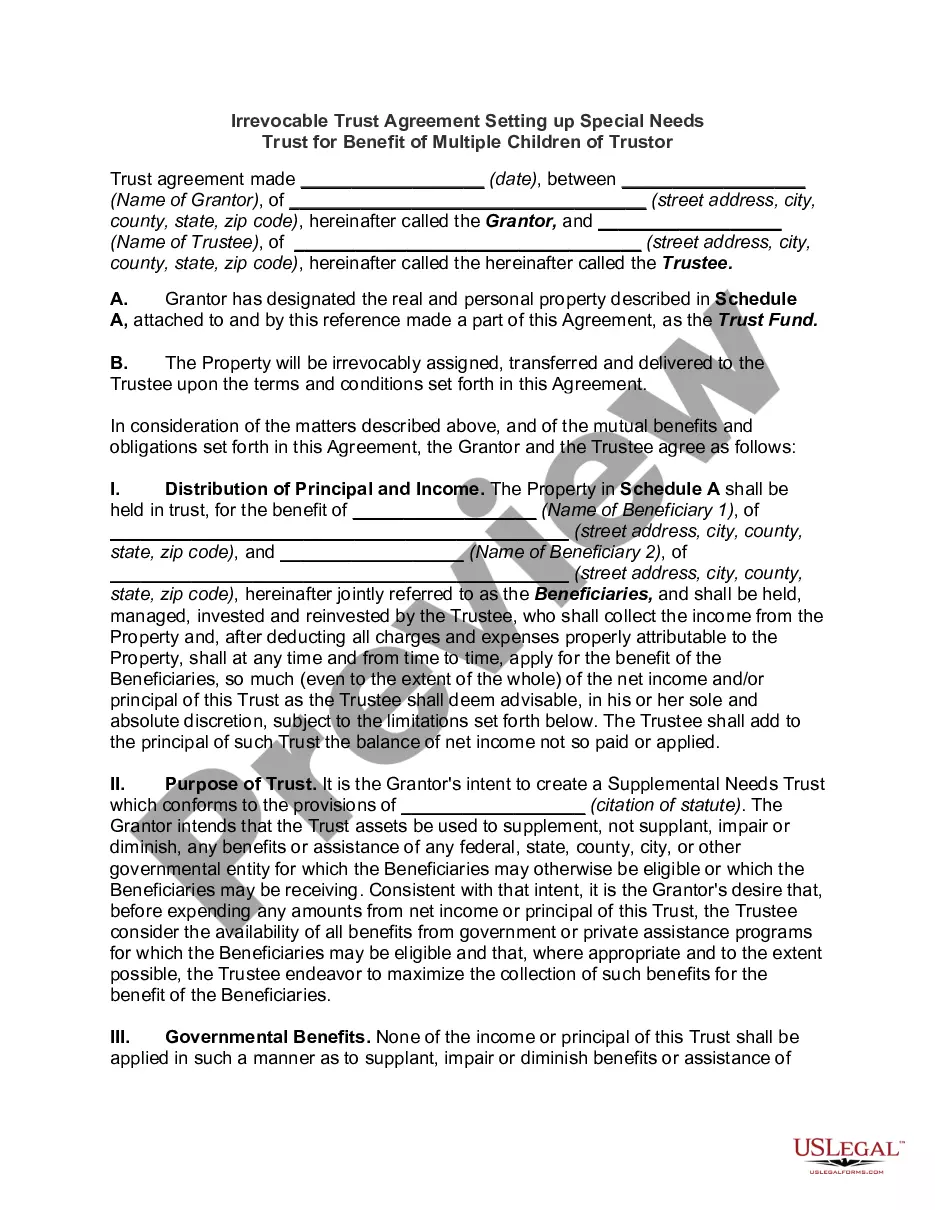
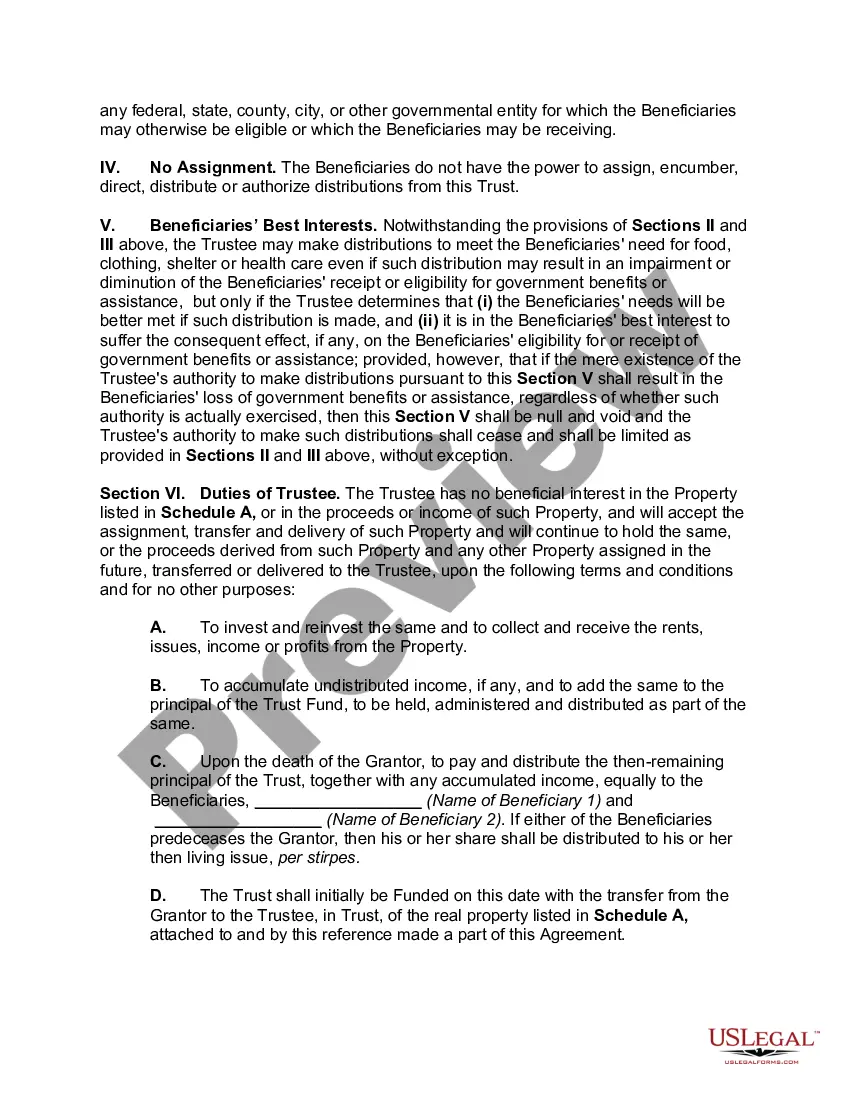
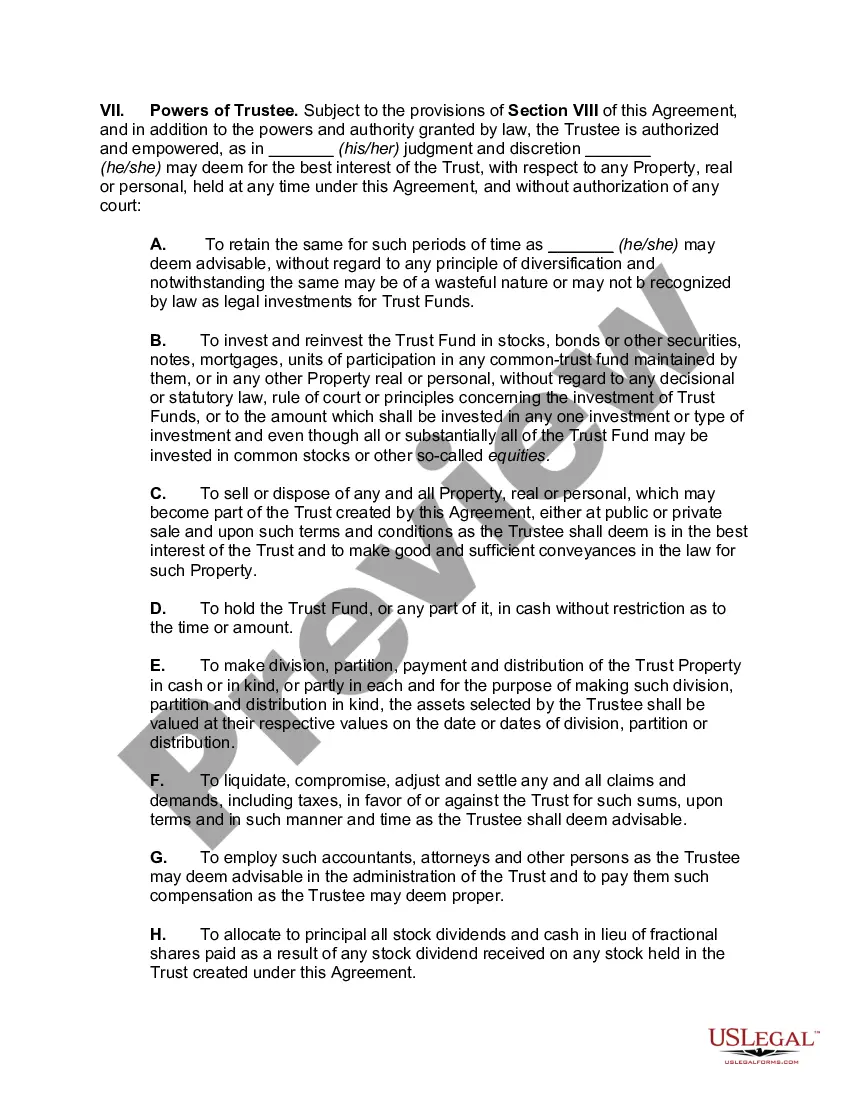
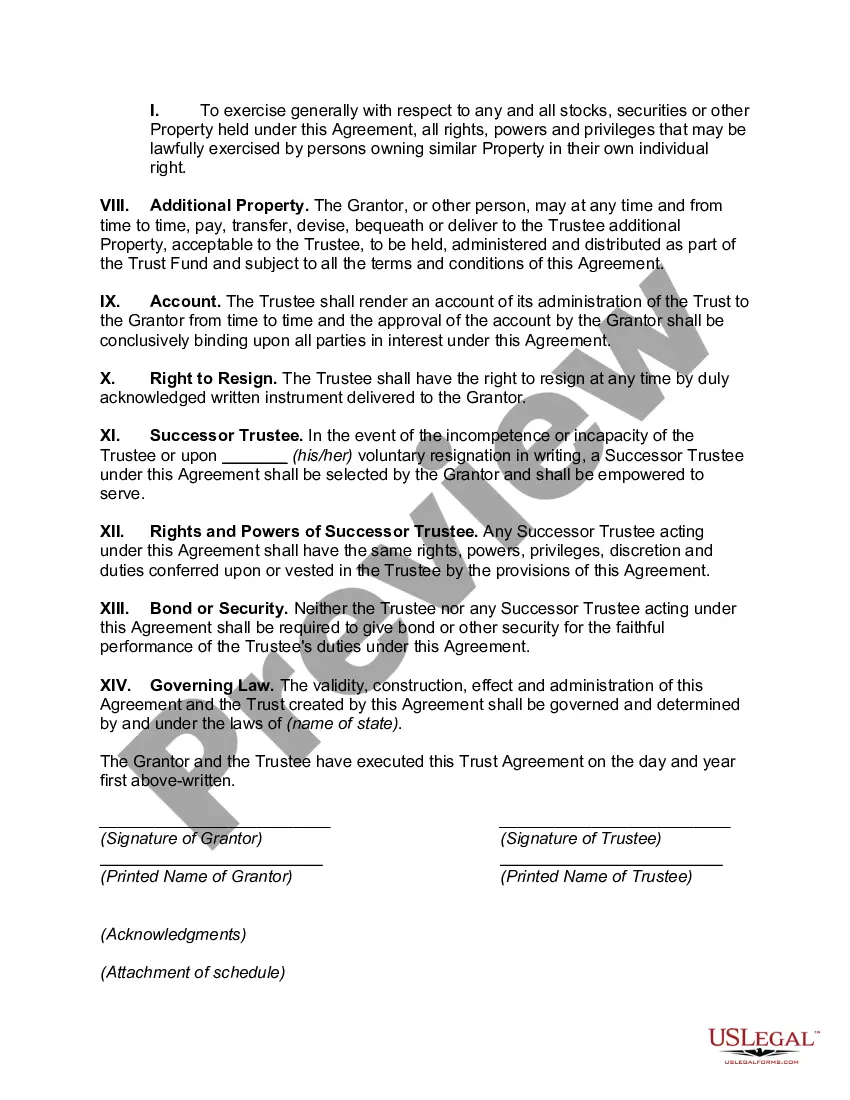
Utilize the US Legal Forms website. The service offers thousands of templates, including the Indiana Irrevocable Trust Agreement Establishing Special Needs Trust for the Benefit of Multiple Children, which can be utilized for both business and personal purposes.
You can preview the form using the Preview option and read the form description to ensure it is suitable for you.
- All forms are reviewed by experts and meet state and federal requirements.
- If you are already a registered user, Log In to your account and click on the Download option to obtain the Indiana Irrevocable Trust Agreement Establishing Special Needs Trust for the Benefit of Multiple Children.
- Use your account to search for the legal forms you have previously purchased.
- Visit the My documents tab of your account and download another copy of the document you need.
- If you are a new user of US Legal Forms, here are simple instructions you should follow.
- First, make sure you have selected the correct form for your jurisdiction/county.
Form popularity
FAQ
Anyone besides the beneficiary can create a third party SNT and the trust can have multiple beneficiaries. Beneficiaries do not need to be disabled to have a third party SNT.
A special needs trust is a popular strategy for those who want to help someone in need without taking the risk that the person will lose their eligibility for programs that require their income or assets to remain below a certain limit.
The term special needs trust refers to the purpose of the trust to pay for the beneficiary's unique or special needs. In short, the name is focused more on the beneficiary, while the name supplemental needs trust addresses the shortfalls of our public benefits programs.
To help you get started on understanding the options available, here's an overview the three primary classes of trusts.Revocable Trusts.Irrevocable Trusts.Testamentary Trusts.More items...?
A Special Needs Trust (SNT) allows for a disabled person to maintain his or her eligibility for public assistance benefits, despite having assets that would otherwise make the person ineligible for those benefits.
It's created while I'm living. That's called a living trust. A special-needs trust is another type of trust similar to it, but it is there to provide for a person with a disability, a child, a grandchild or a spouse who has a disability.
Disadvantages to SNTCost. Annual fees and a high cost to set up a SNT can make it financially difficult to create a SNT The yearly costs to manage the trust can be high.Lack of independence.Medicaid payback.
Special Needs Trusts are a useful tool and a long-term plan for savings; however, they are not always a good fit for everyone. Alternatives to opening a trust include spending down the funds, prepayment of living expenses, and ABLE Accounts.
