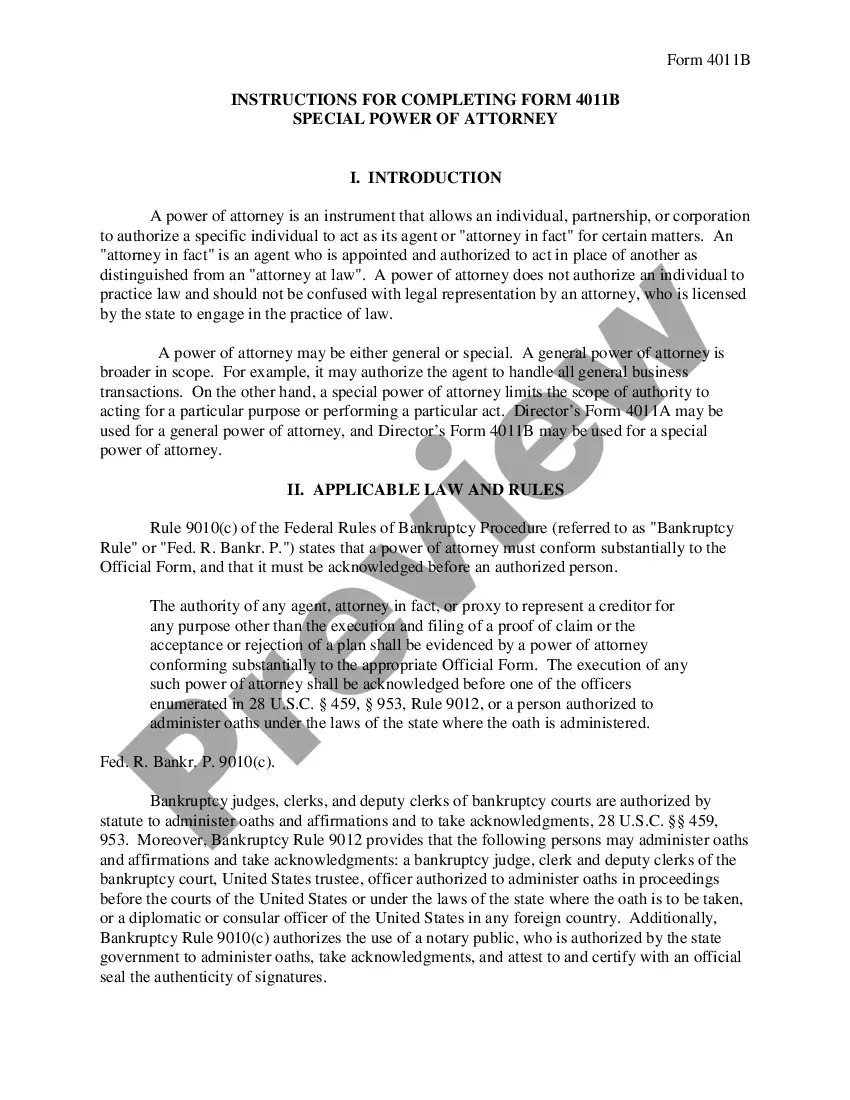
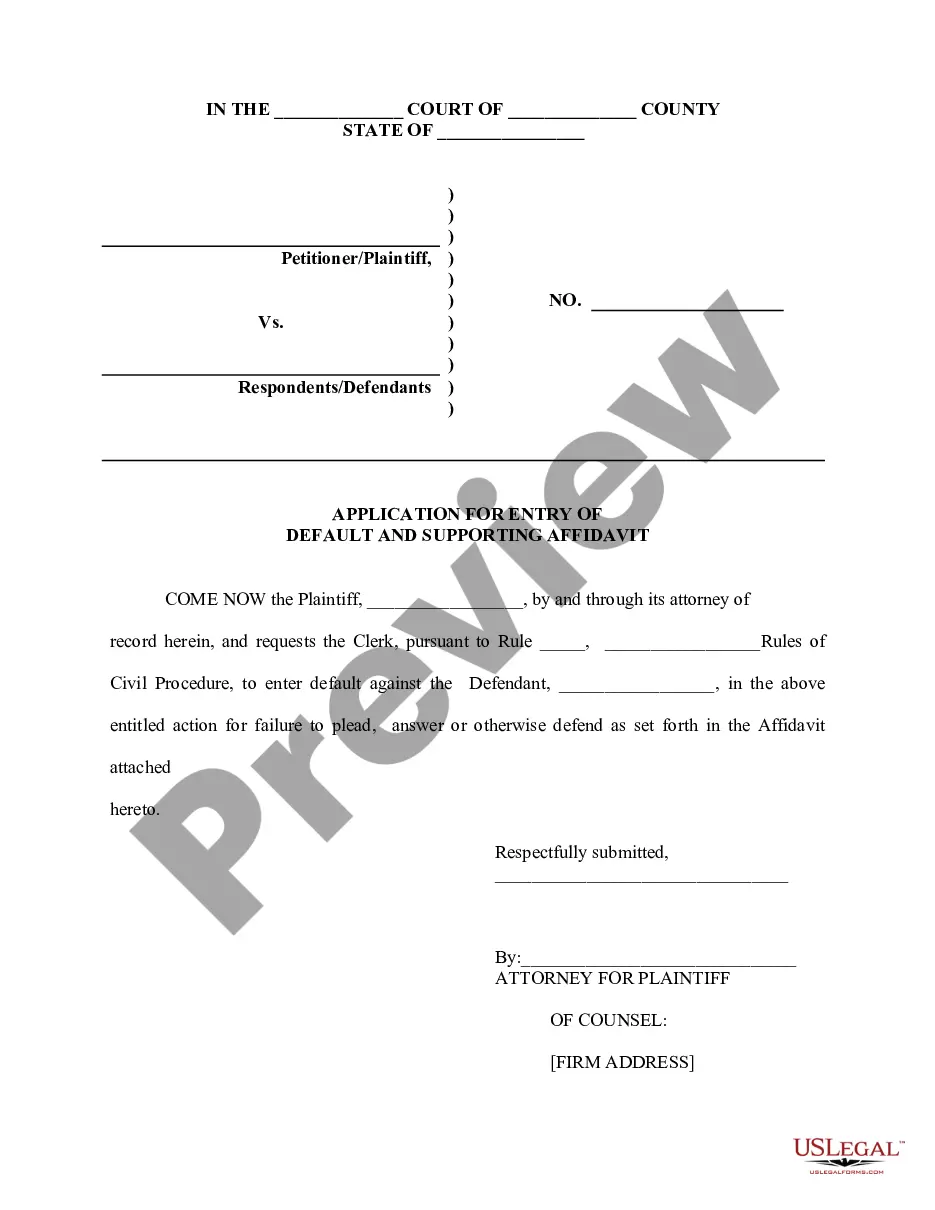
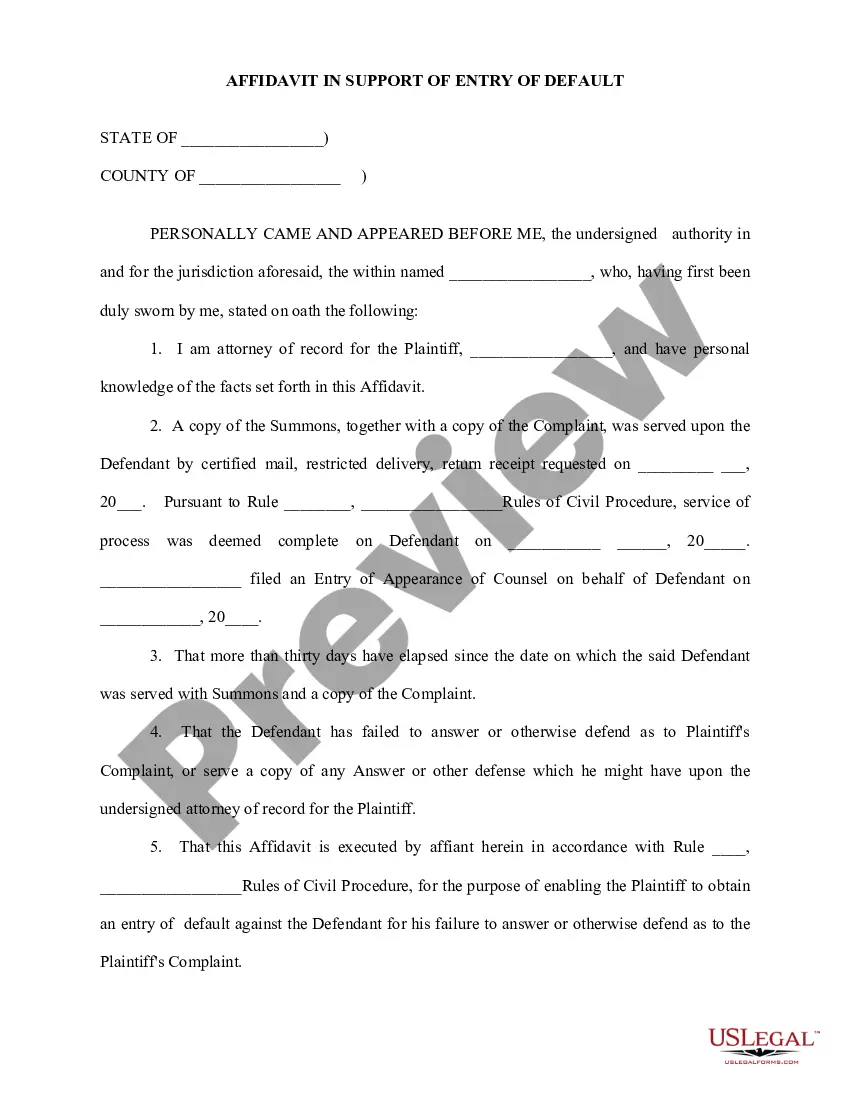
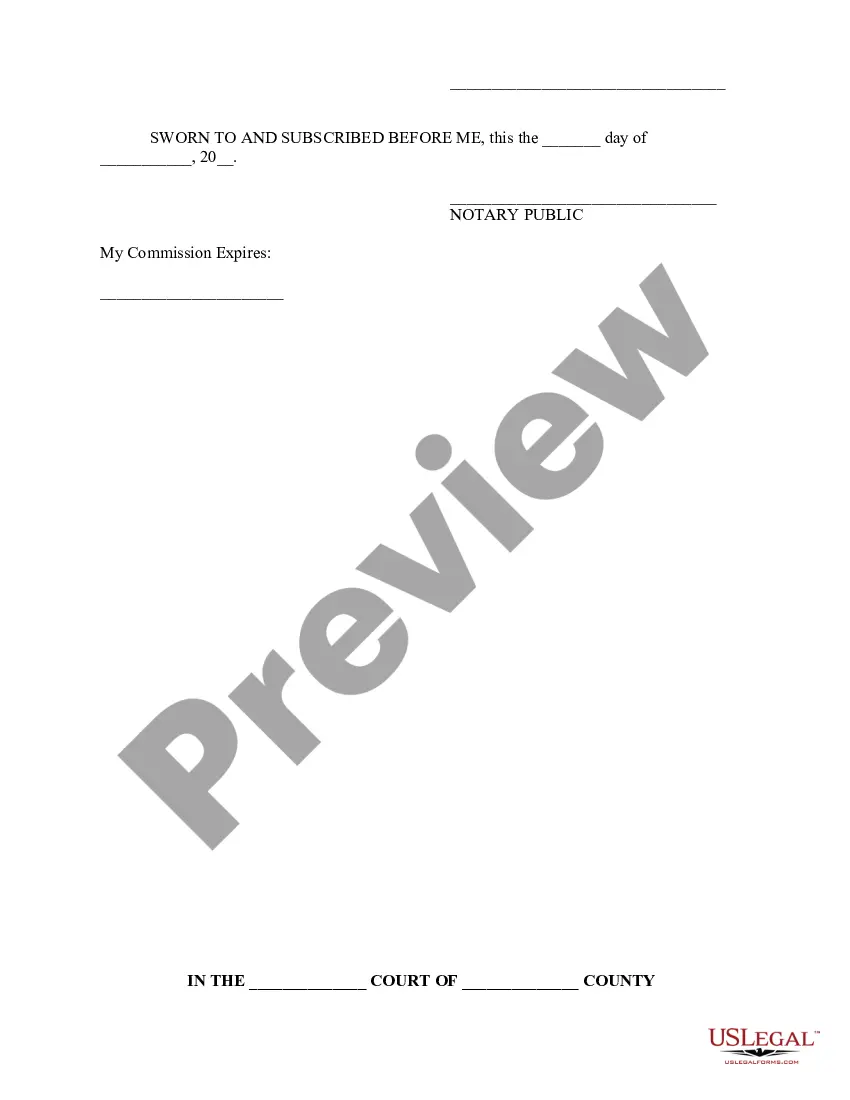
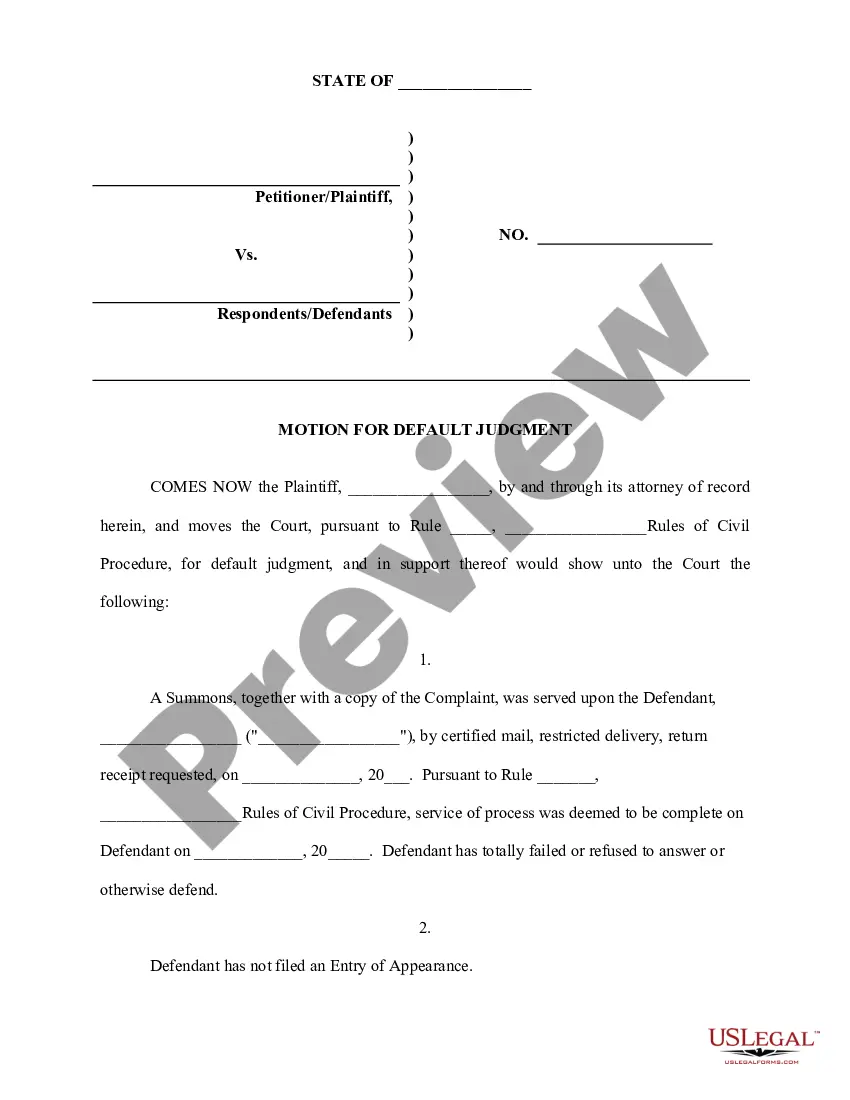
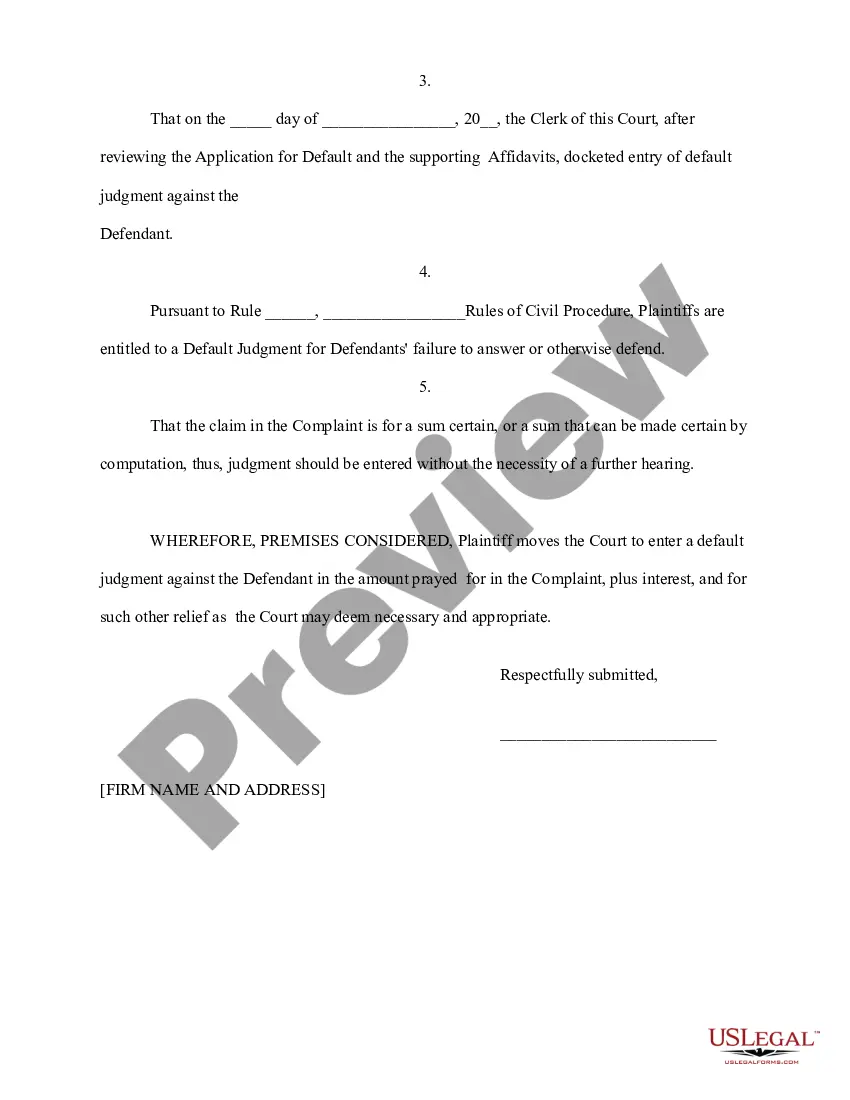
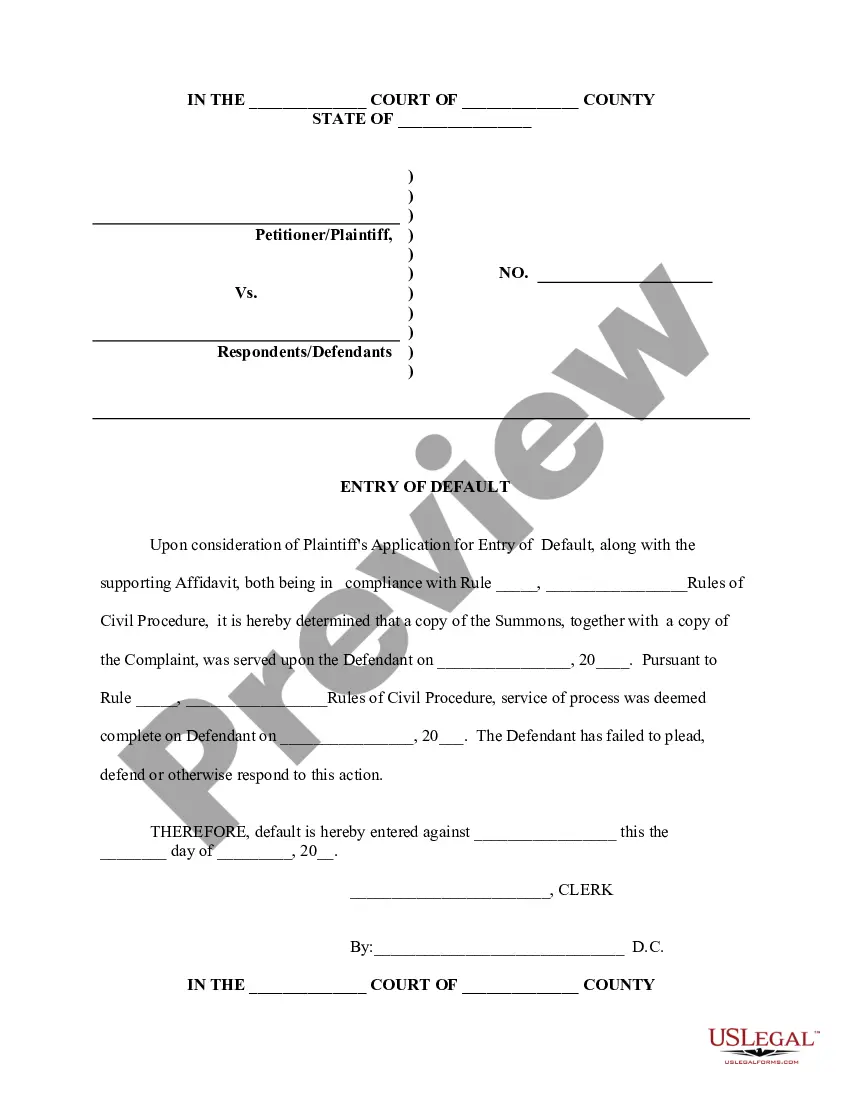
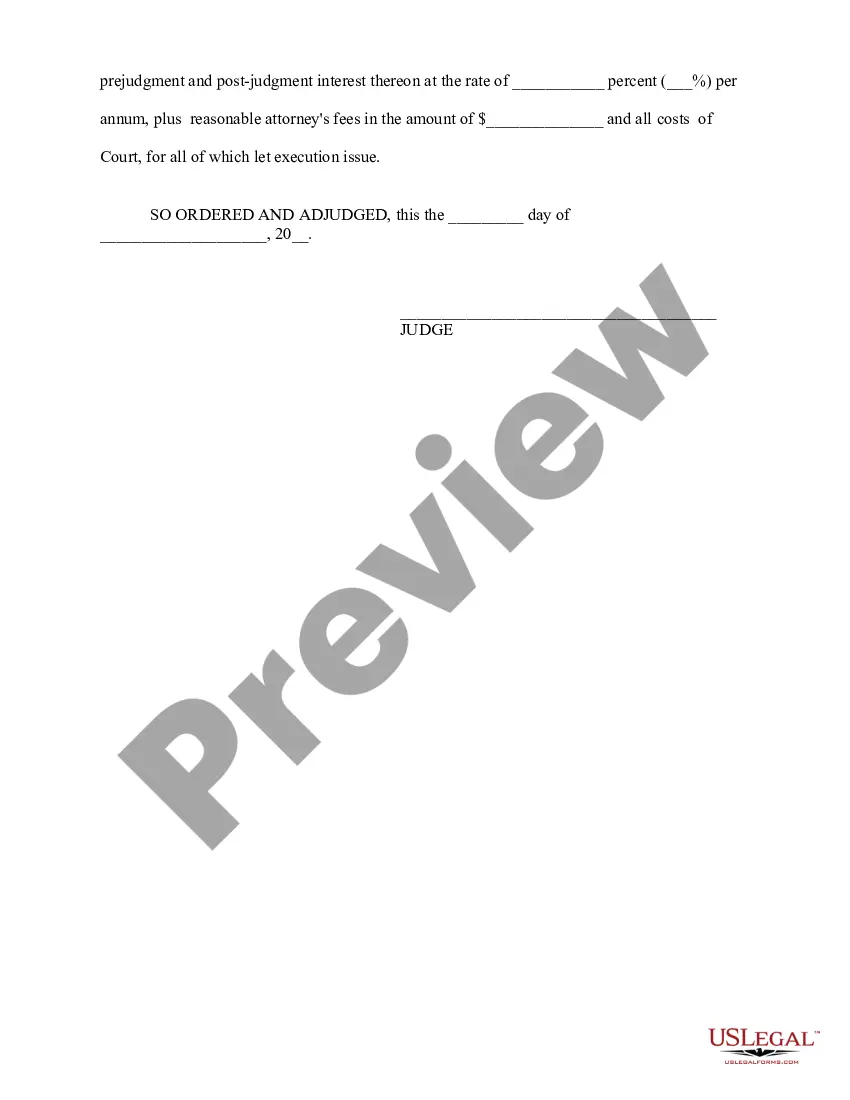
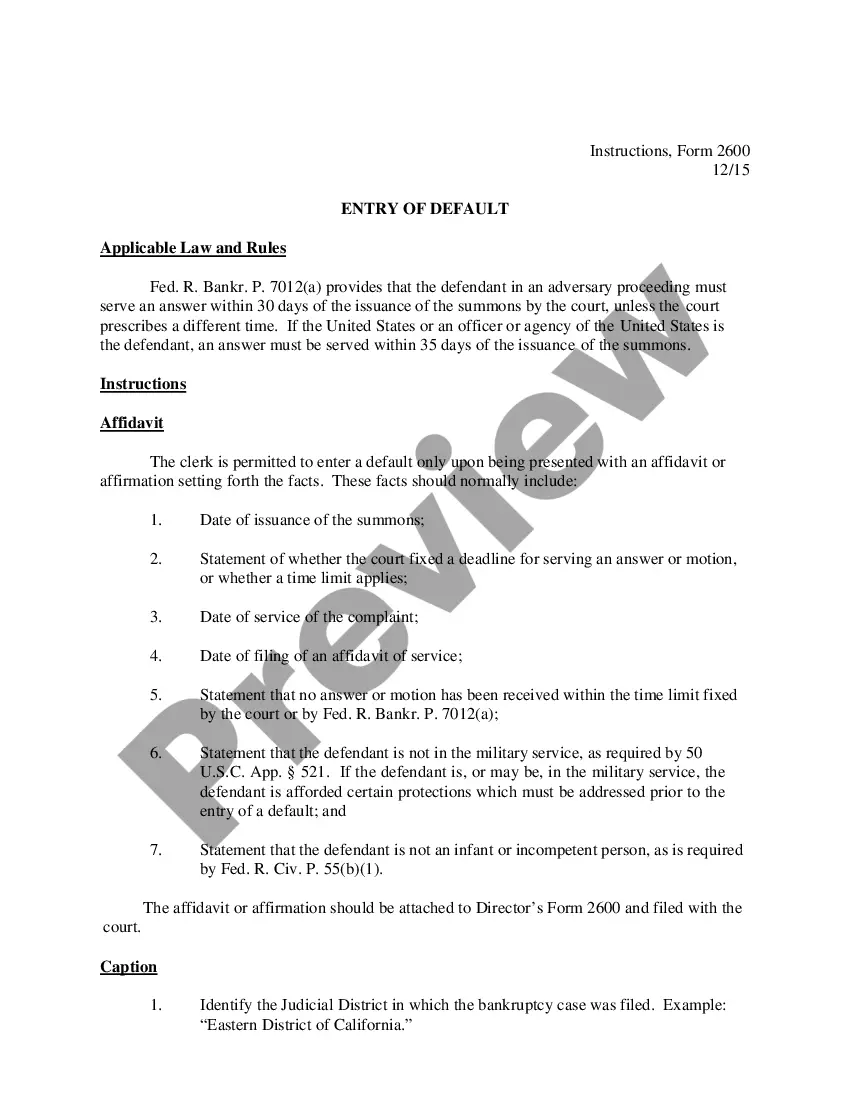
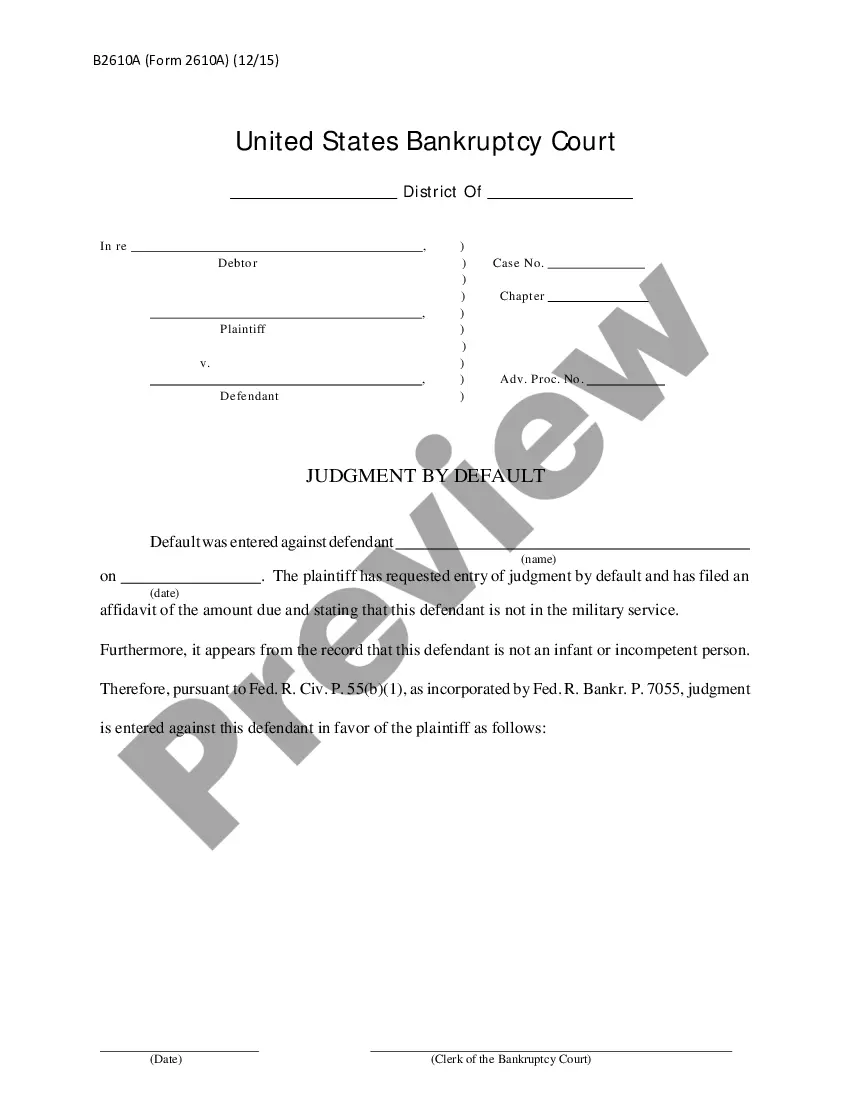
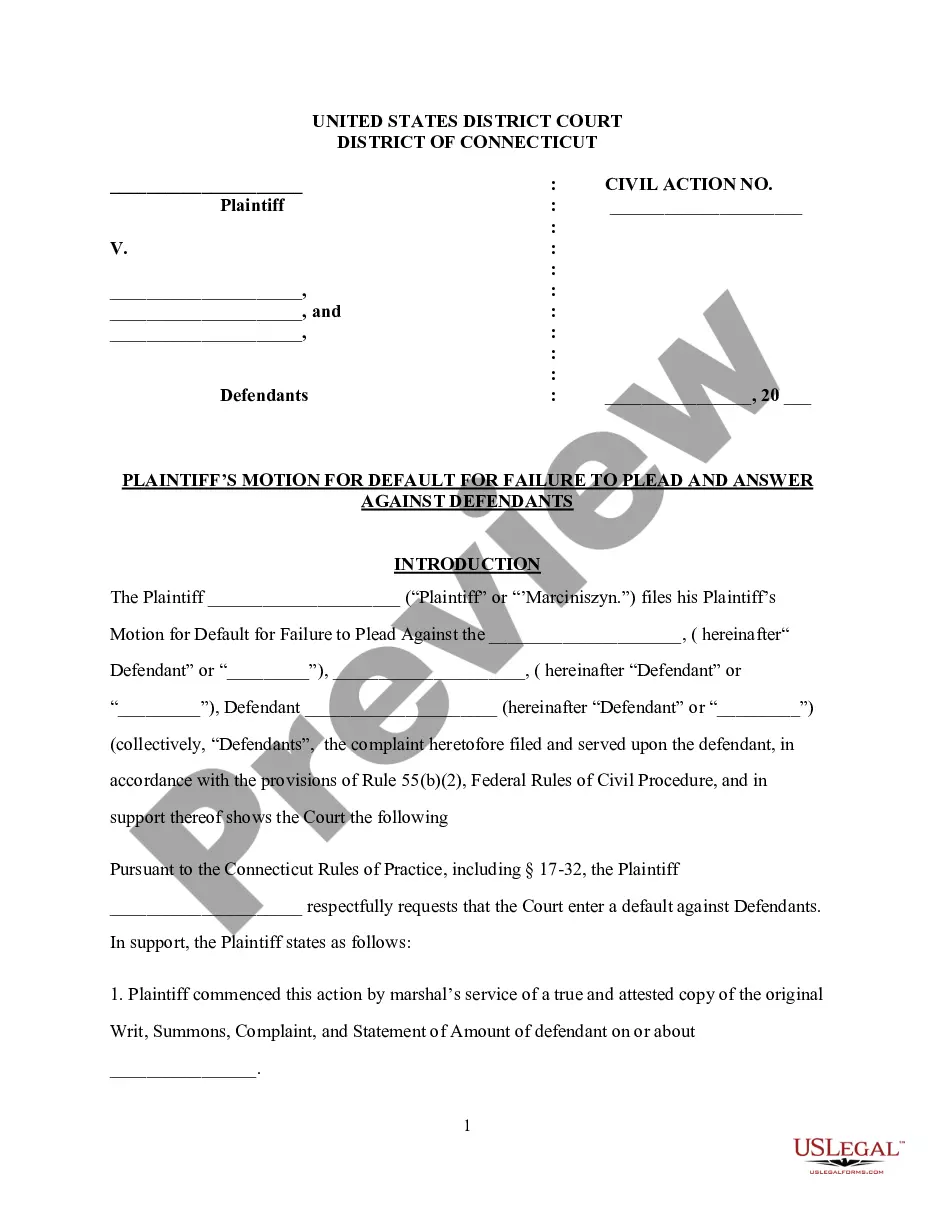
This form is a sample Application for Entry of Default and a Supporting Affidavit. The plaintiff places before the court an application for entry of default against the defendant. The form also contains an affidavit which supports the allegations made by the plaintiff.
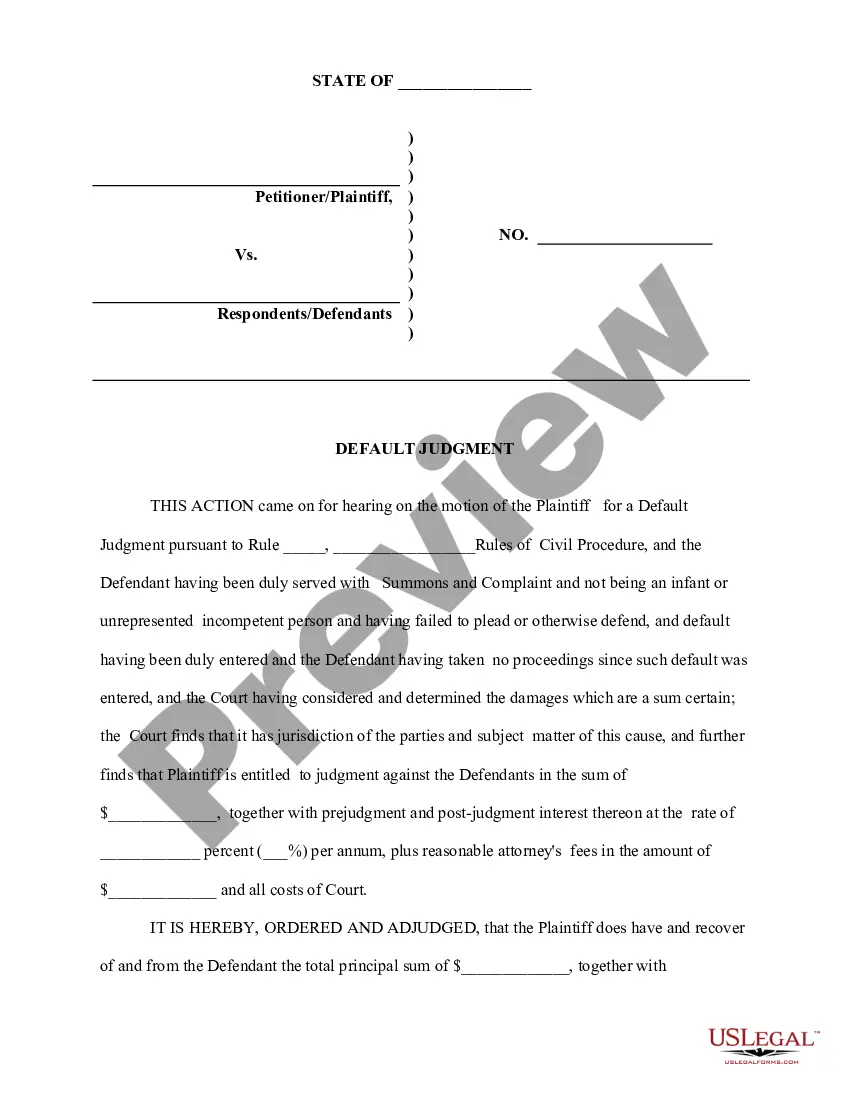
Indiana Application for Entry of Default - Affidavit - Motion - Entry of Default - Default judgment
Instant download
Description
Free preview
Get your form ready online
Our built-in tools help you complete, sign, share, and store your documents in one place.
Built-in online Word editor
Make edits, fill in missing information, and update formatting in US Legal Forms—just like you would in MS Word.
Export easily
Download a copy, print it, send it by email, or mail it via USPS—whatever works best for your next step.
E-sign your document
Sign and collect signatures with our SignNow integration. Send to multiple recipients, set reminders, and more. Go Premium to unlock E-Sign.
Notarize online 24/7
If this form requires notarization, complete it online through a secure video call—no need to meet a notary in person or wait for an appointment.
Store your document securely
We protect your documents and personal data by following strict security and privacy standards.

Make edits, fill in missing information, and update formatting in US Legal Forms—just like you would in MS Word.

Download a copy, print it, send it by email, or mail it via USPS—whatever works best for your next step.

Sign and collect signatures with our SignNow integration. Send to multiple recipients, set reminders, and more. Go Premium to unlock E-Sign.

If this form requires notarization, complete it online through a secure video call—no need to meet a notary in person or wait for an appointment.

We protect your documents and personal data by following strict security and privacy standards.
Looking for another form?

How to fill out Application For Entry Of Default - Affidavit - Motion - Entry Of Default - Default Judgment?
US Legal Forms - one of the largest collections of legal documents in the United States - offers a range of legal document templates you can download or print. With the site, you will find thousands of forms for business and personal use, organized by categories, states, or keywords. You can discover the latest versions of forms such as the Indiana Application for Entry of Default - Affidavit - Motion - Entry of Default - Default judgment in just minutes.
If you already have a membership, Log In and download the Indiana Application for Entry of Default - Affidavit - Motion - Entry of Default - Default judgment from the US Legal Forms repository. The Download button will be visible on each form you view. You can access all previously downloaded forms from the My documents section of your account.
If this is your first time using US Legal Forms, here are simple steps to get started: Ensure you have selected the correct form for your city/state. Click the Preview button to review the form's content. Check the form details to confirm you have selected the right one. If the form does not meet your requirements, use the Search field at the top of the page to find one that does. If you are satisfied with the form, confirm your choice by clicking the Buy Now button. Next, choose the payment plan you prefer and provide your information to create an account. Process the payment. Use your credit card or PayPal account to complete the transaction. Choose the format and download the form to your device. Make modifications. Fill out, edit, print, and sign the downloaded Indiana Application for Entry of Default - Affidavit - Motion - Entry of Default - Default judgment. Each template you save to your account has no expiration date and is yours indefinitely. Therefore, if you need to download or print another copy, simply go to the My documents section and click on the form you require.
- Access the Indiana Application for Entry of Default - Affidavit - Motion - Entry of Default - Default judgment with US Legal Forms, the most extensive collection of legal document templates.
- Utilize a vast array of professional and state-specific templates that cater to your business or personal needs and requirements.
Form popularity
FAQ
In the event a court fails for thirty (30) days to set a motion for hearing or fails to rule on a motion within thirty (30) days after it was heard or thirty (30) days after it was filed, if no hearing is required, upon application by an interested party, the submission of the cause may be withdrawn from the trial ...
A default is a failure to perform a duty in legal proceedings. A default judgment is binding, and the defaulting defendant may not litigate his case or present any evidence. A civil action default judgment will grant the amount of relief sought in a plaintiff's complaint.
An entry of default is the first step to obtaining a default judgment against a party, and allows you to proceed in the action without further notice or input from the opposing party. An entry of default can come in two forms, an entry by the clerk or an entry by the judge.
If a defendant has failed to timely file an answer, to appear when summoned, or otherwise fail to plead, the plaintiff may file a request for a default judgment in their favor.
It is a court judgment awarding a plaintiff the relief sought in the complaint because the defendant has failed to appear in court or otherwise respond to the complaint.
If the Defendant later learns about the default judgment and disagrees with it, he/she may file a Motion to Vacate Default Judgment. This usually must be filed within one (1) year from the date the default judgment was entered.