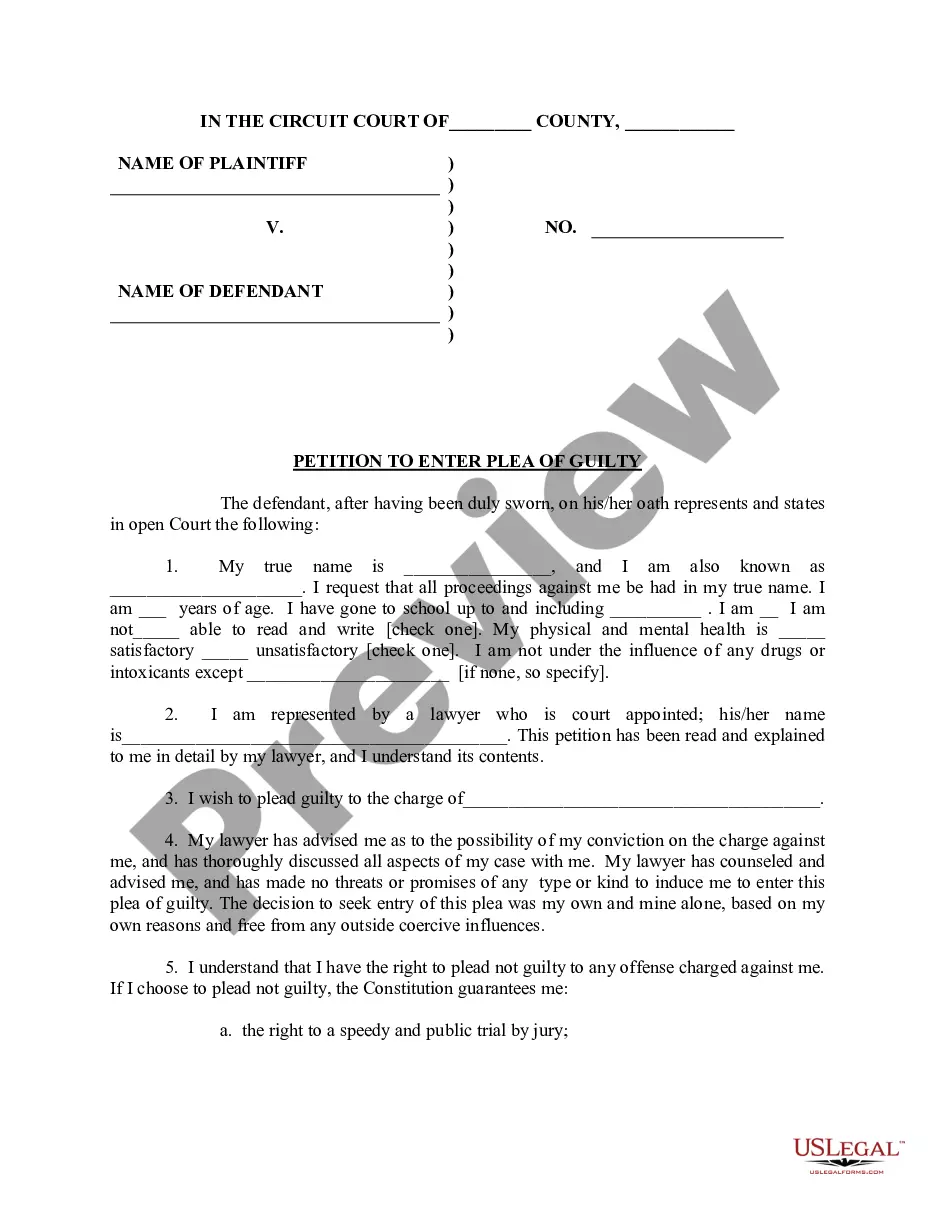
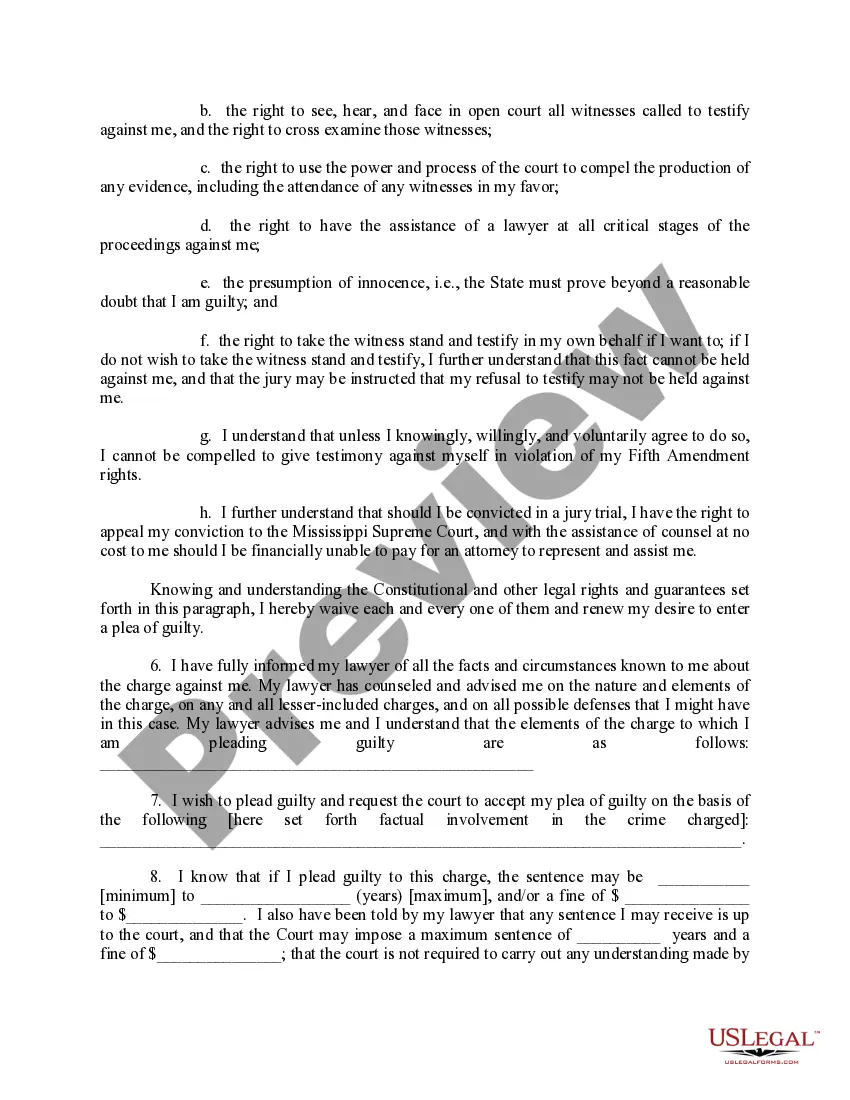
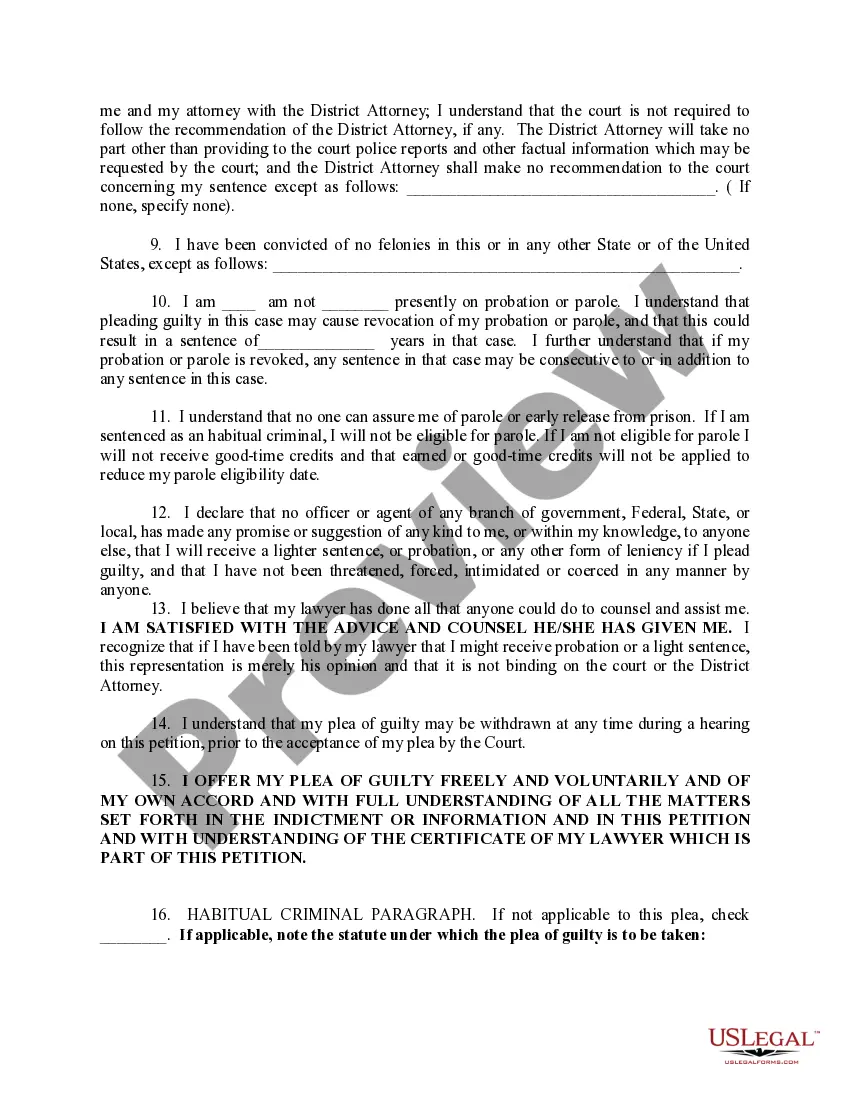
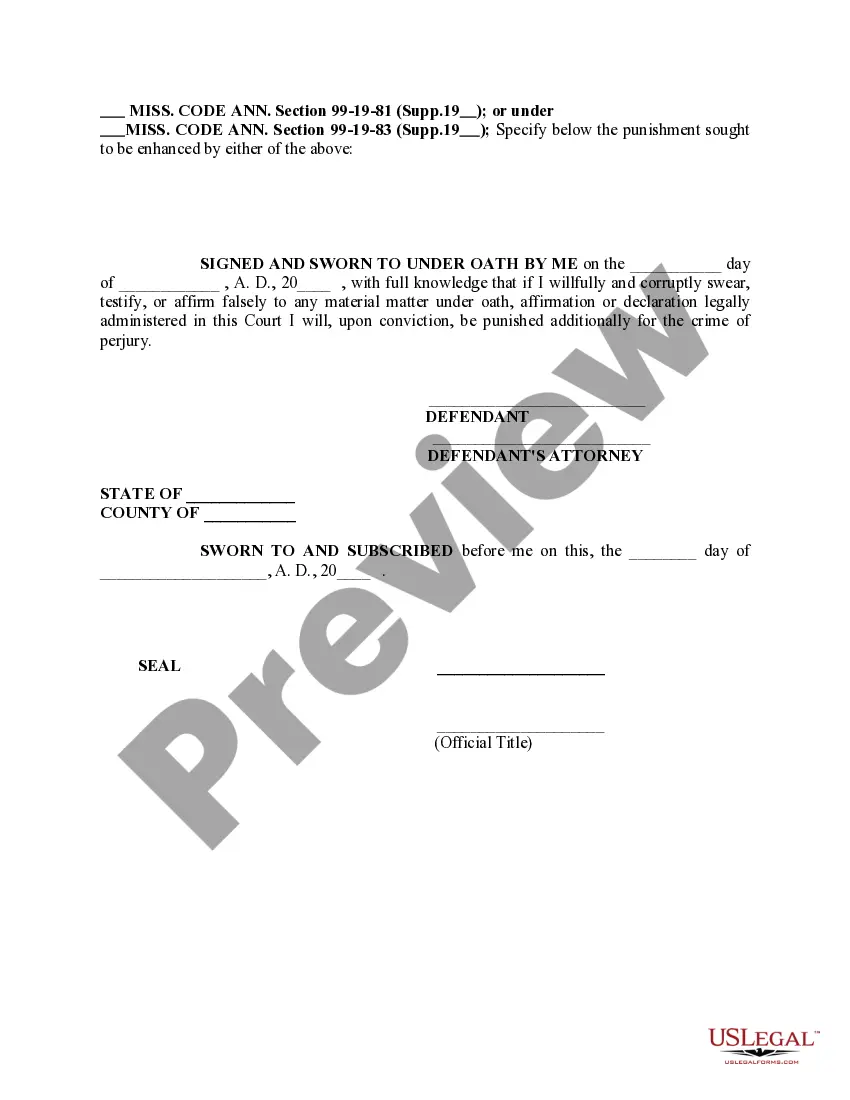
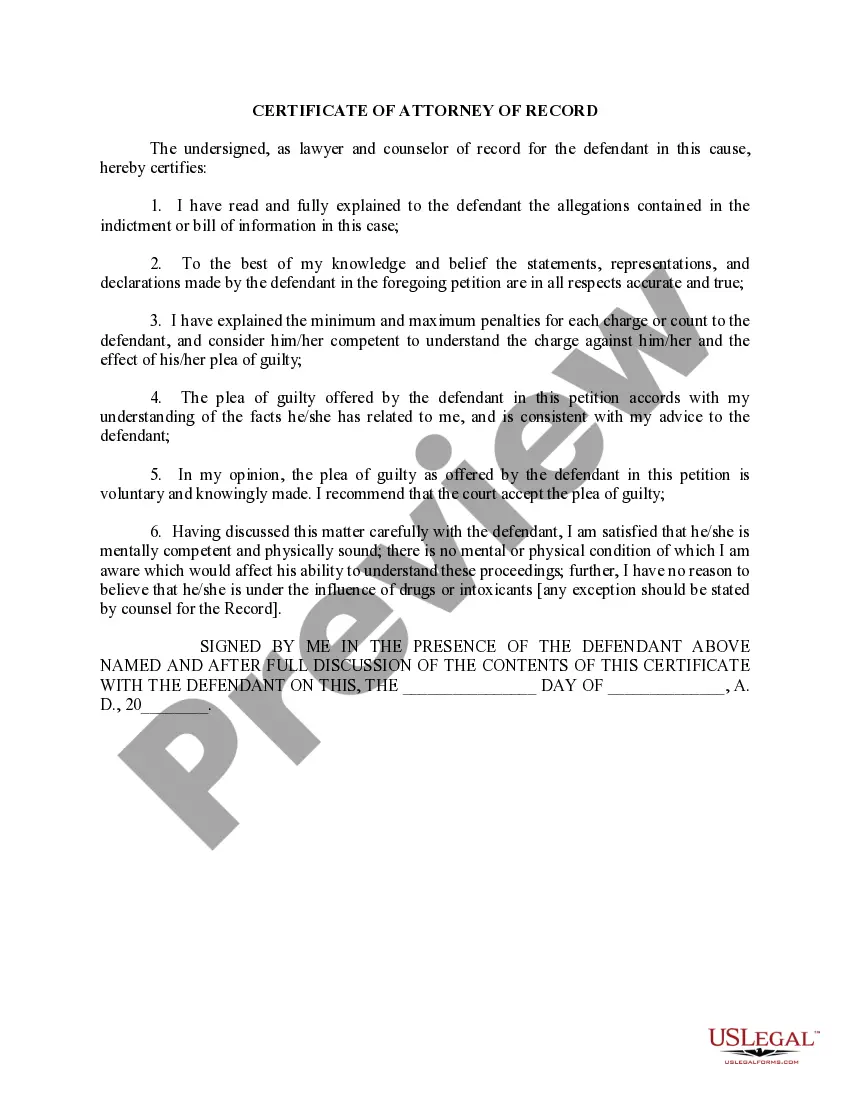
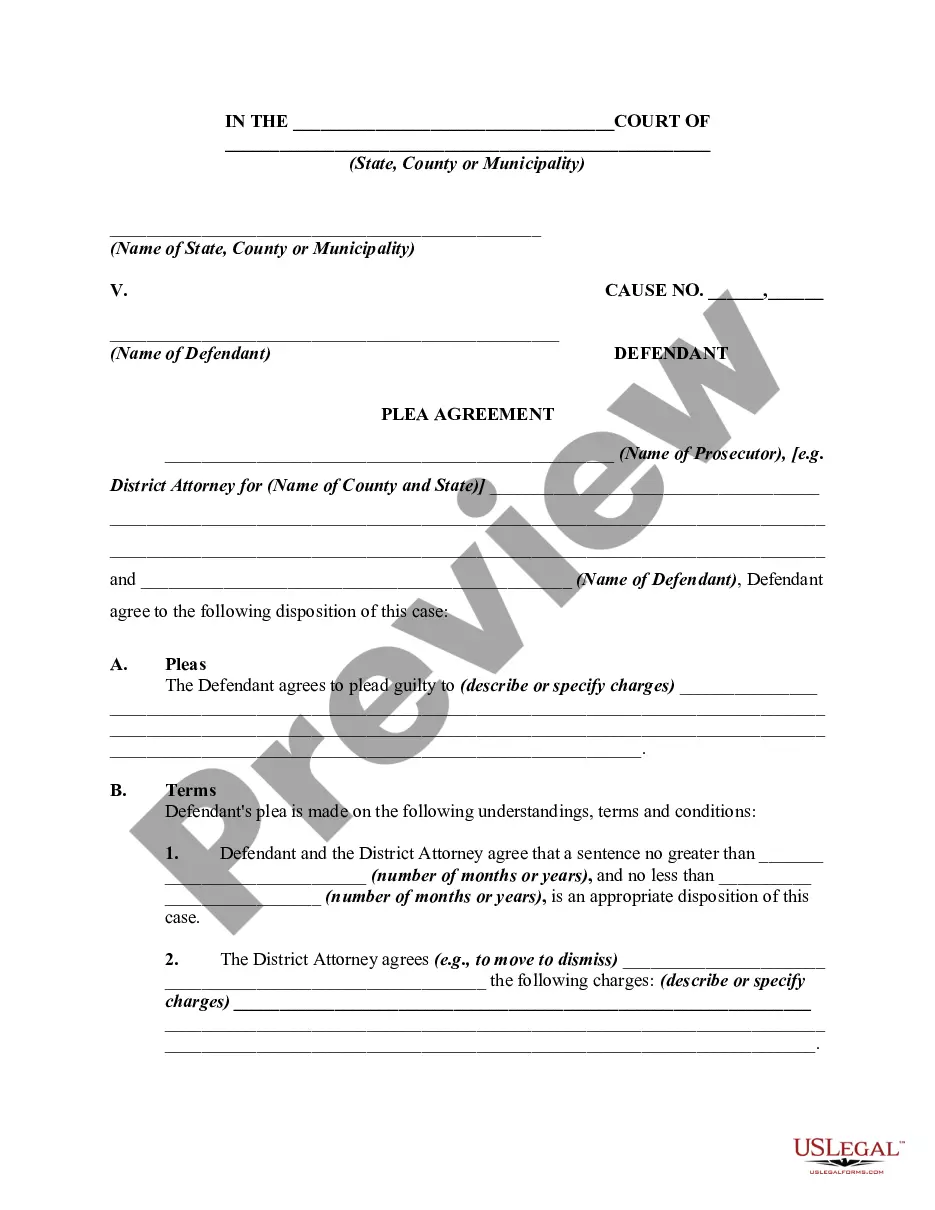
Indiana Petition to Enter Plea of Guilty
Description
Get your form ready online
Our built-in tools help you complete, sign, share, and store your documents in one place.
Make edits, fill in missing information, and update formatting in US Legal Forms—just like you would in MS Word.
Download a copy, print it, send it by email, or mail it via USPS—whatever works best for your next step.
Sign and collect signatures with our SignNow integration. Send to multiple recipients, set reminders, and more. Go Premium to unlock E-Sign.
If this form requires notarization, complete it online through a secure video call—no need to meet a notary in person or wait for an appointment.
We protect your documents and personal data by following strict security and privacy standards.

Make edits, fill in missing information, and update formatting in US Legal Forms—just like you would in MS Word.

Download a copy, print it, send it by email, or mail it via USPS—whatever works best for your next step.

Sign and collect signatures with our SignNow integration. Send to multiple recipients, set reminders, and more. Go Premium to unlock E-Sign.

If this form requires notarization, complete it online through a secure video call—no need to meet a notary in person or wait for an appointment.

We protect your documents and personal data by following strict security and privacy standards.
Looking for another form?
How to fill out Petition To Enter Plea Of Guilty?
If you wish to finalize, acquire, or print authentic document templates, utilize US Legal Forms, the largest selection of legal forms available online.
Employ the site's straightforward and user-friendly search feature to locate the documents you need.
An assortment of templates for business and personal purposes are organized by categories and titles, or keywords. Use US Legal Forms to find the Indiana Petition to Enter Plea of Guilty in just a few clicks.
Every legal document template you acquire is yours indefinitely. You have access to every form you saved in your account. Select the My documents section and choose a form to print or download again.
Complete and acquire, and print the Indiana Petition to Enter Plea of Guilty with US Legal Forms. There are thousands of professional and state-specific forms you can utilize for your personal business or individual needs.
- In case you are already a US Legal Forms user, Log In to your account and click the Download button to obtain the Indiana Petition to Enter Plea of Guilty.
- You can also access forms you previously saved in the My documents section of your account.
- If you are using US Legal Forms for the first time, follow the steps below.
- Step 1. Ensure you have chosen the form for the correct city/state.
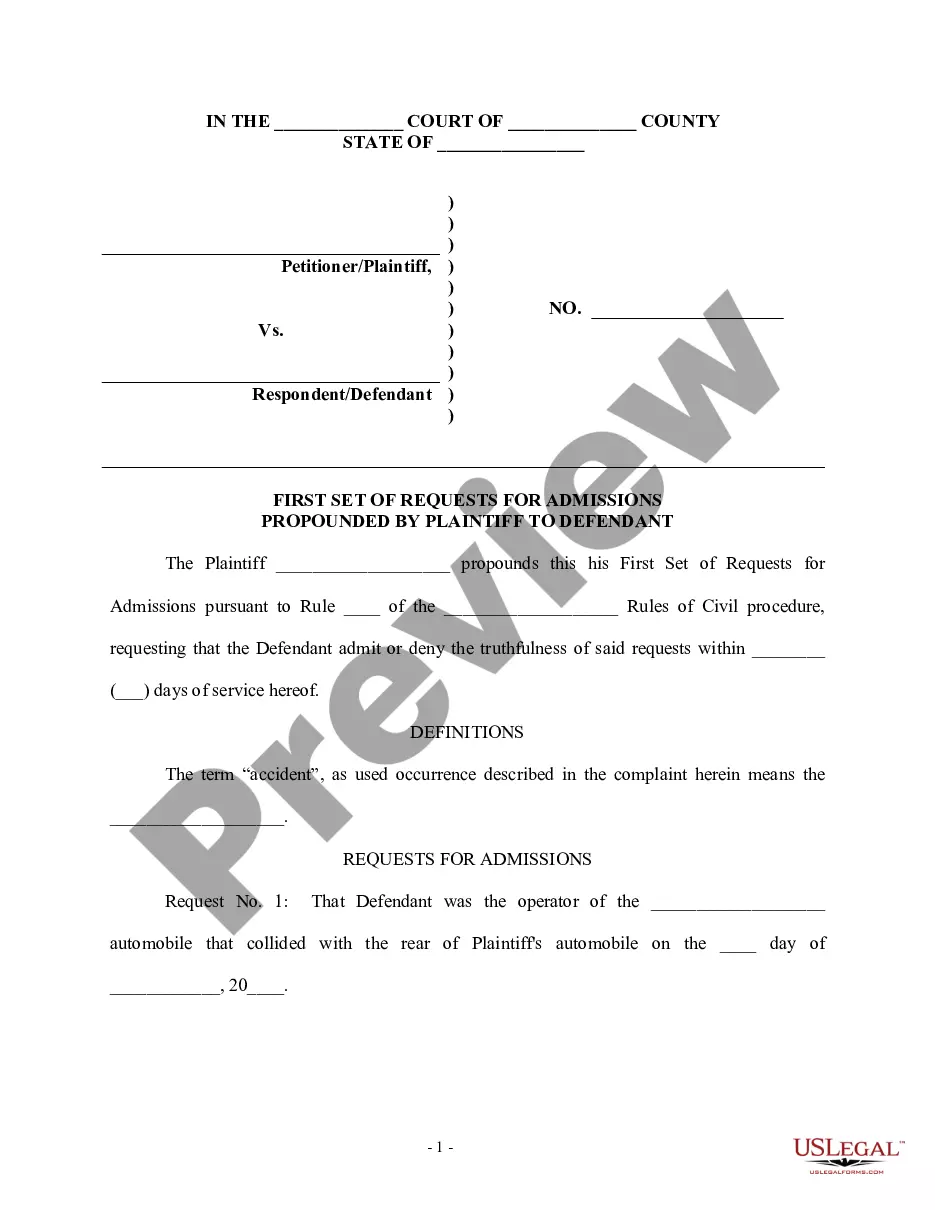
- Step 2. Utilize the Preview option to review the form's content. Don’t forget to read the description.
- Step 3. If you are not satisfied with the form, utilize the Search field at the top of the screen to find alternative versions of the legal form template.
- Step 4. After locating the form you need, select the Get now button. Choose the pricing plan you prefer and enter your details to register for an account.
- Step 5. Process the transaction. You can use your Visa or Mastercard or PayPal account to complete the transaction.
- Step 6. Select the format of the legal form and download it to your system.
- Step 7. Complete, modify and print or sign the Indiana Petition to Enter Plea of Guilty.
Form popularity
FAQ
The court should address the defendant personally to determine whether any other promises or any force or threats were used to obtain the plea. (a) In accepting a plea of guilty or nolo contendere, the court should make such inquiry as may be necessary to satisfy itself that there is a factual basis for the plea.
When the Government has a strong case, the Government may offer the defendant a plea deal to avoid trial and perhaps reduce his exposure to a more lengthy sentence. A defendant may only plead guilty if they actually committed the crime and admits to doing so in open court before the judge.
Plea bargains are agreements between defendants and prosecutors in which defendants agree to plead guilty to some or all of the charges against them in exchange for concessions from the prosecutors.
The main types of plea bargains are charge bargains and sentence bargains. Charge bargaining involves pleading guilty to a less serious crime than the crime originally charged. Sentence bargaining involves pleading guilty in exchange for the prosecutor recommending a lower sentence.
The two sides usually compromise on a lesser charge or reduced penalty in exchange for a guilty plea or no contest plea. Before the agreement can be finalized, however, a judge needs to review and approve it.
Alford plea - A defendant's plea that allows him to assert his innocence but allows the court to sentence the defendant without conducting a trial. Essentially, the defendant is admitting that the evidence is sufficient to show guilt.
It must be expressly clear that the defendant understands the ramifications of the plea. They must understand that they are waiving their 5th and 6th constitutional rights (the right to not incriminate themselves, the right to a trial and the right to confront their accusers).
A plea of guilty means that the act with which you are charged is prohibited by law, that you committed the act, and that you have no defense or excuse for the act. Before you enter a plea of guilty, consider the following: 1. The State has the burden of proving that you violated the law.